These brands that "don't build cars" are the real heroes that determine your daily driving experience.
At each Class A auto show, there are always thousands of exhibition vehicles competing on the same stage, showing off their strengths. And there are always some models that can stand out and become the focus of attention.
At the upcoming grand opening of the "2026 Beijing Auto Show", the all-new generation AITO M9, the all-new Li L9 Livis, the new-generation Xiaomi SU7, the NIO ES9, the Mercedes-Benz all-electric CLA 260 L, etc., all come with their own aura. These cars come from different brands and different countries, with different prices. But if you make a "list of key components" for these cars, you'll find an interesting phenomenon - behind them stand the same group of names.
Huawei, CATL, Bosch, Fuyao... These brands don't manufacture complete vehicles and don't put their own logos on the car bodies. But the core components such as intelligent driving systems, power batteries, brake control, car body glass, and air suspension all come from them.
They have strong brand appeal and a good market reputation, which is making consumers shift from "recognizing the car logo" to "looking at the suppliers" when choosing a car - what you buy is not just a car, but a complete set of technology from the suppliers.
Today, let's talk about six "non-car-manufacturing" players. How did they become the "standard configuration" for popular car models? And which cars are using their products?
1. The Common Secret of Auto Show Hits - They Don't Make Cars, but Create the "Soul"
In just a few days, the biennial Beijing Auto Show will be here.
It's foreseeable that in front of the AITO M9 booth, there will be many people queuing up for the experience. What people discuss is not its car logo, but "how powerful is the Huawei Kunpeng Intelligent Driving system in this car"; beside the Xiaomi SU7, the most frequently asked question to the salesperson might be "Is the battery from CATL?"; in the test drive area of the all-new Li L9 Livis, many people will be interested in "which suppliers are there for the active suspension".
In fact, you don't have to be at the auto show. In the direct-sale stores or 4S stores of every car brand, there are more and more "professional" consumers. Their questions go straight to the core: Who are the suppliers of the core components such as intelligent driving, batteries, and chassis?
In the past, when we chose a car, we mainly looked at the "three major components" - the engine, the gearbox, and the chassis. And most of these core components were developed and produced by the car manufacturers themselves. But now, a car has become a "modularly assembled" product - the intelligent level, cruising range, and chassis quality of a car increasingly depend on whose intelligent driving solution, whose battery, whose control system, and whose air suspension it uses.
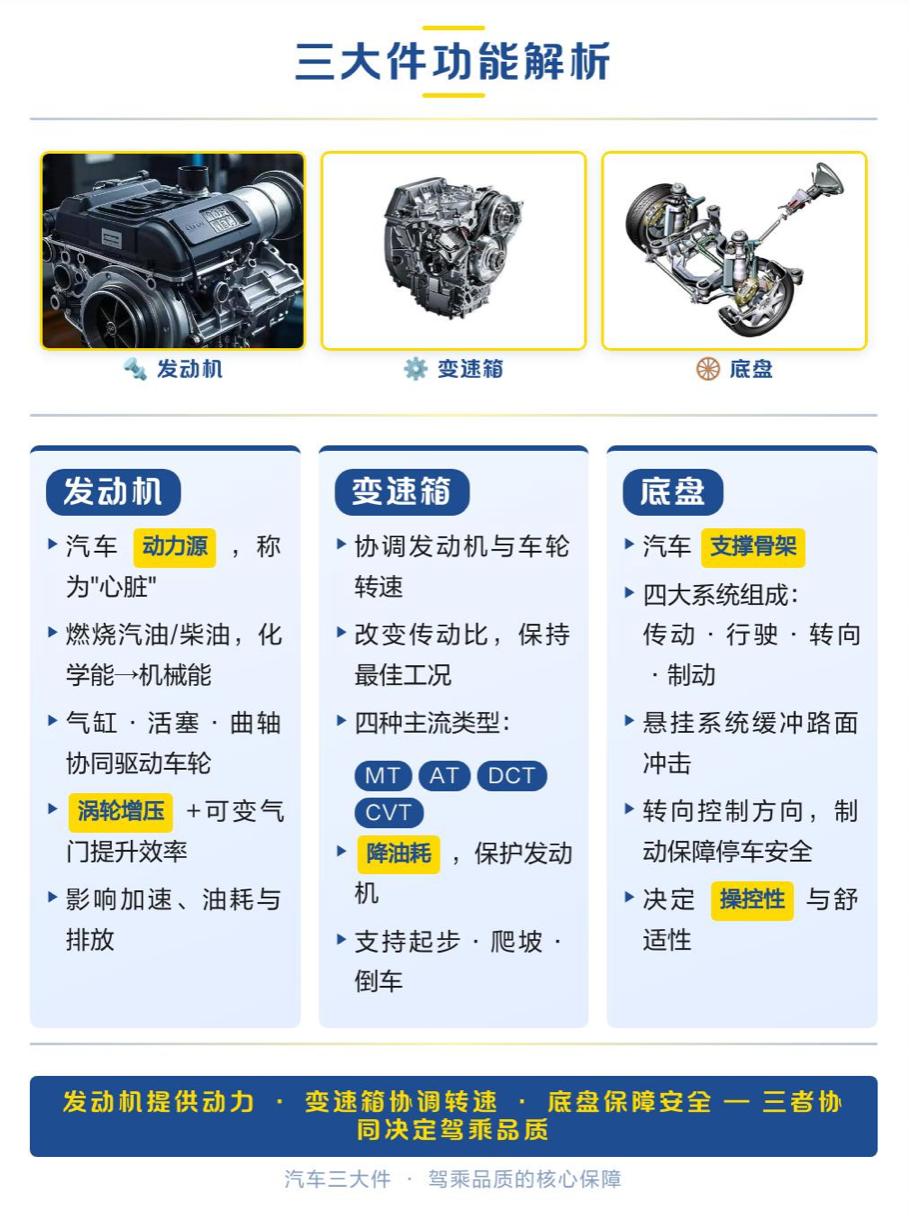
Image/Functional analysis of the "three major components", Source/Screenshot from the Internet's New Energy Outlook
It's easy to understand by making an analogy. When buying a mobile phone, you don't just look at the phone brand. You also look at whether the processor is from Qualcomm or MediaTek, and whether the screen is from Samsung or BOE. The same story is happening in the automotive industry: The brand of the supplier itself is becoming an unavoidable reference when buying a car.
Some people may ask: How powerful are these suppliers exactly? Let's look at a few figures.
The total number of vehicles equipped with Huawei Kunpeng Intelligent Driving in 2025 was close to 1 million, and its market share in the luxury car market above 350,000 yuan exceeded half;
CATL's global market share of power batteries was close to 40%. One out of every three electric vehicles in the world uses its batteries;
Momenta is a company you may not have heard of, but it has won cooperation with 8 of the top 10 global car manufacturers, including Mercedes-Benz, BMW, and Audi;
Bosch's products are used in cars from Wuling Hongguang to Porsche 911;
One out of every three automotive glass in the world is made by Fuyao;
Baolong Technology has brought the air suspension, which used to be exclusive to million-yuan luxury cars, down to the 200,000-yuan level...
Why do these "non-car-manufacturing" names make so many popular car models have to use their products? What exactly have they done that makes car manufacturers and consumers unable to bypass them?
2. Six "Non-Car-Manufacturing" Players - Why Are They the "Standard Configuration" for Popular Cars
Let's start with Huawei. In 2025, the total number of vehicles equipped with Huawei Kunpeng Intelligent Driving reached 976,000, and the number of component shipments exceeded 31.68 million. As of September 2025, the market share of Huawei ADS urban pilot assist driving reached 27.8%, ranking first in China; in the luxury car market above 350,000 yuan, this figure exceeded 50%.
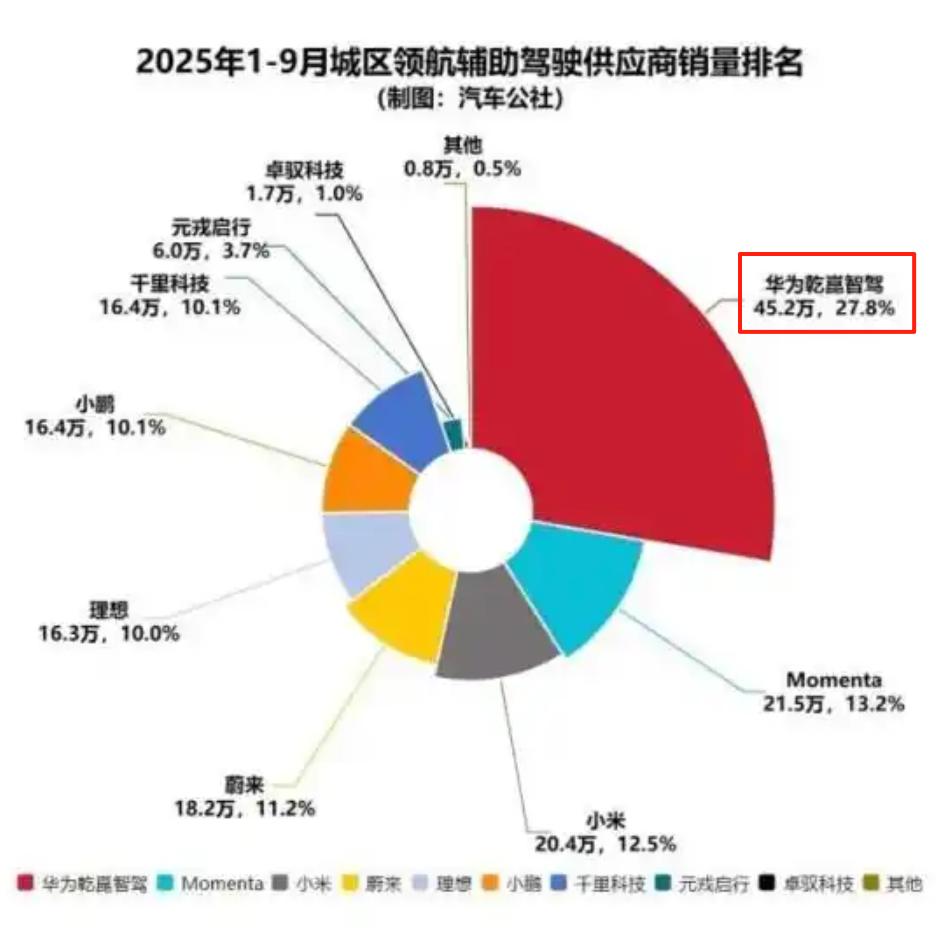
Image/Huawei's intelligent driving market share from January to September 2025, Source/Screenshot from the Internet's New Energy Outlook
In 2026, it is estimated that there will be more than 80 models equipped with Huawei ADS, with a cumulative number of equipped vehicles of about 3 million. The Huawei Kunpeng Intelligent Driving solution is currently installed in 45 cooperating vehicle series. Representative models include AITO M5/M7/M9 (250,000 - 570,000 yuan), Avatr 11/12 (300,000 - 400,000 yuan), Deepal S07 (150,000 - 200,000 yuan), etc. When car manufacturers choose Huawei, in essence, they are buying the certainty of "leading in intelligence" - fast algorithm iteration, outstanding perception ability, and seamless transfer of the mobile phone ecosystem.
Next, let's look at CATL. In 2025, CATL's global power battery installation volume reached 464.7 GWh, a year-on-year increase of 35.7%, and its market share was 39.2%, ranking first in the world for nine consecutive years. According to the statistics of the China Automotive Power Battery Industry Innovation Alliance, CATL's domestic market share in 2025 reached 43.42%.
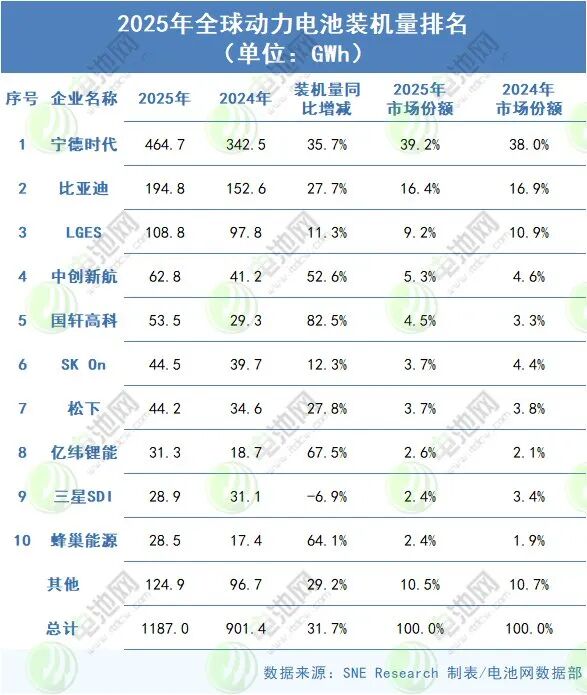
Image/Ranking of global power battery installation volume in 2025, Source/Screenshot from the Internet's New Energy Outlook
CATL's customer list almost covers all mainstream new energy car manufacturers: Geely, Tesla, Changan, Xiaomi, Seres, Li Auto, NIO, as well as overseas brands such as BMW, Mercedes-Benz, and Volkswagen. Representative models include Tesla Model 3/Y (230,000 - 360,000 yuan), Li L series (320,000 - 450,000 yuan), Xiaomi SU7 (210,000 - 300,000 yuan), etc.
There is a saying in the industry: In the field of electric vehicle batteries, there is only CATL and the others. Why are car manufacturers willing to use CATL's batteries? Because the battery directly determines the user's word-of-mouth. The comprehensive performance in terms of safety records, low-temperature performance, and charging speed has made CATL the "TSMC" in the electric vehicle field - not necessarily the only choice, but definitely unavoidable.
Now, let's talk about Momenta. Many people may not be familiar with this company, but in the automotive industry, it is an "invisible champion" in the field of intelligent driving.
The NOA report of the China Association of Automobile Manufacturers shows that from January to November 2025, the number of vehicles equipped with Momenta's urban NOA reached 414,400, accounting for about 61.06% of the third-party suppliers. Eight out of the top 10 global car manufacturers have carried out cooperation with it. Its representative models mainly include the Mercedes-Benz all-electric CLA (about 300,000 - 400,000 yuan), IM L6 (230,000 - 330,000 yuan), Denza N7 (300,000 - 380,000 yuan), etc.
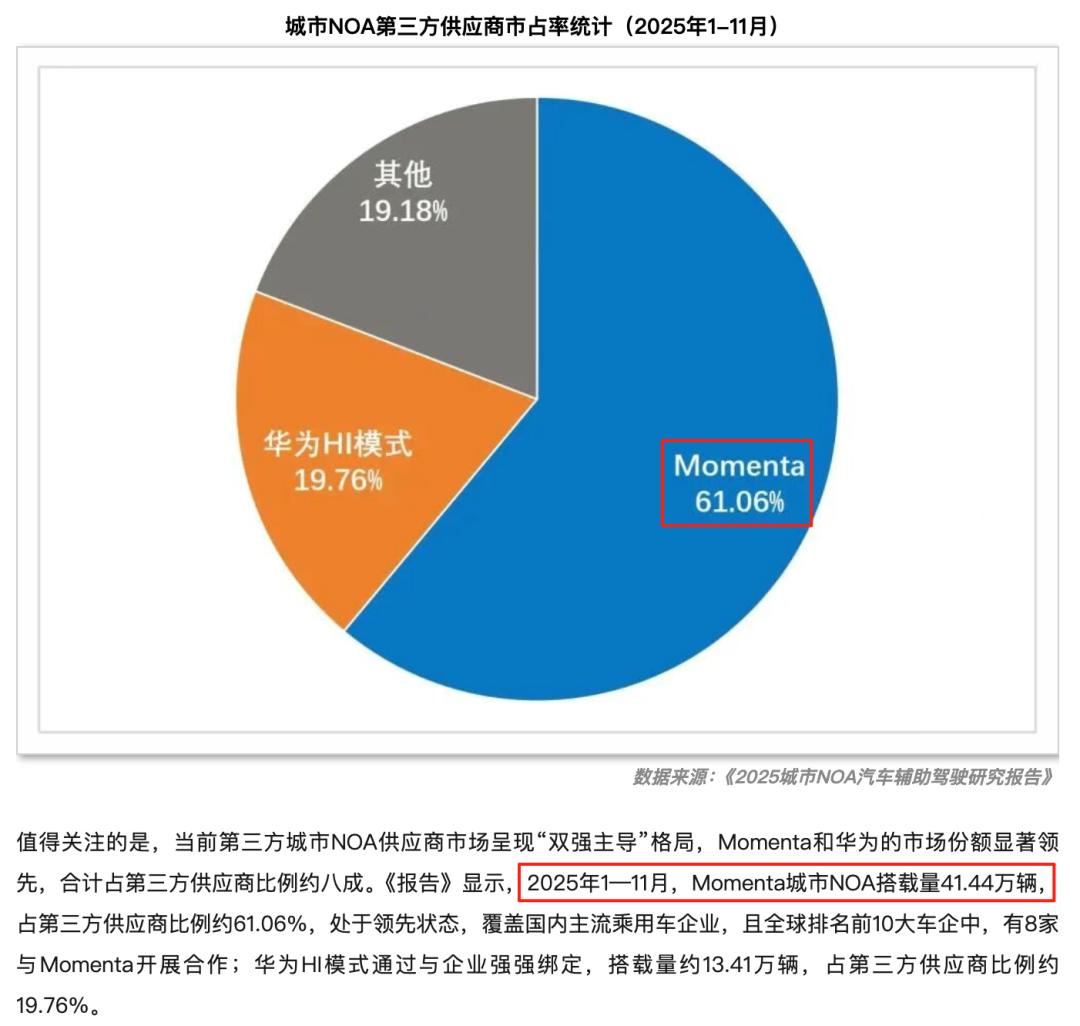
Image/Statistics of the market share of third-party urban NOA suppliers, Source/Screenshot from the Internet's New Energy Outlook
The fourth one is Bosch. If the above-mentioned companies are new players on the new track, Bosch is the "old ace" in the automotive industry. Bosch's core competitiveness lies in "reliability without inspection" - its products have passed the world's most stringent regulatory standards. When car manufacturers use Bosch's products, they can skip the long verification cycle and directly get a "safety pass".
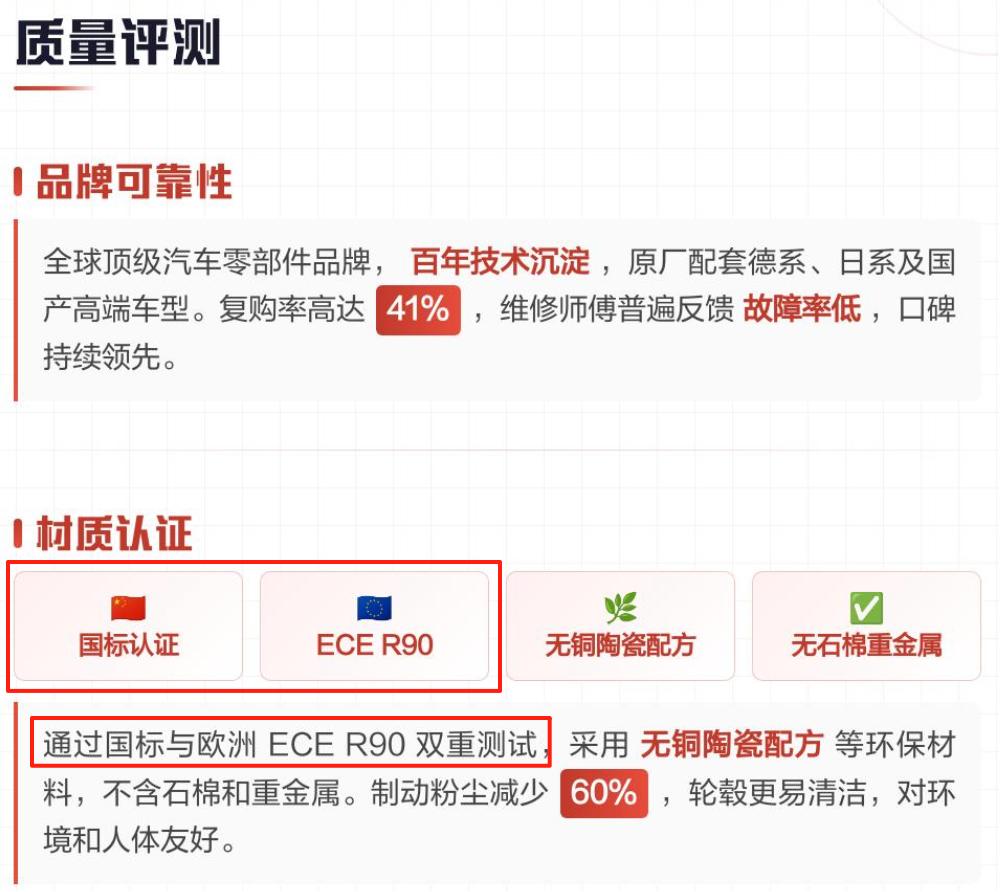
Image/Bosch's products have passed safety tests in many countries, Source/Screenshot from the Internet's New Energy Outlook
This German century-old enterprise has almost penetrated into every mass-produced car - from the tens of thousands of yuan Wuling Hongguang to the millions of yuan Porsche 911. Bosch is the main supplier of core electronic components such as the ESP body stability system, the iBooster electronic brake, and the wheel speed sensor.
The fifth one is Fuyao Glass. How much technical content can a piece of glass have? Fuyao tells you: It can be equipped with HUD projection, can insulate sound and heat, can adjust light intelligently, and can also make way for lidar. Fuyao's global market share is about 34% - 37%, and its market share in the Chinese market exceeds 68%.
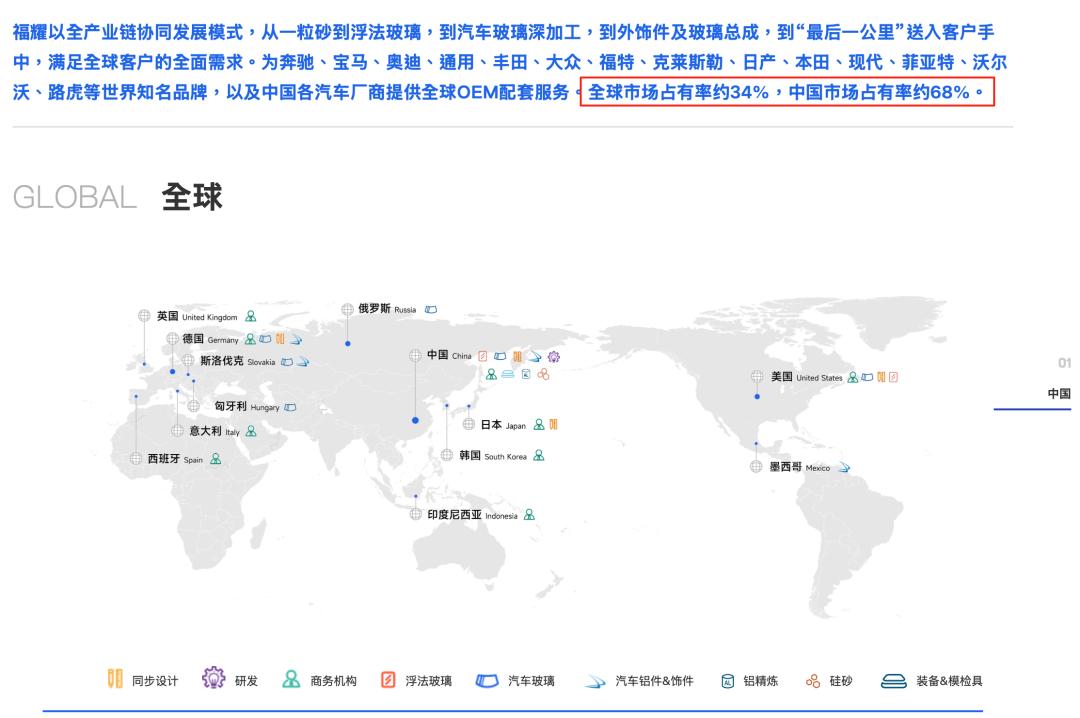
Image/Fuyao Glass's market share, Source/Screenshot from Fuyao Glass's official website and the New Energy Outlook
Fuyao serves more than 60 brands. From BMW, Mercedes-Benz, and Tesla to BYD, NIO, and Li Auto, almost all the mainstream car manufacturers you can think of are Fuyao's customers. Its price is more than half cheaper than imported brands, but its performance is even stronger. This is the reason why it is "unavoidable". Its representative models include the Cadillac VISTIQ (about 500,000 - 600,000 yuan), the XPeng GX (399,800 yuan), and the AITO M9 (470,000 - 570,000 yuan).
The sixth one is Baolong Technology. The air suspension used to be an "exclusive configuration" for million-yuan luxury cars, but driven by domestic suppliers such as Baolong Technology, this configuration has been extended down to the 300,000 - even 200,000 - yuan level.
From January to October 2025, the installation volume of Baolong Technology's air suspension reached 196,000 sets, with a market share of 21.0%, ranking third in the industry. The total market share of the three domestic suppliers, Tuopu Group, Konghui Technology, and Baolong Technology, reached 88.6%, squeezing the foreign brands to a total of less than 12%.
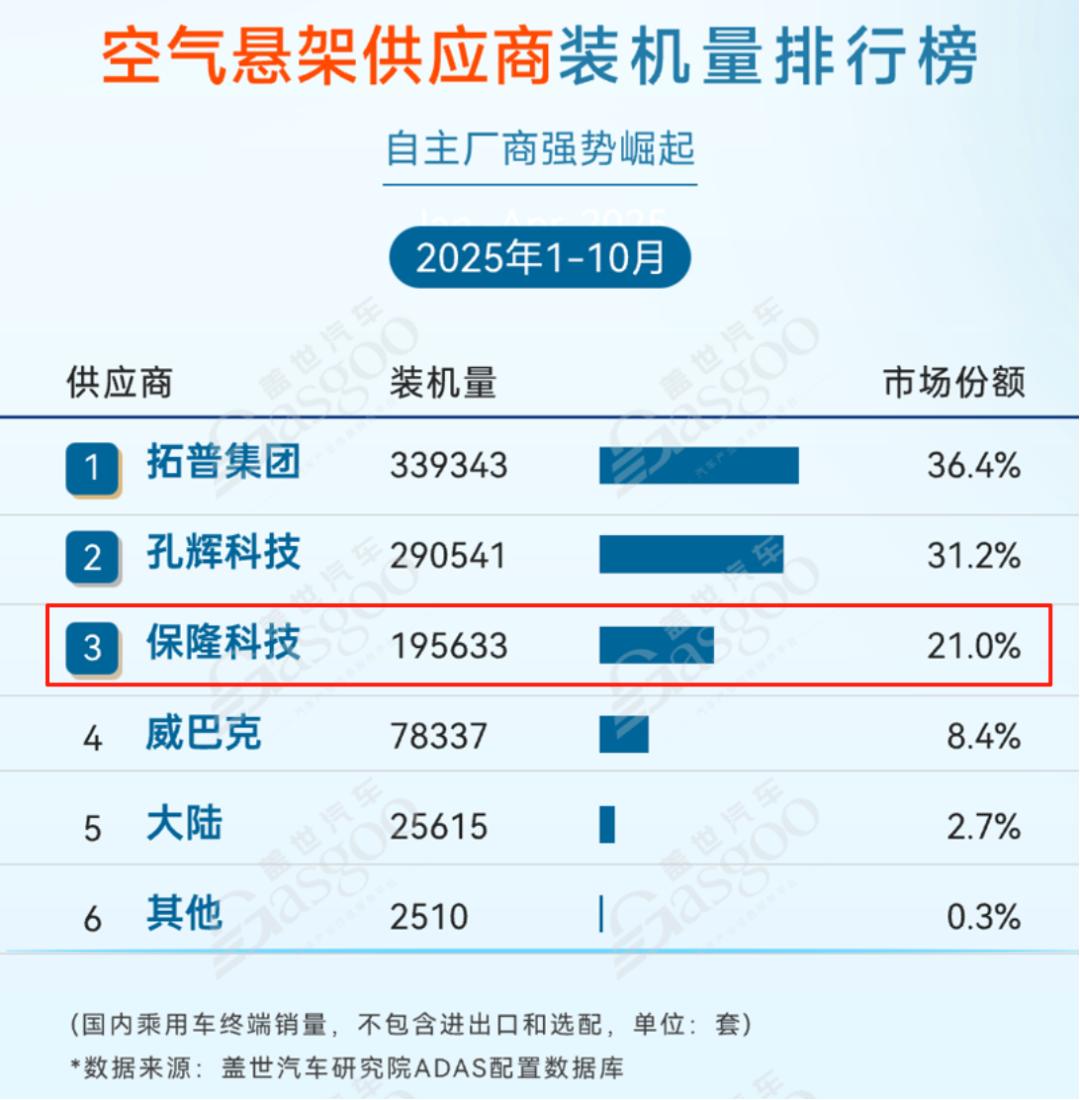
Image/Ranking of the installation volume of air suspension suppliers from January to October 2025, Source/Screenshot from the Internet's New Energy Outlook
Baolong has turned the "magic carpet chassis" from a luxury item into a national configuration. Representative models such as the Li L8/L9 (330,000 - 450,000 yuan), the Deepal G318 with air suspension (starting from 199,900 yuan), and all NIO models (300,000 - 600,000 yuan) are all equipped with domestic air suspension solutions.
3. The New Logic of Buying a Car - Look at the Car Logo, but Also Look at the "Supplier Package"
From these six companies, we can see a clear trend: The leading suppliers are binding a large number of popular car models, covering price ranges from 100,000 yuan to millions of yuan.
Huawei ADS plans to be installed in models at the 150,000 - yuan level in 2026; CATL's batteries are installed in cars from the Wuling Hongguang MINI to the Porsche Taycan; Momenta's intelligent driving solutions cover the mainstream range of 200,000 - 500,000 yuan; Bosch's product line covers all price ranges; Fuyao Glass appears in every mass - produced car; Baolong Technology has lowered the threshold of the air suspension to below 200,000 yuan.
