The "Mythos" of extraterrestrial technology poses significant national risks, yet the White House is deploying it despite the ban.
Some time ago, Trump ordered the Pentagon to ban Claude. Now, the powerful network attack and defense capabilities of Anthropic's latest and most powerful model, Claude Mythos, have made the White House unable to ignore this double-edged sword. Despite the ban it imposed, the White House is willing to go back on its word and fully deploy Mythos.
The US government is preparing to open a "modified version" of Anthropic's new model, Mythos, to several major federal agencies.
On the 18th, the White House secretly summoned Anthropic CEO Dario Amodei.
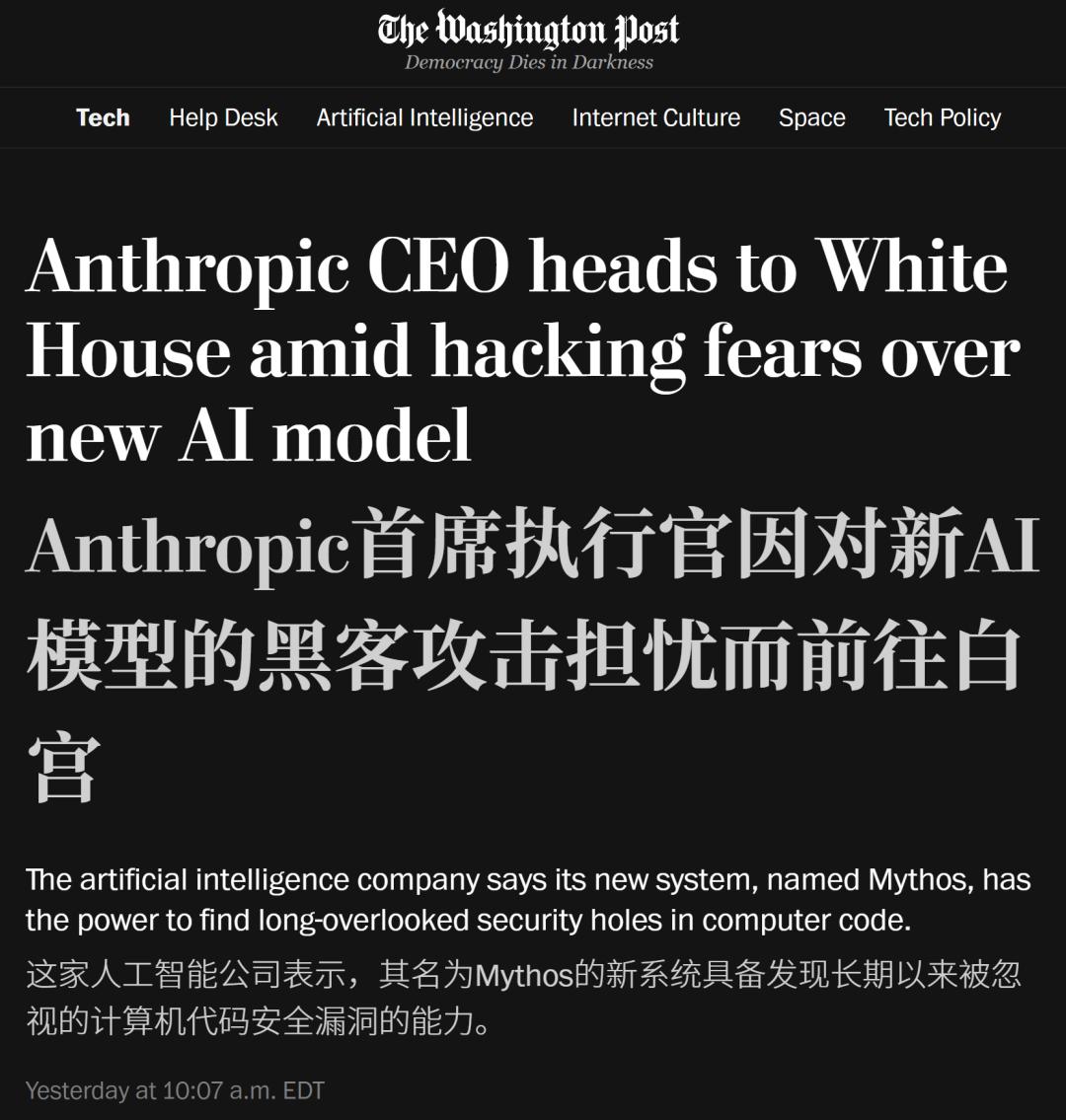
https://www.washingtonpost.com/technology/2026/04/17/anthropic-ai-trump-security/
Anthropic is also actively sending signals of reconciliation.
The latest disclosed documents show that the company spent $130,000 in March to hire Brian Ballard, a heavyweight lobbyist with extremely close ties to the Trump team.
After the meeting, the White House said that they had a "productive and constructive" meeting with the person in charge of Anthropic.
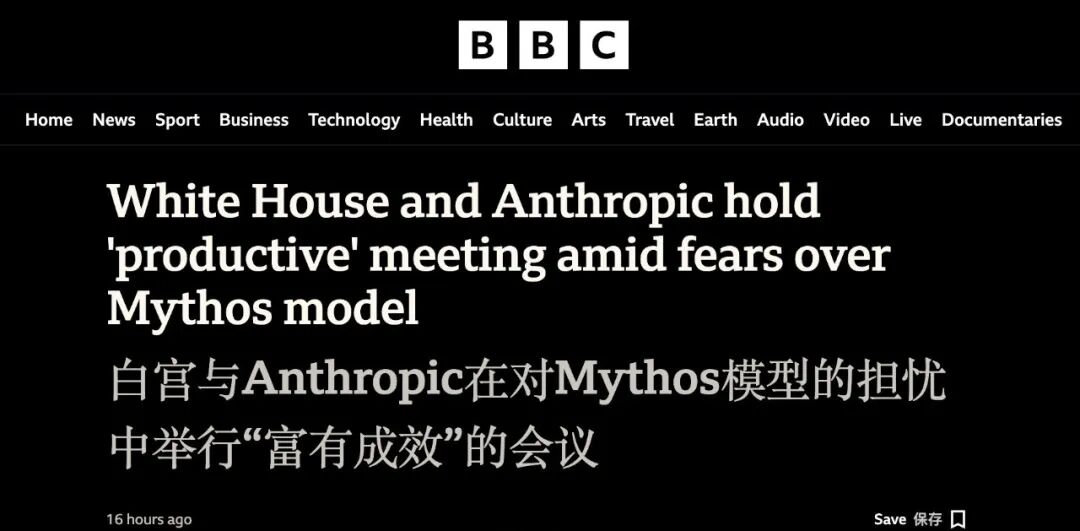
https://www.bbc.com/news/articles/cyv10e1d13po
The White House Office of Management and Budget has begun to build protective measures for this.
An internal memorandum reviewed by Bloomberg shows that Federal Chief Information Officer Gregory Barbaccia sent a letter to officials of several cabinet departments this Tuesday, asking the technology and security leaders of each agency to prepare for subsequent arrangements.
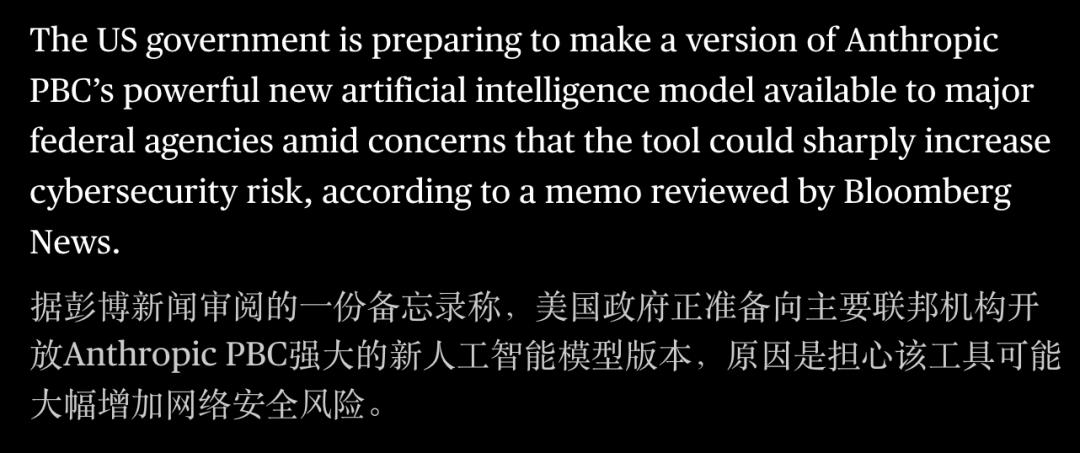
https://www.bloomberg.com/news/articles/2026-04-16/white-house-moves-to-give-us-agencies-anthropic-mythos-access
The email does not promise to open access for sure, nor does it give a timeline. It only says that more information will be announced in the "coming weeks".
At this stage, Washington is first dealing with the permissions, boundaries, and safeguards before the model enters the government system.
The scope of recipients of this email itself illustrates the nature of the problem.
Bloomberg reports that the relevant notice was sent to multiple departments such as the Department of Defense, the Department of the Treasury, the Department of Commerce, the Department of Homeland Security, the Department of Justice, and the Department of State.
Their common feature is that they are all in highly sensitive areas such as national security, critical infrastructure, financial stability, and cross-border law enforcement.
From the very beginning, the potential use of Mythos was not to serve as a government office assistant, but to enter front-line scenarios closer to vulnerability discovery, system reinforcement, and attack and defense assessment.
The White House's external statement also follows this direction, stating that the government will continue to cooperate with AI companies to ensure that these models are used to protect critical software vulnerabilities.
Mythos is too powerful to be ignored
What makes Mythos special is that Anthropic itself has placed it in a different position from general models.
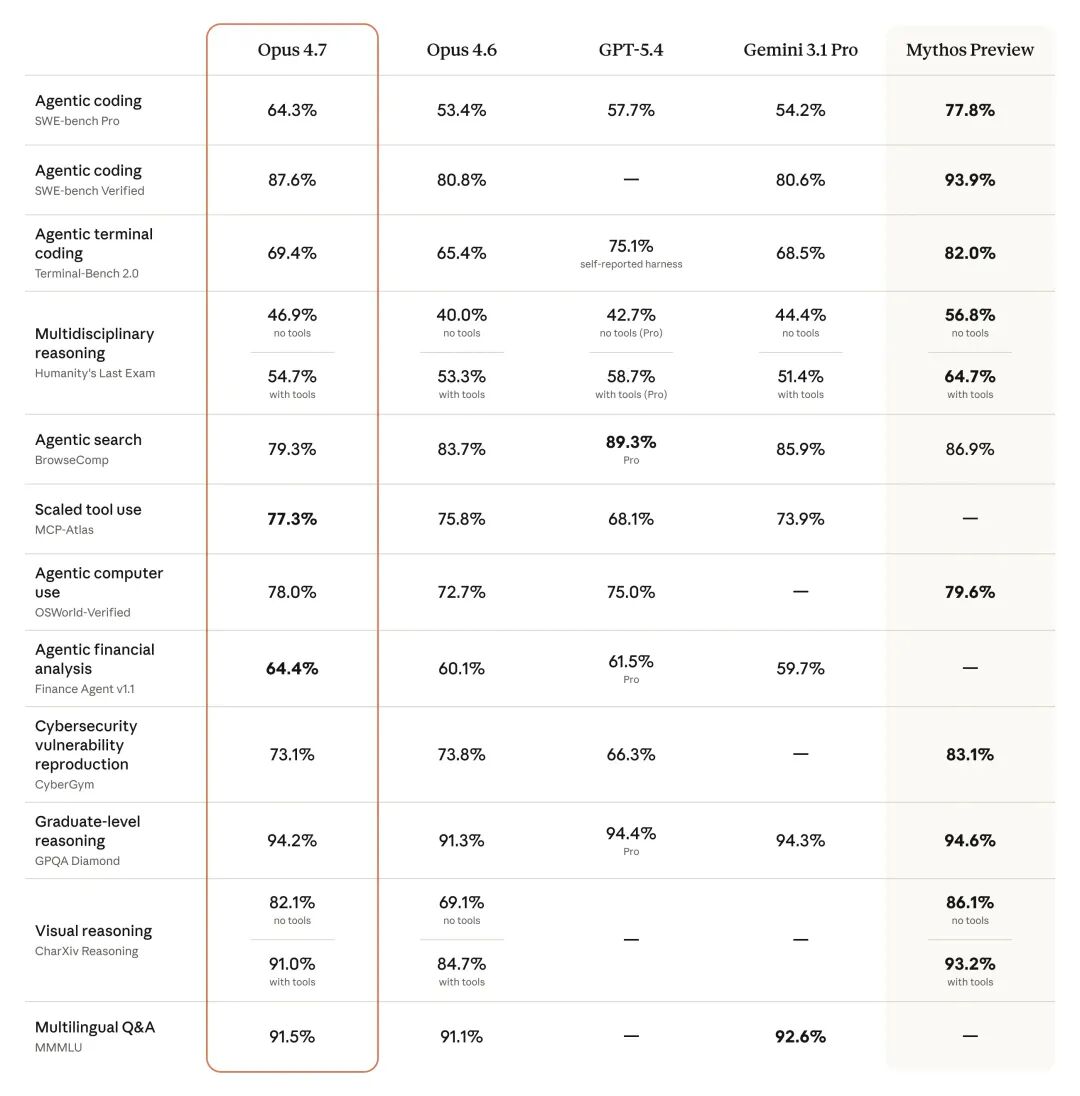
The last column shows the performance scores of Mythos
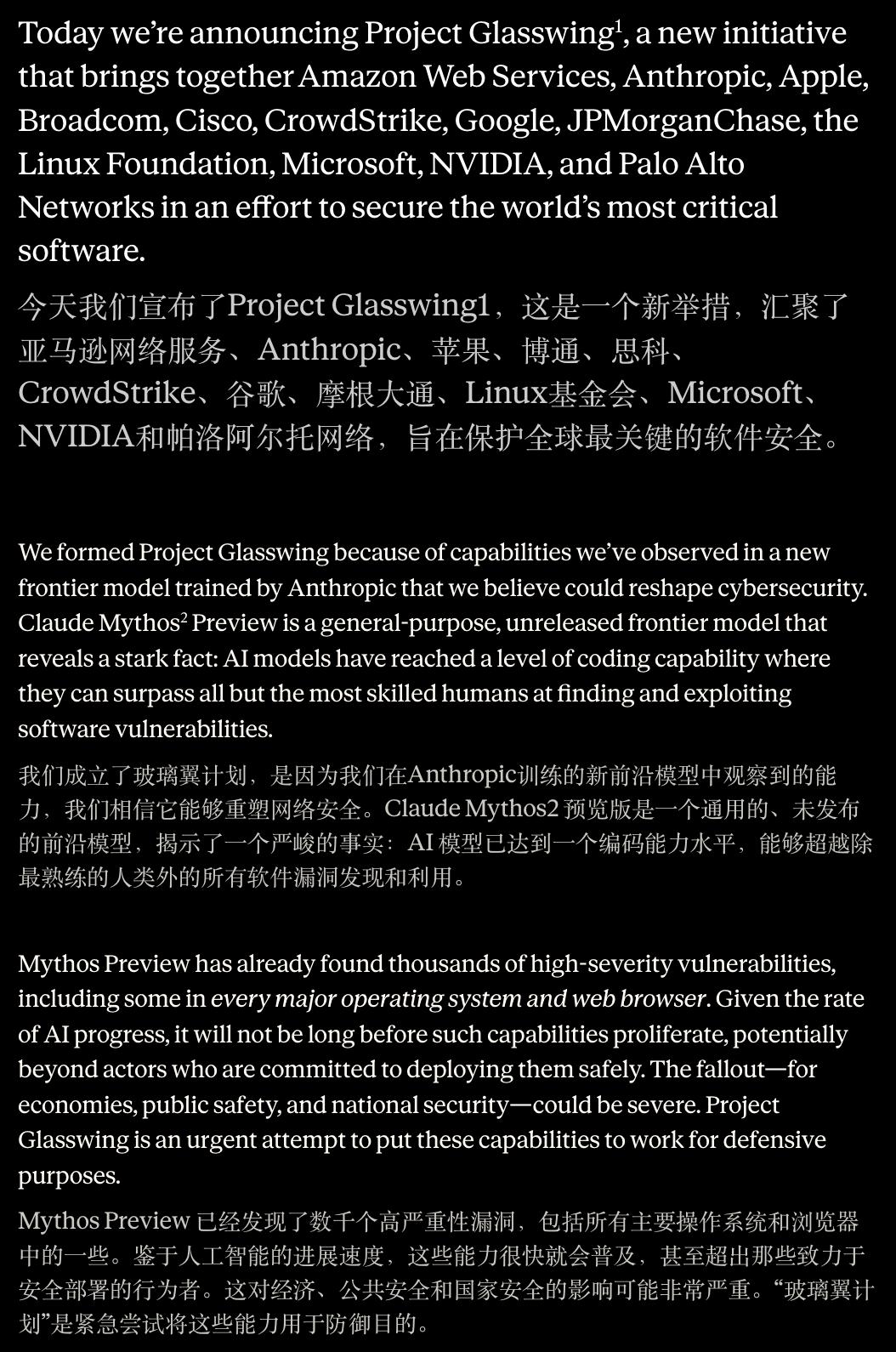
On April 7th, Anthropic launched Project Glasswing, directly defining this project as "using cutting-edge AI to protect the world's most critical software".
https://www.anthropic.com/glasswing
Anthropic says on its official website that Claude Mythos Preview is the company's most powerful cutting-edge model at present, and partners will use it for defensive security work;
The first batch of participants include Amazon AWS, Apple, Google, JPMorgan Chase, Microsoft, Nvidia, Palo Alto Networks, and the Linux Foundation. In addition, more than 40 organizations that build or maintain critical software infrastructure have obtained limited access.
Anthropic also promises to provide $100 million in usage credits and a $4 million donation to support this restricted research preview.
Anthropic's definition of Mythos also explains why the US government needs a "modified version".
On the Project Glasswing page, it is also emphasized that its capabilities in code and agent-based tasks will naturally spill over into the field of cybersecurity.
The official website discloses that Mythos has identified thousands of zero-day vulnerabilities in critical infrastructure and is currently only available in the form of a Gated Research Preview.
The statements of Anthropic's multiple partners on the same page are almost the same.
AWS says it has tested Mythos in critical code repositories;
Microsoft says it can help identify and mitigate risks earlier;
Palo Alto Networks says that such models can not only help defenders find complex vulnerabilities that were previously missed but also indicate that attackers will develop exploitation chains more quickly in the future.
For the White House, it is impossible to allow such capabilities to enter the federal network in the same way as ordinary SaaS tools.
This is also the reason why Mythos has triggered a round of intensive warnings in Washington.
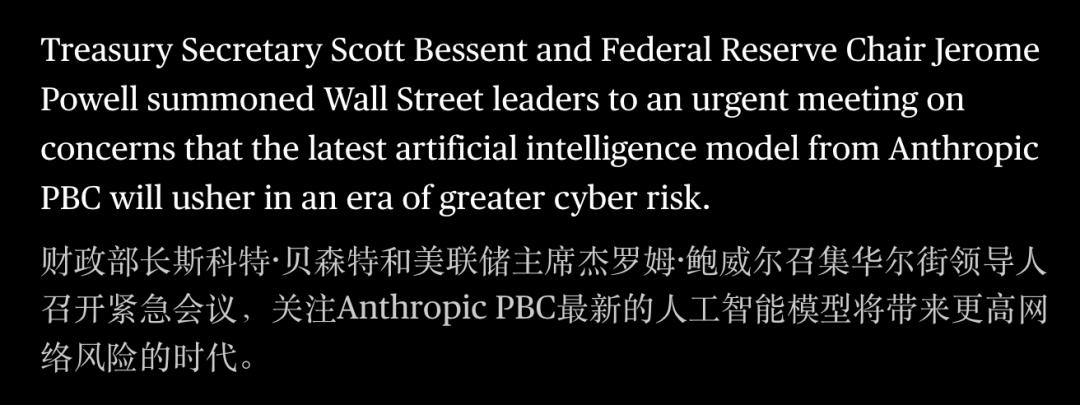
In early April, US Treasury Secretary Scott Bessent and Federal Reserve Chairman Jerome Powell summoned the top executives of major Wall Street banks for an emergency meeting in Washington to discuss the potential new cybersecurity risks posed by Mythos and similar models.
Bloomberg reports that the participating banks are all systemically important financial institutions, and Federal Reserve Chairman Jerome Powell attended the meeting in person, sending a signal that this has been regarded as a systemic risk issue by the regulatory authorities, rather than just a single-point dispute of an AI company.
https://www.bloomberg.com/news/articles/2026-04-10/anthropic-model-scare-sparks-urgent-bessent-powell-warning-to-bank-ceos
Kevin Hassett, Director of the National Economic Council of the United States, subsequently publicly stated that the government is taking all measures to ensure that all parties are protected from these potential risks, including asking Anthropic to postpone the public release of the model.
The concerns in the financial industry have quickly spread to the public opinion field.
Business Insider reports that in an open letter to the Treasury Secretary, the Securities Industry and Financial Markets Association of the United States warned that if Mythos is used maliciously, the consequences could range from large-scale identity theft to "systemic financial market disruptions".

https://www.businessinsider.com/anthropic-mythos-ai-cybersecurity-financial-system-risks-retail-investor-data-2026-4
The association specifically mentioned the SEC's Consolidated Audit Trail, believing that for systems that centrally store investors' sensitive information, once supported by a model that can quickly discover high-risk vulnerabilities, the exposure surface will be enlarged again.
The risk list listed by the association includes retail investor data leakage, trading strategy disclosure, exploitation by foreign actors, and chain failures in the financial system.
The key change here is that the efficiency of both the offensive and defensive sides may be increased, and the defense line that originally relied on the time difference to maintain is starting to thin.
The interest in Mythos within federal agencies is not evenly distributed.
Axios reports that the civil agencies such as the Department of Energy and the Department of the Treasury are the ones actively promoting this matter because they are facing real targets such as the power grid, the financial system, and local critical infrastructure.
For these departments, the value of the model lies in helping to determine where enterprises and local governments are the most vulnerable, which systems need to repair vulnerabilities first, and which industries should be warned in advance.
Axios quoted an informed source as saying that some agencies have been frequently asking the White House about the availability of Mythos because they have regarded such models as new security infrastructure.
https://www.axios.com/2026/04/16/white-house-anthropic-ai-mythos-government-national-security
The first people in the federal system to have a demand are not those in charge of purchasing office software, but those in charge of dealing with the expansion of the next round of attack surfaces.
The problem is that the US government's attitude towards Anthropic is not unified.
Anthropic is still involved in a legal dispute with the Pentagon.
The Pentagon has listed it as a "supply chain risk" and requires companies cooperating with the military to remove its software from relevant workflows.
Anthropic cannot currently participate in Pentagon contracts, but it can still conduct business with other government departments during the ongoing litigation.
Axios quoted a government official as saying that the military's dissatisfaction with Anthropic focuses on the boundaries of use and value constraints, especially Anthropic's reluctance to allow the model to be used for large-scale surveillance or the development of fully autonomous weapons;
However, in the eyes of civil agencies such as the Department of Energy and the Department of the Treasury, these disputes do not change the tool value of the model in scenarios related to national security.
The fact that the government is blocking on one hand and contacting on the other shows that it is both worried about this company and reluctant to let go of this ability.
This contradiction makes the three words "modified version" crucial.
The information provided by Bloomberg and Axios both point to the same judgment: the White House does not intend to directly introduce the original version of Mythos into the federal network, but instead first discuss the conditions for customized access.
The so - called modification includes at least two meanings.
The first is the limitation at the technical and permission level, restricting which capabilities can be invoked, which actions will be intercepted, and which logs must be recorded.
The second is the division at the institutional level, locking the available scope within defensive cybersecurity, vulnerability discovery, system reinforcement and other uses.
The Opus 4.7 update recently released by Anthropic is regarded by Barron's as a prelude to the wider release of Mythos because the company is deploying the automatic identification and interception mechanism for high - risk cybersecurity uses into more widely available models to accumulate experience.
The federal version currently being promoted by the White House will probably continue to narrow the boundaries along this line of thinking.
Looking at the long - term timeline, there is a greater policy change behind this move.
In the past year, the main focus of the US government around cutting - edge models has been on computing power, chips, export control, and training security.
With models like Mythos, the topic has shifted to "deployment security".
The model is no longer just likely to generate incorrect information or replace some knowledge work. It has begun to directly affect the speed of vulnerability discovery, the order of attack surface exposure, and the repair rhythm of key industries.
After such impacts enter the power grid, banks, browsers, operating systems, and government networks, what regulators face is no longer abstract AI risks, but quantifiable rearrangements of system vulnerabilities.
Anthropic writes on the Glasswing page that cutting - edge AI developers, software companies, security researchers, open - source maintainers, and the government all play irreplaceable roles.
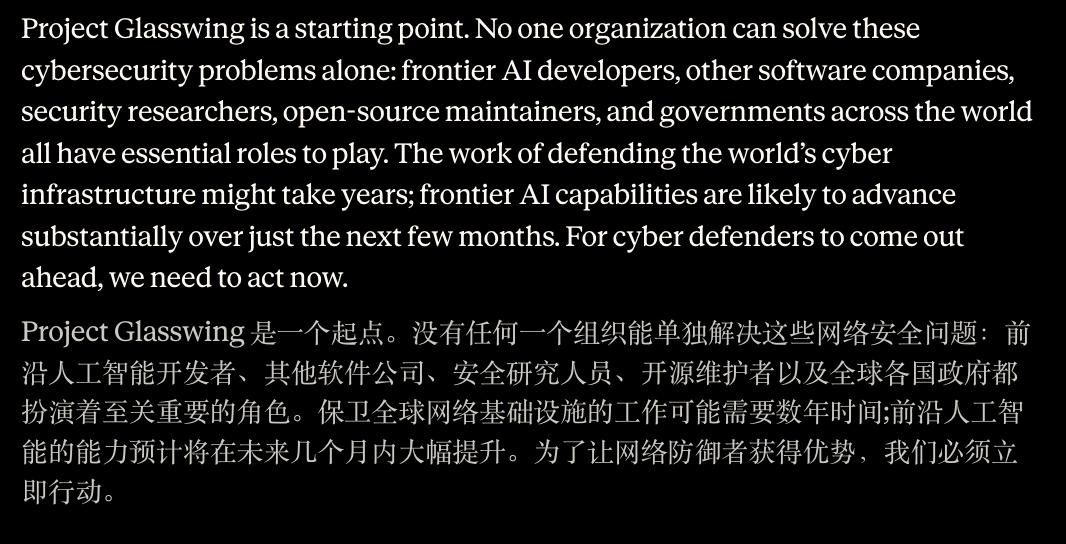
The White House's current response is actually translating this statement into a set of federal governance processes.
The highlight of this news is not just whether Anthropic will get more government procurement orders.
What is more worthy of attention is that the US government has begun to treat cutting - edge large models as part of national - level cybersecurity capabilities.
There are three things it needs to solve: Who gets access first; To what extent; Who is responsible if something goes wrong.
The White House's preliminary answer is to first let the model enter the system in a "modified version" and then discuss its entry into agencies.
This order bears the typical mark of the federal bureaucracy and is also in line with the current risk position of Mythos.
Washington has accepted the reality that similar capabilities will sooner or later enter the government, finance, and critical infrastructure.
The real competition has quickly shifted to who can domesticate and integrate it into their own security system earlier.
References:
https://www.bloomberg.com/news/articles/