Super Battleship, ZHIYUAN Fission
In 2022, Zhi Huijun, a genius teenager hired by Huawei with an annual salary of one million, acquired a new identity seemingly unrelated to his main profession, "One of the Top 100 Bilibili Content Creators in 2021".
Actually, Zhi Huijun has always been an active young-generation tech influencer on the Internet.
As the era of influencers shifted from being dominated by Weibo to being dominated by Bilibili, and the content carrier changed from text to video, technology could be presented in a more vivid and intuitive way, and more tech talents stepped into the spotlight. Zhi Huijun is one of the representative figures.
However, whether it's "Huawei's Genius Teenager" or "One of the Top 100 Bilibili Content Creators", these are just unimportant labels behind Zhi Huijun. The turning point for their generation was the release of OpenAI's ChatGPT in 2022.
After that, an AI entrepreneurship boom comparable to the Internet entrepreneurship boom around 2000 swept across.
In the same year, Zhi Huijun left Huawei and founded a robotics company named Zhiyuan.
Four years later, Zhiyuan and Unitree became the two leading robotics companies in China. In terms of both market sales and market influence, Zhiyuan no longer showed the immaturity of a startup team.
Especially after bringing in many former Huawei veterans and having a strong Huawei gene, Zhiyuan has become an ecological enterprise with a distributed resource model.
It was also at this time that Zhiyuan split into four and began to diversify.
01 Former Huawei Veterans Bring in the Huawei Gene
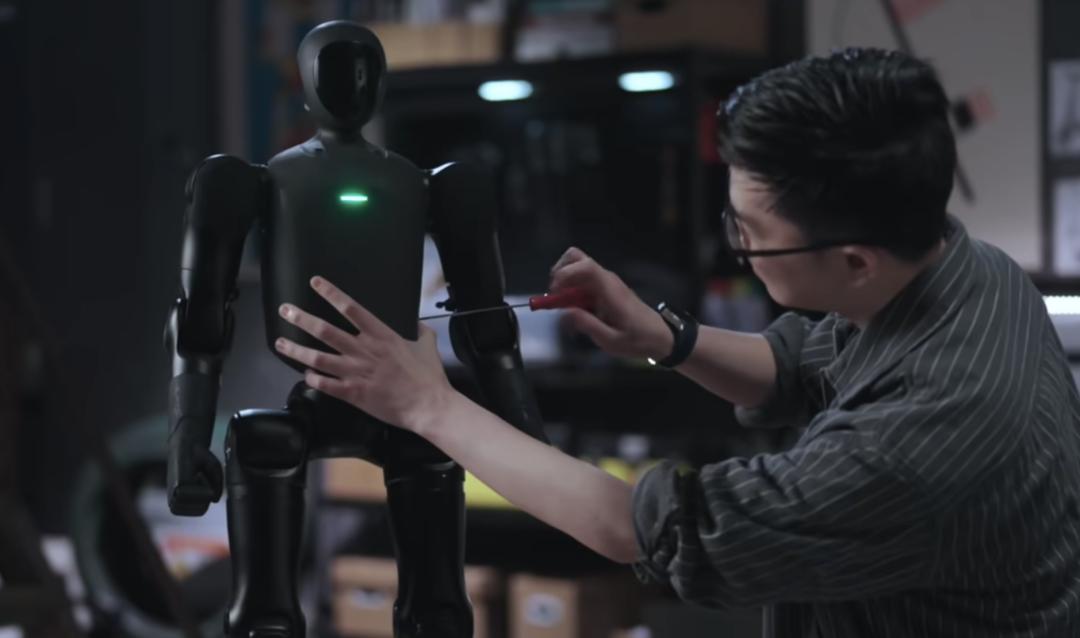
Zhiyuan Robotics was officially established in February 2023. At the beginning of its establishment, besides Zhi Huijun (Peng Zhihui), who was well - known, there was another key figure, Yan Weixin, a professor at Shanghai Jiao Tong University.
Yan Weixin is a professor at the School of Mechanical Engineering of Shanghai Jiao Tong University and the Chief Scientist of Smart Health Care at the Shanghai Artificial Intelligence Research Institute. At the beginning of Zhiyuan's establishment, it was clear that Yan Weixin and Zhi Huijun had a clear division of labor - Yan Weixin was in charge of the R & D of the hardware (body) of humanoid robots, while Zhi Huijun was responsible for the R & D of the software (brain).
Zhiyuan was not established very early. Before it, there were "survivors" among the old - generation robotics startup teams such as Ubtech and Leju;
Nor was it established very late. After it, there was a new wave of star robotics startup teams such as Galaxy Universal and Xingdong Era.
Due to the situation of facing both predecessors and competitors, Zhiyuan didn't dare to slack off at all. Only six months after its establishment, it held its first press conference.
On August 18, an auspicious day, Zhiyuan officially launched its first - generation humanoid robot, the Expedition A1.
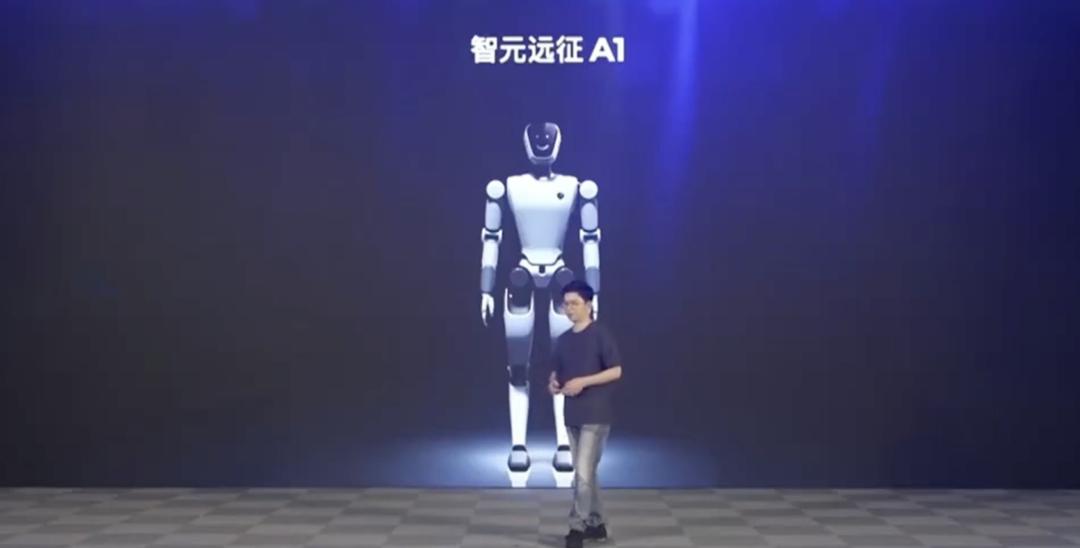
For this humanoid robot, Zhiyuan independently developed joint motors and dexterous hands, and demonstrated the team's algorithm capabilities.
Zhi Huijun said, "We currently have the R & D capabilities of the first - tier in the industry." He also pointed out, "In the future, we hope to control the cost of robots within 200,000 yuan."
If the first press conference of Zhiyuan only revealed the preliminary plan of Zhiyuan in the robotics field, then the new product press conference held on the eve of WRC 2024 showed Zhiyuan's greater ambition.
At that press conference, Zhi Huijun launched five new humanoid robot products at once. At that time, Zhiyuan's humanoid robot product line was divided into the Expedition series, which focuses more on scenario implementation, and the X series, which focuses more on open - source and openness.
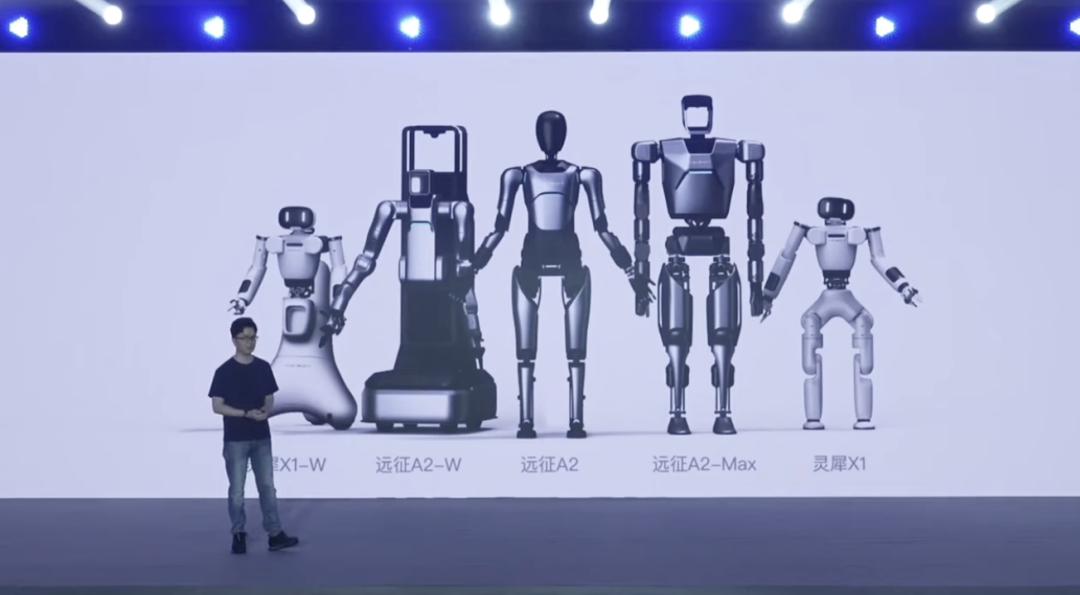
It was also at this press conference that Zhiyuan revealed its data collection factory. The open - source million - real - machine dataset AgiBot World project later came from here.
In those two years, the update and iteration speed of Zhiyuan's software and hardware products was quite fast. It played a key role in the global open - source market, the scientific research field, especially in the construction of the local robotics industry in Shanghai.
As domestic embodied teams began to try to bring embodied robots from the scientific research field to the commercial market, Zhiyuan also began to test, mass - produce, and implement its "Expeditionary Force" in some commercial scenarios.
It was also at this time that Zhiyuan's luxurious partner team began to appear in the public eye. Many of them were former Huawei veterans.
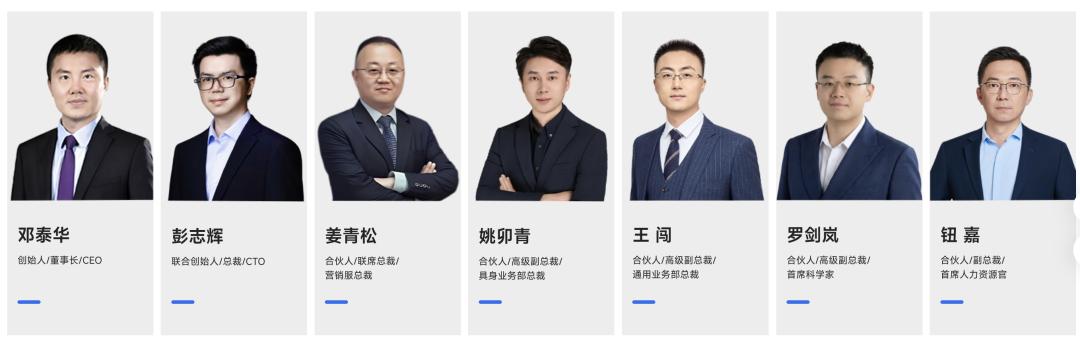
The first one is Deng Taihua. Before joining Zhiyuan, Deng Taihua was the vice - president of Huawei and the president of the Computing Product Line. During his more than 20 - year tenure at Huawei, he led the wireless product line in the early stage and the computing product line in the later stage, and was in charge of the construction of the Kunpeng and Ascend AI computing ecosystems.
The establishment of Zhiyuan is also related to Deng Taihua. As reported by the Science and Technology Innovation Board Daily before, it was Deng Taihua who invited Zhi Huijun, who was still at Huawei at that time, to start a business together, which led to the birth of Zhiyuan Robotics.
After Zhiyuan shifted its focus from R & D to commercialization, Deng Taihua began to appear in public as the founder, chairman, and CEO, while Zhi Huijun became the co - founder and CTO. They are responsible for management and R & D respectively, becoming the real "dual cores" of Zhiyuan Robotics.
The second one is Qiu Heng. Qiu Heng is also a former Huawei veteran. Previously, he was the CMO of Huawei's China Enterprise Business. Responsible for the marketing of Huawei's nearly 100 - billion - yuan B - end business in China, after joining Zhiyuan in 2025, he served as the Chief Operating Officer, which enabled Zhiyuan's humanoid robots, which are mainly targeted at the B - end market, to formulate marketing strategies more smoothly.
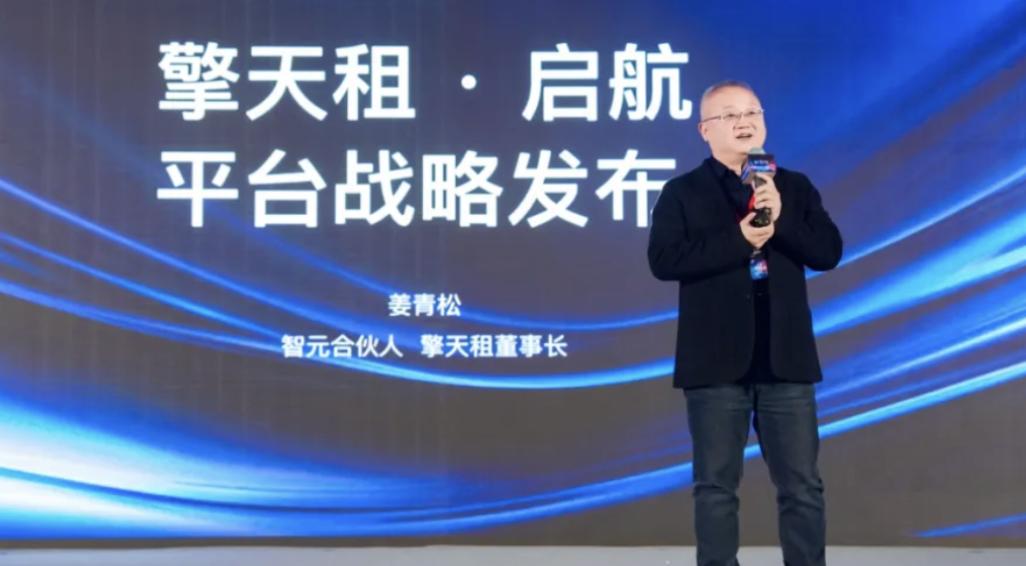
The third one is Jiang Qingsong. Jiang Qingsong was the president of Huawei's Global Enterprise Wireless Sales Department and was also in charge of Alibaba Cloud's overseas business. He is a key figure introduced by Zhiyuan during its commercialization and globalization process. Currently, he is a partner, co - president, and marketing service president of Zhiyuan, and in 2026, he became the chairman of the Qingtian Rental business, a branch closer to Zhiyuan's commercialization.
The fourth one is Niu Jia. Niu Jia was the HRD of Huawei's Cloud Computing and Big Data Platform Product Line and was also in charge of human resources at Cambricon and AsiaInfo Technologies. He is also a core member introduced from Huawei to Zhiyuan. He is still engaged in his old profession - human resources at Zhiyuan and is listed as a partner.
It is such a team composed of many former Huawei executives, along with Luo Jianlan, who was a research scientist at Google DeepMind, Yao Maoqing, who did autonomous driving research at Waymo and NIO, and Wang Chuang, a founding member of DJI's lidar, that forms Zhiyuan's super - partner team.
Such a team has become a unique super target in the field of embodied intelligence in China.
02 Supported by Hundreds of Billions of Capital, Building a Super Sequence
Such a super target has naturally attracted the pursuit of capital.
In 2025, in the embodied intelligence market where there were continuous rumors about company share reform and updated listing progress, Zhiyuan was also rumored to list in Hong Kong. However, these rumors were all denied by the official, and the official also said that there was no clear plan to list in Hong Kong for the time being.
Among them, the closest Zhiyuan came to listing was when it acquired Shangwei New Materials in 2025.
In November 2025, Zhiyuan acquired a 63.62% controlling stake in the listed company Shangwei New Materials for 2.1 billion yuan. After the industrial and commercial change, the actual controller of Shangwei New Materials was changed to Deng Taihua, the chairman of Zhiyuan.
At that time, Zhiyuan was rumored to list through a back - door listing. Zhiyuan's official response at that time was that there was no plan for a back - door listing within 36 months.
Although there is no listing plan, it doesn't affect Zhiyuan's popularity in the capital market. In just three years, Zhiyuan has completed more than a dozen rounds of financing. In the financing map behind Zhiyuan.
Among them, there are top - tier investment institutions such as Sequoia Capital (China), Hillhouse Capital, Matrix Partners, Gao Rong Capital, and BlueRun Ventures, as well as local funds from Lingang and Zhuhai. There are also large companies such as Baidu, Tencent, JD.com, BYD, TCL, and LG, as well as key enterprises in the upstream and downstream of the robotics industry chain such as iSoftStone, Oulong Electric Drive, BAIC, and SAIC.
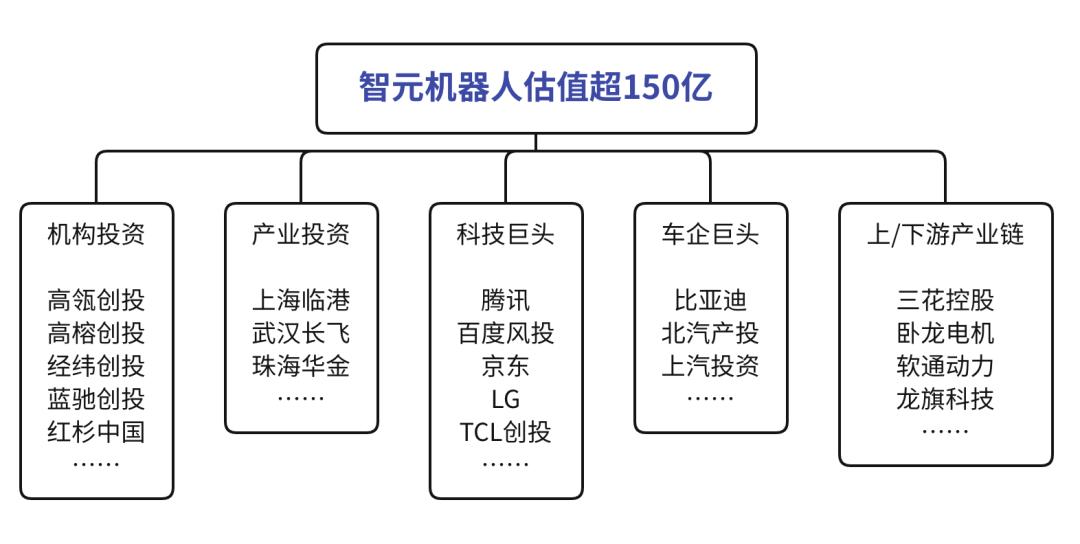
Supported by such a huge capital system, Zhiyuan's valuation exceeded 15 billion yuan as early as 2025, making it one of the billion - yuan unicorns in the field of embodied intelligence.
It should be noted that around the time when Zhiyuan acquired Shangwei New Materials, the stock price of Shangwei New Materials was raised from less than 10 yuan to more than 170 yuan in just a few months, which shows the market's high expectations for the concept stocks of embodied intelligence, especially for Zhiyuan.
If the financing system reflects Zhiyuan's position in the Chinese embodied intelligence market, the investment system reflects Zhiyuan's active layout in the field of embodied intelligence.
As early as 2023, after obtaining multiple rounds of financing, the funds mainly flowed to two places:
Firstly, technology R & D and product R & D.
Judging from the technology and product layout announced by Zhiyuan later, Zhiyuan not only developed humanoid robots but also carried out an all - round layout in core components, software platforms, data collection tools, and even robot datasets.
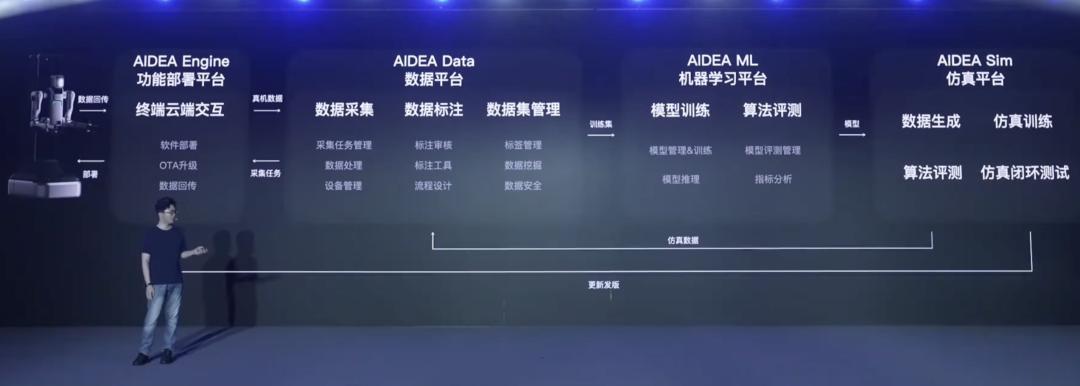
In the process of promoting the commercialization of robots at the end of 2025, Zhiyuan even established a humanoid robot leasing platform.
It can be said that in the field of humanoid robots, Zhiyuan has almost explored and transformed the entire industrial chain through the self - R & D capabilities of its team.
Secondly, industrial chain investment.
Even business giants like IBM and consumer hardware leaders like Apple cannot complete the entire industrial chain on their own. The best way to cooperate is naturally through cooperation and investment.
Zhiyuan's founding team understands this very well. Deng Taihua once publicly stated that Zhiyuan aims to incubate more than 50 early - stage projects within three years and build an industrial cluster worth hundreds of billions.
According to incomplete statistics, Zhiyuan has invested in 48 companies so far. Among them, there are R & D teams for embodied intelligence hardware bodies and brains such as Lingchu Intelligence, Xingyuan Intelligence, Digital Huaxia, and Shouxing Technology, as well as R & D teams for core upstream components of the industrial chain such as Blue Dot Touch, Fuxing Motor, Qianjue Robotics, and Hill Robotics.
In Zhiyuan's investment map, there are also downstream scenario - implementation teams such as Yushu Intelligence, Wujie Wisdom, and Chimeng Technology.
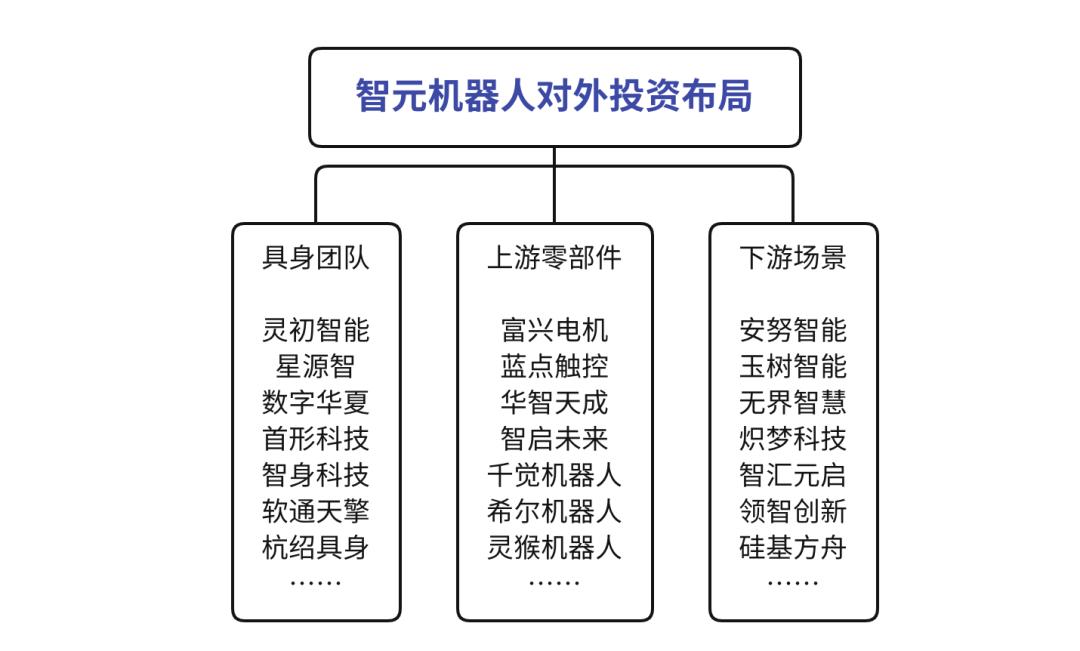
Yes, supported by capital, Zhiyuan has sorted out the entire embodied intelligence industrial chain through external investment.
It is through such investment and financing relationships that Zhiyuan has quietly built a huge domestic embodied intelligence ecosystem. For Zhiyuan's ecological layout of such a scale, there is a more vivid metaphor in the industry - an aircraft carrier battle group.
Zhiyuan is like the aircraft carrier in this battle group, using the powerful domestic supply chain system and industrial chain strength to create an industrial ecosystem and a business empire that most startup companies dare not imagine.
As the core of this super - battle sequence, since the end of 2025, Zhiyuan itself has also begun to diversify. By making strategic moves at key nodes in the embodied intelligence industry, on the one hand, it strengthens the core product capabilities, and on the other hand, it improves the ecosystem control capabilities.
Of course, Zhiyuan is also seeking self - hematopoietic capabilities in the early