In - depth analysis of the latest issue of A16z Speedrun: One - third of the companies directly display revenue figures in their profiles.
When it comes to a16z Speedrun, the first reaction of most people is: it's a game accelerator.
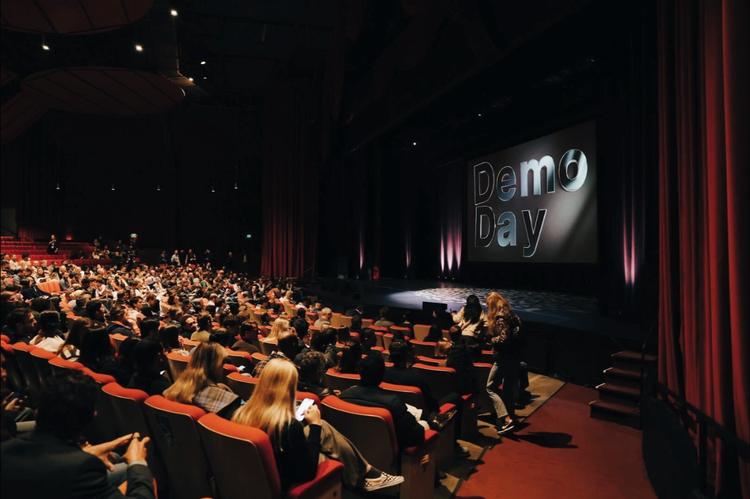
It originated from the a16z GAMES fund. Among the 25 companies admitted in the first session in 2023, 56% were game studios. The Demo Day was held during GDC, and the list of mentors included Mark Pincus, the founder of Zynga, and Sean Rad, the founder of Tinder. With "GAMES" in its name, it has entertainment in its blood.
However, when looking at the list of 60 companies in SR006 - the sixth session that just ended yesterday - the picture is completely different. 87% of the projects carry the AI label, more than half are B2B, and one - third directly write revenue figures in their profiles. There is only 1 game studio left. It has completely deviated from the graduation list in the narrow - sense perception of a "game accelerator".
In three years and six sessions, games have changed from the protagonist to an exception. This is a complete overhaul: what lies behind it is a logical rewrite of the entire AI startup ecosystem.
1
The True Face of SR006
Spreading out the list of SR006, the portrait is extremely clear.
Who are in it? Among the 60 companies, the median team size is 4 people, and 75% are between 2 and 6 people. The largest team, Smart Bricks, only has 20 people - three years ago, the largest team in SR001, SuperGaming, had 150 people. Geographically, San Francisco accounts for 57%, New York accounts for 22%, and the two cities together take 79% of the seats. There are only 4 international projects left.
Where is the money? This might be the most unconventional aspect of SR006 - 32% of the selected companies directly state their ARR in one sentence. The descriptions of the first five sessions depicted the grand vision of "SOLOMO", while SR006 returns to the actual revenue data.
Several figures are worth looking at separately: Straia, an AI platform for higher education, achieved $4.5M cARR in 4 weeks. Bilrost, which automates commercial loans, achieved $680K ARR in 5 weeks. August, an autonomous banking software, achieved $800K ARR in 3 months. Traditionally, it usually takes 12 to 18 months for a B2B SaaS to reach $500K from scratch. Several companies in SR006 achieved this in just over a month.
What are they doing? Two high - frequency naming patterns emerge.
"AI Workforce for [Industry]": Tax companies (Grove Tax), heavy vehicle maintenance (Heavi), building materials distribution (Modern Industrials), construction (Piper - ai), accounting firms (Quanto). At least 5 companies use this exact phrase.
"AI OS for [Industry]": Lawyers (Concorda), debt (PayPath), consulting firms (Meridian).
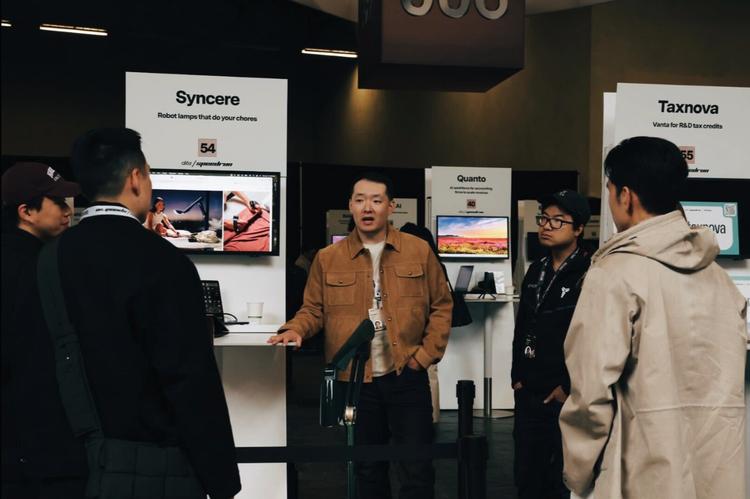
They are all going into the most "boring" industries. Railways, agriculture, commercial loans, heavy vehicles - these industries have a huge TAM but extremely low digitalization levels, and few entrepreneurs were willing to touch them before.
SR006 is not just a project list of an accelerator; it is more like a roadmap for "AI replacing white - collar service industries".
2
Several Faces of SR006
It's impossible to analyze all 60 companies one by one, but a few typical cases are enough to outline the investment logic of SR006.
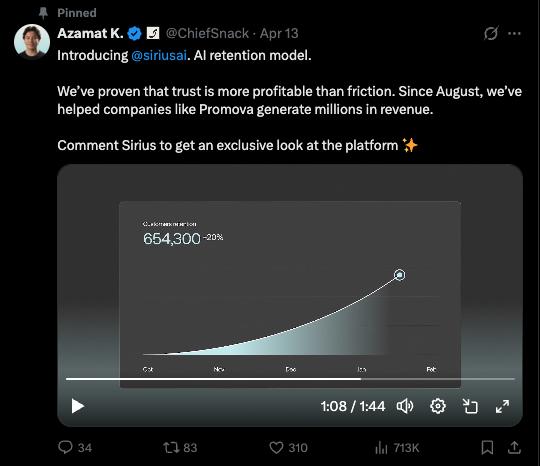
Revenue is the first face. Smart Bricks operates an AI real - estate application laboratory. With a 20 - person team, its annualized revenue is $12M - this is no longer an early - stage experiment in an accelerator but a successful vertical AI business. Straia, an AI platform for higher education, achieved $4.5M cARR in 4 weeks. Sirius Technology, an AI retention platform for subscription - based companies, achieved $3M ARR with a 15 - person team. Traditionally, it usually takes 12 to 18 months for a B2B SaaS to reach $500K from scratch. Several companies in SR006 achieved this in just over a month. When technology is no longer a bottleneck, speed - to - revenue becomes the strongest evidence of PMF.
Finance is the second face and also the most concentrated track in SR006. Bilrost uses AI to automate the commercial loan process and achieved $680K ARR in 5 weeks. A seven - figure deal is about to be closed. August, starting from Israel, develops autonomous banking software and achieved $800K ARR in 3 months. Third Space enters the offline commercial insurance market. With a 2 - person team, it has a $3M premium LOI. These three companies point to the same logic: the compliance threshold in the financial industry naturally blocks large - model companies from entering. Once customers hand over their processes, it's very difficult for them to switch - the regulatory complexity itself is a moat.
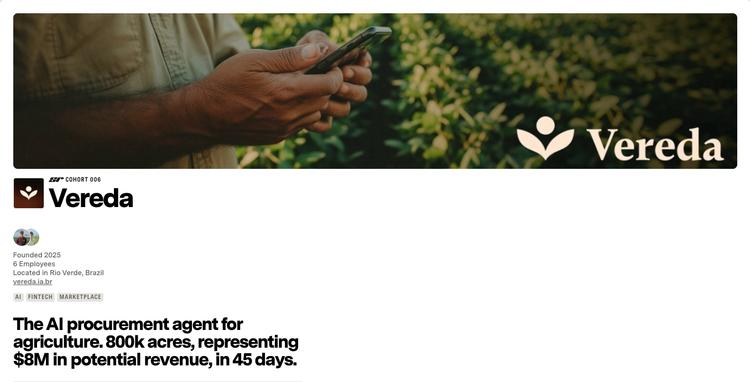
"Boring industries" are the third face. Heavi provides AI labor for heavy vehicle maintenance. With a 2 - person team, the two founders have raised a total of $275M before. Railways, agriculture, heavy vehicles - these industries have a huge TAM but extremely low digitalization levels, and few entrepreneurs were willing to touch them before. Under the same logic, there are also Kaaro (a railway AI agent, 2 people, ex - Toma/a16z alumni) and Vereda (an AI procurement platform for agriculture, from Brazil, covering 800,000 acres in 45 days). The more boring the industry, the less competition there is, and the stronger the customers' willingness to pay.
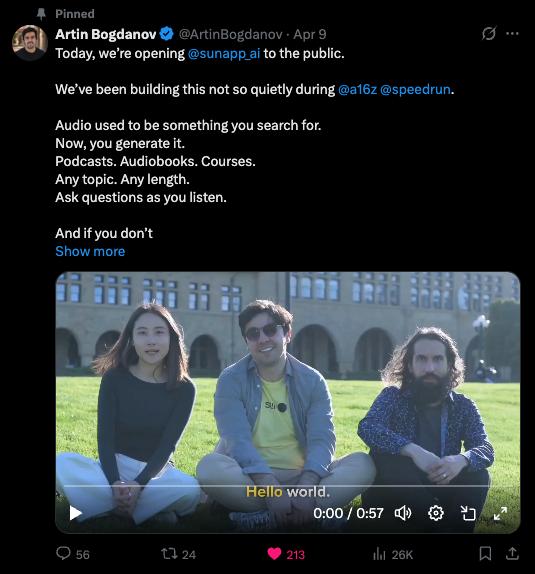
Consumer is the last face and also the highest - threshold one. PicPet is a social pet platform with 240K DAU and 45% D90 retention - in SR006, which is almost all B2B, it stands out with its overwhelming retention data. SUN enters the personalized AI audio field. A 3 - person team composed of Harvard CS, Stanford AI PhD, and the founding engineer of Amazon Podcasts creates dynamic personalized podcasts and audiobooks. Users can ask questions in real - time, customize the length and voice. B2B companies can be selected by showing $100K ARR, but Consumer companies must present data at this level - when AI tools enable everyone to create an app, the competition in the Consumer track far exceeds that in the B2B track.
3
How Did a Game Accelerator Reach This Point?
Let's quickly review the evolution line of the six sessions.
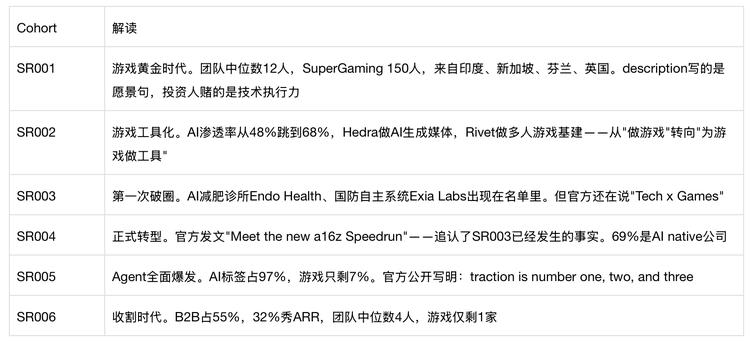
Looking at the six sessions together, an interesting pattern emerges: there is always a systematic time lag between the official narrative and the actual admissions - the actual admissions are always one session ahead of the official statement. SR003 was actually no longer a game accelerator, but SR004 publicly admitted it; SR005 actually only looked at traction, but it wasn't until SR006 that this standard was written into the company profiles. Do first, then talk. The portfolio leads the narrative.
What caused this change?
The Fund Structure Changed, and the Positioning of Speedrun Followed
Speedrun was originally a project under the a16z GAMES fund. As the name suggests, it was a game accelerator. However, in 2023, GPT - 4 triggered the AI wave, and a16z immediately invested heavily in the AI track and established a dedicated AI fund. As more and more money from LPs was directed towards AI, the game narrative was no longer attractive on the fundraising side. The fund's mandate expanded from pure games to "AI broadly". As the outpost project of the fund, the portfolio of Speedrun naturally shifted. This is not a change in the personal preference of a certain partner but the transmission effect of the entire capital chain from LPs to GPs to the portfolio - SR003 was the turning point, and SR006 is the result.
When Technology Is No Longer a Barrier, Revenue Is the Only Verification Standard
This is the most core structural change. During the SR001 period (2023), building an AI product required an engineering team of 10 to 30 people, and technology itself was a barrier. By SR006, tools like Claude Code and Lovable enabled 2 to 3 people to build a complete B2B SaaS in a few weeks. Just like in the early days of the mobile Internet, "being able to write iOS apps" was a scarce ability, but this scarcity disappeared after the App Store matured - the AI era is going through the same process, just ten times faster.
When everyone can build a product, "whether it can be sold" becomes the only question. The descriptions of SR006 have collectively become ARR reports - in a world where the technological barrier has disappeared, revenue is the only non - forgeable proof of PMF. The median team size has decreased from 12 to 4 people. It's not that a16z deliberately selects small teams, but that AI tools enable small teams to generate revenue. Large teams have become a kind of signal noise, indicating low individual efficiency.
From "AI Agent" to "AI Workforce" - The Leap of the Pricing Model
The keyword of SR005 was "AI Agent", and in SR006, it became "AI Workforce". This is not a semantic game - AI Tools are charged by seat and replace software; AI Agents are charged by task and replace workflows; AI Workforces are charged by headcount and replace people. When Grove Tax says "AI Workforce for Tax Firms", its pricing anchor is not Salesforce's $300/seat/month but the annual salary of a junior accountant at $60K/year. The product is benchmarked against labor costs rather than software costs, so the customer unit price is naturally high - this directly explains why the ARR figures of SR006 are generally good.
After the Disappearance of the Technological Barrier, Regulatory Complexity Becomes the New Moat
There are a large number of companies in SR006 in heavily regulated industries - law (Concorda), tax (Grove Tax, Taxnova), insurance (Third Space), healthcare (Advocate, Miraka), compliance (ZeroDrift), defense (Coalition Systems), finance (August, Bilrost).
This is not a coincidence. The regulated industries have two natural advantages for AI startups. First, once customers hand over their compliance processes to you, the switching cost is extremely high - replacing a tax system means going through a compliance audit again, and no CFO is willing to take this risk. Second, regulatory barriers naturally prevent large - model companies from entering the vertical application market. OpenAI won't take the tax accountant license exam, and Anthropic won't obtain an insurance brokerage license.
In the context where AI levels the building barriers, everyone is asking "What's your moat?" The answer given by SR006 is becoming clearer: Regulatory complexity × Industry know - how × Customer relationship network. These are the few things that AI itself cannot automate.
This also explains another phenomenon. There are many serial entrepreneurs in SR006 - the founder of Acceler8 has raised a total of $80M before, the two founders of Heavi have raised a total of $275M, and Cedar is from the founding team of HootSuite. Three years ago, the "Earned Secret" (unique industry knowledge) that Speedrun valued meant "you have unique insights into the game industry". Now it means "you've been in the heavy vehicle maintenance industry for 20 years and know the car dealership owners who are willing to sign contracts in the first week". Bilrost achieved $680K ARR in 5 weeks, not through insights but through connections.
4
What Kind of World Is a16z Betting On?
Taking a step back from the micro - changes in Speedrun, a16z's bets through 240 companies in six sessions are quite clear.
1. Vertical AI is the Inevitable Path in Each Round of Platform Transformation
In the Internet era, there were horizontal infrastructures like AWS and Google first, and then vertical SaaS like Veeva and Toast. In the mobile era, there was a horizontal platform like the App Store first, and then vertical applications like Uber and DoorDash. The AI era is repeating the same path: first, OpenAI and Anthropic build the horizontal model layer, and then entrepreneurs package the model capabilities into solutions for specific industries. SR006 happens to be at this inflection point - the capabilities of large models are strong enough, and entrepreneurs don't need to train models themselves.
2. Geographical Contraction is the Natural Result of B2B Transformation
SR001 had a large number of international teams because making games is a global business - there is no essential difference between making mobile games in Helsinki and San Francisco