Apple has done something out of the ordinary again by publicly promoting a security update.
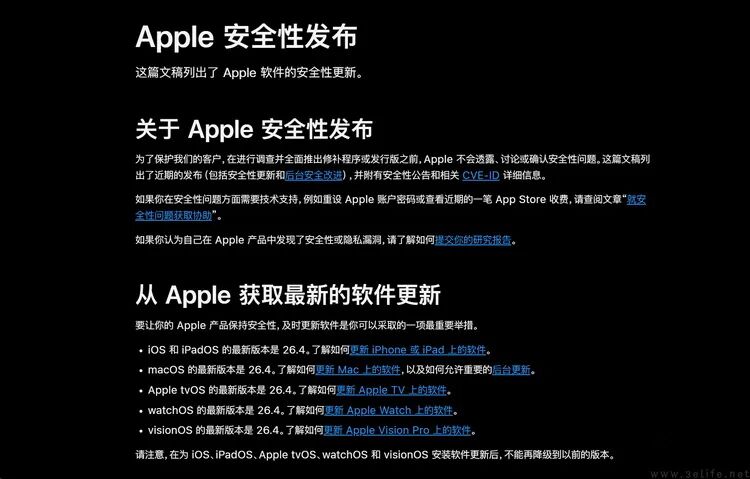
On April 15, 2026, Apple released a system update. In response to the situation where older systems were attacked by web pages, it launched targeted security updates covering iOS 15 to iOS 26, providing vulnerability fixes and attack blocking for a large number of new and old devices.
Compared with the common practice of many manufacturers of "quietly patching and silently pushing" security vulnerabilities, Apple's approach this time seems somewhat special.
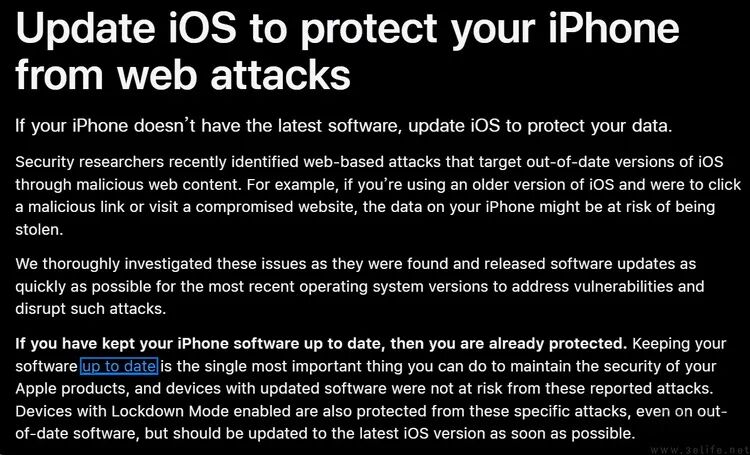
On the one hand, this security update has a very wide coverage, including many old devices that have been out of production for many years and even no longer have new system adaptations.
On the other hand, Apple also actively spread information about the security update through official channels and offline service networks, popularizing risks to users and guiding them to upgrade. This approach is particularly "alternative" in the mobile phone industry, so it has also attracted wide attention.
It should be noted that according to the convention of the mobile phone industry, fixing security vulnerabilities is the basic responsibility of manufacturers. However, even after most manufacturers complete the patching of vulnerabilities, they often tend to handle it low - key. For example, they only briefly mention "performance optimization" and "problem fixing" in the system update log, rarely actively disclose relevant details, let alone urge users to upgrade. The reason is that most of these manufacturers are worried that publicizing security issues will cause user panic and amplify negative public opinion, so they finally choose to "do it without saying" and quietly "mend the fold after the sheep is lost".
But Apple just broke this unspoken rule. In response to the web attack vulnerability of the old - version iOS system this time, Apple not only quickly launched a patch but also simultaneously launched national - scale popular science and service support. All Apple Store retail stores, authorized dealers, and authorized service providers across the country opened services for software version detection and update assistance. In addition, the official channels simultaneously pushed security protection guides to inform users of risk points and protection methods.
This honest, open, and proactive attitude of taking responsibility forms a sharp contrast with the previous common practice of "acting low - key" in the industry.
Why did Apple choose such a way of handling? In the view of San Yi Life, this first stems from its long - standing user security concept.
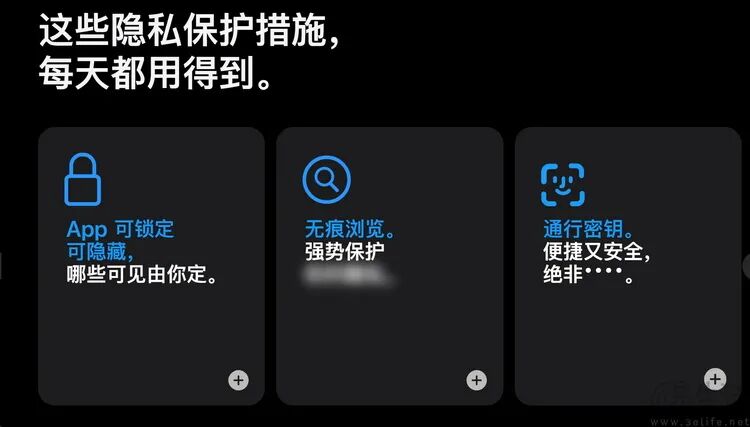
When you open Apple's official website, you will see that the privacy and security section occupies a prominent position. From system permission management, web browsing protection to privacy data encryption, the official will continuously update detailed security usage tutorials to teach users step by step how to avoid risks and protect data. This practice of making security transparent and popular science normalized is not only a core part of the Apple product experience but also runs through the entire process of its system iteration and after - sales service.
This active promotion of the security update is also a continuation of this concept, not avoiding problems, not downplaying risks, and protecting user rights and interests with a transparent attitude.
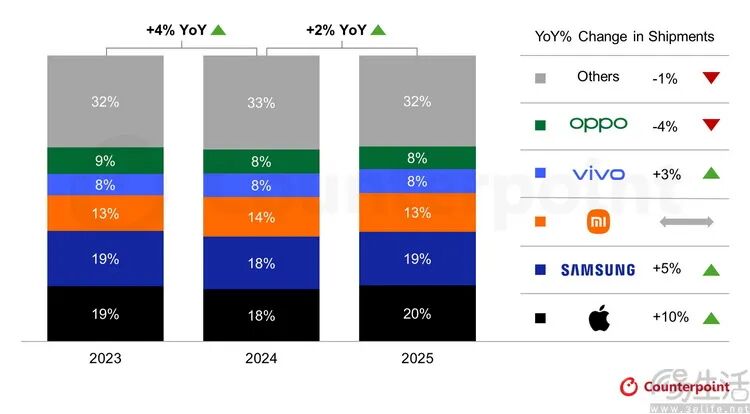
The deeper reason is the market reality of "with great power comes great responsibility".
As a leading manufacturer in the global smartphone market, Apple's user base has long reached a leading level by a large margin. According to relevant data for the first quarter of 2026 released by institutions such as Counterpoint and Omdia, Apple topped the list for the first time with a 21% global market share and was the only manufacturer among the top five to achieve positive growth. In the high - end market above $600, Apple alone occupies more than 66% of the share, showing absolute leading strength in this segmented market.
Focusing on the Chinese market, Apple's leading advantage is also significant. In the first quarter of 2026, Apple's shipments increased by 42% year - on - year. After the iPhone 17 series was launched for half a year, it is reported that its sales in China exceeded 27.22 million units, even several times the total sales of the flagship models of "Huawei, Xiaomi, OPPO, and VIVO".
Such a large user base also means that the security vulnerabilities of Apple device systems have a wider impact. Once a risk occurs, the affected user group far exceeds that of other brands. Therefore, actively disclosing vulnerabilities and promoting users to update as soon as possible is essentially taking responsibility for a large number of users and living up to consumers' long - term trust.
Of course, we can also interpret this from a somewhat joking "conspiracy theory" perspective. It is precisely because of the high sales volume and large user base of the iPhone that network attacks against the iOS system are more "cost - effective". After all, the benefits and impacts obtained by attacking a system with a high market share and wider user coverage are far greater than those of a niche system. This also makes Apple a key target of network attacks, and any slight vulnerability will be infinitely magnified.
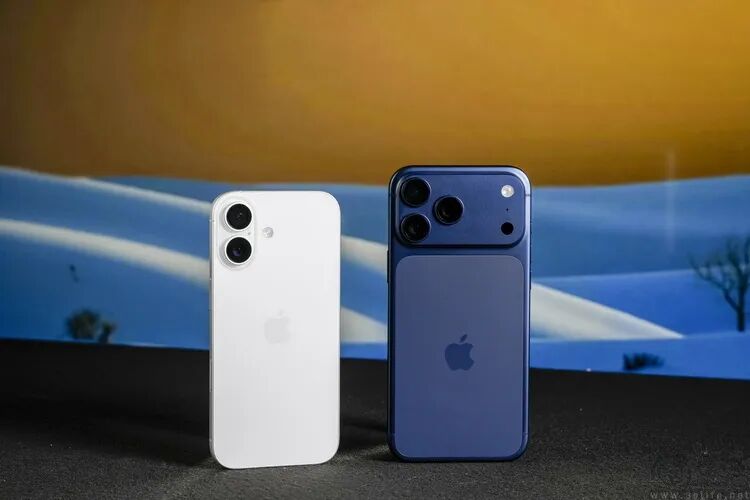
At the same time, the huge user base also gives Apple a built - in traffic attribute. After the relevant vulnerabilities were exposed, some media seized on the topic of "iPhone security vulnerabilities" and hyped it up. In essence, they were eyeing the value of this traffic and trying to gain attention by amplifying anxiety. For Apple, although this is somewhat of a helpless situation of "one who wears the crown must bear its weight", after all, with leading sales and a large number of users, it naturally has to bear higher attention, stricter supervision, and even the security vulnerabilities will be magnified and interpreted. It's hard to keep a low profile.
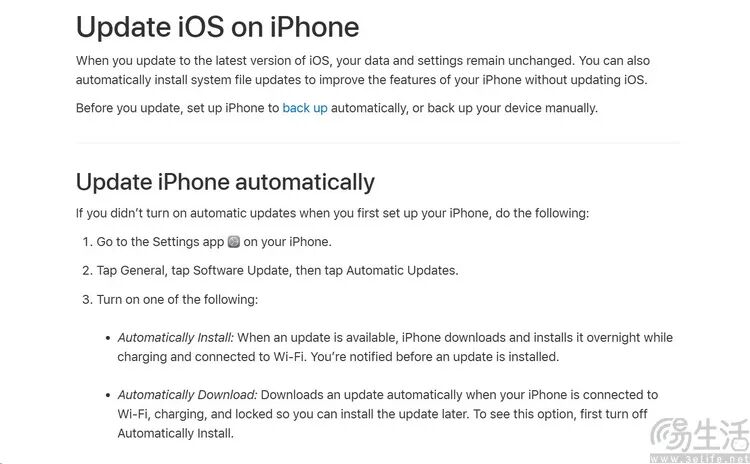
But joking aside, when it comes to users themselves, security is always the bottom line of digital life. Apple also provided practical security suggestions this time: keeping the iOS system up - to - date is the core of protecting personal data security; it is recommended to turn on automatic system updates, not click on links in strange text messages, and only download applications through the App Store; if you have questions about the upgrade, you can go to the support page on Apple's official website for consultation, or take your device to any Apple Store retail store or authorized service provider across the country for detection and update assistance.
From quietly patching to actively announcing, Apple's system update for security vulnerabilities this time is not only a technical - level vulnerability fix but also an open practice of brand responsibility. Between industry conventions and user responsibilities, Apple chose the latter, and this honesty and responsibility may be the key for it to win users' trust in the long run.
This article is from the WeChat official account "San Yi Life" (ID: IT - 3eLife), author: San Yi Jun, published by 36Kr with authorization.