Yesterday, NVIDIA open-sourced a quantum AI, which sent shockwaves through the U.S. stock market's quantum computing concept.
"Ising changed everything."
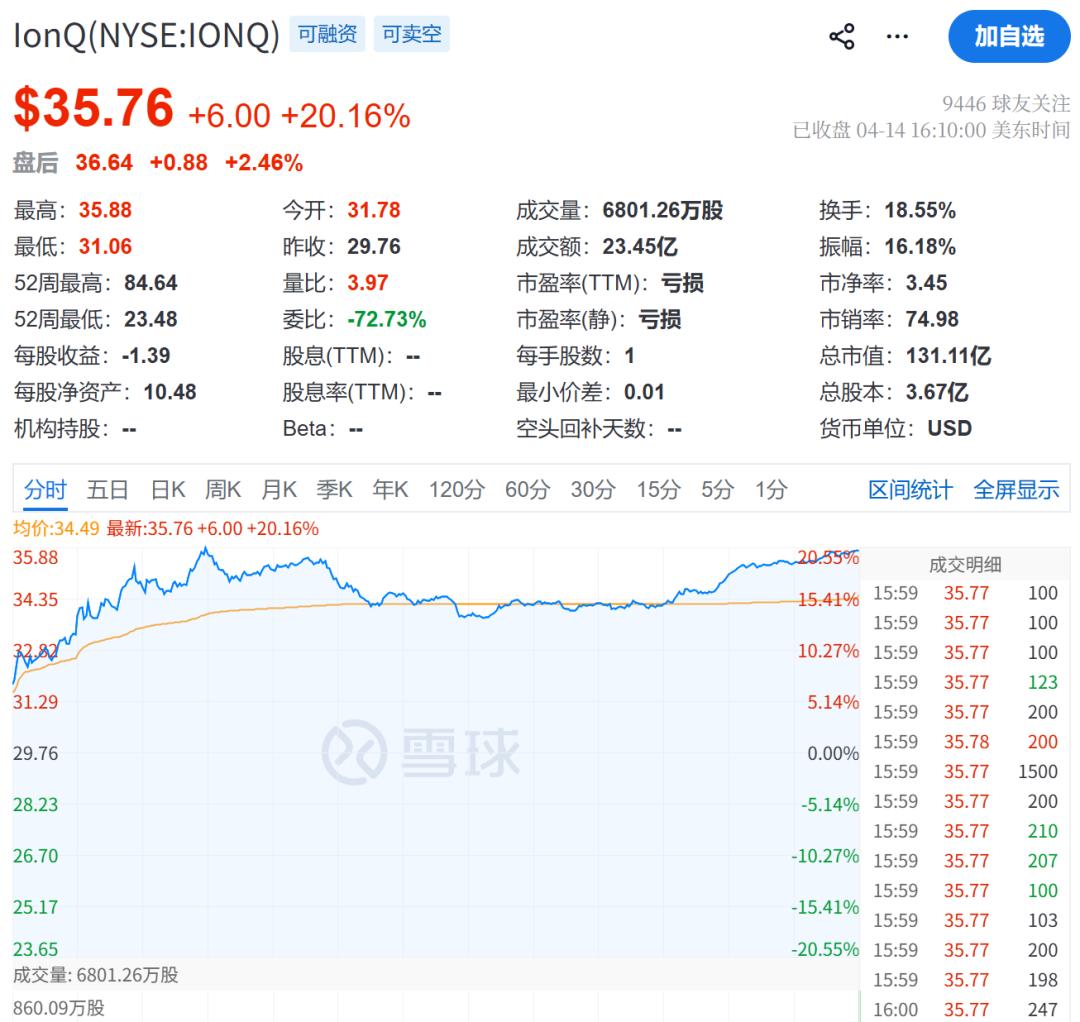
Last night, the stock prices of quantum computing concept companies in the US stock market soared collectively.
On Tuesday this week, NVIDIA announced the launch of NVIDIA Ising, the world's first open-source quantum AI model series, which has pushed quantum computing from a laboratory technology to the verge of engineering implementation. Through AI, it provides quantum error correction decoding capabilities that are up to 2.5 times faster and 3 times more accurate than traditional methods.
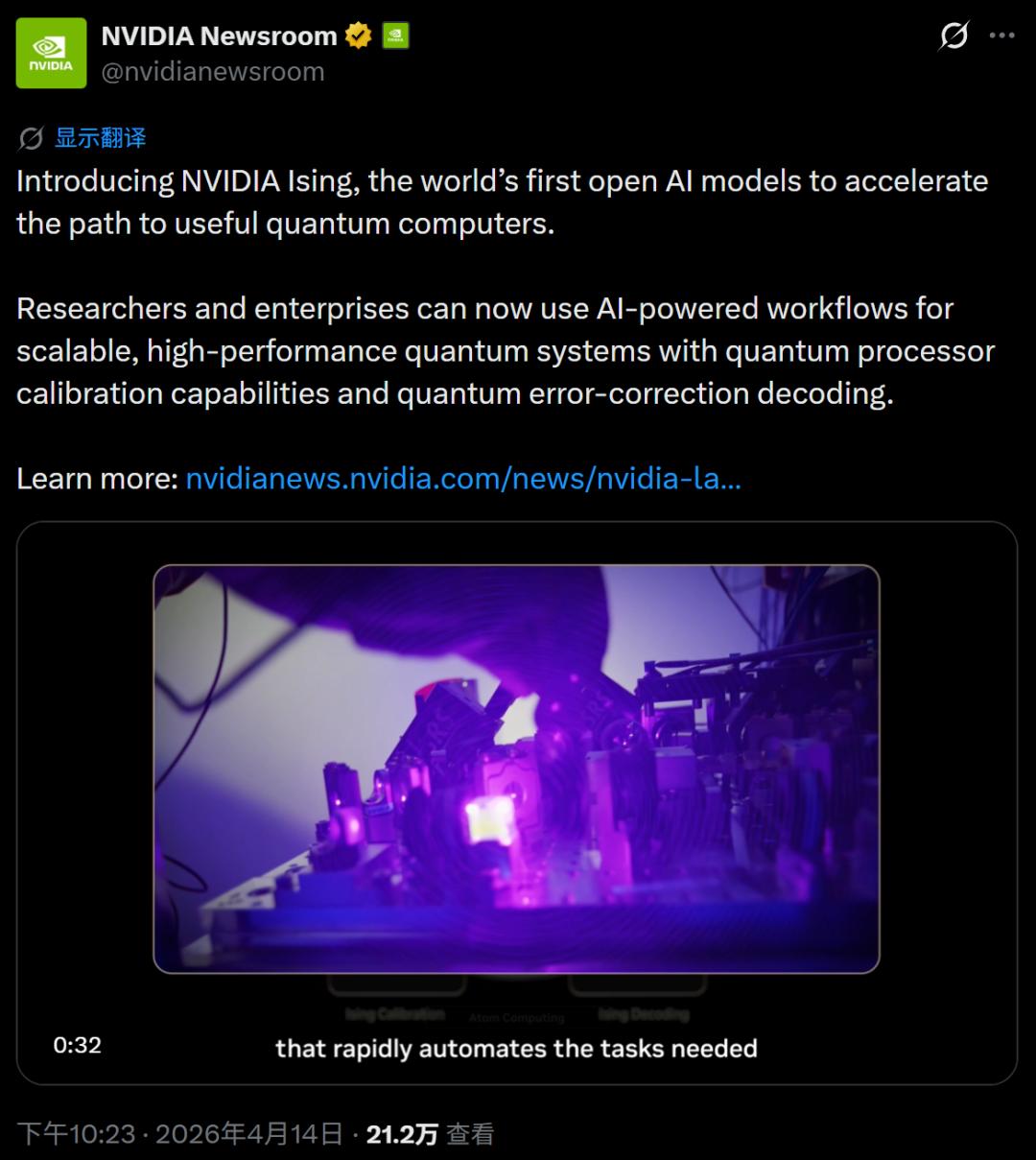
For a long time, quantum computing has faced two fatal engineering bottlenecks: fragility (noise) and difficulty in scaling. Quantum bits (Qubits) are extremely sensitive to the environment. Even a slight temperature change or electromagnetic interference can cause calculation errors. Ising precisely targets these pain points.
NVIDIA believes that artificial intelligence is the key to transforming today's quantum processors into large-scale, reliable computers. And open models enable developers to build high-performance artificial intelligence while having full control over their own data and infrastructure.
NVIDIA Ising is a powerful set of AI model tools, currently mainly including two types of models:
Ising Calibration (Calibration Model): A visual language model (VLM) that can quickly "understand" and respond to measurement data from quantum processors. This enables AI agents to automatically perform continuous calibration, reducing the required time from days to hours.
Ising Decoding (Decoding Model): Two three-dimensional convolutional neural network models (CNNs), optimized for speed or accuracy respectively, are specifically used for real-time decoding of quantum error correction. The Ising Decoding model is 2.5 times faster and 3 times more accurate than the current open-source industry standard pyMatching.
In the past, every time a quantum processor was started and fine-tuned, it required a large number of experts with a deep background in quantum physics to intervene manually, or relied on slow traditional algorithms, and the entire process could take several days. Ising Calibration can automate this process and significantly shorten the time.
On the other hand, quantum computing must perform error correction while computing (Fault Tolerance). As the number of qubits increases, the amount of computation required for error correction grows exponentially, which is a task that traditional algorithms can hardly handle. The solution provided by NVIDIA is expected to break through this bottleneck.
Jensen Huang, the founder and CEO of NVIDIA, said, "AI is crucial for realizing the practical application of quantum computing. With the Ising model, AI will become the control plane - the 'operating system' of quantum machines - and can transform fragile qubits into a scalable and reliable quantum GPU system."
The industry believes that the quantum processing unit (QPU) is likely to become the next important coprocessor in data centers, working together with CPUs and GPUs. Leveraging the physical properties of quantum superposition and quantum entanglement, QPUs are specifically designed to accelerate the solution of extremely complex problems that even CPUs and GPUs cannot solve in tens of thousands of years (such as new drug molecule simulation, battery material discovery, and extremely complex logistics optimization).
The emergence of Ising is equivalent to putting an "AI driver" on the difficult-to-operate QPU. Through real-time monitoring, automatic calibration, and rapid error correction of large AI models, Ising shields the complexity and instability of the underlying quantum physics. This means that enterprise data centers can finally use QPUs as an "acceleration card" without having to understand quantum mechanics, only needing to understand AI and software calls.
According to the prediction of the analysis company Resonance, the scale of the quantum computing market is expected to exceed $11 billion by 2030. This growth trajectory highly depends on the continuous progress made in solving key engineering challenges, such as quantum error correction and scalability.
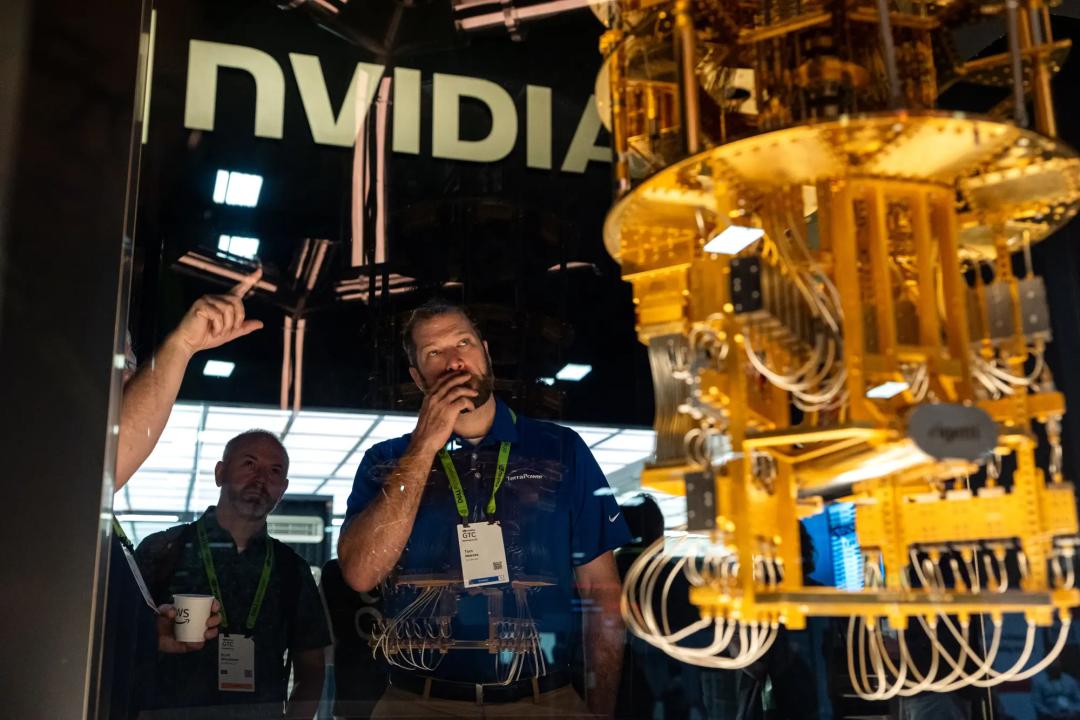
NVIDIA said that some enterprises, academic institutions, and research laboratories are already using Ising for quantum computing development.
Ising Calibration has been adopted by institutions such as Atom Computing, Academia Sinica, EeroQ, Conductor Quantum, Fermi National Accelerator Laboratory, Harvard John A. Paulson School of Engineering and Applied Sciences, Infleqtion, IonQ, IQM Quantum Computers, Lawrence Berkeley National Laboratory's Advanced Quantum Testbed, Q-CTRL, and the National Physical Laboratory (NPL) in the UK.
In addition, NVIDIA also provides a set of operating guidelines for quantum computing workflows and training data, as well as NVIDIA NIM microservices, enabling developers to fine-tune models for specific hardware architectures and use cases with minimal setup. These models can also run locally on researchers' systems, thus protecting proprietary data.
NVIDIA Ising can be used in conjunction with the NVIDIA CUDA-Q software platform to achieve hybrid quantum - classical computing and is integrated with the NVIDIA NVQLink QPU - GPU hardware interconnection to achieve real-time control and quantum error correction, providing researchers and developers with a complete set of tools needed to transform today's qubits into future accelerated quantum supercomputers.
Reference content:
https://nvidianews.nvidia.com/news/nvidia-launches-ising-the-worlds-first-open-ai-models-to-accelerate-the-path-to-useful-quantum-computers
https://www.businessinsider.com/quantum-computing-stocks-nvidia-ising-ai-xndu-inoq-rgti-qbts-2026-4
This article is from the WeChat official account "MachineHeart". Editor: Zenan. Republished by 36Kr with authorization.