Why does the recording card that costs 1,000 yuan dare to charge an additional 1,000 yuan every year?
In recent years, "AI hardware" has been quite popular, but it always seems to inevitably fall into the narrative of a "one - time deal":
At the product launch, a grand concept is presented, and the imagination born from this concept completes the first - round persuasion. However, when the product is actually delivered to users, they find that its capabilities don't match the story.
As a result, the usage frequency of the product drops sharply, and no one is willing to pay for its subsequent services continuously. Eventually, the daily active users number only a few hundred, ending up in a dismal situation.
But Plaud has broken this dead - end cycle. It not only makes money from selling me a voice recorder but also plans to earn another 1000 yuan from me every year.

More importantly, I'm really willing to pay. In the current situation where the concept of AI hardware is still highly questioned, it has successfully established an entire business model.
The hardware is the entry point, and the App is the core
Plaud's free "entry - level" plan includes 300 minutes of transcription time.
However, for a user with professional recording needs who buys a voice recorder, 300 minutes is just a trial version.
Going up a level, the professional version costs 339 yuan per year, offering 1200 minutes of transcription time per month. The "Premier" membership, which costs 1099 yuan per year, provides unlimited transcription time.
Things get really interesting here. Because the price of a Plaud Note voice recorder itself is around 1049 yuan.
That is to say, the annual subscription fee may even be more expensive than the hardware itself.
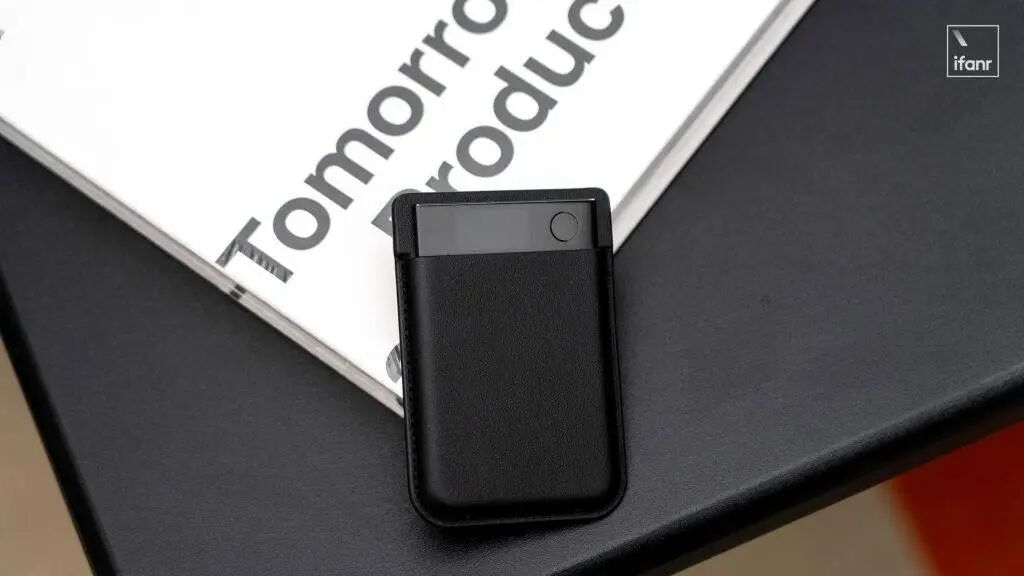
So, what magic does Plaud have that makes people willing to spend 1000 yuan on a voice recorder first and then another 1000 yuan every year to use it?
Actually, what constitutes Plaud's core experience is not the voice recorder hardware itself but the App that comes with it.
This App is quite pure. All its functions are centered around processing "recordings", making it seem advanced and professional.
Its core function is "notes". Plaud uses large - language models to process the recorded content. You can let Plaud generate everything with one click, or you can select the transcription language, AI model, and template.
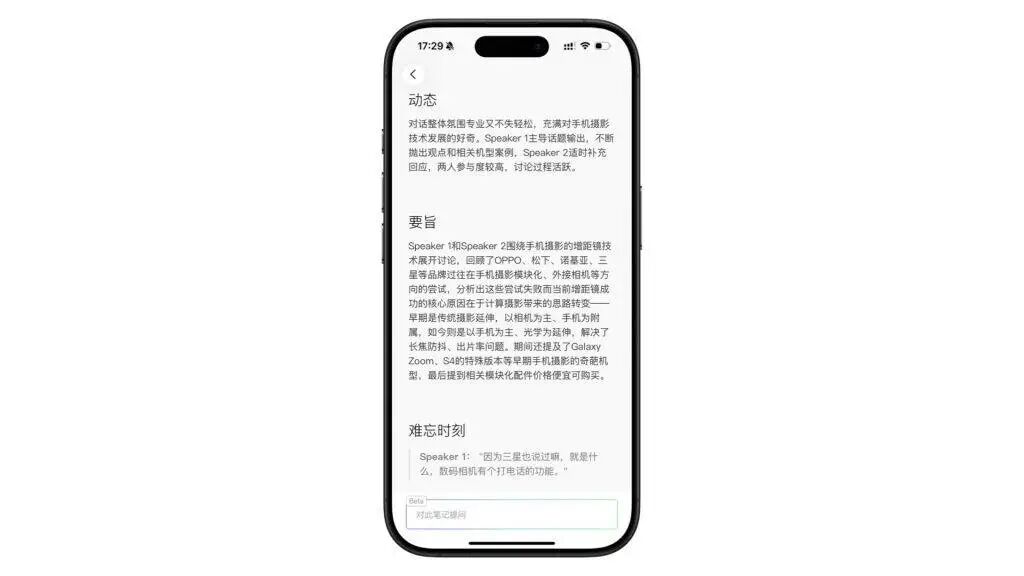
What further differentiates the "results" is Plaud's template function, which I think is the most worthwhile feature to pay for.
The official provides a large number of ready - made templates, covering various scenarios and professions such as meetings, speeches, calls, interviews, medical, finance, and law. There are also some "functional" templates that analyze the speaker's intentions, power dynamics in the recording, and even the speaker's psychological state and honesty.
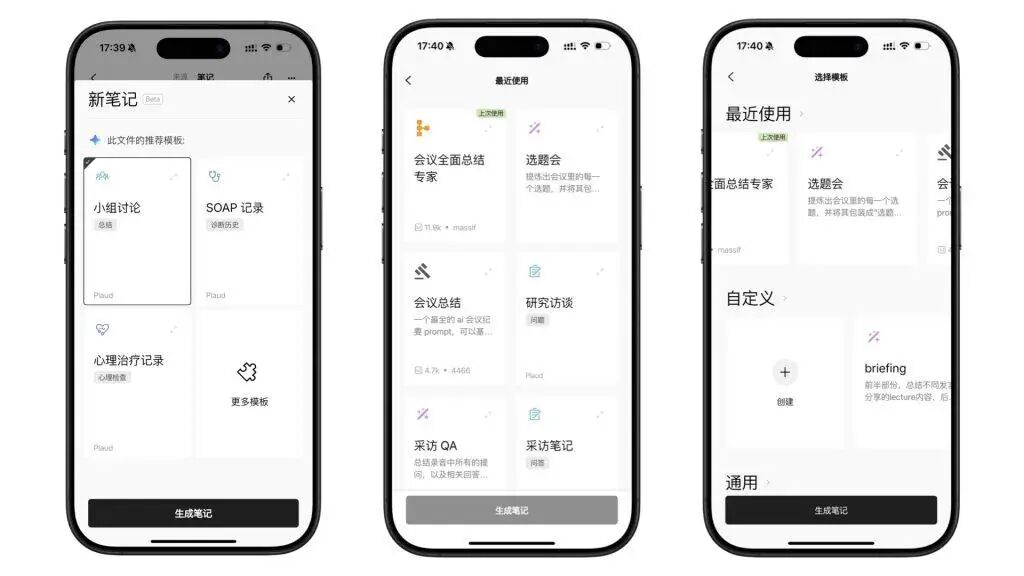
In essence, Plaud's templates are a long series of fixed prompts. They use large - language models to organize the recordings in a targeted way. What Plaud is selling is this set of pre - written prompts.
Since they are prompts, users are naturally allowed to create their own templates. This is very much like a product made by someone who really understands work because, in many cases, general templates are not personalized enough. What really matters is your own logic for processing information.
For example, we have a topic - selection meeting every morning, which involves key points such as topic content, topic core, important information, and responsible editors. Ordinary transcription can record these, but it's difficult to turn it into something directly executable.
Later, I simply created a template for Plaud to organize the content according to these dimensions. The final result was very clear. Each topic was separated, and each task was accurately assigned.
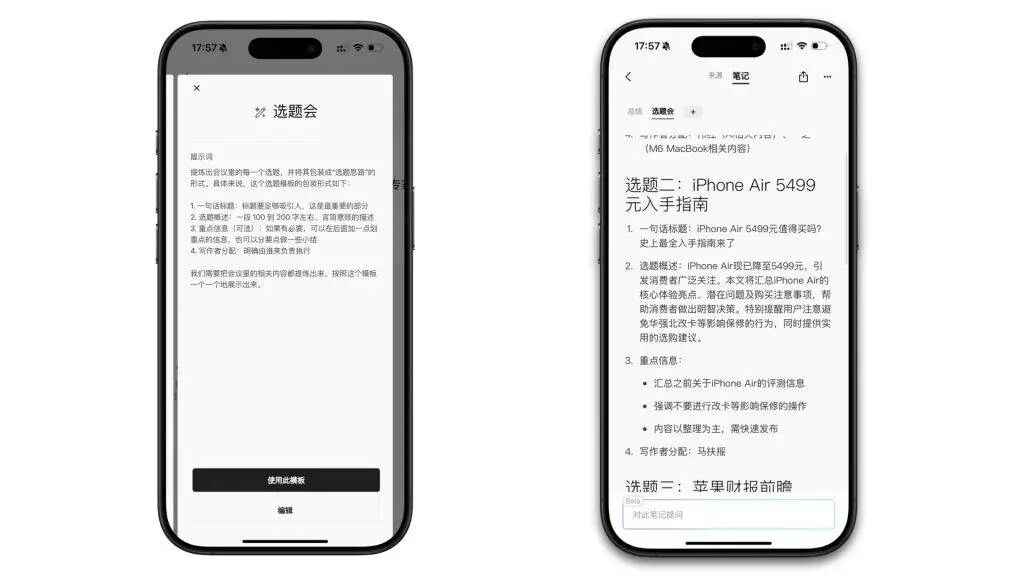
By using different templates, the same recording can be analyzed and distilled in different ways. Through such repeated organization, we can extract the most valuable information from the recording.
Plaud gives me the feeling that it is very "human - centered".
Many recording products, such as Feishu Miaoji, are actually centered around "meeting recordings". Every time a recording is completed, notes are automatically generated and can be directly used to assign tasks.
But Plaud is built around what "people" hear, focusing on the interaction between people. First, it records 100% of the content, and then through summaries and templates, it retains and highlights the most valuable 50% of the content and presents 10% of the essence.
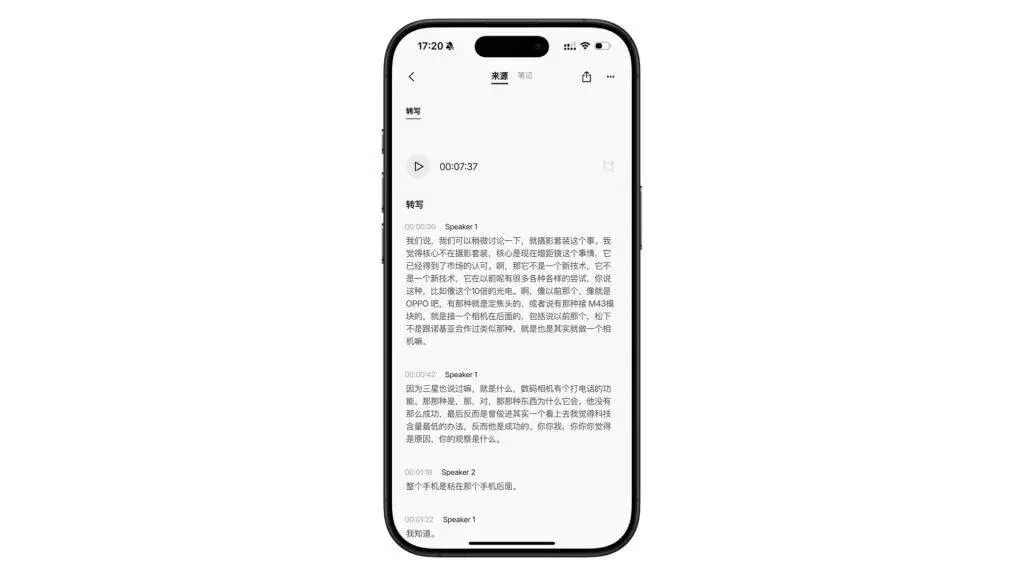
Different templates represent different ways of looking at the original information. You can choose the template according to what you care about. This can't replace human thinking, but it can bring different inspirations.
By retaining the most essential original information and combining it with the memory and experience generated during the conversation, the understanding achieved in communication can be truly maximized.
The "electricity and electric lamp" in the AI era
Although it is an "AI hardware", Plaud doesn't make money from the "hardware" itself. The majority of its revenue comes from subscriptions.
This is the classic razor - blade business model: razor manufacturers don't just sell the razor itself but the replaceable blades. After users purchase the hardware, they need to continue paying and are bound to an ecosystem.
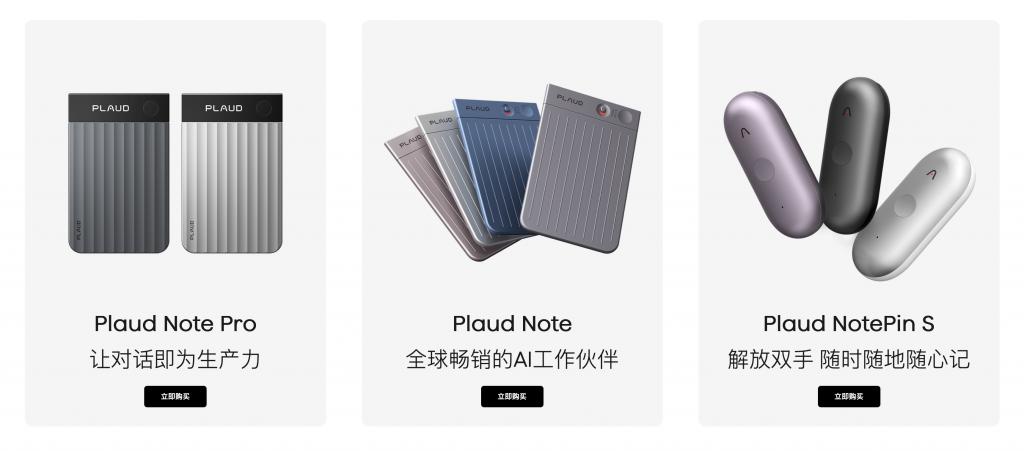
In today's context, it is very similar to a standard "AI - style charging" logic. The core difference between different - level memberships lies not in quality and speed but in time, quota, and how many "Tokens" you are willing to pay for.
Of course, it doesn't mean that Plaud's voice recorder is useless. For heavy - duty recording users, a dedicated physical device for recording can greatly improve the experience.
Does Plaud make money from the "AI model" like OpenAI? It seems not.
Plaud's excellent experience is indeed supported by large - language models, and users can choose from multiple models such as DeepSeek, Qianwen, and Doubao. However, the default "automatic mode" is the essence of Plaud: it allows you to get the results directly without worrying about technical details.
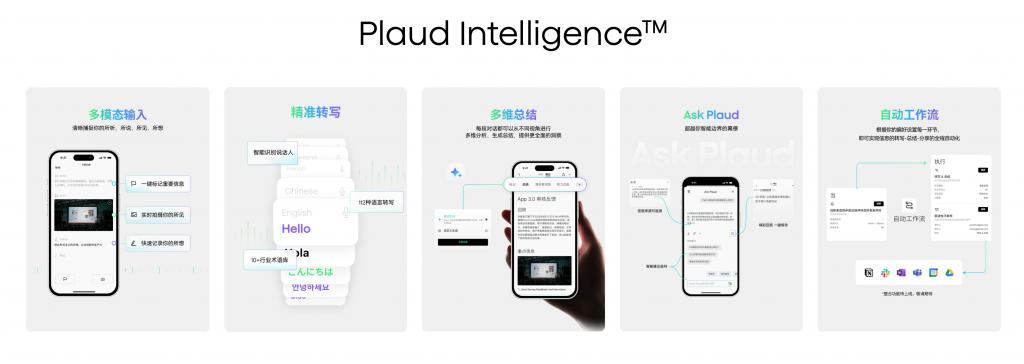
This is also the most prominent feature of the AI era. We pay for the results, not for the tool itself or the process.
Plaud, which doesn't develop large - language models, is not selling "AI" itself but "the method of using AI".
In essence, large - language models in AI are just a source of power, similar to water and electricity. They have great energy, but our current development of them is still limited, and we have basically not gone beyond the scope of chatbots.
Just like 200 years ago, people didn't know what to do with the electricity discovered by Faraday. Then, until electric lamps, telephones, and other electrical appliances appeared.
Plaud is the "electric lamp" in the AI era.
The ambitious Rabbit R1 and Humane AI Pin are more like "AI hardware" that, when the wave of generative AI hits, tries to find problems to solve with AI.
To put it bluntly, these product forms are "AI for the sake of AI" and haven't found a user scenario to solve problems with AI.
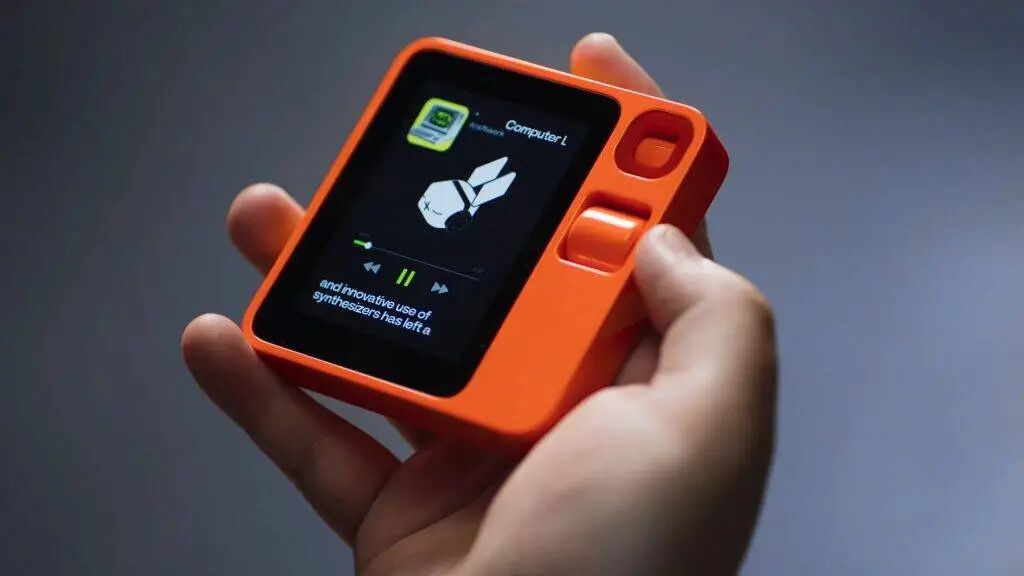
For Plaud, AI is not that important. From the very beginning, this company just wanted to do a good job in "recording". The large - language model is just the closest path to this goal.
Just like the lighting problem that has always troubled humanity. Before the invention of the electric lamp, humans had already invented candles, but the efficiency and lighting effect of the electric lamp far exceeded those of the past, so we chose the electric lamp.
Plaud's logic is similar. We have large - language models with unprecedented language - processing capabilities, so we use them to solve problems in the recording scenario, making "recording" better than ever before.

We can, of course, use existing chatbots like ChatGPT or Gemini to process these recordings. However, to get good results, we need high - quality prompts, and if the model is not good enough, we need to change the model. This is not an intuitive way of using AI.
Plaud doesn't require users to consider which large - language model to use or provide better prompts. It offers a certainty that can bring good results to users with one click.
Among a large number of similar products, Plaud is still the most "certain" one so far.
What we are willing to pay for is this certainty, a one - click solution without the need for "luck - based selection".
AI hardware should absorb "complexity"
Many people actually don't know how to use AI.
The "don't know how" here means, on the one hand, that they are not proactive in contacting AI products. More importantly, they don't know how to use AI. They think that just throwing a short prompt into the dialog box can make AI fully understand their intentions and deliver an immediately usable result.
The problem lies here. Currently, there are really very few people who are willing to spend time researching prompts, workflows, and model differences, that is, the "people who know how to use AI". Most users neither have the patience nor the need to have it. They need results and don't want to train themselves to be half - prompt engineers.
After all, our expectation of AI is to achieve the most and best results with the least effort.
If people don't know how to use AI, they won't know what a qualified and useful AI product should look like. So, the current technology circle is full of so - called "AI hardware" that only has a gimmick but no value, and only has the label of AI but no real capabilities.
After seeing a lot of promotions, people easily think that a product that can chat, generate content, and call models is a successful product, but in fact, it's far from enough.
A useful AI product should at least do two things: First, it knows that users probably don't know how to use AI, so it doesn't shift the learning cost to users. Second, it can compress the originally unstable model capabilities into a relatively stable result.
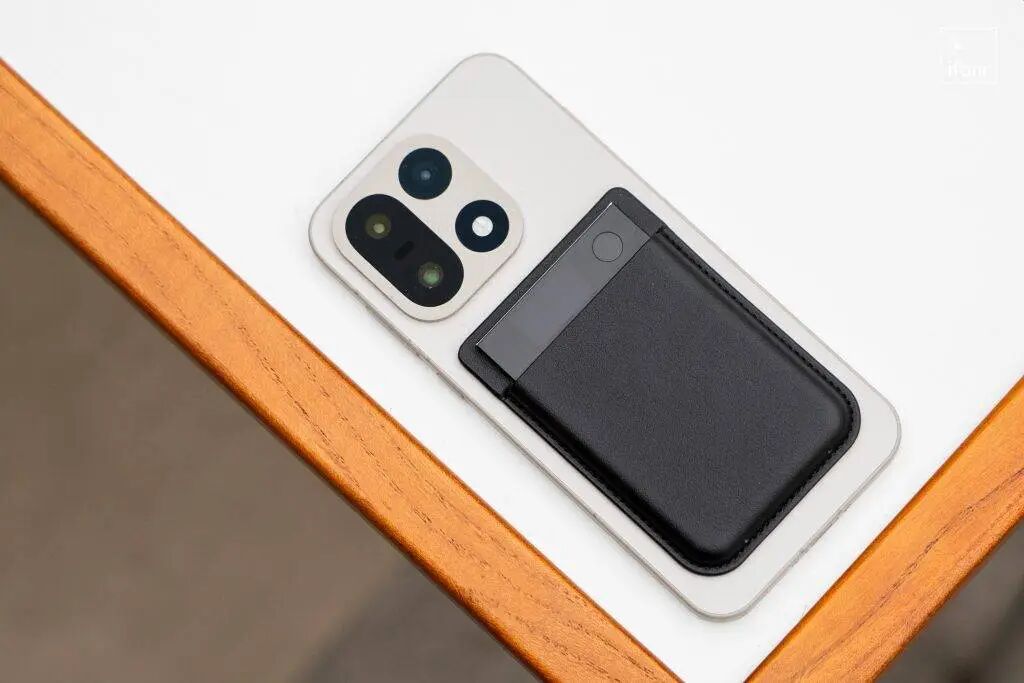
This is where Plaud's value lies. It solves a very real problem: not everyone wants to learn how to use AI, but everyone wants to get things done.
In front of Plaud, everyone is equal. Everyone presses the same button and gets the same high - quality content. The only difference is the amount of content they can get after subscribing.
The more advanced "templates" are like the "cheat sheets" provided by Plaud's official. They allow you to directly select suitable prompts according to your needs. If that's not enough, various templates from users are even more powerful supplements. You don't need to do in - depth research, and Plaud directly brings the AI benefits to you.
It's like using money to let Plaud research the ever - changing large - language models for you and come up with more and better prompts, completely getting rid of the anxiety of being left behind.
Plaud swallows the complexity for you and levels the playing field. What it's selling is actually an "AI shortcut" add - on.
