The "Four-stage Rocket" of Jiangsu's Intelligent Manufacturing
On April 11th, the 2026 "Jiangsu Super League" officially kicked off.
During those days, I happened to be on a business trip in Jiangsu. Many local scenic spots and pedestrian streets prepared large screens to broadcast the games live. The scene was bustling with red flags fluttering and crowds of people.
So much so that when I wanted to order a cup of coffee at nine o'clock in the evening, I found that the coffee shop was swamped with orders and I had to wait an hour for my order.
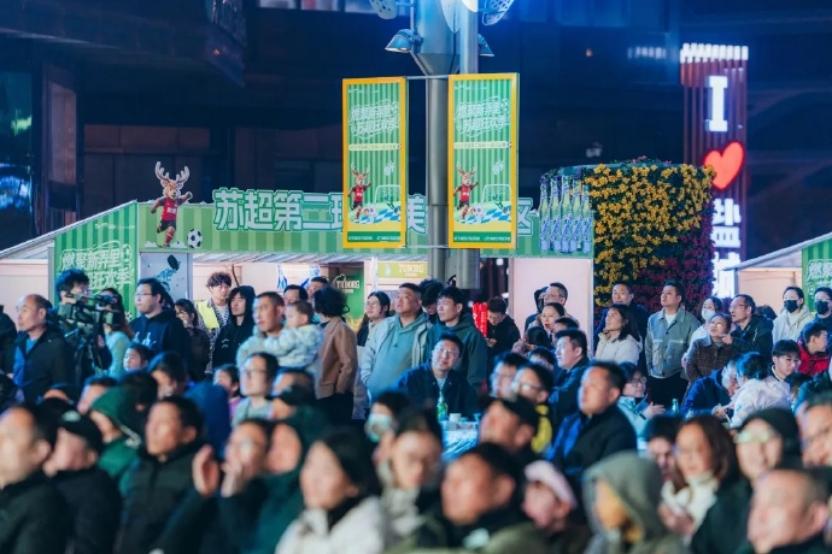
Image source: Yancheng Release
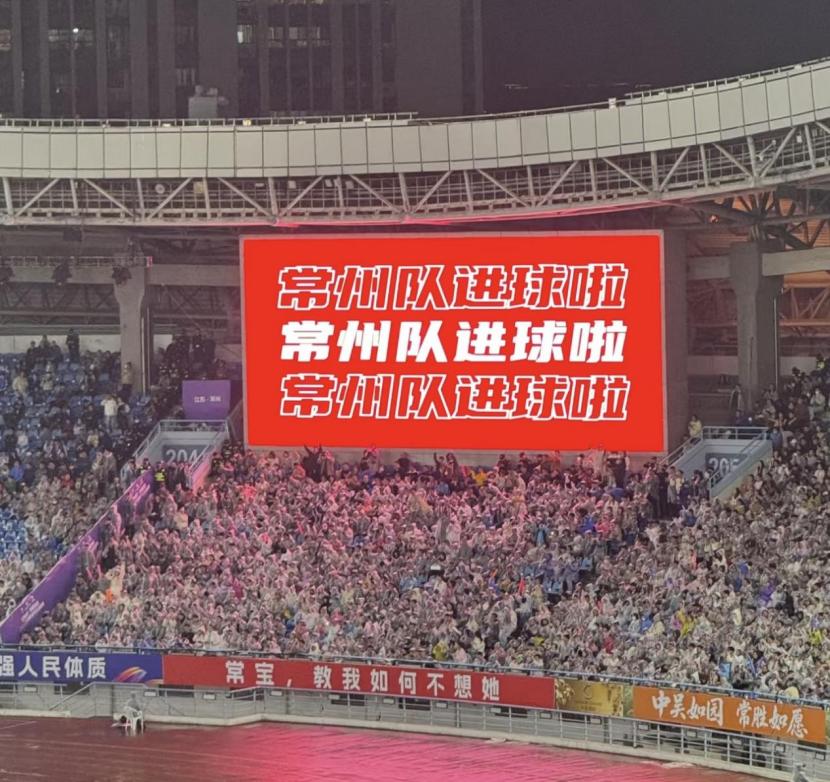
At the opening ceremony, cities across the region went all out to create a lively atmosphere. Wuxi invited the Zhang Xue Motorcycle Team to support the event, Yangzhou arranged for knights to gallop on horses, and Lianyungang even had the "Journey to the West Group" riding bicycles around the venue. Changzhou didn't have any strange "vehicles", but it seemed to want the whole world to know when a goal was scored. It even excitedly announced: "We're temporarily changing our name to 'Changzhou'!"
However, all the excitement was theirs, and I could only watch the live broadcast.
Just kidding. Actually, I was on this business trip to participate in the "High - quality Development in Jiangsu" activity. By visiting front - line enterprises up close, I aimed to observe the "secrets" of Jiangsu's development.
In four days, I visited 13 companies/projects in 4 cities: Nantong, Yancheng, Wuxi, and Nanjing. The industries involved included commercial aerospace, low - altitude economy, embodied intelligence, biomedicine, ecological engineering, cultural and tourism consumption, and so on.
At first glance, it seems quite diverse. Does it mean that Jiangsu's high - quality development means having everything?
Actually, it is precisely these diverse industries that together form a large and powerful Jiangsu.
From the "source innovation" of Zijinshan Laboratory, to the "invisible infrastructure" of Zhongtian Technology, then to the "mass production" of Galaxy Space, and finally to the "global market" of Pudu Robotics, this is a process from innovative technology to product implementation, and finally to conquering the global market. It is also a leap from 0 to 1, then to 100, and finally to +∞.
01: Source Innovation (0→1)
It is said that in Nanjing, Zijinshan Laboratory is regarded as the "ceiling" of work.
Here, the world's first large - scale network operating system (CNOS) was independently developed and has been stably operating for more than 3 years in a large - scale backbone network with over 1,100 nodes in nearly 400 cities around the world;
Here, the world's first innovative experiment on a deterministic wide - area network was completed, achieving ultra - low - latency transmission with a jitter of 30 microseconds over a distance of more than 2,000 kilometers;
Here, millimeter - wave chips and large - scale antenna arrays using CMOS technology with independent intellectual property rights were developed, providing key technical support for solving the "bottleneck" problems in China's 5G and 6G development;
Here, the world's first network endogenous security test field (NEST) based on the mimic theory was built, solving security problems at the system root and completely subverting the traditional network security protection model;
Here, the national 6G overall technology research work was led, and many original "world - first" achievements were made in fields such as terahertz communication and communication - sensing integration.
...
Non - professionals may not understand the above content. It doesn't matter. You just need to know that Zijinshan Laboratory defines the future global communication rules from the source.
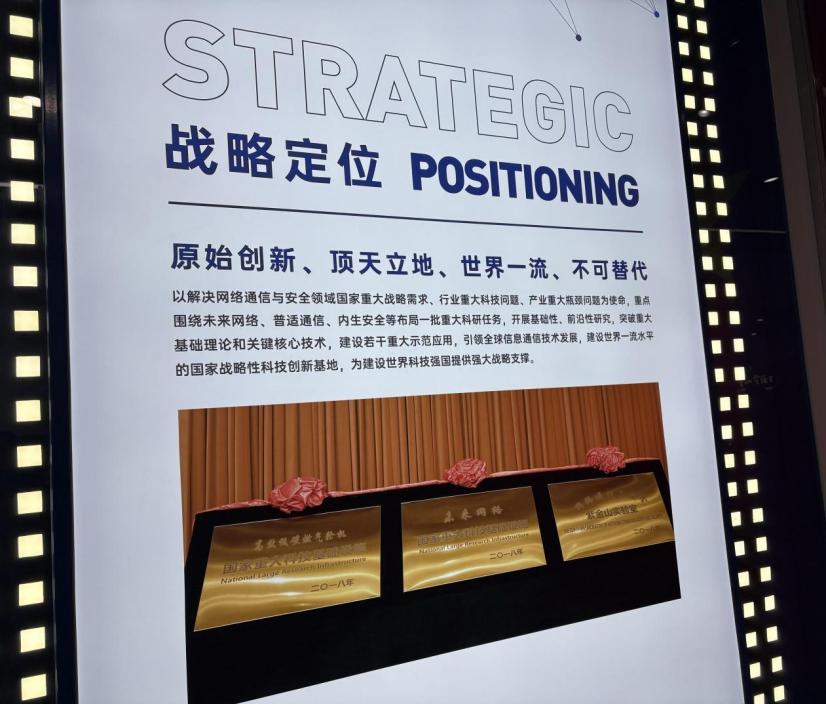
The most impressive sentence I heard during my visit was the laboratory's strategic positioning:
"Original innovation, reaching for the sky and grounding in reality, world - class, and irreplaceable."
These 16 words may be the real value of the "ceiling".
If Zijinshan Laboratory is the innovation of "defining rules", then Nanjing Triastek is the innovation of "breaking rules".
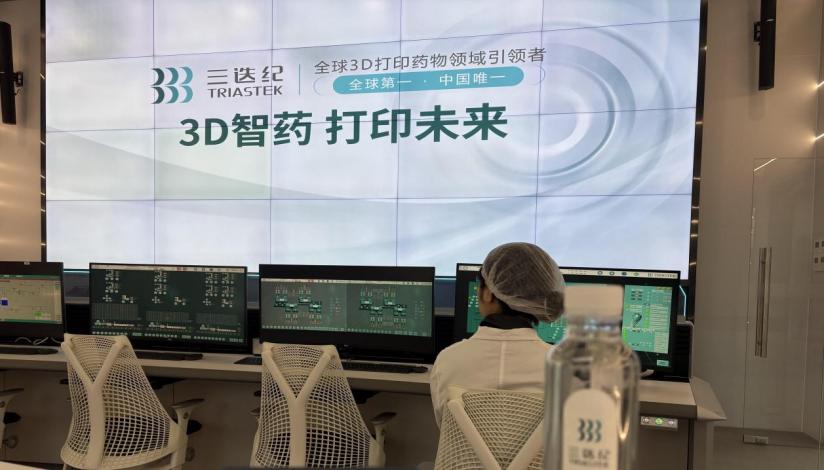
Traditional pharmaceutical manufacturing involves at least 7 processes such as crushing, mixing, granulating, drying, tableting, and coating, which takes a long time and is complex. Triastek independently developed the "Melt Extrusion Deposition (MED®) 3D printing drug technology", realizing 3D "printing" of tablets.
Traditional pharmaceutical manufacturing has a "bug", which is the delivery problem.
For example, Semaglutide, which was popular in the past two years, is essentially a polypeptide. If taken orally, the drug molecules will be decomposed and destroyed by gastric acid and digestive enzymes, greatly reducing its effectiveness. So, Semaglutide is usually administered by injection.
3D - printed drugs can be designed with different structures, like upgrading a traditional drug's "single - room" to a "duplex apartment" with different functional partitions, thus solving the delivery problem of complex drugs.
Currently, Triastek has developed more than a dozen innovative structures such as core - shell structures, multi - layer structures, multi - chamber structures, and "rocket - shaped dosage forms" (for pulsed release), achieving precise control of drug release time, location, and rate.
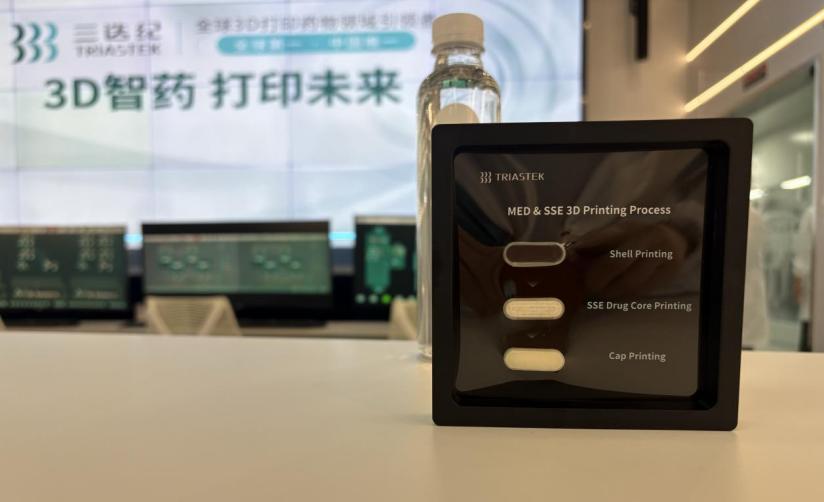
More importantly, Triastek is the first company in China and one of only two in the world (the other is Aprecia in the United States) to successfully industrialize 3D - printed drug technology and enter the product development stage.
Triastek has taken the first step from technological innovation to product development.
And from an abstract technology to a specific product, it also needs powerful "infrastructure" support.
02: Invisible Infrastructure (1→10)
The so - called "invisible infrastructure" is the "auxiliary" infrastructure for the implementation of a technology.
For example, artificial intelligence depends on electricity, and the instant data exchange when we send messages and watch videos every day depends on the global submarine cable network hidden deep in the ocean.
According to the latest data from TeleGeography, an authoritative research institution in the telecommunications industry, as of the beginning of 2025, there were approximately 600 global submarine cable systems, carrying more than 95% of the international Internet traffic, which is the main artery of the global digital ecosystem.
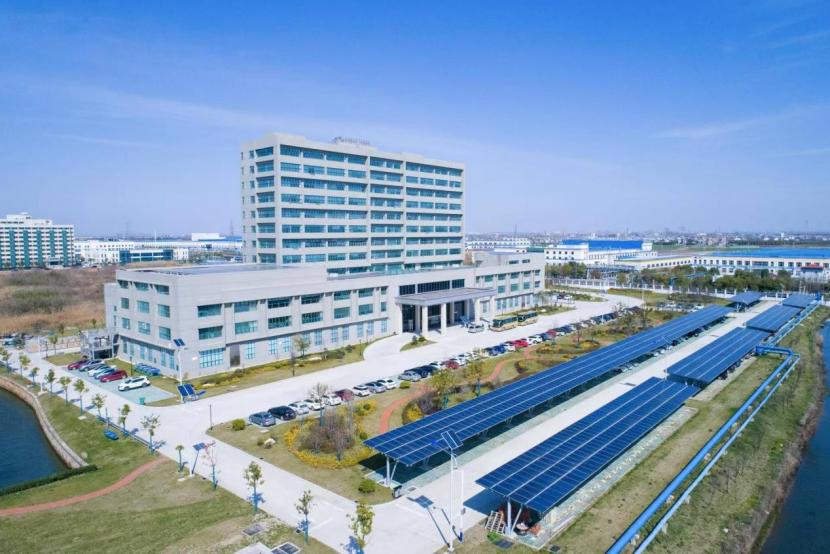
In Nantong, Zhongtian Technology, one of the earliest submarine cable manufacturers in China, successfully developed China's first commercial submarine cable in 1999.
The core material of submarine cables is optical fiber preforms. Simply put, by heating a high - purity quartz glass rod and drawing it into an optical fiber thinner than a human hair, and then adding a protective layer and reinforcement, a submarine cable is made.
It sounds easy, right?
Actually, preparing a qualified optical fiber preform is like first casting a "glass golden cudgel" with a purity of up to 99.9999%, and then drawing it into a transparent thread hundreds of kilometers long, thinner than a human hair, without breaking, without flaws, and with a uniform thickness from start to finish, with a diameter error of no more than 1 micron.
Therefore, optical fiber preforms are also known as the "pearl on the crown" of the optical fiber industry. It takes several years or even decades of technical adaptation and yield improvement from laboratory breakthrough to stable mass production. For a long time, the market was monopolized by international giants from the United States and Japan.
Zhongtian Technology is currently one of the few domestic enterprises with the manufacturing technology of "ultra - large - size fully synthetic optical fiber preforms" with complete independent intellectual property rights, fundamentally ensuring national information and communication security.
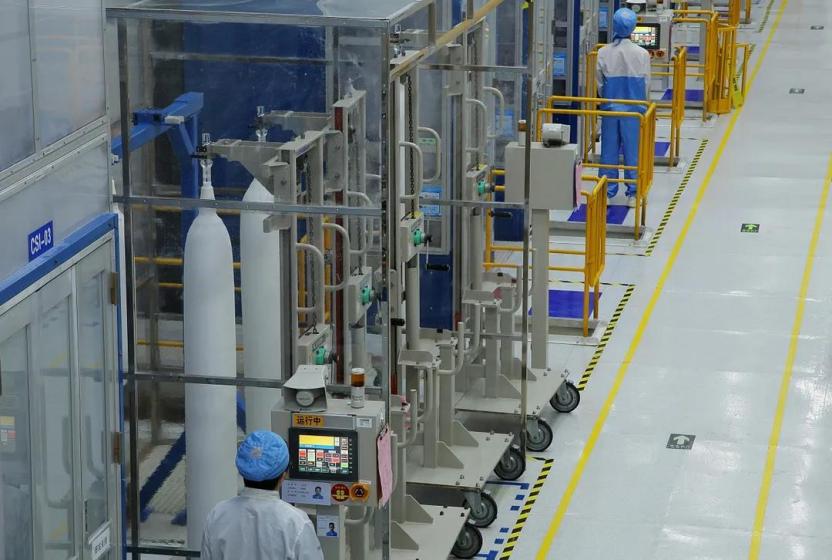
Another type of "invisible infrastructure" is to equip traditional manufacturing with the "wings" of digital and intelligent transformation, enabling traditional industries to carry out digital and intelligent upgrades.
In Wuxi, the Jiangsu Embodied Intelligence Robot Industrial Data Collection and Training Center (hereinafter referred to as the "Training Center") is undergoing a "collective evolution" of robots.
The Training Center is guided by the Wuxi Municipal Bureau of Industry and Information Technology and is led by Tianqi Automation for construction and operation. It was officially put into operation at the end of October 2025.
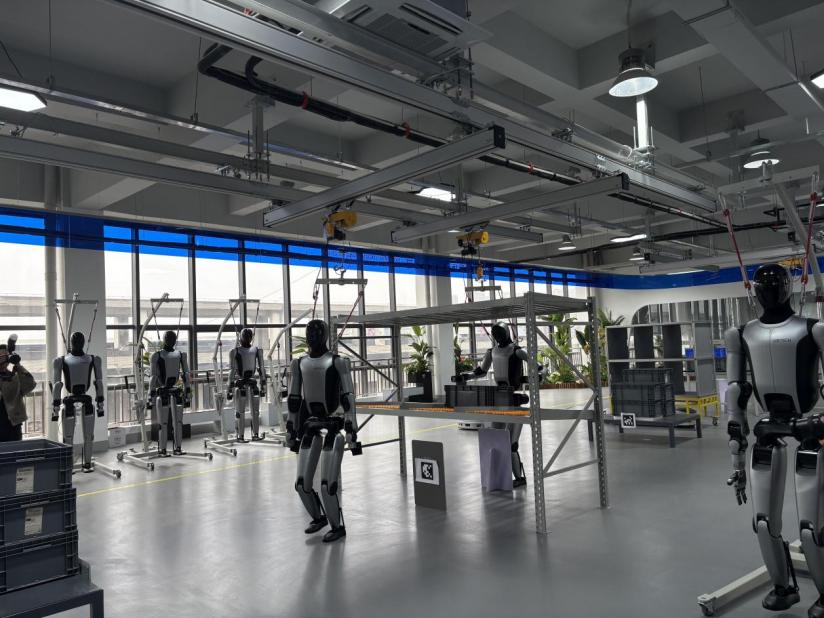
Many people may not have heard of Tianqi, but in the automobile manufacturing field, Tianqi's customers include car companies such as Li Auto, NIO, BYD, BMW, Ford, Volkswagen, and Volvo.
To put it this way, Tianqi doesn't produce cars, but almost all mainstream automobile manufacturers rely on Tianqi's production lines.
Now, Tianqi has invested its accumulated experience in the automotive industry, new energy, and other fields into the Training Center. Through systematic real - machine data collection, high - quality data annotation, and efficient algorithm training, it provides indispensable underlying support for the intelligent evolution of robots.
In other words, the Training Center is like a "Cyber Lanxiang", dedicated to making every robot a qualified automobile assembler.
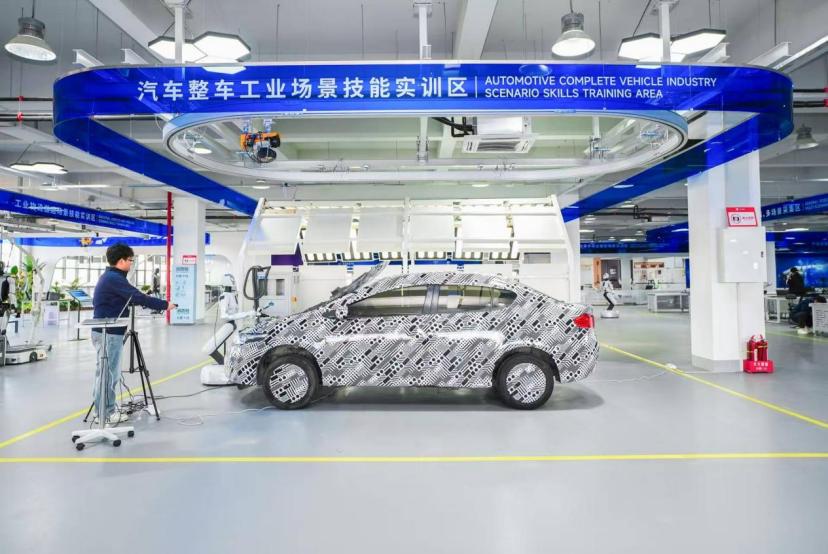
03: Mass Production (10→100)
When the digital and intelligent upgrade of the production line is completed, it means that the factory has a higher degree of automation and that the manufacturing industry has a greater production capacity.
Yueda Textile in Yancheng has been continuously working hard around "equipment interconnection, data - driven, and scenario innovation" in recent years, creating a green and intelligent factory with 100,000 spindles.
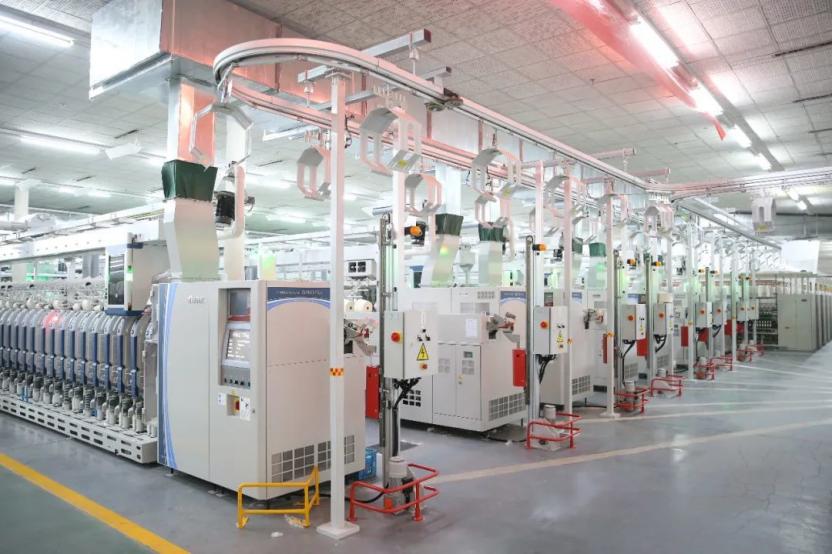
A "spindle" refers to the core component on a spinning device. One spindle is a "working unit" that can independently spin raw materials such as cotton and chemical fibers into yarn.
You know, the traditional textile industry is a labor - intensive industry. There is a saying that "a thousand people for spinning and ten thousand people for weaving". In traditional spinning, about 55 people are needed for every 10,000 spindles. Workers need to perform tasks such as splicing, doffing, handling, and inspection, which is inefficient and error - prone.
In Yueda Textile's 100,000 - spindle green and intelligent factory, through digital connection and intelligent upgrade, the number of workers per 10,000 spindles has been reduced to 15 people, the overall labor productivity has increased by more than 400%, unit energy consumption has decreased by 15%, processing costs have decreased by 26%, and the defect rate has decreased by 90%.
This reminds me of Nanjing Iron and Steel. With the same digital and intelligent upgrade and the same improvement in efficiency and benefits, who says traditional industries can't become "new - quality productive forces" with global competitiveness?
When traditional industries trigger a new round of growth through digital and intelligent transformation, the emerging commercial aerospace industry has also entered a "soaring" mode.
In Nantong, the Galaxy