Breaking through the AI electricity shortage: Who can replace heavy fuel oil?
In the previous articles "The Endgame of the AI Competition: Is Electricity the Deciding Factor?" and "The Ultimate Bottleneck of AI: The Runaway Computing Power Encounters a 'Super Power Shortage', and Gas Turbines Become the Big Boss Behind the Scenes?", Dolphin Jun has made it clear that the power shortage in the United States is not a short - term imbalance between supply and demand, but a structural contradiction formed by the explosive growth of AI computing power and the long - term lag in energy and power grid infrastructure.
On the power supply side, heavy - duty gas turbines have become the theoretical "optimal solution" for power generation in AIDC data centers due to their economic efficiency and power supply stability. However, the production capacities of the "Big Three" global gas turbine manufacturers have been fully booked by existing orders until 2028.
And the focus of Dolphin Jun's research in this article lies in:
1. In the gas turbine industry chain, which is the high - value track?
2. The scarcity of heavy - duty gas turbines restricts the computing power. How can industry giants break the deadlock?
The following is a detailed analysis
I. In the gas turbine industry chain, which is the high - value track?
1) Turbine blades: The "heart" of the gas turbine
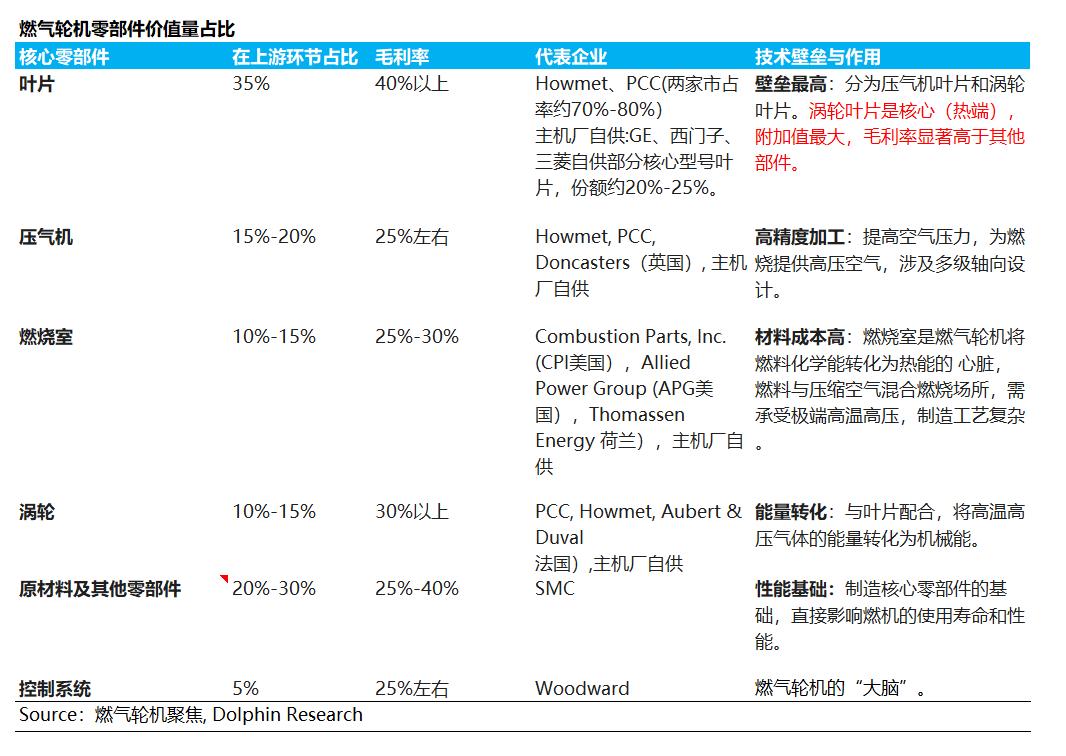
From the perspective of the overall gas turbine industry chain, turbine blades are undoubtedly the "heart" and "bottleneck". As the core component with the highest technical barrier, the largest value, and the tightest supply in the whole machine, their performance directly determines the efficiency and power of the gas turbine, and their scarce production capacity directly limits the upper limit of the delivery of downstream main engines.
As Elon Musk recently pointed out: "Unable to tolerate the 12 - 18 - month grid - connection delay of the US power grid, xAI turned to purchasing natural gas turbines but found that the orders had been booked until 2030. And the vanes and blades in the turbine are the real limiting factors because casting these blades is an extremely special and professional process."
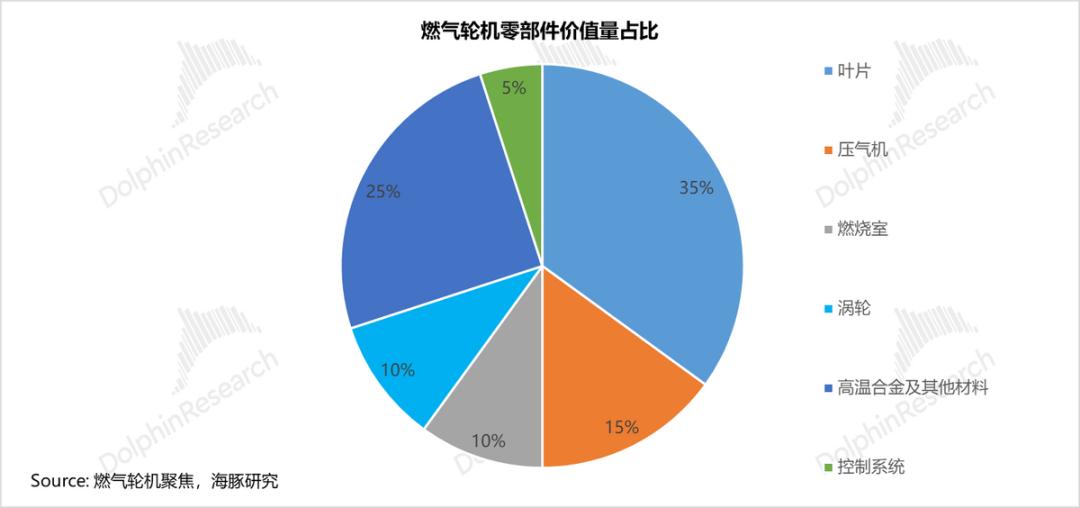
In the overall cost of the gas turbine, the value of the blades (especially turbine blades) accounts for about 35%, significantly higher than other components such as the compressor, combustion chamber, and control system. At the same time, it is also the link with both high added value and high gross profit margin in the entire industry chain (the gross profit margin of turbine blades has been maintained above 40% for a long time).
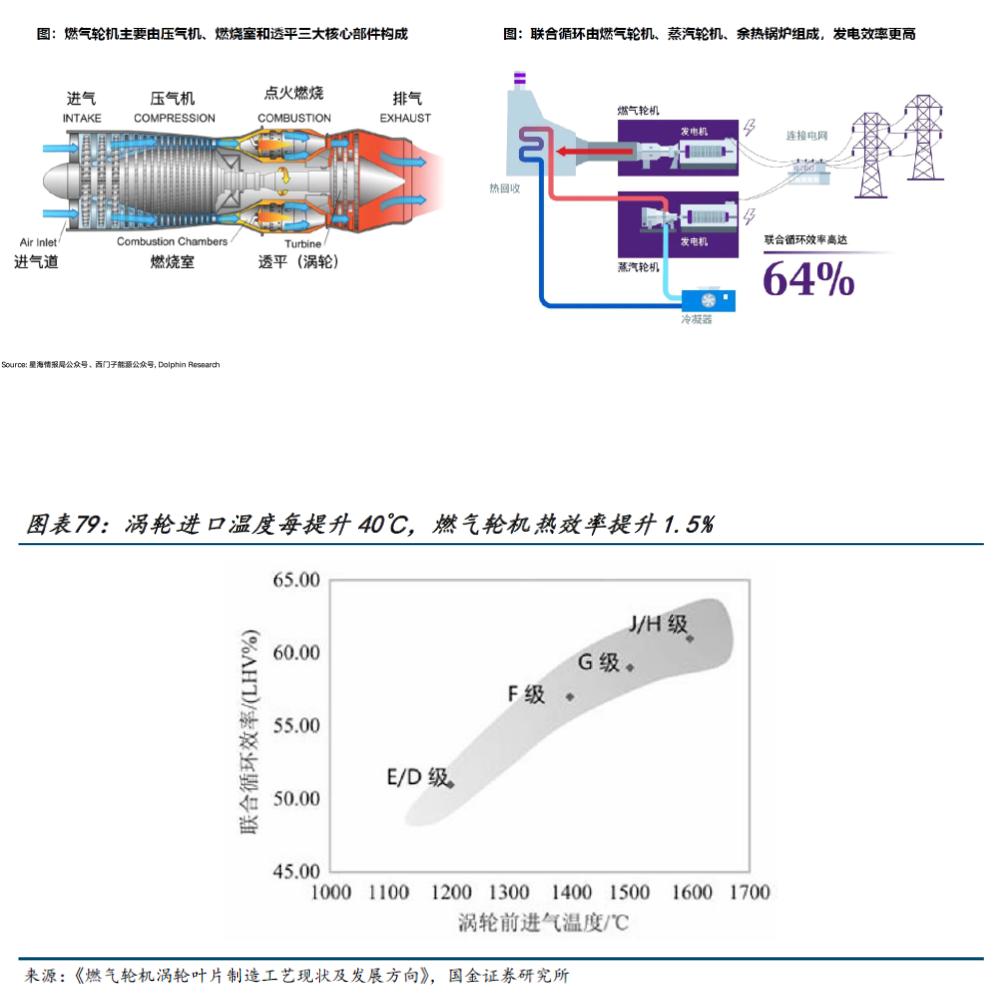
The turbine inlet temperature (TIT) is the core parameter to measure the inter - generational performance of the gas turbine. Theoretically, for every 40°C increase in TIT, the thermal efficiency of the gas turbine can be increased by about 1.5%, and the output power can be increased by about 10%. The temperature - resistance limit of the turbine blades directly sets the physical upper limit of TIT and is the key to the performance breakthrough of the gas turbine.
2) The barriers of hot - end turbine blades are extremely high:
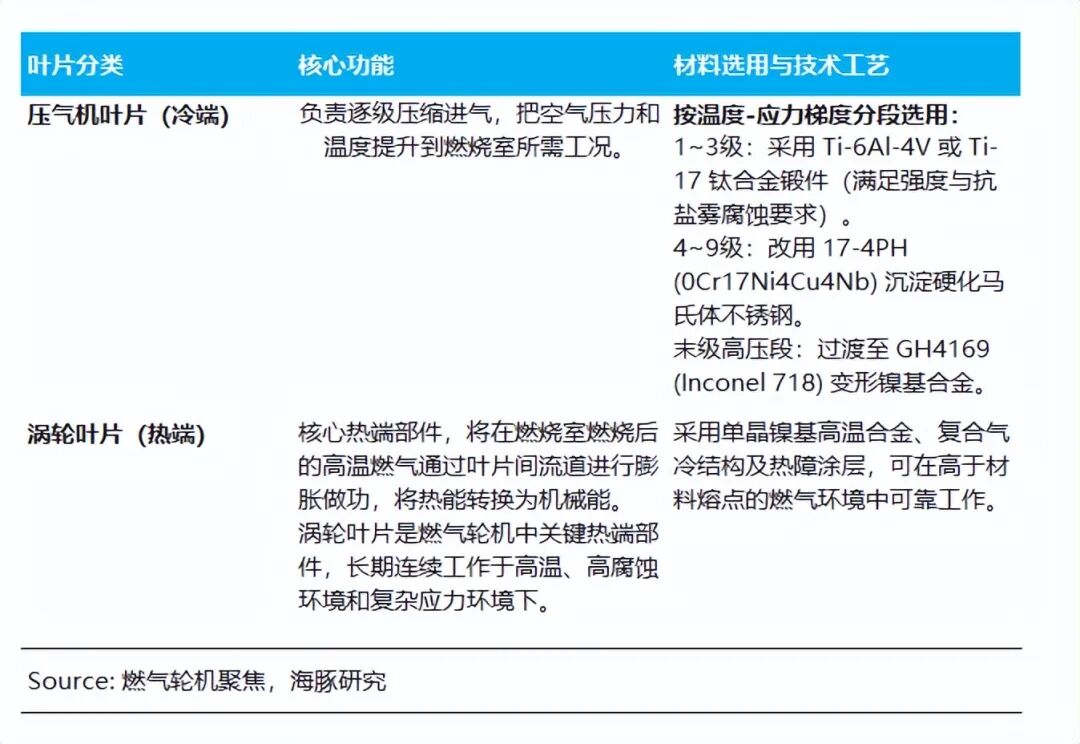
Gas turbine blades are divided into cold - end (compressor blades) and hot - end (turbine blades). The most core turbine blades are responsible for expanding and doing work with the high - temperature gas after combustion and converting it into mechanical energy. They need to work stably for tens of thousands of hours in an extreme environment with a temperature exceeding 1400°C (close to or even exceeding the melting point of nickel - based alloys), bearing tens of thousands of times the centrifugal force of their own weight and high corrosion. This constitutes an extremely high moat:
a. Breakthrough in the limit of materials:
Single - crystal superalloys must be used, and expensive rare elements such as rhenium and hafnium must be accurately added to improve high - temperature resistance and creep resistance. Currently, there are only a few enterprises in the world that master the core technology of single - crystal high - temperature components and have effective production capacity.
b. Peak challenge in manufacturing process:
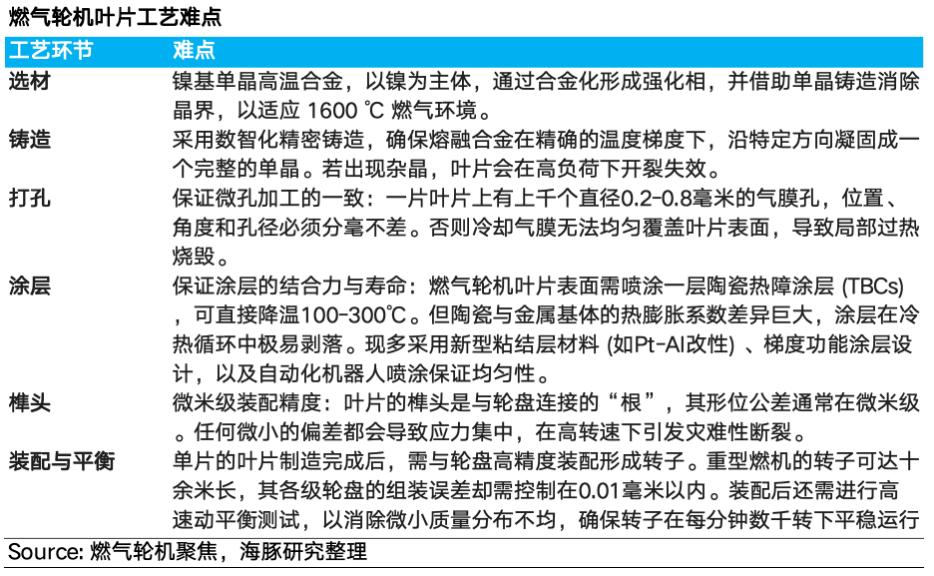
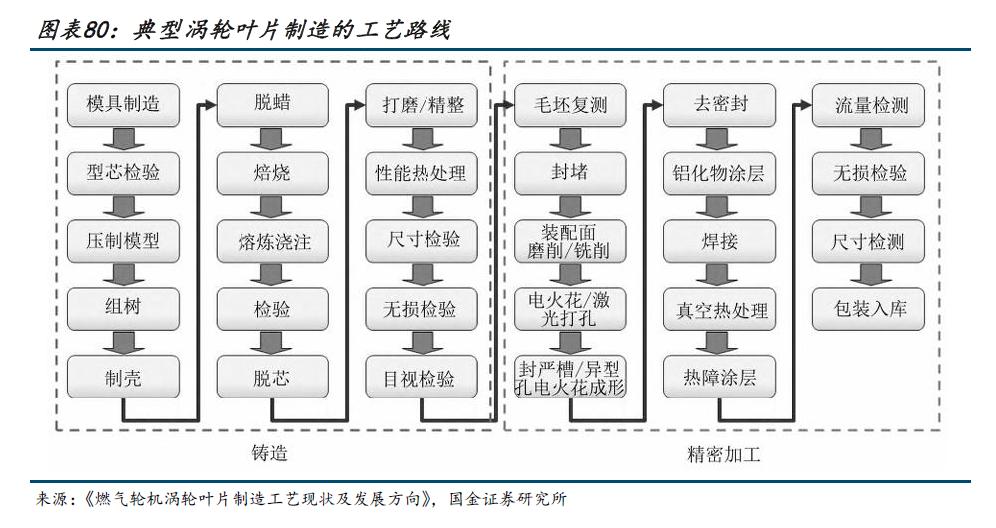
The manufacturing process involves more than ten extremely difficult processes such as vacuum melting, single - crystal directional solidification, precision forming of complex hollow cooling air passages, laser processing of air film holes, and thermal barrier coating (TBC) spraying. The requirements for dimensional tolerance and consistency reach the micron level, and yield control is a huge challenge.
In addition, to cope with the extremely strong centrifugal force, the blades need to have an advanced aerodynamic design, and the wax mold manufacturing and assembly stages still highly depend on skilled senior technicians.
c. Long cycle of trial - and - error and certification:
From the research and development of underlying materials to the final passing of the strict grid - connected test by the main engine factory for tens of thousands of hours, the certification cycle often takes years, and the trial - and - error cost is extremely high.
3) Extremely high technical, capital, and time barriers have led to a highly concentrated global high - end turbine blade market and a rigid supply constraint
Currently, there are very few core players in the global turbine blade market. The market has long been dominated by two American oligarchs, PCC (Precision Castparts Corp) and Howmet Aerospace (HWM). Together, they account for about 70% - 80% of the global high - end turbine blade market (especially single - crystal/directionally solidified blades) and are the absolute main suppliers to gas turbine main engine manufacturers such as GE, Siemens, and Mitsubishi.
Facing the current gas turbine market detonated by the demand from AI and data centers, the expansion willingness and actual ability of these two blade giants are insufficient. This "rigid supply" is mainly restricted by the following three structural factors:
a. "Structural occupation" of gas turbine production capacity by aero - engines
Facing the aggressive expansion plans of downstream gas turbine main engine manufacturers, the upstream blade giants (PCC, HWM) are extremely conservative in capital expenditure (for example, the proportion of HWM's capital expenditure to total revenue has been maintained at around 5% for a long time).
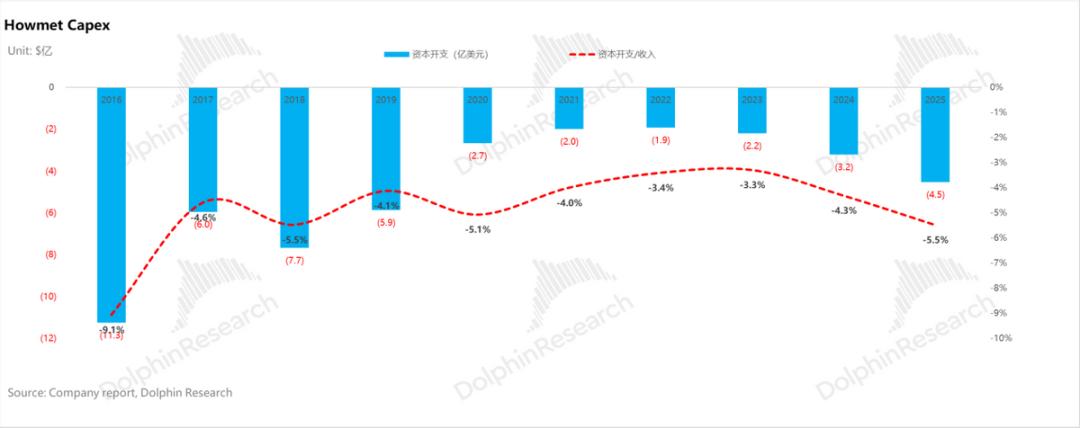
This is not short - sighted but a rational decision under their heavy - asset business model: Once the core equipment (such as single - crystal furnaces) with a unit price of millions of dollars and single - purpose is idle, it will cause huge depreciation losses. To avoid the risk of the "bullwhip effect" caused by demand fluctuations, they would rather sacrifice some growth than expand production aggressively.
On the premise that the total production capacity pool is almost fixed, high - value orders will inevitably occupy the production capacity of low - value orders. Aero - engine blades are "occupying" the production capacity of gas turbine blades in all aspects, which stems from the fundamental differences in their advantages and disadvantages:
Determinacy of the business model: Aero - engine blades are often bound by long - term agreements of 10 - 15 years (such as supporting Airbus, Boeing, and military aircraft), providing a stable income "ballast stone" for the factory to cross the cycle. While the long - term agreements for gas turbine blades generally do not exceed 7 years and are more affected by energy policies and project investment cycles, with higher fluctuation risks.
Higher economies of scale and yield of aero - engine blades: Aero - engine blades are small in size. A single model corresponds to thousands of aircraft globally, and the batch production order volume can reach hundreds of thousands of pieces, which can extremely dilute the high R & D and mold costs.
Moreover, small - sized blades are heated more evenly during the casting process, and the scrap rate is significantly lower than that of large - sized gas turbine blades. While heavy - duty gas turbine blades are huge in size, and even a slight flaw in the furnace will lead to the whole blade being scrapped, resulting in extremely high sunk costs.
Therefore, for PCC and HWM, allocating production capacity to aero - engine blades with "long - term agreements, large volume, and high profit" is a safer and more profitable business choice than producing gas turbine blades with "short - term agreements, small volume, and easy to scrap".
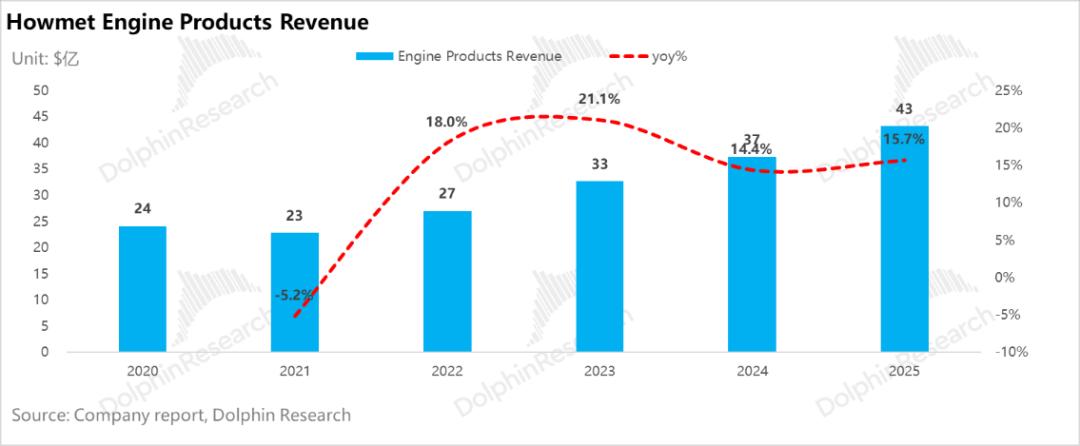
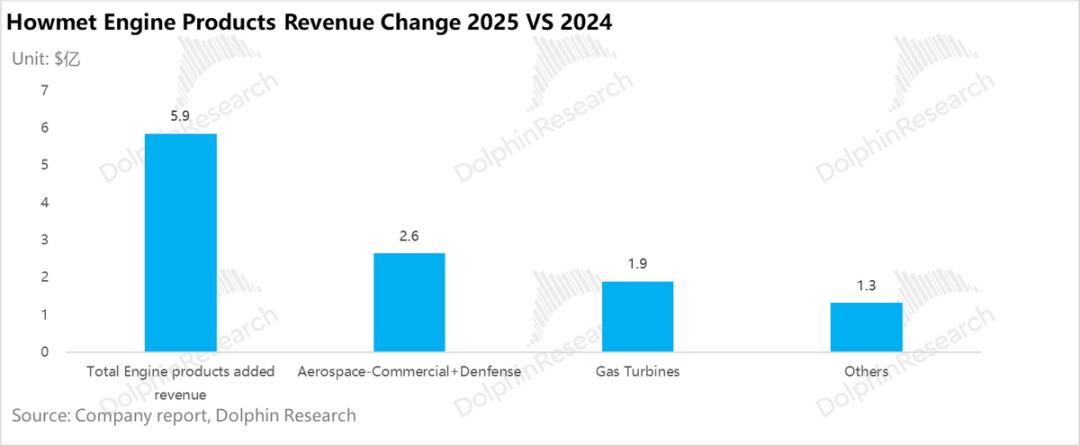
In 2025, HWM's engine business segment achieved revenue of $4.32 billion, a steady year - on - year increase of 15.6% (an increase of $585 million). Among them, commercial and defense aero - engines contributed 45% of the core increase; while the gas turbine field contributed 32% of the increase, but its growth mainly came from product price increases rather than a substantial increase in sales volume, which indirectly confirms that the expansion of gas turbine production capacity is extremely limited.
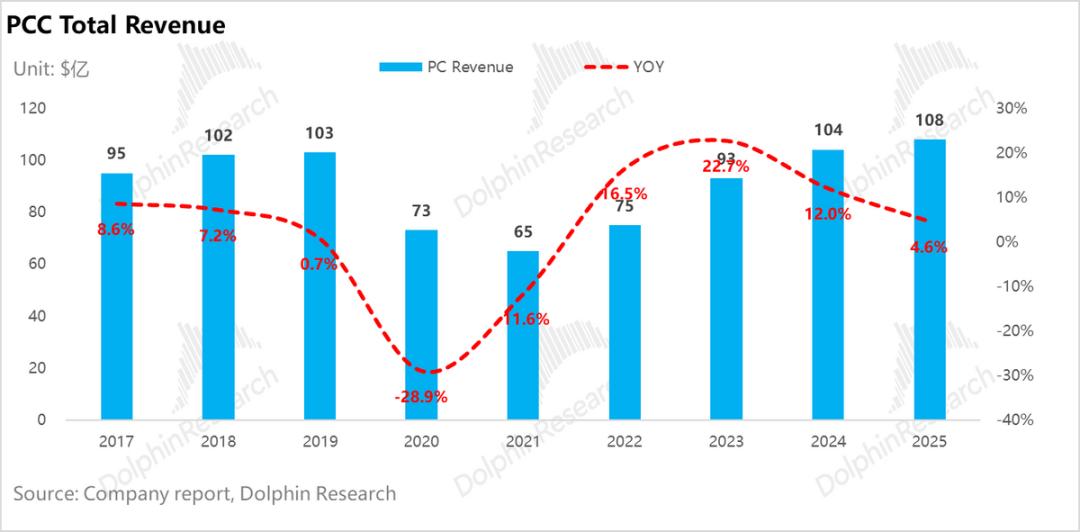
During the same period, PCC's revenue only increased by 4.6% year - on - year, and the overall revenue growth rate also showed a slow - down trend.
Against the background of the strong post - pandemic recovery of the global commercial aviation industry and the significant increase in the procurement budget of military aviation equipment in Europe and the United States, the high - prosperity of aero - engine demand will continue for a long time, and the situation of "production capacity concession" of gas turbine blades is difficult to reverse in the short term.
b. Limited core equipment and extremely long expansion cycle
The current bottleneck of blade production capacity is not the basic metal raw materials but the extreme shortage of high - end machine tools and special casting equipment.
The supply chain of core casting equipment for high - end blades is extremely long. Taking the directional/single - crystal vacuum induction melting furnace as an example, from placing a customized order with leading equipment manufacturers such as ALD in Germany (the equipment delivery period is about 1.5 years), to trans - national shipping, production line installation and commissioning, process parameter exploration, and finally passing the strict certification of the main engine factory and achieving mass production of qualified products, the entire production capacity ramp - up cycle is more than 3.5 years.
c. Decision - making lag due to deep binding
Hot - end gas turbine blades are highly customized components, and their aerodynamic design and material formula are deeply bound to the specific models of the main engine factory. The upfront development sunk cost is extremely high (the main engine factory needs to pay tens of millions of yuan for mold - opening fees and long - term technical guidance).
Therefore, the expansion decision of blade factories highly depends on the clear demand guidance and long - term agreement commitment given by the main engine factory 2 - 3 years in advance. Before the demand explosion in 2024, the global supply and demand were balanced, and blade factories did not receive "suggestions" for large - scale expansion, resulting in the production capacity planning being seriously lagging behind the current demand.
II. The scarcity of heavy - duty gas turbines restricts the computing power. How can industry giants break the deadlock?
As can be seen from the above, the actual expansion rhythm of the heavy - duty gas turbine industry is severely restricted by the production capacity bottleneck of upstream core components (especially turbine blades). The long - term mismatch between orders and production capacity of leading manufacturers has brought clear growth opportunities to technical routes with shorter delivery cycles, such as aero - derivative gas turbines, light - duty gas turbines, gas internal combustion engines, and SOFCs.
In the case of saturated orders and limited production capacity of heavy - duty gas turbines, the urgent power demand of AIDC has overflowed in large quantities, forming a clear substitution gradient:
In terms of delivery and construction cycle: Heavy - duty combined - cycle gas turbine (CCGT) (3 - 5 years) > Aero - derivative gas turbine (1.5 - 3 years) ≈ Light - duty gas turbine (1 - 3 years) > Gas internal combustion engine (1 - 2 years) > SOFC (90 - 120 days).
Cost per kilowatt - hour: SOFC > Internal combustion engine > Aero - derivative/light - duty gas turbine > Heavy - duty CCGT;
Power generation stability: Although all routes can provide highly reliable base - load power, the ranking is heavy - duty gas turbine > Light - duty gas turbine/aero - derivative gas turbine > SOFC > Gas internal combustion engine
