When will the "exception of U.S. stocks" end?
Author | Huang Yida
Editor | Zhang Fan
Since entering April, driven by the continuous release of positive factors such as the easing of geopolitical relations and the weakening of "re - inflation" expectations, the three major U.S. stock indexes have continued to strengthen. As of April 13, the S&P 500 achieved six consecutive positive days in the first eight trading days of April, and the Nasdaq had a relatively higher cumulative increase during the same period, recording 7.38%.
In terms of industry sectors, the technology sector, as the "leader" in the short - term rise of U.S. stocks in this round, has shown relatively strong performance. The performance in sub - fields such as semiconductors, chips, AI, and quantum technology has been particularly prominent. As of April 13, the cumulative increases of the Wind U.S. Semiconductor Index, the Wind U.S. Chip Index, and the Wind U.S. AI Index since April have all exceeded 10%.
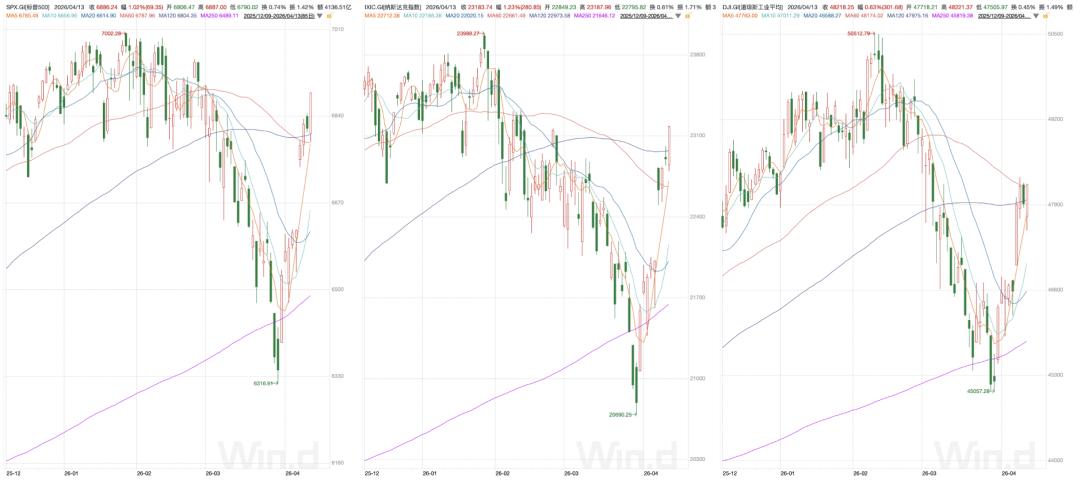
Chart: Trends of the three major U.S. stock indexes; Source: Wind, 36Kr
Looking back at the trend of the U.S. stock market this year, after entering February, the three major U.S. stock indexes have all experienced varying degrees of continuous adjustment, mainly disturbed by multiple factors such as the geopolitical conflict in the Middle East, the Fed's policy expectations, and the switch of the AI narrative. In comparison, the technology sector has been more affected. In terms of style, the performance of value stocks is better than that of growth stocks, and the performance of small - and medium - cap stocks is better than that of large - cap stocks.
It is worth noting that although the U.S. stocks have experienced a strong rebound since entering April, "Stock God" Warren Buffett recently expressed a bearish view on the current U.S. stock market during a CNBC program. As an investment master who has experienced multiple market cycles and is well - versed in the essence of value investment, Buffett's views are of great reference significance for stock investors.
01 The current valuation of U.S. stocks is not attractive
Although the U.S. stocks had their worst quarterly performance in nearly four years in the first quarter of this year, in Buffett's view, the valuation level of U.S. stocks after this round of decline is still not significantly attractive. This judgment is not only based on his investment experience accumulated over a long - term career but also in line with his concept centered on long - term investment value.
Since Buffett took over Berkshire Hathaway, he has not only experienced three market crashes of more than 50% but also witnessed an extreme market situation where the U.S. stock market tumbled 21% in a single day. Therefore, against the backdrop of the volatile trading style of the U.S. stock market, the decline of only 6 - 7% in the U.S. stock market in the first quarter of this year is really insignificant, and such a discount rate is naturally difficult to impress Buffett. The rising market since April has further strengthened this view.
More importantly, Buffett's investment logic has never focused on short - term price fluctuations but on the long - term investment value of enterprises, and he aims to achieve considerable returns by holding high - quality assets for a long time. Apple, American Express, Coca - Cola, Chevron, Occidental Petroleum and other long - term heavy - weighted targets of Berkshire are all concentrated manifestations of this concept.
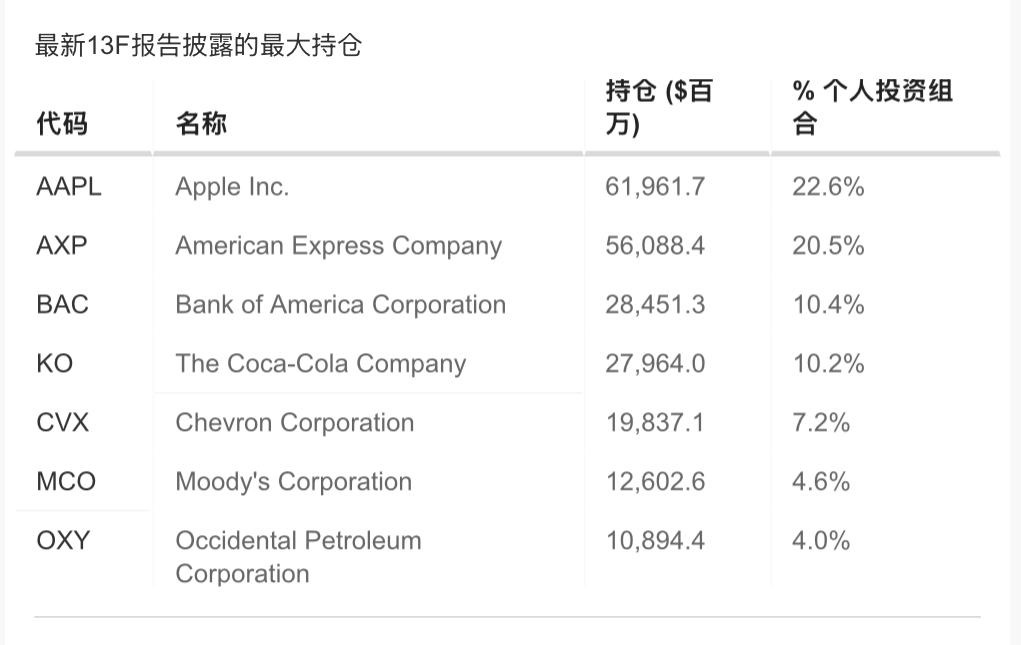
Chart: Some heavy - weighted stocks in Buffett's stock investment portfolio; Source: Investing, 36Kr
When there are not enough attractive deep - discount opportunities in the U.S. stock market, he still chooses to wait patiently. Berkshire's 2025 financial report shows that the company holds approximately $370 billion in cash and cash equivalents, and most of them are allocated to U.S. Treasury bonds. Based on the high liquidity of U.S. Treasury bonds, this layout of Berkshire's asset side also intuitively reflects its current investment strategy: centered on defense while taking into account flexible offensive and defensive transitions.
02 The two - sided nature of the "re - inflation" risk
Combined with Buffett's consistent investment style, many investors simply interpret his operation of holding $370 billion in cash as waiting for the opportunity to bottom - fish. However, from a deeper level, his current investment strategy is mainly based on a comprehensive assessment of multiple factors such as the macro - economy, monetary policy, and geopolitical risks, rather than simply waiting for the opportunity to bottom - fish after a market crash.
In terms of monetary policy, Buffett's attitude is more radical than that of the Fed. He believes that the inflation policy target should be set at 0 instead of the current 2%. The core logic behind this is essentially a simple investment account: even without considering the long - term erosion of wealth by the compound effect of inflation, as long as the annualized investment return lags behind inflation, it is equivalent to an actual loss.
From the perspective of inflation expectations, the "re - inflation" risk in the United States is on the rise, exerting obvious pressure on risk assets such as U.S. stocks. In March 2026, the U.S. CPI rose 3.3% year - on - year, a significant rebound from the previous level of 2.4%. In terms of structure, the housing (including rent) sub - item, which has the highest weight (30 - 40%) in the U.S. CPI, has now returned to the pre - pandemic level, and the rising energy prices are the main driving force for the year - on - year expansion of the CPI in March.
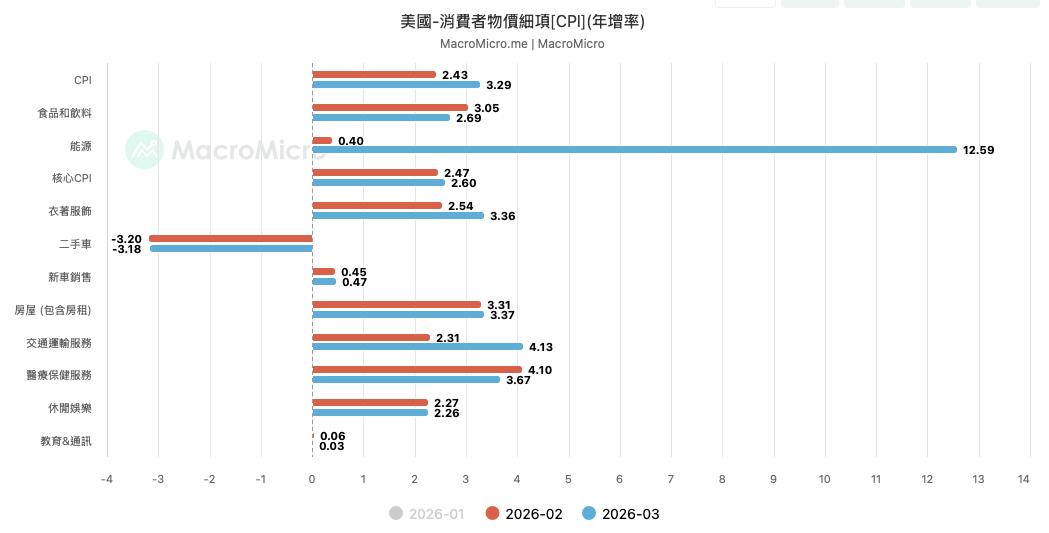
Chart: Year - on - year U.S. CPI in March 2026; Source: MacroMicro, 36Kr
The short - term sharp rise in energy prices in this round is mainly affected by the U.S. - Iran conflict. Therefore, the international oil price is one of the core indicators for observing the "re - inflation" risk in the United States. Based on a scenario analysis with the trend of oil price changes as the core variable, only if the United States and Iran quickly reach a reconciliation can the international oil price quickly decline, and the "re - inflation" risk in the United States will be lifted immediately. Otherwise, in the most optimistic scenario, the oil price will remain at a high level of $90 per barrel at least until the end of the second quarter of this year.
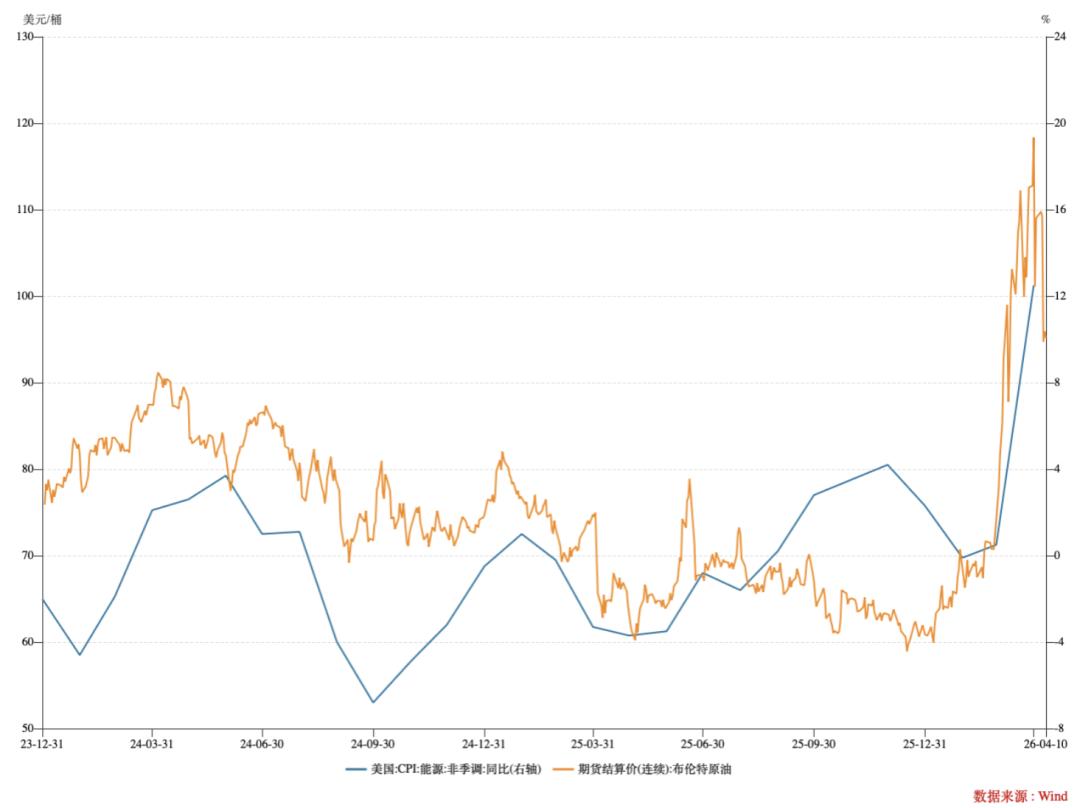
Chart: U.S. energy CPI and Brent crude oil futures prices; Source: Wind, 36Kr
However, the continuous rise of the "re - inflation" risk in the United States has a relatively complex impact on Buffett's investment decisions, not limited to suppressing the overall expectations of U.S. stocks. Since Berkshire has heavily invested in oil and chemical giants such as Chevron and Occidental Petroleum, with the sharp rise of international oil prices in the first quarter of this year, the above - mentioned heavy - weighted stocks also achieved good returns during the same period. Chevron's increase in the first quarter of this year was as high as 31%, and Occidental Petroleum's increase during the same period was even close to 60%.
From the perspective of Buffett's long - term value investment concept, the core logic behind his heavy investment in petrochemical giants such as Chevron and Occidental Petroleum is his firm optimism about the long - term fundamentals of the petrochemical industry. The considerable returns achieved by these energy stocks in the first quarter of this year are the natural result of his long - term strategy of holding high - quality assets.
According to the current mainstream market expectations, the international oil price will remain at a high level at least until the end of the second quarter of this year. Buffett's heavy investment in petrochemical giants is expected to continue to contribute considerable returns to the portfolio. The core logic behind his holding of a huge amount of cash is not only his prudence regarding the suppression of U.S. stock expectations by the "re - inflation" risk but also his concern about the potential risks in the financial system.
03 Holding a huge amount of cash is also a hedge against potential risks
Although Buffett has always emphasized not to predict the short - term fluctuations of the market, he has always been highly vigilant about potential risks. In the current financial system, the scale of unsecured business of top investment banks continues to expand. Due to the high correlation among financial institutions, once a risk occurs in one link, it is very easy to spread rapidly, which is also a prominent manifestation of the current fragility of the financial system.
Based on the consideration of the potential risks in the current financial system, Buffett chooses to hold sufficient cash (including short - term Treasury bonds) and even avoids high - liquidity assets such as money market funds and bills under non - extreme market conditions. In his view, in an extreme market environment, when the market experiences a liquidity shortage, only cash and Treasury bonds can maintain truly reliable liquidity. This is also Buffett's experience after experiencing multiple market cycles in his long - term career.
It can be seen that the core reason for Buffett to hold a huge amount of cash at present, in addition to being bearish on U.S. stocks, is also due to his investment concept that emphasizes the safety margin, aiming to hedge market risks in multiple aspects such as "re - inflation" pressure and potential liquidity crises. With his decades of investment experience, he may have smelled the potential crisis signals in advance.
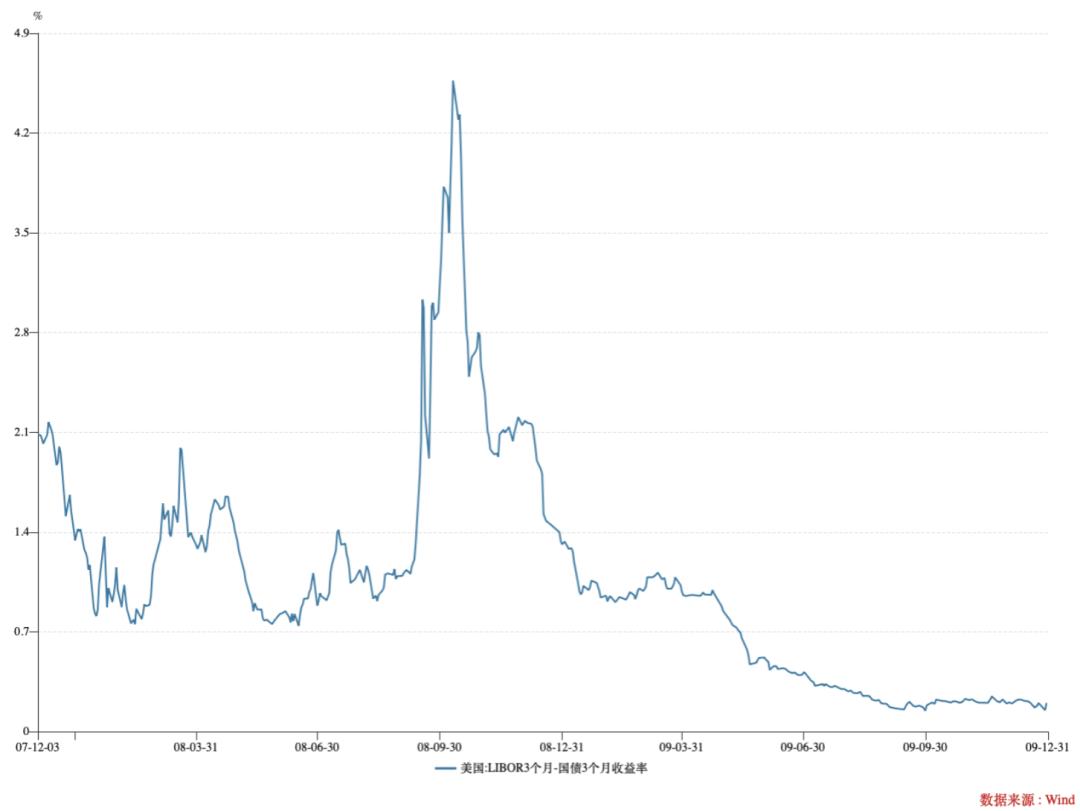
Chart: TED spread trend during the 2008 financial crisis; Source: Wind, 36Kr
04 Will the "U.S. stock exception" be ended?
In a conversation with Buffett on CNBC, he expressed his concern about the global reserve currency status of the U.S. dollar, which also implies his concern about the long - term prospects of U.S. stocks in the future. In the global equity market, U.S. stocks are in a league of their own. Based on the advantages of the United States in economy, policy, and technological development, U.S. stocks have been able to outperform non - U.S. markets in the global cycle. This view of the "U.S. stock exception" is a concentrated manifestation of the "American exceptionalism" in the capital market.
The core foundation for U.S. stocks to be an "exception" is the global reserve currency status of the U.S. dollar. As a result, U.S. dollar assets generally benefit, and U.S. stocks are the most direct beneficiaries. The internal logic is that, with the advantage of global asset pricing power brought by the U.S. dollar, combined with the huge market scale, mature market ecosystem, and perfect trading system of U.S. stocks, U.S. stocks have a unique liquidity advantage in the world. The continuous resonance of the above multiple factors constitutes the core competitiveness of U.S. stocks.
However, with the continuous trend of anti - globalization in recent years, the foundation of the "unique" market status of U.S. stocks has shown some signs of loosening. Under the impact of the de - dollarization wave, the reserve currency status of the U.S. dollar is being continuously weakened, and the advantages of U.S. stocks, such as global pricing power, international capital attraction, and abundant liquidity, which are based on the U.S. dollar, are all facing direct challenges. In terms of investment and trading, from a short - term perspective, global funds have reduced their holdings of U.S. stocks for two consecutive quarters.
The recent exchange - rate fluctuations of the Japanese yen also pose a clear negative impact on U.S. stocks, especially high - valuation technology stocks. Since the second quarter of 2025, the Japanese yen has been depreciating overall. The recent breach of the key exchange - rate level of the Japanese yen has triggered "verbal intervention" from the Japanese regulatory authorities. With the increasing expectation of a Japanese interest - rate hike in April, the market expectation of the Japanese yen has changed, driving the short - term strengthening of the Japanese yen.
Due to the long - term zero - interest rate and even long - term negative - interest rate of the Japanese yen, the borrowing cost is extremely low, so the Japanese yen has gradually become the world's largest funding currency. Through the yen carry trade, that is, borrowing yen and investing in high - yield assets, a large amount of liquidity has been provided to the U.S. stock market.
However, the yen carry trade is extremely sensitive to the exchange - rate fluctuations of the Japanese yen. With the recent short - term appreciation of the Japanese yen, the yen has been driven to flow back from overseas. While the liquidity is being "pumped out", since the carry trades generally have a certain multiple of leverage, the impact of the exchange - rate fluctuations of the Japanese yen is magnified, which in turn reverses the yen carry trade to a certain extent, thus forming a negative spiral of "selling U.S. stocks → U.S. stocks falling → further appreciation of the Japanese yen → more carry trades closing positions → U.S. stocks falling again".
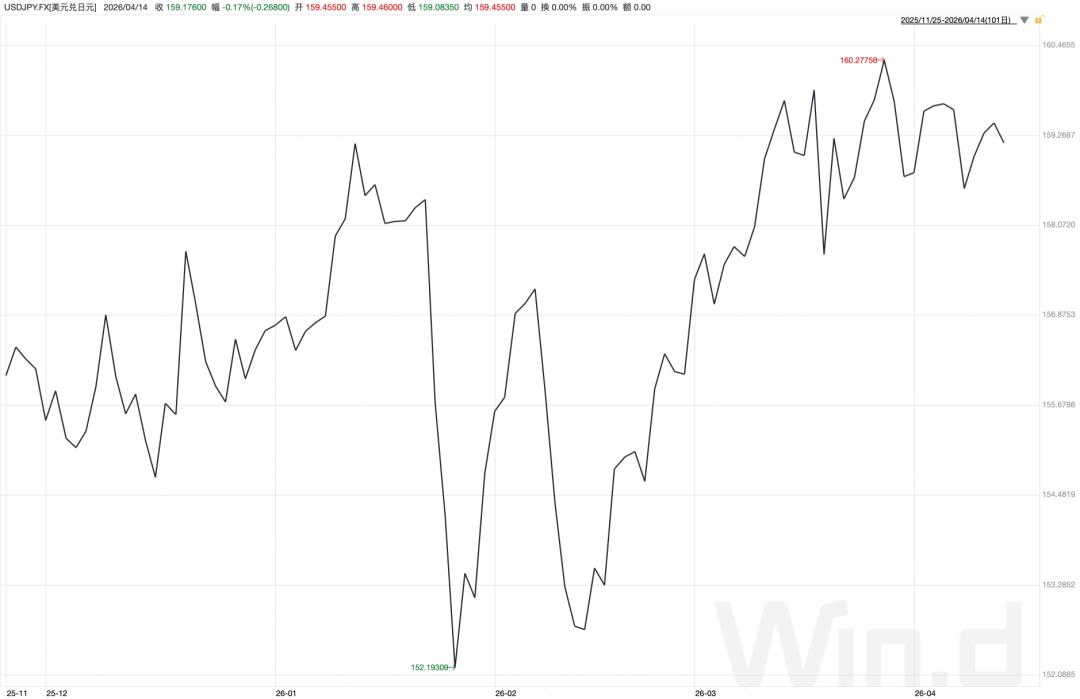
Chart: U.S. dollar - Japanese yen exchange - rate trend; Source: Wind, 36Kr
According to CCTV news, on April 13 local time, U.S. President Trump said that the military blockade of Iran had begun and that the United States "does not need" the Strait of Hormuz. OPEC data shows that mainly affected by the geopolitical conflict, the organization's crude - oil production in March hit a record - high monthly decline. The intensification of the geopolitical conflict and the expectation of a contraction in crude - oil supply have pushed up the "re - inflation" pressure in the United States. On the one hand, it directly exerts a new round of pressure on the valuation of U.S. stocks. On the other hand, the rising energy costs will also increase the profit pressure on enterprises, which is negative for the fundamentals of U.S. stocks.
Under the resonance of stagflation risk and risk - aversion sentiment, the market risk preference will significantly decline. Coupled with the disturbances brought by the repeated geopolitical situation, the overall short - term expectation of U.S. stocks is bearish. Among them, technology stocks, which previously maintained high valuations with abundant liquidity, are more sensitive to the tightening of liquidity and changes in market sentiment. With the increasing "re - inflation" pressure in the United States and the passive closing of positions caused by the reversal of the yen carry trade, the technology sector of U.S. stocks may face a greater risk of