A post-2000 "genius girl" dropped out of school to start a business in Silicon Valley and created a unicorn worth 11 billion yuan in one year.
In the 2026 Hurun Global Rich List, 32-year-old Lucy Guo, with a net worth of 9 billion yuan, became the world's youngest self-made female billionaire, surpassing Taylor Swift. The post-90s and post-00s women of this generation are stunning the global capital circle with their strength.
The post-90s and post-00s women of this generation are stunning the global capital circle.
In the 2026 Hurun Global Rich List, 32-year-old Lucy Guo, with a net worth of 9 billion yuan, became the world's youngest self-made female billionaire, surpassing Taylor Swift.
Not long after, Hong Letong, a post-00s girl from Guangzhou, announced the completion of a $200 million financing. The company was only founded a little over a year ago, but its valuation soared to 11 billion yuan. Even a 57-year-old international mathematics master quit his tenured faculty position and was willing to work for her.
Going back further, there's Wang Shuo, the founder of Deel, who built a unicorn company worth hundreds of billions; Guo Wenjing, a post-95s founder, took on AI giants head-on; and Lucy Liu, a Chinese-American girl, became the richest woman in New Zealand...
These young Chinese female entrepreneurs have some commonalities:
Most of them have a background from prestigious universities and are "genius girls" with the aura of MIT, Harvard, and Stanford.
However, they are not bound by the "prestigious university complex." When facing huge opportunities, they dare to think and act, and are even willing to drop out of school to start a business. They have faced some doubts to varying degrees during the entrepreneurial process, but they are fearless.
They are using their rapid growth to declare to the world that the wealth scepter of the new generation of women has already been transferred into their own hands!
1. The "heroine of a feel-good story" dropped out of school at 25 to start a business and built a unicorn worth 11 billion yuan in one year
Recently, Axiom, which was founded just over a year ago, announced the completion of a $200 million Series A financing. Its valuation soared to $1.6 billion, about 11 billion yuan, and it directly entered the unicorn club.
The founder of Axiom is Hong Letong. Her real-life experience is very much like the "heroine of a feel-good story" in short dramas.
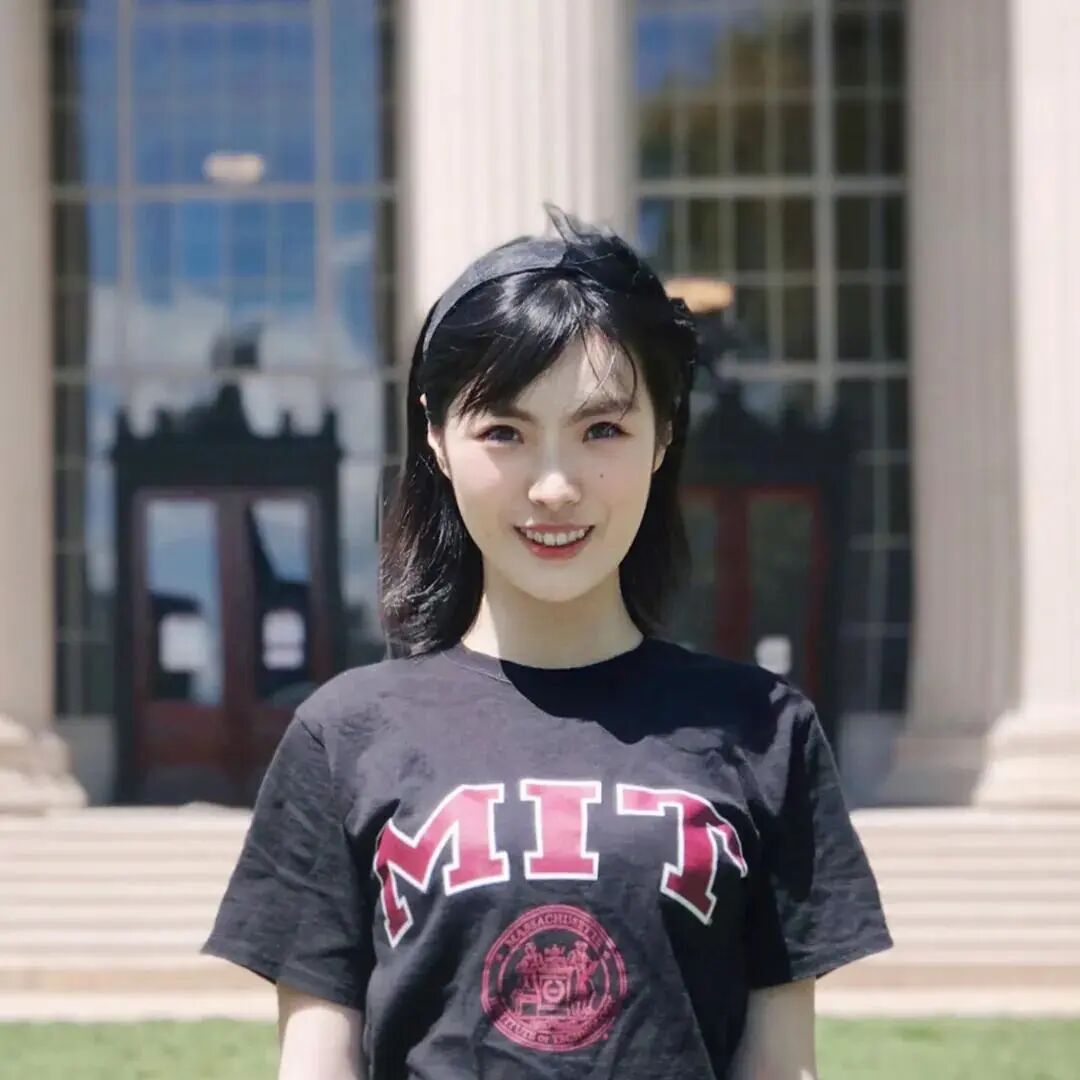
Hong Letong was born in Guangzhou in 2001. Her parents are ordinary migrant workers and didn't go to college, but she has been on a roll with her super strong mathematical talent:
She was selected for the provincial Olympiad math team in her first year of high school. At 17, she was admitted to the Massachusetts Institute of Technology (MIT). She completed a double major in mathematics and physics in three years and also took an additional 20 advanced courses at the master's and doctoral levels. She successively won the "Morgan Prize," the highest honor for North American undergraduate math students, and the "Schafer Award for Mathematical Excellence."
▲
In 2021, Hong Letong won the Rhodes Scholarship, known as the "Nobel Prize for undergraduates," and went to the University of Oxford for further studies. Then she entered Stanford University to pursue a double doctorate in mathematics and law at the same time.
According to this "script," after graduation, she might have taken an academic path by working at a university or become a top technical expert at a leading company. However, a casual chat with someone in a coffee shop in 2024 completely changed the trajectory of her life.
At that time, Hong Letong and Shubho Sengupta, the then director of AI research at Meta, discussed a topic that hit the pain point of the industry: Can AI truly master mathematical reasoning?
Hong Letong keenly noticed the fatal weakness of current AI: Although the capabilities of large models are soaring, their reasoning process based on "probabilistic word guessing" is like a black box. It might not matter much if they talk nonsense in daily chats, but in critical fields such as financial quantification, even a 1% probability of error could lead to a disaster.
Hong Letong resolutely dropped out of Stanford and founded the artificial intelligence company Axiom. She has great ambitions:
To create "Verified AI" so that the reasoning process of AI is as rigorous as a mathematical proof.
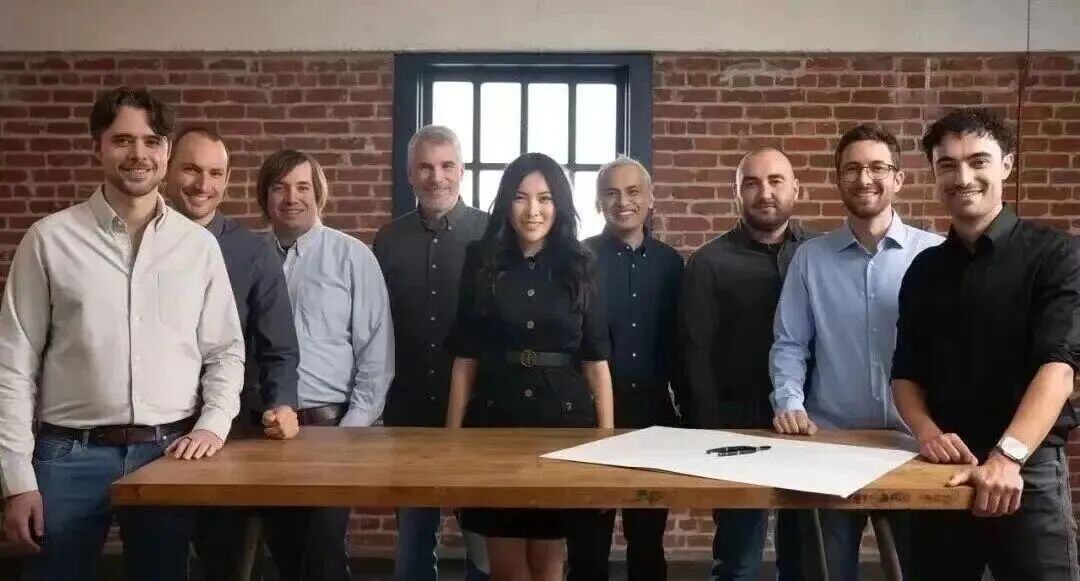
Axiom adopts a math-as-a-service model. The core is to make AI generate outputs written in the Lean language to ensure that every step of the machine's reasoning can be 100% verified. This is like putting a lock on the output of large models.
The math genius girl used her mathematical knowledge to start a business, and the results came quickly. In December 2025, Axiom's core system scored a perfect score in the Putnam Competition, the most difficult undergraduate math competition in North America. You know, in the past nearly 100 years, only 5 people in the world have ever achieved this.
Subsequently, this system proved a number theory conjecture that had been pending for 20 years and two major problems in the Erdős problem set without any human intervention, which shocked the world.
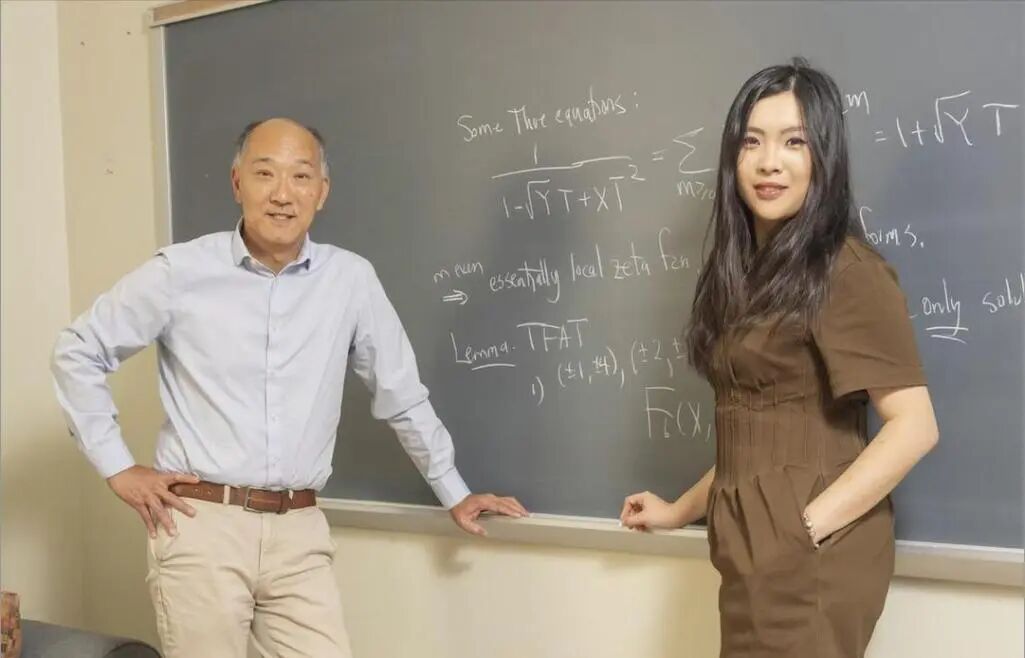
After witnessing the potential of the system, 57-year-old math master Ken Ono resolutely quit his tenured faculty position at the University of Virginia and started working for his former student.
Hong Letong also recruited many top talents from Silicon Valley. The former director of AI research at Meta also joined as the CTO. French mathematician François Charton, who was the first to apply Transformer to solve complex math problems, and AI developer Hugh Leather, who was the first to apply deep learning to code generation, also joined.
In Hong Letong's view, solving math problems is just an entry point. Using math to verify all AI-generated code is the ultimate ladder to superintelligence. It can be seen that this post-00s genius girl's billion-yuan empire has just begun.
2. The post-90s Chinese female richest person: After being fired, she earned 9 billion yuan lying down with a 5% stake
Similar to Hong Letong, Lucy Guo also dropped out of a prestigious university to start a business. However, the difference is that she also experienced the "dramatic" plot of being kicked out of the company by her co-founder. But it doesn't matter. Now, with the 5% stake she retained, she has not only made a comeback to become the self-made female richest person but also started a "second spring" in her career.
In the 2026 Hurun Global Rich List, Lucy Guo, with a net worth of 9 billion yuan, became the world's richest self-made post-90s female.
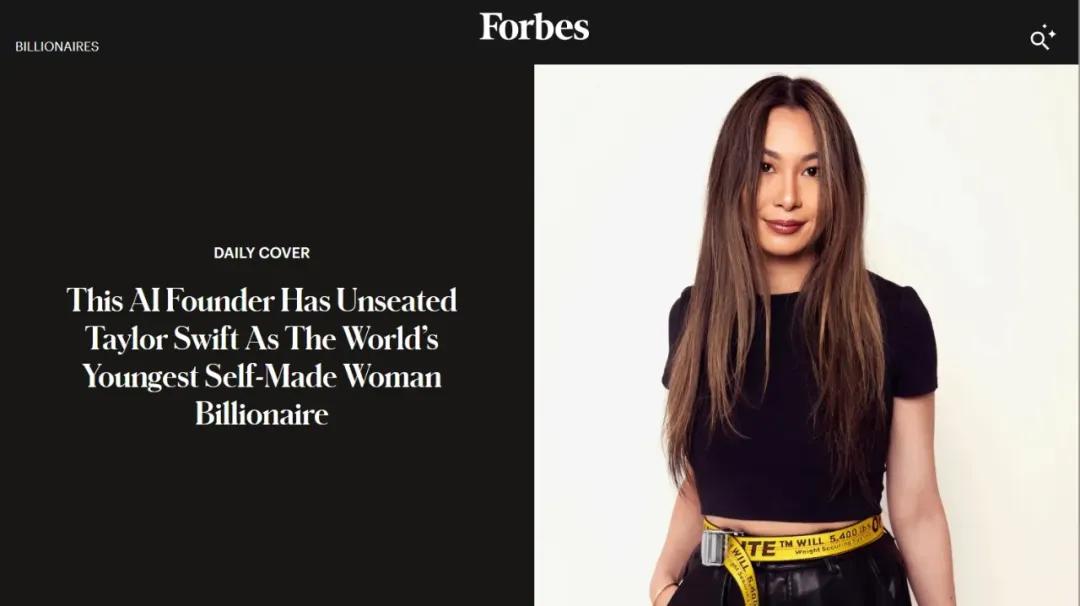
In fact, this is not the first time she has topped the list. As early as in the 2025 Forbes Rich List, she surpassed pop diva Taylor Swift to become the world's youngest self-made female billionaire.
Don't think that Lucy Guo is rich now. In fact, she had a tough time in her early years. In 1994, Lucy Guo was born into a Chinese immigrant family in California. The bursting of the Internet bubble in the early 2000s made her parents, who were both electronic engineers, lose their jobs, and the family fell into a difficult situation. This sudden change also stimulated her extreme desire for money.
When Lucy Guo was in the second grade of primary school, while her peers were still watching cartoons, she was already making money online with PayPal. In junior and senior high school, she resold trading cards, built websites to earn advertising fees, and even taught herself programming to write scripts for game players to earn extra money.
In 2012, Lucy Guo was admitted to Carnegie Mellon University, a well-known computer school. But just two years later, when she was just a few courses away from getting a double degree, she unhesitatingly chose to drop out to get Peter Thiel's $100,000 entrepreneurship scholarship.
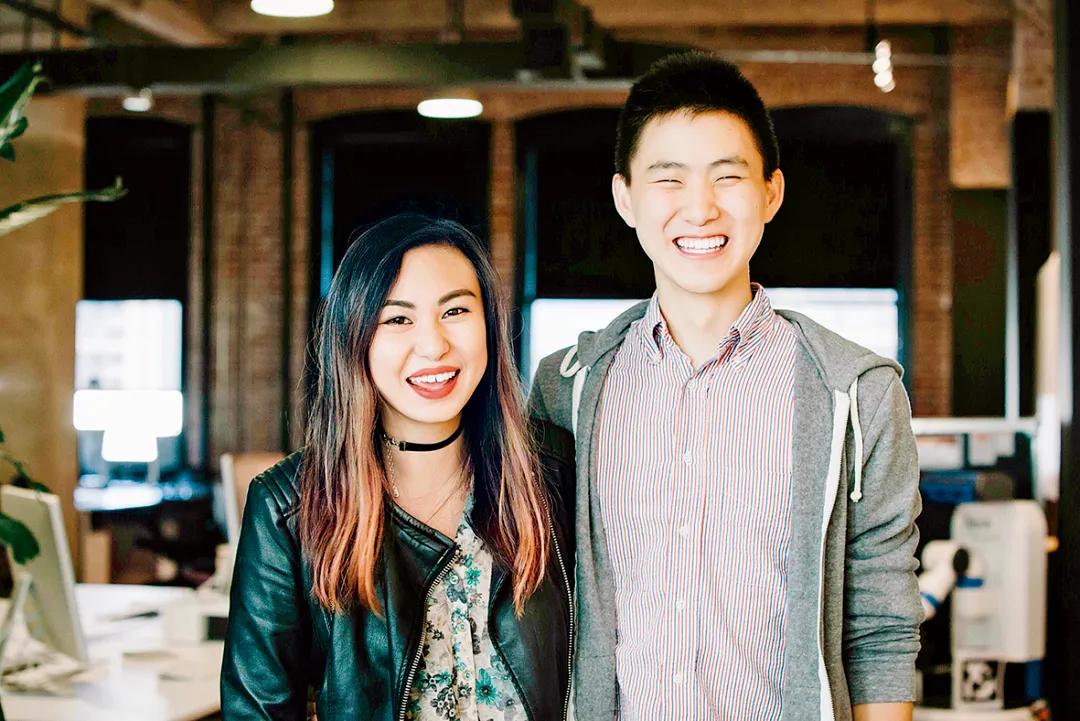
In 2016, 21-year-old Lucy Guo met 19-year-old Alexandr Wang, a dropout from MIT, during an internship at the Q&A platform Quora. The two Chinese geniuses set up a desk with wooden boards in a drafty basement in San Francisco and founded Scale AI.
▲
They had a sharp eye: While others were gold-rushing in AI, they chose to "sell shovels." AI needs a huge amount of data for training, and Scale AI specialized in the laborious task of data annotation. In 2018, Scale AI, which caught the wave of autonomous driving, quickly secured large-scale financing.
However, just as the company was taking off, the two founders had a serious disagreement. Alexandr Wang wanted to expand the scale crazily, while Lucy Guo insisted on fine-tuning the product through meticulous operation.
The final outcome was cruel:
Lucy Guo was kicked out of the company by Alexandr Wang in collaboration with the board of directors.
Being fired from the company she founded would have broken down an ordinary person, but Lucy Guo showed calmness beyond her age. When she left, she didn't choose to cash out but kept nearly 5% of her shares. At that time, the company's valuation was not high, and this 5% seemed insignificant, but her business sense told her that the potential of AI had not yet been fully unleashed.
Facts have proved that this was not only an act of patience but also an epic bet. With the explosion of generative AI, Scale AI became a core supplier to giants such as OpenAI, Meta, and Tesla. In June 2025, Meta, owned by Zuckerberg, spent $14.3 billion to acquire about 49% of Scale AI's shares, and the company's valuation soared to $29 billion overnight.
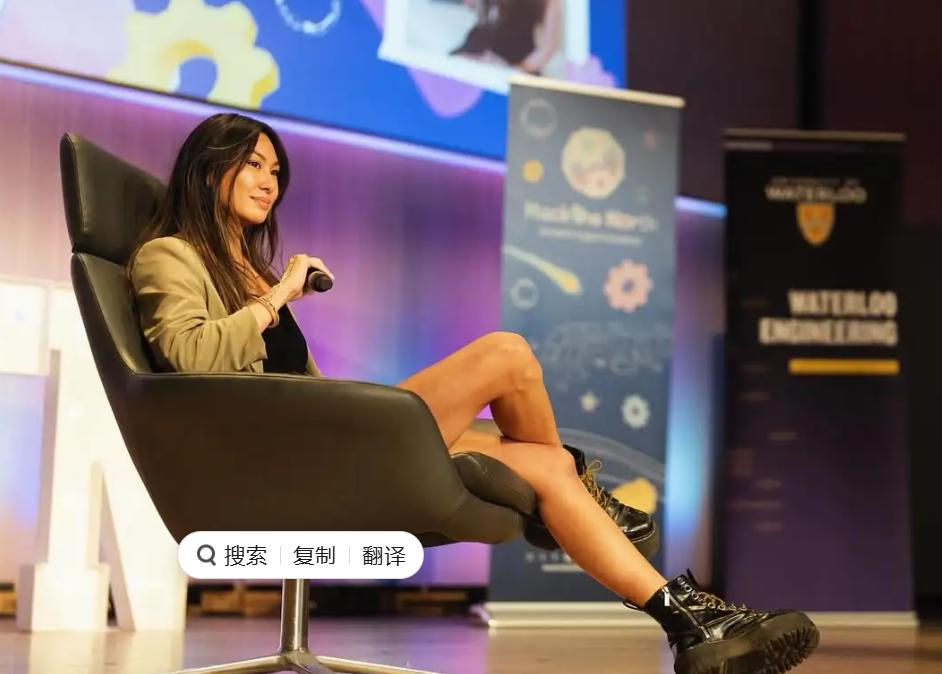
Lucy Guo's 5% stake suddenly jumped to $1.25 billion (about 9 billion yuan). She thus became the only woman in the world who, after leaving the company, still made it into the ranks of billionaires by relying on her founding shares.
Lucy Guo didn't idle around after leaving Scale AI. She founded the venture capital firm Backend Capital. The financial software company Ramp, in which she invested in 2020, now has a valuation of over $32 billion. In 2022, she founded the creator economy platform Passes, which has raised $65 million in financing in three years and has a valuation of $150 million.
Despite her nearly billion-yuan net worth, Lucy Guo still lives a very disciplined life. She gets up at 5 a.m. every day for high-intensity fitness and has never missed 3,000 consecutive check-ins. Her motto is "Discipline is more important than sleep."
Her comeback is not only due to catching the wave of the times but also an inevitable result of her sobriety and self-discipline.
3. Investing $1 million yields a 1,200-fold return! Chinese female elites are making a splash in the tech circle
Like Hong Letong and Lucy Guo, more and more Chinese female elites are making a big impact in the global tech circle.
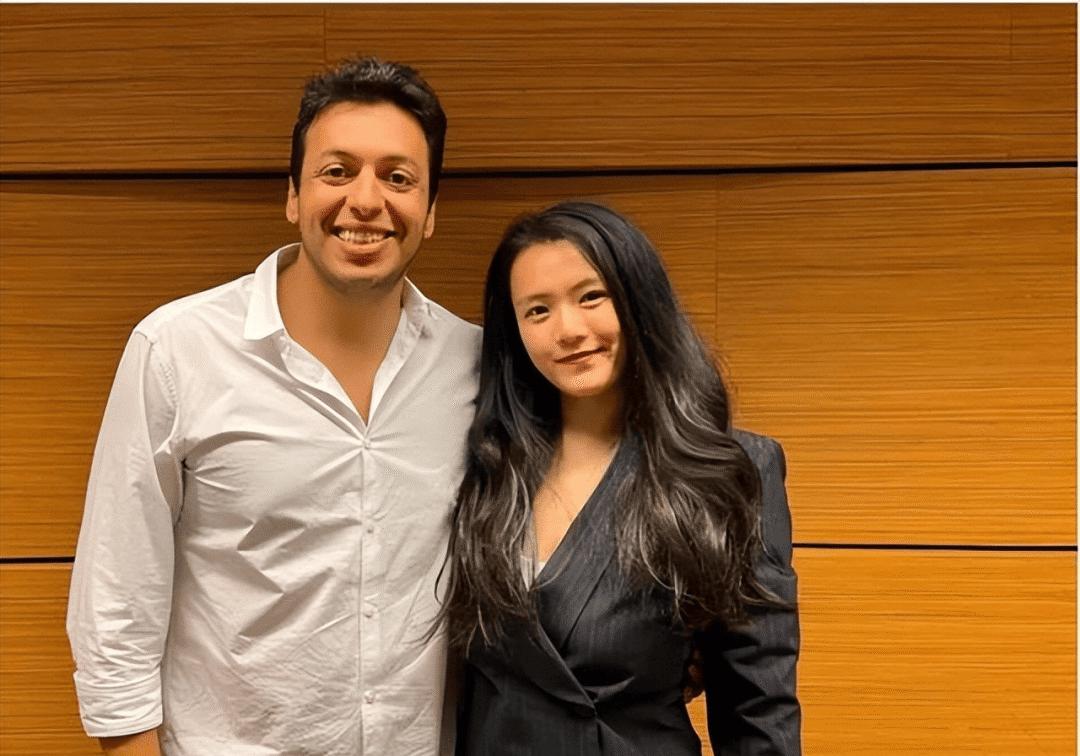
Before Lucy Guo, Shuo Wang, the founder of Deel, was already well-known in the global tech circle. As a girl from Northeast China who immigrated to the United States at the age of 16, she worked her way into the Massachusetts Institute of Technology and obtained a bachelor's and master's degree in mechanical engineering and robot design.
▲
In 2019, Shuo Wang and her alumni founded the human resources technology company Deel, which specializes in helping multinational companies solve the pain points of recruiting, calculating salaries, and paying employees across borders. Later, the global demand for remote work skyrocketed.
In less than five years, Deel became the fastest-growing SaaS company in history, with an annual revenue exceeding $1 billion and a company valuation of up to $17.3 billion, over 120 billion yuan.
Shuo Wang, with a personal net worth of $850 million, was named by Forbes as "the most successful Chinese immigrant female entrepreneur in the United States who started from scratch." Her wealth is on par with that of pop diva Madonna.
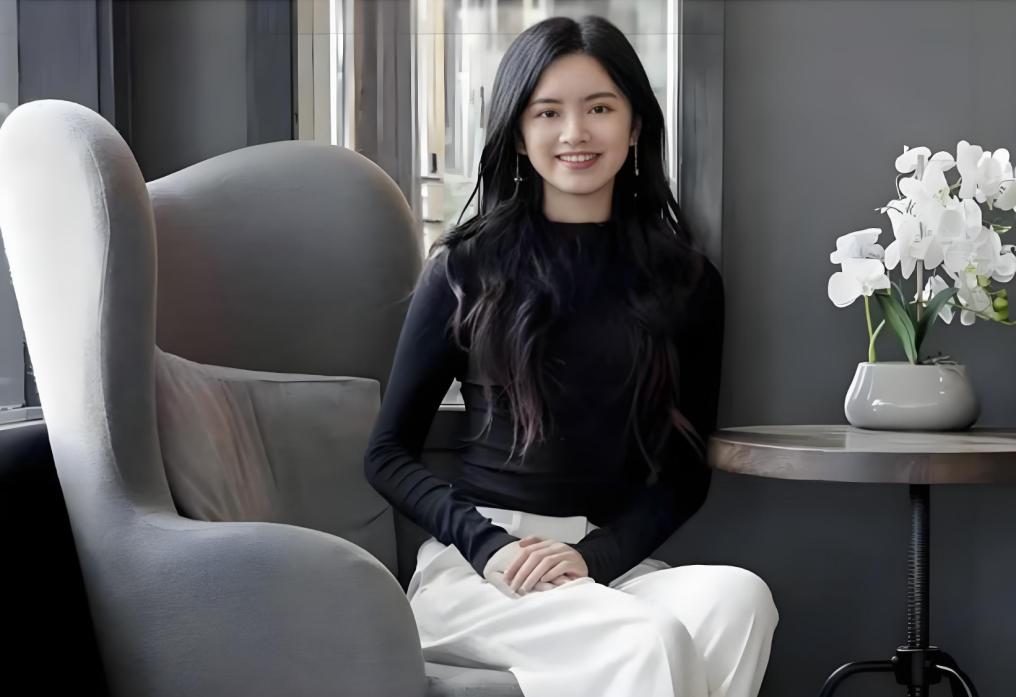
In the field of AI, a post-95s girl Guo Wenjing also caused a stir. In 2023, Guo Wenjing's AI video generation company Pika became extremely popular. The A-share "Xindaya" had eight consecutive daily limit up, simply because the chairman of the company is Guo Wenjing's father. The phrases "father benefiting from daughter" and "daughter concept stock" became popular overnight.
▲
However, Guo Wenjing's entrepreneurship was not initially favored. At that time, with the aura of a bachelor's and master's degree from Harvard, she dropped out of the Stanford AI doctoral program and founded Pika with three partners. In the field