Is diamond the ultimate chip?
In the past few decades, we have witnessed transformative developments in the field of power electronics. Starting from bipolar transistors, progressing through MOSFETs, and then to wide - bandgap (WBG) semiconductors such as silicon carbide (SiC) and gallium nitride (GaN), each technological innovation has brought higher performance, greater efficiency, and miniaturization of power systems.
Today, we are standing on an exciting threshold, which may mark another leap forward in the performance of power devices towards the legendary 99.99% efficiency: the use of synthetic diamond as a semiconductor material. For power electronics engineers, this is truly an exciting breakthrough.
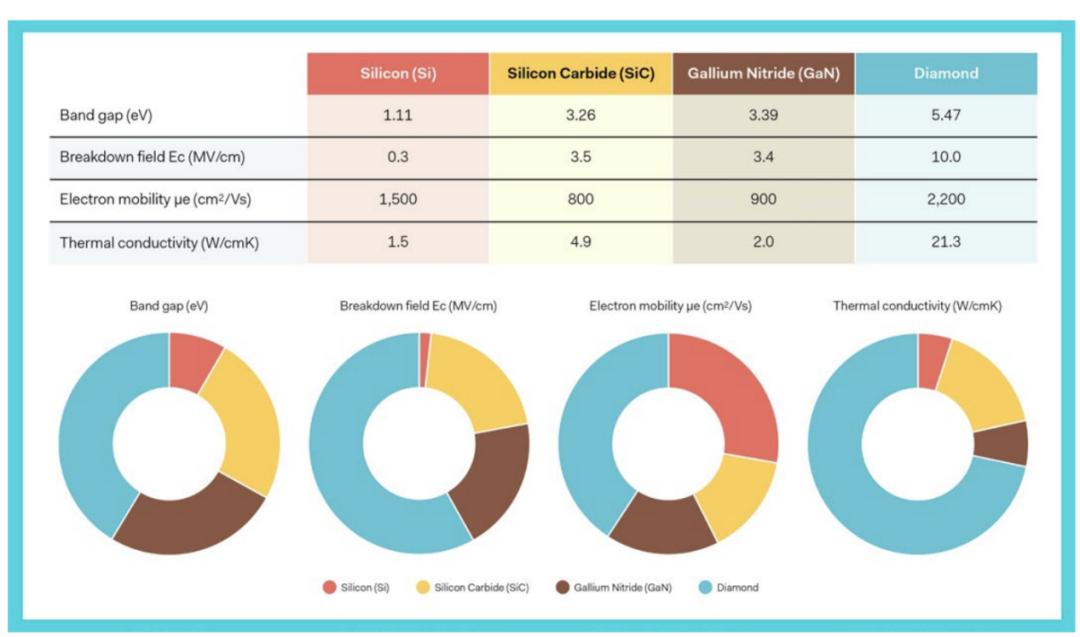
Figure 1: Material properties determine performance
Is it realistic to use diamonds in the semiconductor field?
This idea may sound far - fetched, even a bit of a pipe dream. After all, diamonds are traditionally associated with jewelry, industrial applications (such as abrasives), and cutting, drilling, grinding, and polishing machinery, or used in high - pressure laboratory experiments, rather than in power conversion systems or radio - frequency amplifiers.
However, for years, the scientific community has recognized that diamond is the material with the best heat - dissipation performance, and its thermal conductivity far exceeds that of traditional materials such as silicon. Nevertheless, the inherent hardness and processing complexity of diamonds have previously made them unsuitable for the semiconductor technology field.
Before delving into the performance and advantages of diamonds, it is necessary to outline the development history of diamonds in the field of technological applications. This history began in 1954 when General Electric (GE) successfully synthesized the first artificial diamond using the high - temperature and high - pressure (HPHT) method, marking the first successful human - made diamond. Following this milestone, the 1980s witnessed the first use of chemical vapor deposition (CVD) for diamond synthesis, and then the doping process was explored in the 1990s. Since then, researchers in synthetic diamond have continuously expanded their understanding of this material in terms of characterization, manufacturing, and processing.
However, advancements in materials science and manufacturing technology are rapidly transforming synthetic diamond into a strong competitor in the future semiconductor field. Let's explore why diamond is considered an excellent material, what advantages it has compared to traditional wide - bandgap semiconductors (such as silicon carbide and gallium nitride), and what obstacles still exist before achieving commercial maturity.
The Ladder of Technological Evolution
We used to say that the development of power electronics technology is like a ladder. Each major breakthrough pushes new technologies from research and development to the market, thereby improving performance. Diamond semiconductors may be regarded as the next stage, but some people think the challenges they face are too great to be realized.
It is worth noting that the success of silicon carbide (SiC) and gallium nitride (GaN) did not happen overnight. I remember that in the late 1990s, when SiC power diodes were first launched on the market, they were expensive, difficult to manufacture, and had reliability issues. The commercialization process of GaN started later. It was initially applied in the radio - frequency field and later developed into high - efficiency power transistors, which are widely used in various devices from fast chargers to data - center power supplies.
There is no doubt that traditional silicon semiconductor technology is already very mature and continues to improve with the emergence of new technologies. However, the success of SiC and GaN is mainly due to the industry's demand for higher voltage, higher efficiency, and higher switching frequency to reduce the size of the final equipment.
Today, silicon carbide (SiC) and gallium nitride (GaN) are widely used, from electric vehicles to solar inverters. Wide - bandgap (WBG) materials have significantly reduced the size, weight, and power consumption (SWaP) of devices, allowing us to enjoy powerful, energy - efficient, and compact USB adapters.
Gallium nitride (GaN) shows advantages in the high - frequency switching field due to its high electron mobility and low capacitance. Meanwhile, silicon carbide (SiC) has found its place in the medium - and high - voltage range, replacing IGBTs and silicon MOSFETs in applications such as electric vehicles and industrial drives.
However, both silicon carbide (SiC) and gallium nitride (GaN) have limitations. Some applications operating in high - temperature and harsh environments may require higher performance and greater stability, and the characteristics of diamond can precisely meet these needs and have a transformative impact.
An Overview of Diamond Advantages
To understand the potential of diamond, we must start with materials science. In the field of semiconductor technology, the performance of materials in high - power, high - frequency, or high - temperature applications depends on their key physical properties. We have listed the basic properties of silicon, silicon carbide, gallium nitride, and diamond in the table (Figure 01) and selected four key parameters to facilitate the comparison of the performance and advantages of different materials:
1. Bandgap
The bandgap is an important indicator for measuring the conductivity of a material and a key criterion for judging its suitability for high - temperature or high - energy environments. A wider bandgap means stronger anti - leakage and anti - breakdown capabilities, which are crucial for applications in extreme conditions. In this regard, diamond far surpasses all other materials. Its wide bandgap of 5.5 eV enables devices to operate at higher voltages and temperatures.
2. Breakdown Field Strength
The breakdown field strength refers to the ability of a material to resist electrical stress before conducting electricity. It is worth noting that for devices operating at high voltages, especially power electronics devices, a higher breakdown field strength is crucial. This is because ensuring the optimal performance of devices under extreme electrical loads is of great importance.
The theoretical critical electric field strength of diamond is close to 10 MV/cm, which is three times that of gallium nitride (GaN) or silicon carbide (SiC) and more than 30 times that of silicon. This allows devices to be made thinner at the same rated voltage, thereby reducing resistance and improving efficiency. It also paves the way for devices with rated voltages of 10 kV, 20 kV, or even 50 kV, which is expected to revolutionize high - voltage direct - current (HVDC) power transmission, electrified railways, and grid - connected energy systems.
3. Electron Mobility
Electron mobility refers to the speed at which electrons move under the action of an electric field. It is a key component of electronic switching and signal propagation, which often occur rapidly. Increasing the electron mobility in these devices can improve the performance of digital circuits and high - frequency analog devices. Although the electron mobility of gallium nitride (GaN) and diamond is similar, diamond devices may have a higher saturation speed, enabling extremely fast switching speeds, extremely low on - resistance, and lower losses. This is expected to push the switching frequency to new heights and further reduce the size of magnetic components such as transformers and inductors.
4. Thermal Conductivity Evaluation
Thermal conductivity is a material property that measures the heat - transfer ability of a material. In the electronics field, high thermal conductivity is crucial. This property is essential for effective heat dissipation, thereby preventing overheating and improving the reliability and service life of devices. Diamond has a thermal conductivity of up to 20 W/cmK, which is the highest among currently known materials, making it excellent in heat dissipation, which has always been a major challenge in the power electronics field.
As is well known, thermal management is one of the most costly and performance - limiting factors in high - performance systems. For example, gallium nitride (GaN) usually requires special substrates such as silicon carbide to avoid overheating.
The unparalleled heat - dissipation ability of diamond allows devices to operate stably at temperatures exceeding 400°C, enabling more compact and robust systems, especially in aerospace and high - temperature applications.
Where are we currently?
Although attracting much attention, diamond semiconductors have not yet achieved mainstream production. However, in the past decade, significant progress has been made, especially in the preparation of synthetic diamonds led by chemical vapor deposition (CVD) technology. CVD technology can prepare large - area, ultra - pure single - crystal diamond wafers, which is a key prerequisite for manufacturing reliable semiconductor devices.
Today, diamond Schottky diodes and power field - effect transistors (FETs) with good characteristics have been successfully demonstrated in the laboratory. However, due to factors such as manufacturing cost, defect density, doping control, and scalability, its full commercialization is still in the early stage. However,
The latest research results are exciting, and some notable progress has also been made.
Looking back, I feel the same as when silicon carbide (SiC) and gallium nitride (GaN) were in the research stage. As a power electronics engineer, I have in - depth studied a large number of papers on wide - bandgap technology and its prospects, written articles, and presented at conferences to share my enthusiasm with the power electronics community. Twenty years later, these prospects have become commercial realities.
After years of basic research, the application of diamond in the semiconductor industry is moving towards a new stage, namely pre - industrialization and building an ecosystem to support future commercial products.
It is almost impossible to list all the major progress that has occurred in the diamond semiconductor industry recently. In this article, we share some outstanding projects in Japan and France (EU), but it is certain that many similar progress has also been made in the United States.
1. Japan
It is reported that the first power circuit using synthetic diamond semiconductors was developed by a research team from a Japanese university. Led by Professor Kasa Makoto, the research team at Saga University explored the hypothesis that diamond semiconductors could surpass silicon and other existing materials and thus launched research on diamond semiconductors. Eventually, they developed a functional n - channel MOSFET transistor made of diamond.
Another important turning point in the development history of the Japanese semiconductor industry was the shutdown of the Fukushima Daiichi Nuclear Power Station (NPS). On March 11, 2011, a tsunami triggered by the Great East Japan Earthquake caused the shutdown of the Fukushima Daiichi Nuclear Power Station. During the decommissioning process of the nuclear reactor, a research project was launched in 2012 to develop diamond semiconductors that can operate in the harsh environment of the damaged nuclear power station, which had been highly contaminated by radiation.
This project was made possible by the convergence of technical expertise from well - known institutions such as the National Institute of Advanced Industrial Science and Technology (AIST), the Japan Atomic Energy Agency (JAEA), Hokkaido University, and the High - Energy Accelerator Research Organization (KEK).
The goal was clear: to design a key method to use diamond semiconductors capable of withstanding high radiation levels to monitor the system, thereby providing detailed data including the neutron dose of fuel debris. This was aimed at ensuring a safer and more efficient debris removal plan.
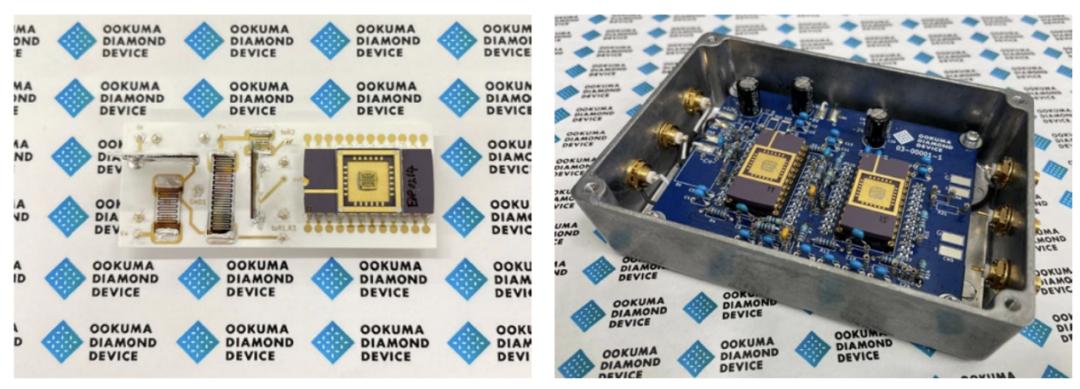
As part of this project, Ookuma Diamond Device Co., Ltd., a startup jointly founded by Hokkaido University and the National Institute of Advanced Industrial Science and Technology (AIST), established a vertically integrated diamond semiconductor manufacturing system, covering all aspects from substrate design to the assembly of the world's first differential amplifier circuit using diamond semiconductors. This circuit has been confirmed to operate stably for a long time in a high - temperature environment (300°C), and its latest prototype is shown in the figure.
In early 2025, it was reported that significant progress had been made in the field of advanced semiconductor technology. The National Institute of Advanced Industrial Science and Technology (AIST) collaborated with Honda R & D Co., Ltd. to successfully manufacture a hydrogen - terminated diamond MOSFET prototype. This breakthrough achieved high - speed switching operation at the ampere level for the first time, which is a major advancement in semiconductor research and development. The research team led by Keita Takae increased the substrate size and developed parallel wiring technology, thereby increasing the current. In the future, they plan to apply this technology to next - generation mobile power devices. Currently, they are verifying the preliminary results, which will pave the way for the research and development of diamond MOSFETs with higher current.
2. Europe
Several projects have been carried out in Europe. Notably, the "Horizon 2020" research and innovation framework program was launched in January 2014. The goal of this program is to strengthen the scientific and technological foundation of the EU, create a European research area, promote the free flow of researchers and knowledge, and drive the EU towards a knowledge - based society and a competitive economy.
As part of the "Horizon 2020" program, the sub - project "Green Electronics Technology Based on Diamond Power Devices" coordinated by the French National Center for Scientific Research (CNRS) aims to explore the possibilities and feasibility of this promising technology and formed an alliance for this purpose. This alliance brings together experts in power device design, diamond growth and characterization, packaging and testing, and innovative end - users. Most partners are also involved in the research of silicon carbide (SiC) or gallium nitride (GaN) technology, which enables the project to benefit from their rich experience and achievements in the field of wide - bandgap semiconductors.
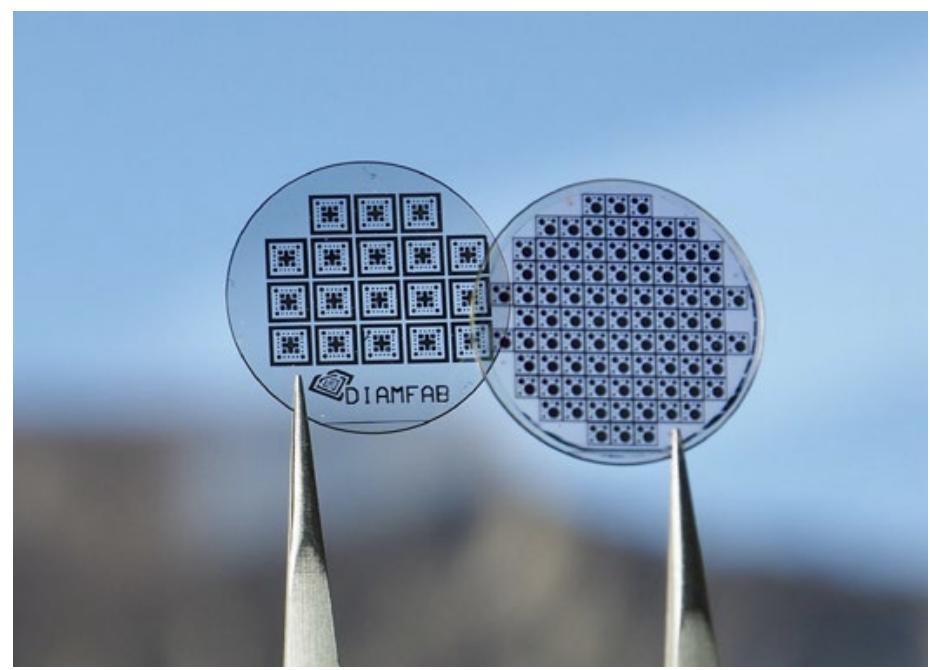
Among the many important reports released under this project, as part of the next - stage work, I would like to specifically mention the French company Diamfab. Founded in March 2019 by CEO Gauthier Chicot and CTO Khaled Driche, it is affiliated with the Néel Institute under the French National Center for Scientific Research (CNRS). Since its establishment, Diamfab has built a cooperation network dedicated to the development of diamond synthesis technology and the development of cutting - edge components such as Schottky diodes and MOSFET transistors (as shown in the figure).
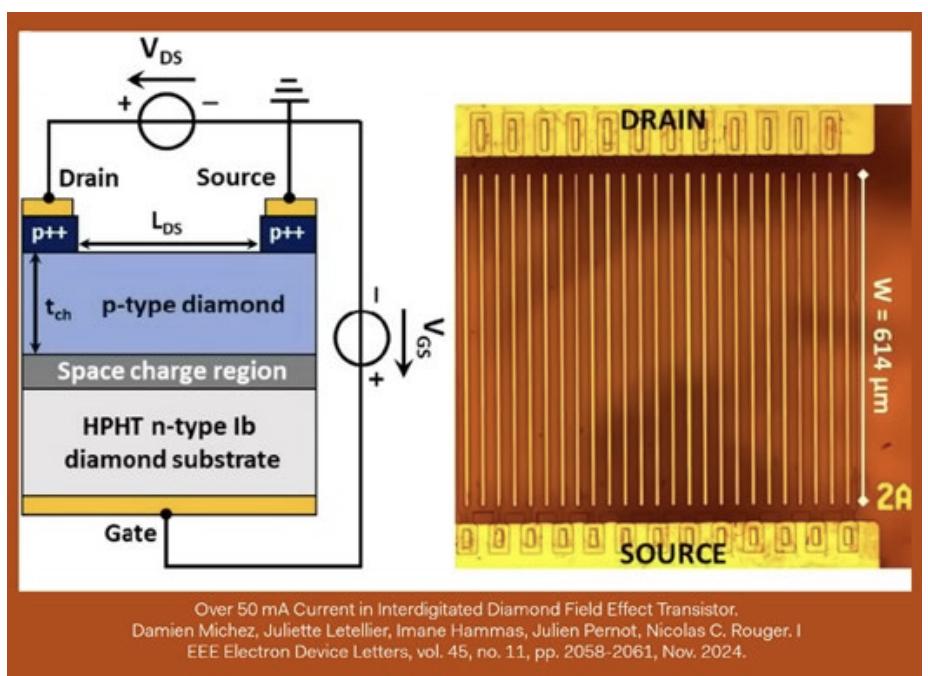
In terms of research, it is worth mentioning the cooperation among the Néel Institute of the French National Center for Scientific Research (CNRS), the Laboratory of Plasma and Energy Conversion (LAPLACE, CNRS/University of Toulouse/Paul Sabatier University), and the DIAMFAB company. They designed a diamond transistor that achieved a record body - current conduction of 50 mA. This device is a junction field - effect transistor (JFET) using body conduction.
The team successfully prepared a uniformly boron - doped diamond layer without any harmful defects. Therefore, they were able to increase the effective volume of the transistor and its gate. The gate size reached 14.7 mm and had 24 parallel finger structures. This transistor is no longer a simple micro - demonstration device but a truly usable device, indicating a good development prospect for diamond transistor technology.
Vision: Where Will Diamonds Lead Us?
Imagine an electric - vehicle inverter with an efficiency of up to 99.9% and a switching frequency of up to 1 MHz, without the need for a bulky cooling system. Imagine an ultra - compact space power module that can operate normally in the extreme temperature and radiation environment of the moon or Mars. Or envision a smart grid operating at a voltage of up to 100 kV, with its embedded sensors powered by diamond integrated circuits. These visions may sound a bit ahead of their time - but so did SiC/GaN 25 years ago.
If research and development continue, in the next two decades, diamond - based semiconductors are expected to become the preferred platform for ultra - high - power and high - reliability applications. Governments and private enterprises around the world are increasing their investment in diamond research and development, regarding it as a strategic technology with both energy and defense significance.
In the semiconductor field, materials determine the limits - and diamond redefines these limits. Although commercial applications may still take several years, the performance ceiling shown by diamond cannot be ignored. As the demand for higher efficiency, higher voltage, and smaller size in power electronics technology continues to grow, the industry must pay close attention