When AI starts to "develop" itself
In the famous blog post "The Gentle Singularity" by the founder of OpenAI, he envisioned a future where robots could create more robots. Eventually, global productivity would break free from the population ceiling and enter an era of exponential growth.
At the physical level, limited by factors such as materials and resources, this imagination may still be full of science - fiction elements. However, at the software level, the behavior of AI "replicating" AI has already begun.
Just last month, the AI programming product TRAE turned the SOLO mode built into the IDE into an independent client, including both desktop and web forms.
The benefits of doing so are obvious. After getting rid of the traditional IDE environment, non - professional users - those in product, design, operation, data and other fields - can "command" a hard - working AI engineer in a more familiar conversation scenario.
However, this is not the key point. The key is that this independent SOLO client was basically developed by SOLO itself...
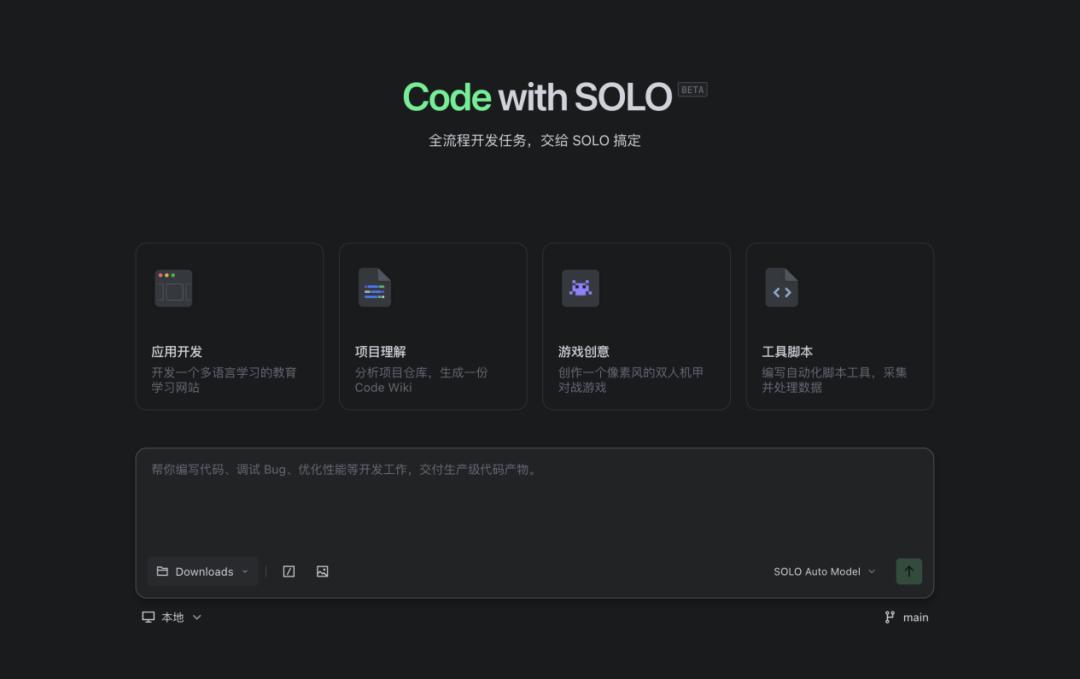
Overall, AI is always the most core code producer. Programmers also wrote the independent SOLO client through the SOLO mode throughout the process. Among the total of more than one million lines of code, the contribution rate from AI is as high as 93%. "It eats grass and gives milk."
In the past year, the signal has been extremely strong. The working paradigm of the entire software industry is undergoing huge changes and even upheavals, and the standards of what is valuable and what is not are being repeatedly revised and challenged.
Yes, "You're a mature AI now and should learn to support yourself" is no longer just a joke.
The only constant is change itself.
1
Going back a bit earlier, Chris Kempczinski, the CEO of McDonald's, was severely criticized. It wasn't because he did anything immoral, but in a live - stream of tasting a new product, his process of tasting his own company's hamburger was a "disaster."
It was like he was chewing on a battery. He only took a bite of the edge of the hamburger and then immediately started wiping his mouth with a paper towel. You couldn't even see him swallow. This hypocritical act made him the target of public criticism in an instant and gave an assist to his competitors. The CEOs of Burger King and Wendy's appeared on camera, showing themselves enjoying their own hamburgers...
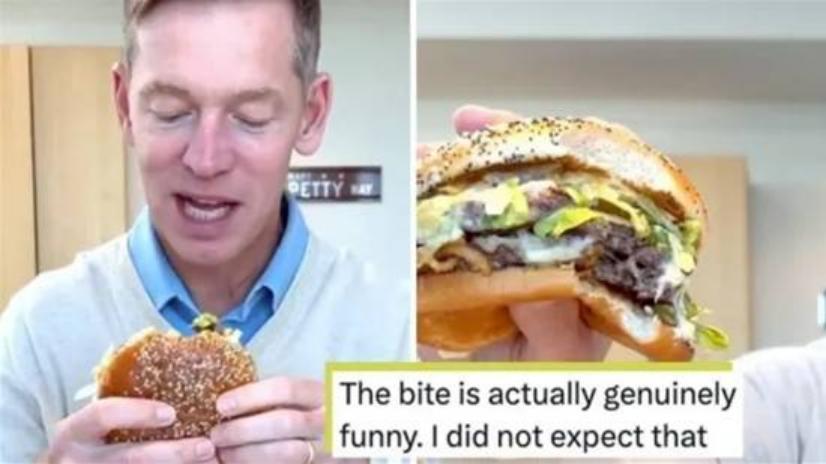
To be fair, Chris Kempczinski just let his physical instinct overcome his professional spirit. As an elite white man who has long paid attention to diet management, processed carbohydrates like hamburgers really made him unable to swallow. However, the sense of incongruity that even the executives don't love the company's products naturally can't gain the trust of consumers.
The reason I thought of this is that in the explanation of the TRAE team for the choice of "SOLO developing SOLO", they mentioned the basic logic of doing so:
If you really believe in AI Coding, you shouldn't just use it as a sales pitch. Whether you have participated in it and achieved results yourself is the most persuasive advertisement.
So, the TRAE team took the most important project as a test field for the best practice. Through the "oral spray" method, SOLO successfully replicated itself.
Biological theory holds that replication is the basic ability of life and one of the key features affecting the survival of life. This may sound a bit metaphysical, but the accelerated development of AI in recent years - especially in the past year - has really overturned the perception that it is just a "more useful tool" time and time again.
At the beginning, the "co - pilot" positioning of AI was deeply rooted in people's hearts. That's why Microsoft chose Copilot as the name for its AI assistant. But soon - I guess - Microsoft may have regretted it.
Because AI began to grab the steering wheel... To be precise, with the improvement of infrastructure such as MCP and CLI, AI has the ability to act and can complete work autonomously. Instead, humans are placed in the observation position.
Taking programming as an example, the need for manual completion by humans has been decreasing significantly. In the TRAE developer community, some heavy users said that they produced 300,000 lines of code from TRAE in a year, and the number of times they used the Tab key was only 12.
In other words, today's developers no longer need to develop software by themselves. Their new role is more like that of a manager, assigning tasks in advance and reviewing the results afterwards.
In the process of "SOLO developing SOLO", after grabbing the steering wheel, AI even takes over the route planning of where to go.
2
The team described their feelings when facing the iteration of AI programming ability as "painful but happy". At the beginning of the year, AI was just an intern who did odd jobs for them. By the end of the year, it was already assigning tasks to itself.
Taking SOLO developing its own client as an example, many people may assume that 93% of the code has a lot of water, and programmers still need to initiate frequent conversations to tell AI what to do. These conversations - such as "There's still an error", "Don't change the naming convention", "Just change this part and leave the others unchanged" - are not counted in the code proportion.
Well, maybe the development model was like this a year ago, but the version has long been updated...
According to what I've seen, the TRAE team shared their approach. The function responsible person collaborates with SOLO. Instead of rushing to write code, they first let AI output a complete technical solution to ensure that the execution path meets expectations and avoid large - scale rework that may occur later.
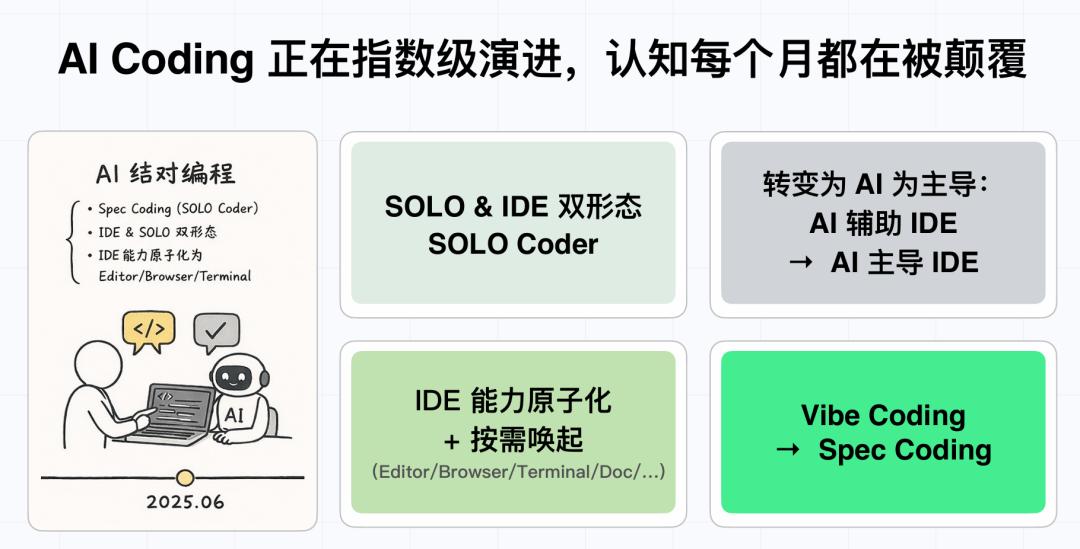
Facts have proved that this pre - alignment process has achieved a significant effect of "sharpening the axe doesn't delay the work of chopping wood". The main work of developers is focused on architecture design, complex logic, and innovation.
A subsequent change is that the dialogue between humans and AI is gradually replaced by long - term asynchronous tasks instead of real - time feedback. This shows that the paradigm of using AI as a hammer to find nails is a thing of the past. Once the work is clearly stated, AI will solve the problem by itself. Human intervention becomes "initiated only when necessary".
Skill is the biggest engineering creation in the past six months. Although the joke about distilling colleagues is really never getting old... Skill has made great contributions to getting AI "officially employed" from an intern as soon as possible.
There is a concept in economics called "friction cost". In the office scenario, friction mainly lies in the inconsistent ideas among employees. That's why there are endless meetings in the company. No one likes meetings, but they just can't stop because only communication can reduce friction.
As mentioned above, the collaboration of AI Coding tends to be asynchronous, which means the necessity of having meetings with AI is also greatly reduced. Encapsulating the experience of senior engineers into Skill, making it readable and emulatable for AI, not only improves the efficiency of humans and AI finding the optimal solution but also systematically eliminates the "friction cost".
Enterprises also welcome this reliable precipitation of R & D assets. Everyone is saying that AI enables "one person to form an army". The most important thing is that it should match the ability of the best person, rather than approaching mediocrity infinitely.
3
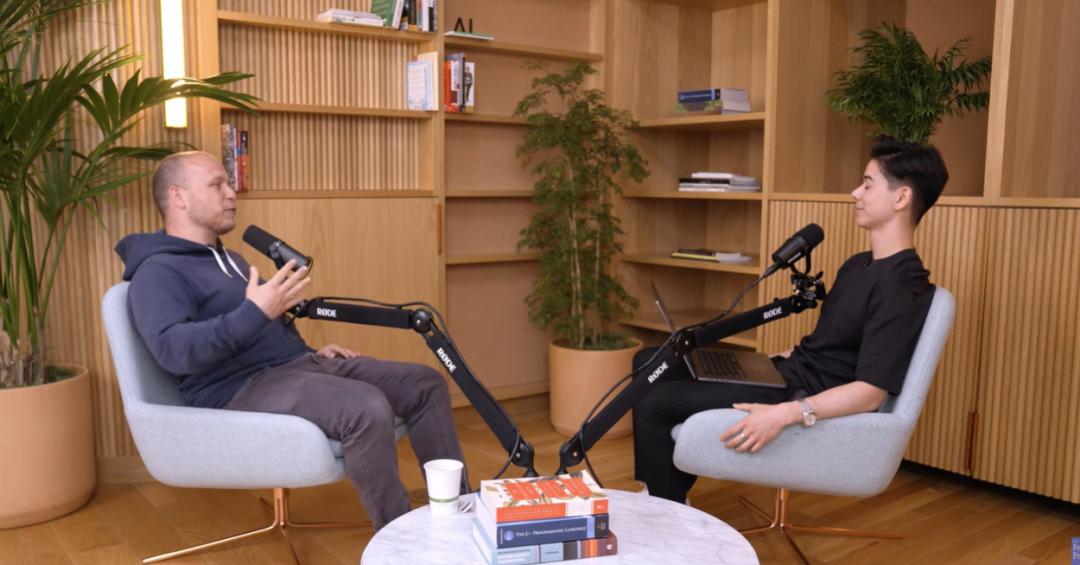
TRAE is not the first to try to make AI a "creator". At the beginning of this year, Boris Tchitchine, the person in charge of Claude Code, admitted that 90% of the code of this product, which earns a fortune for Anthropic every day, was written by itself.
Boris Tchitchine, a senior programmer, said that he has never had so much fun in his career. He can leave all the dirty and tiring work to AI and only needs to invest his time in the most worthy places for creation:
"We may be witnessing the end of an era. The position of Engineer will disappear, and it will be replaced by the Builder."
However, in the actual operation of "SOLO developing SOLO", the review from the TRAE team is more realistic. They think that we are still in the stage of quantitative accumulation and have not yet achieved qualitative breakthrough. Although the speed of individuals has increased, it is difficult for the speed of the organization to increase proportionally.
This is in line with the popular view in the industry. An individual adapting to AI is like a small boat turning around, which can be flexible and free. But an organization integrating AI is like a giant ship turning, which will have a long lag.
However, there is probably no disagreement among the world's top technology companies in terms of the overall direction and ultimate goal. Just as Jensen Huang said that those who use AI will eliminate those who don't, the same applies to companies. The earlier a company enters the AI Native dimension, the faster it will enjoy the new world.
For another example, we all know that the Android market in China is extremely fragmented. To make an app compatible with different common markets and mobile devices, a large amount of development resources are required. There are still criticisms targeting apps that don't support HarmonyOS, believing that this is neglecting the domestic system. No developer would do this voluntarily due to the shortage of manpower.
The example of "SOLO developing SOLO" provides a once - unattainable possibility. Let AI develop different branch versions of apps, and the compatibility, listing, and maintenance can be highly entrusted. Developers only need to allocate a small amount of manpower to ensure that the whole process goes smoothly.
This is a revolution in productivity.
It is said that Meta has a gamified leaderboard internally, ranking the Token consumption of more than 80,000 employees in the company. There are ranks from bronze to diamond. The CTO publicly stated that the company has no upper limit on the budget for reimbursing Token, meaning that employees can use it as much as they want.
Although this incident has caused a lot of ridicule because the picture is too abstract, in essence, encouraging AI programming to penetrate into the capillaries of software engineering, and even forcing the reconstruction of the enterprise production system, is correct.
The future of code freedom is product freedom, and the future of product freedom is creative freedom. The industrial era has brought material surplus, and the AI era is about to bring intellectual surplus.
So what is scarce? After all, it is still the person who makes the final decision of "just do it" and the person who knows where to "draw a line".
This article is from the WeChat official account “Lanxi” (ID: techread), author: Lanxi. Republished by 36Kr with permission.