The humanoid robot has Tyson's body but is still waiting for Hawking's brain.
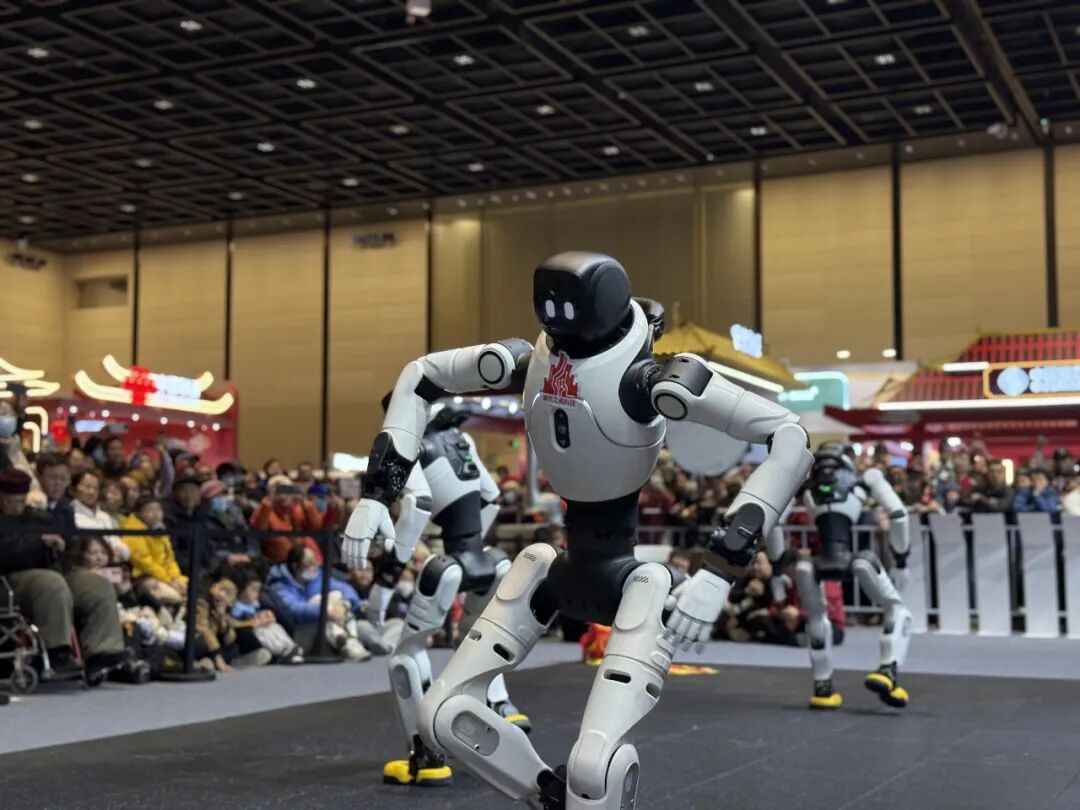
The roar of hydraulics and pneumatics and the rapid friction of metal cut through the tranquility of the spring night in Beijing.
Early in the morning of April 12th, the test event of the 2026 Beijing Yizhuang Humanoid Robot Half Marathon was launched. More than 70 participating teams staged a competition of speed and technology.
The Unitree humanoid robot remains the well - deserved focus on the field.
Its maximum speed can reach 10 meters per second, and its running indicators are approaching 95.8% of the average speed and 80.5% of the peak speed of Bolt, the world's top human athlete.
Actually, behind this glorious performance on the field, there is not only the painstaking efforts of hardware manufacturers like Unitree, but also the significant contributions from enterprises in the downstream of the industrial chain that focus on the motion control of humanoid robots.
As early as in the 2025 Yizhuang Humanoid Robot Marathon, the Unitree humanoid robot optimized by CityLink Technology won three major awards, which verified its technological and commercial value.
Half is like the sea, half is like the fire.
In fact, the glorious performance on the field has not covered up the controversies. The development of the humanoid robot track has always been accompanied by differences and discussions.
Some people worry that the humanoid robot track is overheated and there is a risk of the bubble bursting. But others firmly believe that this is a track that requires long - term accumulation and slow development.
In this regard, Xue Qingheng, the general manager of CityLink Technology, a top 3 robot scenario service provider in China, said:
Currently, humanoid robots already have a body like Tyson's. They only need a brain like Hawking's to be perfect.
In the next three to five years, humanoid robots will be mass - produced and enter more application scenarios.
And after five years, humanoid robots similar to real humans will enter thousands of households.
Unexpected Surge in Orders
On April 2nd, in the Shang8 Designers Advertising Park in Sihui, Beijing, just on the right - hand side after entering the park, is the robot scenario laboratory of CityLink Technology. I made an appointment to meet its general manager, Xue Qingheng, there.
As a long - time player in the industry, CityLink Technology not only participated in the humanoid robot marathon with Unitree and won three major awards.
It has also established cooperation with more than 100 leading domestic robot manufacturers and has accumulated rich experience in the field of humanoid robot application scenarios.
This accumulation was demonstrated as soon as I entered the laboratory.
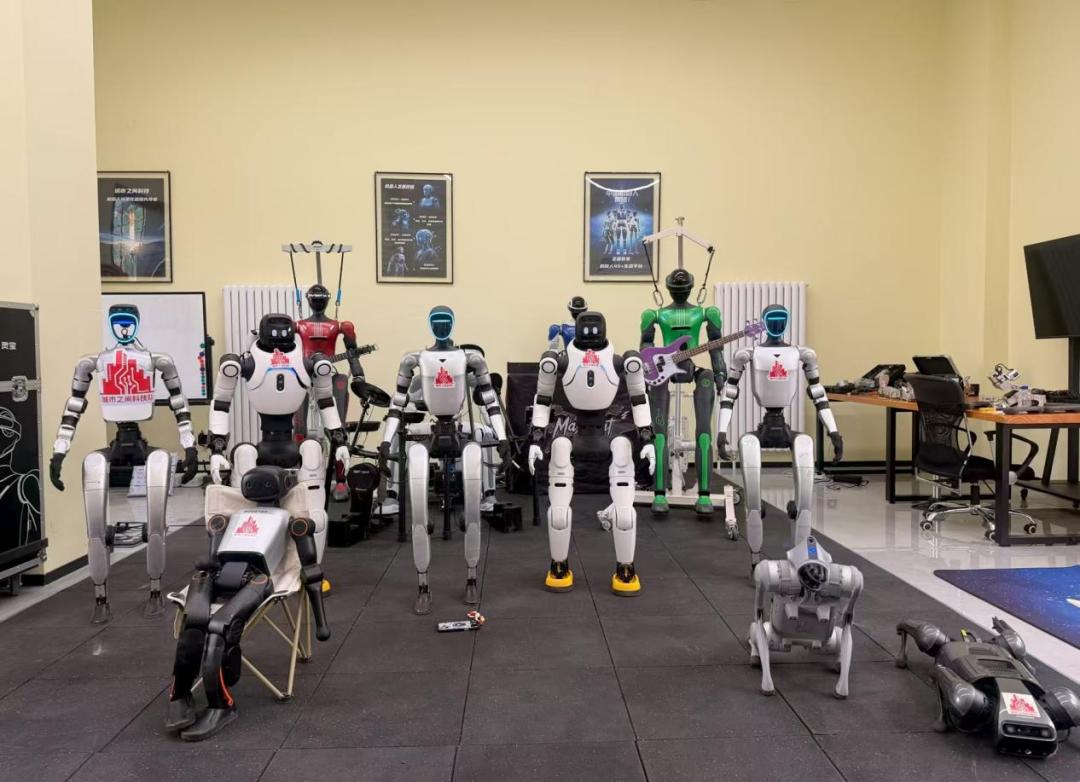
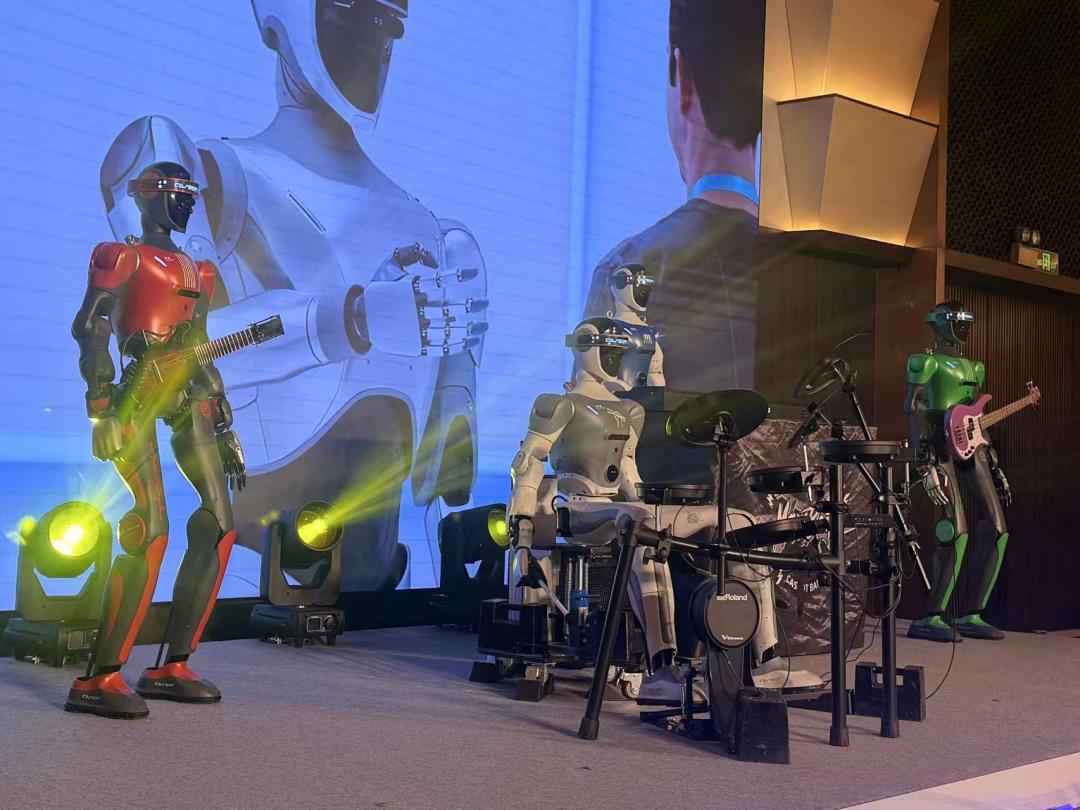
A robot band was particularly eye - catching. There were electronic organs, basses, guitars, and drum sets. Four or five robots of different brands were each performing their duties and had been well - tuned.
But there was an obvious look of tiredness on his face: "We haven't had a rest since the Spring Festival Gala. Currently, we've already scheduled such events until the middle of May. The schedule is very full."
In fact, since humanoid robots appeared on the Spring Festival Gala, they have started to move towards offline activities more quickly.
Lion dances, hip - hop dances, and guitar - playing. Humanoid robot flash mobs have been staged continuously in shopping malls and temple fairs across the country.
The various stunts performed by their mechanical bodies have amazed the audience and won continuous applause.
In the capital market, the pursuit of humanoid robots has been particularly enthusiastic.
Unitree has started the IPO process, with a valuation of 12.7 billion and a fundraising plan of 4.2 billion. The halo of "the first humanoid robot stock" has illuminated the entire STAR Market.
Jack Ma and Lei Jun have jointly invested 1 billion in Qianxun Intelligence. Qianxun Intelligence has raised more than 4 billion in seven rounds of financing, and its valuation has exceeded 20 billion.
According to statistics, there were more than 40 investment and financing - related events in the first quarter of 2026, among which more than 60% were billion - level financings. The valuations of leading enterprises such as Songyan Power, Pacini, and Xingdong Jiyuan have successively exceeded the 10 - billion - yuan threshold.
Although a large amount of hot money is flowing in, the industry is still in a window period where the technological path has not converged and the demand is not clear.
Under this situation, the upstream and downstream of the humanoid robot industry present a market pattern that is strikingly different and unexpected:
Upstream in the industrial chain, most complete machine enterprises have not yet found a mature profit - making model.
They still need to rely on continuous financing to maintain R & D and operations.
In contrast, downstream in the industrial chain, enterprises focusing on motion control and servo systems, which provide commercial performance services for the public, have witnessed a concentrated explosion of orders first.
They have become the first area to reap real benefits in this wave of the humanoid robot industry boom.
"I just watched the robot show its stunts on TV last night, and today I can touch a 'living' one at the temple fair." Some audience members exclaimed.
Some people hold a 100 - day banquet for their children to celebrate that the children have passed the critical period after birth, and humanoid robots start to help out.
Some wedding companies have launched packages such as "robot groomsmen and bridesmaids", "robot ring - bearers", and "robot hosts to warm up the atmosphere".
Some people specifically inquire about forming a robot lion - dance team to prepare for their elderly family members' 80th birthday.
Humanoid robots have quietly entered people's daily lives, witnessing the entire life journey of ordinary people from birth to old age.
From being highly sought after by capital to creating a carnival in the streets, humanoid robots have unexpectedly welcomed the first wave of commercialization explosion, but they have also attracted numerous criticisms.
There is No Useless Technology, Only Mismatched Scenarios
The piper's flute has sounded.
"Robots jumping around are useless. They're just for show."
Some people keep warning that the humanoid robot industry is overheated and the rapidly expanding bubble may burst.
A large amount of hot money has flowed into the track, but there is a lack of large - scale mass production and real - world application value as support. Demonstrative commercial performances such as dancing and boxing have become the main application forms of humanoid robots at present.
In the face of the controversy, Xue Qingheng has a clear and unique view.
He admits that the currently popular performance - based services are difficult to maintain their popularity in the long run.
As the supply of humanoid robots increases, the scarcity of such services will continue to decline, and it will be difficult to maintain the current high level of attention.
However, the dancing, boxing, and even marathon competitions of humanoid robots, even if they seem like gimmicks, are not meaningless.
These performances at least verify the current robots' body strength and motion stability.
He used an impressive metaphor:
"Humanoid robots now have a body like Tyson's, but they lack a brain like Hawking's."

In fact, when people discuss humanoid robots, they generally presuppose an idealized context:
These robots will eventually enter daily life and perform various practical tasks.
This expectation itself actually examines the current technological reality from a future standard and judges the current achievements based on long - term visions.
This cognitive dislocation naturally gives rise to many criticisms and doubts.
We know that for a humanoid robot to truly enter people's lives, a strong body and an intelligent brain are equally important and each has its own role.
Boxing, dancing, and even continuous marathon - style movements are essentially a hardcore verification of the robot's mechanical structure, joint performance, and motion control ability, and also a phased alignment of current technology and demand.
From the industry data, the core components of the execution layer of current humanoid robots have taken the lead in becoming mature. The batch shipment volume of domestic joint motors and reducers has exceeded 100,000 units, and the cost of the domestic - made dexterous hand solution has decreased by more than 50% compared with imports.
In contrast, the commercialization rate of the whole machine is less than 15%, and the adaptation rate of multi - modal large models to real - world operation scenarios is still less than 30%. This also verifies a core logic:
There is no useless technology, only mismatched application scenarios.
"It's really a pity that such good body technology is only used for dancing and boxing performances now and hasn't been matched with scenarios that can create more value."
This may be the most objective evaluation of humanoid robots at this stage.
In 5 Years, Humanoid Robots Will Enter Thousands of Households
In the book Do Androids Dream of Electric Sheep?, such a scenario is depicted:
After a nuclear war, the earth is desolate. In order to promote the Mars colonization plan, humans mass - produce humanoid androids that are indistinguishable from real humans, and they integrate into society as labor force and communicate normally at work.
Putting aside the industry disputes, this is the same core question that everyone is asking:
How far away is the era of humanoid robots that we are looking forward to, which can be widely applied to create real value and even enter thousands of households?
Xue Qingheng believes that the key problem hindering the practical application of humanoid robots is stability.
"The stability problem should be solved within three to five years. By then, humanoid robots will enter more practical scenarios in batches.
Last year, the industry only mass - produced a few thousand robots, but now the delivery volume has exceeded 10,000 units. China accounts for 82% of the global humanoid robot market. Judging from the data, domestic robots are showing an exponential growth trend."
But he also admits that it will take another five years for robots to truly enter thousands of households and have interaction and operation abilities comparable to those of real humans.
As the number of humanoid robots and the amount of data increase, the optimization of humanoid robots will be more perfect.
And this optimization precisely needs scenarios that meet different needs to support it.
"In the process of discussing business with various brand owners, we found that they only produce standardized products.
The robots they build from scratch must ultimately become a standardized product.
We think that each person and each scenario has different needs for robots, and that's why we are optimistic about this track.
This track should be called the innovation of application scenarios.
To enable everyone to get non - standard products is our original intention and what we have always adhered to."
So - called customization means breaking out of the unified general product framework and tailoring the robot's functions and interaction solutions according to the unique needs of different users and scenarios.
In Xue Qingheng's view, this insistence on customization is more in line with the future direction of humanoid robots.
"In the future, robots will definitely be applied at the C - end. The current B - end performances are just the most intuitive form of manifestation."
Standardized products may be able to achieve rapid batch delivery, but it is difficult to meet the diverse personalized needs of C - end users. Customization is the key to opening up the C - end market.
The future is bright, but all of reality has to be based on the objective laws of development.
Xue Qingheng believes: "It took us millions of years to evolve from a quadrupedal creature to a bipedal one. If you think about it this way, I think the evolution of humanoid robots also needs a certain long - term process."
Of course, this process will be much faster than the evolution history of humans.
This article is from the WeChat official account "NEXT Trend", author: Shu Yi. It is published by 36Kr with authorization.