Beyond human hands, China's first brain-computer interface unicorn aims to bring bionic hands to robots
What? A company specializing in brain-computer interfaces has also ventured into the field of dexterous hands?
Come, let's first watch the demo!
This hand can not only play with jump ropes and draw pentagrams.
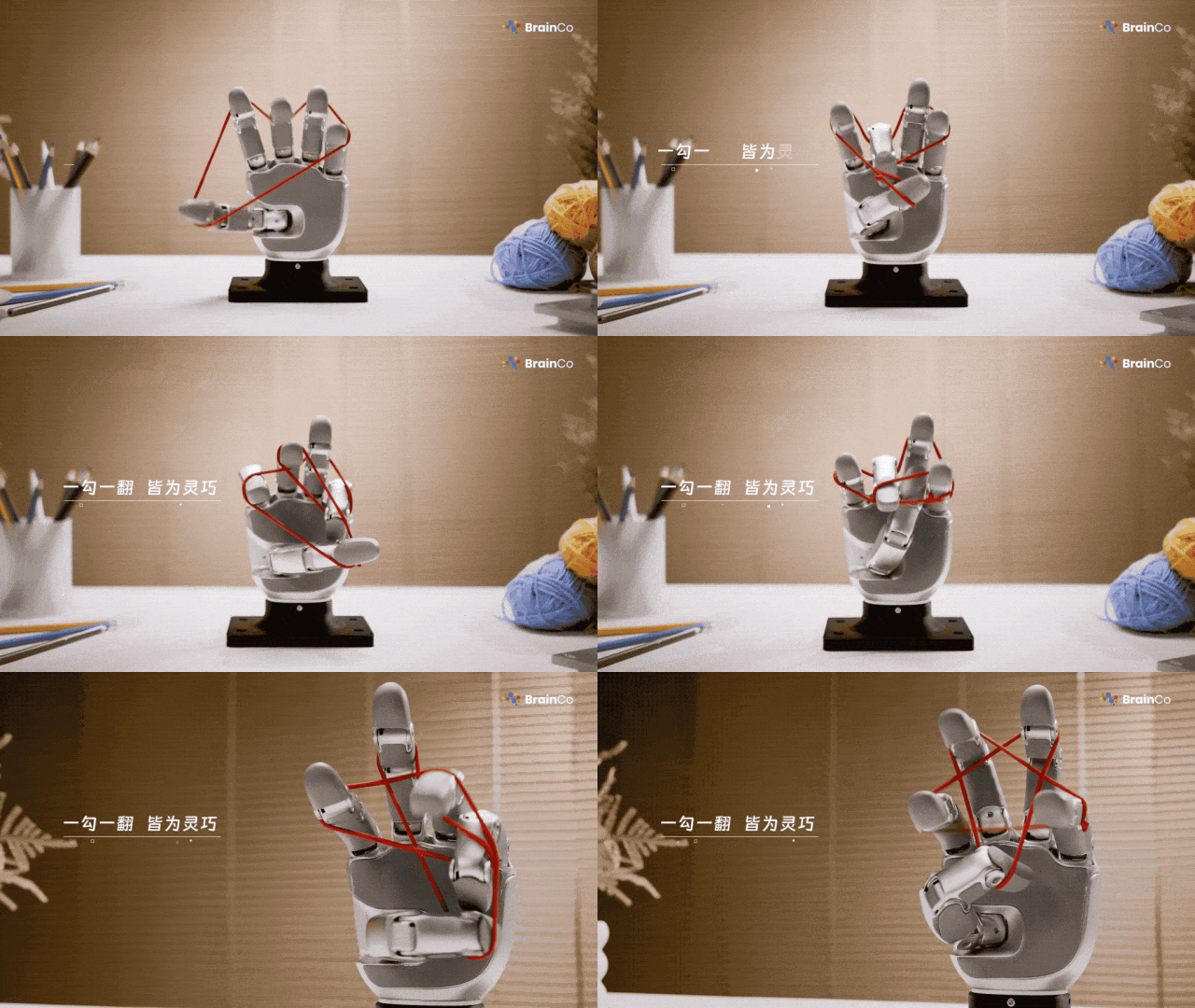
(To be honest, I was stunned by how well it played with the rope.)
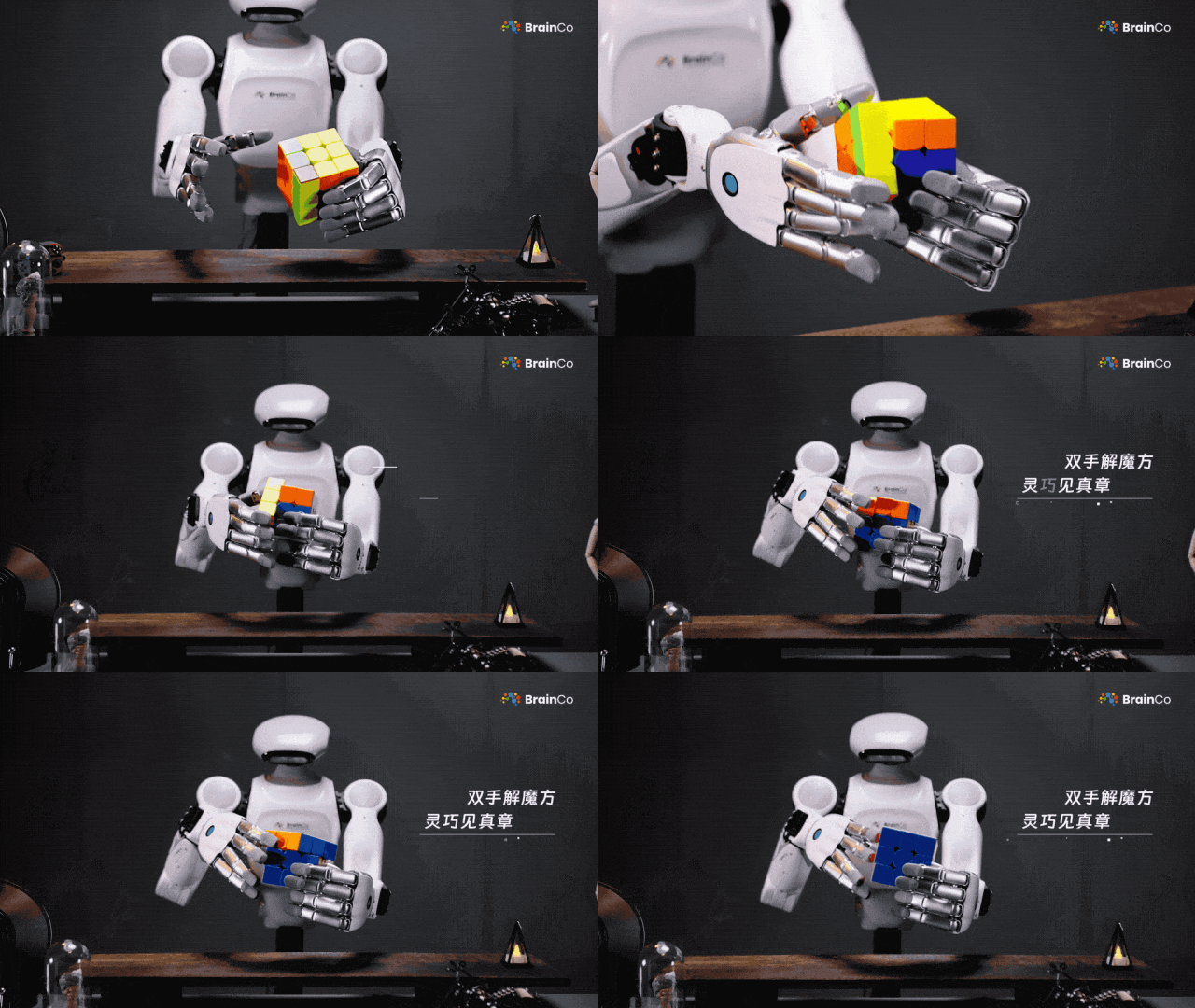
It can also use scissors to cut paper neatly and solve Rubik's Cubes with both hands in coordination.

It can even play with a fidget spinner.
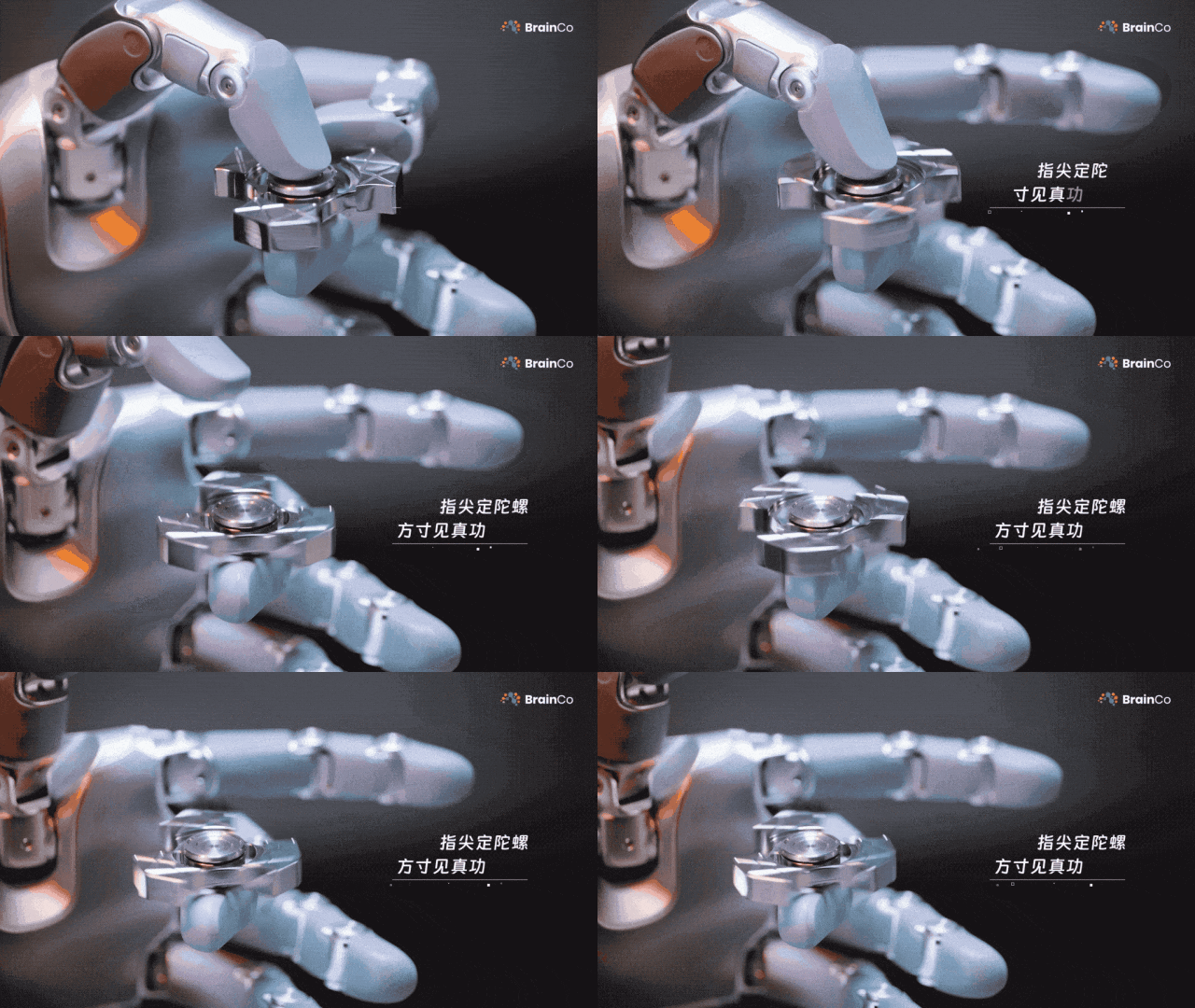
I have to say, after getting tired of seeing grippers for grasping, this robotic hand really seems quite impressive.
Many netizens, after watching, also exclaimed in the comment section: "It's even more flexible than a human hand!"

However, some people also expressed their doubts:
Is this a bionic hand for humans or a dexterous hand for robots?
The reason for this question is that this dexterous hand comes from Qiangnao Technology, one of the six rising stars in Hangzhou, which is well - known for its brain - computer interfaces.
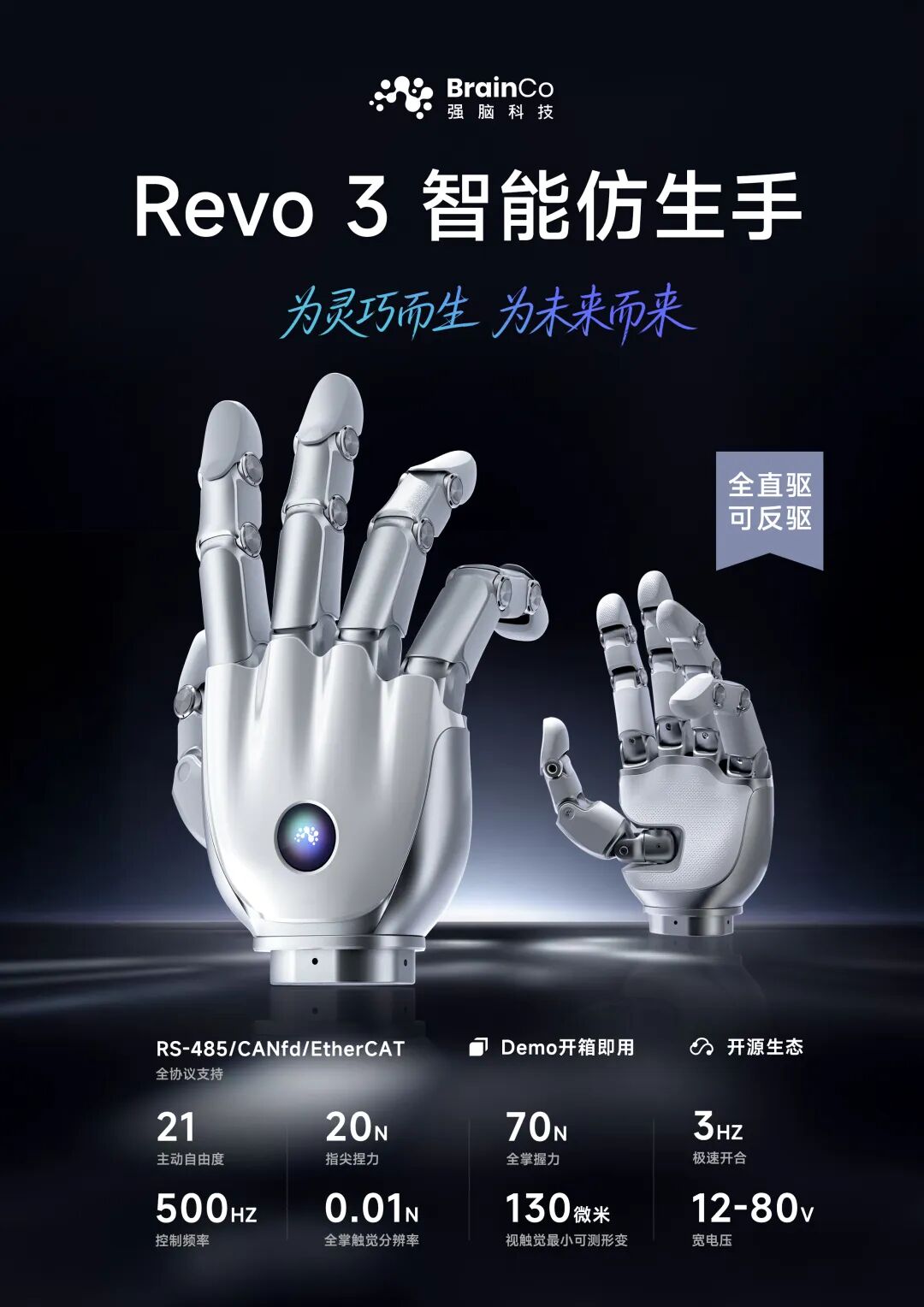
The hand in the demo is their latest dexterous hand product - Revo 3.
Needless to say, people's inherent impression of Qiangnao still remains on brain - computer interfaces and manufacturing bionic hands for the disabled.
But in the window where this perception hasn't had time to be updated, Qiangnao has quietly moved on to the next chapter:
From helping the disabled regain the use of their hands to enabling robots to use hands.
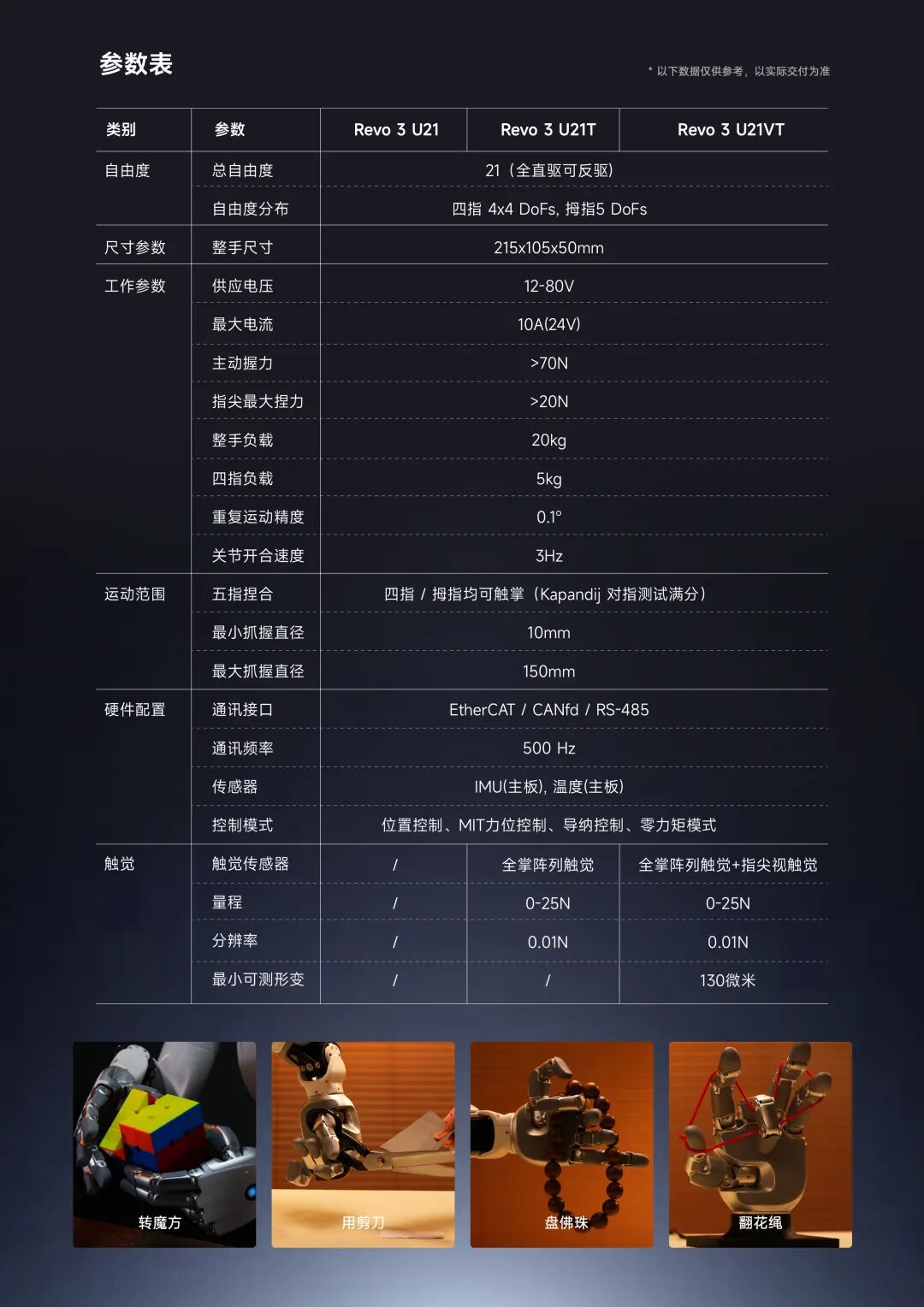
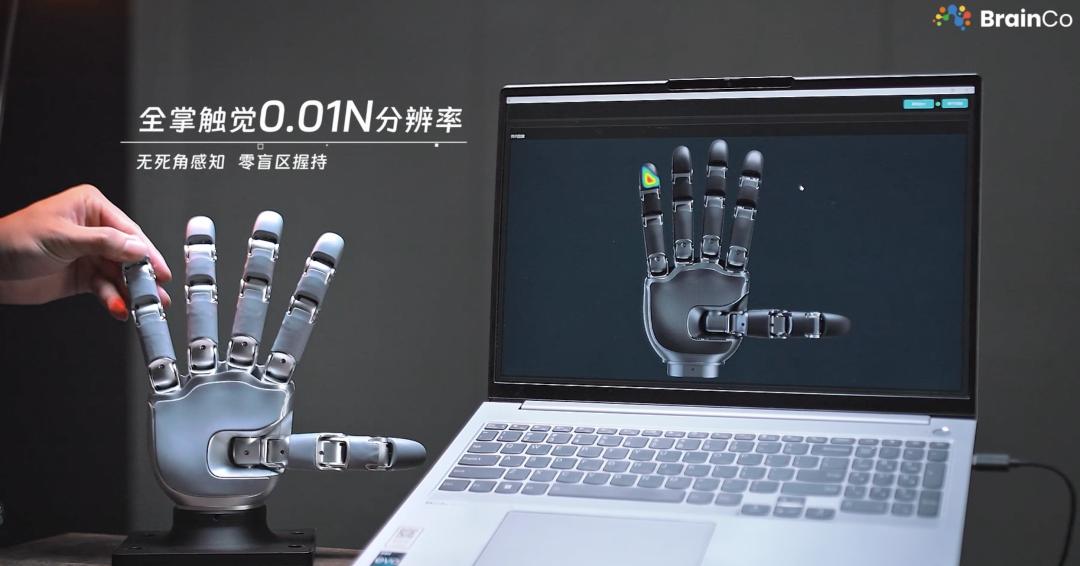
Revo 3 has 21 degrees of freedom in a single hand, adopts a brand - new direct - drive and back - drivable design, has full - palm tactile and fingertip visual - tactile capabilities, and the full - palm grasping force reaches 70N.
It is not only the world's first dexterous hand with an open - source ecosystem featuring over 20 degrees of freedom, full - palm tactile, and visual - tactile capabilities, but also has reached the leading level in the industry in terms of flexibility, perception, and controllability.
In terms of price, which everyone is most concerned about, Qiangnao revealed that the price of Revo 3 is quite cost - effective.
In addition, Qiangnao also plans to further combine the dexterous hand with the bionic hand. Looking further ahead, it is not impossible for Qiangnao, which started with brain - computer interfaces, to directly control robots with the brain.
This means that Qiangnao Technology, which is rumored to have submitted its prospectus for a Hong Kong IPO, is no longer just a candidate for the "first brain - computer interface stock", but is becoming the first complete narrative in the capital market about "brain - computer interface + dexterous hand or even embodied intelligence".
From controlling the dexterous hand with thoughts to controlling robots with the brain -
We may really be getting closer and closer to this path.
Revo 3: A Well - Rounded Hand
First, the conclusion: The newly released Revo 3 is a "well - rounded hand".
The term "well - rounded" here is not derogatory. In the dexterous hand market, most players' product strategies are to optimize a single parameter to the extreme -
Having the most degrees of freedom, the most sensitive tactile sense, or the lowest price, using a single indicator to create differentiation.
Qiangnao's choice is the opposite. They hope to find a balance among degrees of freedom, driving methods, perception capabilities, durability, and price, and create a well - rounded hand for people to use:
21 degrees of freedom in a single hand, a fully direct - drive and back - drivable design, full - palm tactile plus fingertip visual - tactile, self - developed high - density motors and reducers, and a full - palm grasping force of 70N.
No single parameter is deliberately exaggerated, but when combined, they form a rare "complete" product in the current market.
Degrees of Freedom: Hardware Shouldn't Hold Back the Algorithm
Degrees of freedom are the most controversial point in the current dexterous hand field, but their significance is often misunderstood.
More degrees of freedom are not always better, nor is fewer degrees of freedom always more convenient. They determine the upper limit of the embodied algorithm.
The mainstream training path for embodied intelligence is to let a human hand demonstrate an action first and then let the robot imitate.
If the robotic hand doesn't have enough degrees of freedom, it simply can't perform the actions that a human hand can do due to its structure, no matter how long it is trained.
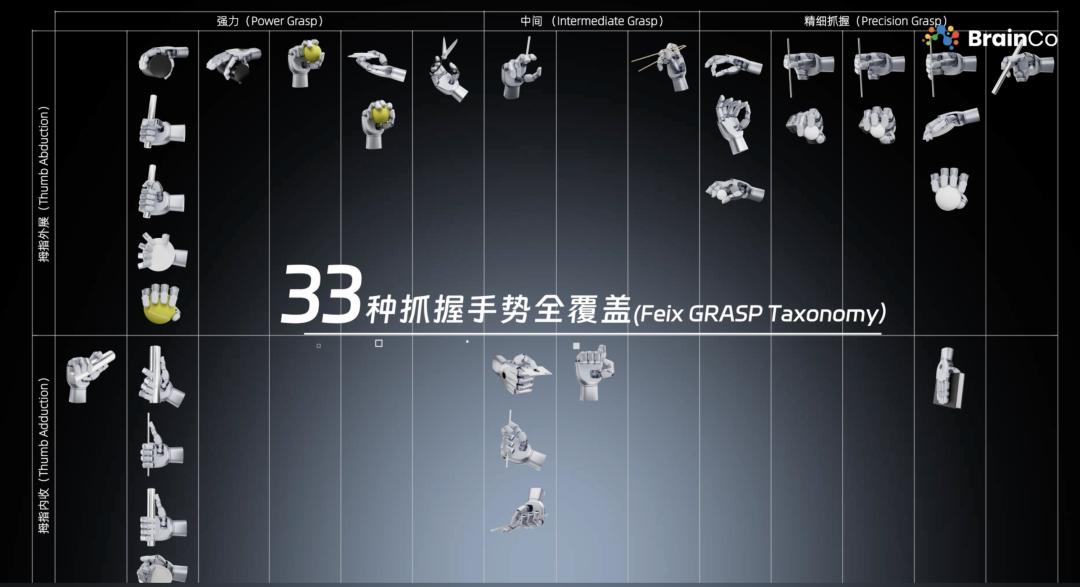
In practice, this creates a very real dilemma: Some algorithm teams spend half a year choosing a "hand" and finally find that the degrees of freedom of existing products limit certain scenarios, but they're not sure whether it's a hardware problem or an algorithm problem -
As a result, they end up suspecting both and delaying progress on both fronts.
Qiangnao conducted a systematic test on this.
The conclusion is: When the degrees of freedom increase from 11 to 20, the operational performance improves linearly and slowly; when it jumps from 20 to 21, there is a significant performance leap:
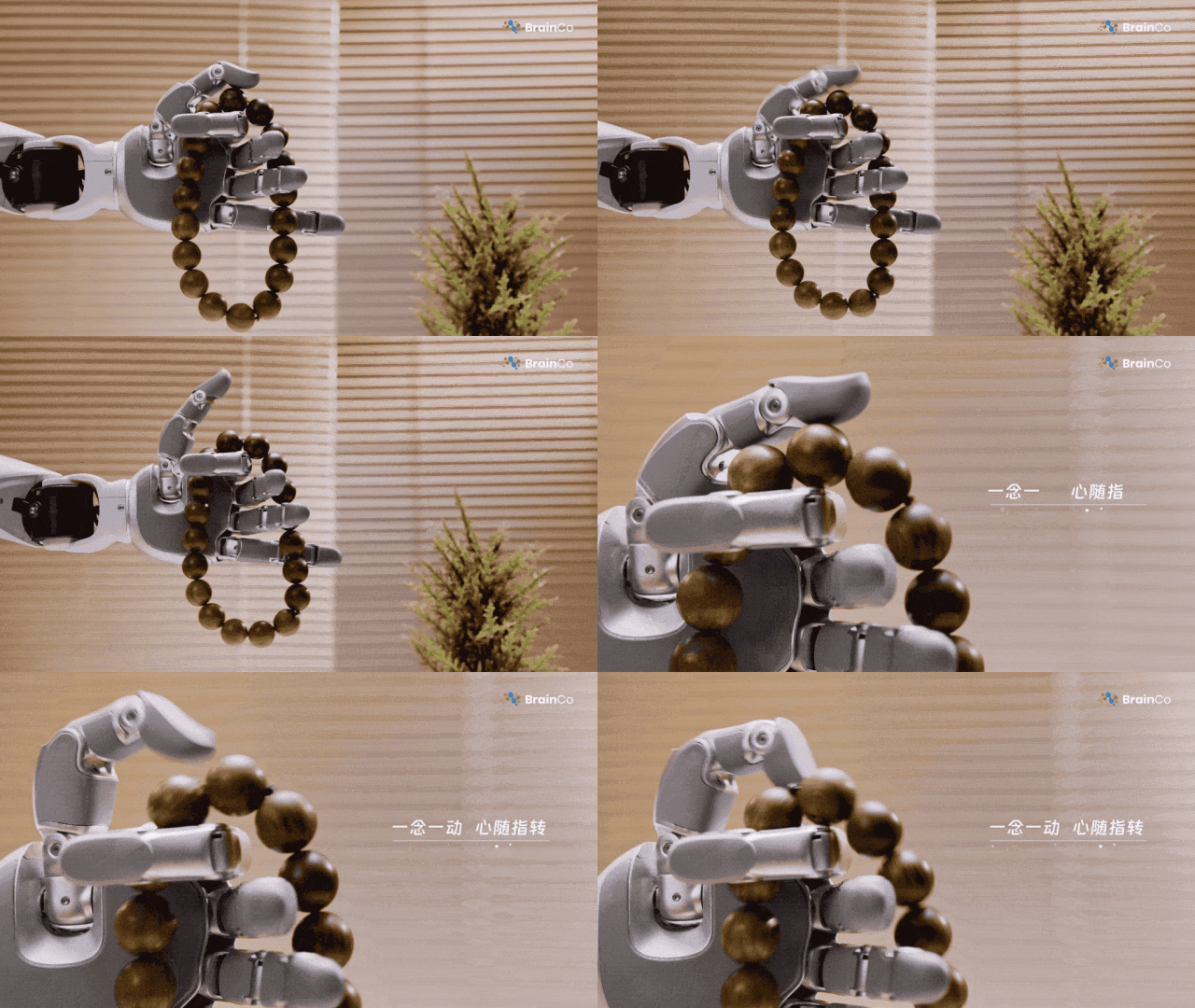
Actions such as playing with beads, jump ropes, Rubik's Cubes, and fidget spinners, which were originally exclusive to human hands, can now be stably reproduced by the robotic hand.
Beyond that, the marginal benefit starts to decline.
Therefore, Qiangnao's view is that 21 degrees of freedom is the current sweet spot, which is close to the 27 degrees of freedom of a human hand and won't lead to out - of - control control difficulty and durability issues due to excessive complexity.
Back - Drivability: Structure Without Control is Useless
Degrees of freedom solve the problem of whether a dexterous hand can perform an action, but how well it performs depends on the control strategy.
In terms of hardware architecture, Revo 3 uses full direct - drive and back - drivability to reconstruct the underlying logic of the control layer.
Different from traditional driving solutions such as rope - drive and linkage, Revo 3 adopts a fully direct - drive integrated micro - joint, combined with self - developed high - density motors and reducers, and integrates the drive - control board into the palm, achieving both miniaturization and high - power density.
This design eliminates the complex transmission chain, reduces wear and lag, and enables high - speed opening and closing at a response frequency of 3Hz.
What needs to be emphasized here is the back - drivable characteristic.
Because in operation, what determines whether a hand is "easy to use" is not just how many joints it can move, but whether it can "give way" at the moment of contact.
If the joints of a dexterous hand are too rigid, even if it has enough degrees of freedom, many actions cannot be trained.
The reason is that one of the mainstream training methods for embodied intelligence - reinforcement learning - heavily relies on the simulation environment.

△
In the simulation, contact is assumed to be "compliant", and the control strategy assumes that the hand can flexibly adjust the force when contacting an object.
However, if the joints of the real - world hardware are completely rigid, problems such as excessive contact force, jamming, and vibration will occur as soon as it touches an object, and the strategies trained in the simulation will basically be useless on the real machine.
This is one of the core sources of the sim - to - real gap, and back - drivability is the key to bridging this gap.
The full direct - drive + back - drivable solution adopted by Revo 3 enables each joint to have force - feedback capabilities.
When encountering external resistance, the motor can retreat in response to the external force instead of resisting it -
This is not just for collision prevention. More importantly, it allows the robotic hand to adjust the force in real - time during contact, achieving true compliant force control.
In Qiangnao's words, the biggest advantage of back - drivability is not collision prevention, but making training more friendly.
What can work in the simulation is likely to work on the real machine. This step transforms Revo 3 from being able to move to being able to be trained.
Tactile Fusion: Controllable but Unable to See or Touch
After solving the structural problems and making the control strategy transferable, there is still one last gap: perception.
Dexterous hands have long been ridiculed as "clumsy" for a simple reason: The algorithm can only observe actions through external cameras, and the hand itself cannot sense whether an object is slipping, being crushed, or properly aligned.
Revo 3's solution is to use two systems simultaneously:
The full - palm tactile array is responsible for real - time perception of the object's contour, softness, and sliding direction;
The fingertip visual sensor is responsible for sub - millimeter - level alignment during the pre - grasping stage, which is like having eyes on the fingers.
Together, they form a local perception closed - loop: The algorithm no longer needs to rely on a global camera and a large model to guess the contact state. The hand itself can tell it "it's grasped firmly now", "it's sliding down", or "it's a little off - center".
The success rate of tasks such as threading a needle and fine assembly has been greatly improved as a result.
Price and Durability: Enabling Robots to Use Hands
Price and durability are the last hurdles for Revo 3 to move from an eye - catching exhibition stand to real - world usability.
As is well - known, some high - end dexterous hands in the current industry have raised the price threshold to a level that is out of reach for most developers while pushing the performance to the extreme.
However, the problem is that it's difficult to actually use an overly expensive hand. If it can't enter real - world scenarios, it's hard to enter the positive cycle of joint iteration between developers and manufacturers.
In contrast, Qiangnao believes that a more affordable and durable hand has a better chance of being used repeatedly and continuously refined.
In terms of durability, Revo 3 will continue to meet the standards of the second - generation hand, and its overall performance is in a relatively good range in the industry.
In terms of the developer ecosystem, Qiangnao plans to open - source the embodied algorithm with the goal of enabling users to get it up and running within half a day after purchase;
At the same time, Revo 3 is already compatible with mainstream simulation platforms such as MuJoCo, Isaac Gym, and NVIDIA Omniverse, and will launch a supporting remote - operation data collection solution to support the collection of full - scale action data for 21 degrees of freedom.