LeCun gives a thumbs up: Domestic open-source models are taking over Silicon Valley, with a cost-performance ratio over 10 times higher.
Wow, Silicon Valley has actually been occupied by Chinese open - source models!
Even Yann LeCun gave a thumbs - up and said: That's right!

The first - generation AI programming darlings, Cursor and Devin, have both been exposed for claiming to have self - developed models, but in fact, they are just repackaging Chinese open - source models.
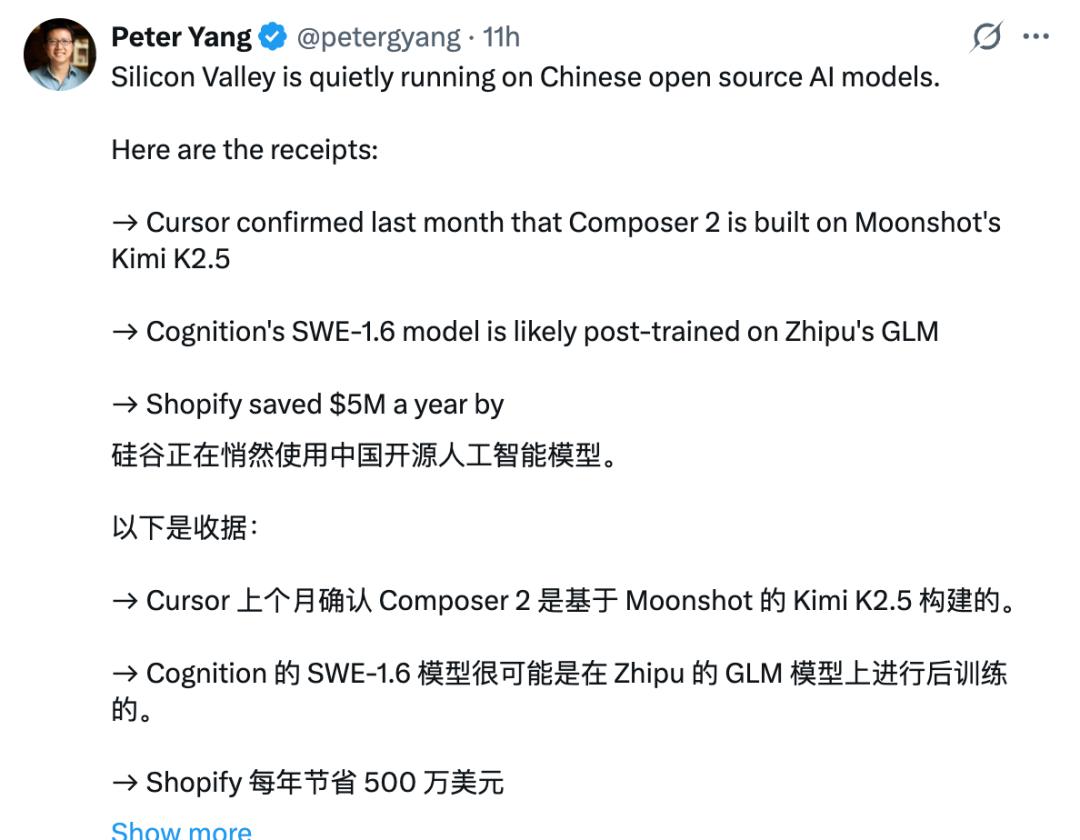
Last month, Cursor admitted that its Composer 2 is a repackaged version of Kimi K2.5.
Cognition, the company that first launched the "AI auto - engineer" Devin, its self - developed model SWE - 1.6 is suspected of being post - trained on the GLM model.
Actually, it's not just these two. Similar examples are increasing, and the popularity of Chinese open - source models in Silicon Valley is on the rise —
Shopify saved $5 million annually by switching to Qwen. Brian Chesky, the co - founder of Airbnb, also said: Qwen is good, fast, and cheap, and it's even better than GPT!
Moreover, GLM - 5.1, the latest model released by Zhipu, is an open - source model that outperforms Opus 4.6 in some indicators. It is estimated to be quite competitive in Silicon Valley in terms of cost - effectiveness.
Domestic open - source models are sweeping Silicon Valley
It's not uncommon for foreign models to choose to distill Chinese open - source models or conduct post - training on them. This has become a common occurrence.
Last month, Cursor's self - developed model Composer 2 outperformed Opus 4.6 in the benchmark test, and its price was significantly reduced.
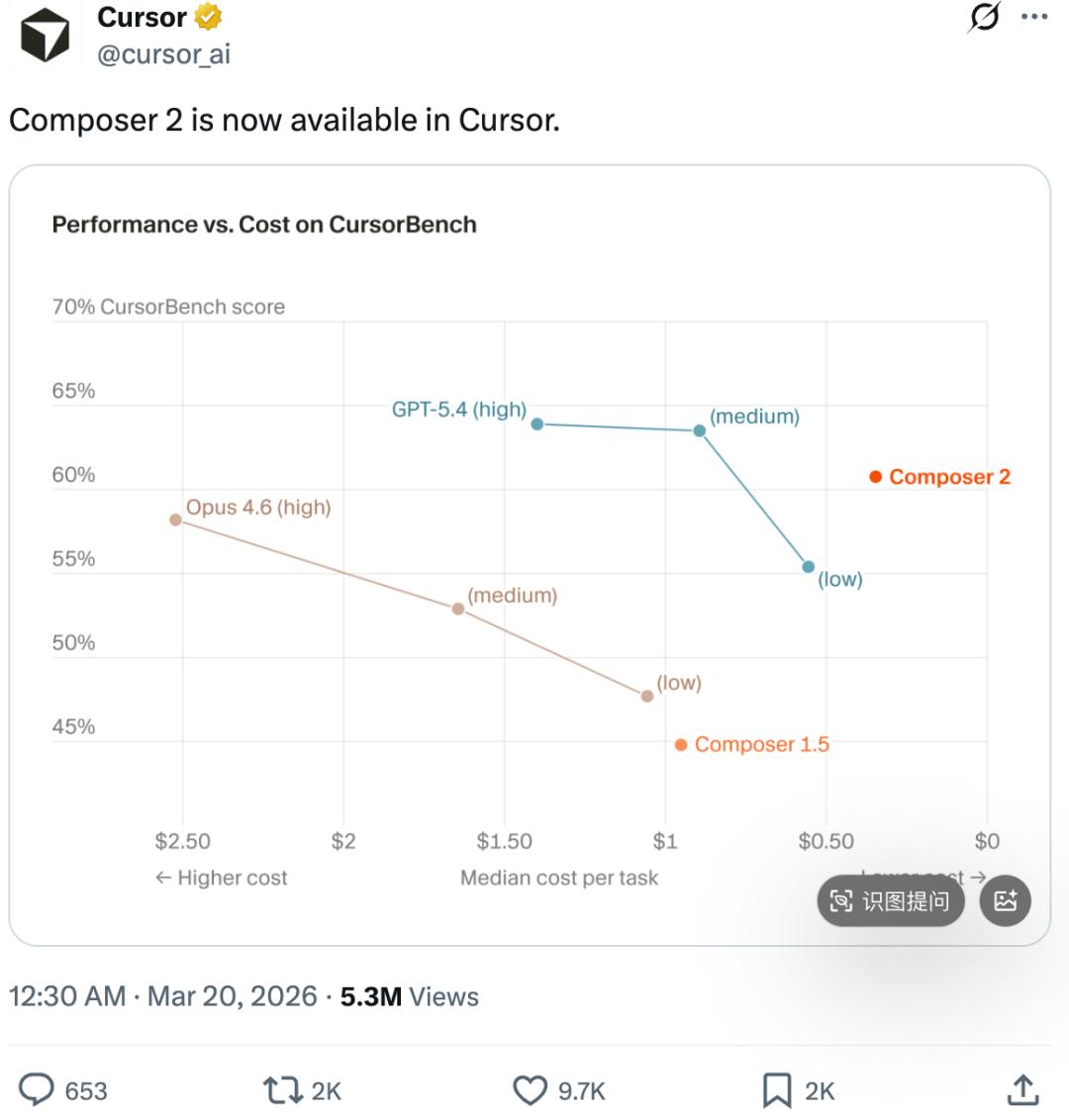
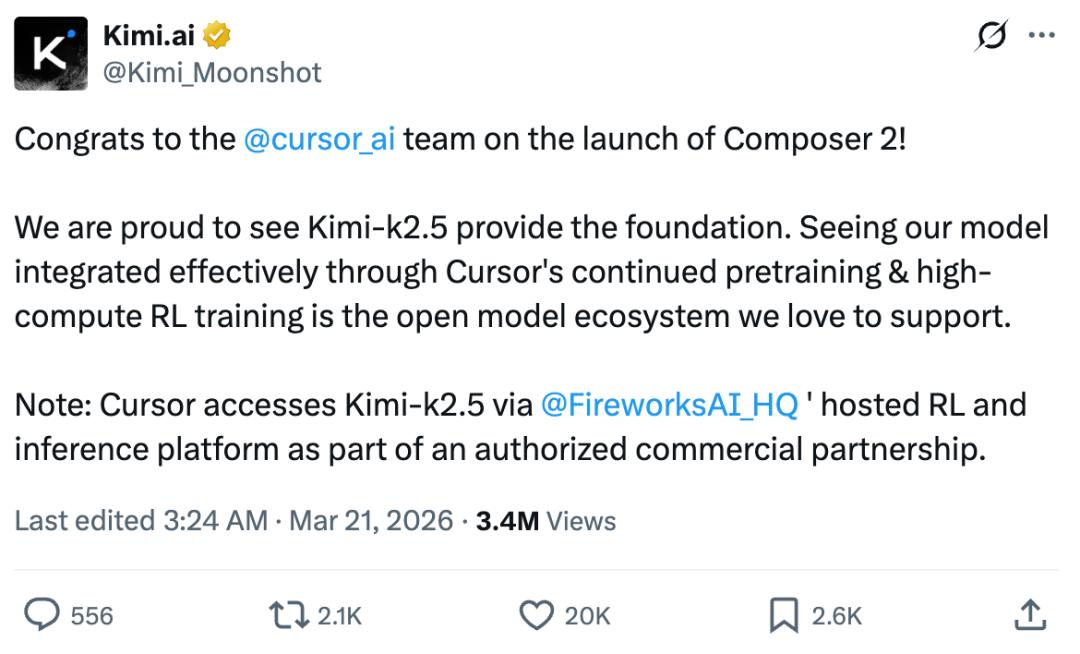
However, it was exposed that it was actually a repackaged version of Kimi K2.5 just a few days later.
Although the incident ended with a reconciliation between the two parties, it was quite disappointing.
Cursor, you were once the first - generation AI programming darling. This is not very fair!
In addition, another darling, Cognition, its self - developed model SWE - 1.6 was also exposed for being suspected of post - training on the GLM model.
Moreover, this company is a repeat offender. It started to pull a fast one since its previous model SWE - 1.5.
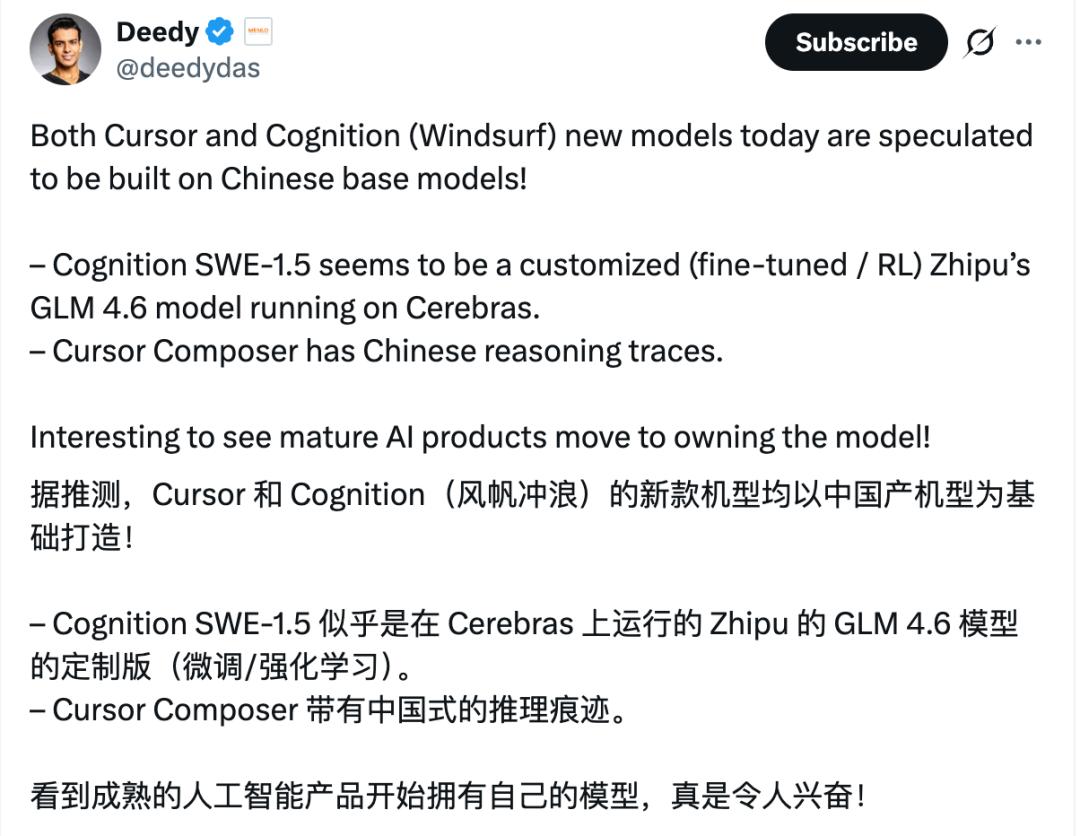
Last year, SWE - 1.5 was exposed to be post - trained on GLM - 4.6.
At that time, meme pictures were spreading everywhere:

Cursor and Cognition initially integrated the capabilities of Claude and GPT, but now they have switched to Chinese open - source models.
Shawn Wang, a developer at Cognition, once said bluntly:
As long as the foundation model is good enough, its specific features become less important because reinforcement learning and post - training are the keys and the differentiators.
Well, for start - up unicorns, it's okay to treat their behavior of repackaging models and refusing to admit it as a joke.
But when even giants do this, there may be deeper reasons behind it.
In December last year, Meta's "Avocado" project was exposed to have used the Qwen open - source model for distillation training.
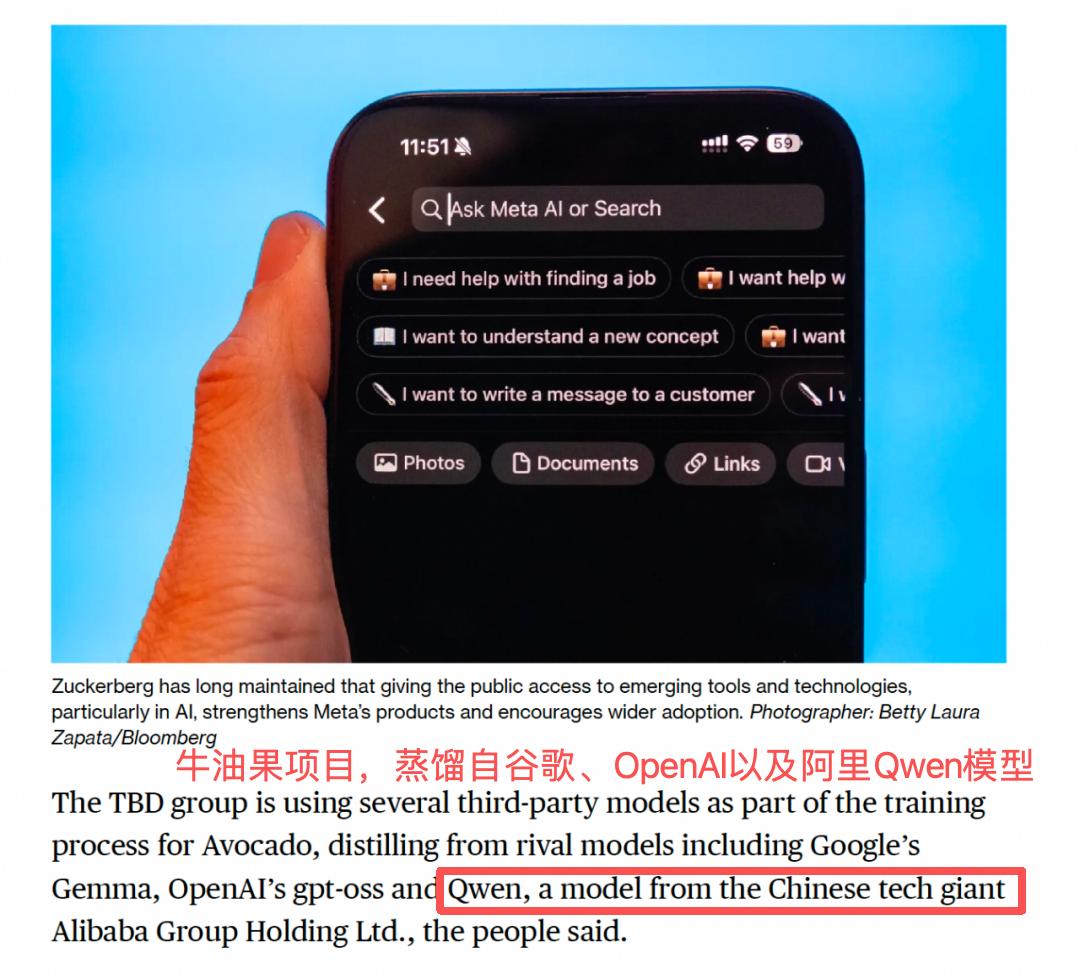
Previously, Meta's Llama model had long dominated the open - source field, with the number of its derivative models and download volume leading.
Mark Zuckerberg once publicly called for building an open - source ecosystem centered around American models.
But now, facing the sluggish growth of its Llama series and the strong rise of Eastern models, Meta has made its choice.
After nine months of hard work, Meta's latest model, Muse Spark, has been completed, but it is a closed - source model.
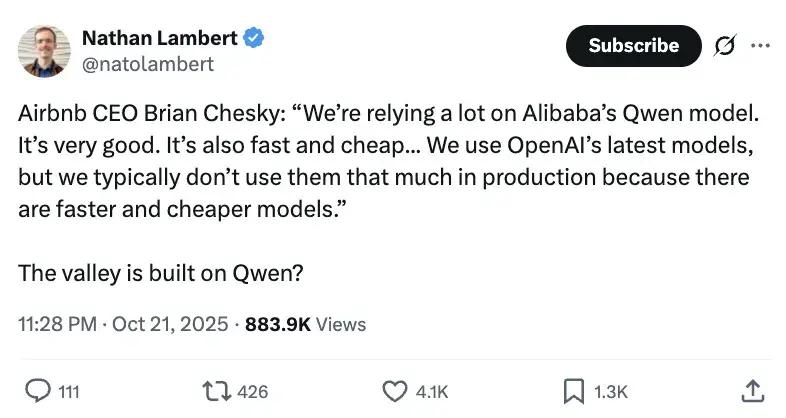
In addition, Brian Chesky, the co - founder and CEO of Airbnb, has long been a fan of Qwen's capabilities.
He once publicly stated:
We rely heavily on Alibaba's Qwen model. It is very good, fast, and cheap. We also use OpenAI's latest models, but we usually don't use them in large quantities in actual production because there are faster and more cost - effective models available.
As a little gossip, Brian Chesky and Sam Altman are good friends. But when it comes to integrating their own application products, they have to be clear about the accounts...
Brian said bluntly that the connection tools provided by OpenAI are "not fully ready."
Airbnb's choice is just a microcosm of the technical strength of Chinese large models.
In the academic community, top institutions such as Fei - Fei Li's team at Stanford University and the Allen Institute for Artificial Intelligence have also adopted technical solutions based on Qwen in their research.
At the beginning of last year, Fei - Fei Li's team built a top - level inference model s1 - 32B based on Qwen2.5 - 32B, with a cost of less than $50.
The mathematical and coding capabilities of this model are comparable to those of top - level inference models such as OpenAI's o1 and DeepSeek's R1.
The Allen Institute for Artificial Intelligence also built its multimodal system based on Qwen2 - 72B.
The unicorn Thinking Machines Lab founded by Mira Murati also uses Qwen as the default fine - tuning option.
The popularity of Chinese open - source models in Silicon Valley is obvious.

Cost - effectiveness trumps everything
Why is Silicon Valley so keen on Chinese open - source models?
Of course, it's because they offer high volume at a low price.
Peter Yang did some calculations: In many benchmark tests, the prices of models of the same quality from China and the United States differ by 10 - 20 times.
Take the latest domestic models as an example:
Kimi K2.5: $4 for every million token inputs and $21 for outputs;
MiniMax M2.7: $2.1 for every million token inputs and $8.4 for outputs;
GLM - 5.1: $6 for every million token inputs and $24 for outputs;
Qwen3.6 - Plus: $2 for every million token inputs and $12 for outputs.
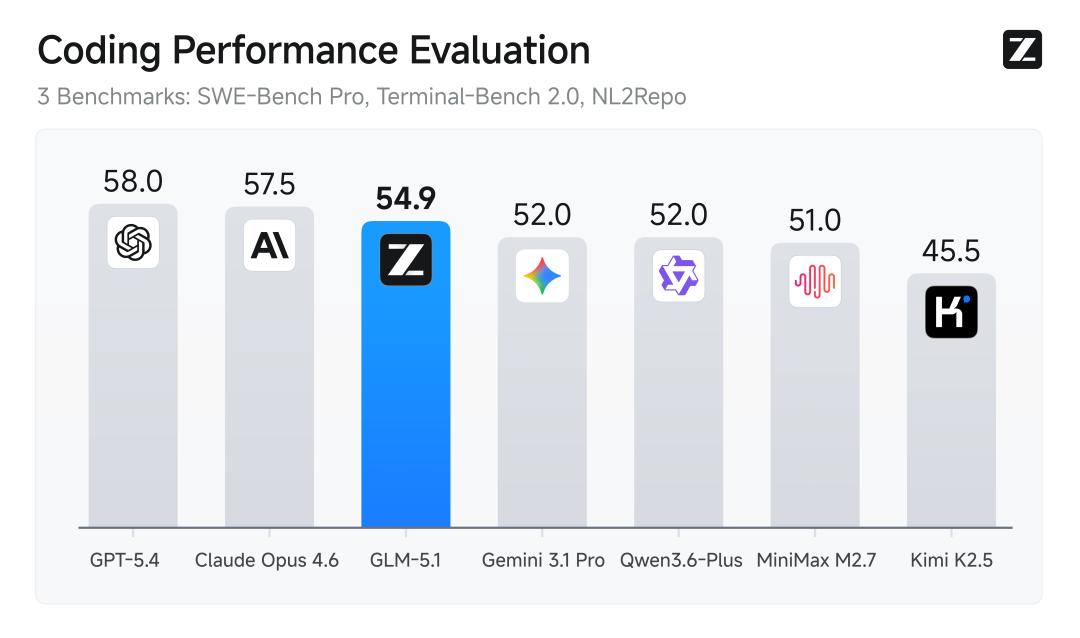
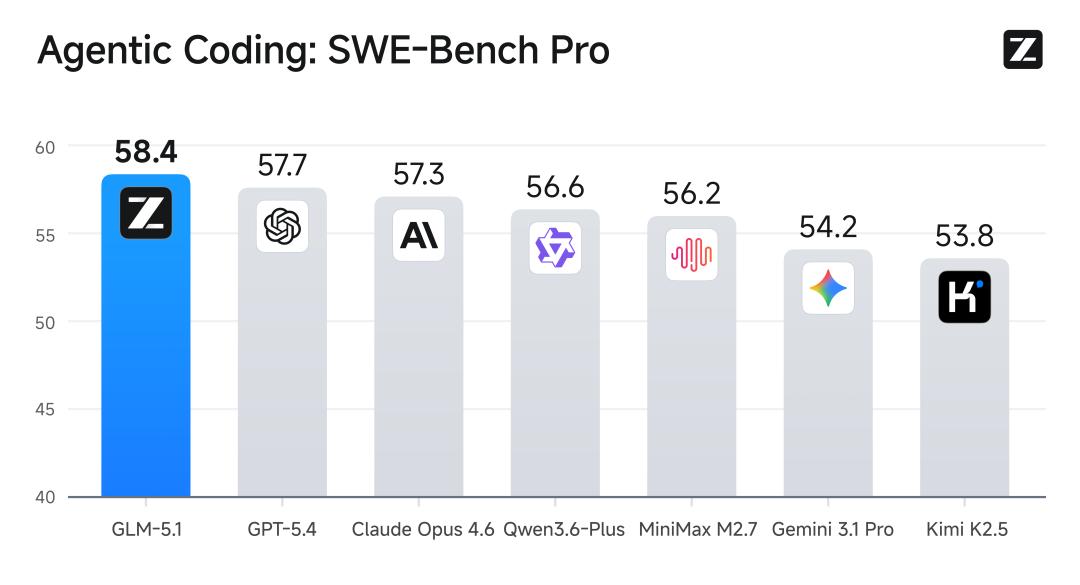
The performance of these models in benchmark tests is close to or even surpasses that of top - level closed - source models such as Opus 4.6 and GPT - 5.4 in some aspects.
However, the price of Opus 4.6 is $5 for every million token inputs and $25 for outputs, while GPT - 5.4 is $2.5 for inputs and $15 for outputs.
The cost - effectiveness is obvious.
Save more than 10 times the price and get a decent model performance. Isn't that great?

Moreover, open - source models are not necessarily inferior to closed - source models.
As early as when Kimi only had K2, Guillermo Rauch, the CEO of Vercel, mentioned:
In the real - world benchmark test of internal agents, Kimi K2 outperformed GPT - 5 and Claude Sonnet 4.5 in terms of running speed and accuracy.
Its accuracy was even 50% higher.
Chamath, a Silicon Valley investor, also said that Kimi K2 has strong capabilities and is much cheaper than OpenAI and Anthropic.
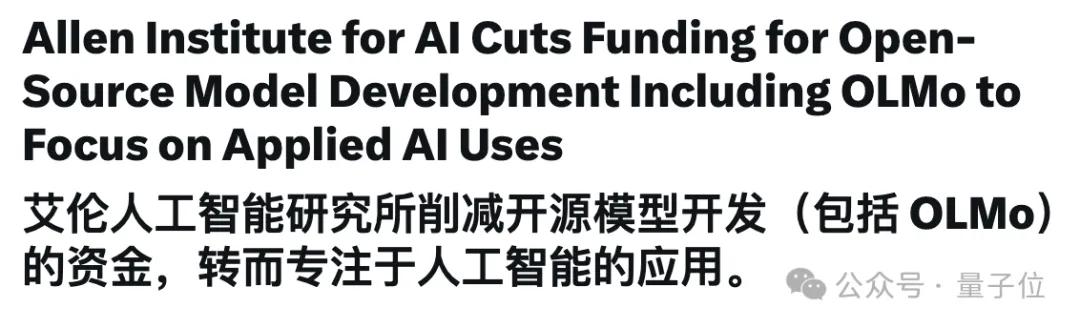
Moreover, since the Allen Institute for Artificial Intelligence announced a cut in R & D funds for open - source models and shifted to AI applications, the flag of American open - source AI has really fallen.
It's time for Chinese open - source models.
Reference links:
[1]https://x.com/petergyang/status/2042248752157839793?s=20
[2]The All - You - Can - Use AI Subscription Won't Last Forever
This article is from the WeChat official account "QbitAI". Author: Focus on cutting - edge technology. Republished by 36Kr with authorization.