1.2 billion yuan: The largest angel round in private nuclear fusion is born.
A shocking scene.
The investment circle has learned that Nova Fusion announced today that it has completed a 700 million yuan Series Angel+ financing round. Looking through the list of investors, the lineup is impressively luxurious: Alibaba, as an early-stage investor, continued to make a significant additional investment. New investors such as Meituan Longzhu, Hillhouse Capital, Shangqi Capital, Huichuan Industrial Investment, and Jiukun Venture Capital made a grand entry. Well-known institutions like Legend Capital, GaoRong Venture Capital, and Photosynthetic Venture Capital continued to follow-on invest.
So far, Nova Fusion has completed two rounds of financing totaling 1.2 billion yuan in just one year since its establishment, setting a new record for the financing scale and speed of domestic private nuclear fusion enterprises in the early stage.
This is a phenomenal project in the venture capital circle. Founded in Shanghai in April last year, the person at the helm of Nova Fusion is a scientist born in the 1960s, Guo Houyang, a Fellow of the American Physical Society (APS Fellow) and a specially-appointed expert of the Chinese government. He is the pioneer inventor of the FRC - SMR modular technology, has led the Sino-US cooperation in magnetic confinement nuclear fusion, served as an expert on the ITER International Science and Technology Advisory Committee, a member of the Magnetic Confinement Expert Group of the Chinese Ministry of Science and Technology, and the chief of a major fusion project. He is undoubtedly a top-notch expert in nuclear fusion.
Remember a joke in the industry: If you ask a scientist at any time when controllable nuclear fusion will be realized, the answer you'll always get is: "It's still 50 years away." Now, it's time to change this answer.
Established in Shanghai, China's Nuclear Fusion Dream Team Is Here
Guo Houyang is undoubtedly the soul of Nova Fusion.
In 1965, he was born in Gushi County, Henan Province. He graduated from Hefei University of Technology with a bachelor's degree and then entered the Institute of Plasma Physics of the Chinese Academy of Sciences, obtaining a master's degree in 1988. After graduation, Guo Houyang went to study at the Institute of Energy and Materials of the University of Quebec in Canada, earning a doctorate in 1993. He was then employed by the Canadian Nuclear Fusion Research Center.
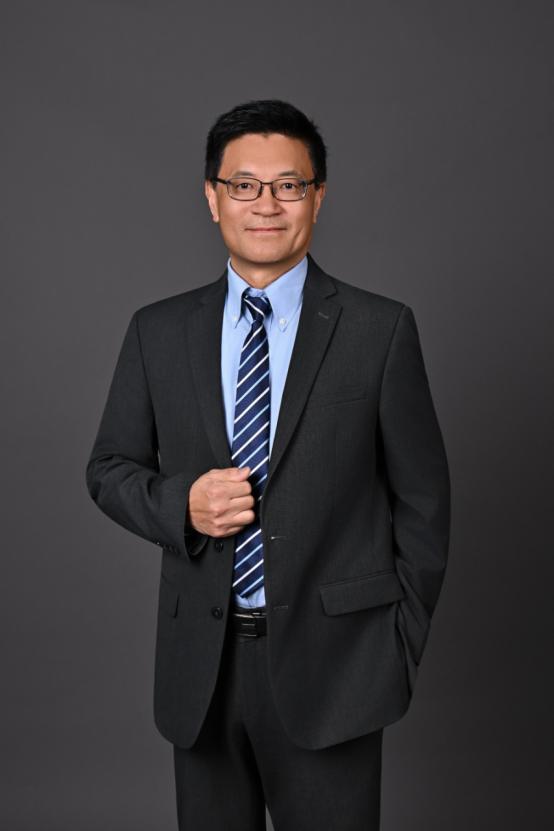
Since then, Guo Houyang's career has spanned the largest fusion research institutions on three continents. He is one of the few scientists with profound knowledge and leadership experience in both the Tokamak and FRC major technology routes.
Later, Guo Houyang served as the experiment leader of the world's largest Tokamak device, JET (Joint European Torus) in the UK, leading cutting-edge physics experiments. Since 1999, he has been the chief research scientist at the University of Washington in the United States and the general leader of the FRC experiment. Years later, he joined the American company TAE as the chief scientist, chief experimental strategist, and director of the experimental operation department, fully responsible for the FRC fusion R & D project. After that, he participated in the establishment of the national-level DIII - D Tokamak Boundary Plasma and Materials Research Center in the United States and served as the director of this research center.
Guo Houyang also served as the director of the well-known EAST Tokamak research laboratory in China. In 2021, he returned to China to start a business with more than 30 years of technical and experience accumulation in the fields of FRC and Tokamak, aiming to promote the commercialization of nuclear fusion in China. He has served as the vice-president/chief technology officer of ENN Group, the co-founder and chief technology officer of Energy Singularity, and directly led the plasma physics experiment R & D team.
Until April 2025, Guo Houyang officially founded Nova Fusion in Shanghai. It is the first domestic enterprise focusing on the R & D and industrialization of miniaturized and distributed controllable nuclear fusion technology (FRC - SMR), filling the gap in this field in China.
When talking about why he chose the FRC - SMR route, Guo Houyang said bluntly, "It is based on a triple judgment of the fundamental contradictions in fusion commercialization, the technological development trend, and the urgent market demand."
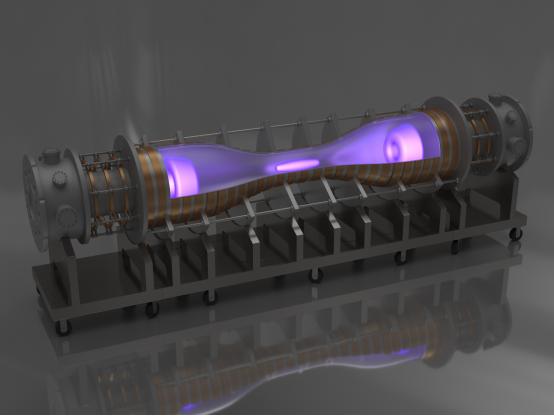
Specifically, the core innovation of FRC - SMR lies in the ingenious combination of the "magnetic confinement" feature of the Field-Reversed Configuration (FRC) and the "inertial confinement" feature of magnetic compression. First, using the field-reversed configuration as the basic magnetic confinement form, different from the complex toroidal magnetic field of the Tokamak, FRC adopts a compact cylindrical magnetic field configuration. "You can imagine a mineral water bottle wrapped with coils outside." This extremely simple structure lays a solid foundation for the miniaturization and economic efficiency of the system.
Second, by using magnetic compression technology to increase the density and break through the threshold of fusion conditions, the system does not need to rely on ultra-high-power lasers. At the same time, through modular design, it effectively avoids a series of key technical challenges faced by the Tokamak and laser fusion paths. "Thus, the construction cost and R & D cycle of the nuclear fusion power plant can achieve double significant breakthroughs, and it is expected to enter the commercialization stage earlier in a shorter time."
Guo Houyang pointed out: "More importantly, this route has been verified. In the United States, our peer company Helion has achieved a plasma temperature of 150 million degrees Celsius and has signed a power purchase agreement with Microsoft. This just shows that the FRC route is not 'armchair theory' but a mature route on the verge of commercialization. If others can do it, we can do it too, and we will do it better."
With a clear technical route, Guo Houyang quickly assembled a full-scale R & D team of more than 40 people. The core members all come from world-class fusion laboratories, and all key positions are fully staffed, laying a solid talent foundation for technological breakthroughs. This team not only has scarce knowledge in the FRC - SMR field, filling the domestic talent gap in this direction, but also has rich engineering experience. The core team members have won the Second Prize of the National Science and Technology Progress Award on average, and their capabilities cover the entire chain from physical design, device construction, power supply, diagnosis to quality control.
"They are all dedicated entrepreneurs. The pure entrepreneurial spirit and high-efficiency execution they show are the core driving force for the rapid progress of our R & D roadmap," Guo Houyang sighed.
Relying on this, Nova Fusion has made major breakthroughs from scratch in several core key technology fields within just a few months of its establishment, covering core systems such as high-power all-solid-state switches, modular strong-magnetic field magnet design, large-caliber quartz tube manufacturing, and nanosecond-level control and acquisition.
Then, a milestone moment arrived - the construction factory of the "Nova One" fusion device officially started recently, marking that Nova Fusion has officially entered the engineering implementation stage from technology R & D.
Standing at a new starting point, Guo Houyang said: "Our goal is clear, and the route is well-defined. We firmly believe that as long as we work together with one heart and one mind, we will surely hand in an answer worthy of the times."
1.2 Billion, Creating an Angel Round Record
In just one year since its establishment, Nova Fusion has left a deep impression on the venture capital circle.
Remember in August last year, Nova Fusion announced the completion of a 500 million yuan angel-round financing. The investors included well-known institutions and important strategic investors such as the Zhongguancun Independent Innovation Special Fund of the Social Security Fund (managed by Legend Capital), Legend Capital, Photosynthetic Venture Capital, GaoRong Venture Capital, Huakong Fund, Mingzhi Venture Capital, Yunqi Venture Capital, and Lingang Science and Technology Innovation Investment. At that time, the investment circle confirmed with several insiders that Alibaba, as the leading investor, also participated in this round of financing.
Now, let's turn our attention to this Series Angel+ financing - "Internet industry capital + top financial capital + state-owned innovation funds" have gathered in this diverse investment lineup, a scene rarely seen in previous private nuclear fusion financings.
Among them, Alibaba, as an early-stage investor, made a significant additional investment again, demonstrating its long-term confidence in Nova Fusion's technical route and commercialization prospects. Meituan Longzhu made its first capital investment in the nuclear fusion track, further confirming the strategic value of fusion energy as the ultimate energy in the AI era.
More importantly, the collective entry of Internet giants not only brings abundant funds for nuclear fusion R & D but also enables the direct connection between fusion energy and AI application scenarios, building an industrial bridge for the subsequent commercial implementation in scenarios such as AI data centers, cloud computing bases, and intelligent industrial parks.
When talking about this round of financing, Wang Xinyu, a partner of Meituan Longzhu, believes that energy and information are the two main lines of human civilization development. At the bottom, energy is the ultimate limiting factor. On the way to AGI, the availability of energy has become the core bottleneck. FRC is suitable for the power demand of future ultra-large-scale and rapidly expanding AI super-computing centers. "We believe that Nova Fusion will grow into the next great enterprise in the history of human energy."
In the view of the Legend Capital team, Nova Fusion focuses on the small fusion reactor (FRC - SMR) technical route. With its rapid iteration ability and modular design advantages, it is expected to be the first to break through the commercialization in the field of controllable nuclear fusion, injecting new impetus into the surging development of the artificial intelligence era and the achievement of global sustainable development goals.
According to Xin Wang, a partner of GaoRong Venture Capital, GaoRong has been researching nuclear fusion for several years and only made an investment when it met Nova Fusion. "Teacher Guo Houyang is a rare Chinese scientist with the deepest accumulation and the highest level in the FRC technical route. We also believe that the FRC - SMR technical route is a fusion technology with the hope of being the first to be implemented, and Nova has gathered the strongest domestic team in this technical route. We look forward to and wish Nova to make important contributions to the human fusion cause!"
Zhu Jia, a partner of Photosynthetic Venture Capital, also said: "Controllable nuclear fusion is rapidly moving towards engineering and commercialization. Nova Fusion has obvious advantages in the differentiated path of FRC small fusion reactors and is expected to be the first to complete the closed-loop. We are optimistic that the company will move from China to the world in the future energy paradigm and become a company that defines the industry boundaries."
So far, investors have joined hands to make the largest angel-round investment in nuclear fusion this year.
On the Eve of Nuclear Fusion Commercialization, Aiming for the 100-million-degree Milestone Next Year
At this moment, the strategic significance of nuclear fusion is self-evident.
Goldman Sachs research shows that by 2030, the global data center power demand is expected to reach 1130 TWh, equivalent to Japan's annual electricity consumption. Traditional energy cannot meet the high-power-density and 24/7 non-stop power supply requirements of AI data centers. Therefore, controllable nuclear fusion has become the breakthrough to solve this problem.
Sam Altman, the founder of OpenAI, is a supporter of this view. He has mentioned nuclear fusion many times in public, believing that AI and nuclear energy are closely related. In other words, in the second half of the AI competition, it's all about energy.
Investors have also mentioned a common view: In the future, whoever can lead the new round of "energy revolution" may dominate the future economic paradigm and international rules. As a VC partner emphasized, the ultimate energy, "controllable nuclear fusion," will become the "killer weapon" in industrial and national competition, and may even exceed the historical contribution of the "steam engine."
However, as is well-known, the technical threshold of controllable nuclear fusion is extremely high, and the industrialization cycle is long. It is destined to be a cause spanning several generations. Since the first hydrogen bomb test in the world in 1952, human exploration of the peaceful use of fusion energy has never stopped.
Now, the dream of nuclear fusion commercialization is becoming a reality. The "2025 Global Fusion Industry Report" predicts that between 2030 and 2035, more than 35 companies will build commercial fusion demonstration power plants that can produce net energy, and another 28 companies plan to connect to the power grid for power supply during this period.
Soon, a critical window period has emerged. Helion Energy in the United States, as a representative enterprise of the FRC technical route, has set a record of 150 million degrees Celsius plasma temperature. Its first fusion power plant under construction, "Orion," plans to supply 50 MW of electricity to Microsoft's AI super-computing center in 2028 and has signed a power purchase agreement of at least 50 megawatts. OpenAI also plans to purchase electricity from Helion, with a scale of up to 50 gigawatts.
This undoubtedly marks that FRC - SMR is a mature technical route on the verge of commercialization, which is in line with Nova Fusion's vision of "Fusion for AI & Beyond."
Currently, the commercial imagination of Nova Fusion's FRC - SMR is further expanding. A single reactor can output 50 - 100 MW of power, with stable, continuous, and flexible power-supply capabilities, which are highly compatible with high-density and high-reliability power-demand scenarios such as large-scale industrial parks, smart cities, and artificial intelligence super-computing centers. This scenario-based layout creates a new path for the commercialization of fusion energy.
Meanwhile, Nova Fusion's target blueprint is clearly emerging: Achieve the first plasma discharge by the end of 2026; Become the first domestic private enterprise to achieve a fusion temperature of 100 million degrees in 2027, entering the threshold of nuclear fusion; Achieve the net energy output of DT equivalent fusion (Q > 1) in 2029, laying a scientific and technological foundation for the efficient acquisition of fusion energy; Build the first domestic small-scale distributed fusion demonstration power plant in the first half of the 2030s, achieving 50 - 100 MW-level commercial power supply, perfectly matching the 24/7 non-stop power demand of AI data centers.
Looking back, China's fusion R & D has long been dominated by the "national team." Now, private enterprises represented by Nova Fusion are coming to the forefront. In Guo Houyang's view, the future of China's fusion industry is not a zero-sum game between the "national team" and "private forces," but a coordinated operation between the "cornerstone" and the "shock troops."
That is, the national team focuses on basic scientific research and fundamental technology R & D, aiming at large-scale centralized base-load energy after 2040. Nova Fusion, with the FRC - SMR route as the core, precisely captures the distributed energy gap brought by AI computing power. Relying on its technological first-mover advantage, top-notch international team, and strong capital, it can quickly iterate with the efficiency of a startup company and be the first to fill the strategic gap in the short-term clean energy demand.
As Guo Houyang said, "In China, we are forming a healthy and efficient industrial ecosystem - the national team lays the foundation, and the private team acts as the vanguard, jointly supporting the future of China's nuclear fusion." It is foreseeable that China will surely have a place in the global fusion map.
This article is from the WeChat official account "Investment