Apple is using its supply chain to strangle Android as consumers are scrambling to buy memory at twice the price.
Squeezing out innovation, lack of freshness, being stingy, and even making Steve Jobs turn in his grave... In the past five or six years, these are probably the key words to describe Apple's public image. It seems to be on the verge of "going downhill soon."
However, this seemingly declining Apple launched a large-scale surprise attack in 2026, aiming to deliver a fatal blow to the Android camp.
01 · The Memory War
If you've been paying attention to mobile phones recently, you'll notice a strange phenomenon: all major manufacturers are raising prices like crazy, but Apple remains calm.
As of early April, several major players in the Android camp, including Xiaomi, OPPO, vivo, and Honor, have successively raised the prices of their products. The price increase ranges from 300 to 400 yuan, and in some cases, over 1000 yuan. Some manufacturers are even increasing prices indirectly by reducing discounts. Models that have been on the market for half a year are still sold at the original price. According to the prediction of the well - known analysis firm Trusted Tech Intelligence, the price of flagship mobile phones in the Chinese market may increase by more than 30% this year. This price difference is significant enough to influence consumers' purchasing decisions.
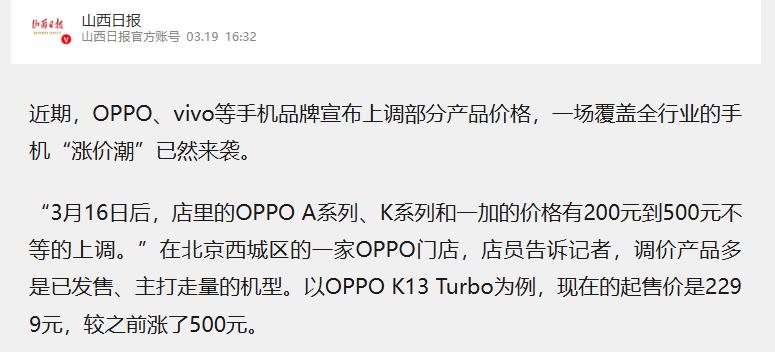
(Shanxi Daily)
What's even more terrifying is that due to the overall price increase, the "thousand - yuan phone" segment is rapidly disappearing. Phones originally priced between 1000 and 1500 yuan now cost 1500 to 2000 yuan. The entry threshold for smartphones has become higher, which is a disaster for students and elderly users.
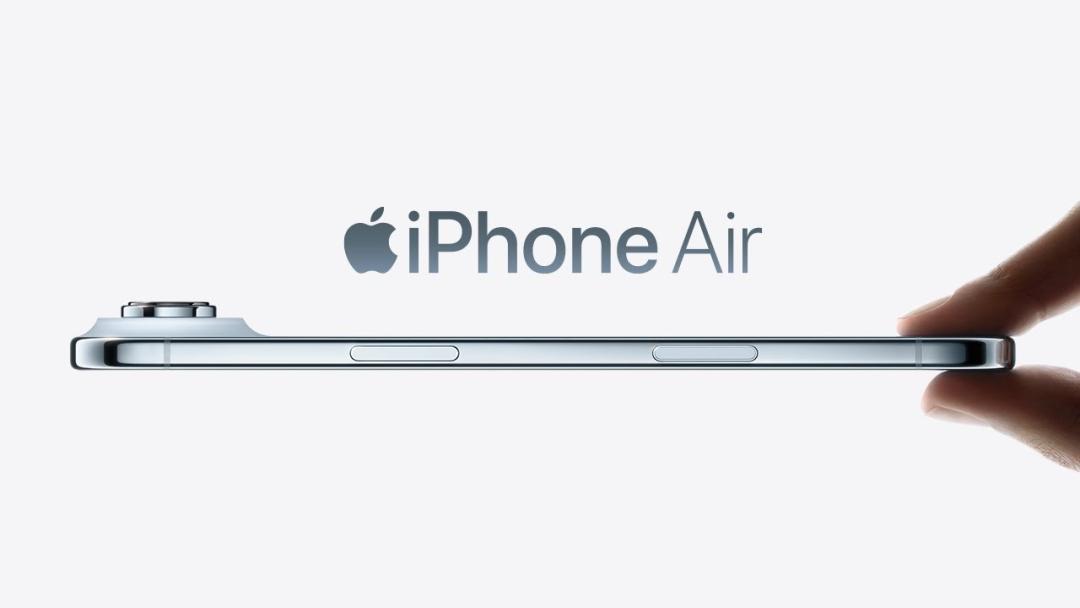
Strangely enough, Apple seems to be out of this turmoil and has taken no action so far. The main - selling iPhone 17 series is still sold at the previous price. The older iPhone 16 series had an official price cut of several hundred yuan at the beginning of the year, and the less - popular iPhone Air even had an official price cut of 2000 yuan for promotion. In this situation, the iPhone, which is often criticized for its high price and low - end configuration, actually seems to have good value for money. It feels like you've entered a different world.
The key to this turmoil is actually the price increase of memory chips.
In the past two years, with the soaring demand for AI large - model training and inference, the demand for HBM high - bandwidth memory used in AI servers has also increased. This has led chip giants such as Samsung and SK Hynix to invest a large amount of capital and production capacity in HBM, reducing the supply to the consumer market. In just the first quarter of 2026, the price of mobile phone memory increased by 400% year - on - year. The common 12GB + 256GB combination has soared from more than 30 dollars to 120 dollars.
Apple also "contributed" to this largest price increase in a decade. Recently, foreign media reported that Apple is buying all available mobile DRAM memory chips on the market at extremely high prices, as much as possible.
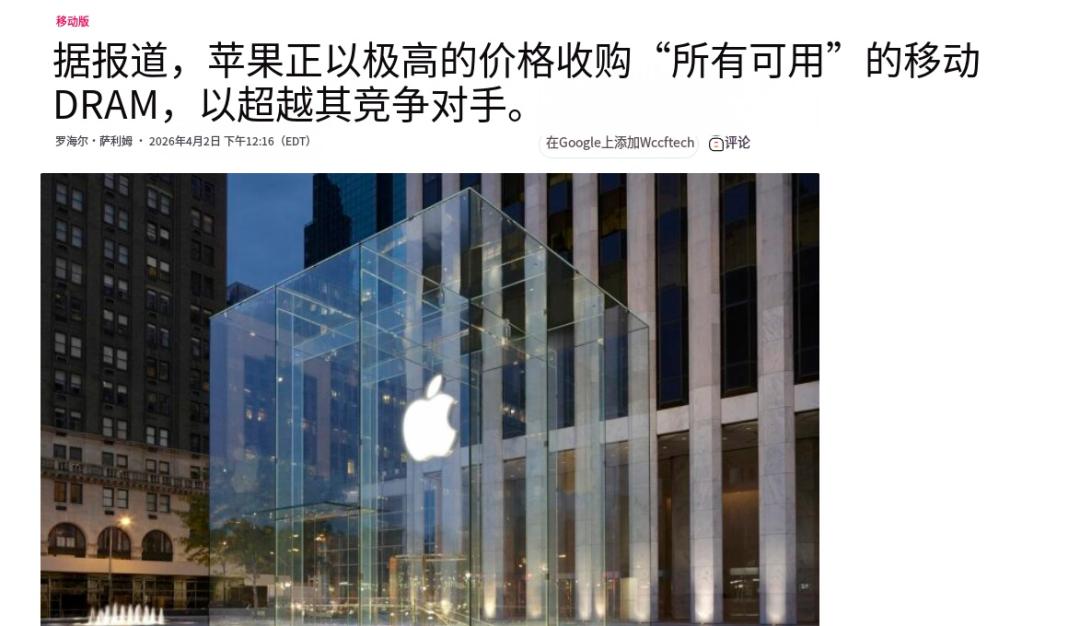
(wccftech)
There were actually signs of this earlier. When negotiating prices with Samsung's semiconductor department at the beginning of the year, Apple casually agreed to double the price of DRAM memory. It is said that Samsung's representatives were shocked because their psychological expectation was a price increase of about 60%. They initially proposed a 100% increase, expecting Apple to bargain, but Apple didn't even bother and signed the contract immediately.
It's not that Apple is stupid with money. Analysts generally believe that Apple is not only ensuring its own memory supply this year but also deliberately annoying its competitors. By further raising their procurement costs and occupying the chip factory's production capacity in advance, it leaves its competitors without available components, limiting both price and production capacity. Although Apple spends more money on high - priced memory procurement, which will make its financial report look bad, it gains market share.
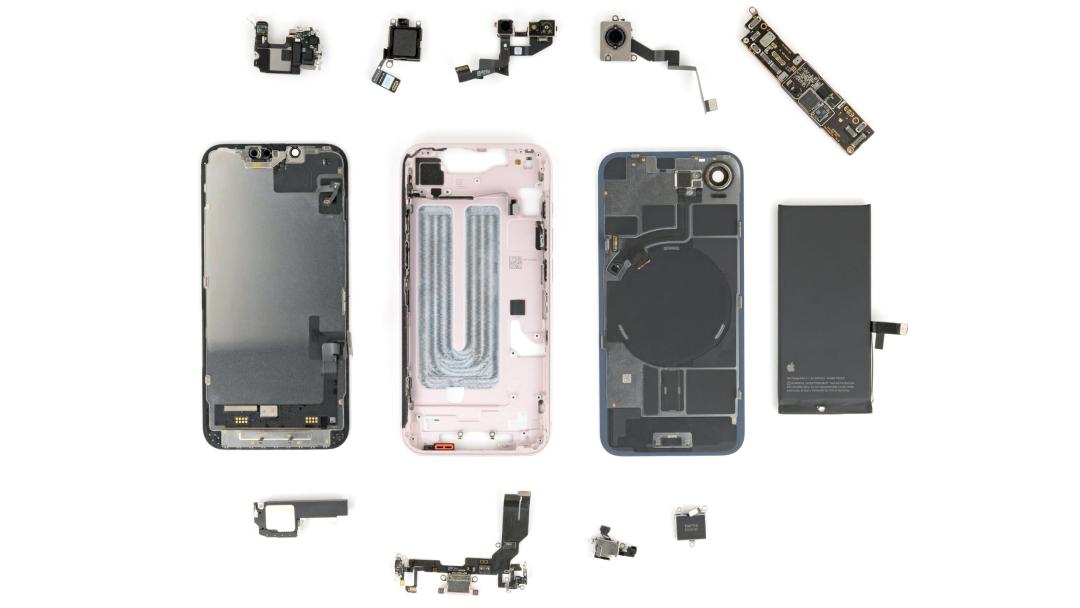
Judging from the fact that Apple shows no sign of price increase, this is obviously what they are planning. The new products launched by Apple in March also confirm this from the side. The entry - level iPhone 17e, although with a reduced camera and screen configuration, is priced at only 4499 yuan. After the national subsidy, it can be bought for more than 3900 yuan. If it were you, would you rather buy an Android low - end phone after the price increase or spend a little more to buy an iPhone that is less likely to freeze? Apple's intention to seize the market is very obvious.
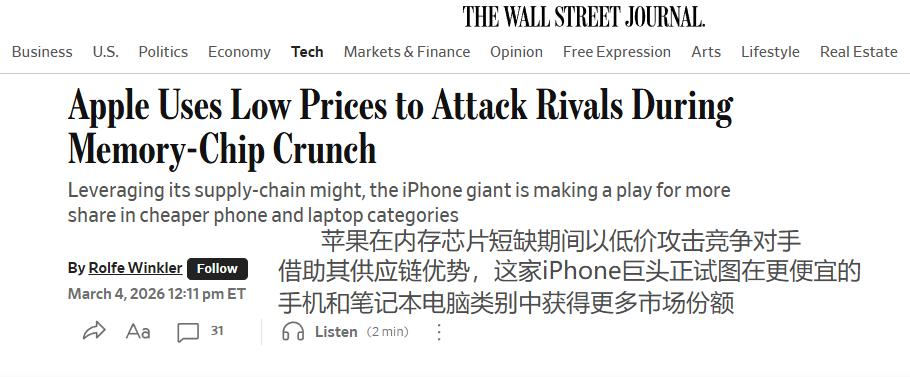
(Wall Street Journal)
Facing Apple's all - out attack, almost all Android manufacturers are pessimistic about their sales in 2026. Industry insiders revealed that Xiaomi and OPPO have reduced their overall machine orders by more than 20%, vivo by nearly 15%, and Transsion, known as the "King of Africa," has also reduced its orders to less than 70 million units. Among them, Transsion may be in the most dangerous situation. As a brand targeting the sinking market, it has been severely impacted. Mobile phone CPU suppliers believe that the low - end market is shrinking and have started to significantly reduce the production capacity of backward 5nm/4nm chips, switching to more advanced and high - profit processes. About 15 to 20 million 4nm chips will be reduced in production.

Some manufacturers simply give up. Meizu has announced that due to the significant increase in memory prices, the launch plan of the Meizu 22 Air has been cancelled, and it is rumored that the development plan of its subsequent models has also been put on hold.
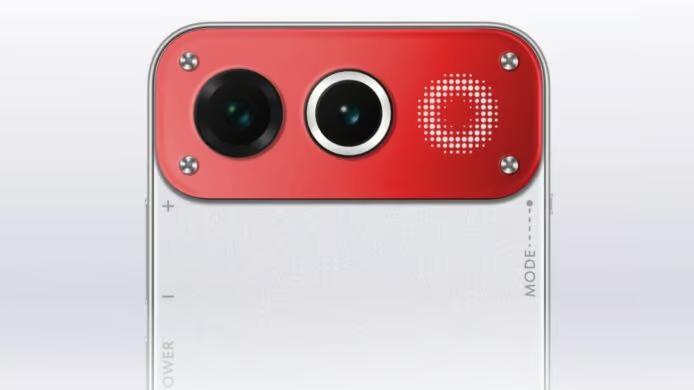
You're panicking, and so is he, but Apple isn't. In January this year, the overall sales of the Chinese smartphone market declined by 23%. Apple was the only mainstream brand with positive results, with an 8% increase in sales and its market share rising to about 20%. In February, Apple's market share reached 26.76%, ranking first.
For the Android camp, things may get even worse. The chip market has already been affected by the AI demand and Apple's price - driving behavior. Now, with the conflict in the Middle East, oil and gas facilities have been destroyed, shipping has been disrupted, and the supply of helium from the Qatari gas fields has almost been interrupted. Some reports say that it will take at least 5 years for the facilities to fully recover.

Helium is an indispensable raw material in the semiconductor industry. As an extremely stable inert gas, when precision equipment etches micro - circuits, helium is needed for continuous cooling to maintain an appropriate operating temperature. After the wafer is cleaned with chemical reagents, helium is also used to blow away residues.
Now, the helium supply has suddenly decreased by one - third, and the price has skyrocketed by more than 50%. In this situation, semiconductor giants such as Samsung and SK Hynix will definitely prioritize the production of high - value orders to meet the needs of Apple, their major customer. The Android camp can only pick up what's left by Apple. Especially for small and medium - sized manufacturers, it's questionable whether they can maintain production.
02 · Innovation is Dead, Supply Chain is King
A very crucial reason why Apple dares to implement a "money - throwing" strategy in the supply chain is that it has money and can afford to lose.

As of the end of 2025, Apple held a total of $145 billion in cash and marketable securities, with an annual revenue of over $140 billion. In comparison, Xiaomi Group, known as the "cash king," held about $33.795 billion at the same time, and Transsion, known as the world's fifth - largest smartphone manufacturer, had just over $2.1 billion. The available resources of the Android camp are far behind Apple's.
Moreover, Apple has implemented an aggressive capital return plan for several consecutive years, reducing its cash through stock buybacks and dividend distributions. At its peak in 2019, Apple held more than $200 billion in cash, truly being extremely wealthy!
This large - scale reserve gives Apple a much stronger ability to withstand losses than its competitors. It can actively give up profits and engage in loss - making procurement by spending a large amount of money, then crazily erode its competitors' market share. If one year of losses can't defeat you, then two years. Few manufacturers in the Android camp can afford to play this game with Apple. Not to mention, when Apple purchases from suppliers, it either pays in advance or settles immediately. Small and medium - sized manufacturers in the Android camp can't even guarantee this. They have to wait 120 days after delivery to issue an invoice and another 180 - day payment period. Just this alone is enough to make suppliers dream of joining Apple's supply chain.
Therefore, for most manufacturers in the Android camp, when the raw material prices increase, the terminal product prices must also increase. When the component supply is tight, they can only reduce production. They are helpless in this "money - power" war and can only bear the risk of being eliminated due to the lack of available chips.
Apple's large cash flow is actually a result of its product positioning.
Apple has a market share of over 60% in the high - end mobile phone market above $800. Many users don't ask about the price but only ask, "Is it the most expensive model?" This allows Apple to have much higher profits than other manufacturers, reaching 30% to 35%. Even the best - performing Android manufacturers can only achieve about 10%. This enables Apple to continuously accumulate cash through high - premium products and start spending money to gain market share at this critical moment.
Moreover, Apple has a closed ecosystem integrating software and hardware. The Apple tax from the App Store