In - depth Dialogue on Power Batteries: How Did China Win This Tough Battle?
In recent years, if there's a story in the global manufacturing industry that's worth retelling, it must be the power battery. China has established a strong advantage in the global power battery industry chain. In contrast, Northvolt in Europe has gone bankrupt, and Japan and South Korea no longer have a leading edge. But how did this outcome come about? Why did many of the initial technologies and research not start in China, yet it was China that developed the most complete and dominant industry in the end? What exactly is at play behind this - policy, market, supply chain, or engineering capabilities?
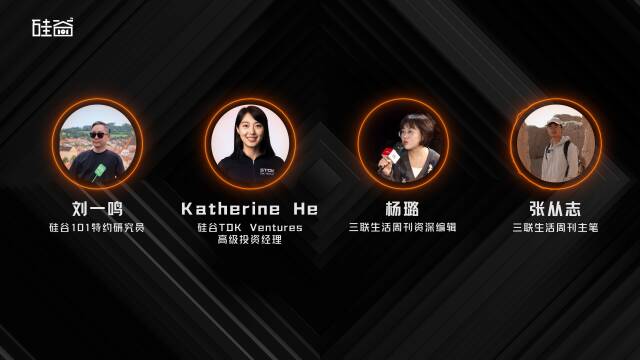
In this podcast episode, we've invited three guests who have long been researching, reporting on, and investing in the power battery industry: Katherine He, an investor at TDK Ventures and a doctor in materials science and engineering, Yang Lu, a senior editor and lead writer at Sanlian Life Weekly and the author of The Heart of Electric Vehicles, and Zhang Congzhi. Let's discuss the real story behind the rise of China's power battery industry. From the early days of "hand - made batteries" and "selling everything to survive" to building a moat with extreme engineering capabilities and forming "Power Battery Capitals" like Changzhou and Yibin with government support, what are the differences in the development logics of the Chinese and American industries? Where will the next disruptive innovation in the industry emerge?
The following are the highlights of this conversation:
01 When did the turning point occur for China's electric vehicles and power batteries?
Yiming: The automotive industry is actually a very important industry for a country, but the rise of electric vehicles didn't happen overnight. China has been making arrangements in this field for many years and also went through some difficult early times. The United States has a first - mover advantage represented by Tesla, Japan has a strong first - mover advantage in the battery field, and Europe launched its carbon - neutral strategy earlier. But ultimately, we can see that China has achieved a decisive advantage in this industry, especially in the power battery segment. According to many foreign media reports, in many production segments, China's global market share basically reaches over 80%, and in some cases, even over 90%. If you were to summarize the most important turning point for China's electric vehicles, what do you think it would be?
Yang Lu: When Congzhi and I were writing this article, it was 2023, and the 20 millionth new - energy vehicle in China rolled off the production line in Guangzhou. It only took 17 months to break through from 10 million to 20 million vehicles. Also, in that year, China's vehicle exports exceeded Japan's, becoming the world's number one. However, I think the shift in thinking from trading the market for technology to independent innovation might be a very important point.
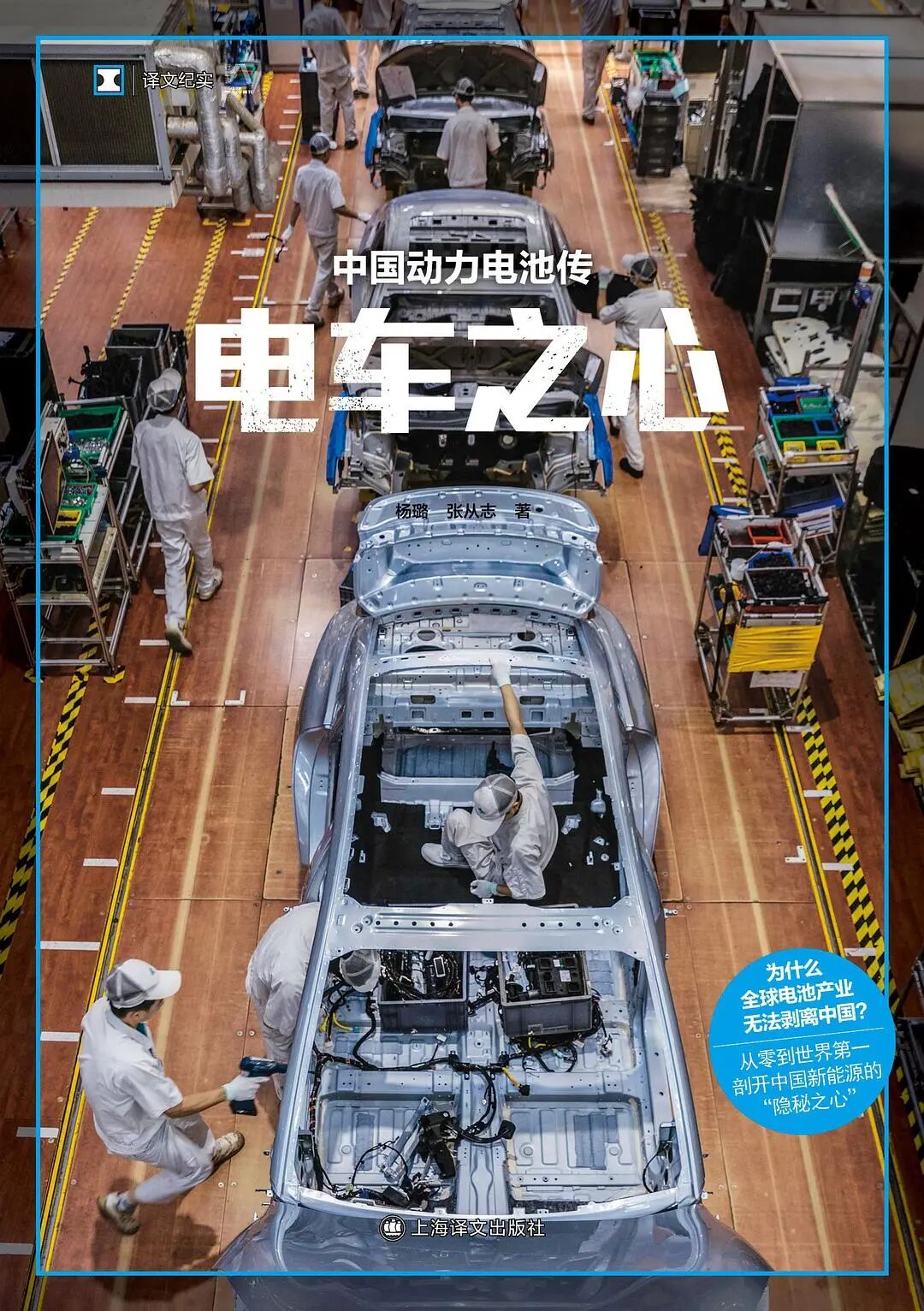
Image source: Douban
Zhang Congzhi: If we extend the time scale to the entire development process of China's electric vehicles, I think 2009, when the "Ten Cities, One Thousand Vehicles" project was launched, was a very important turning point. In the early days, when the technology and market were not very mature, the biggest problem was the lack of demand. But the "Ten Cities, One Thousand Vehicles" project created demand through government subsidies. Once this demand was created, it attracted people from various fields to join. Only after these people and enterprises entered could the subsequent technological innovation in this ecosystem develop.
Katherine: In my opinion, the key node was probably the so - called "white list" issued by the Ministry of Industry and Information Technology in 2015. This "white list" stipulated that only new - energy vehicles equipped with domestic batteries could receive new - energy vehicle subsidies. This significantly raised the industry's entry threshold. Even well - established manufacturers at that time, such as Panasonic, LG, and Samsung SDI, were excluded from the subsidy system. I think this move quickly and strongly supported Chinese domestic manufacturers like CATL and BYD.
Comparing with the United States, the United States passed the Inflation Reduction Act (IRA) in 2022. Compared with China's continuous subsidies for electric vehicles over the years, first, the subsidy intensity is not enough, and second, it lasted for only two years and was completely reversed after Trump took office. So the United States lacks a continuous subsidy policy like China's at that time. This policy really blocked Japanese and Korean battery manufacturers and allowed our domestic enterprises to grow and expand.
02 China's power battery industry chain from a global perspective
Yiming: To give our listeners a more intuitive understanding and comparison, what position does China's power battery industry chain currently hold in the world?
Katherine: I think if we regard the global power battery industry as a marathon, Chinese enterprises are in the leading and speed - controlling stage. Japanese and Korean enterprises may be in the second echelon, with good intentions but insufficient strength. And the United States, I think, has fallen far behind and is now more focused on seeking to change the track, platform, or make up for the foundation.
China's power battery industry chain has in - depth coverage and is probably the only closed - loop full - industry chain in the world. From the upstream key metals - lithium, nickel, cobalt, and graphite, to the mid - stream materials - cathodes, anodes, electrolytes, and separators, and finally to the cell manufacturing, PACK, and BMS system integration. China is the only country in the world that can achieve large - scale, commercialization, and continuous iteration in all key segments.
Although the United States is lagging behind, a lot of innovation still occurs there, such as the latest silicon - anode technology, dry - electrode technology, advanced battery recycling technology, and now the application of AI to accelerate battery research and development. We can see that many leading enterprises, in addition to focusing on domestic innovation, also pay a lot of attention to American laboratories, innovators, and entrepreneurs. A lot of American innovation has gradually entered the supply chains of Chinese leading enterprises through various means. So, to make an inappropriate analogy, the United States may be like a very smart "underachiever" who doesn't work hard, but a lot of innovation grows relatively fast there. However, when it comes to commercialization, large - scale production, and truly raising the TRL (Technology Readiness Level) or MRL (Manufacturing Readiness Level) from 1 or 2 to 8 or 9, this is what China is best at and can do best.
Yang Lu: In 2022, I participated in the World Power Battery Conference and signed up for a forum on the intelligent manufacturing of power batteries. Representatives from important companies, including CATL and BYD, came to share how to reduce product defect rates and improve productivity. I found that each sharing guest would invariably emphasize the self - controllability of the entire industry chain or technology. The domestic production rate of China's lithium - battery equipment may exceed 90%, and the localization rate of key processes exceeds 80%. For example, in 2022, the shipment volume of cathode materials accounted for 70% of the global total, anodes accounted for over 90%, separator shipment volume was 83%, and electrolyte shipment volume exceeded 86.7%.
Zhang Congzhi: We often study the changes in the list of the world's top 10 power battery manufacturers. You'll find that in the early days, the number of Chinese and Japanese - Korean enterprises in the top 10 was relatively similar. But especially after 2015, when CATL gradually took the top spot, it gradually presented a situation of "one super - strong and many strong". Especially after 2022, the top three were mainly CATL, BYD, and LG, and Japanese and Korean enterprises gradually fell behind.
03 How "miserable" were Chinese enterprises in making batteries in the early days?
Yiming: In the real front - line of the industry back then, it was very "miserable" at the beginning. You two also mentioned in your book that some early batteries were even made by hand. Can you tell us the most impressive story during the interview process?
Yang Lu: At that time, Japan was a leading country in making batteries in Asia. South Korea's way of catching up was to buy Japanese equipment, take it apart, learn from it, and then make a copy. In China's case, first, we couldn't really afford Japanese equipment, and second, it took a long time to transport the equipment to China. Chinese people are actually very good at solving engineering problems. For example, Wang Chuanfu used a method of manual labor plus fixtures. There was a drying process. In Japan, you need to build a drying room, but BYD didn't have the cost to do so at that time. So he made a small box, put a desiccant inside, and people could put their hands in to complete the process. At first, I was very surprised and thought it didn't sound very reliable, but later they started receiving orders from Motorola using this production method.
Katherine: I think being poor had its advantages at that time. Mr. Zeng of CATL obtained the technology of ATL from the US Bell Labs through authorization. There were about 20 companies that licensed lithium - ion battery technology from Bell Labs at that time. Zeng Yuqun spent about $1 million on this authorization. After getting the technology, he found it couldn't be used due to a gas - generation problem. Many people might have given up after trying. But because $1 million was a large sum of money for us, we couldn't just throw it away. So Mr. Zeng sold everything he had and, together with a group of his brothers, was determined to solve the technical problem. Among the 20 licensees, ATL was the only one that kept working hard and truly solved the core challenges from a technical perspective, becoming the world's first player to commercialize lithium - ion batteries.
Moreover, Wang Chuanfu couldn't afford a fully automated production line from Japan, which might cost $5 million. He used manual labor to replace the automated production line and finally built a production line for only about $140,000. And I think the most crucial point is that when you don't import the entire production line from Japan, you actually have the opportunity to break down each step, understand how to optimize each step through manual operation by engineers, and truly get hands - on experience. Look at BYD. From 1995 to 2005, and then by 2018, it quickly built the world's most advanced fully automated production line. This actually gave Chinese manufacturers more opportunities to re - think and design from first principles and optimize the combination of materials and equipment. This is actually one of our advantages.
Yiming: It seems that this story line is happening again in the field of large models. Under the limitation of computing power, people still manage to achieve such good results in terms of cost and effectiveness.
04 What is the most difficult process in power battery manufacturing?
Yiming: Power battery manufacturing is a typical complex manufacturing industry. What's the difference between an advanced process and an immature one?
Zhang Congzhi: I think an important point is the consistency of the batteries. The industry often says it's a micron - level manufacturing. Vehicle - used batteries are assembled from thousands of small batteries to work together. If the capacities are inconsistent, the available capacity of the entire battery pack is determined by the smallest cell, which is like the bucket effect.
Katherine: The entire battery manufacturing industry is mainly divided into three major stages. The front - end is mainly the manufacturing of electrode sheets, including ingredient preparation, slurry mixing, coating, drying, rolling, and slitting. The middle - end is cell assembly, including winding, stacking, welding tabs, casing, and electrolyte injection. The back - end is formation, aging treatment, and sorting. American battery companies mainly import middle - end and back - end equipment because the coating technology for front - end electrode sheets is the most difficult.
Why can CATL's coating technology be so good? TDK was initially in the business of making magnetic tapes. Magnetic tape manufacturing itself is an extremely precise coating technology, a continuous coating process with sub - micron - level thickness control on a long flexible substrate. After TDK acquired ATL, it introduced the extremely precise coating technology of magnetic tapes into ATL. The engineering logic is highly similar. Requirements such as thickness fluctuation, coating density consistency, local defect control, and slurry dispersion uniformity are almost the same issues. Later, CATL was spun off from ATL and was able to use this extreme electrode coating technology to further improve the middle - end and back - end processes.
Producing only one defective cell out of one billion is the manufacturing level of first - tier suppliers like ATL and CATL. Other companies can also make cells, but there are gaps in terms of yield, process control, and coating quality. This is why even if Northvolt imported all the equipment, without a fundamental understanding of the technology and decades of accumulation, it was almost losing money with every battery produced and every meter of material coated.
Tesla in the United States also imports electrode sheets in rolls from China to do the middle - end and back - end processes in the United States because the most difficult part to control is the coating process of the front - end electrode sheets. The United States now knows that coating is the most difficult part, so we've also invested in a company called AM Batteries, which is working on dry - electrode technology. The idea is that since they can't compete with China's wet - coating technology, can they change the track and bet on dry electrodes?
05 The real moat of Chinese battery enterprises
Yiming: What is the most important moat for a battery factory?
Katherine: There's a book called Breakneck that says China is a country governed by engineers, while the United States is dominated by lawyers. Chinese entrepreneurs use the same - generation technology through engineering competition. Dozens or even hundreds of factories repeatedly polish it from different angles to find the optimal solution, resulting in a rapid decline in costs and a significant increase in yield. I think this collective engineering optimization is the biggest barrier. In the United States, they may focus on IP protection first and build a very strong contract system, so the progress in upstream IP is slow. But Chinese engineers and entrepreneurs are willing to jump into any complex problem and can stay in the factory for days, months, or even years.
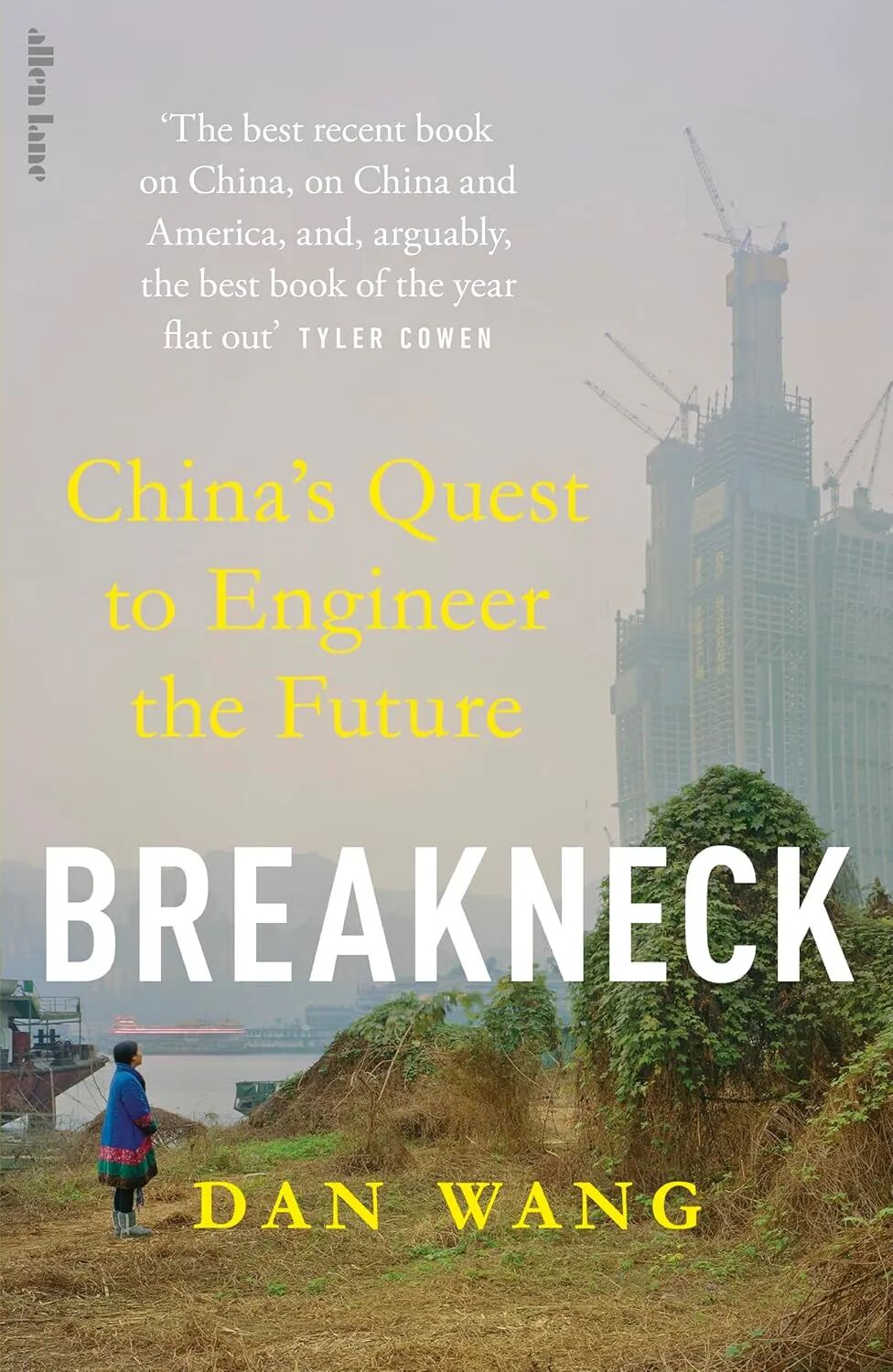
Image source: Amazon
We have a Tesla colleague who came back to China, downloaded Douyin, and searched for rolling presses and coating machines. Thousands of search results came up. But when searching for coating machines on TikTok in the United States, nothing was found. In China, at exhibitions, there are a large number of manufacturers discussing engineering problems, which far exceeds that in other countries. In other countries, it's very difficult to find so many people researching how to design a coating machine or a rolling press.
Yang Lu: I think engineering capabilities will become an important factor for iteration and migration from one task to another. When I visited BYD, a video was constantly playing in the exhibition hall, telling the story of mask production during the pandemic. Engineers went to the mask factory, observed, drew blueprints, and produced mask machines themselves, and also improved the original process. In less than two months, they were producing 5 million masks per day and became the world's largest mass - producing mask manufacturer. So it's no wonder that these factories don't allow each other to visit. Chinese engineers are really experienced and smart.
06 The battle of battery forms
Yiming: Which battery manufacturers impressed you particularly in terms of the iteration of battery forms?
Yang Lu: A representative example is the blade battery. Wang Chuanfu personally chaired the meeting, and technical backbones discussed together how energy density is determined. Finally, they still used lithium iron phosphate batteries and figured out how to arrange the batteries within the limited volume of the battery