In the next decade, what determines your wealth or poverty is no longer hard work, but it.
In 1866, the 30,000 - ton giant ship "Great Eastern" crossed the Atlantic Ocean. It laid a cable that connected London and New York.
With the trans - oceanic telegraph, the British Empire had control over the prices of cotton and sugar, war news, and climate changes. It made rapid profits in business by relying on information.
Telegraph, telephone, the Internet, the mobile Internet... With increasingly fast communication technologies, humans can quickly obtain information, communicate and collaborate. The transmission efficiency of human brainpower has been liberated, and wealth has rapidly concentrated among those who control information channels, have higher cognition, and more traffic.
However, this is about to become history. A new liberation is approaching in a nearly silent yet overwhelming way. What it liberates is the efficiency of value generation.
This is the Token revolution.
Token is not a character
Alibaba established a Token division, and Jensen Huang shouted out "Token economics"... The words and deeds of the giants sparked a heated discussion about Token this spring.
People's initial understanding of Token comes from its original meaning in the technical field. Token is the smallest computing unit for AI large models to process information. It can be four English letters or one or two Chinese characters.
However, the in - depth discussions day by day have continuously overturned the answers. This can be seen from the Chinese translations of Token: corpus block, language block, model element, intelligence element, wisdom root... Everyone hopes to find a deeper and more ultimate connotation.
On March 24th, it not only received an official name: "Lexeme", but also got an official definition:
It is not only the value anchor point in the intelligent era, but also the settlement unit connecting technological supply and business demand.
This should be the deepest and most authoritative explanation of the connotation of Token currently made public. It has moved away from the simple technical level and instead tries to define Token from a brand - new perspective.
This is value.
In the AI era, Token will become the smallest quantifiable unit of the value created by human civilization.
In the traditional world, value is sometimes vague, subjective, and not easy to price. For example, an old traditional Chinese medicine doctor felt a patient's pulse, talked for 5 minutes, and charged 500 yuan for the diagnosis. How much is each word worth in these 5 minutes? How much is his experience worth? It's all a muddled account that no one can clarify.
However, from the perspective of Token, each diagnosis of the old traditional Chinese medicine doctor will be disassembled into individual Tokens. His observation of the patient's complexion is a "diagnostic experience Token"; the sentence he used to ask about the patient's sleep condition is an "inquiry logic Token"; the prescription he finally wrote out is a "treatment plan Token".
Another example is that a lean production expert led a transformation of the production line, which reduced the production cost by 1%. But which part created how much value? What value did it contribute to the whole? It's also a muddled account.
From the perspective of Token, the expert's transformation of the production line can also be disassembled into Tokens. Her re - arrangement of personnel is an "optimization Token"; her change from individual inspection to spot - check is a "cost Token" for quality control; the entire production line transformation is a "lean solution Token".
Such changes have re - measured value.
Previously, value was "fog - like", visible but intangible; in the future, value will be "granular", and each Token will come with its own price tag.
This means that for the first time in human history, humans have the ability to precisely measure, mass - produce, and trade the intangible asset of "wisdom" just like coal and oil in the industrial era.
But more importantly, AI has demonstrated its power: It can process, circulate, and generate these value Tokens with an efficiency that humans can't match, and turn these Tokens from valueless information into directly realizable wealth.
What does this mean?
The third liberation
If we lengthen the time axis, we will find that the progress of human civilization is essentially a process of two "liberations".
The first liberation was the Industrial Revolution. Before that, human output was limited by physical strength. A person could only plow one mu of land and move a few hundred bricks a day. After the appearance of machines, human physical strength was liberated, bidding farewell to the era when "physical strength determines fate", and wealth rapidly concentrated among those who owned machines.
The second liberation was the Information Revolution. Before that, the spread of human knowledge and information was highly restricted by time and space. A letter took several months to be transported, and a book could only be read by a few people. However, the progress of communication means gradually broke down the barriers.
If the first two liberations centered around physical strength and information channels liberated the production factors, then the third liberation triggered by Token is directly aimed at the result, at value itself.
In the past, the speed at which humans created value was limited by physiological limits. A person can only work 16 hours a day, the brain can only process limited information, and one can only accumulate limited experience in a lifetime. Whether it's Einstein or a top - notch surgeon, their value output is linear.
The combination of AI and Token has broken this biological seal.
AI can generate Tokens 24/7, process billions of times more information than humans, and the efficiency of generating value is at least hundreds of times that of humans. More importantly, its improvement in productivity has made value production shift from "handicraft workshops" to industrial mass - production.
This will also change the production methods of many human jobs. In the past, people created value by organizing resources; in the future, people will generate massive Token value by giving instructions to AI computing power.
In the new production mode, the core role of humans will change from hard - working value creators to "value definers" and "Token schedulers" standing on the command platform.
When both productivity and production relations are subverted, a new industrial revolution unfolds. Its biggest stage is often those seemingly very traditional and ancient industries.
Token is a revolution, reconstructing industries
The stock market is a typical example affected by the Token revolution.
In traditional stock trading, although quantitative trading exists, in essence, it is still a game between people.
Analysts stay up late to read financial reports, fund managers conduct on - site investigations of enterprises, hot - money speculators create momentum with large amounts of capital, and retail investors trade stocks based on rumors... Although the information flows quickly, decisions still rely on the human brain. At this time, smart and hard - working people still have a chance to make money.
But what will the stock market look like in the era of the Token revolution?
From March 11th to March 25th, 2026, the stock price of Zhongfu Shenying, a listed company on the A - share market, rose from 33 yuan all the way to 66.88 yuan. What drove this was the Token strategy of the large - scale model of quantitative funds.
At 7:20 a.m. on March 11th, the CCTV News Channel's "Morning News" program reported a piece of news: A Chinese enterprise's independently developed T1200 - grade ultra - high - strength carbon fiber was officially launched globally today and has the mass - production capacity of hundreds of tons, filling the gap in the global relevant field.
Although the news didn't mention the name of the enterprise, careful people would notice that the word "Zhongfu Shenying" was written on the engineer's work uniform in the camera shot.
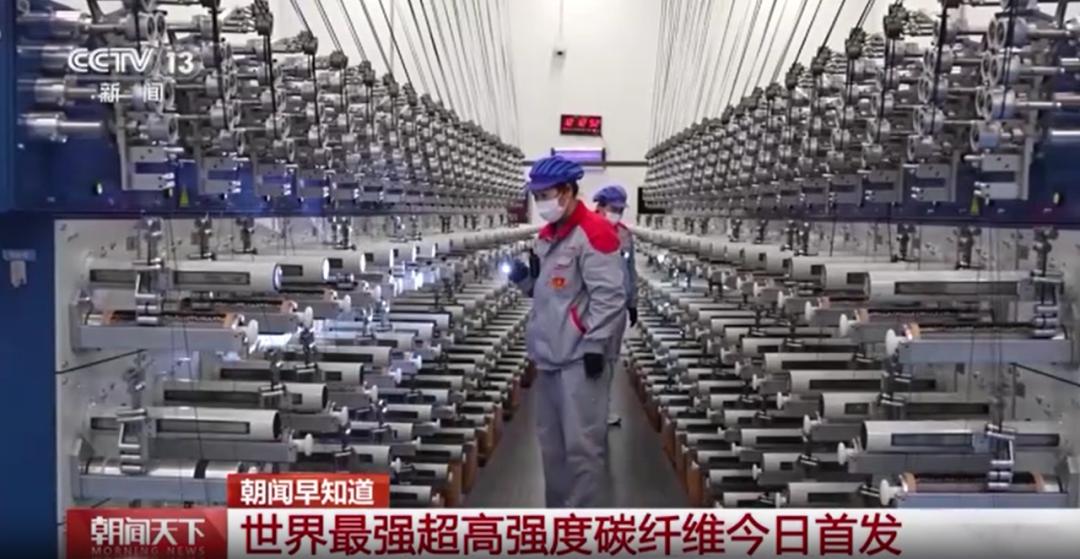
▲ Image source: CCTV News
However, as soon as the market opened at 9:30, after a brief high - opening, the stock price of Zhongfu Shenying immediately declined. Prudent traders would conclude that the market didn't recognize this piece of news.
But as the news spread through various channels, changes took place. The large - scale model of quantitative funds disassembled this piece of news into several "event Tokens" including "carbon fiber", "global launch", "T1200", and "mass production" through corpus extraction.
Subsequently, it quickly generated several "emotion Tokens" and "industrial chain influence Tokens", and then generated several "trading strategy Tokens". Finally, it combined these into several sets of trading plans and started placing orders.
At 11:27, the quantitative funds began to pour in and pushed the stock price up to over 37 yuan in the afternoon. In the following trading days, the quantitative funds appeared on the top - ten active stocks list four times. Eventually, it created a bull stock whose price doubled.
This is a typical asymmetric war. There is no prior layout, no insider information, and no industry hot - spots at the consensus level. Without the assistance of Token tools, ordinary investors have no possibility of quickly formulating high - value trading strategies.
In the face of highly Tokenized AI, whether it's value investment, chasing hot - spots, or technical analysis, they are just predictable data fluctuations. Wealth doesn't only flow to those who conduct in - depth research and have well - informed information, but more to those who have the strongest computing power and can generate high - value decisions the fastest.
The same impact is also happening in the content creation industry.
In the past, the moat of content creators was their viewpoints and writing skills. It took a long time and high cost to write an article or shoot a movie. However, in the AI era, viewpoints and writing skills have been rapidly "equalized". What's more terrifying is that the production cost of content will approach zero. An AI with ordinary performance can generate hundreds of articles and dozens of short - videos within an hour.
At this time, there are only two types of content that can survive.
One type is the extremely personalized "personality Token" with strong emotional imprints. For example, a rural writer's articles are valuable not because of the flowery words, but because of the deep affection and nostalgia for rural life revealed between the lines. This emotional resonance is a "personal emotion Token" that is difficult for AI to replicate.
The other type is the "data Token" and "logic Token" with extremely high efficiency and precision. For example, a financial media no longer relies on journalists to manually interpret financial reports. Instead, it uses AI to instantly disassemble tens of thousands of financial reports into "risk Tokens", "growth Tokens", and "association Tokens", and automatically generates interpretation versions for different investors.
The moat of this type of content is no longer writing ability, but the ability to give precise instructions to AI and screen and combine high - quality content from a large amount of junk Tokens.
The Tokens corresponding to the "mediocre content" in the middle - ground, which has neither unique emotions nor precise data support, will become worthless. Because AI can generate a large amount of such information in batches at almost zero cost.
However, impact is not the only change that the Token revolution can bring. Destruction and reconstruction often happen simultaneously. The medical industry is one of the central stages of reconstruction.
For a long time, the core pain point of medical resources has been "scarcity". The time of top - notch experts is limited, and their experience is private. The best doctors can only see dozens of patients a day, which is a physical law. This has led to the problems of "difficulty and high cost in seeing a doctor".
At the same time, for a young doctor to grow into an expert, it's not enough to be quick - witted and have a lot of basic medical knowledge. Usually, the hospital will put forward two requirements for his training: Establish clinical thinking and understand the overall situation of the patient.
The so - called clinical thinking mainly refers to the diagnosis and treatment experience when facing diseases, while understanding the overall situation of the patient requires the doctor to go to the patient's bedside to understand the patient's medical history, physical condition, and even make predictions about the disease trend.
In the words of many experts, these two requirements are often summarized as "seeing more and being closer".
However, under the Token revolution, the experience of top - notch doctors can be "extracted" and "replicated". AI will interact with top - notch experts, learn about clear and diverse severe disease types, complex medical conditions, complete patient data, the process of differential diagnosis, diagnosis and treatment decisions, and clear and definite intervention results for specific clinical problems.
This complete chain of diagnosis and treatment thinking will help AI generate a large number of "diagnosis Tokens" and "treatment plan Tokens", and enable them to circulate on the large - scale model.
A top - notch respiratory expert in Beijing has had his lifetime diagnosis and treatment experience trained into a high - precision diagnosis model. In a community hospital in a remote area, when a young doctor faces a difficult and complicated disease, by calling on the expert's "experience Token", he can instantly obtain a diagnosis suggestion almost the same as that of the top - notch expert.
This circulation of Tokens is essentially an "infinite replication" of scarce medical resources. It enables the wisdom that could originally only serve a few hundred people to provide top - notch medical services to every corner of the world at a very low cost.
These impacts and reconstructions are just the tip of the iceberg. On March 24th, the official released a set of data:
At the beginning of 2024, the average daily Token call volume in China was 100 billion. By March this year, it had exceeded 140 trillion, a more than a thousand - fold increase in two years.
What supports the average daily Token call volume of 140 trillion are the real demands and changes from all walks of life.
In the fields of industrial manufacturing and warehousing and logistics, AI is deeply integrated with robots and sensors, and has the ability to perform complex tasks; in the film and television industry, AI actors are accelerating their appearance on the screen; in the biomedical industry, AI is reshaping the drug R & D process...
Similar impacts and reconstructions will occur one after another in every industry like a row of dominoes falling.
The forms of change may vary widely - some are manifested as the transfer of pricing power, some as the subversion of service models, and some as a hundred - fold increase in efficiency... But looking through the fog, the direction of change always points to the same core: With the assistance of AI, core value will be created faster, more concentratedly, and more efficiently.
What should we do?
When the new "value high - ground" mercilessly concentrates on the nodes with computing power and algorithms, the impact of the Token revolution will be far more than just the impact and reconstruction of industries:
All the production relations and social divisions of labor attached to industries have reached the moment of being completely rebuilt.
This means that in all industries, brand - new "core groups" and "marginal groups" will emerge. The former may only account for 1% or even less of the human population. Becoming one of them highly depends on three core abilities: Token definition power, Token scheduling power, and Token ecosystem construction power.
The so - called Token definition power is the ability to define what a valuable Token is. For example, defining the value standard of medical Tokens and the scoring system of education Tokens. Just like the "rule - makers" in the industrial era, they hold the pricing power of value.
Token scheduling power means scheduling the global AI computing power, data, and models to generate a large number of high - value Tokens, similar to the builders of infrastructure. And ecosystem construction power means the ability to build a platform where Token producers and consumers can freely trade, and they are the rule - makers.
Everyone else will face a marginalized situation. This situation is not because of laziness, but because they have lost the core ability to participate in the Token revolution. For example, those who only know how to do "physical work and basic repetitive work" will lose the ability to create value, changing from "value creators" to "valueless onlookers". Some people even define these groups as the "useless class".
The result of marginalization is like that of the handicraftsmen during the Industrial Revolution. After being completely replaced by machines, they had no chance of making a comeback. Similarly, under the Token revolution, some marginalized groups may become "AI refugees".
Such a cruel differentiation is obviously something that no one wants to encounter. Therefore, for every ordinary person, the core coping logic of the Token revolution is only one sentence:
Shift from "passively accepting value" to "actively defining value and participating in Token generation".