Just now, four people "flew" to the moon. Read this article to understand the Artemis II mission.
At 18:35 Eastern Daylight Time on April 1st, Artemis II lifted off from the Kennedy Space Center in Florida. Four astronauts boarded the Orion spacecraft and headed towards the moon.
The last time humans ventured this far was in 1972. That year, Apollo 17 landed on the lunar surface and brought back the last batch of lunar rock samples.
NASA (National Aeronautics and Space Administration) spent $93 billion this time to send humans to the moon again.
Many people's first reaction was: Haven't we been there before? Why go again?
01
First, figure out whether we're actually going to the moon this time?
Note that this mission is a lunar flyby, and no one will set foot on the moon.
The spacecraft lifted off from the Kennedy Space Center in Florida at 18:35 Eastern Daylight Time on April 1st. It orbited the Earth for the first 24 hours and then headed towards the moon. It is expected to fly by the far side of the moon on the sixth day of the mission, then use the moon's gravity to turn and return to Earth along an arc-shaped orbit, splashing down in the Pacific Ocean on April 10th. The whole journey takes about 10 days. The four astronauts will stay inside the spacecraft, and no one will land.
But there's an astonishing figure about this flight: The spacecraft will reach a position about 407,000 kilometers from Earth, surpassing the human deep-space record set by Apollo 13 in 1970. These four people will be the humans who have flown the farthest in more than half a century.
In terms of orbit design, this mission is more like Apollo 13 than Apollo 8.
Apollo 8 had to fire its engines to enter and then leave lunar orbit, burning the engines several times. This time, the spacecraft will fly by and use the moon's gravity to bounce back without entering a stable lunar orbit. There will be fewer engine firings, and theoretically, the risk is lower.
What's the purpose of this trip? Simply put, it's to test the spacecraft.
The SLS rocket and the Orion spacecraft have only flown once in an unmanned state in 2022. This is their first time carrying astronauts into deep space. Systems such as life support, communication, and navigation need to be verified in a real mission. Before departure, the crew will also stay in Earth's orbit to carefully check the life support system and only fire the engines to head towards the moon after confirming that everything is okay.
So, this is the last official rehearsal before NASA's next manned lunar landing.
The return journey is the most dangerous part. When the spacecraft re-enters the Earth's atmosphere, its speed is close to 40,000 kilometers per hour, and the surface temperature of the hull is about 2,760 degrees Celsius. During the Artemis I mission, there was abnormal erosion of the heat shield.
02
Who are the four astronauts?
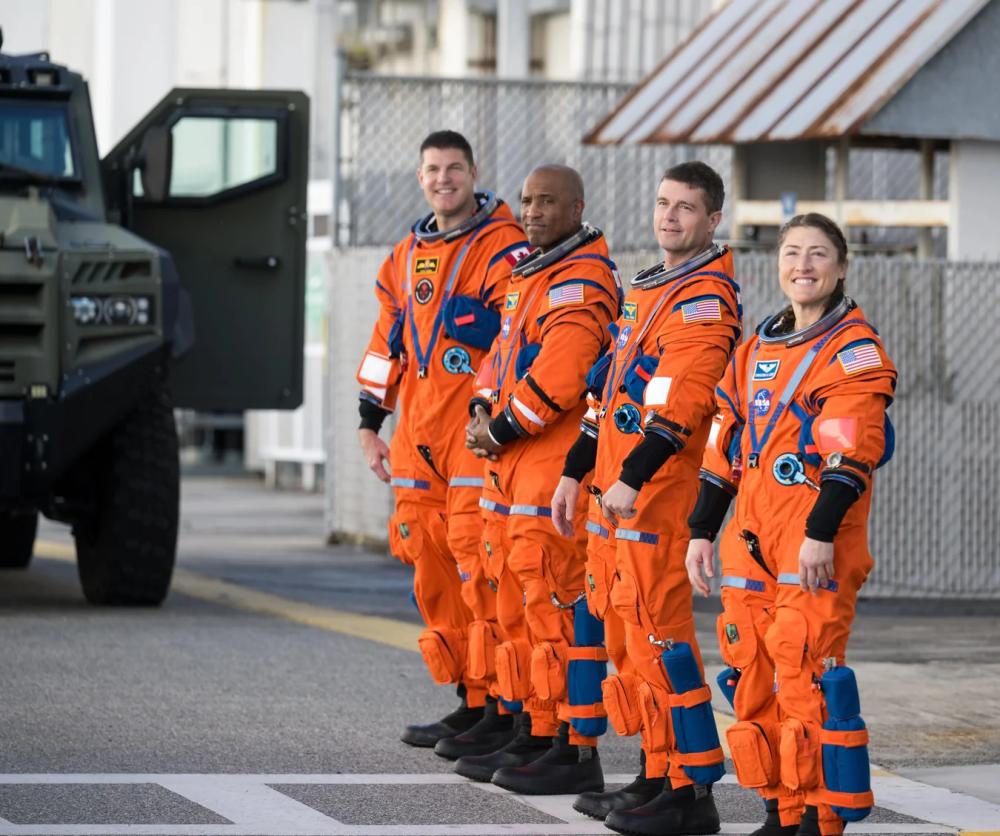
Commander Reid Wiseman, a retired naval pilot, visited the International Space Station in 2014. He is raising two daughters on his own. When asked if he was afraid of this flight, he said he wasn't, but he was worried about his daughters. "I could have given them a stable life,"
he said, "but I saw the same fire in their eyes as in mine. So we can't stop." Regarding teamwork, he also said, "Every ship needs a captain. I'm ready to make decisions, but not alone."
Pilot Victor Glover, who has experience flying on the space station, will become the first African-American to fly into deep space.
Mission Specialist Christina Koch, who was initially an electrical engineer at NASA and later became an astronaut, spent a whole year at an Antarctic research station. She will become the first woman to fly beyond low Earth orbit.
She said, "We have the opportunity to answer what might be the most important question of our lives: Are we alone in the universe? To answer this question, we start from the moon."
Mission Specialist Jeremy Hansen is making his space debut. He is also the first non-US astronaut to fly into deep space - no one from Canada has ever done this before.
03
Why didn't it happen in 2024?
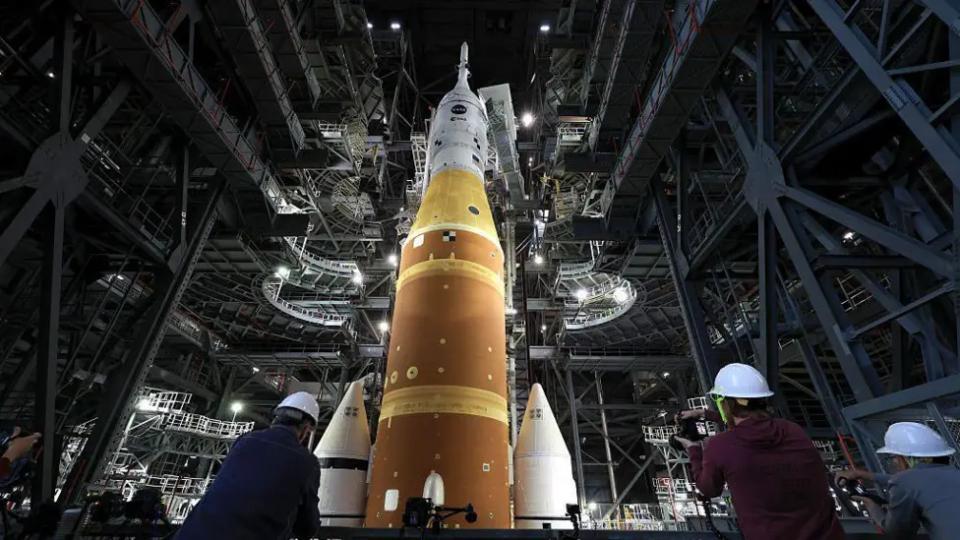
The original plan was to launch in 2024, but it was postponed again and again.
The problems were in three areas: abnormal erosion of the heat shield during the return of Artemis I, with the material performance not meeting the standards; potential faults in the valve circuit of the life support system; and insufficient power redundancy in the launch abort system under extreme conditions. In case of an accident, there was not enough confidence to eject the astronauts.
In February this year, the spacecraft was forced to return to the assembly building due to a helium leak, causing the launch date to be postponed again to April. These three problems are directly related to whether the astronauts can return alive, so the entire project had to wait. Engineers readjusted the structure of the heat insulation material, replaced some key electronic systems, and increased the safety redundancy.
On the day of the launch, about an hour and a half before the end of the countdown, NASA found an abnormality in the flight termination system - this system is used to send instructions to destroy the rocket in case of loss of control to protect public safety. Without its guarantee, NASA would not take the risk of launching. Fortunately, the problem was resolved within a few minutes and did not have a substantial impact on the countdown.
Sean Quin, the ground system project manager, once said a very appropriate thing: "When the spacecraft is ready, the rocket is ready, and the ground is ready, we're just waiting for the weather." The weather forecast on the day of the launch showed that the probability of bad weather during the launch window was only 20%.
04
Since we've been there before, why go again?
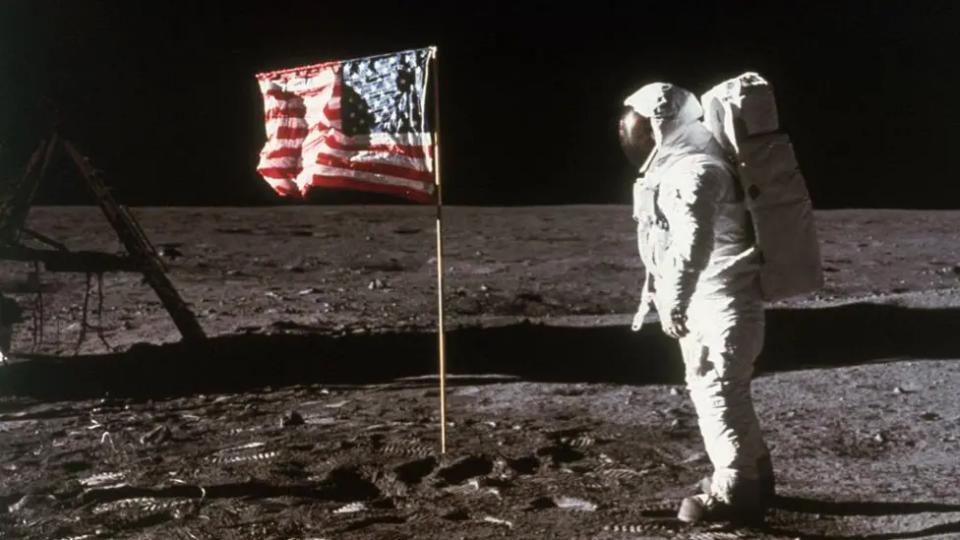
This question deserves a serious answer. The purpose of the Apollo moon landing in 1969 was simple: the Cold War, but the logic this time is completely different.
There are things on the moon that are scarce on Earth.
There are rare earth elements, iron, titanium, and helium. More importantly, there is water. There is a large amount of water ice in the permanently shadowed craters at the lunar south pole. This ice can provide drinking water and can also be electrolyzed into hydrogen and oxygen. One is rocket fuel, and the other is the air for breathing.
With water, a lunar base can truly operate, rather than relying on supplies from Earth every time. Another specific goal of this mission is to take pictures of the lunar south pole region from an altitude of 4,000 to 6,000 kilometers above the lunar surface to provide a reference for future manned landings and the selection of a lunar base site.
The moon is also a necessary step before going to Mars.
NASA's ultimate goal is Mars, and it plans to send humans there around the 2030s. But Mars is at least 55 million kilometers away at its closest, and the one-way communication delay is 20 minutes. The moon is different. It's 380,000 kilometers away, and there's still a chance to handle problems. The cost of testing technologies such as life support, power generation, and radiation protection on the moon is much lower than on Mars.
Libby Jackson, the head of space at the Science Museum, put it directly: "If these technologies fail for the first time on Mars, the consequences could be catastrophic."
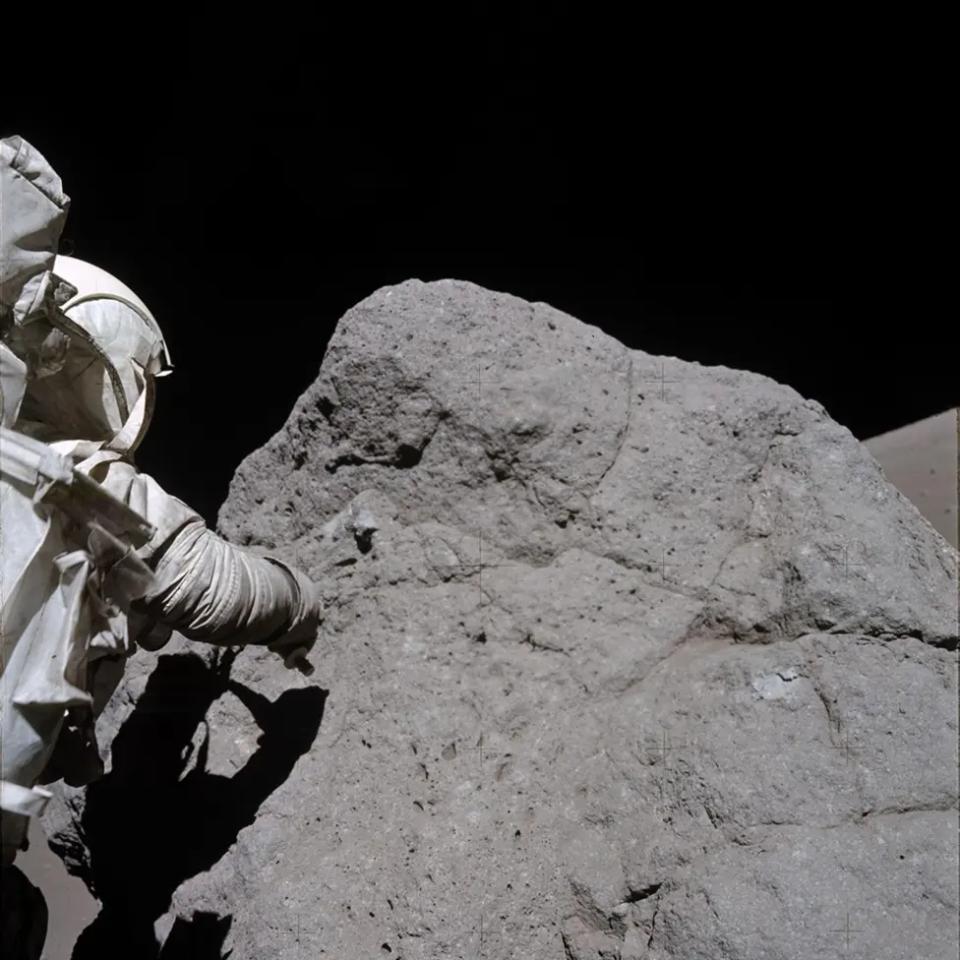
Scientifically, there are still many things about the moon that are not clear. The rocks brought back by Apollo tell us how the moon was formed, but that's just the beginning. The moon has no plate tectonics and no wind or rain erosion, and the early geological records of the solar system are almost intact there. There may be more discoveries waiting in areas that have never been visited.
But there's a more fundamental question. Scott Pace, the director of the Space Policy Institute at George Washington University, asked very clearly: What can humans actually do on the moon?
He divided the possible futures into several scenarios: If humans can survive using local lunar resources and do something of economic value, then a real settlement can be built on the moon; if they can make money but still rely on supplies from Earth, then the moon is more like the North Sea oil fields, dangerous but profitable; if it can only be sustained by government funding, then it's like the Antarctic research stations, where science can be done, but the scale will always be limited. "We don't know the answer yet," he said. "One of the meanings of exploration is to figure out which future is actually feasible."
05
Everyone is eyeing the moon
The Artemis program has never been a solo project. Canada, Japan (JAXA), Italy (ASI), and many European space agencies are all involved, sharing the specific work of lunar base construction.
Meanwhile, China's lunar program is also advancing. The Chang'e series has completed multiple landings and sample collections and plans to achieve a manned lunar landing before 2030. China and Russia are also jointly promoting the "International Lunar Research Station" (ILRS) program, with the goal of establishing their own lunar base around 2035.
The focus of all parties is on the lunar south pole. There is water ice, the terrain is relatively stable, and the lighting conditions are conducive to energy acquisition.
There's an unresolved legal issue. The 1967 United Nations Outer Space Treaty states that no country can claim ownership of the moon. But the treaty doesn't clearly state whether extracting and using resources on the moon counts as ownership. The 1979 Moon Agreement attempted to define lunar resources as the "common heritage of all mankind" and establish a unified extraction mechanism, but only 15 countries ratified it, and none of them are major space - faring nations, so it's basically not recognized.
The United States passed legislation in 2015, clearly authorizing its citizens to extract space resources. Luxembourg, the United Arab Emirates, and Japan followed suit, each enacting laws to protect the lunar resource rights of their domestic enterprises. Dr. Helen Sharman, the first British astronaut, said a sentence that points out the reality: "You can't own the land, but when you work on it, others have no right to interfere with you."
To set some boundaries for this legal gray area, the United States led the launch of the Artemis Accords in 2020. This agreement is not a formal treaty and has no binding force, but it proposes a set of behavioral guidelines, including principles such as transparency, avoiding mutual interference, and resource extraction rights.
As of January 2026, 61 countries have signed it. Russia criticizes it as a unilateral framework dominated by the United States, and China did not participate because of US legal restrictions on NASA's cooperation with Chinese institutions. The two countries started their own project and jointly promote the International Lunar Research Station program.
In this way, lunar exploration has actually formed two camps: one is the US - led system based on the Artemis Accords, and the other is the independent route led by China and Russia.
06
Private companies have started to grab positions
In addition to governments, private companies have also set their sights on lunar resources, and they are moving faster than many people expected. Seattle - based startup Interlune has signed a letter of intent with Finnish cryogenic equipment company Bluefors, promising to supply up to 10,000 liters of lunar helium - 3 to it annually starting in 2028. The potential value of the contract is about $300 million.
Helium - 3 is a helium isotope that is extremely scarce on Earth, with an annual production of less than 25 tons. But after billions of years of solar wind bombardment, the lunar surface has accumulated an estimated hundreds of thousands of tons of reserves.
Its uses are very specific: cooling quantum computers, for nuclear magnetic resonance lung imaging, and as nuclear fusion fuel - just in the field of quantum computing, the price of helium - 3 is about $20 million per kilogram. Blue Origin has also signed an agreement to map lunar resources from orbit and conduct on - site evaluations on the lunar surface. Japanese company ispace is collaborating with resource extraction company Magna Petra to send helium - 3 collection equipment to the moon.
The existence of these companies shows one thing: Lunar resources are no longer just a future vision in government reports. There are already buyers, contracts, and engineering prototypes. But it should also be clear that no one has really succeeded in this path yet.
The extraction is difficult, the legal framework is incomplete, and there is a large funding gap. At this stage, it's more like queuing on the track, and the starting gun hasn't been fired yet.
07
What does NASA plan to do next?
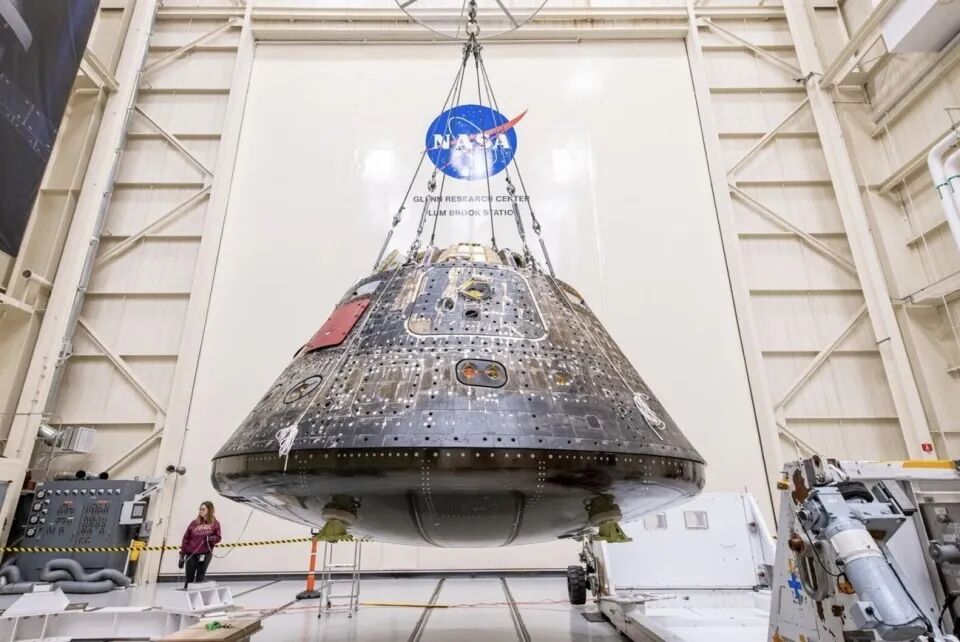
Just last week, NASA held a press conference called "Ignition" in Washington and announced its lunar base plan for the next seven years, with a total budget of $20 billion. NASA Administrator Jared Isaacman made it very clear: "The mission of NASA's establishment is to undertake grand and bold undertakings in the fields of aviation and space and accomplish things that are almost impossible. It's not just about planting a flag and taking a photo. This time, the goal is to stay."
NASA's plan consists of three steps. Step one, by 2028: 21 robotic landing missions will send 4,000 kilograms of equipment to the moon to test whether various systems can be used on the moon. The frequency will increase rapidly from 2 in 2026 to once a month. Step two, from 2029 to 2032: 60,000 kilograms of materials will be transported to build a semi - permanent structure where astronauts can live, allowing them to work continuously on the lunar surface. Step three, starting from 2033: Larger cargo landers will be used for manned lunar landings every six months, transitioning from short - term visits to real long - term stays.
Regarding the lunar lander, NASA is working with SpaceX and Blue Origin respectively. Both are required to complete unmanned landing verification first before carrying astronauts.
Greiz said at the press conference that the one that is ready first will fly first.
In addition, NASA has abandoned the "Gateway" plan of building a