Humanity's Return to the Moon: NASA's Artemis II Launches Successfully, Ushering in a New Era
On April 2nd, four astronauts lifted off from NASA's Kennedy Space Center in Florida, embarking on a 10 - day journey to orbit the Earth and the Moon.
During this mission, the spacecraft will fly over the far side of the Moon in a figure - eight trajectory, then use a gravitational slingshot to accelerate and return to Earth. The astronauts will not land on the lunar surface.
The crew for this mission includes mission commander Reid Wiseman, Victor Glover, Christina Koch, and Jeremy Hansen. It has been over 50 years since the Apollo 17 mission in 1972. However, they will not land on the lunar surface. This mission aims to pave the way for a landing in 2028 and ultimately achieve NASA's goal of establishing a long - term presence on the Moon.
The United States has not landed on the Moon since 1972. For a whole half - century, the Moon has almost disappeared from humanity's technological agenda. But now, almost all major space - faring nations are re - formulating lunar plans, and the Moon is becoming a potential market for commercial activities.
The Apollo program brought about semiconductors, materials science, and the computer industry. The Internet originated from military research networks; SpaceX brought about commercial spaceflight.
This time, can the lunar orbit and the return to the Moon bring about a space economy? What are the key points of NASA's lunar orbit mission? What tasks will the nearly 50 - year - old space team complete? Why does humanity want to return to the Moon again? Below, Enjoy:
01
Costing billions
Where has the money been spent on tasks and equipment?
As a key project costing billions of dollars, NASA's Artemis 2 mission will complete a 10 - day round - trip between the Earth and the Moon. This mission does not include a lunar landing but will send astronauts to deep space.
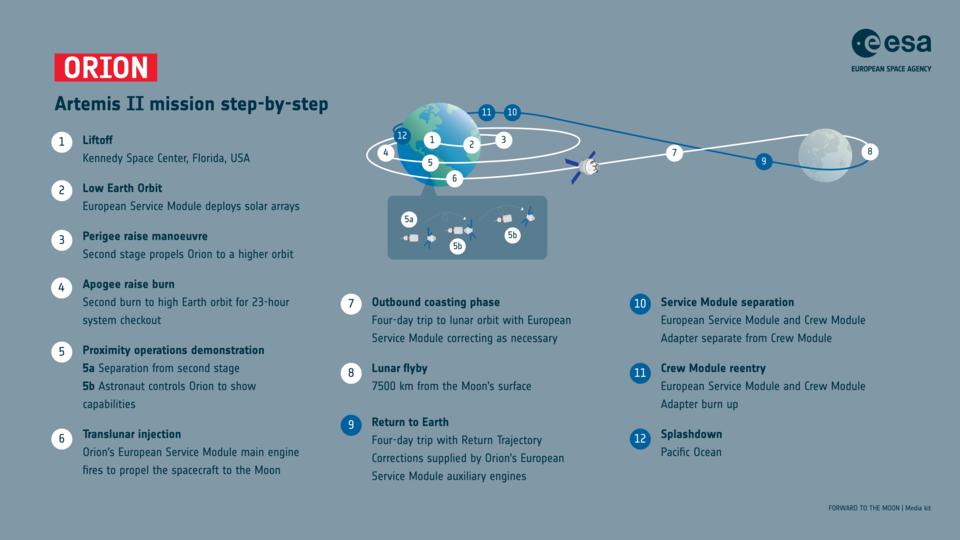
On the first day of the mission, the astronauts will orbit the Earth and test the Orion spacecraft's life - support systems. These systems are used to regulate temperature, air quality, and other factors to ensure the crew's safety, including drinking water, food, and waste - disposal systems.
On the second day of the mission, the main engine of the spacecraft is expected to fire, putting the spacecraft on a trajectory towards the Moon.
During the next four days of flight, the astronauts will test the Orion spacecraft's ability to withstand space radiation and demonstrate emergency procedures and other operational processes in preparation for future Artemis missions.
The next flight of the program, Artemis III, is planned to conduct more technical tests in low - Earth orbit, especially docking with another spacecraft in space. This spacecraft will send astronauts to the lunar surface. After that, NASA plans to send astronauts to the Moon on the Artemis IV mission in 2028.
Finally, under the Earth's gravity, the spacecraft is expected to splash down in the Pacific Ocean off the U.S. West Coast on April 10th. The main goal of this mission is to comprehensively test the Orion spacecraft's life - support systems, navigation and communication systems, and heat shield performance in a real deep - space environment.
As the mission commander said:
"What we're about to attempt is to send humans into space, to places they've never been before, and then bring them back to Earth safely. It sounds simple, but that's what this mission is about testing - whether the entire system can safely send and return humans."
This mission has four core objectives:
1. Validate life support: Verify whether the new - generation rocket and spacecraft technology can sustain astronauts' survival in the deep - space environment for an extended period, laying the foundation for deep - space exploration in the next few decades.
2. Regarding the orbital hub: Test the navigation accuracy of the spacecraft in the distant lunar orbit and high - radiation environment, which is also in line with the Artemis program's plan to establish a lunar gateway space station in the future.
3. Validate the deep - space communication link: Lay the foundation for Earth - Moon communication, facilitating the conduct of various experiments and data transmission.
4. Heat shield performance test: Test the condition of the thermal protection system when re - entering the atmosphere at the second cosmic velocity, paving the way for future Mars landing plans.
What supports this feat is a young space equipment combination known as the "strongest on Earth": the SLS rocket + the Orion spacecraft + the supporting guarantee system. Behind this combination, Boeing is the prime contractor for the "Space Launch System," Northrop Grumman is responsible for manufacturing the rocket's solid - fuel boosters, and Lockheed Martin is responsible for producing the "Orion" spacecraft.
The last time this combination carried out a flight mission was in 2022 when NASA completed the unmanned Artemis 1 mission. This time, sending humans into space will be a first - time breakthrough.
SLS super - heavy rocket:
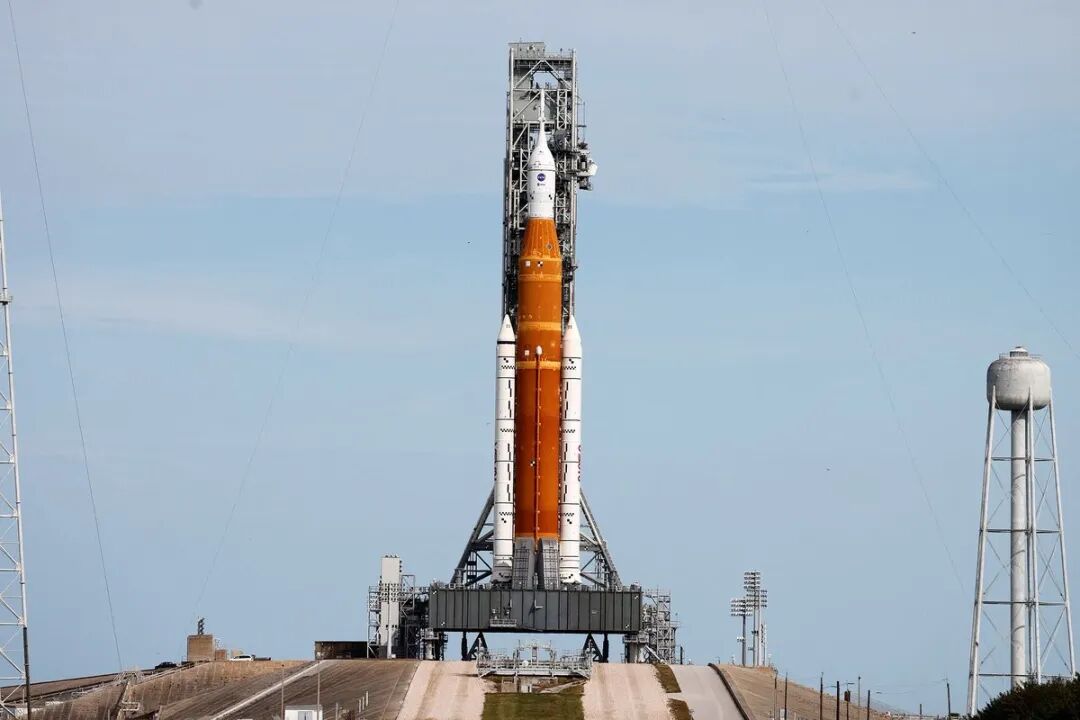
This is NASA's "lunar vehicle" built over many years and at a huge cost. It is about 98 meters tall and has a maximum thrust of about 8.8 million pounds. It is a super - heavy rocket built by NASA for the return to the Moon, more powerful than the Saturn V of the Apollo era. It can stably send the Orion spacecraft + 4 astronauts into the lunar transfer orbit. This time, the Block 1 configuration is used, equipped with four RS - 25D liquid rocket engines and two solid boosters. Although it has limited combat experience, it bears the "launch responsibility" for the entire mission, with a single - launch cost of up to $4.1 billion.
Orion spacecraft:
This is a spacecraft capable of withstanding a manned lunar orbit and re - entry. The service module is provided by Europe. Its core advantage is extreme safety - it needs to withstand an extreme high temperature of 2700 degrees Celsius when returning to Earth and maintain its structural integrity at high temperatures. At the same time, it is equipped with a multi - layer radiation protection structure, which can effectively shield deep - space radiation, building a "life barrier" for astronauts.
The living space inside the spacecraft is equivalent to the size of two small vans. It is equipped with a customized heater and a general waste - management system, which can meet the 10 - day in - orbit living needs of 4 astronauts.
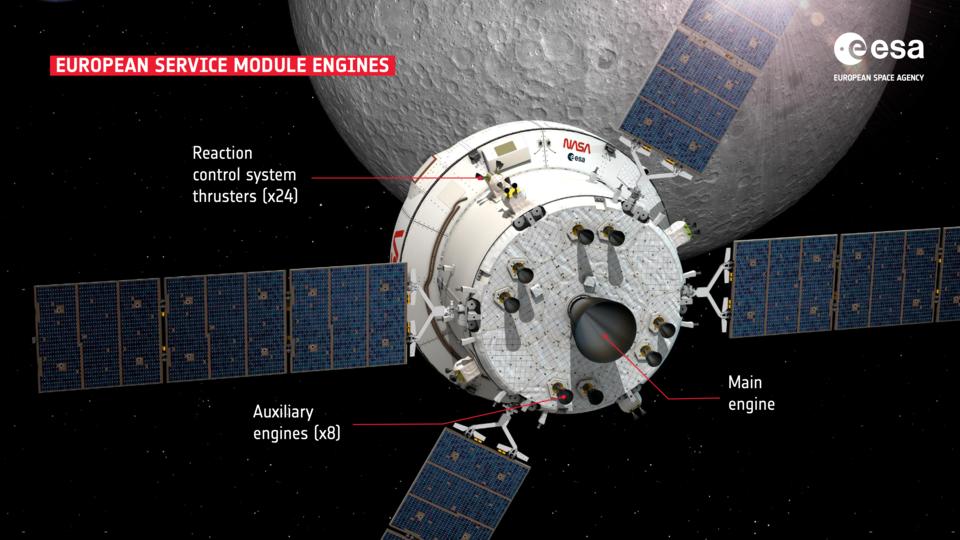
The core of the spacecraft is the European service module, which is equipped with 33 engines to support multiple actions such as guidance, steering, and propulsion. These engines can be divided into 3 different types:
One main engine is responsible for the spacecraft's speed - change actions and plays a role in the key orbit changes between the Earth and the Moon. This engine is also a refurbished one; eight auxiliary engines are responsible for orbit fine - tuning and also serve as backups for the main engine; 24 small attitude - control engines are used for the spacecraft's attitude adjustment, enabling more precise angle rotation. They can be ignited individually or used in combination, and are divided into 6 groups.
Supporting guarantee system:
A communication network consisting of more than 50 ground monitoring and control stations around the world and three tracking and data relay satellites ensures real - time communication throughout the mission. Ground facilities such as the mobile launch platform and the launch - pad emergency evacuation system safeguard the launch process. Even in the face of sudden situations such as strong winds and pipeline leaks, they can be adjusted and responded to in a timely manner.
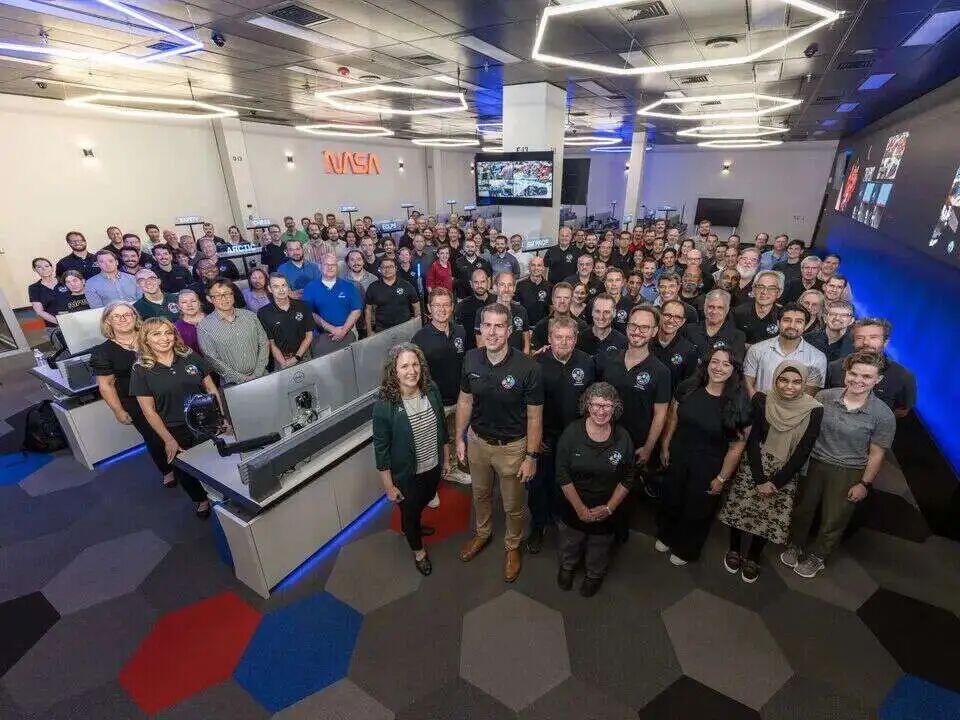
At the same time, European engineers on standby 24/7 at the Dutch ESA Technical Center and ground staff in the mission evaluation room at the U.S. NASA Space Center jointly safeguard this operation.
02
A "50 - year - old" astronaut combination with multiple firsts
The four astronauts for the Artemis 2 mission are mission commander Reid Wiseman, Victor Glover, Christina Koch, and Jeremy Hansen.
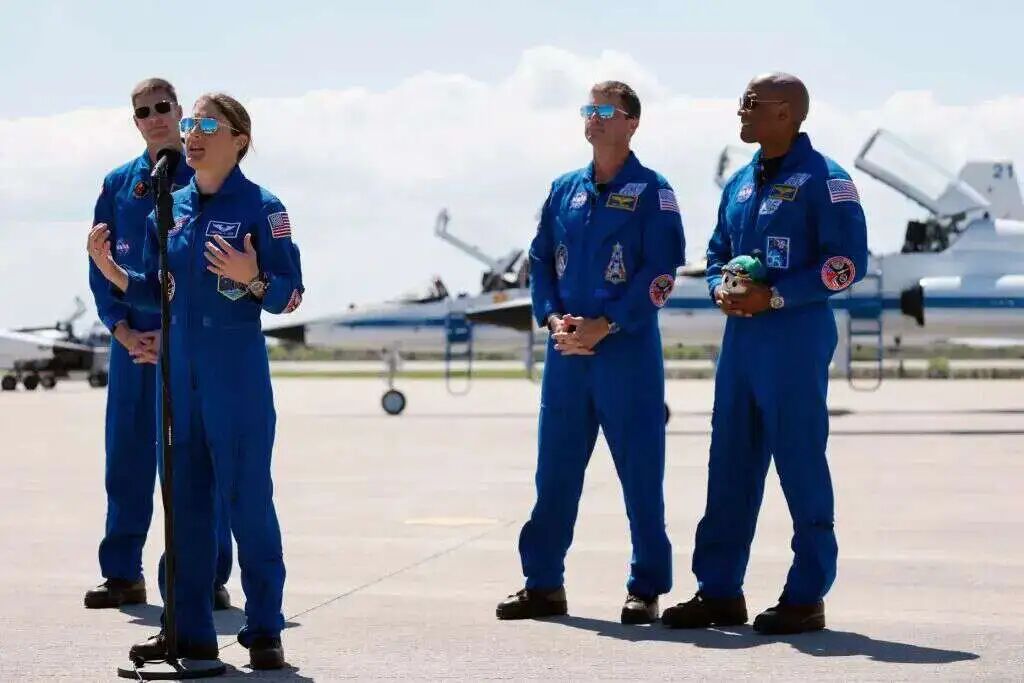
This combination has set several "firsts." Breaking the pattern of space crews dominated by white men, in this mission, Christina Koch becomes the first woman to fly past the Moon; Victor Glover is the first African - American to fly past the Moon; and Jeremy Hansen is the first Canadian to fly past the Moon.
Notably, the average age of the four astronauts is nearly 50, demonstrating great enthusiasm and a spirit of adventure. As Hansen said in an interview, "The point isn't to be the first, but to make sure you're not the last."
People at every age have the ability to make important decisions at any time.
Mission Commander Reid Wiseman is a retired naval pilot who carried out an International Space Station mission in 2014 and stayed there for six months. He has solid flight experience and emergency - handling capabilities.
As the mission commander this time, he is not only responsible for monitoring the overall status of the Orion spacecraft, handling abnormalities, and making return - flight decisions but also leading the team to complete various test tasks. As the ultimate decision - maker and safety supervisor for the entire mission, he coordinates the entire process of launch, flight, lunar orbit, and return.
He once said in Time magazine:
I really think we are taking the next right step in a sustained lunar presence.
Pilot Victor Glover is a senior naval pilot and also participated in SpaceX's first commercial flight mission to the space station with the Crew Dragon spacecraft in 2020.
In this mission, he will be responsible for the manual flight control of the Orion spacecraft, performing low - Earth orbit maneuvers, lunar - orbit flights, and attitude adjustments. He will also conduct close - range operation demonstrations: manually controlling the spacecraft to approach the upper stage of the rocket to verify the docking ability of the future lunar lander.
Mission Specialist Christina Koch stayed at the International Space Station for 328 days in 2019. She set a record for the longest in - orbit stay by a female astronaut and completed NASA's first all - female spacewalk mission. She also spent a year at an Antarctic research station.
In this mission, she will focus on participating in the testing of the life - support system (LSS): verifying the reliability of oxygen generation, carbon dioxide removal, and water circulation in the deep - space environment. She will also conduct in - cabin system inspections, equipment operations, and coordinate scientific experiments, cooperate with ground scientists in deep - space exploration, and record the impact of the deep - space environment on the human cardiovascular function, bone density, and cognitive ability, providing valuable medical data for subsequent missions.
Jeremy Hansen is the only member on his first space mission and is from the Canadian Space Agency. He will be responsible for the comprehensive testing of the spacecraft systems: verifying the operation status of the Orion's communication, power, thermal control, and other systems in the deep - space environment, preparing for the subsequent deployment of lunar surface equipment. He has been preparing for this mission for many years, going all out in every aspect from physical training to technical learning, demonstrating the original intention of "international cooperation in lunar exploration" with his actions.
This is a very counter - intuitive detail. In the most cutting - edge and dangerous mission, NASA did not choose the "youngest people" but a group of people with the most complete experience. They respectively have: 1. Long - term stay experience at the International Space Station; 2. Commercial spaceflight experience (SpaceX manned mission); 3. Survival experience in extreme environments (Antarctica); 4. Experience in multi - national collaborative missions.
Behind this is actually an industrial law: the closer to a "system - level project," the more it depends on "veterans." Spaceflight is not about extreme operations but about multi - dimensional abilities such as decision - making, risk judgment, and system understanding. This is a typical "top - level industry logic in the industrial era."
The four astronauts come from different backgrounds but have the same goal - to head to the Moon with humanity's curiosity and desire for exploration and unlock the unknown in deep space. They need to enter a strict isolation state before the launch, conduct high - intensity training and drills every day, and bear both physical and psychological pressure, but they always maintain a firm belief.
From the moment when three astronauts on the Apollo program first witnessed the Earth rising to the present when four astronauts are heading to the lunar orbit again, for more than half a century, humanity's original intention of lunar exploration has never changed, and these astronauts are the practitioners and inheritors of this original intention.
03
Why does humanity want to return to the Moon again?
The British Broadcasting Corporation (BBC) reported that the "Artemis" program involves thousands of people and is expected to cost over $93 billion to date.
So, a real - world question arises: Humans went to the Moon 50 years ago. Why do we want to go again?
The answer is simple. The last time we went to the Moon was a political competition; this time, it's a resource competition. We are vying for resources, energy, and industrial control.
The symbolic victory of the Apollo program can be summarized in one sentence - reaching the destination was considered a success. There was no long - term base, let alone industrialization and resource development. This time, in addition to landing on the Moon, we also want to "mine" the Moon.
Because the value of the Moon is not limited to scientific research. It also has water resources and rare metals.
Scientists have discovered water ice at the lunar south pole. Maybe a drop of water is not valuable on Earth, but in space, water can be decomposed into hydrogen (rocket fuel) and oxygen (for breathing).
Similarly, a large amount of rare metals on the lunar surface is considered a potential candidate resource for future nuclear fusion fuel. This means that if the Moon can produce and process fuel, future rockets can use the Moon as a regular gas station.
The cost structure of spaceflight will change significantly, and the cost of deep - space navigation will decrease exponentially. Space companies can actually transform into space energy companies.
If we put all these together, we can draw a bigger conclusion: the significance of the Moon is not as a "destination" but as a "transit station." That is to say, whoever establishes lunar infrastructure first will have the "energy and logistics pricing power" in deep space.
Future lunar exploration involves competition, cooperation, difficulties, and more importantly, breakthroughs.
The unknown will bring about the ordinary. Satellites, GPS, and medical technology have all been verified on new lands and resources. The Moon can bring even more.
If we look at history in the long run, human economy has always been expanding its spatial boundaries: in the agricultural era, we cultivated land; in the era of great navigation, we explored the oceans; in the industrial era,