Witness history: After half a century, humanity sets off today to return to the lunar orbit.
Early this morning Beijing time, the Launch Pad 39B at the Kennedy Space Center in Florida, USA, was awakened by flames and roars. A 98 - meter - tall rocket soared into the sky, with four astronauts sitting at its tip, setting off on a journey to the moon.
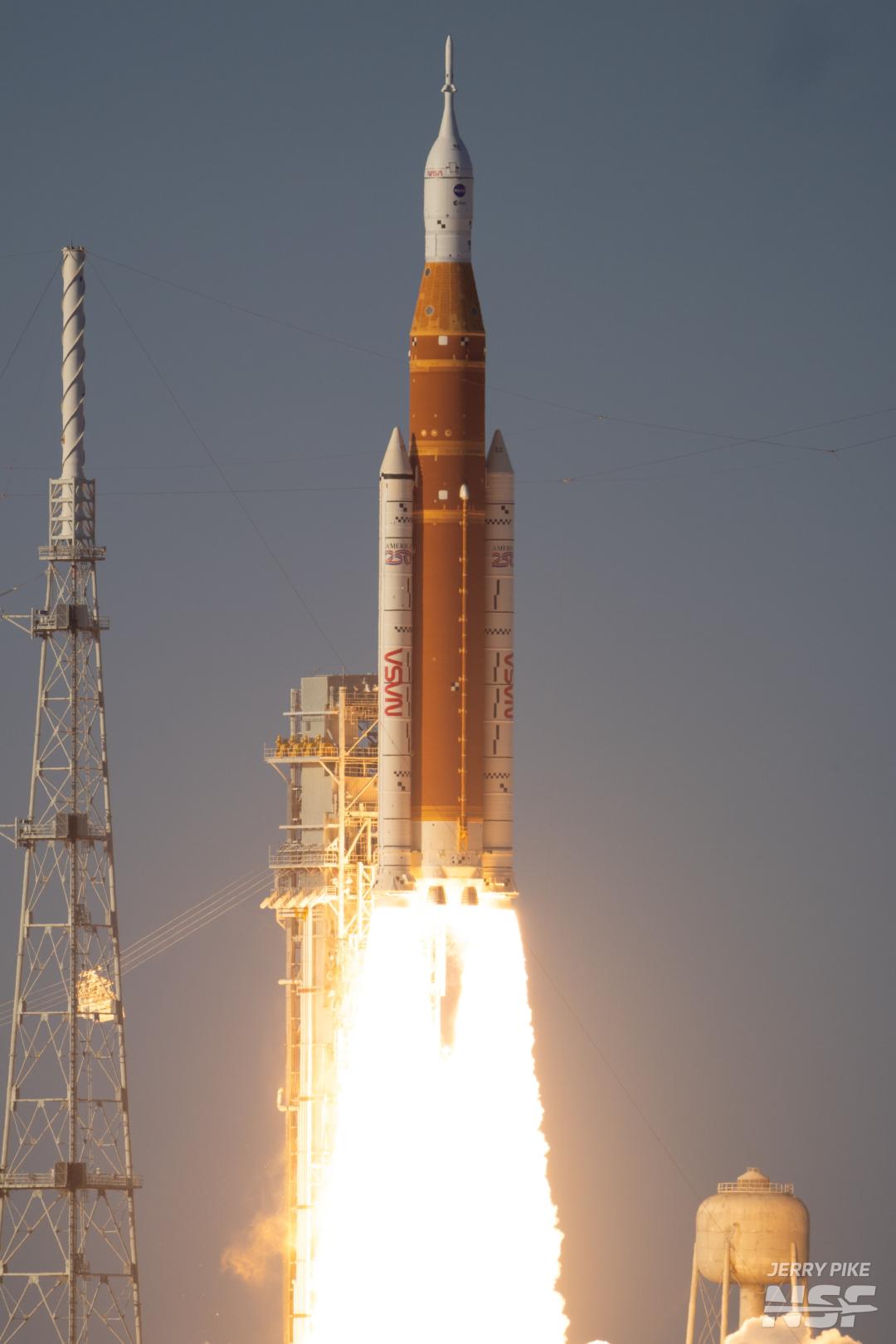
Artemis 2 ignites and takes off | Jerry Pike / NSF
The last time someone did this was in 1972.
The 54 - year gap was broken today by Artemis 2. This nearly 10 - day lunar flyby is the first real - world rehearsal of the new - generation US manned lunar landing program. It is also the first step taken by human manned spaceflight after half a century of staying in low - Earth orbit.
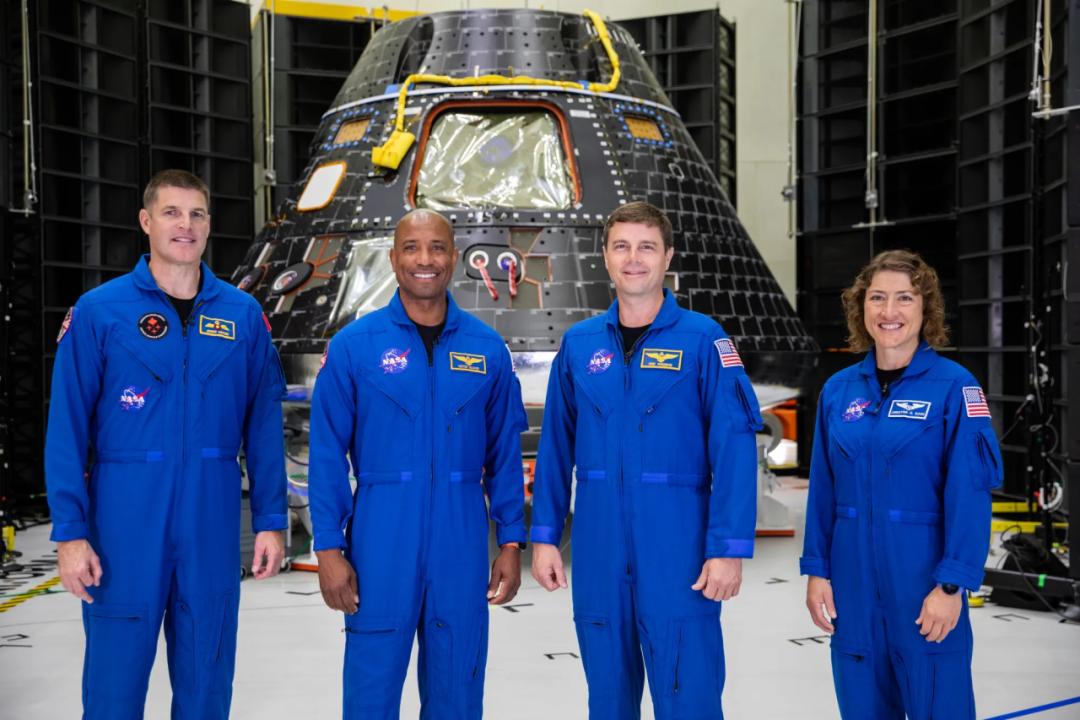
The four astronauts flying to the moon, from left: Jeremy Hansen (Canada), Victor Glover, Reid Wiseman, Christina Koch | NASA / James Blair
After multiple technical glitches and launch window delays, it finally took off today. This news is worth celebrating.
However, if you take a closer look at the current situation of this program, you'll find a bunch of troubles hidden behind it. And this launch has exactly put all these troubles on the table.
The first manned "flyby" of the moon in half a century
Artemis 2 is not a lunar landing mission but a real - world verification of the manned deep - space round - trip system. Its core goal is simple: to confirm whether the combination of the SLS rocket and the Orion spacecraft can safely send astronauts into lunar orbit and bring them back to Earth. This is the most basic and crucial test of life and death in the manned part of the entire Artemis program.
Safety is put first throughout the mission, and a classic free - return orbit design is adopted. Simply put, a "way back" is designed for the spacecraft: even if the power fails completely midway, the spacecraft can automatically swing back to Earth with the help of the moon's gravity without additional rescue.
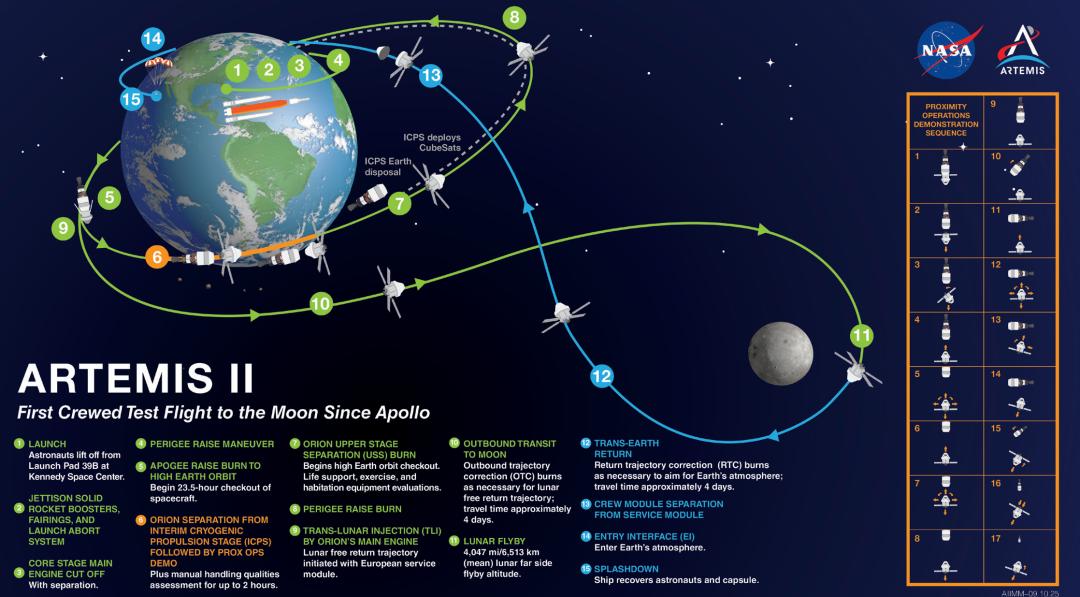
Flowchart of the Artemis 2 mission | NASA
After the SLS rocket sends the Orion spacecraft into Earth orbit, the rocket and the spacecraft separate. The next day, the spacecraft ignites and enters the Earth - moon transfer orbit. Four days later, it flies by the far side of the moon in a figure - eight trajectory, with the closest distance to the moon being about 7,600 kilometers. The spacecraft does not decelerate, does not enter lunar orbit, and does not perform any landing operations throughout the journey. Finally, it rushes into the atmosphere at a speed of over 40,000 kilometers per hour and splashes down in the Pacific Ocean for recovery.
This orbit is actually very similar to the emergency route in the Apollo 13 accident in 1970. During that mission, the service module exploded on the way. With the main engine out of operation, the crew relied on the remaining thrust of the lunar module to fine - tune the orbit several times, following a "quasi - free - return orbit" and finally survived. That was the "most successful failure" in human spaceflight history. And Artemis 2's active choice of a similar orbit turns the life - saving plan of that year into a standard operation.
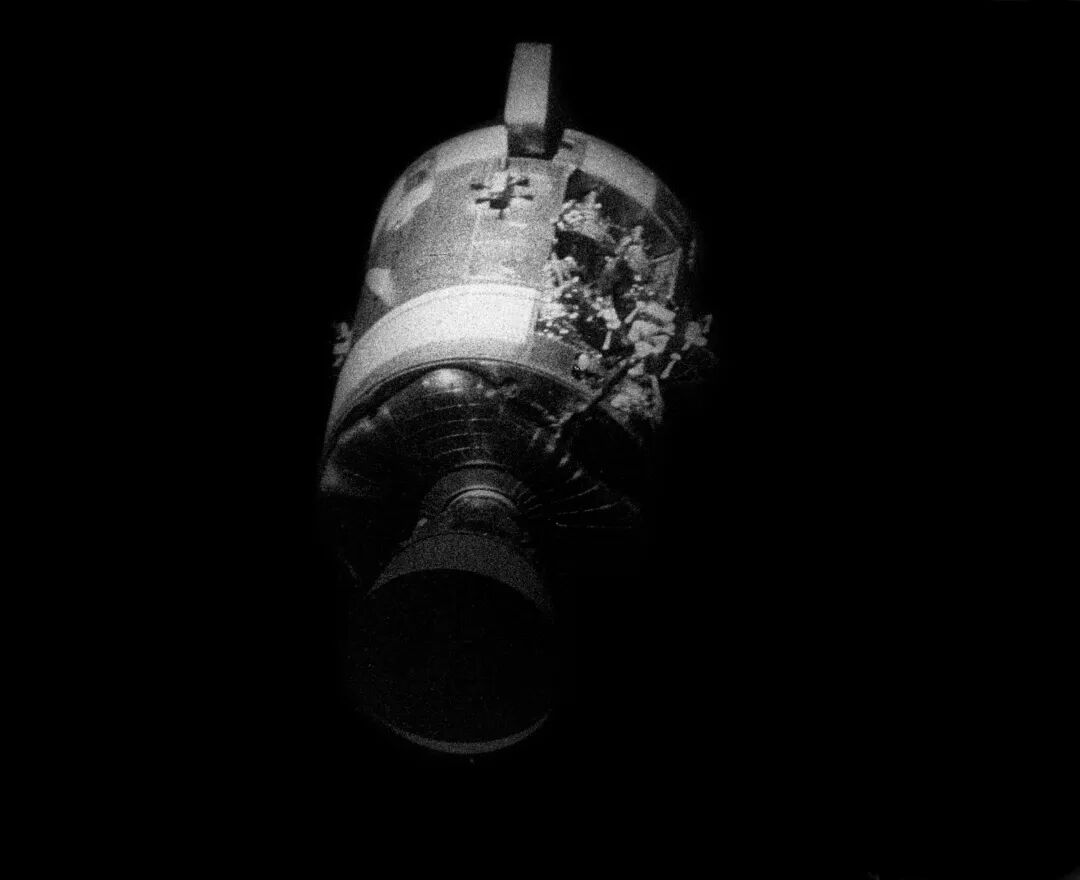
The exploded service module of the Apollo 13 spacecraft | NASA
Compared with the "twists and turns" of Apollo 13 in orbit, the launch of Artemis 2 was also bumpy, except that the troubles occurred before the launch.
The SLS heavy - lift rocket that took off today has been repeatedly troubled by faults in the helium and hydrogen systems since its first flight four years ago. In February this year, a liquid hydrogen leak caused the countdown to be aborted, and the February launch window was wasted. During the maintenance, the helium supply was interrupted, and the rocket was returned to the assembly building for major repairs, resulting in the March launch window being scrapped. It wasn't until the end of March that all faults were confirmed to be eliminated, and today's launch time was locked in.
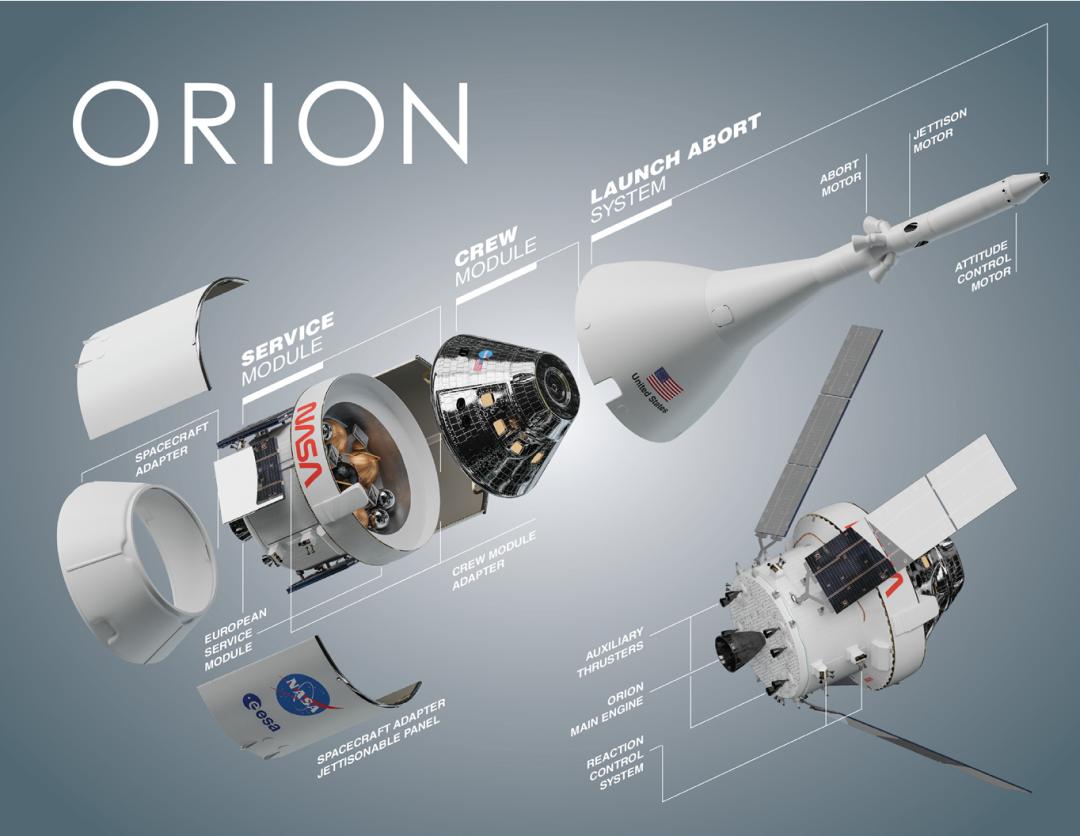
Structural diagram of the Orion spacecraft | ESA / NASA
Besides the rocket, the Orion spacecraft also set off with hidden dangers. During the unmanned test flight of Artemis 1 in 2022, the heat shield of the spacecraft showed abnormal ablation beyond expectations. That is the last line of defense to protect astronauts when re - entering the atmosphere. In order to catch up with the schedule, NASA did not conduct a thorough rectification. Instead, it only adjusted the re - entry path and production process and approved the manned mission. Today's flight is the first real - world test of this "faulty" spacecraft. Core systems such as life support, navigation control, and deep - space communication will all face unprecedented tests in a manned environment.
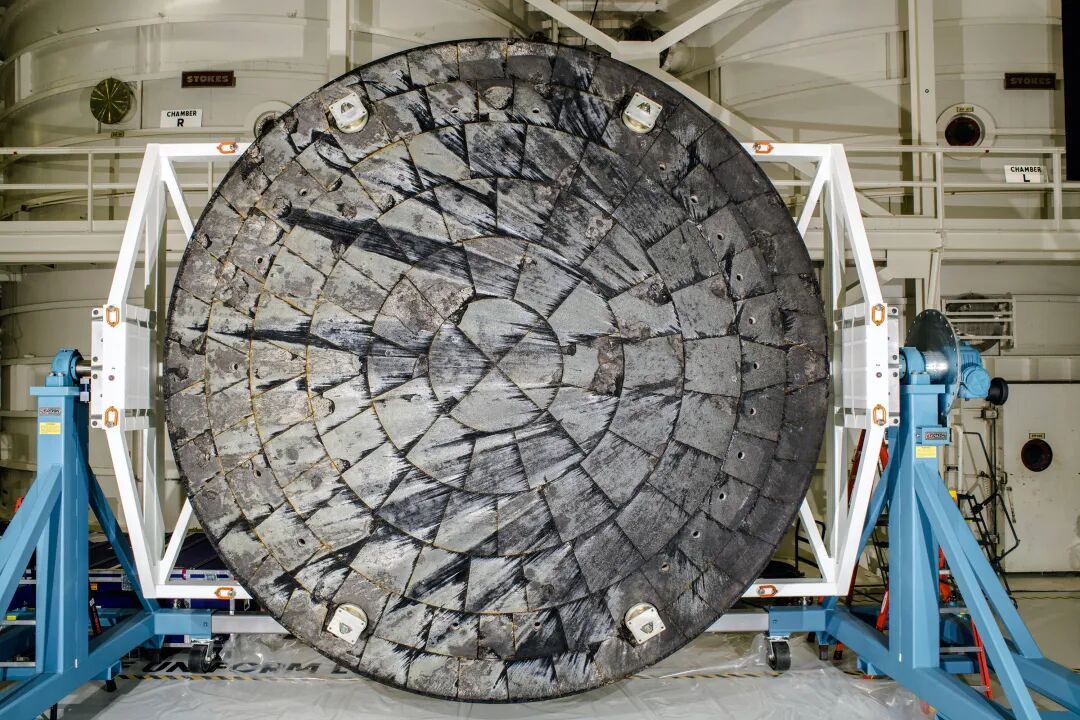
The Orion spacecraft of Artemis 1 with abnormal ablation on the heat shield | NASA
It can be said that the successful launch of Artemis 2 only achieves the most basic low - altitude pass, solving the problem of "sending people to lunar orbit and bringing them back". There is still a long way to go before the real manned lunar landing.
So, how far is this distance? We need to talk about this rocket itself first.
The "retro" "new - type" heavy - lift rocket
As the core launch vehicle for the US to return to the moon this time, the SLS should have been the most prominent protagonist of this launch. However, in the aerospace circle, this rocket is jokingly called the "Senate Launch System" and is often associated with a series of negative words - over - budget, delayed, squeezing funds, full of problems, and a job - creation project.
The story starts in 2010. At that time, the ambitious "Ares" rocket program of the Bush era had just failed, and the space shuttle was about to be retired due to two accidents. The US was in an awkward vacuum period. It intended to return to the moon but had no available heavy - lift rocket. More problematically, the retirement of the space shuttle meant that the relevant industrial chain was on the verge of collapse, and the employment and votes in dozens of states were at stake. So, the SLS was launched. From the very beginning, its mission was not only to fly to the moon but also to support an entire industrial chain.
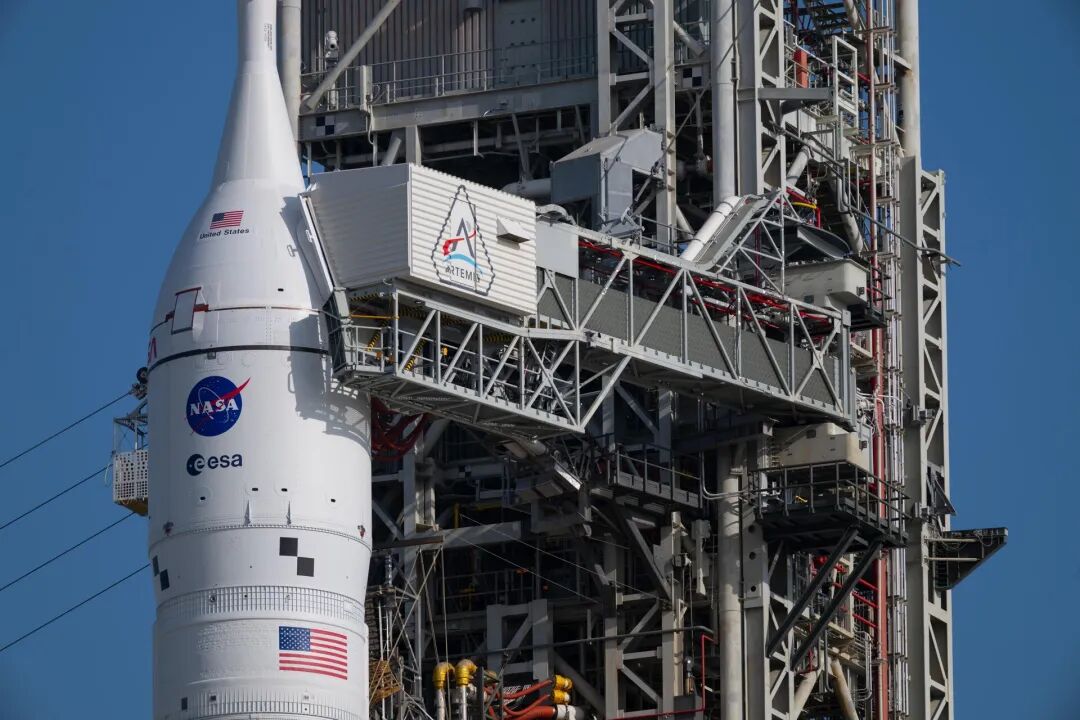
The SLS rocket and Orion spacecraft for Artemis 2 | NASA / Isaac Watson
Heavy - lift rockets are usually the technological calling cards of a country's aerospace industry and are bound to incorporate a lot of new technologies and designs. However, the SLS took the opposite path. It hardly developed anything new. Instead, it reassembled the technological heritage of the space shuttle, abandoned all reusable designs, and reverted to a single - use launch vehicle like the Saturn V.
The result of the reassembly is the Block 1 configuration of the SLS heavy - lift rocket that took off today. The data is quite impressive: the entire rocket is 98 meters tall (including the Orion spacecraft), with a take - off thrust of 2,200 tons, a low - Earth orbit payload capacity of 95 tons, and an Earth - moon transfer orbit payload capacity of 27 tons. But when analyzed in detail, each component tells the same story.
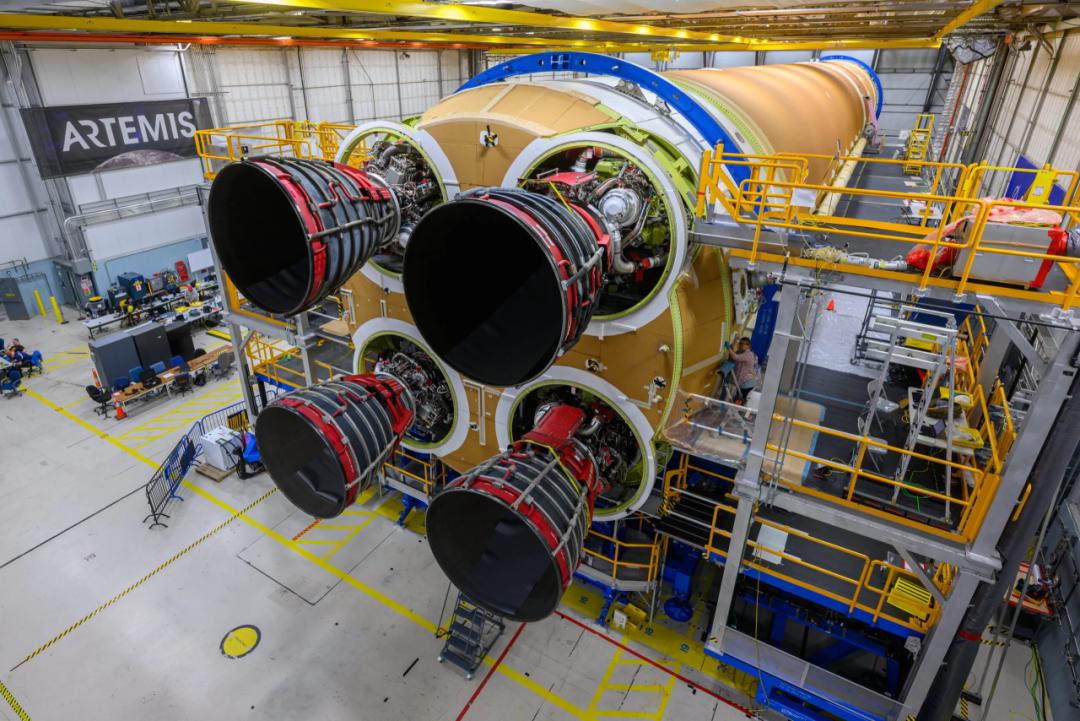
The four engines of the SLS rocket used in Artemis 2 are all inventory from the retired space shuttles | NASA/ Eric Bordelon
The four RS - 25 engines in the first stage are directly from the inventory after the retirement of the space shuttles. These engines have excellent performance, with a vacuum thrust of 220 tons and were originally reusable for more than a dozen times. But each time the SLS launches, it throws these four engines into the sea together. The two solid boosters are also derived from the space shuttle. The main change is that the number of segments is increased from four to five to increase the thrust, and the recovery design is also cancelled. To compress the R & D cycle, the second stage directly borrows the upper stage of the retired Delta 4 medium - lift rocket. That was originally just a component of a medium - lift rocket, with a vacuum thrust of only 11 tons. Using it on a heavy - lift rocket with a low - Earth orbit payload capacity of 95 tons is like "a small horse pulling a big cart". As a result, the payload capacity of the SLS is severely dragged down, and a special project was later launched to develop the "Exploration Upper Stage" as a remedy.
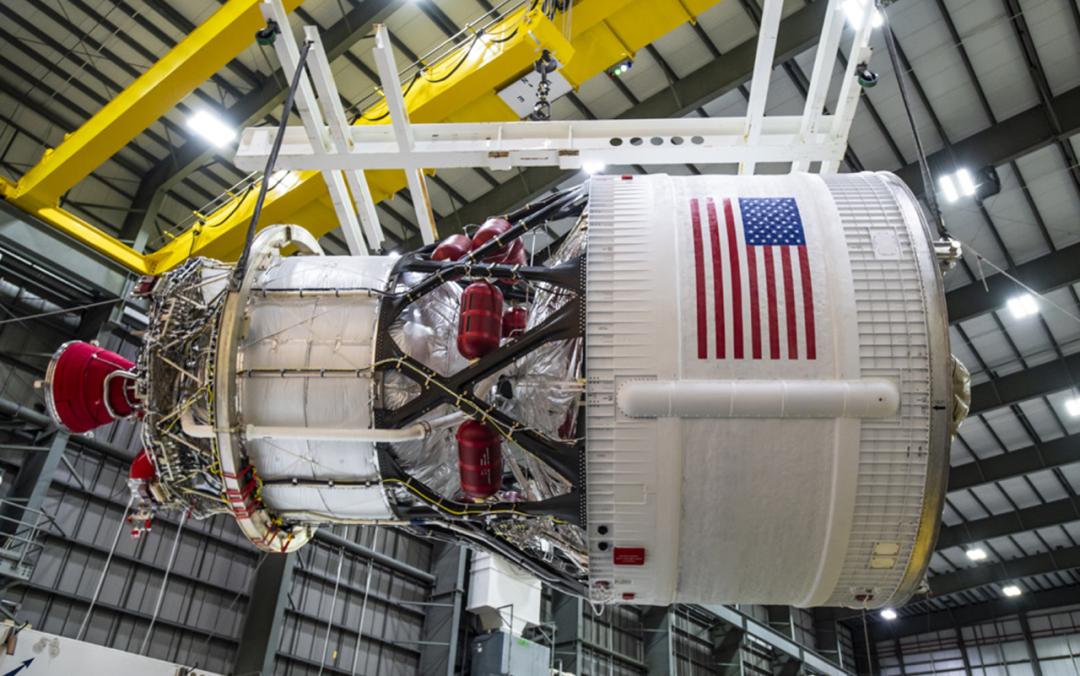
The culprit of the "small horse pulling a big cart", the ICPS upper stage | NASA / Brandon Hancock
This remedial project was later cancelled due to cost overruns. We'll talk about this later.
When the SLS was born, it got the approval for the project with the promise of "using all mature technologies, having a short R & D cycle, and controllable costs". Initially, it was claimed that the single - launch cost was only $400 million.
And the single - launch cost of today's launch is as high as $4 billion.
It's ten times more expensive. A rocket made of old parts and claimed to be cost - saving has become the rocket with the highest single - launch cost in human spaceflight history. And it will be the only choice for the Artemis program in the next few years, at least for now.
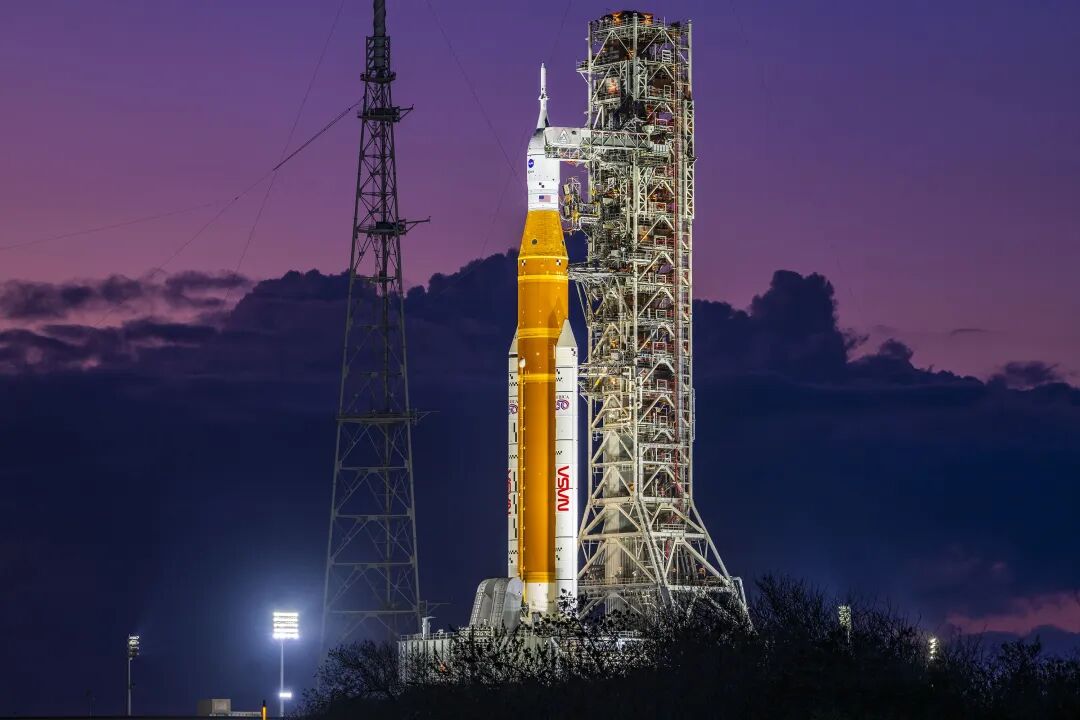
The SLS rocket is the rocket with the highest single - launch cost in history | NASA / Joel Kowsky
However, two months before the launch, NASA quietly shook the foundation of this program.
The major change before the launch, a major reshuffle of the lunar landing program
In February this year, while Artemis 2 was still struggling for the launch window, NASA issued an announcement: the entire Artemis lunar landing program would be comprehensively reorganized.
This is not an active strategic upgrade but a helpless rescue when pushed into a corner. The core logic is simple: the original path won't work. The previous plan was to directly jump from lunar flyby to manned lunar landing, skipping a large number of key in - orbit verification steps. In one sentence, it tried to combine the missions of Apollo 8 and Apollo 11 into one. The safety risk was completely out of control, and it had to be restarted.
The logic of the new plan is to return to the old path of the Apollo era of "step - by - step verification, one step at a time".
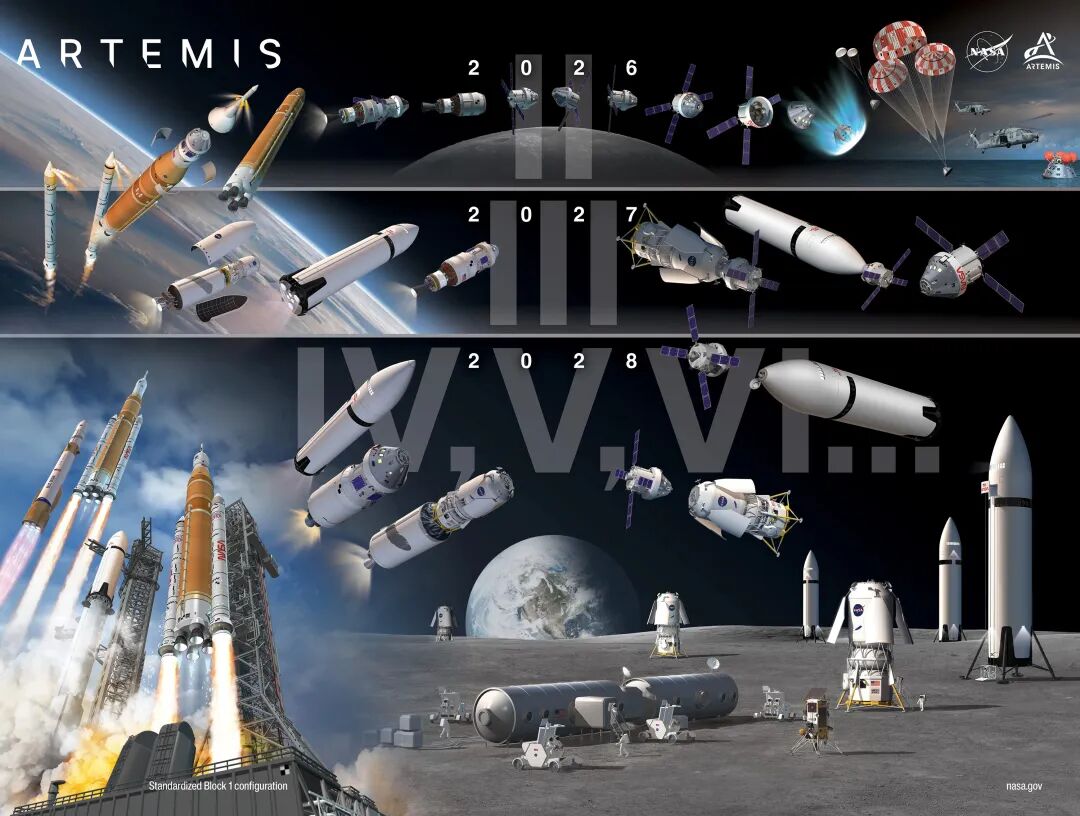
The roadmap of the new - version Artemis program. The Artemis 3 mission is changed to in - orbit rendezvous and docking in low - Earth orbit, and the lunar landing is postponed to after the Artemis 4 mission | NASA
Artemis 2 remains unchanged, which is the lunar flyby launched today. Artemis 3, originally scheduled to carry out the first manned lunar landing in 2027, has been directly downgraded. The lunar landing goal is completely cancelled, and it is changed to conduct the rendezvous and docking test between the spacecraft and the lunar module in low - Earth orbit, as well as the verification of the new - generation extravehicular spacesuit. All high - risk first - time technology verifications are left to be digested in low - Earth orbit. The mission of the first manned lunar landing is postponed to Artemis 4, which will be launched as early as 2028. NASA even proposed to launch Artemis 5 in the same year to achieve two lunar landings in one year.
As for the possibility of achieving this goal, we'll talk about it later.
Besides the mission structure, NASA also announced another decision of equal importance: to completely cancel the SLS rocket Block 1B and all subsequent