Battery company EnerVenue has completed a new round of financing worth $300 million and will build its first gigawatt-scale production line in China | Exclusive from 36Kr
36Kr has exclusively learned that EnerVenue, a new nickel-hydrogen battery technology company, has completed a $300 million Series B preferred stock follow-on financing. This round of financing was led by Fosun Capital, and Hong Kong Investment Management Co., Ltd. was newly introduced as a strategic shareholder. It is reported that the funds from this round will be used for the capacity upgrade and expansion of the Changzhou factory.
So far, the company has completed three rounds of financing, with a total amount exceeding $800 million.
EnerVenue was founded in 2020 by Cui Yi, a professor in the Department of Materials Science and Engineering at Stanford University. It focuses on the research, development, and commercialization of nickel-hydrogen battery technology. Currently, the company has established production plants in cities such as Changzhou, Jiangsu, China, and Kentucky, USA.
After this round of financing, EnerVenue also carried out adjustments to the company's personnel and structure: Henning Rath was appointed as the new Global CEO, and a new regional headquarters and an innovation R & D center were established in Hong Kong.
The new CEO, Henning Rath, has previously served as a senior executive in several internationally renowned technology companies and has management and operation experience in multiple companies with a market value of over one billion dollars.
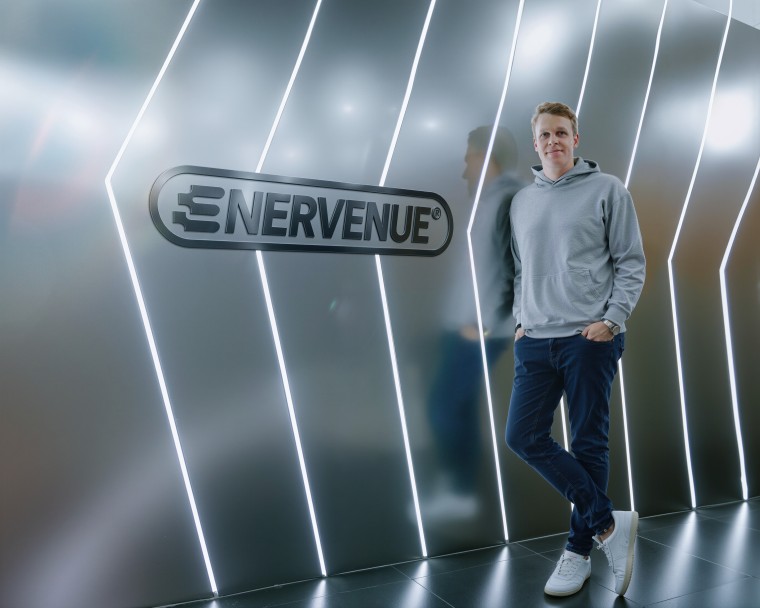
Henning Rath appointed as CEO
EnerVenue's core product is an aqueous metal battery developed based on nickel-hydrogen technology. This is a battery with an aqueous solution as the electrolyte and a metal compound as the positive electrode. It features high safety, long lifespan, wide temperature range operation, flexible energy storage, and maintenance-free characteristics, and can be widely used in energy storage application scenarios such as renewable energy storage, grid peak shaving and frequency regulation services, and building energy storage integration.
Henning Rath, the new Global CEO, told 36Kr that this product has made important progress in terms of safety and reliability. It has not only passed the tests conducted by the nationally recognized testing laboratory SGS in accordance with international safety standards but has also obtained certifications for the UL1973 and IEC63115 - 2 standards. The company has also conducted internal tests according to the standard procedures of UL9540A.
"It is particularly worth mentioning the performance of AMC in the heating and overcharging experiments. It did not catch fire in the thermal runaway test, which is a key difference between our product and lithium-ion batteries."
Henning Rath said that the core of EnerVenue's technology lies in its self-developed battery structure and the proprietary catalyst that replaces platinum. These two technologies enable EnerVenue's fourth-generation AMC product to have excellent performance with minimal attenuation after more than 30,000 charge-discharge cycles.
Currently, EnerVenue's core product has entered the production and commercialization stage.
EnerVenue has a production base in Changzhou, Jiangsu, China. After this round of financing, the company's business focus is to promote the implementation and production of the high-capacity production line in the Changzhou factory. The first-phase project of this production line is designed to have an annual production capacity of 250 megawatt-hours.
Henning Rath told 36Kr that the challenge for nickel-hydrogen batteries in the production and manufacturing process has always been cost, rather than performance.
"Nickel-hydrogen batteries were previously used in the aerospace field, requiring special materials and manual assembly, resulting in extremely high costs. EnerVenue's advantage is that we have independently designed the battery structure, enabling automated and high-capacity production."
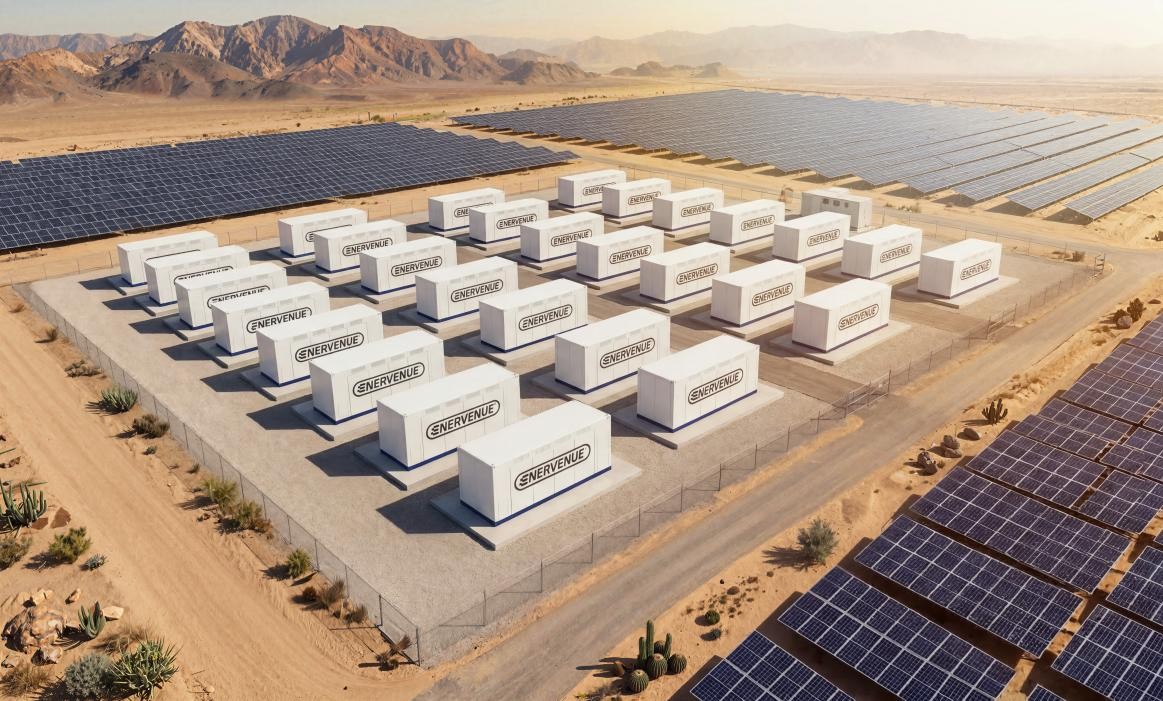
EnerVenue energy storage product diagram
EnerVenue now has customer pilot projects in China, Australia, the United States, and the European Union. Its customer base mainly consists of utility companies, independent power producers, energy project developers, and large commercial and industrial entities with more complex energy storage needs.
Recently, the power demand of AI data centers has sparked social discussions. Henning Rath told 36Kr that this may be one of the important future directions for EnerVenue. However, at present, the company's main goal is to successfully increase the production capacity of the Changzhou factory. "Our pilot projects are very likely to be directly converted into sales orders in the next few months."
Regarding the market status of EnerVenue's aqueous metal battery, Henning Rath said that its biggest competitor in the market is still the lithium-ion industry, "especially lithium iron phosphate batteries, which dominate the stationary energy storage market."
But EnerVenue's opportunity also stems from this.
Although lithium-ion batteries are the mainstream, their product properties determine that they require a large amount of maintenance during use, which brings additional risks and costs to customers. In the energy storage market, customers are eager for an asset with a 30-year lifespan, low attenuation, high safety, and extremely low maintenance requirements.
"EnerVenue is making efforts in this regard, and there is no technology of the same scale, the same, or similar to ours in the market."