Abandon facial recognition? Apple's foldable screen will be the most significant upgrade to the iPhone lineup.
Since March, the buzz around Apple's first foldable iPhone has been intensifying. Renowned tech journalist Mark Gurman gave extremely high praise to this foldable iPhone in the latest issue of his "Power On" newsletter. He said that this phone will be the most significant redesign of the iPhone since the iPhone X in 2017.
Gurman stated that although the iPhone 4, iPhone 6, and iPhone X all represented important design innovations, the upcoming foldable iPhone will bring a "brand - new design." This device will adopt a horizontal book - style folding design similar to Samsung's Galaxy Z Fold series, with an approximately 7.7 - inch inner screen and an approximately 5.3 - inch outer screen.
Meanwhile, the iOS 27 system will be deeply optimized for the folding form, supporting multitasking features similar to those on the iPad, such as split - screen display of apps and floating windows. Gurman further revealed that due to the complex manufacturing process of the foldable screen panel, the release time of this phone may be slightly later than that of the iPhone 18 Pro series released in the same period. The starting price is expected to exceed $1,999 (approximately 13,837 yuan), making it the most expensive iPhone ever.
Gurman mentioned that Apple has invested a huge amount of R & D funds in this model. It has integrated the Apple Vision Pro display technology team with the iPhone hardware team, focusing on solving common industry pain points such as creases and hinge durability, aiming to achieve "visually crease - free" and a folding lifespan of over 300,000 times.
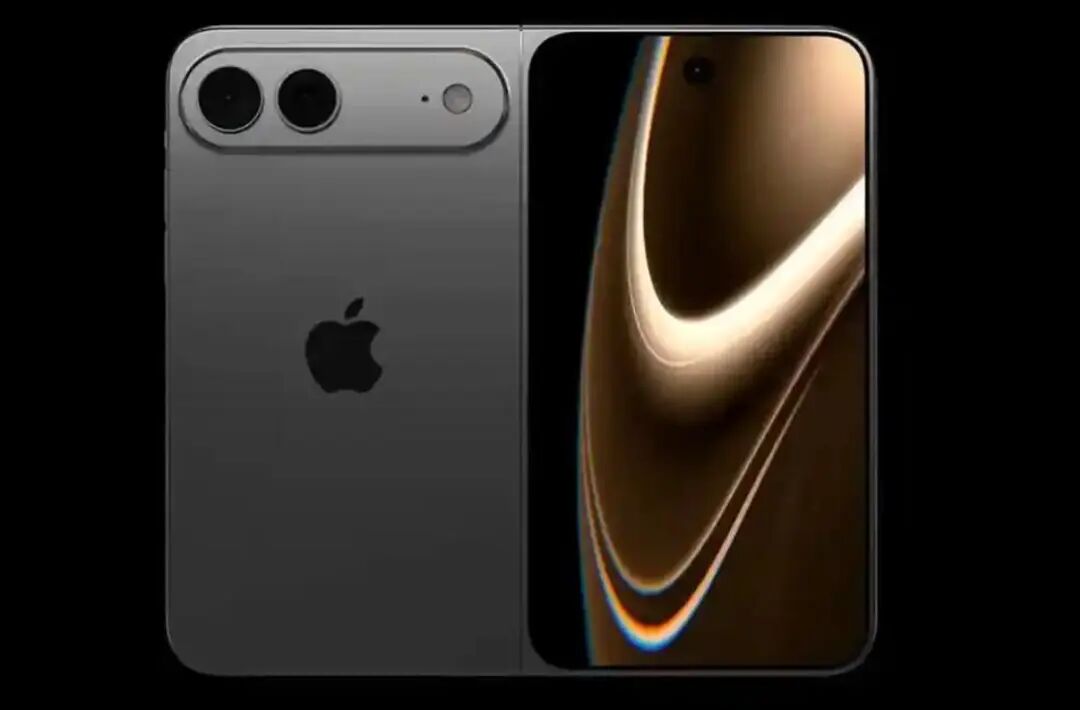
Concept image of the foldable iPhone
Tianfeng International analyst Ming - Chi Kuo also predicted in his latest research report that the first foldable iPhone will abandon Apple's long - used Face ID facial recognition technology and instead adopt a side - integrated Touch ID fingerprint unlocking solution, integrating the fingerprint sensor into the power button, similar to the unlocking method of the iPad Air.
He said that the Face ID facial recognition security module is relatively thick, and the internal space of the foldable model is limited, making it difficult to incorporate it into the body design. To balance unlocking convenience and the thinness of the body, Apple finally chose to return to the Touch ID solution. This solution can not only save internal space but also adapt to the special form of the foldable screen, improving unlocking stability.
According to Ming - Chi Kuo's prediction, the foldable iPhone will be equipped with TSMC's 2nm - process A20 Pro chip, a second - generation self - developed C2 baseband, and will cancel the physical SIM card slot, fully supporting eSIM, further streamlining the body structure and improving the waterproof and dust - proof performance. In terms of imaging, it will be equipped with two rear cameras to meet daily shooting needs, and the shooting interaction will be optimized to adapt to the foldable screen form. The battery will adopt a 5500mAh dual - cell solution to relieve the battery life pressure brought by the large screen.
In terms of the supply chain, Ming - Chi Kuo said that Hon Hai Precision Industry (Foxconn) has been selected as the exclusive assembly manufacturer of this phone, and Samsung Display will be responsible for the exclusive supply of customized LTPO OLED flexible panels, using an ultra - thin flexible glass (UTG) + metal stress dispersion plate structure. Currently, Apple has placed the first batch of orders for 7 - 8 million units with the supply chain. Ming - Chi Kuo predicted that due to the high production difficulty, the shipment volume in 2026 may be between 3 - 5 million units, and large - scale production will not be achieved until 2027, when the total shipment volume of the foldable iPhone is expected to reach 20 million units.
Currently, foldable phones are accelerating from "niche experimentation" to "mass popularization." Data shows that the global shipment volume of foldable smartphones was approximately 28 million units in 2025, and it is expected to increase by 20% in 2026, exceeding 34 million units. Among them, Samsung accounts for approximately 68% of the global market share, and Chinese manufacturers such as Huawei, Xiaomi, and OPPO together account for approximately 27%.
A report released by market research firm Counterpoint Research pointed out that Apple's entry into the market will be a "key turning point" for the foldable phone market, and it predicts that Apple will capture 28% of the global market share in 2026, directly challenging Samsung's leading position. The agency analyzed that the early demand will mainly come from the large existing iPhone user base, and it may also attract some Android users who are considering book - style foldable screens to make an "ecosystem migration."
This article is from the WeChat official account "Jiemian News", author: Li Kefeng. Republished by 36Kr with permission.