A Chinese intern at Meta has developed a super intelligent agent that can write its own code to achieve self-evolution.
The "Super Intelligent Agent" capable of infinite progress has arrived!
Recently, a paper titled HYPERAGENTS (Super Intelligent Agents) by the Meta research team quickly went viral.
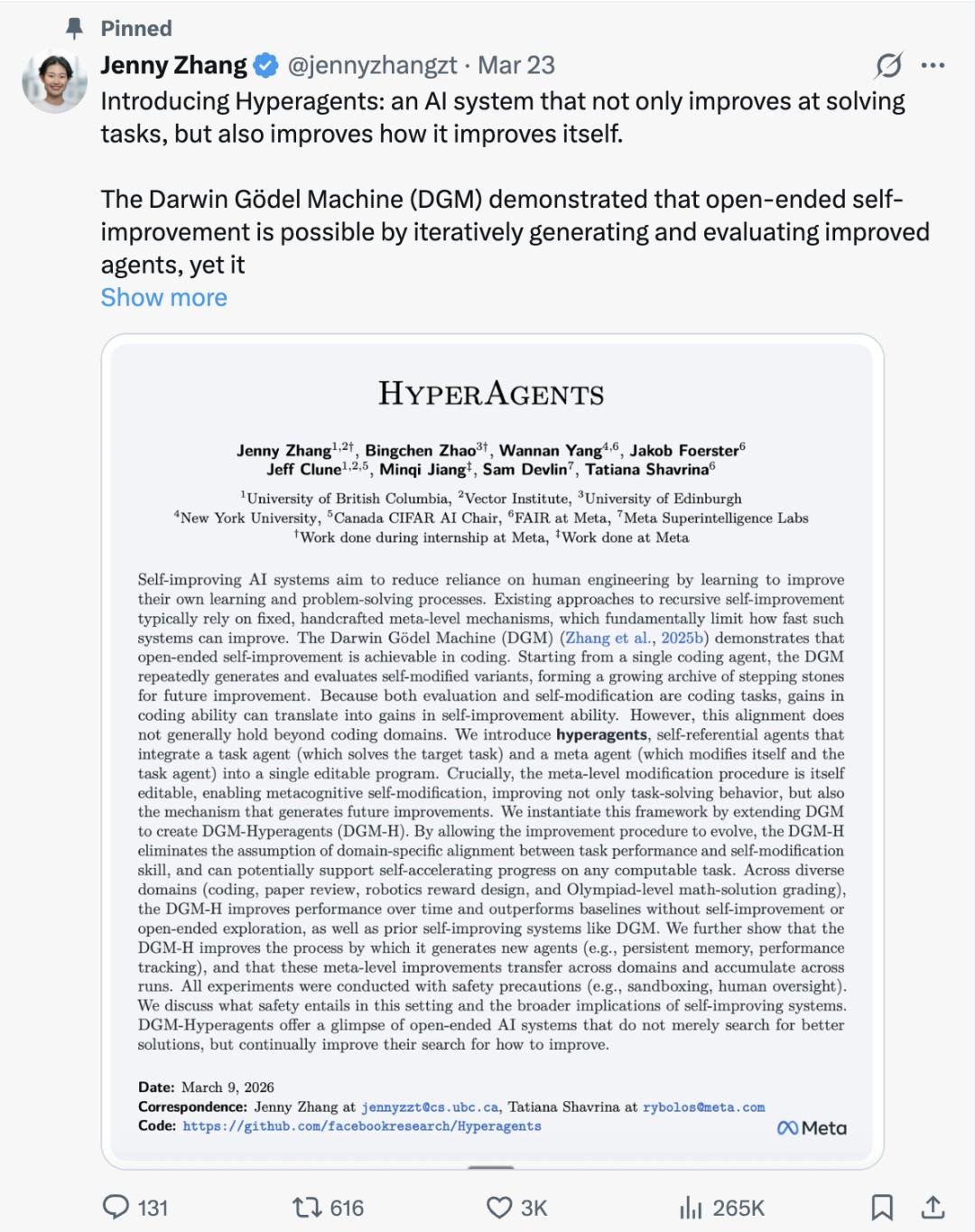
This paper combines the idea of the Gödel Machine proposed by Jürgen Schmidhuber, the father of LSTM, twenty years ago with the Darwinian Open Algorithm to propose the Darwinian Gödel Machine capable of continuous self - iteration.
Based on this idea, agents can not only better complete specific tasks and continuously improve their own performance.
More importantly, it can continuously optimize the underlying logic of "improving itself" to achieve "Meta - learning".
This is the new - generation super intelligent agent defined in the paper - Hyperagents.
The paper further proposes that in the future, AI is expected to break through the initial algorithm boundaries preset by humans through continuous self - iteration. Therefore, AI safety must be placed at the core.
Many netizens also sighed:
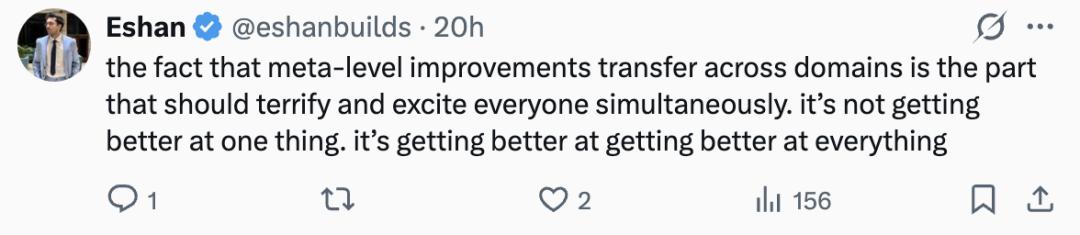
What really makes meta - learning both scary and exciting is that the improvements at the meta - level can be transferred across domains. It's not about getting better at one thing, but learning to get better at everything.
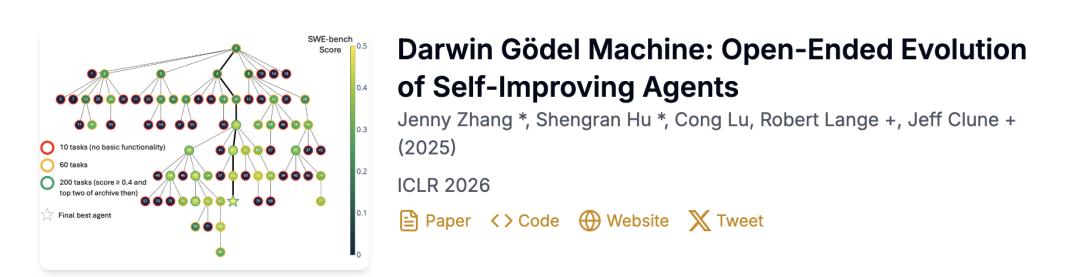
Currently, this paper has been accepted by ICLR 2026.
From the Gödel Machine to the Darwinian Gödel Machine
To understand the super intelligent agent Hyperagents, one must first understand its cornerstone -
The Gödel Machine.
The Gödel Machine is a hypothetical self - improving AI. It seeks a mathematical proof that:
If there is a better strategy, it will solve the problem by recursively rewriting its own code.
This hypothesis was first proposed by Jürgen Schmidhuber more than twenty years ago.
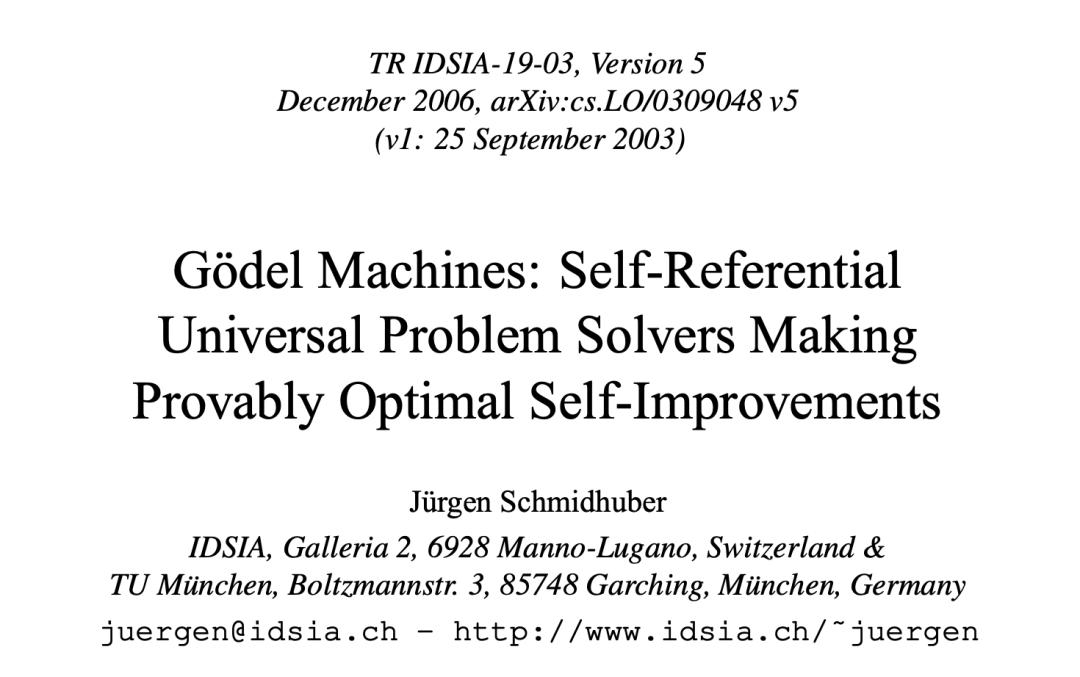
In traditional machine learning, the "learning method" of AI is the hard - coded preset by humans, and it can only approximate the target by adjusting internal parameters;
while the Gödel Machine breaks this limitation. It can regard the algorithm framework itself as editable code and achieve self - evolution of learning ability by autonomously rewriting programs.
However, problems also arise: the Gödel Machine often requires the AI to prove that the change has a net gain before self - evolution.
That is to say, can the computing power cost spent on modifying the code be earned back through stronger performance in the future?
Unfortunately, such calculations are almost impossible to achieve in real - world complex tasks.
In response to this problem, the Meta team proposed the Darwinian Gödel Machine (DGM), which uses open - ended algorithms to search among the code improvement schemes proposed by large models and obtain schemes that can empirically improve performance.
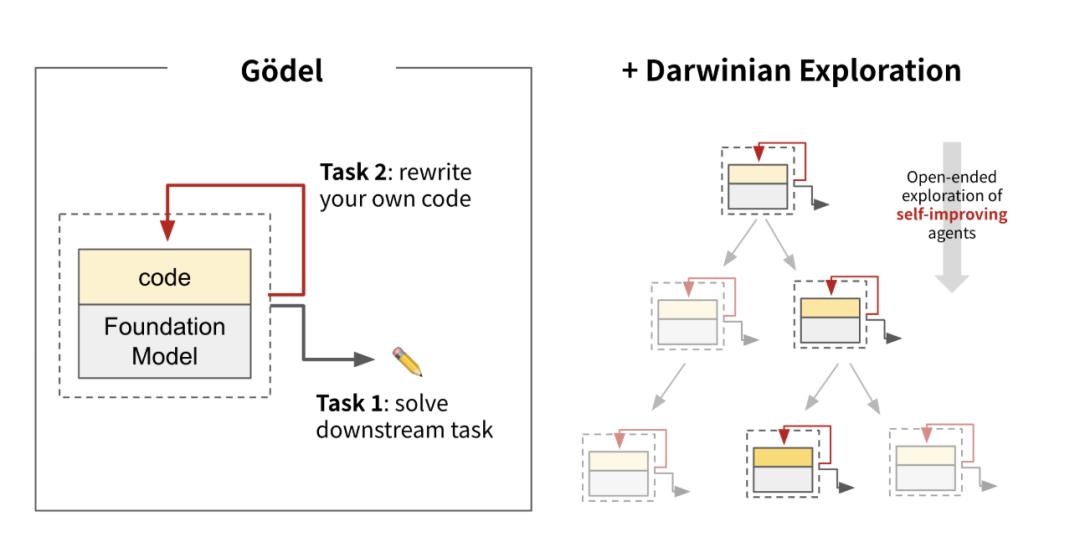
In other words, DGM uses the foundation model to propose code improvement schemes and uses the latest innovations of open - ended algorithms to search for and build a growing, diverse, and high - quality AI agent library.
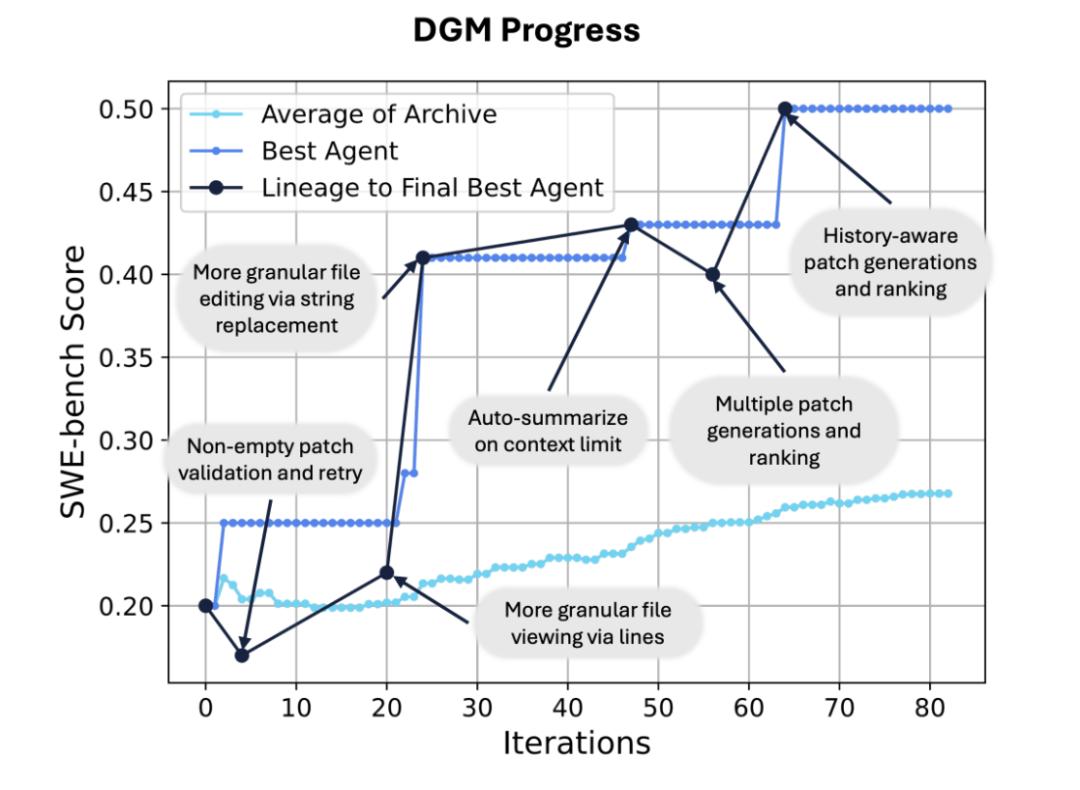
Based on this, DGM can create various self - improvement schemes, such as adding a patch validation step, optimizing the file viewing function, enhancing editing tools, generating and screening multiple solutions to select the optimal one, and automatically adding historical attempt records (and analyzing the reasons for failure) for reference when making new changes.
The experiments in the paper also show that the more computing power DGM obtains, the better the self - improvement effect.
Super Intelligent Agents
Although DGM is very powerful, it has a fatal limitation: it is mainly effective in programming tasks.
This is because DGM relies on a key assumption - the evaluation task and the self - modification task must be "aligned".
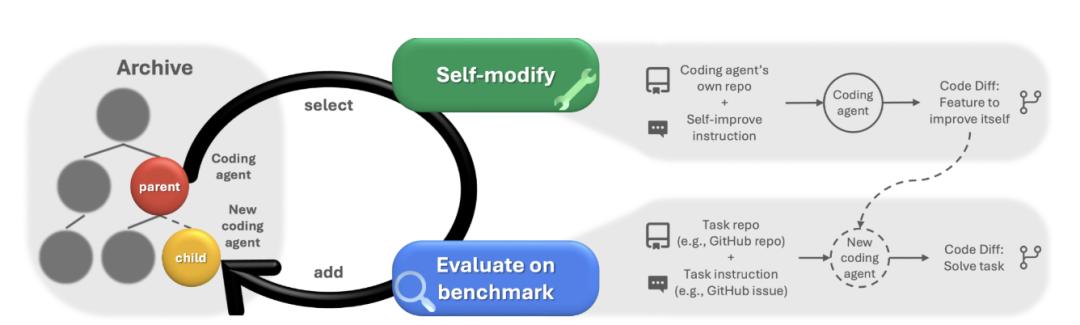
In the programming field, this alignment is natural: improving programming ability naturally improves the ability to modify one's own code.
That is to say, the logical tools for solving external programming problems can be directly transformed into the ability to modify its own underlying code.
On the contrary, in non - programming fields (such as writing poetry), even if the poetry - writing ability is improved, it cannot be directly transformed into the logical level of code modification.
In tasks lacking "self - referentiality", the recursive evolution chain of DGM will break and stagnate.
Based on this, the article proposes super intelligent agents -
They can not only modify their own task - execution behavior but also modify the process of generating future improvement suggestions.
This realizes the so - called metacognitive self - modification: not only learning how to do better but also learning how to improve more effectively.
Further, the paper instantiates the super intelligent agents as DGM - Hyperagents (DGM - H).
DGM - H is an extension of DGM, in which both the task - solving behavior and the self - improvement program are editable and evolvable. Its framework is as follows:
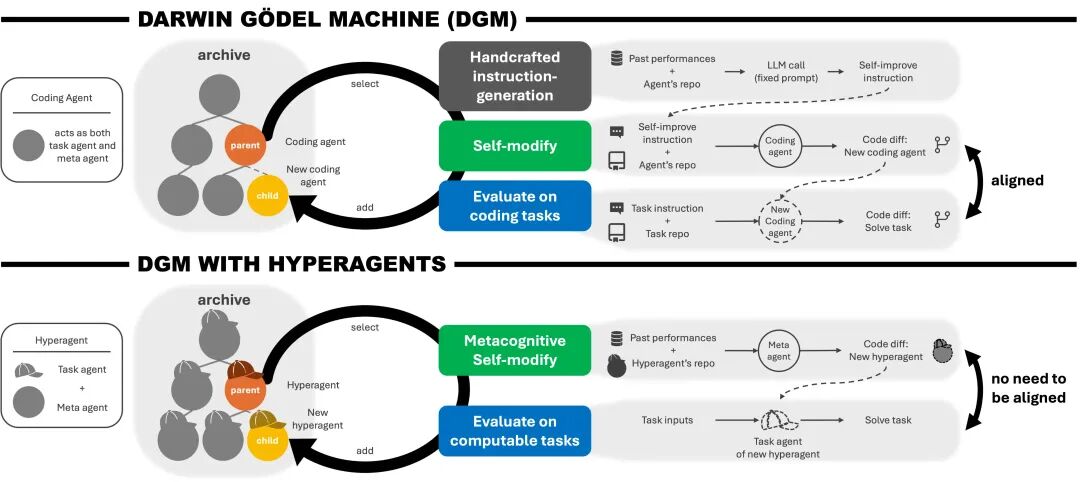
Self - referential architecture: It integrates the "Task Agent" and the "Meta Agent" into a single, editable program.
Meta - level evolution: In Hyperagents, the "method of improvement" itself can also be improved. This makes the system no longer require the alignment of tasks and modifications, thus achieving cross - domain "metacognitive self - modification".
For example, in Hyperagents, not only are athletes training, but coaches are also learning how to coach better. As a result, the performance of athletes and the coaching level of coaches continuously spiral upward.
In addition, DGM - H also improves the process of generating new agents (such as introducing persistent memory and performance tracking), and these meta - level improvements have the characteristics of cross - domain migration and cross - run accumulation.
Experimental Verification: The Leap from 20% to 50%
Experiments have proven that the Darwinian Gödel Machine can achieve continuous self - improvement by modifying its own code library.
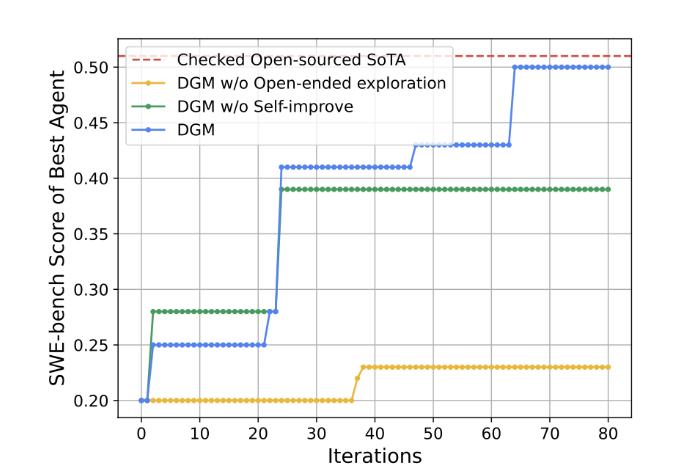
On SWE - bench, DGM automatically improved its performance from 20.0% to 50.0%.
On Polyglot, DGM's performance jumped from the initial 14.2% to 30.7%, far exceeding the representative artificially - designed agents developed by Aider.
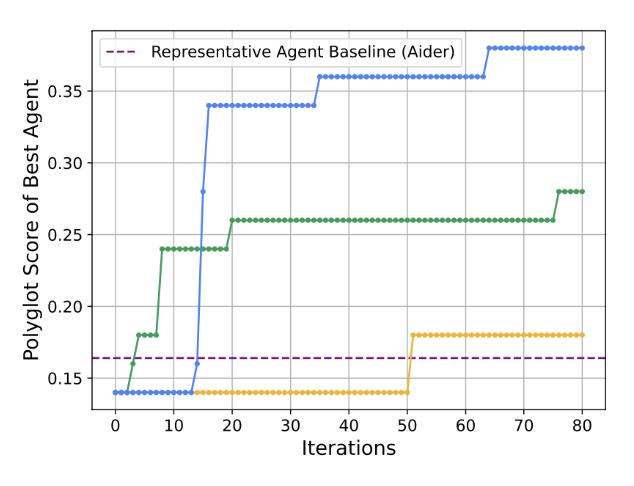
These results prove that DGM can discover and implement effective self - improvements.
The key to achieving this lies in its open - ended evolutionary search strategy:
By sampling from the existing agent library to generate new agents, DGM can explore multiple evolutionary paths in parallel.
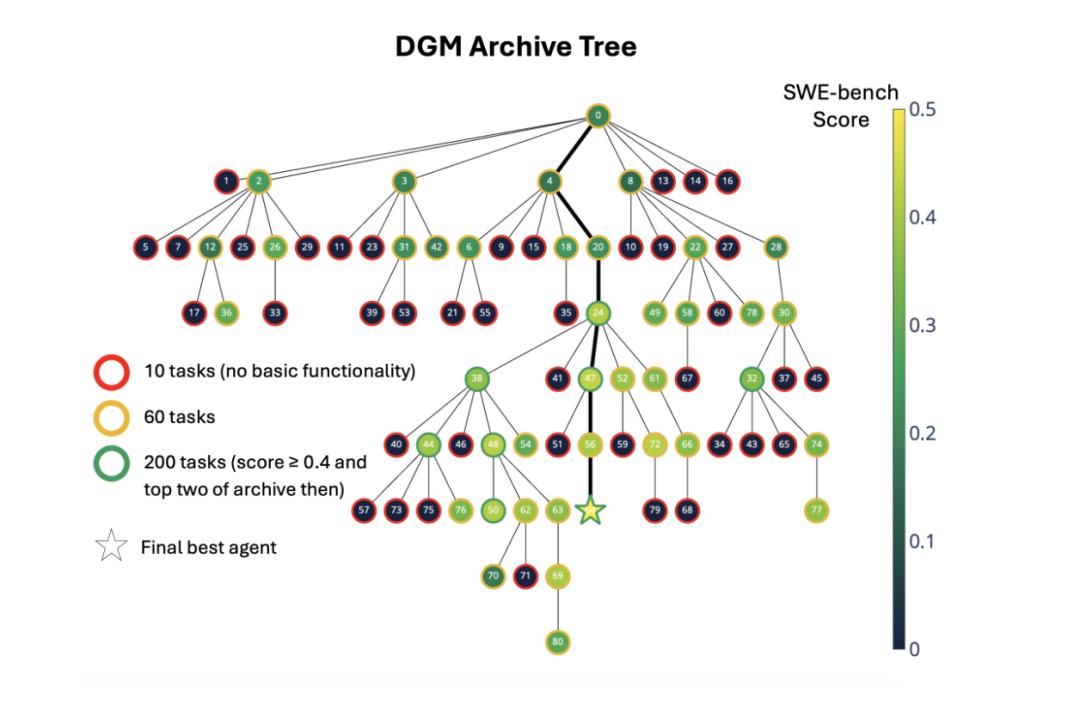
The "ancestor" agents with slightly inferior performance play a key role in discovering new methods and functions, avoiding premature convergence.
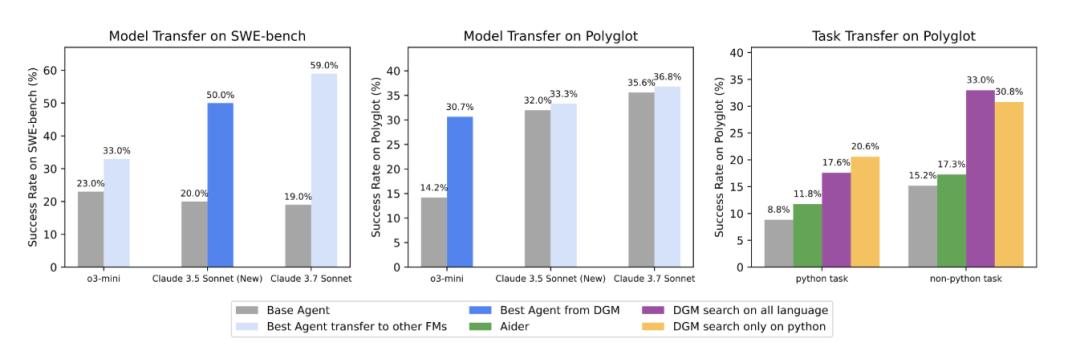
In addition, the improvements of DGM have wide - ranging transferability:
The agents optimized for Claude 3.5 Sonnet can still improve performance when switching to o3 - mini or Claude 3.7 Sonnet.
In the Polyglot benchmark, self - improvements in Python tasks also improved the performance of tasks in different languages such as Rust, C++, and Go.
Introduction to the Authors
Finally, let's introduce the authors of this paper.
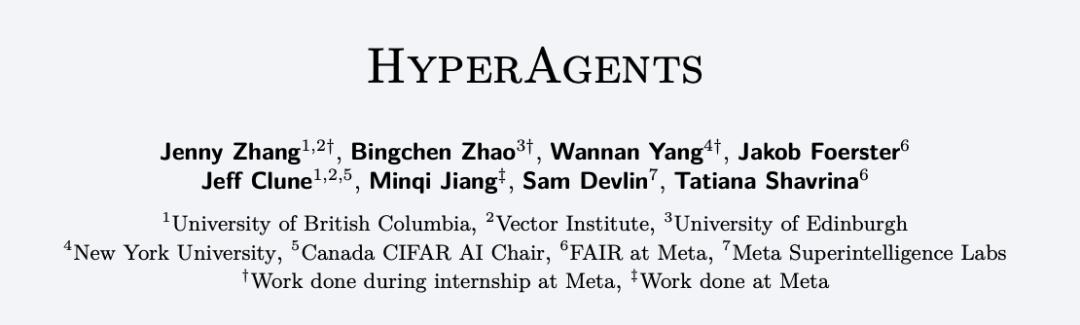
The first author of this paper is Jenny Zhang from UBC, who is a student of Professor Jeff Clune.

△
She graduated from Imperial College London as an undergraduate. This paper was completed during her internship at Meta. Her research focuses on reinforcement learning, self - improving AI, and Open - Ended AI.
Bingchen Zhao is a doctoral student from the University of Edinburgh, and he is a student of Professor Oisin Mac Aodha.
He graduated from Tongji University as an undergraduate. He was previously in the Meta FAIR team, dedicated to building self - improving AI systems.
△
Wannan Yang is pursuing a doctorate at New York University and is currently interning at the Meta Super Intelligence Laboratory. She graduated from the University of Edinburgh as an undergraduate.

△
The other authors of the paper also include Jeff Clune, and researchers Minqi Jiang (who has left), Sam Devlin and Tatiana Shavrina from