After the collective price increase of new mobile phones, the old mobile phones of young people have stopped freezing one after another.
"Users who need to change their phones should do so quickly. All the manufacturers are on the verge of collapse, and a new wave of price hikes is coming..."
At the end of February, topics like "Phones are about to increase in price across the board" and "Thousand-yuan phones will become extinct" were trending on the internet. Most people's reaction at that time was: "It's just a sales gimmick by manufacturers at the beginning of the year. I get it."
This "I get it" actually shows that everyone didn't really understand.
In March, the rumors turned into reality. At this time, consumers became calm. Anyway, the phone replacement cycle has been extended to three and a half years. Rather than chasing the rising prices, it's better to think about how to make the old phone last a few more years.
This collective price hike of phones is a rare phenomenon in recent years, but the trend had already shown signs last autumn.
At that time, the price of memory sticks was rising faster than gold, almost changing every day. Meanwhile, due to the rapid development of AI, the demand for storage chips far exceeded the supply, leading to a sharp increase in costs. Driven by these two external factors, the prices of all electronic consumer products with memory and chips had to rise, and phones were no exception.
While most mainstream Android phone manufacturers announced price hikes one after another, Apple, which is jokingly called "carefully selected by the ancestors", remained quite calm. In the first nine weeks of 2026, its sales in the Chinese market increased by 23% year-on-year. Recently, it quietly launched the new iPhone 17e. Its starting price of 4,499 yuan is the same as the previous generation, but the minimum memory has increased from 128G to 256G, which is equivalent to a price cut in disguise.
This unconventional move has aroused the curiosity of many people: "Why are you cutting the price while others are raising it?"
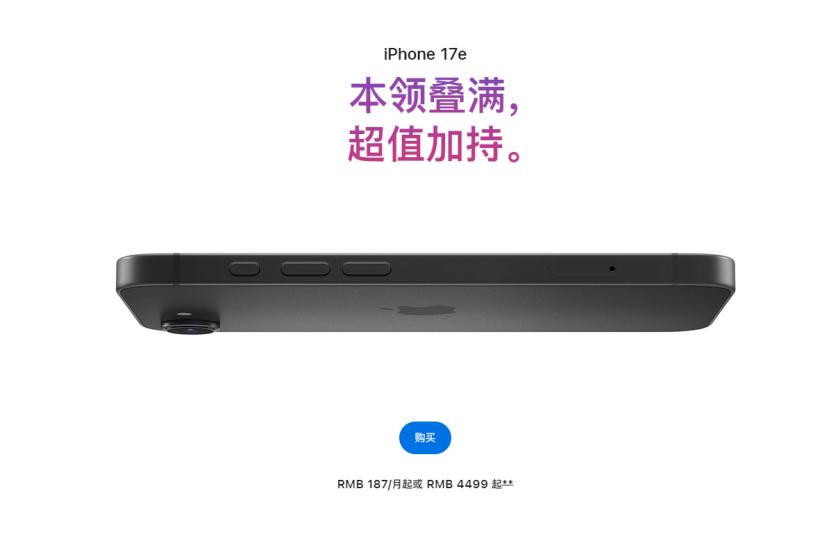
The starting price of the iPhone 17e on the official website is 4,499 yuan, which is called "the cheapest Apple phone at present" by the outside world. (Photo/Apple's official website in mainland China)
The reverse operation of big manufacturers is thought-provoking, but the reality is still not optimistic. The industry predicts that the challenge of storage supply will continue throughout 2026, and the turning point will not appear until 2028 at the earliest.
But this generation of consumers obviously doesn't intend to be the "scapegoat" obediently. Although the price hike of phones is out of control, consumers' perception of phone consumption is no longer in the "impulsive" mode.
Thousand-yuan phones have become mid-range phones, and "cost-effectiveness" has become worthless
The reason why this round of phone price hikes has become the focus is the rare intensity.
Different from the past, this time it's not just a small price increase for high-end flagship phones. From low-end thousand-yuan phones to high-end foldable phones, whether it's new or old models, almost all phones at different price ranges are affected.
The most affected models are the mid - and low - end Android "thousand - yuan phones" in the price range of 1,000 - 2,000 yuan, which are known for their cost - effectiveness. According to the analysis of many authoritative research reports, the gross profit margin of these phones is generally less than 20%. They are highly sensitive to the cost of components. Once the storage cost rises significantly, the phones will fall into a state of negative gross profit, and it's very easy to "lose money on each sale".
For thousand - yuan phones, the profit that can be recovered by raising the price may not be much. However, the price increase of 200 - 500 yuan by major brands has pushed the thousand - yuan phones into the 2,000 - yuan range, which is really too much for consumers. After all, this price range could buy some flagship phones a few years ago.

Thousand - yuan phones used to be the first choice for many young people with limited budgets. (Photo/Class of Lies)
On one hand, there are new ordinary thousand - yuan phones with mediocre performance. On the other hand, there are previous - generation flagship phones with better performance. Consumers who are sensitive to price, performance, and user experience will mostly reconsider which phone to choose to deal with this long - lasting price hike.
You know, the main advantage of thousand - yuan phones is "high quantity, sufficient supply, and low price", but there has never been absolute and reliable cost - effectiveness in the world.
Consumers are worried that facing unprofitable business, phone manufacturers may abandon the cost - effective route in the future. A researcher who has long been concerned about the storage industry revealed to the media that some domestic manufacturers have stopped producing entry - level product lines. "After the inventory is sold out, they won't produce in the short term."
In other words, the domestic "thousand - yuan phones" that used to attract consumers by increasing the number of models and "competing" on low prices may not disappear completely, but their presence in the market will definitely decrease significantly, and this is just the beginning - like a gentle breeze at the tip of a blade of grass. Some small phone manufacturers in the "others camp" have already been "blown down" first.
In February this year, Meizu announced the suspension of the research and development of new domestic phones. The official announcement stated bluntly that "the normal commercialization of the next new product has become impossible". (For details, please refer to the previous report of Jingzhe Youth: The first smartphone of the post - 90s generation has completely disappeared, but no one feels sorry.)
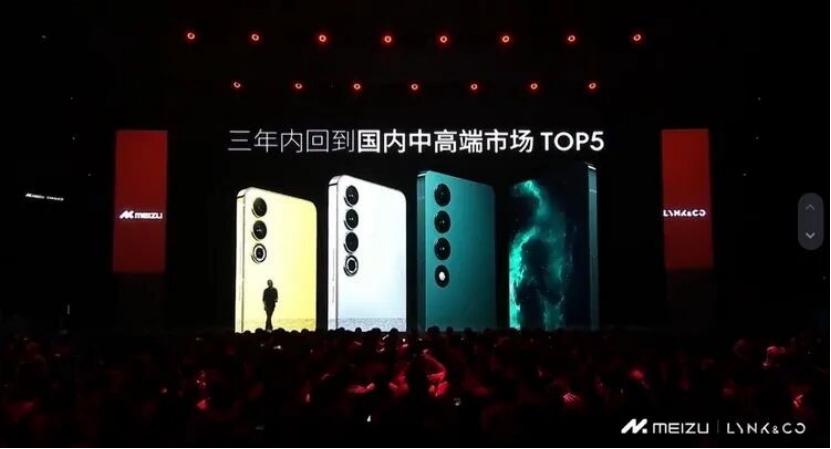
One of the reasons why Meizu announced the suspension of the self - developed hardware project of new domestic phones is the sky - rocketing memory price. (Photo/Meizu's official website)
The impact of the memory price hike on phones affects the whole situation. Do consumers have to endure the inconvenience caused by expensive phones? But the reality is that the phone replacement cycle of Chinese consumers has been significantly extended.
The research report of the China Academy of Information and Communications Technology in the first half of 2025 shows that the average phone replacement cycle of domestic users is approaching 33 months. IDC predicts that affected by the rising cost of components, the shipment volume of smartphones in China will decrease by 2.2% year - on - year in 2026, and the replacement cycle will be further extended. Many media believe that the current average replacement cycle of domestic users has been extended to more than 40 months, which means changing a phone once every three years.

Compared with "changing a phone every two years" five years ago, the phone replacement cycle of Chinese consumers has now increased significantly to nearly three and a half years. (Photo/Just Lost My Phone)
This round of phone price hikes sweeping the whole industry has further made the rule of "the higher the price, the less likely to change" a common phenomenon. And consumers' phone replacement strategies are also quietly evolving in this game.
The reasons for not changing phones are not just about the high price
After the news of the phone price hike spread, Jiuyue, a migrant worker in Guangzhou, opened the online shopping app and took a look at the price of the phone he liked in the shopping cart. After the national subsidy and the trade - in discount, it was still nearly 800 yuan more expensive than the original price.
After some thinking, he emptied the shopping cart and ordered a battery replacement service instead, which cost less than 200 yuan. "A new battery can make the phone last for another two or three years. There is still 40% of the memory left. After cleaning it up, it can still be used."
Jiuyue's choice is exactly the epitome of many consumers' current mentality. In the past few years, phone manufacturers have continuously launched new models, but the "wait - and - see party" has remained firm, posting "next time for sure" in the live - stream of product launches. Recently, in addition to the "wait - and - see party", there are also consumers who have decided to "hold on" in the comment section of the "phone price hike" news: "I won't change it. I'll just make do for another three years."

In recent years, when facing the phone price hike, consumers have responded "stubbornly": "Let the price rise" and "Save 100% by not buying". (Photo/Go Go Squid!)
This "holding on" mentality is becoming the epitome of more and more people. On the other side of this "fight for another three years" wave, the EU is paving the way for consumers with regulations.
As early as 2022, the EU passed a law to force all phones to use the USB - C interface by the end of 2024. Apple, which was the most reluctant at that time, finally had to replace the Lightning interface on the iPhone 15 series. Now, the same logic is being repeated in the battery field. From February 18, 2027, all electronic products sold in the EU must ensure that the battery can be easily disassembled and replaced by consumers: it can be done with an ordinary screwdriver, not welded with glue, and the software should not hinder the process.
Apple's compromise on the charging interface has proved that the EU's standards often become the de - facto global standards. When changing the battery becomes as easy as changing the phone case, "fighting for another three years" is no longer just a slogan, but a right that the system has won for consumers.
Whether it's expanding the memory, using cloud storage, or taking the risk of modifying the phone, these seemingly "holding on" operations are actually saying the same thing: Facing the phone price hike, more and more people are no longer willing to be the "scapegoat" for cost transfer. Instead, they are using a more rational way to make the phone last longer.
After all, although phones are constantly being updated, consumers have already seen through the manufacturers' unchanged iteration routines. They are numb to the over - configured phones and the lackluster innovation.
There are almost no exciting and subversive original functions. If the only difference from other phones is just "a new serial number", consumers naturally can't find a reason to spend money.
Since the performance of new models is similar to that of the previous generation, and both can use the up - to - date system version, why should I change the phone? Even if I really need to change it, why must it be a new phone?
From this perspective, it's not difficult to understand why the second - hand phones on well - known second - hand platforms like Zhuanzhuan and Aihuishou are so popular. Even though second - hand phones are not always that good - in social media, many consumers complain that the quality of the phones they bought from "Zhuanzhuan - like" platforms is uneven, "even more uncomfortable than buying an expensive phone".
Of course, the most important reason is that as the core component in the digital society, modern phones are bound to too much content related to work and life. The chat records in WeChat, the data in apps, and the encrypted face and fingerprint information. Once you buy a new phone, you have to move all of them.
Linzi, a post - 90s migrant worker, has changed her phone three times. She clearly remembers that each time was a painful process. "It took me a whole night just to migrate the data, and some data had to be moved manually. Logging in to the new phone also required secondary verification. It was so time - consuming."
Last spring, Linzi's phone screen was broken and couldn't be used. Considering the painful experience of changing phones in the past, she specially paid more to buy a flagship phone with the largest memory and the best performance. "I won't consider changing the phone for the next five or six years."
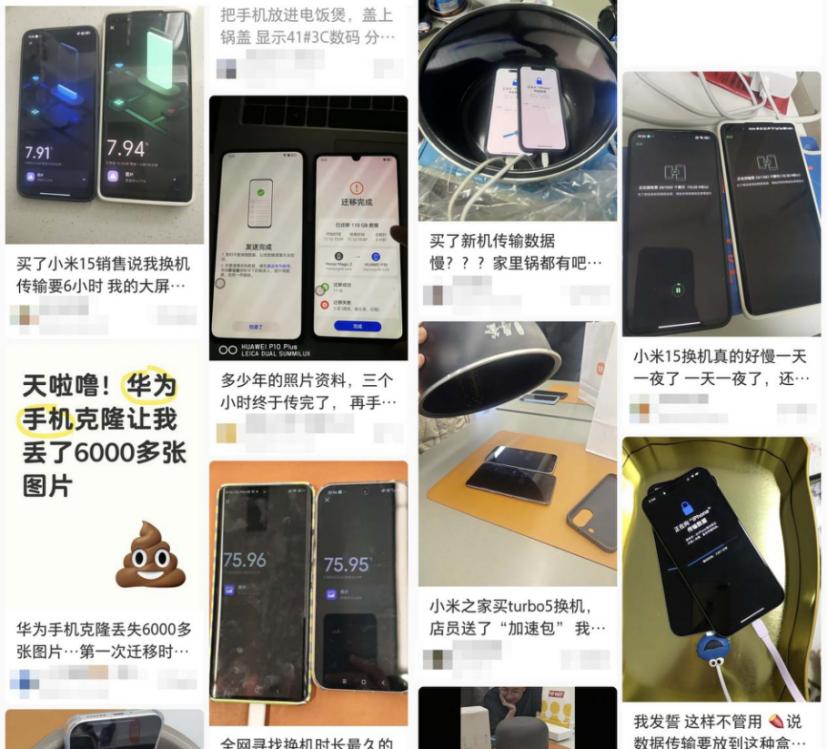
The most painful thing about changing a phone is migrating the data. On social media, netizens have come up with all kinds of "data migration acceleration packages" just to transfer the data earlier. (Photo/Screenshot from social media)
Facing the suffocating feeling brought by the phone price hike, Linzi is not worried at all. "After all, a phone is a durable product. It's enough to use it comfortably. Why do we need so many fancy functions?" She recalled that the first thing she did after buying the new phone was to uninstall all the pre - installed useless software and turn off those useless AI gimmick functions. It not only didn't affect the use but also made it smoother.
After all, the phone price hike won't change the living standards of ordinary people, and it's not the root cause of why ordinary consumers are reluctant to change phones. Instead of worrying about future revenue, phone manufacturers should think about how to make valuable innovations, rather than using false and boring parameters to attract consumers. What consumers really care about regarding phones is never the memory itself, let alone the price.

Although this collective phone price hike is rare, consumers' reluctance to change phones is definitely not because of the high price. (Photo/Jackie)
Seriously, instead of worrying that phones will become as expensive as the famous Luoyang paper in the next few years, we'd better be more diligent in decluttering and cleaning up the long - accumulated chat records and memory junk. At this time, you'll find that the old phone in your hand is not as fragile as the manufacturers claim.
(Jiuyue and Linzi in the article