Several key facts to be clarified in the patent battle between DJI and Insta360
The patent dispute between DJI and Insta360 is still intensifying.
On March 23, DJI Innovation filed a lawsuit against Insta360 at the Intermediate People's Court of Shenzhen, Guangdong Province. This lawsuit involves disputes over the ownership of six patents, and several former core R & D personnel of DJI are alleged to be involved. This is also the first time that DJI has filed a lawsuit over patent ownership disputes in China.
DJI stated in the accusation that the six patents involved in this case are mainly concentrated in key technical fields such as drone flight control, structural design, and image processing. Most of their first application dates are within one year after the departure of the employees from DJI. Although the first application dates of some patents exceed one year, they are very close. These inventions are closely related to their work tasks during their tenure at DJI and belong to service inventions. The patent application rights should legally belong to DJI.
DJI also pointed out that in two patents related to drone flight control and structural design, Insta360 recorded one of the inventors as "requesting not to disclose the name" in the Chinese application text. However, in the corresponding international patent application, the real name of the inventor was listed, and this person is a former core R & D personnel of DJI. This employee was deeply involved in the technical development of key DJI drone projects during his tenure and mastered the core technical system.
A document obtained by Jiemian News shows that Insta360 has a total of 51 patent applications requesting not to disclose the names of the inventors. The relevant patents not only involve drone technology but also widely cover various product categories such as handheld imaging.
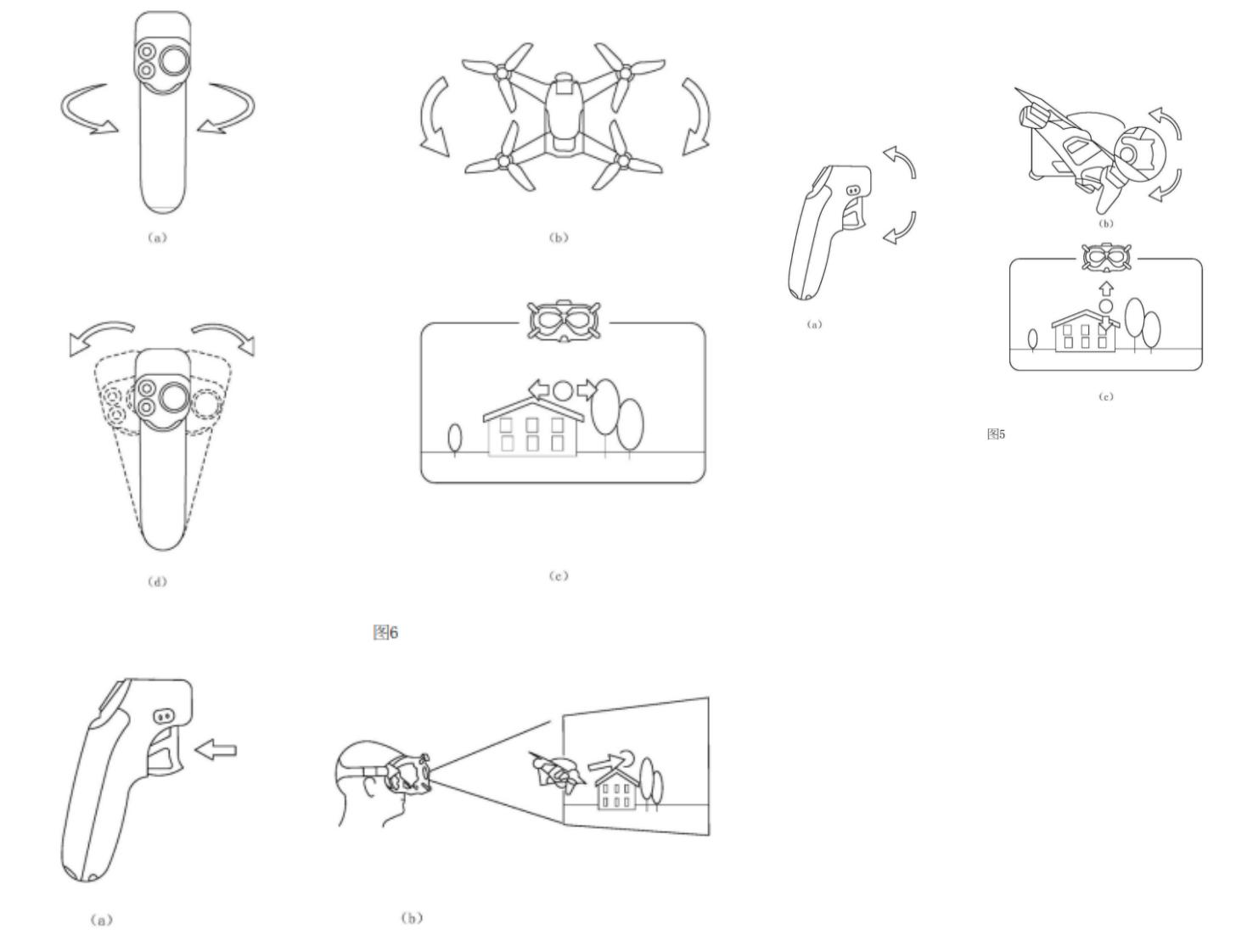
Attached drawing for the description of Insta360's patent CN117784818A
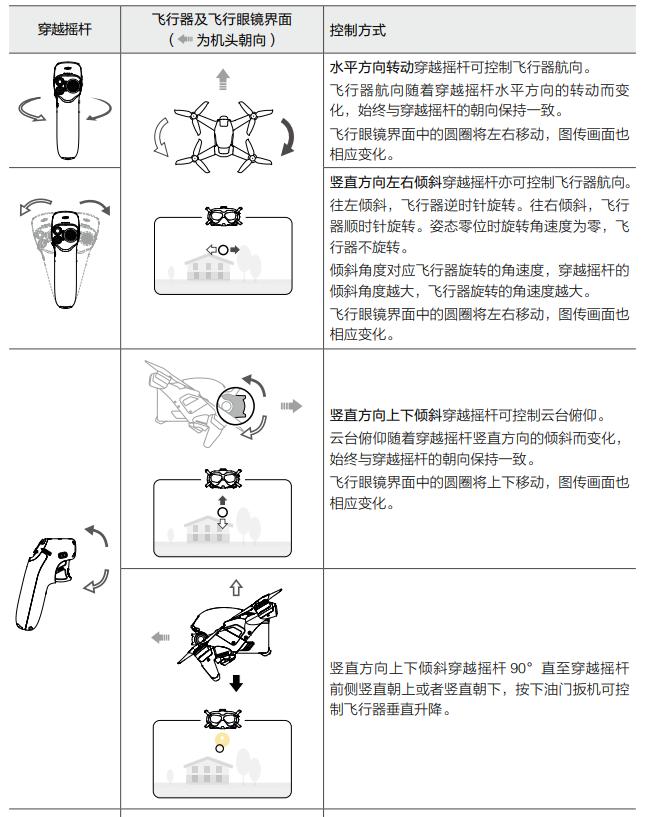
User manual for DJI's first - generation FPV joystick
Liu Jingkang, the CEO of Insta360, publicly responded to DJI's accusation. He said, "DJI's claim is that the ownership of patents generated within one year after an employee's departure should belong to DJI. We carefully investigated the patents applied for by the relevant employees within that time. The existing evidence shows that they are all ideas generated within Insta360 and the results of independent innovation."
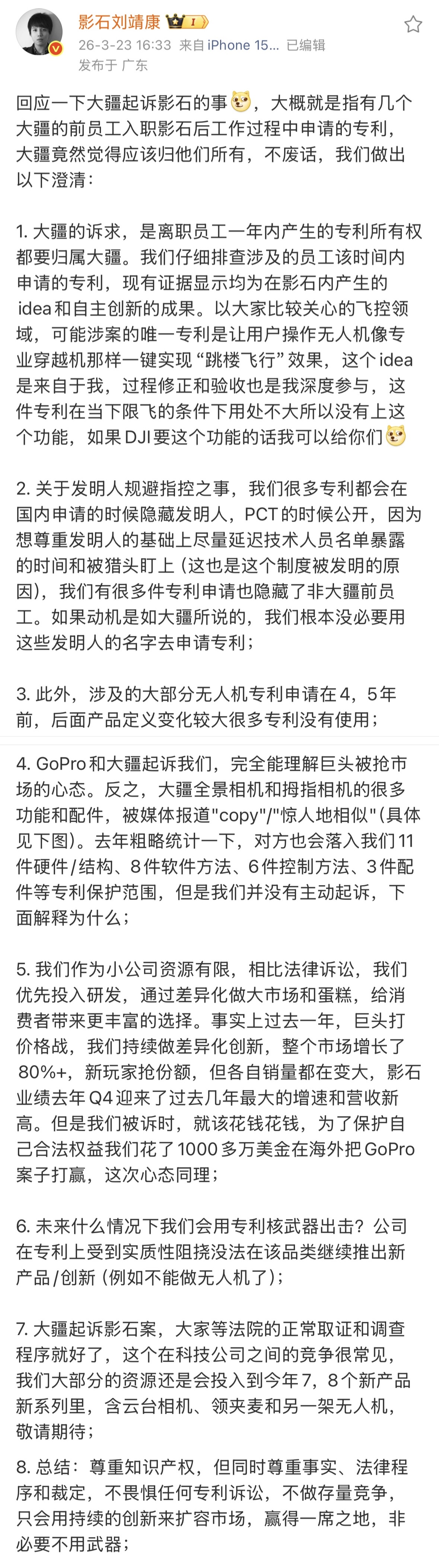
How should the ownership of patents generated within one year after an employee's departure be determined? This has become one of the key issues in this case.
Song Xiantao, a partner at Beijing Qiancheng Law Firm, told Jiemian News that in judicial practice, the court usually makes a judgment based on two key elements in the "Regulations for the Implementation of the Patent Law": "time" and "content".
Among them, the one - year time requirement is relatively clear, that is, within one year after leaving the original company or after the termination of labor or personnel relations. The content requirement is relatively vague. It is necessary to determine whether the invention for which a patent is applied is related to the employee's regular work or assigned tasks in the original company, and it must be judged according to the specific circumstances of each case. At present, the Supreme People's Court has not formed a unified and clear interpretation standard.
In some cases, the court adopts a more lenient interpretation in favor of the original company: it is considered that as long as it can be proved that during the employee's tenure in the original company, based on their duties and powers, they had contact with, controlled, or obtained technical information that has continuity and inheritance in the "technical field, theme, or concept" with the disputed invention, it can be presumed that the invention is related to the employee's work content in the original company, and it is not required that the two be completely consistent in specific technical problems, technical solutions, or implementation means.
However, in other cases, the court may adopt a stricter interpretation for the original company: it emphasizes that while legally protecting the legitimate rights and interests of the original company in service invention results and supporting innovation - driven development, it is also necessary to prevent an overly broad interpretation of "related inventions" so as not to inappropriately restrict the normal flow of R & D personnel or cause unreasonable restrictions on their participation in or development of new technical R & D activities in the new unit without legal basis or non - competition agreements.
According to Jiemian News, the "first inventors" or "core inventors" of the six patents involved have all worked in DJI's core R & D department during a specific period and were directly engaged in work highly related to the patents. In this case, how Insta360 proves the independence of its drone technology system will be the key to the judgment.
Another focus of the dispute in this case is Insta360's concealment of the inventors' names during patent applications.
Liu Jingkang said that Insta360 often conceals the names of inventors when applying for patents in China and discloses them during international applications. This is because, on the basis of respecting the inventors, it wants to delay as much as possible the time when the list of technical personnel is exposed and being targeted by headhunters. Insta360 has also concealed the names of non - former DJI employees in many patent applications.
Generally, when submitting a patent application in China, it is indeed possible to choose not to disclose the names of the inventors. This operation is based on the specific considerations of the applicant. In the PCT international application stage, the information of the inventors is required to be disclosed according to regulations. In the case of a patent ownership dispute, the key lies in whether the applicant can provide a reasonable explanation for "why the names are not disclosed in the domestic application but are disclosed in the overseas stage" and convince the judge.
A lawyer interviewed by Jiemian News believes that this statement makes some sense but is not a common practice. Generally, tracking inventors through the patent database is not the mainstream way for headhunting companies to recruit technical talents. At the same time, it is usually difficult to directly contact the inventors themselves only based on the name information in the patent documents. Therefore, whether this statement can be accepted still needs to be judged in combination with the specific case.
After DJI sued Insta360, on March 24, Insta360 began to counter - accuse DJI of infringing on the protection scope of its 28 patents. Yuan Yue, the person - in - charge of Insta360 in China, said that many products launched by DJI have "copied" a large number of Insta360's innovative functions and designs.
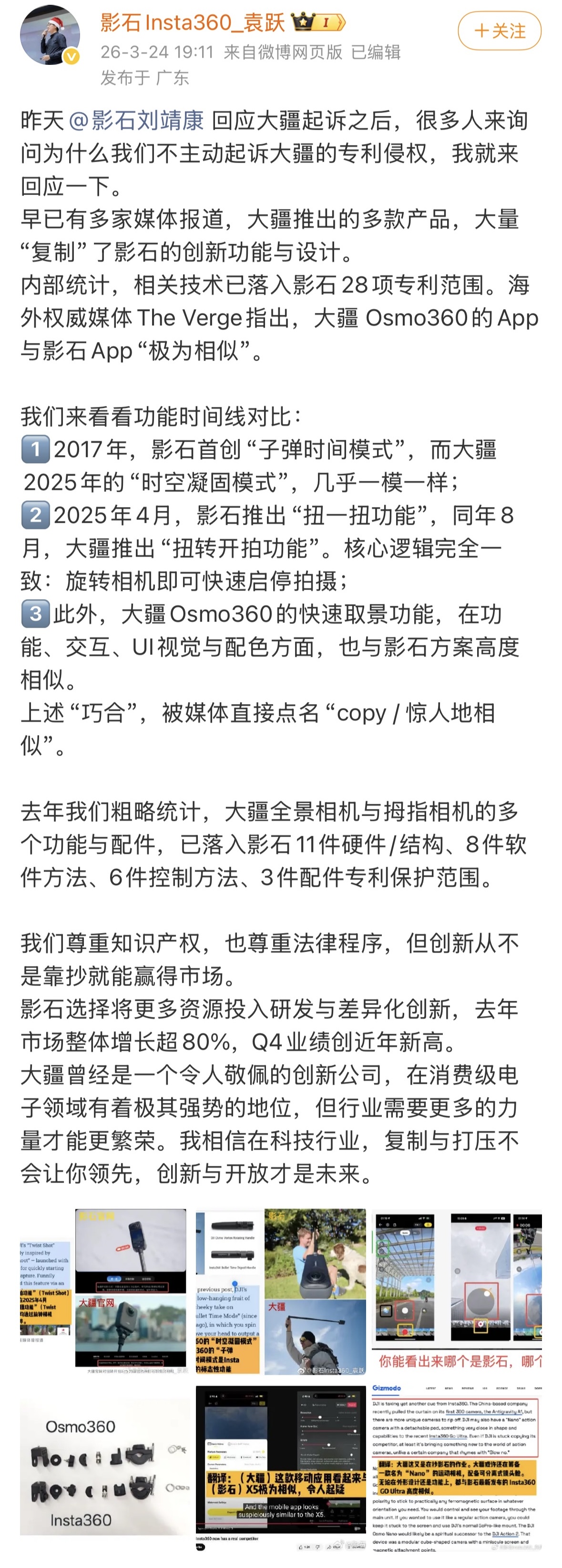
Can Insta360's counter - accusation against DJI be a strong basis for its counter - attack?
The above - mentioned lawyer who requested anonymity believes that the information disclosed by Insta360 currently mainly stays at the product appearance level. It is still unclear which patents Insta360 may claim and which functions of which DJI products are infringing. It still needs to be judged in combination with the specific case.
You Yunting, a senior partner at Shanghai Dabang Law Firm and an intellectual property lawyer, told Jiemian News that patent litigation is mainly used to snip at the other party's products. DJI's lawsuit against Insta360 is mainly to prevent the latter's products from seizing its own market. However, the patents involved currently still belong to Insta360. It will take a court judgment, and after DJI wins the lawsuit, the ownership will change. "In this case, whether Insta360 should sue the other party for counter - measures depends on how many 'cards' it has in hand. If it has many 'cards' (i.e., many patents), it can naturally counter - attack. But if it doesn't have many patents, the correct approach is to wait for the other party to make a move and then consider how to use the patents in hand in a way that maximizes the benefits."
The battle between DJI and Insta360 has spread from action cameras and panoramic cameras to the drone field, and the patent ownership dispute is just one of the battles. In the hard - tech field, the flow of core R & D personnel is becoming more and more frequent, and the patent layout of enterprises around key technologies is also becoming increasingly dense. For the two companies trying to enter each other's core markets, the significance of this lawsuit may be far more than just a legal confrontation.
This article is from "Jiemian News", Reporter: Lu Keyan, Editor: Wen Shuqi. Republished by 36Kr with permission.