Humanoid robots are creating wealth before bringing benefits.
In January this year, the news that "the green channel for Unitree Technology's IPO was halted" flooded social platforms. At that time, the news said that regulators hoped to cool down the market as the robot bubble was too big. When the outside world thought Unitree's listing plan for this year would fall through, the situation took a turn. On March 20th, the prospectus for Unitree's initial public offering of shares and listing on the Science and Technology Innovation Board was officially disclosed, and the Shanghai Stock Exchange accepted its IPO application on the same day.
In 2024, Unitree's valuation fluctuated between approximately 3 billion and 4 billion yuan. In 2025, with the help of the Spring Festival Gala, Unitree became well - known overnight and popularized the humanoid robot track. Its value soared into the tens of billions range. This year, judging from the continuously enthusiastic market and favorable policies, this "first humanoid robot stock" is even expected to reach a market value of 100 billion yuan.
It's not just Wang Xingxing who is excited; there is also the luxurious investor camp behind him.
A Wealth Feast
According to public information, Unitree Technology plans to raise 4.202 billion yuan in this IPO. If calculated based on the issuance of 10% of the shares, the overall valuation of the company is about 42 billion yuan. However, a common view in the investment circle is that if Unitree Technology is successfully listed, as the first stock in the industry, it will enjoy the dividends of the trillion - scale robot track and will at least be a company worth over 100 billion yuan.
As the founder, Wang Xingxing may become one of the youngest billionaires. He directly holds 86,714,964 shares of the company, accounting for 23.8216% of the company's current total share capital. At the same time, he indirectly holds 9.54% through the equity incentive platform, with a total shareholding of 33.36%.
Calculated roughly based on a valuation of 42 billion yuan, Wang Xingxing's personal wealth may exceed 14 billion yuan. If the market value rises to 100 billion yuan, his assets will double.
In addition to Wang Xingxing, Unitree's listing will also create wealth for a group of core employees. According to the prospectus, three post - 90s core leaders of Unitree: Chen Li, the person in charge of the sales and service system; Yang Zhiyu, the person in charge of mechanical structure R & D; and Zhang Yangguang, the person in charge of algorithms and software, indirectly hold approximately 0.36%, 0.32%, and 0.32% of Unitree through the Shanghai Yuyi employee shareholding platform respectively. If Unitree's market value exceeds 100 billion yuan, these three managers will also enter the ranks of billionaires.
As Unitree approaches the IPO, the investors behind it have finally waited for the moment of return and made a fortune.
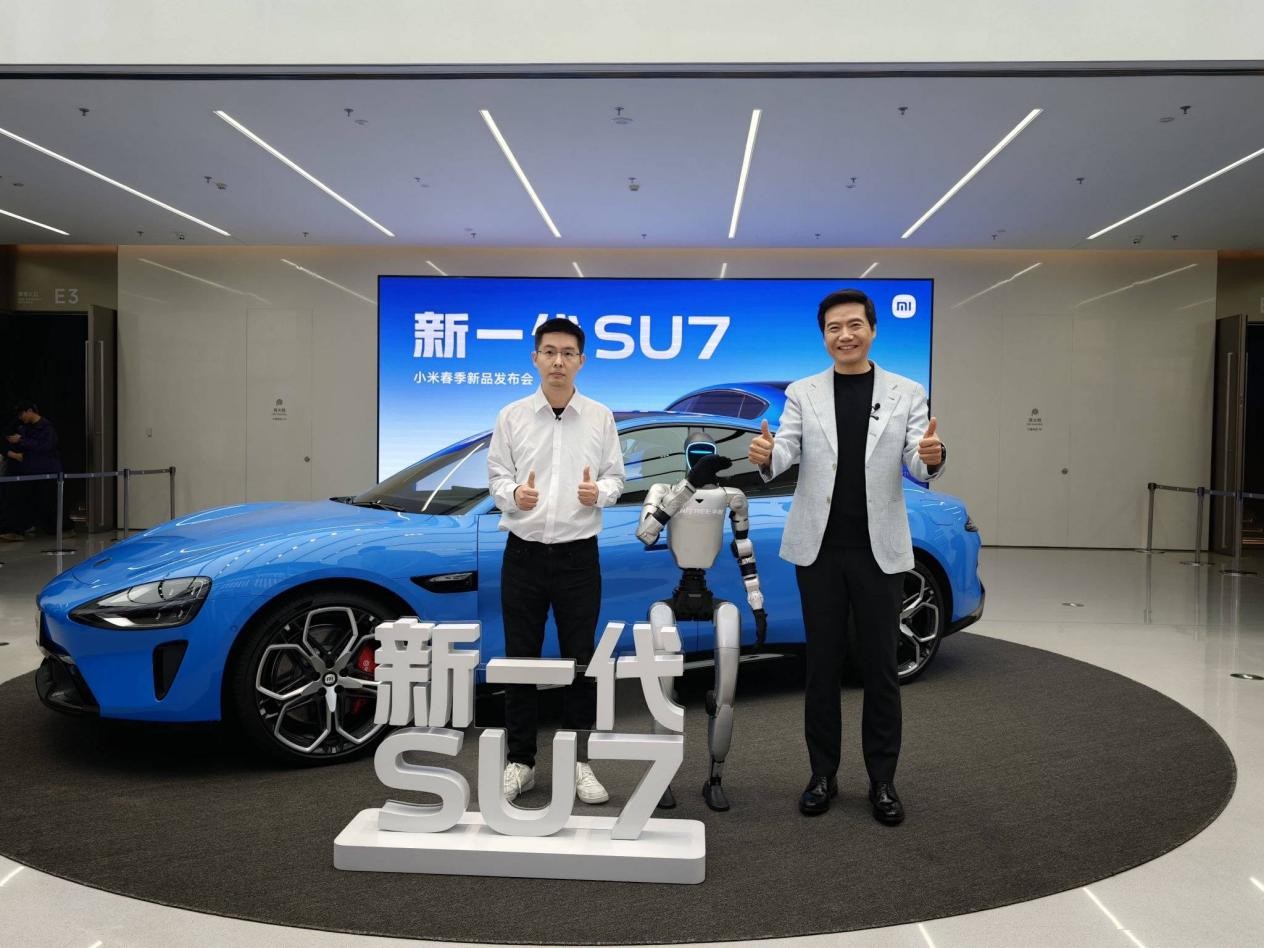
For example, on March 19th, at the Xiaomi press conference, Lei Jun said to Wang Xingxing standing beside him in front of the audience, "Thank you for giving us an opportunity to invest in Unitree five years ago."
In 2021, Shunwei Capital led Unitree Technology's Series A financing, raising tens of millions of US dollars, and then continued to follow - up invest. Currently, it holds 4.42% of the shares. It is understood that Shunwei Capital has cashed out 840 million yuan. In addition, Dexun Investment, founded by Zeng Liqing, a co - founder of Tencent, has also cashed out 30 million yuan.
Meituan, Sequoia China, and Matrix Partners have higher shareholdings. They are the top three external shareholders, with shareholding ratios of 9.65%, 7.12%, and 5.45% respectively. Based on the valuation of about 12.7 billion yuan in Unitree's last Series C financing, the value of these shares reaches 1.225 billion yuan, 904 million yuan, and 692 million yuan respectively. If it successfully reaches a market value of 100 billion yuan, Meituan will have a floating profit of more than 20 times, with earnings approaching 10 billion yuan; Matrix China will have a floating profit of more than 40 times, earning more than 5 billion yuan.
Among Unitree's more than 40 investment institutions, there are more than 20 shareholders with a shareholding ratio of more than or close to 1%. In other words, these more than 20 investment institutions can at least get a return of over 100 million yuan.
With Unitree's listing imminent, a visible IPO competition has begun. At the beginning of this year, Xinghaitu and Zhongqing Robot completed their shareholding reforms one after another, and Magic Atom also announced the promotion of its listing process. Galaxy General and Zhiyuan Robot are also eager to take action. When these highly anticipated robot companies go public one by one, new "wealth - creating myths" will still be staged.
However, on one hand, there is the madness of the capital market, and on the other hand, there is the "useless" doubt that humanoid robots have not been able to get rid of. This may also make this "bet" on wealth dangerous.
The Profit - making Ability Still Needs to be Verified
In the prospectus, one of Unitree's greatest highlights is that it has achieved profitability while other start - up companies are generally in a loss dilemma. Data shows that in 2025, the company achieved an operating income of 1.708 billion yuan, a year - on - year increase of 335.36%. The net profit was 288 million yuan, a year - on - year increase of 204.29%. The net profit after deducting non - recurring gains and losses was 600 million yuan, a year - on - year increase of 674.29%.
This is also a key reason why the investment circle believes that its valuation can reach 100 billion yuan. If it can reach such a high valuation in the A - share market, it will undoubtedly open up the imagination space for hard - tech companies in the A - share market and pave the way for more than 20 subsequent robot companies in the queue. However, does Unitree's ability to make money mean that humanoid robots will definitely make money? And will they make more and more money as the mass - production difficulties are overcome?
Take Ubtech as an example. Last year, Ubtech's humanoid robots won large orders worth over 100 million yuan many times. However, from 2020 to the first half of 2025, the company accumulated losses of over 5 billion yuan and has not yet turned a profit.
In fact, even for Unitree, its profitability may not be able to support its market value to remain at a high level after listing.
Looking closely at the financial statements, from January to September 2025, scientific research and education accounted for 73.60% of its humanoid robot business revenue, commercial consumption accounted for 17.39%, and industrial applications accounted for only 9.01%. Among the 9% industrial application revenue, corporate tours accounted for 50% to 70%, and the revenue from clear industrial scenarios such as intelligent manufacturing and intelligent inspection was only 15.702 million yuan, accounting for 29.29% of the industrial application revenue.
To put it simply, the largest group of buyers of humanoid robots at present are universities, scientific research institutions, and technology companies. They buy robots for algorithm research, model training, and teaching experiments. However, the demand in the scientific research and education market is limited and may reach the ceiling soon.
This still exposes the eternal question: When can humanoid robots enter factories or homes and truly benefit humanity?
This year, at Tesla's Q4 2025 earnings conference call, Elon Musk admitted that currently, no Optimus humanoid robot is truly performing "useful work" in Tesla's factories.
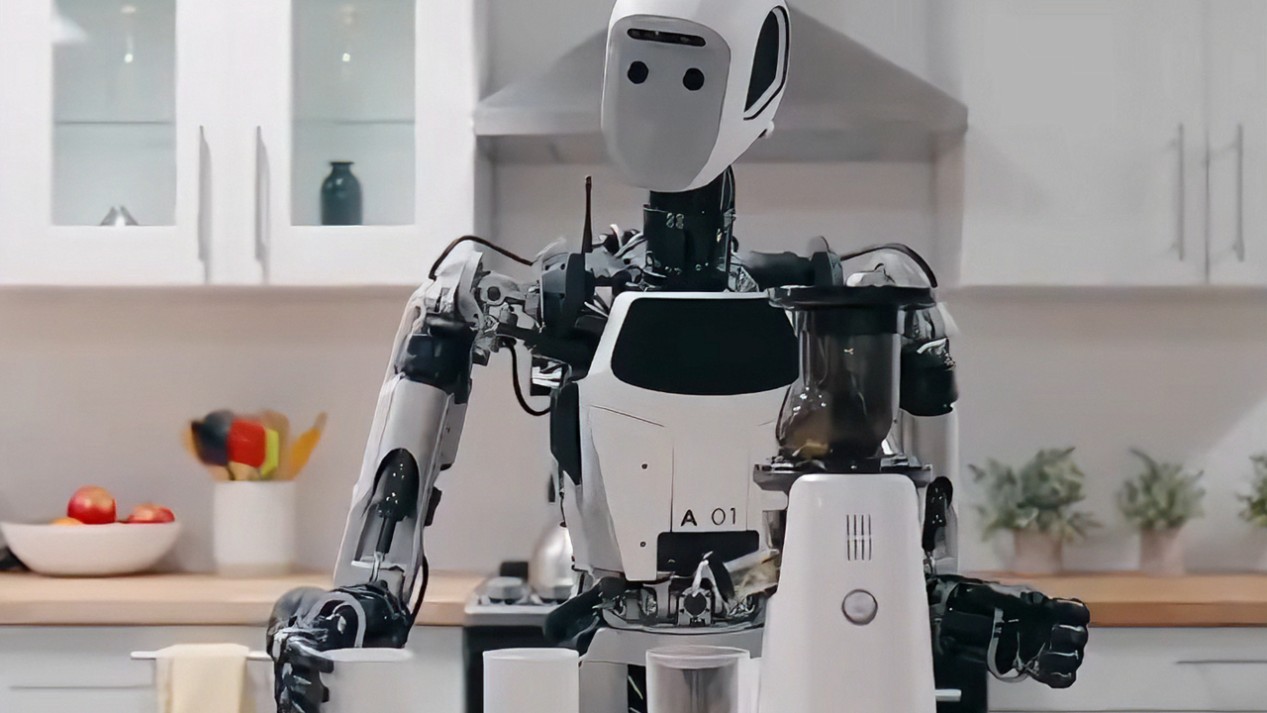
For humanoid robots to enter factories, the problem is not only when they can break through technological constraints. More importantly, it lies in whether the human - like appearance really has an advantage over robotic arms or collaborative robots in the workshop. If the answer is no, then the idea of humanoid robots entering factories becomes a false proposition, which greatly limits the imagination space of their role as high - quality productive forces.
In the consumer - grade market, entering families and becoming helpers in daily life is our greatest expectation for humanoid robots. However, compared with entering factories, entering family scenarios also seems equally distant.
On social platforms, some netizens posted a "disaster scene" of Unitree G1 trying to cook: The robot tried to imitate a human chef's stir - frying action, but due to its inability to accurately sense the dynamic center - of - gravity changes of fluids and ingredients, its movements were stiff and lagging, and finally the cookware was overturned and the food splashed.
The assembly of humanoid robots depends on the progress of industrial manufacturing and cost control. The upgrade of movements can be achieved through technologies such as deep reinforcement learning to make the "cerebellum" stronger. However, there is still no clear path for the breakthrough of the "brain". Colin Angle, the founder of iRobot, a pioneer in the field of sweeping robots, once pessimistically said, "Humans won't be able to create general intelligence in the next 300 years."
The Ideal is Too Beautiful, the Bubble is Too Big
Currently, the capital's enthusiasm for humanoid robots is crazy. Since March, there have been continuous investment and financing news in the embodied intelligence industry. Galaxy General announced the completion of a new round of financing of 2.5 billion yuan, and Songyan Power announced the completion of a nearly 1 - billion - yuan Series B financing. According to IT Juzi data, as of March 20, 2026, there have been 207 financing events in the Chinese robot track this year, including 133 financing events for humanoid robots, and a total of 115 companies have received funding.
The entry of capital is indispensable, but this kind of madness will inevitably be accompanied by bubbles.
Last year, a newly - established embodied intelligence company that started operations in March had completed nearly 200 million yuan in financing by July, and its investors included many well - known institutions.
Not only is the financing pace of start - up companies accelerating, but the listing process also seems to be "on a rocket". Unitree took only 132 days from signing the counseling agreement on July 7th to completing the counseling, setting the fastest record for the counseling time of embodied intelligence companies this year.
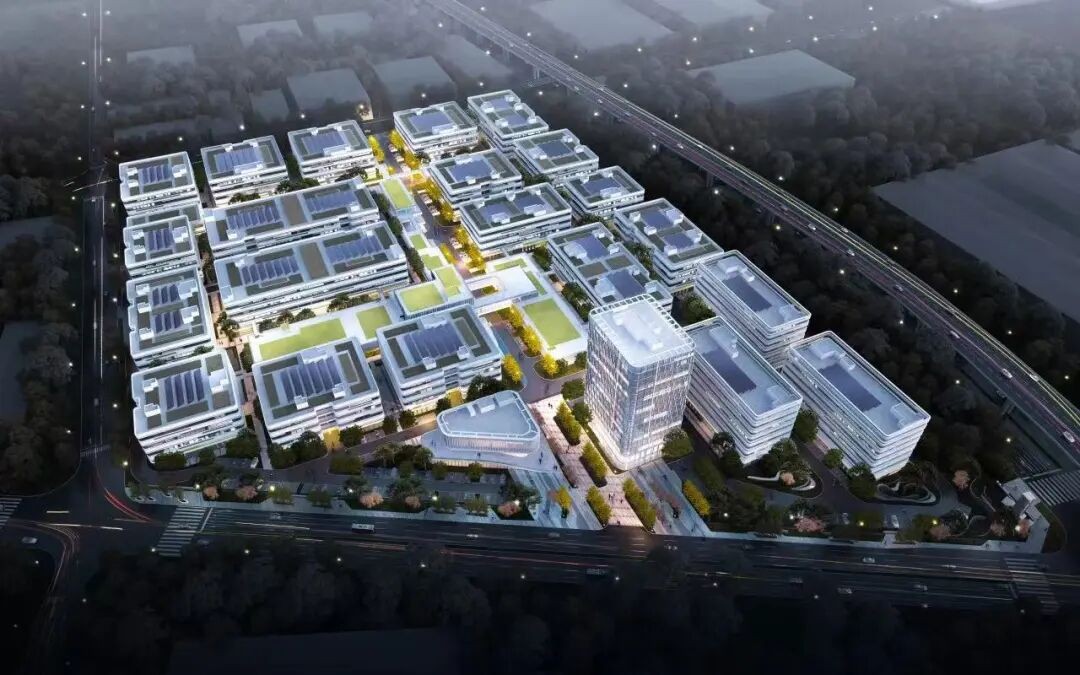
Even bigger bubbles may exist in the competition among cities across the country to chase the humanoid robot trend. In the past year, at least a dozen provinces and cities across the country have intensively announced the construction of robot industrial parks or the introduction of special support policies. For example, Yizhuang in Beijing plans to build a 250,000 - square - meter robot industrial park, and Haidian and Changping also have their own plans, with three districts in one city competing with each other; Wuzhong District in Suzhou has invested 10 billion yuan in a fund to become the "number one district in the country"; Chengdu, Xi'an, Wuhan, Zhengzhou... Almost every city is enthusiastic, and this enthusiasm has even spread to the county level.
This scene is familiar. In the early days of the new - energy vehicle development, cities across the country swarmed to build large - scale industrial parks, vowing to become the number one city in the automotive industry.
Now, robot companies are rushing to achieve mass production and set new delivery records, and cities are also shouting slogans. Yizhuang in Beijing proposes to form a "tens of thousands - level" mass - production capacity next year. Shenzhen proposes that the scale of related industries will reach 100 billion yuan by 2027. Suzhou proposes to support the city's robot industry to reach a scale of 200 billion yuan. Chengdu proposes that the scale of the entire industrial chain will reach 60 billion yuan next year. However, as production capacity further increases, problems also arise. Can the scientific research and education and commercial performances alone digest this production capacity?
Goldman Sachs mentioned in "Global Robot Industry Outlook 2025" that there is an obvious over - valuation phenomenon in the current robot track. Globally, about 60% of robot companies are valued more than 100 times their revenue, and the over - capacity rate of the global robot industry may reach 25% in 2025.
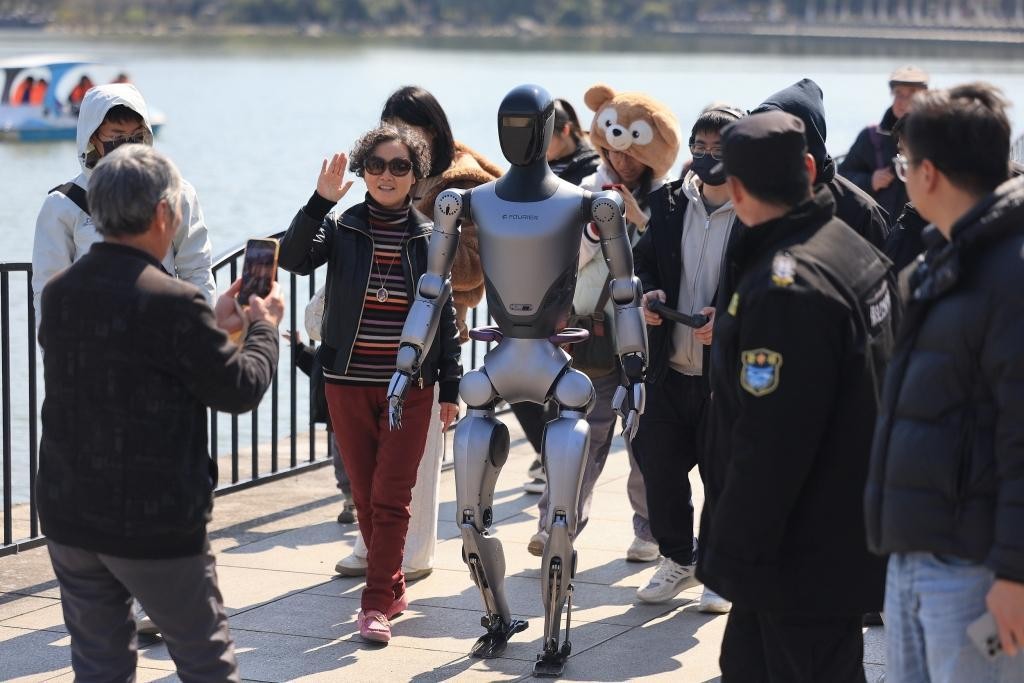
As a new product, new - energy vehicles can be used by people as soon as they are manufactured. Technological breakthroughs and cost control make them more practical and advantageous. However, humanoid robots have not yet crossed the stage from "useless" to "useful". If measured by the standard of "solving people's actual needs", such as entering factories or homes, it can even be said to be very far away.
Since the development of humanoid robots, many doubts and disputes have always accompanied the beautiful ideal. However, this is not a bad thing. When the listing wave brings huge wealth to founders and investors, it is the most important to be vigilant against being addicted to profits and giving up doubts.
This article is from the WeChat public account "Dao Zong You Li" (ID: daotmt), author: Dao Zong. It is published by 36Kr with authorization.