Apple's living room anxiety: Siri is waiting for content, while companies like Midea have taken over the smart home control center.
Recently, Mark Gurman, a Bloomberg reporter known for accurate disclosures, said that the HomePod, HomePod mini, and Apple TV in Apple Stores are facing a shortage of inventory.
Based on past experience, this should be a sign that Apple is about to launch new products. According to Gurman, the new Apple TV and HomePod should have been released last year, but Apple has not been ready.
The "culprit" behind the continuous delays of Apple's new products is its lagging AI. The new version of Siri is long overdue, and Apple's new blueprint for AI-powered smart home cannot be realized. In contrast, domestic brands have gone further than Apple in exploring the smart home field, and domestic AI has gradually taken over the smart home.
Siri and AI are holding back Apple's hardware
According to Apple's long - standing vision, both the HomePod and Apple TV are important components of Apple's smart home system. As a smart speaker, the HomePod plays the role of a control center; as a TV box, the Apple TV serves as a home entertainment center.
If following the normal product update logic, the new HomePod could upgrade its sound quality and replace a few audio chips, and the new Apple TV could replace its processor with a new A - series one, and that would basically be it.
However, the times have changed. As AI has fully penetrated the smart home field, AI anxiety has also spread to Apple. Therefore, Apple is eager to endow the new HomePod and Apple TV with AI capabilities. Apple first thought of Siri. The current version of Siri has long been criticized for being not smart enough. It can only handle very simple tasks and is far less intelligent than the current mainstream large - model products.
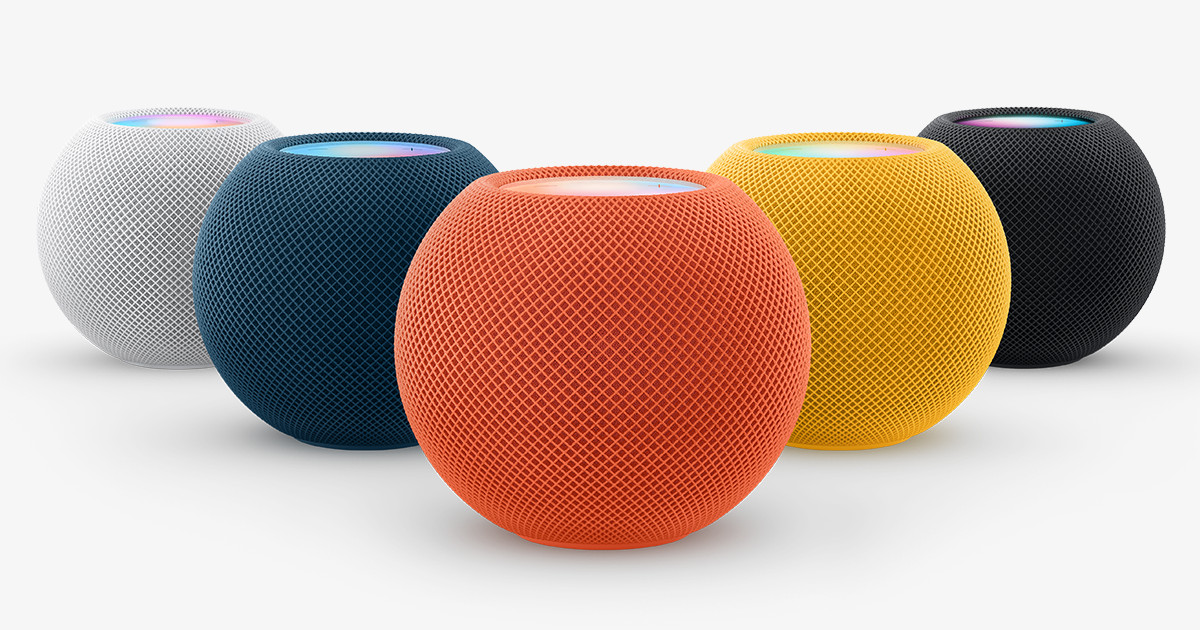
(Image source: Apple)
From the existing exposure news, Apple's new Siri will be equipped with AI capabilities from Google. Specifically, Siri will use Gemini's model and Google's cloud technology to greatly enhance its AI capabilities. To be honest, this is not difficult. The market has fully proven the capabilities of Gemini, and Apple just needs to pay for the service.
However, the problem is that Apple only wants Google's AI technology, and still wants to handle the product part of Siri itself, including function deployment and data protection. Apple makes this plan so complicated. On the one hand, it wants to maintain a certain degree of initiative, and on the other hand, it wants to maintain its image of emphasizing user privacy and security.

(Image source: Apple)
As for the two products, the new HomePod and Apple TV, there isn't much to get excited about. The former upgrades the S5 chip to a new one, and the latter upgrades from the A15 to the A17 Pro. Apple has officially announced this year's WWDC. If Apple's new Siri still cannot be launched by then, its AI - powered smart home will become a joke.
Mobile phone brands are far ahead in integrating voice assistants and smart homes
Using voice assistants to link smart home devices is something that everyone has been doing since the early days of IoT development. Brands such as Xiaomi, Huawei, and Midea have been doing this, and of course, so has Apple. In 2015, Apple integrated Siri into HomeKit. However, in the AI era, the gap between Apple and domestic brands has gradually widened.
Take Xiaomi for example. The release of HyperOS has connected the "full ecosystem of vehicles, people, and homes". Empowered by large - models, the biggest advantage of Xiaoai Tongxue lies in cross - device collaboration and the understanding of vague intentions.
Xiaomi has the world's largest consumer - grade AIoT platform. In the past, controlling these devices required precise instructions, such as "Xiaoai Tongxue, turn on the main light in the living room". Now, "Super Xiaoai" is integrated into the underlying "large - model thinking center" of HyperOS and can recognize vague intentions.
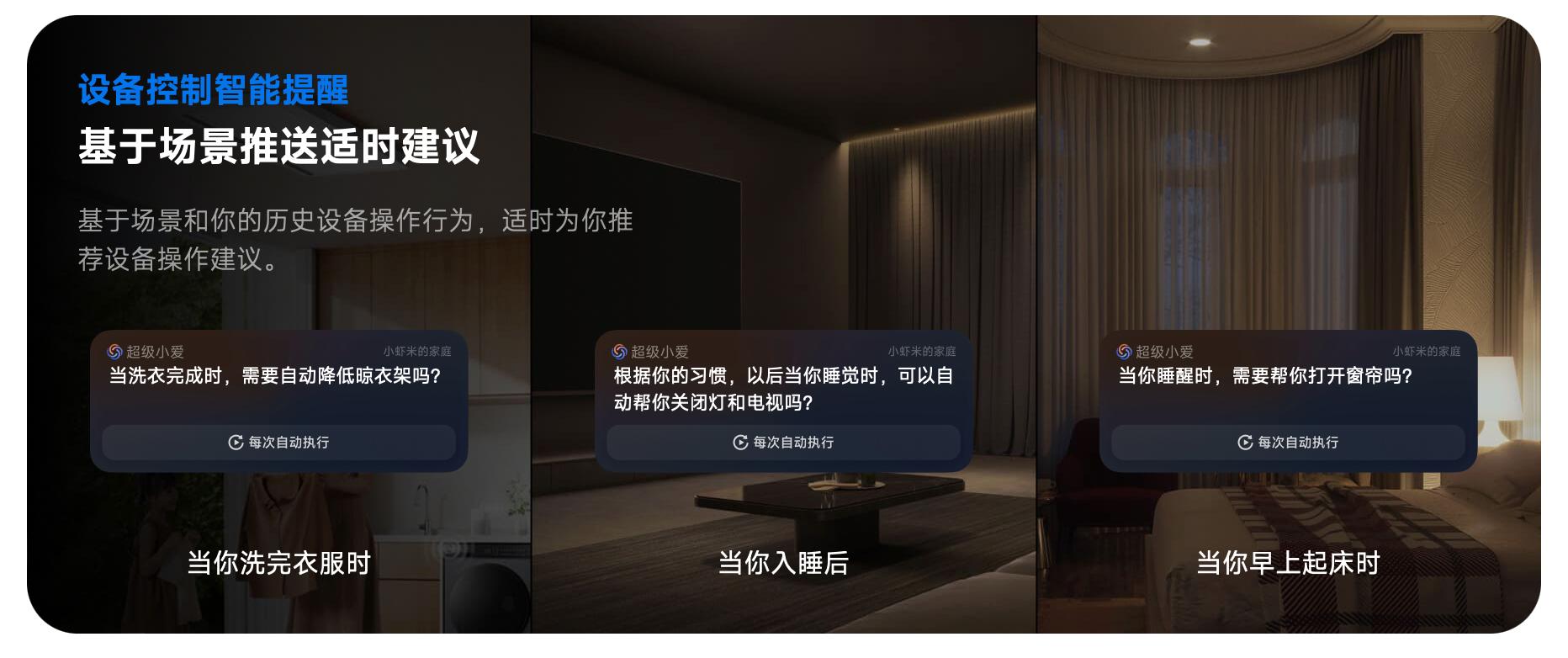
(Image source: Xiaomi)
For example, when a user says to it, "I'm going to watch a movie. Make it more atmospheric." Super Xiaoai will use the large - model to analyze the specific needs behind "the atmosphere for watching a movie" and then automatically perform a series of complex operations: lower the projection screen, turn off the main light, turn on the RGB atmosphere light behind the TV, and switch the audio system to the cinema mode.
Moreover, this kind of control can be seamlessly transferred. When a user shouts in a Xiaomi car, "I'm almost home. Make the living room warmer," the home devices will immediately respond and make a series of preparations in advance.
Huawei has also come up with its own solution. Relying on the deep integration of HarmonyOS and the Pangu large - model, today's "Xiaoyi" is no longer just a speaker that only follows commands. In Huawei's smart home solution, Xiaoyi is endowed with powerful "scene understanding" and "active service" capabilities.
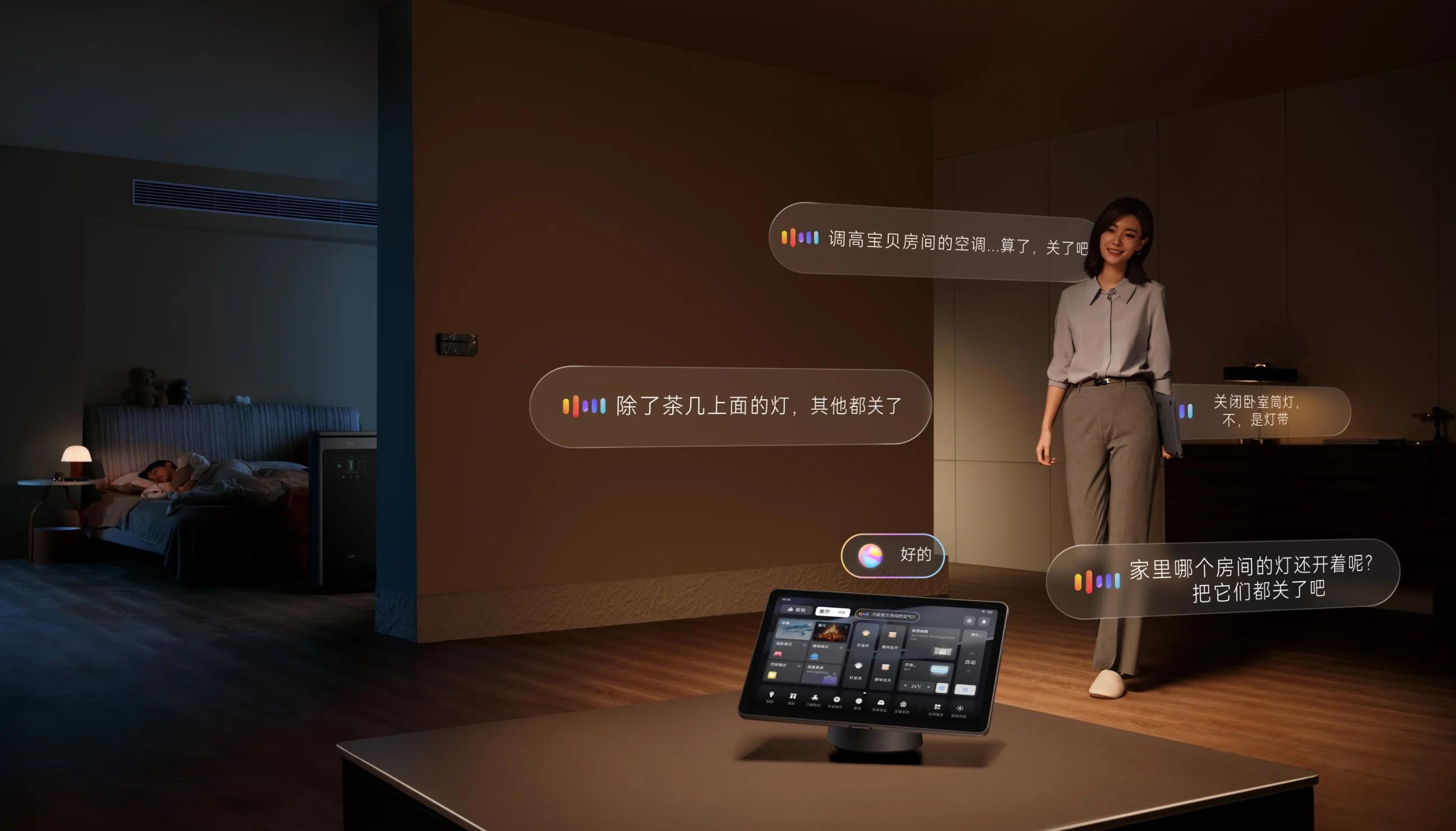
(Image source: Huawei)
To integrate voice and smart home, Huawei relies on the absolute penetration of the underlying protocol. Through HarmonyOS Connect, the metadata and status of all devices, from light bulbs and curtains to smart screens, are shared at the system level.
The Pangu large - model endows Xiaoyi with multi - modal perception capabilities. It no longer only relies on the microphone array to listen to users. It can know which room the user has entered through the millimeter - wave radar on the central control screen and know that the user is on the verge of sleep through the data from the smart watch.
When a user vaguely says, "I'm going to sleep," the system won't just turn off the lights rigidly. Instead, it will automatically adjust the air - conditioner to the sleep - aid mode, slowly close the curtains, and turn on the security system according to the current room temperature and the user's historical sleep preferences.
Speakers and home appliances are completing their AI evolution
If Xiaomi and Huawei are launching a dimensionality - reduction attack from the OS and full - ecosystem level, then Internet and traditional home appliance giants have completed self - innovation in hardware form and vertical scenarios. Several years ago, Internet brands launched a "hundred - group battle" around smart speakers and once sold smart speakers at rock - bottom prices. Looking back, the smart speakers at that time were more like small toys that could play music, check the weather, and chat. They were not real AI hardware.
However, now, relying on the powerful capabilities of large - models, smart speaker - like products are evolving rapidly. Take Tmall Genie for example. Many of its products are connected to Alibaba's Tongyi Qianwen large - model, and their capabilities have been greatly upgraded.
For instance, the storytelling function of Tmall Genie will undergo a major upgrade. It can not only make sounds according to user needs but also learn the voices of parents through AI technology to provide more emotional value for children.

(Image source: Tmall Genie)
Baidu's Xiaodu Speaker has also become more powerful with the support of AI technology. Now, Xiaodu Speaker has incorporated Baidu's multi - modal AI assistant, "Super Xiaodu". It is not only a voice assistant but also an AI butler with Agent capabilities.
Super Xiaodu is not only available on smart speakers but also connected to many products such as cameras and AI glasses. These different devices can also interact with each other. For example, when a user asks the smart speaker, "Where is the remote control?" the AI can not only detect the current field of view through the camera in real - time but also review the camera footage from the past 24 hours to locate the last appearance of the item and directly replay the relevant video.
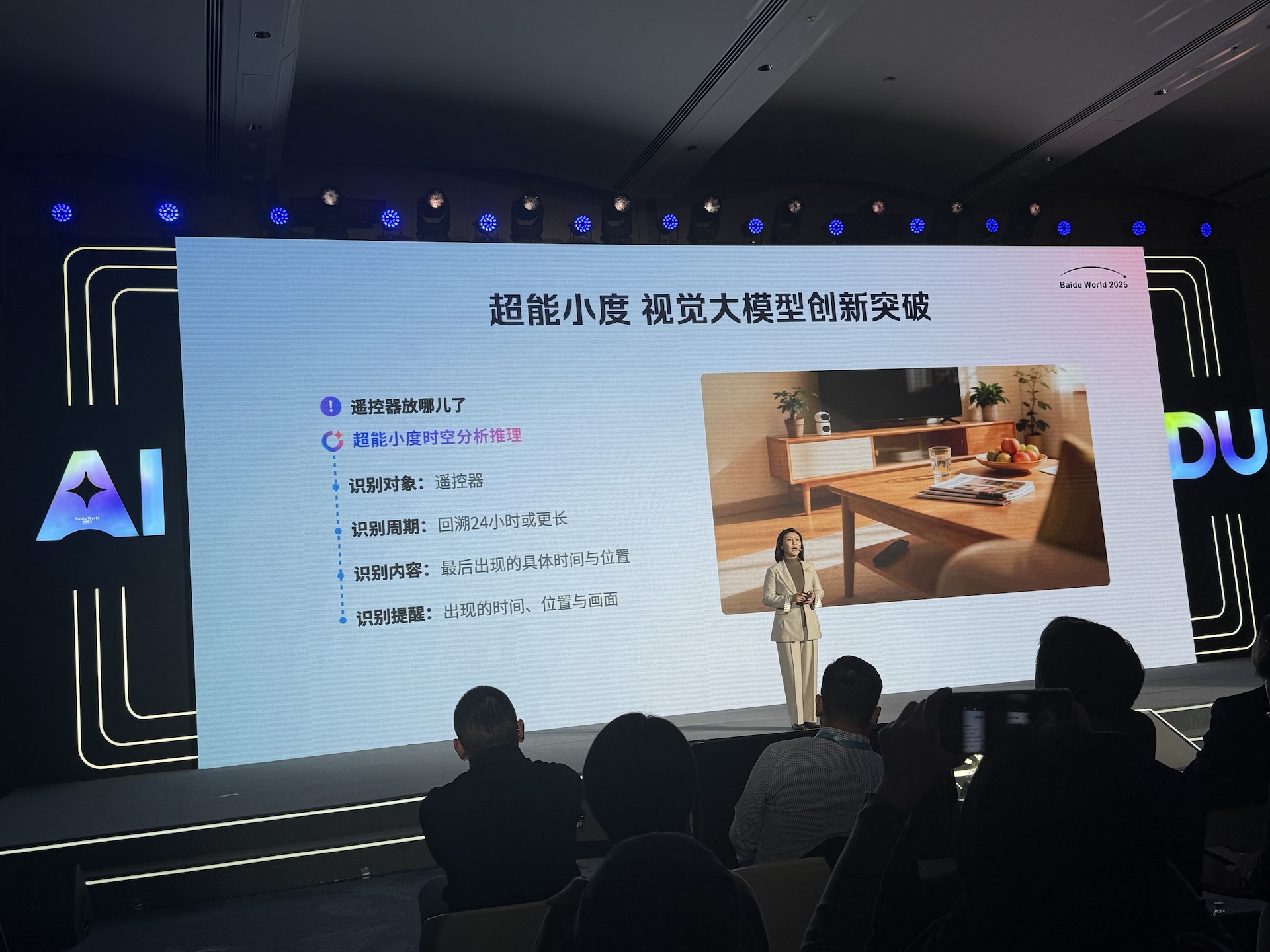
(Image source: Lei Technology)
More importantly, the smart speakers of Internet giants such as Alibaba and Baidu have established their own smart home ecosystems and incorporated many home appliance brands. For example, the cooperation brands of Tmall Genie include Panasonic, Philips, Gree, and Joyoung, while those of Xiaodu Smart Speaker include Siemens, Dyson, Bosch, and Opple. In this system, the smart speaker is no longer just a simple voice remote control but a control center with Agent capabilities.
At the same time, leading home appliance brands are also accelerating the use of AI to empower their smart home ecosystems. Midea's approach to breaking through is very practical: using a large - model for the vertical industry to reshape the understanding ability of the voice assistant and thus completely connect the smart home ecosystem. General large - models may know astronomy and geography, but they are difficult to accurately understand complex home scenarios.
Midea's approach is to directly use a vertical AI large - model fine - tuned for home appliance control as the brain of the voice assistant. When the voice assistant is connected to such a large - model, the smart home truly changes from passive control to active service.
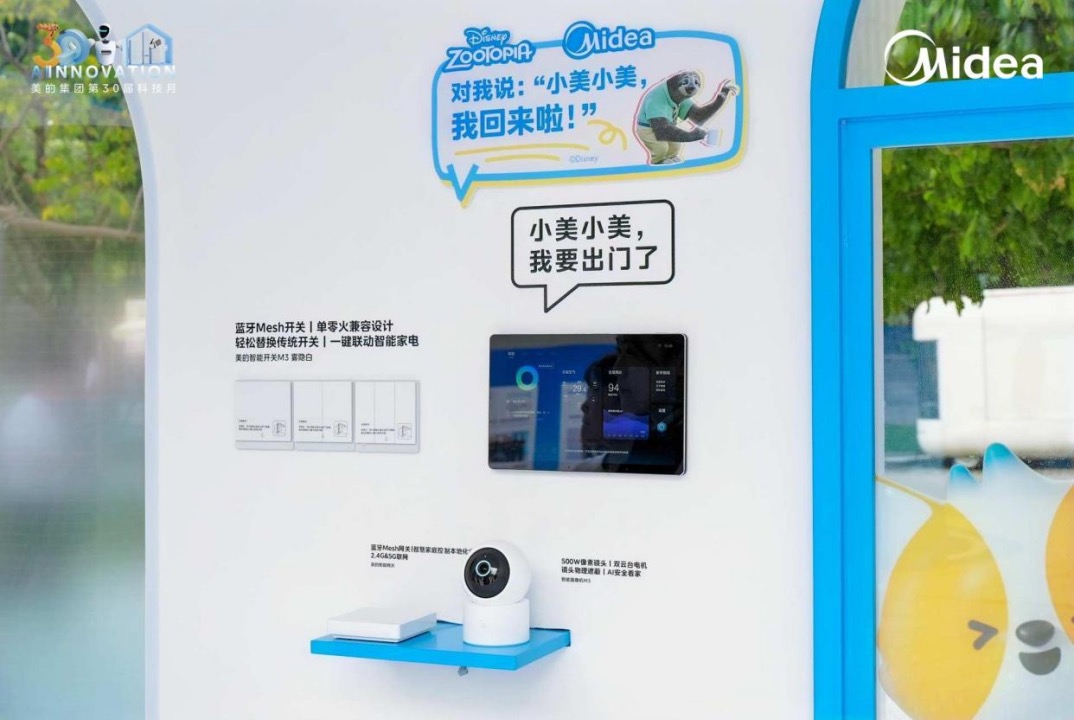
(Image source: Midea)
Here, the voice assistant is no longer an isolated messenger but has become a translator and dispatcher for the smart home. For example, when a user casually says to Midea's smart panel or home appliance, "I just finished exercising. It's so stuffy at home, and I don't like the direct wind," the AI assistant will instantly break down this vague natural language and automatically generate a whole - house collaborative mechanism. It can not only understand stuffiness and heat but also link the air - conditioner to turn on a specific cooling mode, precisely adjust the angle of the air deflector through the built - in sensor, and even close the curtains and turn on the fresh - air system.
Here, the voice assistant is the interaction entrance, the AI large - model is the thinking center, and the whole - house home appliances are the execution terminals. Their interconnection enables every word of the user to be translated into the collaborative operation of the whole - house hardware.
What Siri needs is not new hardware but AI
In 2011, Siri, which appeared at the iPhone 4s press conference, introduced the new concept of voice assistants to the public. For a while, various voice assistants emerged, and chatting with them became a fun thing. However, in the past 15 years, Siri has gradually changed from a leader to a laggard, and its intelligence and capabilities have been surpassed by its competitors.
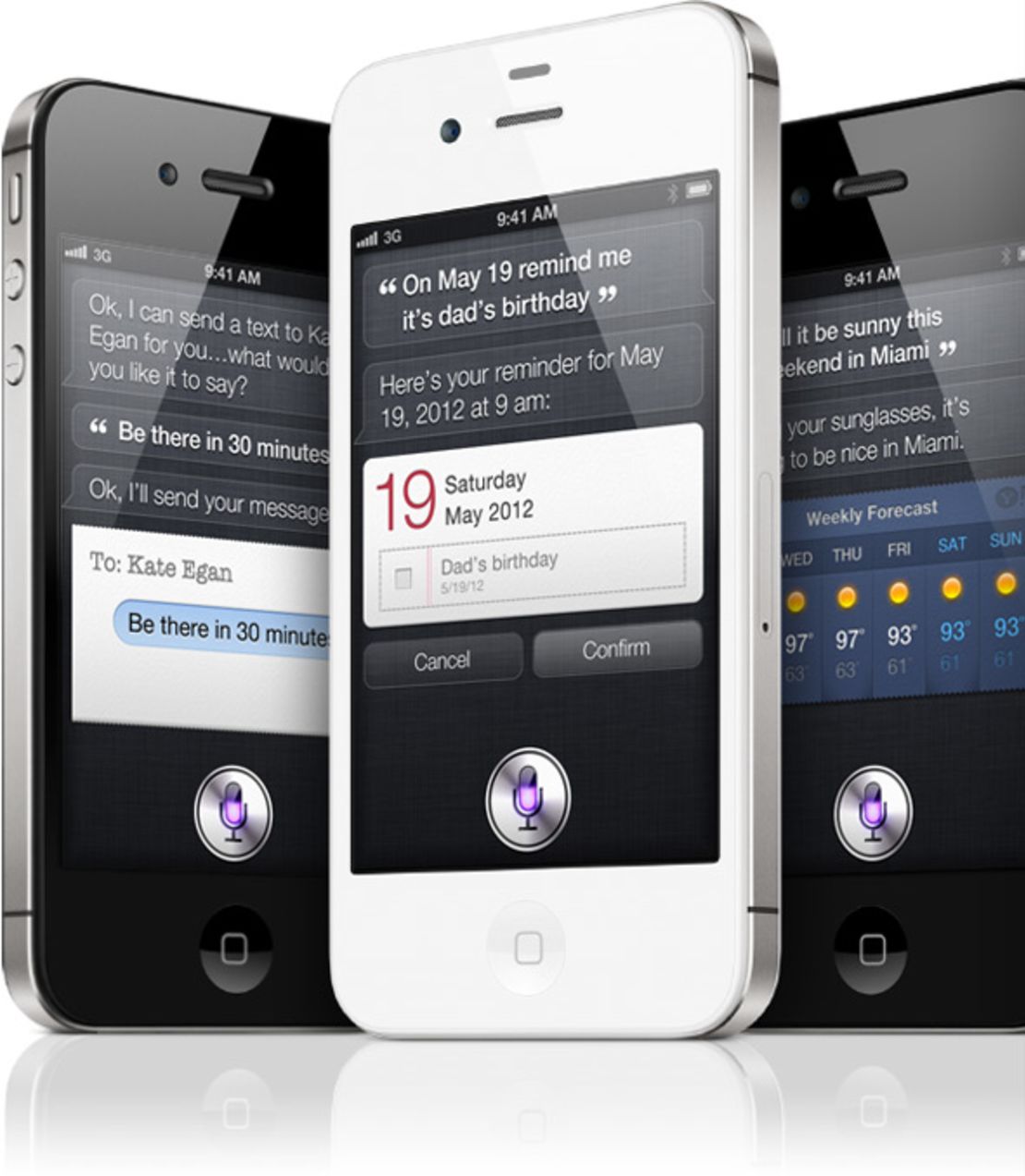
(Image source: Apple)
Today, Siri in the Apple ecosystem is still just like a voice remote control, while competitors' Xiaoai Tongxue, Xiaoyi, etc., have long been deeply integrated with AI and now have increasingly strong Agent capabilities. Recently, Xiaomi and Huawei are both testing the Claw tool on the mobile phone, and their intelligent assistants will become even more powerful.
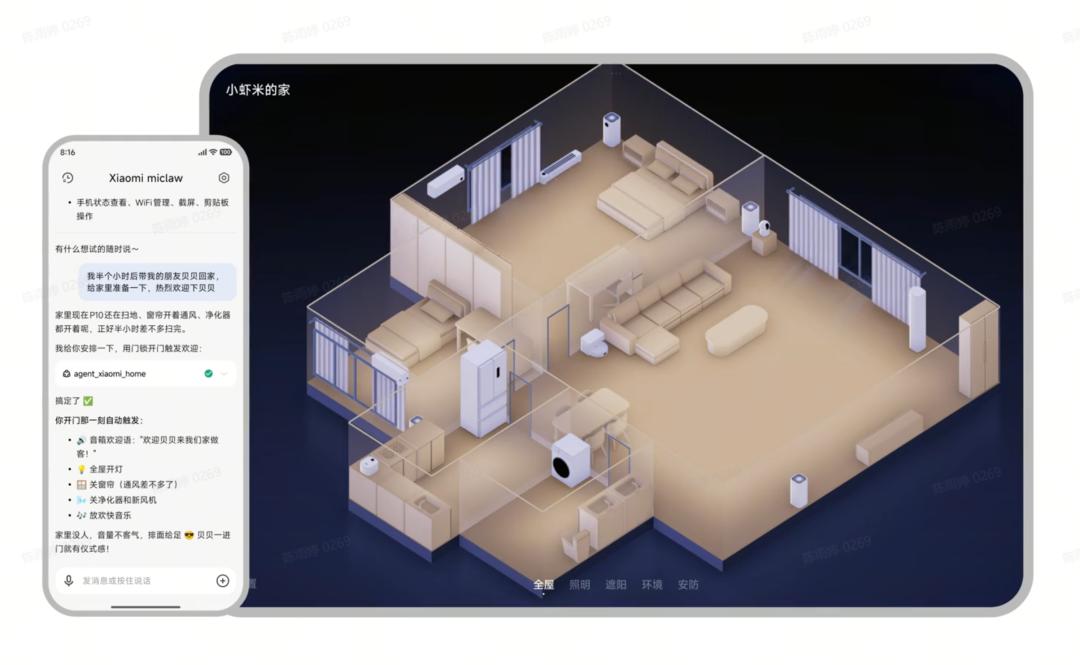
(Image source: Xiaomi)
According to my observation, domestic manufacturers other than Apple, whether they are mobile phone brands, Internet brands, or home appliance brands, are all using voice assistants as an important tool to access the smart home ecosystem. Moreover, they are all using the latest large - model technology to equip voice assistants with smarter brains, evolving from simple voice remote controls to AI assistants that can understand human intentions.
In addition, in the smart home or whole - house smart ecosystem, these AI voice assistants also have strong Agent capabilities. They can not only understand vague natural language but also break down and execute tasks, thus subverting the traditional logic of smart remote control and bringing the capabilities of AI technology to the actual scenarios of home users, enabling them to truly experience the convenience brought by AI.
The continuous delays of Apple's new Siri, which have even affected the release of the new HomePod and Apple TV, are essentially due to the lack of Apple's self - developed AI capabilities. Although Apple announced Apple Intelligence in 2024, the progress has been disappointing.
At the same time, when it comes to the implementation of AI, Apple has been vacillating between self - development and relying on external support from OpenAI and Google. Just like the new Siri, when Apple found that its self - developed AI was far from satisfactory and decided to use all Gemini technology, its competitors' AI voice assistants had already been running on various hardware devices for several years.
Currently, it is basically certain that the new HomePod and Apple TV will finally be released, and June's WWDC will be an important time node. Everyone is looking forward to what real AI achievements Apple will showcase. If Apple continues to make empty promises as before, not only will Siri lag far behind the industry, but Apple's home ecosystem will also completely fail under the dimensionality - reduction attacks of its competitors.
This article is from the