Wuhan, the prices have skyrocketed!
In just one year, the market values of FiberHome Technologies and Accelink Technologies soared from around 2 billion US dollars to 7 - 8 billion US dollars. The market value of Huagong Technology skyrocketed from over 2 billion US dollars to over 10 billion US dollars, and that of Yangtze Optical Fibre and Cable jumped from over 2 billion US dollars to over 20 billion US dollars. There is also Yangtze Memory Technologies Co., Ltd., which is expected to have the largest IPO in China's technology field in recent years...
As the global AI wave surges in, computing power has become the arena for technological competition among major powers. Wuhan, a city that has been persevering in the research of optical fibers thinner than a human hair and chips as small as a fingernail, has finally welcomed its own era with the soaring values of numerous AI - hardcore companies.
The Key Players
In a sense, the competition in the AI era is a race to break through the limits in the fields of optics, chips, and computing.
Computing power is the engine, storage chips are the granary, and optical transmission is the blood vessel. The three are closely interlinked. If there is a bottleneck in any link, the AI edifice will collapse instantly.
Wuhan has laid out the most hardcore strategies in these three crucial areas:
In the field of optical transmission, it controls the main artery of data.
Wuhan Optics Valley, as the world's largest production base for optical fiber and cable, is home to two of the world's top ten optical fiber preform/fiber manufacturers: Yangtze Optical Fibre and Cable and FiberHome Technologies.
Industry estimates show that Yangtze Optical Fibre and Cable has an annual fiber - drawing capacity of 140 million core - kilometers, ranking first in the world.
Together with other industrial chain enterprises such as FiberHome Technologies, more than a quarter of the world's optical fibers come from Wuhan, making it the heart of the global optical fiber and cable industry.
In the field of storage chips, it guards the granary of data.
Facing international blockade, Yangtze Memory Technologies Co., Ltd. stepped forward at the National Memory Base and tore through the technical curtain of overseas high - end storage chips with its original Xtacking architecture.
In the field of computing power, it props up the backbone of domestic - made technology.
Yangtze Computing, as the national team in computing power infrastructure, has created the engine for domestic - made servers.
The computing power twin stars composed of the Wuhan Artificial Intelligence Computing Center and the National Supercomputing Center in Wuhan have built a national - level public computing power platform, providing continuous power for large AI models.
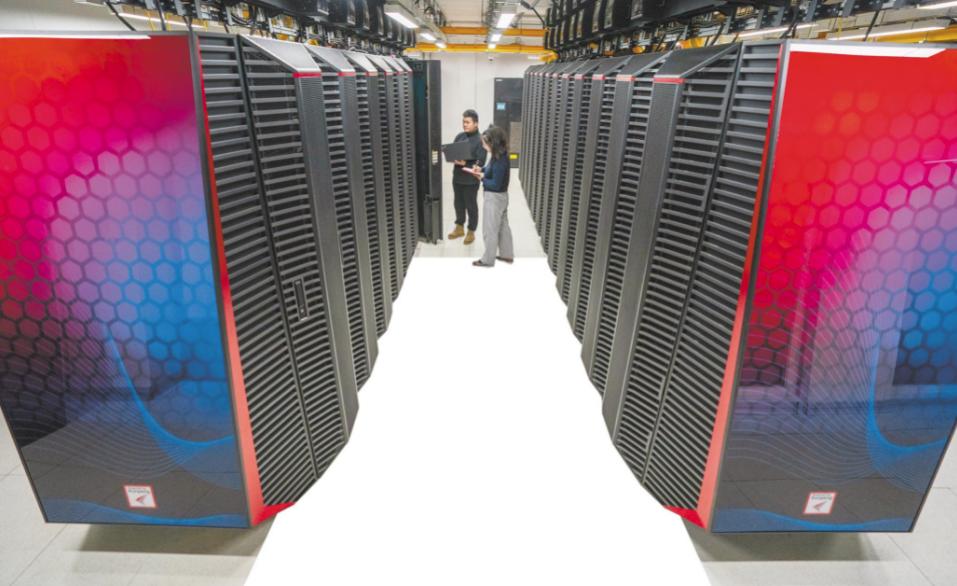
Wuhan Supercomputing Center, Source: People's Daily
The closed - loop of optics, chips, and computing not only connects the industrial framework but also gives rise to a group of hidden champions leading in global niche fields.
In addition to Yangtze Optical Fibre and Cable, there are also Huagong Technology, the global leader in laser equipment, Feilihua, the leading enterprise in high - end quartz materials, and Accelink Technologies, one of the world's top - tier optical communication device manufacturers, etc.
The clustering of these hidden champions has built an irreplaceable industrial depth in Wuhan Optics Valley.
By 2025, the scale of the optoelectronic information industry in Optics Valley will exceed 65 billion US dollars. More than 16,000 optoelectronic information enterprises have gathered in this 518 - square - kilometer area.
The capital market has voted with real money for the hardcore strength, setting off a magnificent wave of value re - evaluation.
In just over a year, the stock prices of Huagong Technology, Accelink Technologies, and FiberHome Technologies have risen nearly three - fold, and Yangtze Optical Fibre and Cable has even achieved an astonishing eight - fold increase!
Now, Yangtze Optical Fibre and Cable sits firmly in the center with a market value of 17.56 billion US dollars. Huagong Technology has strongly exceeded 11.4 billion US dollars, and Accelink Technologies and FiberHome Technologies have respectively stabilized at 6.37 billion US dollars and 5.7 billion US dollars. The Optics Valley army has proudly entered the trillion - dollar market - value club.
The highly anticipated Yangtze Memory Technologies Co., Ltd. is estimated to be valued between 16 billion and 30 billion US dollars, and it is expected to leverage the largest IPO in China's technology field in recent years, triggering the next capital miracle.
This miracle is not a gift from the trend but the result of building a "optics - chips - computing" closed - loop over three decades.
A city and countless people, driven by faith, have carved out a path for China's hard - tech breakthrough through countless inner struggles, games, and perseverance.
A Stunning Leap
The crucial leap of Optics Valley took place around 2000.
At the turn of the century, Wuhan seemed heavy and sluggish in the national urban pattern.
This city once had steel, machinery, and textile as its three major pillars. Enterprises like Wuhan Iron and Steel and Wuhan Heavy Machinery Group supported the industrial backbone of the People's Republic, but they also burdened Wuhan with a heavy institutional load.
In the 1990s, Wuhan's GDP once fell out of the top ten in the country and gradually fell behind the rapid development of coastal special economic zones.
However, a beam of light had been shining in this steel city for more than two decades.
In 1976, Zhao Zisen pulled out China's first quartz optical fiber in the laboratory of Wuhan Research Institute of Posts and Telecommunications, making Wuhan the starting point of China's optical communication.
By the late 1990s, Wuhan had initially formed the prototype of an industrial chain from optical fiber and cable, optical devices to optical communication systems.
It was the strategic decision around 2000 that truly transformed "a beam of light" into "a city".
In 1998, Huang Dexiu, a professor at Huazhong University of Science and Technology, was inspired by the development of Silicon Valley in the United States and proposed the idea of building China's Optics Valley to the Wuhan municipal government for the first time.
He had a deep conversation with Zhou Ji, the then president of Huazhong University of Science and Technology. Zhou Ji only said one sentence: "We should vigorously develop optoelectronics."
With the support of the president, Huang Dexiu became more confident. At an expert New Year's reception held by the Wuhan Municipal Party Committee, he said firmly: "In the next 50 years, Wuhan's development will rely on optoelectronics!"
Huang Dexiu's persistence finally convinced the Wuhan municipal government.
In May 2000, 26 academicians and scientists, including Zhao Zisen, jointly wrote to the Party Central Committee and the State Council, requesting approval to build a national - level optoelectronic information industry base in Wuhan - China's Optics Valley.
The academicians dared to jointly "bet" on Wuhan because it has a unique foundation that others can hardly replicate.
However, this proposal caused a lot of controversy at that time. Coincidentally, the Internet bubble burst, and telecommunications investment declined significantly. The optical fiber and cable industry was hit hard.
Some people questioned: As an inland old industrial base, what makes Wuhan lead in the new - economy track? Instead of betting on high - risk optoelectronics, it's better to stick to traditional industries such as steel and automobiles.
Some even joked that the newly - started Optics Valley "would start crying before it even took off".
At a critical moment, the Hubei provincial government and the Wuhan municipal government made a decisive decision, proposing to build Wuhan Optics Valley with the full strength of the province and established a construction leading group.
In 2001, the National Development and Reform Commission and the Ministry of Science and Technology officially approved the construction of a national optoelectronic information industry base in Wuhan East Lake High - tech Development Zone.
Wuhan · China's Optics Valley officially set sail.
In the early stage of construction, the East Lake High - tech Development Zone established an industrial strategy of "doing some things and not doing others" and regarded optoelectronic information as the "Number One Project".
At that time, the East Lake High - tech Development Zone was still a wilderness: the infrastructure was weak, there were not many bus routes, and it was pitch - black at night. Some enterprise employees joked that "they had to use flashlights to find their way home after work".
However, it was in this wilderness that two enterprises that would determine the fate of Optics Valley were born - Yangtze Optical Fibre and Cable and FiberHome Technologies.
Yangtze Optical Fibre and Cable settled in Optics Valley as early as 1988 and is a real pioneer. FiberHome Technologies was transformed from Wuhan Research Institute of Posts and Telecommunications and inherited decades of optical communication technology accumulation from the institute.
These two enterprises propped up the framework of the optical communication industrial chain in the coldest days of Optics Valley.
Optoelectronics is a typical heavy - asset and long - cycle industry. Optical fiber preforms, fiber - drawing towers, and optical communication system equipment often require huge capital investment.
When Yangtze Optical Fibre and Cable mastered the core technology of optical fiber preforms, it once faced a financial shortage.
At a critical moment, the Hubei Branch of the China Development Bank provided it with a $47 - million loan without collateral, relieving the urgent need.
In the following more than a decade, the Hubei Branch of the China Development Bank provided a total of more than 500 million US dollars in financial support to Yangtze Optical Fibre and Cable.
Zheng Xin, the vice - president of Yangtze Optical Fibre and Cable, sighed: "Without financial support, relying only on our own funds, Yangtze Optical Fibre and Cable could not have grown and become stronger."
In addition to bank funds, the government has also built a capital pool for Optics Valley enterprises through industrial special funds, venture capital, and startup seed funds, and provided real - money subsidies for R & D investment and talent introduction, enabling enterprises to be brave in researching core technologies for decades.
What really tested the patience of the government and enterprises was the long winter after the Internet bubble burst.
Since 2001, global investment in telecommunications infrastructure has plummeted, and the optical fiber and cable industry has entered a trough. Many cities have chosen to withdraw from the optoelectronics track.
But Wuhan chose to go against the trend:
In 2002, it held the first Optoelectronic Exposition to build a market platform for enterprises; then, it prepared to establish the Optoelectronic National Laboratory to build a public R & D and testing platform.
At the same time, it continued to subsidize enterprises such as Yangtze Optical Fibre and Cable and FiberHome Technologies, encouraging them to lie low for a decade and increase R & D investment during the trough period.
Huang Dexiu's words became the spiritual pillar for many people: "In the next 50 years, Wuhan's development will rely on optoelectronics!" Even in the most difficult times of the industry, he firmly believed that the optoelectronic industry would rise.
Years of perseverance have finally brought about a unique Optics Valley.
Today, a group of enterprises, from Yangtze Optical Fibre and Cable and FiberHome Technologies to Huagong Technology, Accelink Technologies, and Raycus Laser, have all achieved a leap from "following" to "leading" in the soil of Optics Valley.
Optics Valley has grown from a wilderness into a 518 - square - kilometer national independent innovation demonstration zone.

Source: People's Daily
From "A Beam of Light" to "A Strategic Game"
The rise of Optics Valley proves the correctness of Wuhan's choice of long - termism. However, as the information industry develops, a sharp pain point has become increasingly prominent:
Although Wuhan and even China have the "blood vessels" of optical communication, they lack the "heart" of independent chips.
Most of the core chips in the booming upstream and downstream industries in Optics Valley rely on imports, which is like building a high - rise building on the beach. This was a common anxiety among entrepreneurs in Optics Valley at that time.
The government keenly realized that if this "north slope of Mount Everest" could not be conquered, the industrial foundation of Optics Valley would be unstable.
Making up for the shortcoming, from optoelectronics to chips, is not only an industrial extension but also a "sky - mending" action related to national strategic security.
Once the determination was made, the target was set on the storage chip, one of the most core fields.
Coincidentally, the country launched the layout of the memory base project, and major cities across the country, such as Beijing, Shanghai, and Shenzhen, were in fierce competition.
To win this project, Wuhan showed sufficient sincerity and determination.
During the critical period of project negotiation, the high - standard factory building planning map was already on the negotiation table. The Wuhan East Lake High - tech Development Zone even started the infrastructure construction in advance to seize the opportunity for the project to land.
Finally, Wuhan won the trust with the strategy of "taking the lead and laying the foundation".
In March 2016, the National Memory Base project was officially launched in the Wuhan East Lake High - tech Development Zone, with Yangtze Memory Technologies Co., Ltd. as the core implementation entity.
However, the project's landing was just the beginning of the game. The core technology was strictly blocked, and equipment imports faced numerous obstacles. At the most difficult time, the project was on the verge of life and death.
At a critical moment, Yang Shining, the then CEO of Yangtze Memory Technologies Co., Ltd., stood up.
This technology expert who had worked in overseas semiconductor giants for many years always conveyed a firm belief to the team in the face of great pressure:
We must hold the key to storage technology in our own hands!
To overcome the core process of 3D NAND flash memory, Yang Shining led the team to launch a saturation attack. Having no retreat became the strongest resonance among the team members. Engineers set up their homes in the laboratory and worked in shifts day and night in the clean room.
With this indomitable spirit, they managed to overcome difficulties in a desperate situation and created the original Xtacking architecture, achieving a breakthrough.
Subsequently, Yangtze Memory Technologies Co., Ltd. iterated at an amazing speed, from 32 - layer to 64 - layer, then to 128 - layer and 232 - layer, breaking through the monopoly of international giants and pushing China's storage chip technology to the world's first - tier.
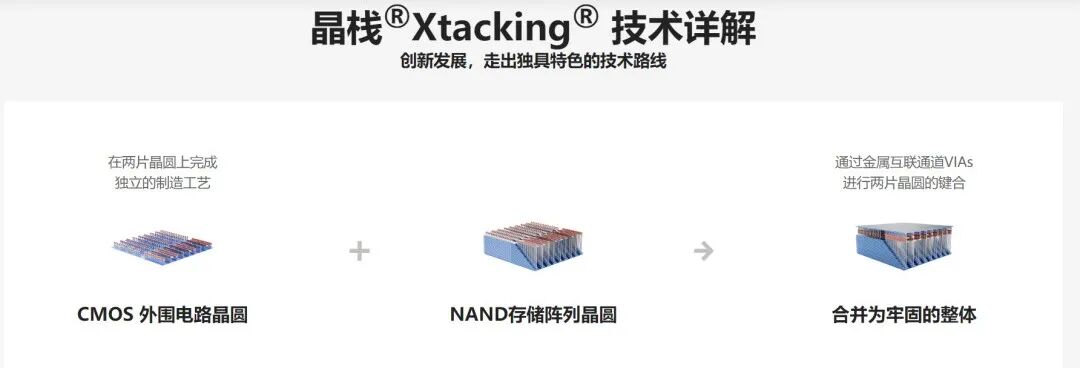
Source: Yangtze Memory Technologies Co., Ltd.
Yangtze Memory Technologies Co., Ltd. is not fighting alone.
In the fields of optical communication chips and display driver chips, enterprises such as Accelink Technologies are also telling stories of overcoming difficulties.
The public technology platform built by the government not only enables large enterprises to take the lead but also allows small and medium - sized enterprises to conduct R & D verification at a lower cost, ultimately giving rise to a prosperous industrial ecosystem.