Stop just focusing on AI and robots. This hidden thread determines the future.
In recent years, AI and humanoid robots have almost dominated all the headlines. The demand for AI computing power has skyrocketed like a rocket, and robots have started to "dance" in precision workshops. However, don't just focus on the excitement on the surface. A more crucial hidden thread is surging: the transformation of the electronics manufacturing industry.
Do you think electronics manufacturing is still about "tightening screws" beside the assembly line? In fact, electronics manufacturing is no longer simply "assembling" but has become the "heart" of the digital world. Today's production lines need to support the rapid growth of AI computing power, boost the rise of the robot industry, and achieve nanometer - level precision in flexible manufacturing and advanced packaging.
From March 25th to 27th, the 2026 productronica Shanghai held at the Shanghai New International Expo Centre will be an important window to observe the drastic changes in this industrial chain.
With the popularity of humanoid robots, who is "making joints" behind the scenes?
The rapid rise of the humanoid robot industry is essentially an industrial revolution from "being able to move" to "being useful". The bottleneck of this revolution has never been limited to algorithms and software but also lies in the precision execution ability at the hardware level. As the "hands" and "joints" of humanoid robots, end - effectors directly determine whether robots can complete complex tasks such as flexible grasping, precision assembly, and force - control adaptation. They are the core prerequisite for robots to move from the laboratory to large - scale industrial applications. For this reason, a number of participating enterprises have accurately targeted the industry pain points. The technological innovation and solution iteration around end - effectors have become one of the highlights of this exhibition.
In the field of industrial - grade precision execution, enterprises are solving the industry problem of "laboratory products being unable to adapt to harsh industrial scenarios" in order to achieve breakthroughs in core technologies and implementation in high - end scenarios. Dahan Robotics, one of the participating enterprises, has successfully installed its AG series of electric grippers on the humanoid robot product AEON of Hexagon in Sweden and implemented it in the BMW factory in Germany, undertaking key operation tasks in battery assembly and parts manufacturing. Technologically, Dahan has significantly improved the grasping lifespan, dynamic response ability, and structural rigidity of its dexterous hand products through systematic upgrades of the driving scheme and transmission structure. At the same time, it has completed a complete product layout of dexterous hands from two - finger to five - finger, which can easily meet the complex operation requirements of industrial scenarios.
Junduo Robotics, which also focuses on implementation in industrial scenarios, will bring a full - series of solutions for the semiconductor and electronics assembly industries at this exhibition. It will prominently display products such as the high - precision ERG - HP series, the linear - rotation LRA series, and the high - precision electric parallel gripper EPG - HP, achieving comprehensive upgrades in multiple dimensions such as rotation precision, force - control precision, beat frequency, and communication. Aiming at the implementation pain points of humanoid robots in industrial scenarios, it has completed in - depth optimization from aspects such as structural design and material selection to ensure the high reliability of products at the industrial level. At the same time, it has deeply analyzed the operating requirements of scenarios and created standardized products with extremely high cost - performance.
When industrial scenarios become the core focus of the industry, this exhibition will also witness the technological exploration of humanoid robots moving towards civilian applications. Some enterprises are targeting the ultimate proposition of humanoid robots "entering human society" and have opened up a new technological path in the field of flexible execution. SoftTouch Robotics will bring a new end - effector ecological solution that combines "high protection, high precision, and fast verification" at this exhibition, and will also release four new products: The GPC series of flexible armor protective suits address the protection problem of flexible fixtures in harsh industrial environments, effectively isolating debris, oil, and dust and significantly extending the product lifespan; The N - N series of flexible tweezers fingertips are designed for miniature workpieces and fragile products and can be adapted to precise micro - operations in narrow spaces; The N - Y series of flexible wing fingertips have strong wrapping and adaptation capabilities and can achieve "injury - free grasping" of irregularly shaped parts; The handheld flexible test pen subverts the traditional verification process, enabling on - site "plug - and - play" grasping verification and assisting in collecting high - quality tele - operation and grasping teaching data to feed back to the large embodied intelligence model training. In SoftTouch Robotics' technological layout, the "combination of rigidity and flexibility" of flexible dexterous hands is the inevitable development trend of humanoid robot end - effectors. Only end - effectors with extremely high intrinsic safety and compliance can enable humanoid robots to truly break through the boundaries of industrial scenarios and enter human society. In the future, SoftTouch Robotics will also layout bionic flexible dexterous hands based on artificial muscle technology to create an ultimate end - solution with extreme lightweight and high integration.
In the core "bones and muscles" part of humanoid robots, the performance breakthrough of joint modules has become the core direction for enterprises to focus on. Taihu Robotics will focus on displaying high - performance integrated lightweight joint modules, collaborative robotic arms, and humanoid biped robot solutions at this exhibition. Its self - developed joint modules have achieved a three - fold leap in precision, compatibility, and load - bearing capacity. Among them, the mass - produced PRO - S series, with core components such as fully self - developed brushless torque motors and high - precision encoders, achieves 100% self - control at the hardware level and meets the automotive - grade anti - static and anti - vibration standards; The whole - machine solution has been verified by hundreds of customers in actual implementation, with high degrees of freedom and strong adaptability, and can be customized according to customer needs. Aiming at the core pain points of humanoid robots in multi - scenario implementation, Taihu Robotics has completed in - depth optimization from four aspects: hardware reliability, intelligent ability, data standardization, and cost control.
AI + Automation: The "Cost - Reduction and Efficiency - Enhancement" Code for Electronics Factories
If precision execution hardware is the "body" of humanoid robots, then the in - depth integration of AI and industrial automation is the "intelligent brain" of the entire electronics manufacturing industry. Currently, the explosion of the AI industry is forming a two - way cycle: On the one hand, the rapid growth of AI computing power poses unprecedented challenges to the manufacturing process and detection precision of AI hardware; On the other hand, the in - depth application of AI technology has completely reconstructed the underlying paradigm of industrial automation, becoming the core means for the electronics manufacturing industry to reduce costs, increase efficiency, and achieve flexible production, and promoting the industry's comprehensive upgrade from "automation" to "intelligence".
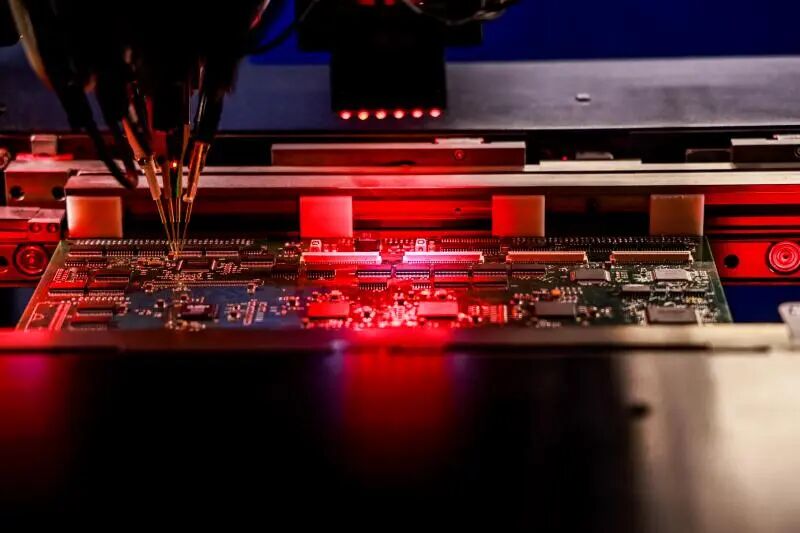
The first battlefield of this two - way interaction is the breakthrough of the detection limit in AI hardware manufacturing. The explosion of generative AI has led to a surge in demand for AI servers, high - speed optical modules, and high - end GPUs/CPUs. Omron's VT - X750 series of AXI equipment specially designed for generative AI hardware will make a prominent appearance at the exhibition. It can accurately adapt to the detection of core devices such as large - size, high - pin - density GPUs/CPUs and optical modules, solve industry problems such as the difficulty in identifying small defects and the missed detection of virtual soldering in traditional detection methods, and meet the full - series detection needs of AI servers with one device, while being compatible with multiple scenarios such as 5G and automotive electronics.
The domestic enterprise MR Tech will also display a full - chain of intelligent detection equipment including SPI, AOI, and AXI at this exhibition, covering the fields of SMT, wave soldering/final inspection, coating/dispensing, semiconductors, and MiniLed. Through the in - depth integration of AI, 3D, and X - ray technologies, it has significantly improved the defect detection rate and reduced the false alarm rate. Its AXI solution has been implemented on a large scale in leading AI server manufacturers. Aiming at the extreme detection pain points such as large motherboard sizes, easy warping, metal interference, and difficult adaptation to irregular solder pads in AI servers, the online 3D AXI developed by MR Tech solves the false alarm caused by warping through double positioning, overcomes metal interference with AI image optimization technology, and adapts to irregular solder pads with a dedicated AI training algorithm, accurately meeting the needs of high - end AI manufacturing scenarios.
At this exhibition, we can more clearly see that the reconstruction of industrial automation by AI is not limited to "improving detection precision" but also lies in completely breaking the underlying logic of traditional industry's "rule - driven" and achieving a paradigm upgrade from "single tool" to "full - process data - driven". Omron will bring an AI visual sensory detection solution. Through the "AI accurate matching" technology to learn good - product image data, it can replicate the detection experience and ability accumulated by skilled workers in a short time, solving the difficult problem of sensory detection that is difficult to define in traditional FA image processing systems. The relevant solution has been implemented in benchmark scenarios such as the appearance inspection of flat - wire motor assembly welding in the automotive industry.
Seica, which has been deeply involved in the testing field for 40 years, focuses on the R & D and manufacturing of testing equipment such as flying probe testing, ICT & FCT. All its equipment uses the same testing hardware platform and a unified software management solution - the VIP platform (Viva Integrated Platform) and VIVA software, which are deeply integrated with AI algorithms. It can achieve intelligent integrated integration at all stages of the customer's manufacturing process, upgrading the testing system from a single tool to a core asset that is fully interconnected and data - driven. The AI algorithm plays a core role in the platform. It not only significantly improves the fault detection ability in circuit board and module testing, can identify complex faults or intermittent problems missed by traditional rule - driven methods, but also can achieve more accurate diagnosis and faster root - cause analysis through continuous analysis of massive testing data. At the same time, it provides intelligent suggestions for testing strategy optimization, significantly improving the diagnosis accuracy, shortening the equipment downtime, and effectively reducing the dependence of the production line on manual operation.
More notably, the explosive development of the AI industry has also opened up a new incremental track for the electronics manufacturing industry. With the continuous expansion of the AI large - model and cloud - computing industries, the single - piece value of high - value AI servers and cloud - computing core PCBs often reaches thousands of dollars. The demand for their manufacturing, maintenance, repair, and precision processing has also increased, putting forward higher requirements for the process capabilities and technical precision of electronics manufacturing enterprises, which has become a new growth pole for the industry.
Semiconductor Advanced Packaging and Micro - Assembly Technologies are Making Breakthroughs
From the precision motion control of humanoid robots to the continuous rapid growth of AI computing power, the performance ceiling of all terminal applications ultimately requires the support of semiconductor chip packaging and micro - assembly technologies. As the underlying support of the electronics manufacturing industrial chain, semiconductor advanced packaging and micro - assembly technologies are another highlight of this exhibition. This exhibition brings together relevant material and equipment enterprises, centrally displaying cutting - edge technological achievements in aspects such as high - computing - power chip and automotive - grade chip high - density stacked packaging, and building a key technology exchange and industrial cooperation platform for the industry.
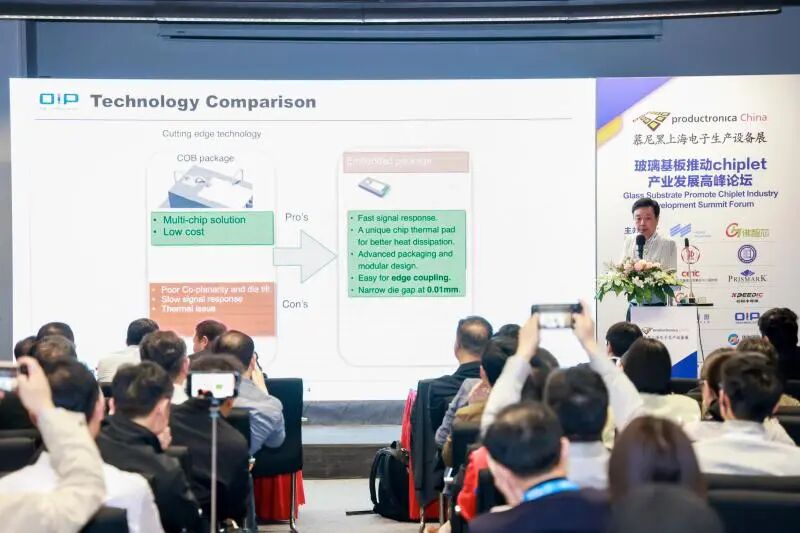
In terms of materials, Dow will bring dozens of innovative silicone solutions based on its "Cooling Science" platform, covering the full - process needs of advanced semiconductor packaging. The key ones include TIM1 high - efficiency thermal conductive materials, chip packaging adhesives, innovative silicone hot - melt technology, a complete micro - electro - mechanical system (MEMS) packaging solution, and silicone adhesives for QFN tapes, which can fully meet the needs of high - density stacked packaging in terms of heat conduction, bonding, stress release, and environmental compliance.
In terms of equipment, Anda Intelligent will focus on displaying a semiconductor advanced packaging and micro - assembly fluid application solution centered around the iJet series of high - speed dispensing machines at this exhibition. The equipment covers key process links such as chip under - filling, wafer fixing, and precision encapsulation. Its iJet - S10 high - precision and high - speed semiconductor dispensing machine solves industry problems such as uneven glue volume, tip - pulling damage to parts, difficulty in filling in ultra - narrow glue overflow scenarios, and cavity and glue overflow pollution in traditional dispensing processes, and can fully meet the needs of advanced packaging for micro - volume and high - consistency dispensing. Relying on technologies such as non - contact flying dots and variable - frequency dispensing, the equipment breaks through the limitations of traditional contact - type dispensing, realizes the dynamic matching of dispensing frequency, glue volume, and speed, and is equipped with a high - precision weighing system to monitor and control the glue volume in a closed - loop manner in real - time, ensuring dispensing consistency.
Aiming at the core pain point in the industry that high - precision placement is difficult to achieve simultaneously with high compatibility and high efficiency, AXXON will display a die - bonding equipment solution specially designed for the semiconductor packaging industry at this exhibition. Based on its judgment of industrial development, AXXON has identified two major trends in the industry's future: In terms of technological breakthroughs, the core areas of attack in advanced packaging and micro - assembly will focus on high - precision die - bonding and multi - layer chip die - bonding; In terms of market growth, the TCB process and Hybrid bonding process will become the core tracks for future demand explosion.
Niton Technology, one of the largest SMT equipment and semiconductor equipment manufacturing enterprises in China, will bring a self - developed ultra - thin multi - chip high - precision IC die - bonder to the exhibition. It will also bring a reflow oven equipped with a self - developed embedded AI algorithm intelligent board, which has self - adaptive adjustment of the temperature curve, high repeatability of the temperature curve, and better meets the customer's process requirements, solving problems such as warping deformation and stress concentration caused by temperature issues. At the same time, Niton Technology will also bring a vacuum reflow oven and a full - nitrogen reflow oven, reducing the product void rate to less than 2%.
Ultimately, the industrial competition between AI and robots is not only a competition in applications and algorithms on the surface but also an ultimate contest in underlying manufacturing capabilities. Every technological breakthrough in terminal products we see is inseparable from the in - depth exploration and continuous iteration of the electronics manufacturing industrial chain.
The 2026 productronica Shanghai is not only a platform for the centralized display of global electronics manufacturing technologies but also a microcosm of the entire industry's development trend. When we are amazed by the breakthroughs in AI and robots again, we might as well turn our attention to this hidden manufacturing thread that determines the future. After all, the skyscrapers of the technology industry always need a solid manufacturing foundation to support them. And every technological breakthrough in China's electronics manufacturing industry gives us more say and initiative in the global technology competition.
This article is from the WeChat official account “Semiconductor Industry Insights” (ID: ICViews), author: Pengcheng, published by 36Kr with authorization.