Can JD use AI to fill the "pitfalls" in home decoration?
Renovation is probably the consumer experience closest to "opening a blind box" in an ordinary person's life.
Consumers spend hundreds of thousands of yuan, gambling on the designer's aesthetic sense, the workers' craftsmanship, the authenticity of materials, and whether different brands of home appliances can "communicate" with each other. Often, the "dream home" in the renderings turns into a collection of compromises and regrets after completion - smart home appliances become information islands, and problems such as mismatched sizes of built - in furniture remain persistent and difficult to solve.
The Industry Research Department of the China Building Materials Circulation Association pointed out that in 2025, despite being affected by multiple factors, the national building materials and home furnishing industry as a whole still showed resilience. Among them, the demand for redecoration of existing housing has become an important guarantee for the resilient development of the building materials and home furnishing market.
However, under the traditional model, pain points such as a large and chaotic selection of decoration - related products, unclear prices, sub - expected smart experiences, and difficult delivery still restrict the industry's development. Facing the dual challenges of consumption upgrading and industry involution, the home decoration industry is at a crossroads of breakthrough and rebirth.
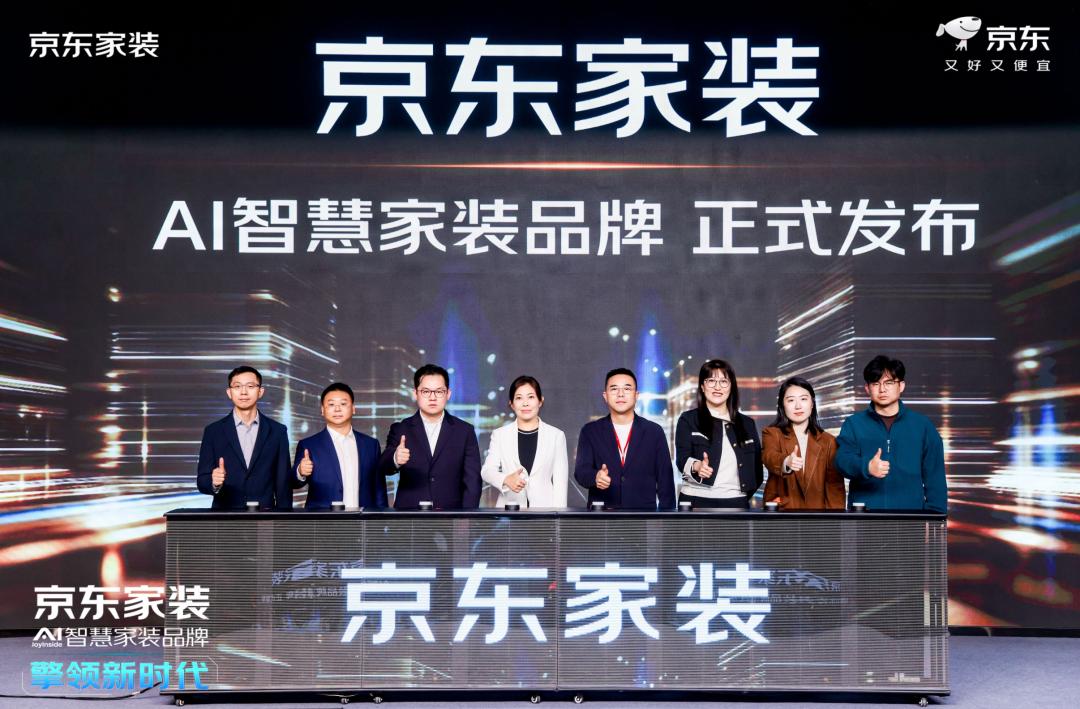
On March 13th, JD.com officially launched its "JD Home Decoration" AI - powered smart home decoration brand. This company, which is good at taking on "heavy - duty" tasks, has decided to bet on its two most core assets this time - the super supply chain and AI - in an attempt to answer an ultimate question: Can renovation be transformed from a game of luck into a scientific process where consumers can "choose blindly"?
Relying on the supply chain to inject "AI magic" into home decoration
In the past, the reason why whole - house intelligence was ridiculed as "whole - house stupidity" was rooted in brand barriers.
Each brand wants to build its own ecosystem, and in the end, the consumer's home becomes an ecological battlefield - lights use one protocol, air conditioners use another, and curtain motors use a third. They don't recognize each other, and the user becomes the only "translator".
JD.com's approach to solving this problem is different from other players from the very beginning. It doesn't represent a single brand but uses the power of its super supply chain to integrate existing brands and achieve intelligent interconnection across brands and categories. "Cross - brand and cross - system integration has been the direction we've been working on for a long time," said the person in charge of JD Retail's whole - house smart home business.
According to 36Kr, the JD Home Decoration team started promoting the "full - scale access of electrical products to the Joy AI large - model" at the end of 2025. In the home appliance field, the strength of JD's supply chain is well - recognized. Its long - term cooperative relationships with major brands make it more likely to solve the industry problem of ecological integration.
Take an ordinary desk lamp as an example. What JD.com does is to go deep into the source of the supply chain, add a chip and a microphone to the original product so that it can access the Joy AI large - model, enabling it to connect to the Internet and have conversations. When the user says "Turn off the light for me," the light turns off; when the user says "The air conditioner is a bit cold. Help me turn up the temperature," the desk lamp becomes an entry point for interacting with the air conditioner.
The beauty of this approach is that it doesn't try to subvert the existing industry pattern but uses its own advantages to make up for the industry's shortcomings. For brand owners, accessing JD's large - model is equivalent to getting AI capabilities for free without having to invest in R & D costs themselves. For users, they no longer have to be forced to buy all products from the same brand to achieve intelligent interconnection. They can freely choose their favorite brands while enjoying the convenience of intelligent interconnection.
However, JD.com's ambition doesn't stop there.
If the full - scale access of electrical products to the Joy AI large - model is like "installing a brain" in traditional home appliances to solve the problem of intelligent interconnection, then JD.com's second move is to enter the market itself. Based on its understanding of users' pain points, it creates more innovative smart single products to further solve the problem of "smart implementation".
For example, its newly launched "AI Smart Door" is not simply adding a smart lock to a wooden door. Instead, it integrates modules such as door locks, cat - eyes, and cameras inside the door body. It uses a 3D face recognition solution at the financial payment security level and combines an automatic door - opening design to allow contactless entry after successful recognition. Similarly, the "Smart Window Fresh Air System" embeds the fresh air system into the window without the need for additional holes or ceiling installation. The "Washing and Drying Integrated Bathroom Cabinet" uses a modular design to integrate complex functions such as an underwear washing machine, a mask refrigerator, a water softener, and beauty lighting into one cabinet.
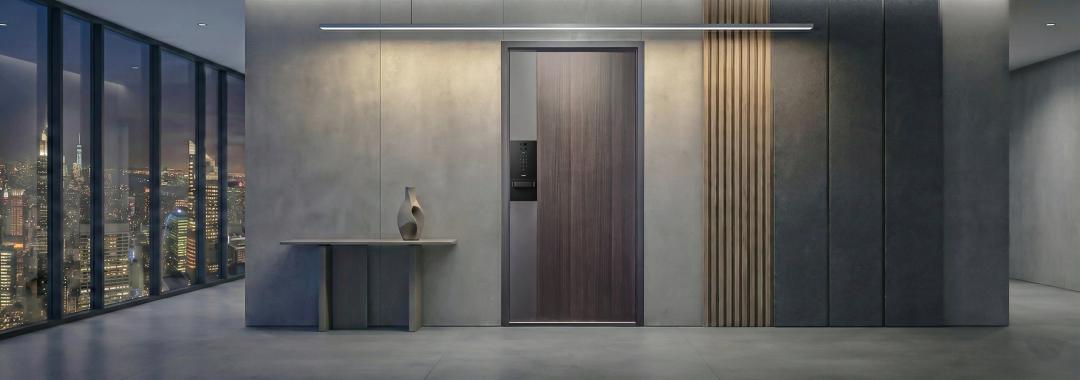
The common feature of these products is integration and embedding. They are no longer "add - ons" installed later but the "native smart organs" of the house.
"Each product is the result of cooperation with many well - known domestic brand owners and manufacturers. It would be almost impossible for the original designers or consumers themselves to complete this," said the person in charge of JD Retail's whole - house smart home business. Behind this is the result of JD.com mobilizing its supply chain resources and conducting in - depth joint R & D with leading manufacturers in niche fields. The entire manufacturing chain, from design, mold - making to production and quality control, has been reshaped.
The electrical products fully connected to the Joy AI large - model and the smart home decoration products independently developed by JD.com together form the two major product lines in JD Home Decoration's new supply chain ecosystem.
On this basis, JD Home Decoration has launched a unified entry point for smart home decoration - the AI Smart Screen. As the control center of the whole - house intelligence, it can not only control all smart devices at home but also realize multiple functions such as smart home control, large - model inquiries, home decoration butler services, and convenient life shopping. Users can interact with the smart screen through various methods such as voice and touch to achieve all - round control of their homes.
Imagine a night like this: When getting ready to go to sleep, you naturally say "Hello, Dongdong. I'm going to sleep." The curtains slowly close, the lights gradually go out, the air conditioner automatically adjusts to a suitable temperature for sleep, and the smart mattress in the bedroom adjusts its support according to your body shape. And these devices may come from five or six different brands.
At the press conference, the person in charge of JD Retail's home decoration business department said, "In the future, the most frequently used word in your family may no longer be 'husband' or 'wife', but definitely 'Hello, Dongdong'." Behind this statement lies JD.com's ambition to unify the entrance of smart home. When users only need to say "Hello, Dongdong" to control all devices at home and book various services, the ultimate form of smart home decoration will truly emerge.
This ability to connect AI capabilities across different brands and integrate various local life service models is the unique advantage that JD.com has accumulated over the years through its supply - chain - centered business operations and is difficult for other players to replicate.
The super supply chain means low prices and more importantly, certainty
The problem of inflated and opaque prices in the home decoration industry has been a long - standing issue.
In the traditional "local procurement" model, brand owners sell their products to local distributors, and then decoration companies purchase from these distributors. At this stage, about 15% of the profit is lost. With subsequent storage, logistics, and secondary handling costs added, the price consumers pay has deviated far from the product's original value.
JD.com's approach is straightforward. It cuts out the middlemen and conducts direct global sourcing and large - scale centralized procurement through a professional purchasing and sales team of more than 500 people. "Our supply chain has an advantage over 99% of decoration companies," said the person in charge of JD Retail's home decoration business department, calculating the cost savings: "Direct sourcing from the source can reduce costs by 15%, and large - scale centralized procurement can further reduce costs. Overall, the cost of decoration materials can be reduced by at least 30%."
However, low prices are just the surface. The real value of JD's super supply chain lies in its reconstruction of the "production relations" in the home decoration industry.
A typical example is the integration of home appliances and home decoration. In the traditional model, when a homeowner wants to buy a built - in refrigerator, they need to repeatedly confirm the size between the cabinet brand and the home appliance brand. If they want to install a sweeping robot with built - in water supply and drainage, the plumber may say "No water and electricity points were reserved in advance," and the custom designer may say "This is not in the blueprint."
JD.com separates the "equipment layer" at the beginning of the construction design. "We divide the delivery process into two layers. One is the traditional basic construction of water, electricity, masonry, carpentry, and painting. The other is a dedicated equipment reservation layer for smart devices," said the person in charge of JD Retail's home decoration business department. For example, the exact size of the built - in refrigerator and the water and electricity points for the sweeping robot are clearly marked on the blueprint. Or, the points are already designed when the wall is being built. "The cost doesn't increase, but the user experience undergoes a qualitative change."
JD.com can achieve this because it has both home appliance and home decoration supply chains. The home appliance department has a "size library" that records the exact size, installation requirements, and water and electricity reservation parameters of each product. When home decoration designers are designing cabinets, they can directly access the data in this size library to ensure a perfect fit after installation.
"When users receive a plan, we have already sorted out the implementation details," said the person in charge of JD Retail's home decoration business department. Users don't need to act as translators themselves or repeatedly confirm details because the standards have been unified at the supply chain level.
Another "key card" brought by the super supply chain is the online - offline integrated experience.
JD Mall, as the core of JD's offline business, is becoming an important entry point for home decoration experiences. According to 36Kr, JD Home Decoration has fully entered JD Mall. Users can experience the physical products offline after seeing them online. After being satisfied with the offline experience, they can scan the QR code to place an order and enjoy the same - quality and same - price service.
This online - offline integrated supply chain model solves the pain point of the home decoration industry where products are "invisible and intangible". Data shows that the conversion rate of users who have experienced products at JD Mall has doubled directly to 30% - that is, one out of every three groups of experience users makes a purchase.
From raw material procurement to the integration of home appliances and home decoration, and then to the online - offline integrated experience, JD's super supply chain is reconstructing the value chain of the home decoration industry. It doesn't simply "lower the prices" but makes the quality, price, and service predictable and controllable by improving the efficiency of the entire supply chain.
JD.com's "heavy - duty" business
This "heavy investment" in the supply chain has been JD.com's consistent business philosophy since its establishment.
From building its own logistics system in 2007 to engaging in self - operated procurement and sales and self - developed smart products in the upstream of the industrial chain today, JD.com has always been a company willing to take on "heavy - duty" businesses. Liu Qiangdong has repeatedly emphasized that JD.com's core competitiveness lies in supply chain efficiency. In an era when the e - commerce industry generally pursued "light assets and high turnover", JD.com chose the most difficult path - building its own warehouses, delivery systems, and engaging in self - operated procurement and sales. This seemingly "cumbersome" model was widely questioned at that time but has now become JD.com's most solid moat.
JD Home Decoration is essentially an extension of this strategic logic in the home decoration field.
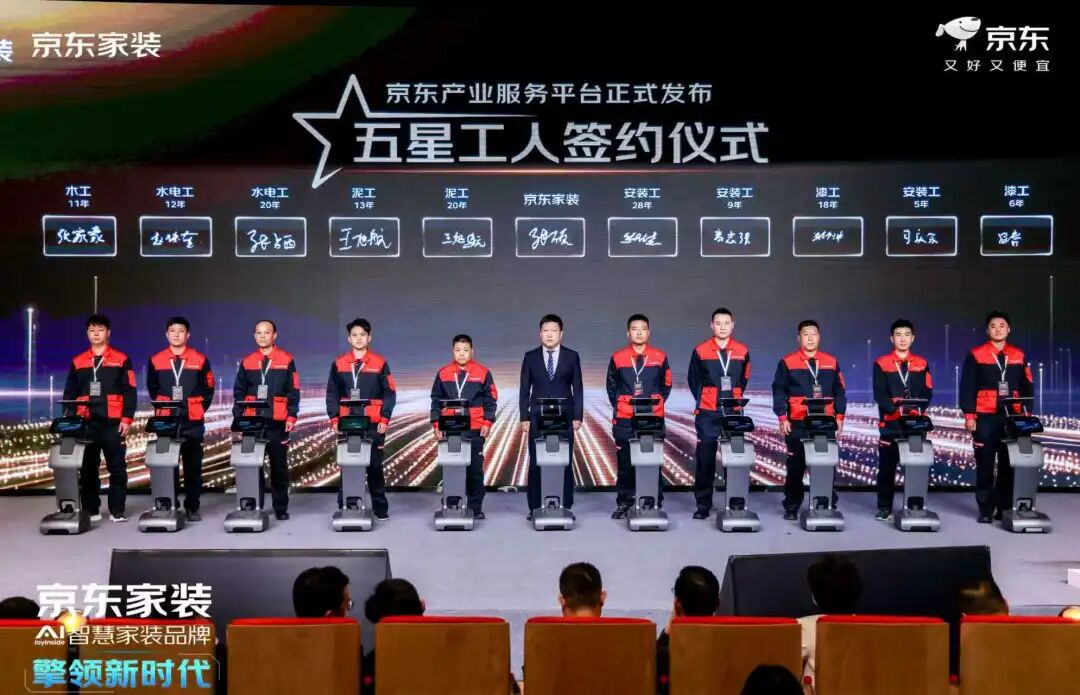
Building an industrialized delivery platform, directly managing more than 5,200 industrial workers, and implementing a "Five - Star Worker" evaluation system to reward workers with good craftsmanship and service is a heavy - duty task. Fully integrating the home decoration business into offline formats such as JD Mall to allow users to experience products offline and place orders at the same price online is also a heavy - duty task. These investments may not yield huge returns in the short term, but together they form a complete experience - based supply chain, transforming renovation from a game of luck into a "tangible certainty".
More importantly, these "heavy" investments are making the entire industry better. When workers are no longer exploited layer by layer, when materials are no longer shoddy, and when smart technology is no longer out of reach, consumers can truly enjoy the dividends of technological progress. This is also the original intention of JD.com in many of its businesses such as e - commerce and food delivery, which is to promote industrial upgrading by optimizing the supply chain and benefit multiple parties including users, merchants, employees, and the platform.
Xu Ran, the CEO of JD Group, said at the JD Home Decoration press conference: "JD.com will use standardization, transparency, and intelligence to solve the pain points of the home decoration industry and promote the transformation of the renovation industry from the 'assembled - computer era' to the 'brand - computer era'." In the "assembled - computer era" of computers, users had to assemble the CPU, motherboard, memory, and hard drive themselves and also worry about compatibility issues and lack of after - sales support. When the industry enters the "brand - computer era", users only need to make the most direct and guaranteed choices between different brand models according to their configuration requirements.
In today's home decoration market, consumers have to deal with designers, foremen, and material suppliers, coordinate water, electricity, carpentry, and painting work, and worry about whether various devices are compatible. What JD.com is doing is to push the home decoration industry into the "brand - computer era".
What supports this "brand - computer" is precisely the supply chain capabilities that JD.com has accumulated over the years. From building its own logistics to global centralized procurement, from directly managing industrial workers to arranging offline experience stores, JD.com has been doing one thing: bringing those scattered and uncertain links under its control one by one to transform them into standardized and trustworthy services.
Now, with the addition of AI, this supply chain capability has found new applications. It is no longer just a tool for cost - reduction and efficiency - improvement but has further become a catalyst for the transformation of home decoration from "hardware installation" to "smart living".