Nvidia's first DGX GB300 was personally delivered to him by Jensen Huang.
Old Huang is personally delivering "graphics cards" again!
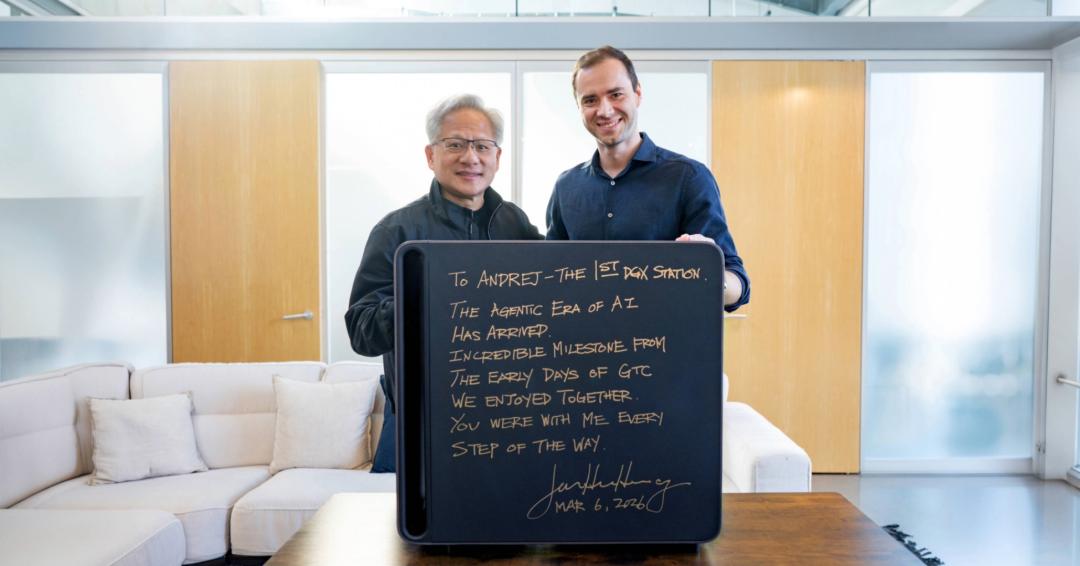
The first DGX Station (GB300) was given to Andrej Karpathy, a representative of individual developers in the AI era.
△
Notice that on this "big toy", Old Huang also attached a long "little essay":
To Andrej, the owner of the first DGX Station: The era of AI agents has arrived. This is an incredible milestone moment, which also reminds me of the early days of GTC that we spent together. Along the way, you've always stood by my side.
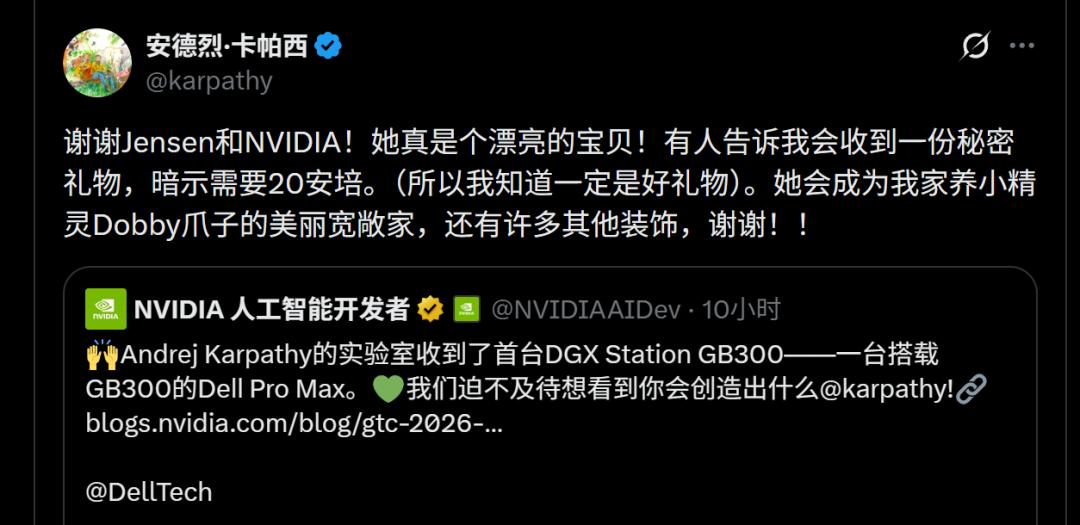
On the other hand, Andrej Karpathy also sent a virtual heart to Old Huang on X and revealed that he plans to use it to build a personal AI cluster for all kinds of interesting experiments.
By the way, regarding the "early days of GTC" mentioned by Old Huang, Andrej Karpathy also provided some explanations:
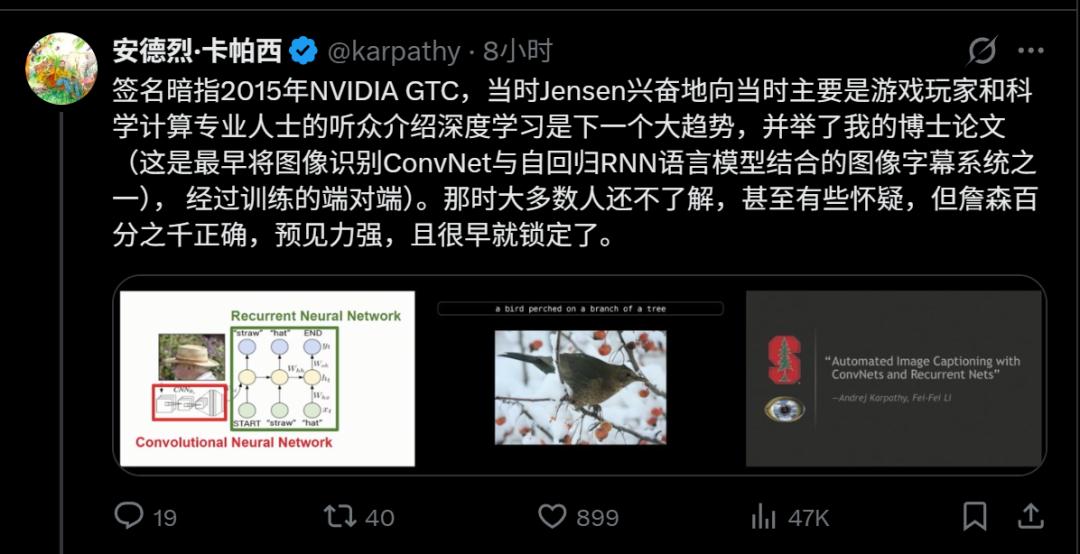
As we all know, the deep learning revolution has made NVIDIA, the "shovel seller", extremely profitable.
So, is Old Huang coming to "repay a debt of gratitude" this time? (doge)
Of course, just for fun. Just take a look at Old Huang's previous home - delivery cases, and you'll know there's more to it.
About 10 years ago (my goodness, it's already been 10 years), Old Huang gave the first DGX - 1 to the then - young OpenAI. Since then, deep learning has truly moved towards engineering, and AI has entered the "pre - era of large models".
In the past two years, he gave the first DGX H200 and DGX Spark mini - supercomputer to Sam Altman and Elon Musk respectively. Besides the reason that the two had a falling - out and needed to be given separately, the signal behind it is clear - the large - model competition has entered the "deep water area", and computing power is becoming the decisive factor.
And now, Andrej Karpathy, a super developer, has become Old Huang's new "guest of honor", which means -
In the era of agents, individual developers are stepping onto the center stage.
Especially when "Lobster" is so popular, this trend will undoubtedly become even stronger.
This time, it was given to individual developer Andrej Karpathy
Let's get back to the event of "Old Huang delivering warmth personally".
The reason why this represents the victory of individual developers is mainly because the recipient, Andrej Karpathy, has very distinct labels.

Although he's an old acquaintance, let's briefly review his resume.
Andrej Karpathy, in his early years, conducted deep - learning research at Stanford. Later, he joined OpenAI as one of the founding members.
After staying at OpenAI for about a year and a half, he was recruited by Elon Musk, who "left in a huff", to Tesla to lead the computer vision team of Tesla's autopilot system.
However, after working at Tesla for more than five years, he returned to OpenAI. But he didn't stay long this time and then chose to go solo...
We won't go into the details. Let's just talk about what he's been doing recently and the impression he leaves.
In summary, he is turning AI from "papers" and "big companies" into a "system that can be run by one person".
Friends who follow Andrej Karpathy's personal account know that in the past year or two, this AI guru has almost been repeating three things:
Quickly reproduce the latest papers into runnable demos
Manually create small and refined models and toolchains
Build an Agent system that can run long - term (that is, what people call "Lobster")
These things have gradually made him a representative of individual developers in the eyes of the public - one person can complete the entire closed - loop from idea to product.
And this is exactly the most scarce and representative ability in the current era of agents.
Coupled with his "personal relationship" with Old Huang (such as the GTC mentioned earlier), at this moment, Andrej Karpathy has become the one chosen by Old Huang.

And what's the purpose after being chosen? Of course, Old Huang's intention is to "promote products" (I'm kneeling in advance).
Since the DGX Station equipped with GB300 hasn't been shown much, let's also introduce it briefly.
In general, this machine is undoubtedly tailored for agents like "Lobster".
Don't be fooled by its appearance as a "desktop workstation". In essence, it compresses a whole set of data - center - level AI computing power onto the desktop of individual developers.
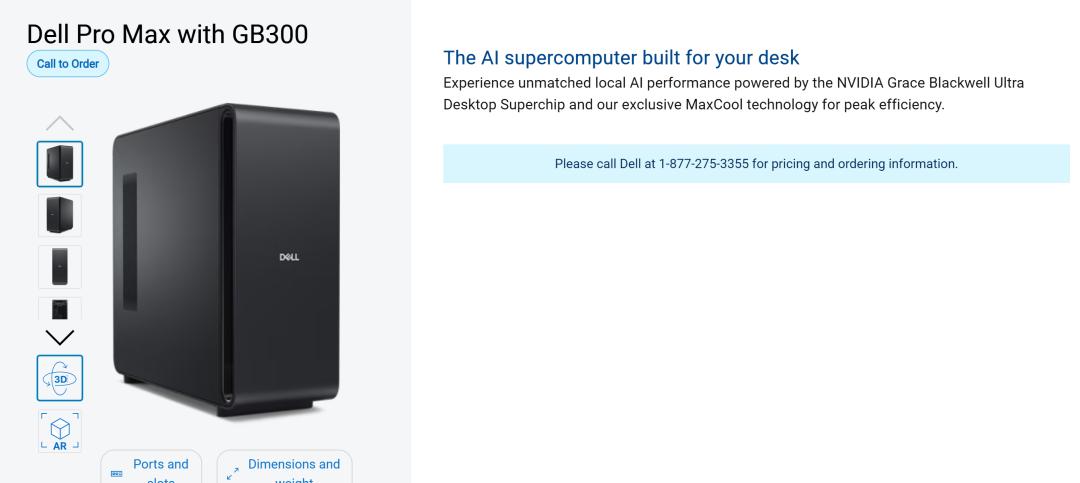
Simply put, the DGX Station (GB300) does one thing - bring the capabilities originally belonging to the computer room to your hands.
It uses the same GB300 architecture as the data center. When you write code and run models locally, it's like working in a "mini - data center".
748GB of unified memory + 20 PFLOPS of computing power means that you can not only run models but also directly tinker with systems with hundreds of billions or even trillions of parameters.
More importantly, this environment is not an "island" - what you run locally can be seamlessly migrated to the cloud or a larger - scale cluster without starting from scratch.
So you'll find that it doesn't solve the problem of "whether you can run AI", but another more practical need:
Whether you can keep AI running continuously.
By now, I believe that those who have been surrounded by "Lobster" from all angles recently already understand the positioning and function of this device.

When we look further, we'll find that Old Huang has a follow - up move in this "Lobster fever".
In addition to finding a "spokesperson", NVIDIA is also working hard to complete the entire set of Agent infrastructure -
From hardware to software, nothing is left behind.
NVIDIA's blog mentioned that to match the hardware (referring to the DGX Station GB300 shown this time), they also contributed an open - source stack to the OpenClaw project - NVIDIA NemoClaw.
NemoClaw allows developers to safely deploy an "always - online" AI assistant with a single command.
It has a built - in runtime environment for AI agents - NVIDIA OpenShell, which is responsible for scheduling model and tool calls and also ensures the safety and controllability of the entire execution process through the sandbox mechanism.
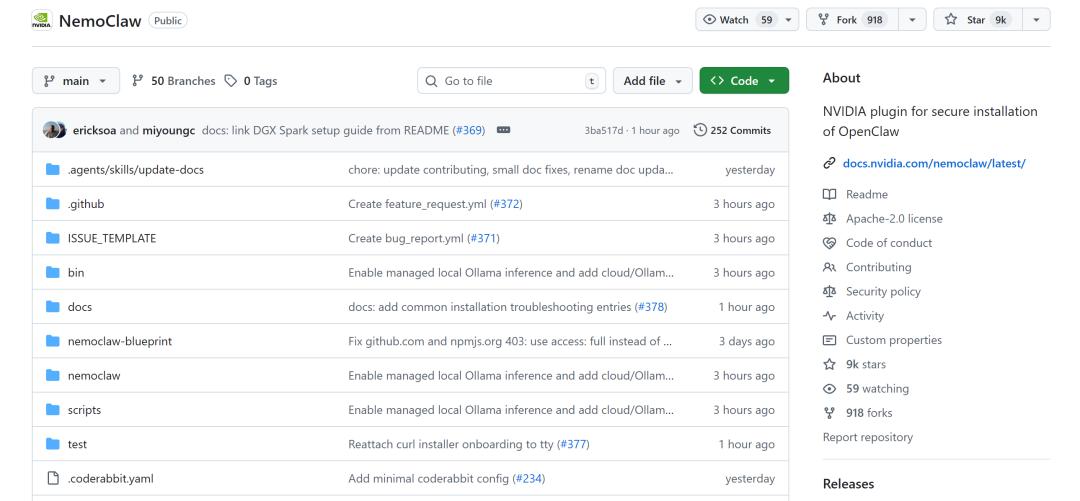
In this way, from computing power to installation and deployment, Old Huang has turned this "Lobster business" into an industrial chain.
Old Huang personally delivering graphics cards has become a vane!
Actually, if you count Old Huang's few "home - delivery services", you'll know how sharp - eyed this computing - power tycoon is.
Almost every home - delivery corresponds to a clear signal of the era.
An earlier and well - known case was when he gave the first DGX - 1 to OpenAI 10 years ago (at that time, Elon Musk was still a co - founder of OpenAI).
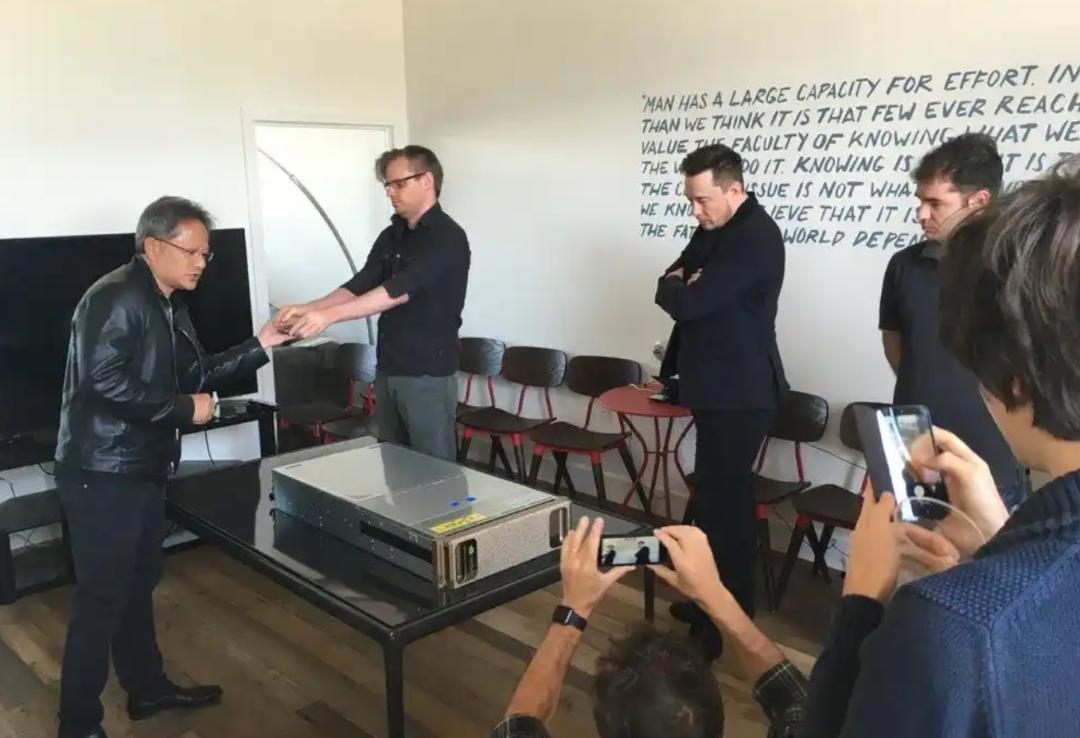
At that time, OpenAI had just been established. The office was full of idealists, but there was almost nothing else (not to mention servers).
On the other hand, the undercurrent of the deep - learning revolution was surging - it just needed a boost of computing power to come to the forefront.
So, Old Huang personally brought the first DGX - 1 to the door and wrote a sentence:
For the future of computing and humanity, I present the world's first DGX - 1.
Although this sounds a bit like a "gamble" now, the fact proves that Old Huang won.
Although it's hard to say how much this DGX - 1 contributed to OpenAI's development, it was these little things that finally nurtured ChatGPT, the towering tree.
Moreover, the DGX - 1 was a relatively advanced product at that time - it was the first to package hardware, interconnection, and software stack into an "out - of - the - box" deep - learning system, which was crucial for improving training efficiency.
Looking back, Old Huang wasn't just delivering a machine; he was betting on an era -
An era of the deep - learning revolution, an era that pushed the deep - learning revolution from the laboratory to corporate engineering.
No wonder many people later said that the pre - era of AI large models started from this photo.
In 2024, still at this company, Old Huang visited again and gave Sam Altman the world's first DGX H200.
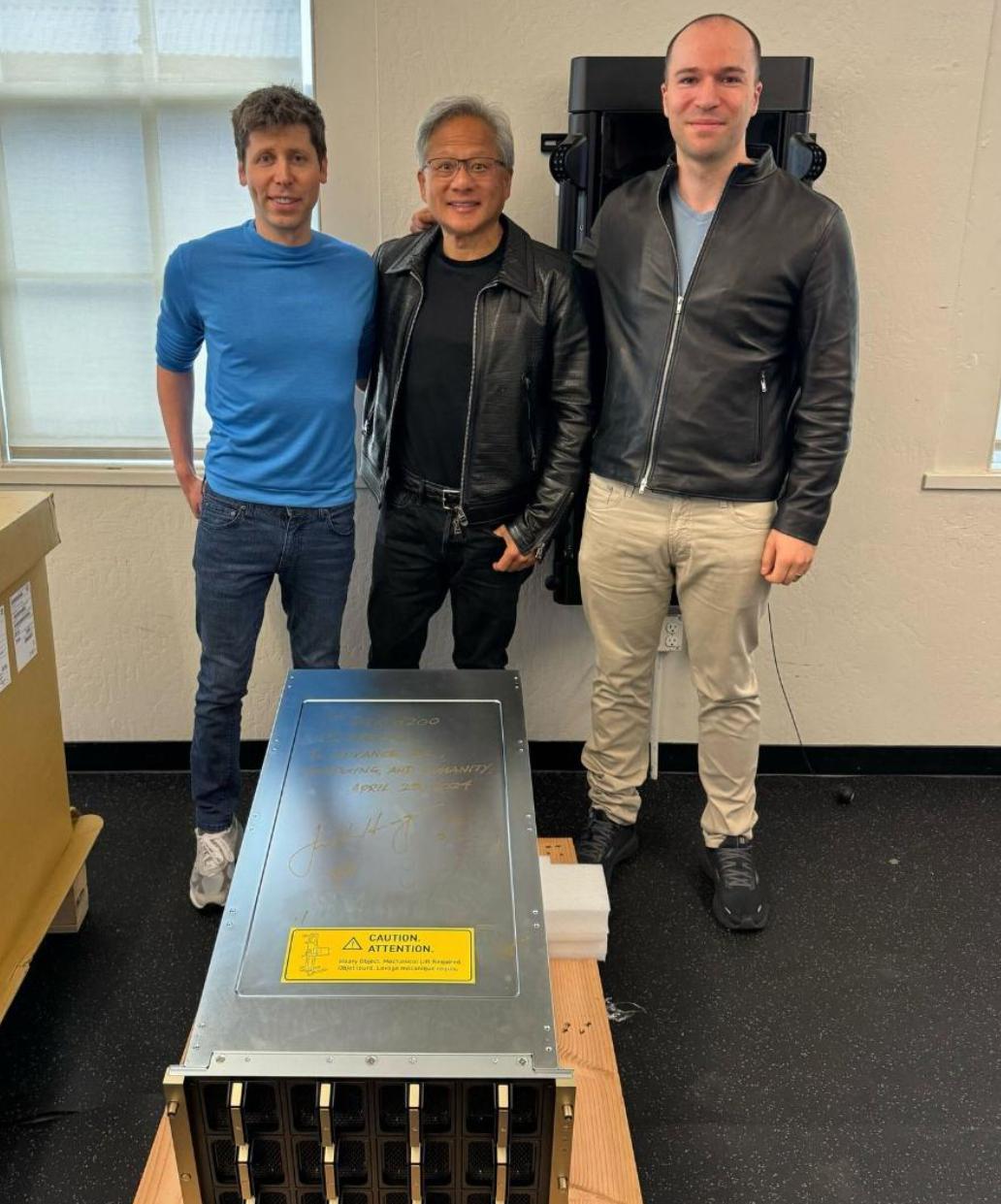
The background of this event is -
The large - model storm brought by ChatGPT has swept the world. Saling Law is in the limelight, and everyone is competing in terms of parameters and scale.
Of course, everyone is also short of computing power.
At such a moment, Old Huang gave the DGX H200, the latest and most powerful AI chip at that time, to OpenAI, which was then recognized as the world's top AI startup. And this time, the sentence he wrote was:
Aiming to promote the development of artificial intelligence, computing technology, and humanity.
Well, on the surface, Old Huang's "original intention remains unchanged", but the signal behind it is clear:
In the era when large models have entered the computing - power competition, NVIDIA is becoming the underlying supplier - even a powerful company like OpenAI has to rely on Old Huang for supplies.
As for the DGX Spark mini - supercomputer he gave to Elon Musk in 2025, this move is actually more interesting.
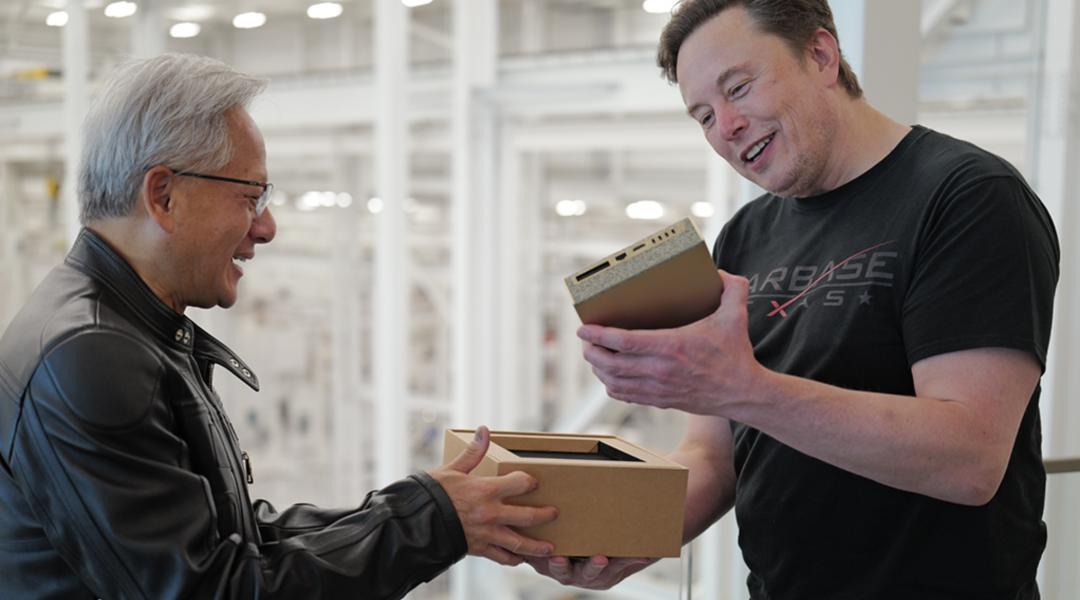
If the DGX H200 represents "pushing computing power to the limit", then what the DGX Spark does is another thing -
Compress top - level computing power into a smaller and more flexible form.
When Old Huang visited, he joked, "Imagine what it would be like to put the smallest supercomputer next to the largest rocket."
Actually, this seemingly joking sentence has exposed Old Huang's "ambition" -
Computing power is not only used for training models but also to support continuously running AI systems.
And Elon Musk's rocket is actually the most extreme scenario behind this idea. If this can be handled, other scenarios such as autonomous driving, robots, and industrial systems will naturally be no problem.
At this time, the form of computing power has begun to change, and the ultimate goal is to enter countless tiny application scenarios.
And in today's context, this means the "desktops" of countless individual developers (which can have both physical and virtual meanings here).
So now we finally understand why Old Huang chose Andrej Karpathy this time and why he gave the first DG