AWE 2026 Observation: AI Reconstructs the Home Space
Author: Wang Li
Editor: Wang Xiaokun
Imagine that you are in an enclosed space surrounded by speakers. Then, the music starts playing, and the sound comes from different directions: some passes over your head, and some echoes in your left ear. The position of each sound source is clearly distinguishable. Subsequently, you put on a pair of headphones. Strangely enough, the headphones don't seem to block out the sound well, and the outside noise remains clear. After listening for a while, you get a bit bored and take off the headphones, only to find that the speakers around you have already been turned off—the music you thought was still being played by the speakers actually came from the headphones all along.
This is a scene that took place at AWE 2026, featuring an audio system from Sony.
This technology is called "360VME," which aims to measure an individual's auditory characteristics and sound field structure in a specific space and generate a personalized acoustic profile. After that, no matter where they are, users only need to put on the headphones to reproduce the sound environment of that space.
According to the staff, "This system is currently mainly targeted at professional audio production scenarios, but it may also be extended to a wider range of personal scenarios in the future, such as simulating the sound field experience of a cinema at home."
Sony may not be the most eye - catching booth at the AWE exhibition, but it precisely reflects a change in this year's exhibition: Technology is penetrating deeper into the details of family life and redefining the boundaries of home technology.
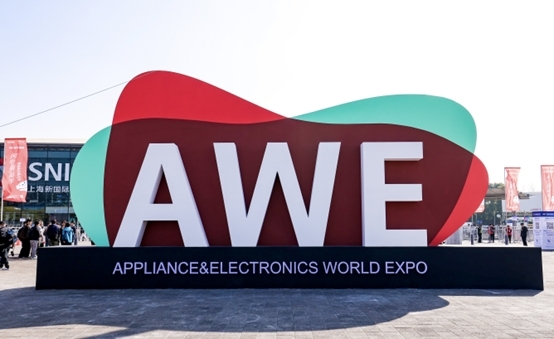
Image source: AWE
Every scenario is worth being deeply explored by AI
If you are a regular visitor to AWE, you are probably already familiar with a view in the home appliance industry: The end - game of smart home appliances is the "system."
In the early days, most smart home appliances focused on networking and remote control. Later, manufacturers widely told stories about "whole - home intelligence" and "scenario linkage": when you open the door, the lights turn on automatically, the curtains slowly open, and the air - conditioner starts running in advance. This model of connecting devices through gateways and central controls was once regarded as the standard definition of "smart home."
But in real life, this narrative has often hit a wall. The problem lies not in the technology but in the ecosystem. Due to the lack of unified standards and commercial competition, manufacturers tend to build their own closed systems. Consumers are forced to make a "choice between two": either accept a complete set of devices from a single brand or accept that the central control system can only control some terminals.
In this situation, the so - called "smart home appliances" are more like moving the switches originally on the wall to the phone screen, without changing people's lifestyles. An ideal smart home needs to have a certain degree of initiative. They must be able to sense environmental changes, learn user habits, and make timely judgments, such as the air - conditioner automatically adjusting the temperature according to the user's schedule.
To achieve the ability of "active intelligence," a large amount of data and computing power are required. However, for a long time, this ability has remained at the conceptual level in the home appliance industry.
It was not until the last two AWE exhibitions that a new change became clear: When AI and chips are integrated into terminals, individual devices can complete the intelligent evolution of "perception - judgment - execution" on their own. Compared with the "whole - home intelligence" and "ecosystem" discussed in the industry, the actual technological evolution has taken a more practical path.
This trend is fully demonstrated at the exhibition site. Although there are still voices about "overall linkage," manufacturers have unanimously refined and disassembled home scenarios, trying to let the devices play a more active role.
"Aging - friendly" has been a highly concerned topic at AWE in recent years. As early as AWE 2023, brands like Hisense optimized products for elderly users. For example, air - conditioners support dialect voice interaction, and some manufacturers introduced millimeter - wave technology and infrared thermal imaging for fall detection and health consultation. At that time, the attempts were more limited to single scenarios and focused on environmental perception.
At the AWE 2026 site, aging - friendly products are starting to be more closely related to daily life. In a corner of the Oriental Hub exhibition area, the flow of people is not very dense, and it is much quieter compared to the surrounding robot booths. A small device shaped like a Bluetooth earphone is placed prominently on the booth. The staff handed it to the visitors for a try - on and introduced, "This is a hearing aid."
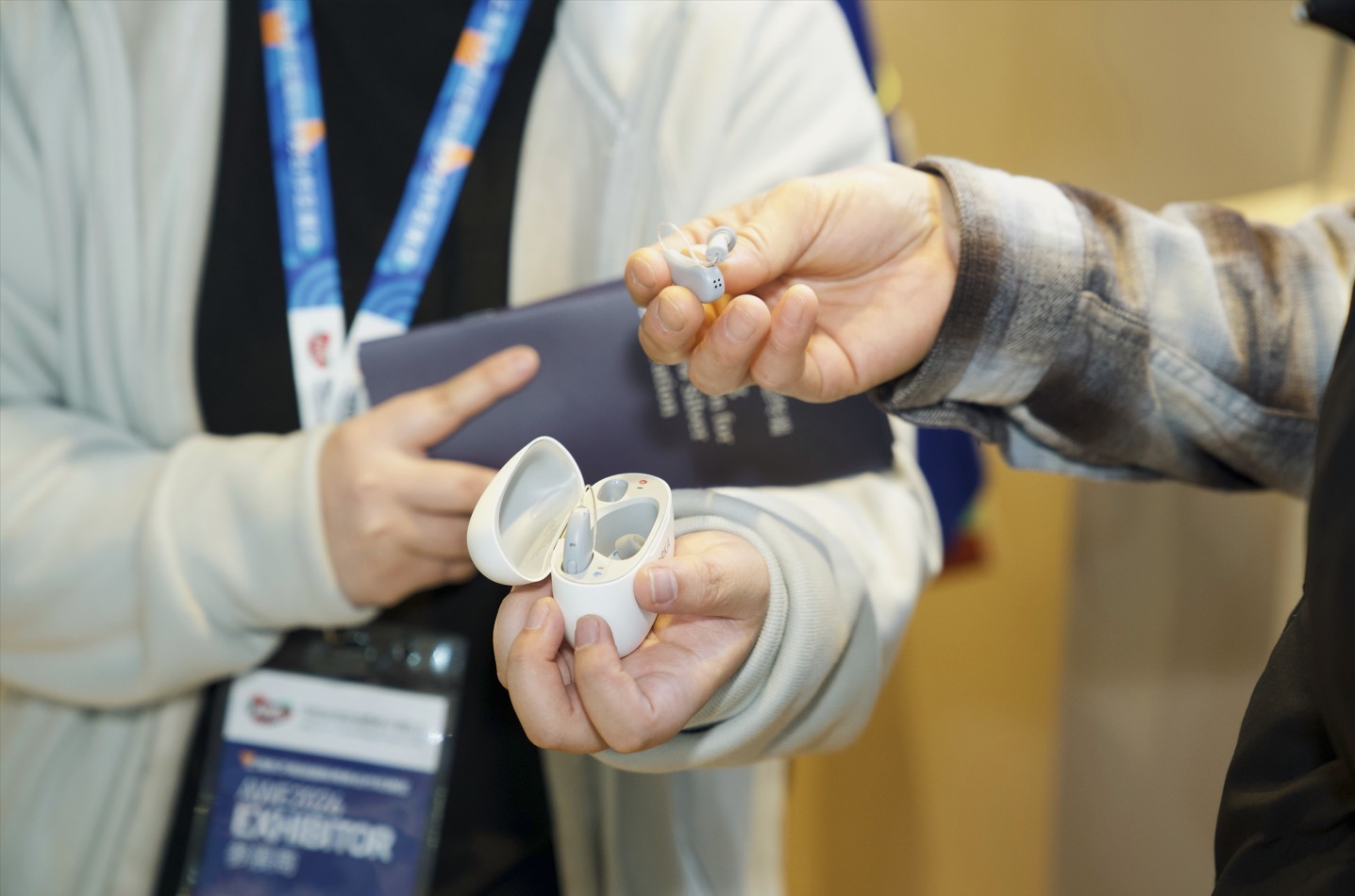
Image source: Orka
This product named O1 Pro is from the hearing technology company Orka. This year, they collaborated with Bose to introduce active noise - cancellation technology into the hearing aid. The change after wearing is not simply "louder sound," but the human voice becomes clearer, and the surrounding environmental noise is suppressed. Liu Xinke, the co - founder of Orka, is a long - term user of hearing aids herself, and she knows the pain well: "The problem with traditional hearing aids is that 'it's tiring to listen,' and users need to constantly distinguish between human voices and noise."
To address this pain point, the role of AI in the hearing aid is more precise: the algorithm focuses on voice recognition and human voice enhancement to separate the human voice from the environmental sound. At the same time, thanks to the low - power design, the battery life of the hearing aid far exceeds that of traditional earphones.
Lu Congxi, the CTO of Orka, told 36Kr, "The hearing aid can be used for 35 hours on a single charge." This means that the usage scenario of the device can also be extended beyond the home. For example, during a medical visit, it can record the doctor's instructions throughout and then let the local model organize and analyze the conversation content to achieve functions such as medication reminders.
Compared with simply adding AI functions, O1 Pro is more like continuously exploring the hearing - impaired scenario and answering a more fundamental question: how to do a good job in "hearing clearly."
In the New International exhibition area, Huida Sanitary Ware is the only sanitary ware brand participating in this AWE with an independent booth. Its exhibition area is divided into multiple theme spaces, from mirror cabinets, showers to toilets; from lighting, deodorization to water temperature control, sensors and algorithms are embedded in every usage link. Visitors seem to be experiencing the products in a real home environment.
Wang Jia, the president of Huida Sanitary Ware, shared, "When AI enters the sanitary ware space, the focus is not on changing the operation method but on optimizing the usage process."
In fact, AI is not only reshaping home appliances but also entering the home design process.
At the press conference site, Huida and Qunhe Technology announced a cooperation to integrate AI design into the kitchen and bathroom renovation process. Users only need to provide the floor plan and basic requirements, and the system can generate a complete and deliverable plan in a short time.
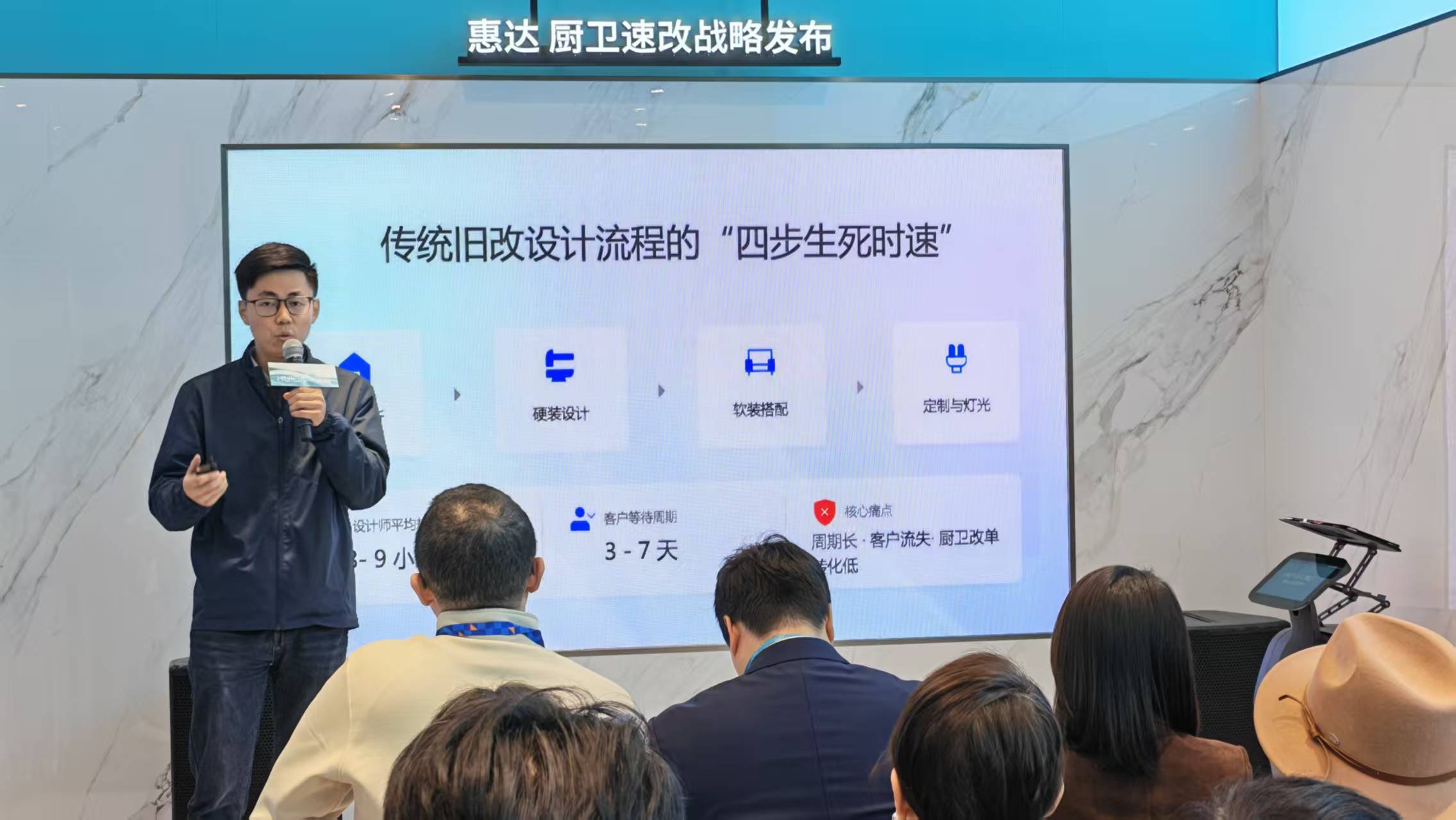
Huida's press conference at AWE
In the traditional model, bathroom renovation often depends on the designer's experience and multiple rounds of communication, with a long cycle and high uncertainty. After AI intervention, this process begins to be reorganized: standardized and modular solutions are embedded in the design system, compressing the renovation cycle to be completed within a few days. Vague usage requirements can be quickly transformed into construction plans and continuously optimized in the iteration.
When AI starts to participate in space design, the decisions originally scattered in different links are re - connected by AI and integrated into a calculable path. The design logic of the bathroom space has also shifted from "groping based on experience" to "continuous optimization based on data."
At the AWE site, AI is not only focused on "rigid needs"; the entertainment experience is also undergoing an algorithmic transformation.
In Hall W4, in the center of the Hisilicon chip booth, a piano is quietly placed. No one is sitting in front of the piano, but the keys are moving up and down on their own. This scene is as strange as a suspense movie. As the melody of "La La Land" plays, more and more people gather around, looking up and down at the instrument, trying to figure out how it works.
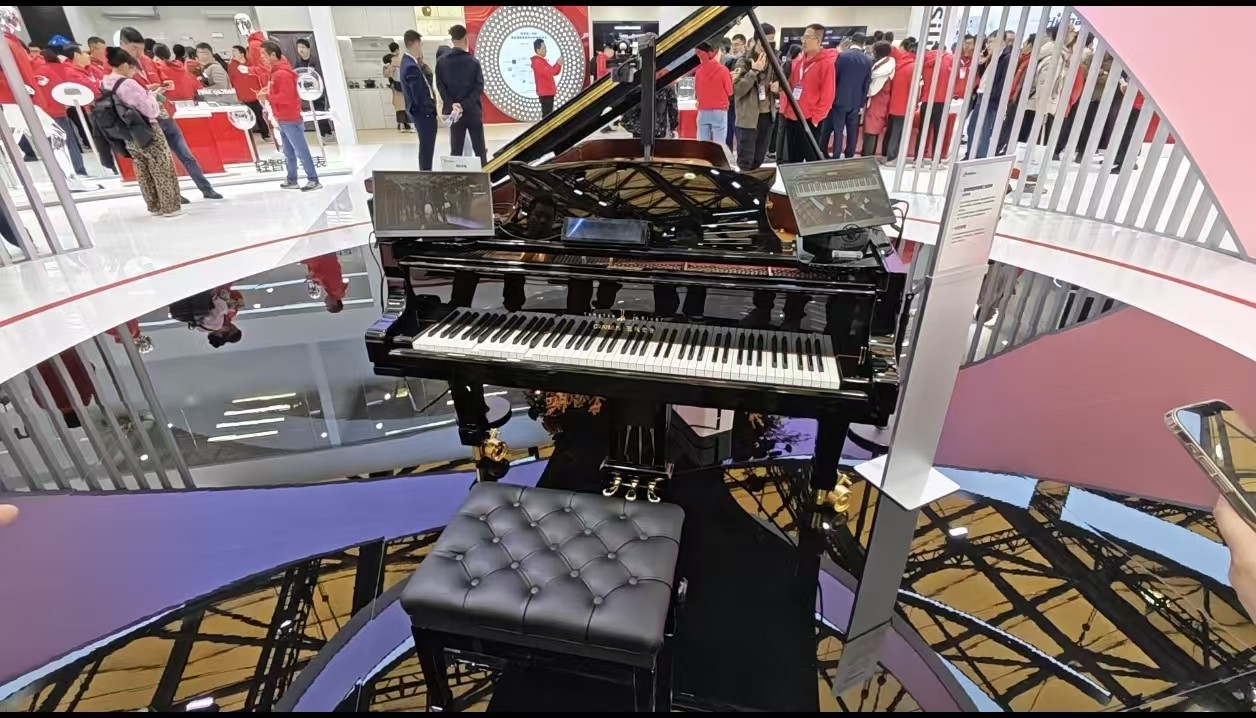
Hisilicon booth
The on - site staff explained to 36Kr, "The instrument is full of sensors. Every time the demonstration training is carried out, the pressing position and strength are recorded and then converted into digital signals. Through the calculation and integration of the Hisilicon chip and the model, the motor is finally driven to simulate the actual performance."
This set of equipment can be used for home teaching and can also create a spatial atmosphere in places such as restaurants and hotels. The staff specifically mentioned that the team has conducted a large number of blind tests, and it is already very difficult to distinguish the difference between the machine's playing and a real person's playing. "It can even play immediately according to the uploaded sheet music."
What supports this process is the collaborative ability of the Hisilicon chip and the cloud model. The local chip is responsible for processing sensor data and real - time control, ensuring the accuracy and response speed of each action; the cloud model undertakes more complex recognition and generation tasks, such as sheet music recognition and performance logic. The combination of the two makes this process of "real - time calculation + physical execution" a reality.
The chip itself is boring and hard to attract attention, but it is creating amazing moments for home appliances. Without the support of computing power and architecture at the bottom, the AI ability will ultimately be difficult to form a closed - loop on the device side.
Whether it's hearing aids, sanitary ware, or musical instruments... all home appliances are actually on the same "AI path." The slices of life that originally relied on experience are disassembled into data streams that can be collected, calculated, and optimized.
Therefore, people have to re - examine the meaning of "scenario"—is it a whole system or a series of tiny units that can be disassembled, modeled, and continuously iterated?
When these scenarios are quantified one by one, an ultimate question also emerges: For home appliances, is AI solving the existing but hard - to - express needs, or is it redefining the possibilities of life?
Is the concept of "home" being redefined?
In the late 20th century, the movie "Bicentennial Man" depicted such a scene: The robot Andrew was initially just a tool bought home to do cleaning, organizing, and execute instructions. But as time passed, it began to learn to express itself and was even regarded as a "family member."
Nearly 30 years later, the imagination in the movie has taken shape at the AWE site.
Compared with previous years, the popular areas in the exhibition hall have shifted from traditional home appliances to embodied intelligent robots. From the robotic arms extended from the floor - sweeping robots, to the mobile terminals with storage and care - taking capabilities, to the embodied systems that change the functions of the kitchen and undertake the cooking process. Various manufacturers have all targeted the home scenario as the core goal—patrolling, caring, cleaning, storing, and even cooking. These functions that were originally scattered in different home appliances are now concentrated in the robots.
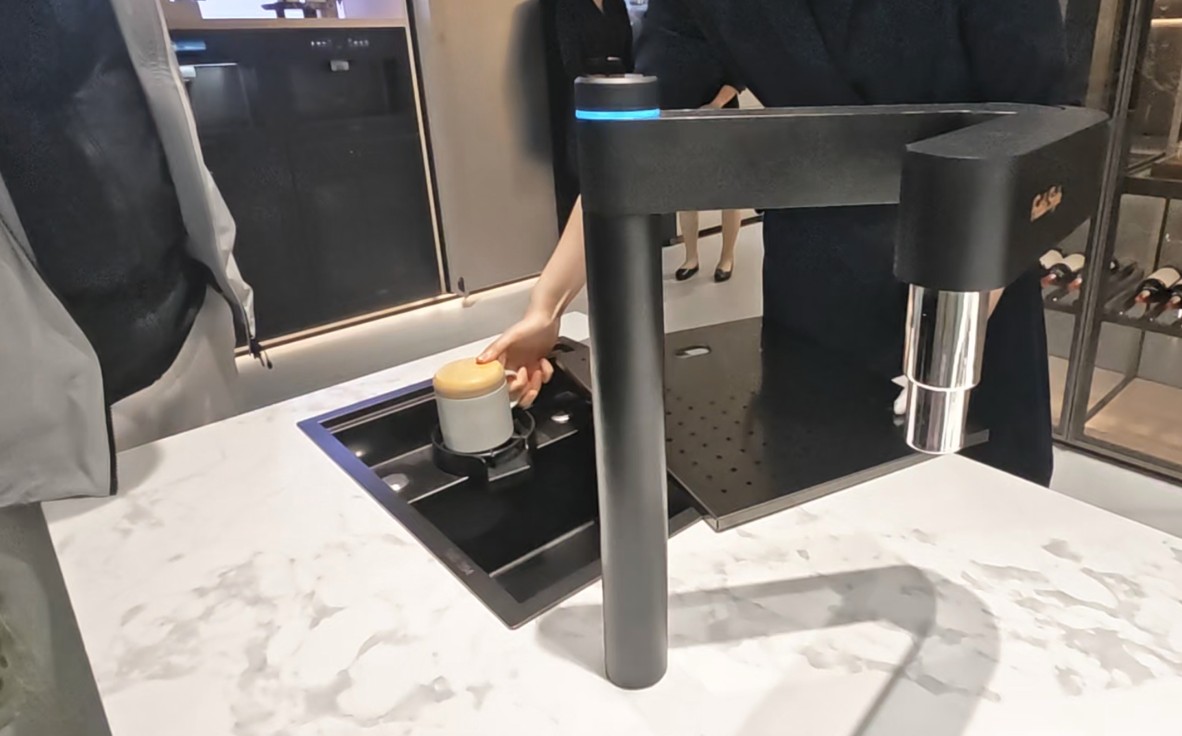
The intelligent sink in the Fangtai exhibition area
At the AWE site, you can see various attempt paths: some brands try to make the robots more human - like, while some manufacturers abandon anthropomorphism and directly design around tasks. The home robot "N1" of Lexiang Technology is a typical representative of the latter.
It doesn't pursue the anthropomorphic five - finger structure but adopts a wheel - arm design, splitting the actions into two types: one side of the robotic arm is more stable for basic operations such as clamping and carrying; the other side is more flexible and can complete delicate actions such as unscrewing bottle caps, opening drawers, and picking up fragile items.
According to the staff, "Compared with bipedal robots, this design currently has more advantages in terms of stability and battery life and doesn't require complex balance control. In a relatively flat and fixed environment like a home, it is often easier to implement." Behind this choice reflects different understandings of robots in the industry: whether to pursue "being human - like" or prioritize "being useful."
In the on - site demonstration, N1 can interact face - to - face through voice and vision and can also be remotely controlled via a mobile phone. The staff mentioned that the device will record the user's usage habits and gradually adjust the behavior path after multiple interactions, such as giving priority to high - frequency tasks or optimizing the action sequence. In addition, users can also view the robot's running trajectory and task status to manage the execution process.
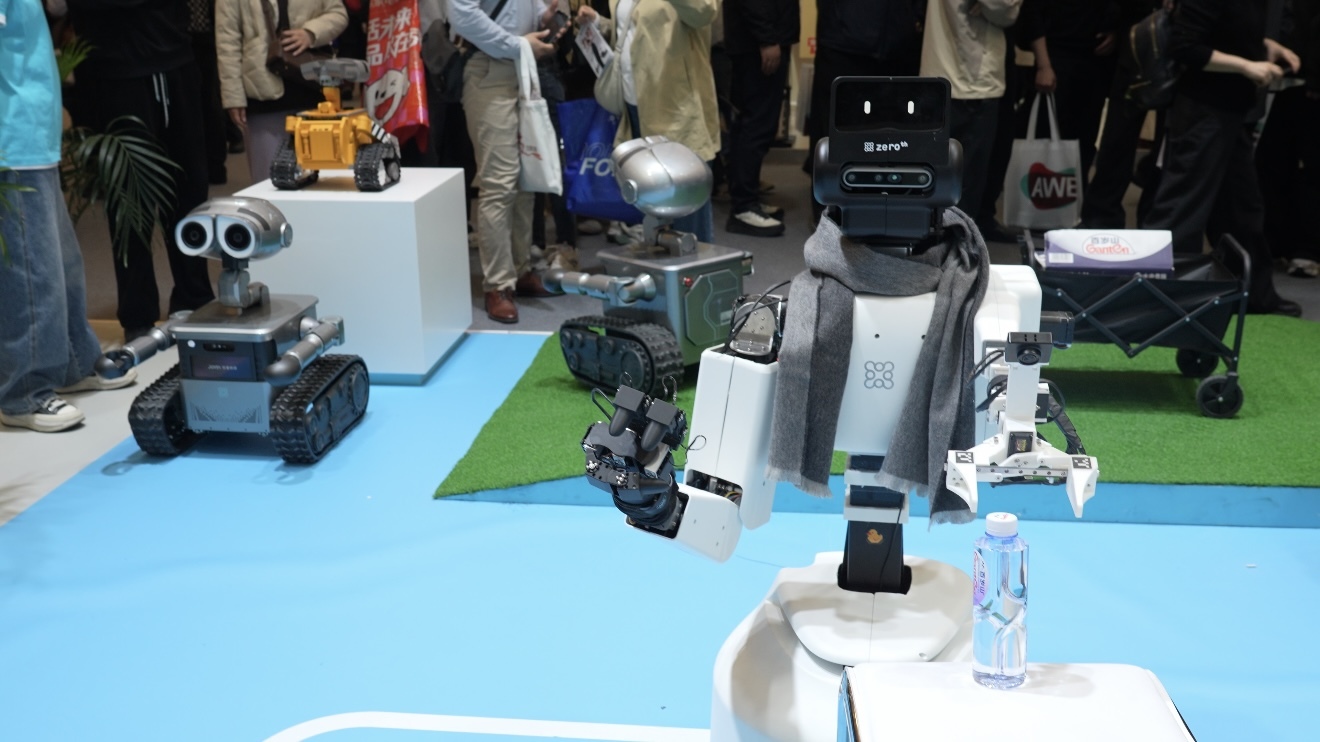
Image source: Lexiang Technology
Overall, although the development of household robots is still in the early stage, there are still many problems to be solved. For example, the reaction speed is slow, the stability is poor, and repeated adjustments are needed... But these attempts have outlined a direction: When devices have the ability to move and continuously interact, a new species of home appliances is emerging. "Andrew" may no longer be just an imaginary character.
In previous AWE exhibitions, travel tools were mostly in the supporting role, and the categories were limited to cars. But this year, the situation is significantly different: Travel devices occupy the center of the exhibition area, and the boundary of "home appliances" has been extended from indoors to outdoors.
The Exploration Ecology exhibition area seems to have exhausted all the possibilities of travel and life. Scooters, electric bicycles, motorcycles, RVs, and even watercraft are competing on the same stage, connecting urban commuting and outdoor exploration.
In Hall W2, an RV named NEXUS in a trailer - type attracted many visitors to stop. Compared with traditional RVs, this device is more like a "home space" that can be moved outdoors: the photovoltaic panels on the top are responsible for generating electricity, and the vehicle is integrated with an energy storage system and a power management module, which can support the continuous