QbitAI Exclusive Interview with Terence Tao: Why Am I Founding an AI x Science Organization Now?
The mathematician Terence Tao has publicly announced his new AI - related identity as the co - founder of the SAIR Foundation.
Previously, he was a world - renowned mathematical genius, a legendary mathematician who achieved fame at a young age, and the youngest gold medalist at the IMO at the age of 13... At 24, he became the youngest full tenured professor in the history of the University of California, Los Angeles (UCLA).
In recent years, with the popularity of ChatGPT, he has also become a flag - bearer in the field of AI × Mathematics. He has started to think and talk more frequently about the possibilities of the intersection between AI and basic sciences.
At the beginning of 2026, 50 - year - old Terence Tao took a further step. As a co - founder, he launched the SAIR Foundation. He hopes that this non - profit alliance, aiming to reshape the relationship between AI and science, can connect the academic and industrial communities, and unite and help more young scientists to advance two major goals:
One, build AI using scientific methods; Two, reshape basic scientific research with the help of AI.
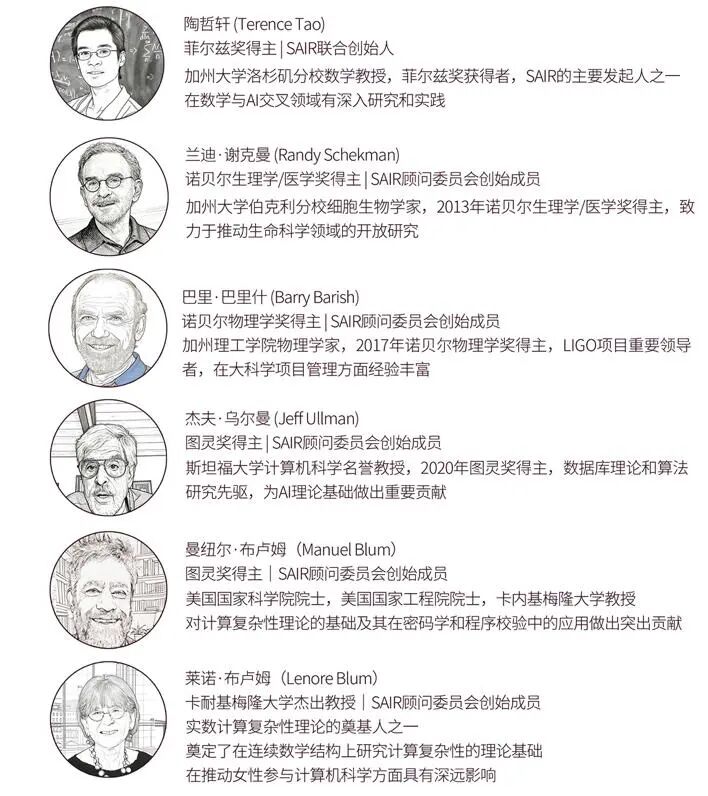
△Main expert members of the SAIR Foundation
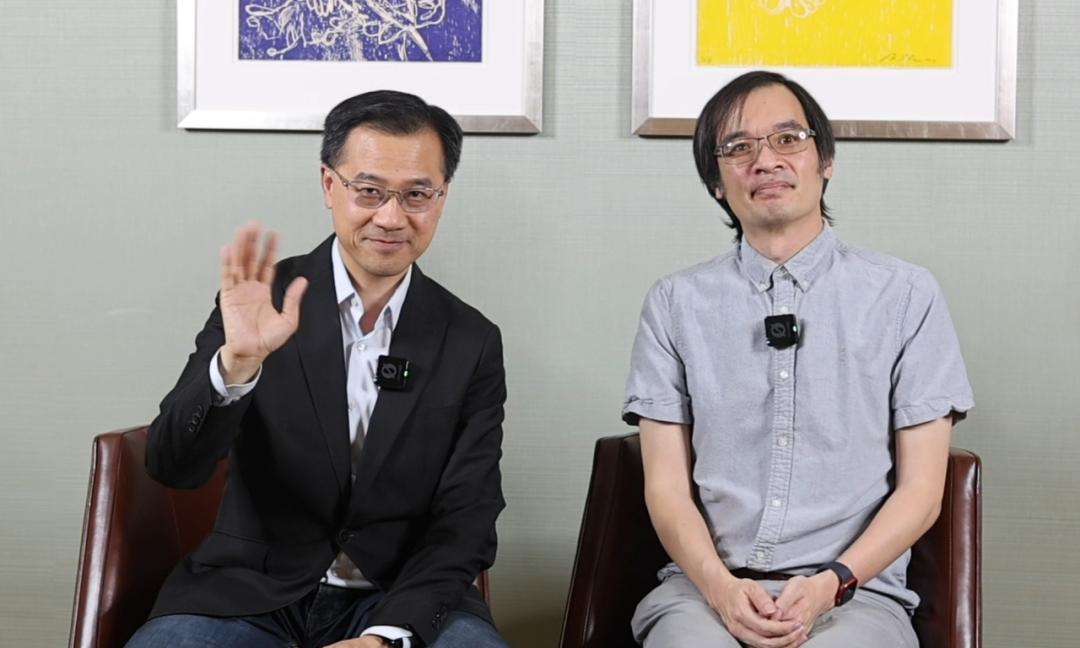
After the official announcement of the SAIR Foundation, Terence Tao and Chuck NG, the two co - founders of SAIR, also talked about everything related to AI x Science, mathematics, basic scientific research, etc. in an exclusive interview with QbitAI.
In their view, the most exciting aspect of AI x Science lies in the popularization of scientific research. They hope that through SAIR as a bridge, more young people can be given access to the ivory tower.
In the future, there may be 10,000 Terence Taos in the world.
The above are just the tip of the iceberg. In this in - depth conversation lasting over 90 minutes, you will also see the following wonderful viewpoints:
If AI can express confidence levels when answering, such as "I'm quite confident" or "I'm not very sure here", its practical usability will be greatly improved.
The model where the academic and industrial communities work independently doesn't work. It's too slow. In the AI era, they need to cooperate closely.
Compared with finance and healthcare, science is a safer testing ground for AI. Relatively speaking, making a mistake in a math problem hardly causes any loss.
Seemingly repetitive and boring basic work is actually very important for personal growth. Young people need these valuable training opportunities.
Most disciplines are communicating with each other, and AI is an important catalyst for such interdisciplinary interactions.
Don't simply ban new technologies. The task of universities is to teach students how to use them correctly.
We need to solve the structural bottlenecks in the scientific research system and accelerate the evolution of Artificial General Intelligence (AGI) and Super Artificial Intelligence (ASI) in a scientific and safe way through interdisciplinary global collaboration.
Below is the full and carefully proofread interview text, with over 15,000 words. To improve readability, QbitAI has appropriately organized and deleted some content without changing the original meaning.
Please enjoy.
AI X Science needs its own vertical AI
QbitAI: First of all, congratulations on the establishment of the SAIR Foundation. Can you tell us about the motivation for launching this AI X Science institution?
Terence Tao: I believe that AI will fundamentally change the scientific research model. The core question we need to clarify first is: How can we use AI reasonably and efficiently in scientific research scenarios?
In fact, we need some high - quality pilot projects to demonstrate best practices so that other scientists can refer to and learn from them.
In the past, this kind of work was mainly promoted by universities, scientific research institutions, and government departments. But in the current environment, support from other fields is also very important. It is more flexible and can help us try some innovative things.
I'm very glad to be involved in founding this institution. I hope to explore new ideas and try bolder paths to see how far AI and science can go when combined in a more prudent way.
Chuck: I've always enjoyed collaborating with excellent scientists. I'm really excited to launch this organization with Terry (Terence Tao). And several Nobel laureates and Turing Award winners have also joined.
Terry mainly talked about the academic side just now. I've been promoting the integrated development of academia and industry for a long time, which is also one of the reasons why we're so enthusiastic about this project.
If you look at our launch event, you'll find that participants include top academic researchers from around the world and representatives of many technology companies, such as NVIDIA, OpenAI, Amazon, Microsoft, etc. All parties discussed the development of AI x Science, laying the foundation for subsequent cross - field collaboration.
When the academic and industrial communities sit together, there will be many opportunities and a lot of things to do.
QbitAI: From your perspective, what are the main shortcomings of current AI technologies? Why can't the scientific research field directly use models from OpenAI or other companies?
Terence Tao: We've actually been trying to use some mainstream large language models (LLMs), and some researchers have indeed achieved results with them.
The problem is that the models can produce hallucinations, which is a very serious problem for scientific research. Scientific research requires a verifiable and trustworthy system.
Another challenge is interpretability. Sometimes the model gives an idea that seems good, but it often doesn't explain whether this idea comes from existing literature in the training data or a new combination, nor can it clarify its relationship with existing work.
Science is not just about solving isolated problems. More importantly, new results need to be integrated into the existing knowledge system so that later generations can build on them. This requires results to have traceability, standardized citations, and a clear explanation of how to expand or modify them.
Commercial large models can sometimes achieve these, but not stably. If we can have AI specifically designed for scientific research, or use better workflows to enforce verification and systematically connect the results with the literature system, it will be of great help to science.
The most likely direction in the end is to embed existing models into a more rigorous framework and cooperate with strong verification and calibration mechanisms to make them real tools for scientific discovery.
Chuck: In fact, in daily tasks like writing, AI already performs well.
But once it comes to deeper and more professional technical fields, the situation is completely different. In many sub - scientific fields, high - quality and structured data are very limited. This is why it's necessary to cooperate closely with scientists.
Our goal is to polish these systems to be reliable for scientific research. Ultimately, we hope that advanced AI can be used by the vast majority of people, that is, "AI popularization".
Terence Tao: Let me give a very simple example.
When scientists put forward a conclusion, they usually state their confidence level in this conclusion at the same time, such as "I'm very confident about this", "I'm somewhat confident", "This idea is not very mature yet".
AI doesn't do this. They almost always give answers in a completely certain tone. If AI can clearly express different levels of confidence, its practicality in scientific research will be greatly improved.
QbitAI: Currently, the main theme in the entire industry is about Scaling, with more data, larger models, and stronger computing power. But SAIR is more concerned about "Scaling the Science of AI". What does this specifically mean?
Terence Tao: So far, the approach adopted by technology companies has been very successful. When the computing power and training data increase by an order of magnitude, the model's capabilities will have a significant leap. This method has worked well so far.
But in the long run, it will hit a wall. Data is not infinite. The public Internet has been almost fully utilized, and there are also constraints in terms of energy and computing power.
Moreover, current AI can solve very difficult problems, but often very inefficiently. A human mathematician may be able to grasp the core of a problem after looking at ten examples and then draw inferences. However, existing AI often needs millions of training samples, repeated attempts, and even hundreds of runs to get a correct result.
In scientific research, we don't always need the largest and most general models. Many scientific research tasks are very specialized. In some scenarios, smaller - scale, lower - power - consumption, and lower - cost models, which can even run directly on a personal computer, are sufficient.
Large companies are more focused on building general - purpose models that can do everything. In scientific research scenarios, we may need special - purpose tools tailored for specific workflows. Developing and supporting such tools is what we hope to promote through SAIR.
QbitAI: Can I understand it this way: in the direction of AI x Science, the real key is better principles and methodologies, rather than simply making the models larger?
Terence Tao: You can understand it this way. We need better ways to evaluate credibility and express confidence levels, and we also need to improve the interpretability of the system.
We also need to improve the way humans collaborate with AI. The most common interaction mode now is that you give the model a prompt, and it directly gives a complete answer.
But in many scientific research scenarios, researchers often care not only about the final conclusion, but also about the reasoning process itself. You may want to intervene midway, add new information, or explore different paths.
Currently, many researchers are still on the sidelines regarding the application of AI. On the one hand, they have experienced system errors firsthand. On the other hand, existing tools do not match their core research needs.
If scientists can develop tools that truly fit their own workflows and research needs, I believe the usage rate of these systems will increase significantly.
Chuck: I'd like to add from another perspective related to credibility, "data quality".
One of our close partners, John Hennessy, has been providing advice to the SAIR Foundation. He is a Turing Award winner and also the chairman of Alphabet. He often emphasizes that in scientific research, improving data quality is as important as improving the model itself.
Trust is also a more macroscopic social issue. In different regions, people's trust levels in data and technology vary. The trust level of American society in something is about 70% to 80%, while the trust level in AIGC is often only about half of this figure.
This gap also explains why many organizations, including OpenAI, xAI, and other AI companies, hope to cooperate with us. Trust, reliability, and scientific rigor are crucial.
QbitAI: As AI continuously lowers the threshold of scientific research, what changes will it bring to the entire industry and the global scientific research landscape?
Chuck: This is a very good question. I think the ultimate goal is to raise AI to a level of "default trustworthy" through cooperation with top - notch scientists and researchers.
Once AI reaches this level, it won't be used only by experts. Ordinary people, such as your parents or even grandparents, can rely on AI in daily life without worrying about its reliability.
This is exactly why we need to bring together first - class scientists and industrial partners to learn from each other and promote jointly. Only through such collaboration can technology itself and its application in real scientific research scenarios move forward together.
We hope that AI can become a daily tool, just like a car. When AI reaches such a reliability level, the global scientific research landscape will truly change.
QbitAI: How will SAIR specifically participate in and promote this transformation?
Chuck: Our approach is to bring the academic and industrial communities together in a more direct and organized way.
On the academic side, many researchers lack computing power and it's difficult for them to obtain long - term and stable funding support. On the industrial side, companies have computing power, capital, and engineering capabilities, but there is still an obvious mismatch between existing models and tools and scientific research needs.
The scientific research field increasingly needs broader social forces to participate, including donors, foundations, investors, and entrepreneurs. Bringing these people together can better support those truly long - term and high - impact research directions.
We believe that this collaboration model can push the boundaries of science further.
Terence Tao: In the past few decades, a mainstream model has been: The academic community mainly relies on official funding support, while the industrial community is responsible for transforming research results into applications. Academic researchers put forward basic ideas, and the industrial community or other entities then turn these ideas into intellectual property, patents, and commercial products.
This chain can work, but it's relatively slow. In some countries, the academic community has no motivation to consider marketization issues, and the industrial community rarely invests in truly long - term and basic research, focusing more on short - term returns.
We can rethink how to design the path from basic science to applied research and then to real - world products in the 21st century to make it more efficient and more in line with social needs.
Chuck: This is a very special historical node. In the past, universities and scientific research institutions could rely on relatively stable government funding. Now, especially in the United States, this support has changed, and new cooperation models have become very necessary.
We see this as an opportunity. All parties are exploring new resource - integration models, and organizations like SAIR have emerged to support outstanding researchers and cooperate closely with industrial partners.
QbitAI: The quality of AI models depends to a large extent on data. Do you think the amount of data in different basic science fields will lead to differences in the difficulty of AI implementation?
Terence Tao: AI often makes the fastest progress in scientific fields with relatively abundant high - quality data.
A very typical example is protein folding. This field has received continuous investment for decades and has accumulated a large amount of carefully organized high - quality protein data.
But in other fields, the situation is completely different. For example, modeling a single cell seems like a similar problem at first glance, but we currently don't have data of the same quality and scale.
AI's dependence on data is very high, far exceeding many traditional scientific methods, and this is a real bottleneck.
Some people hope to use synthetic data to replace real data. However, if the generation method is not rigorous enough and the standards are not high, it may have the opposite effect. Low - quality synthetic data will contaminate the original data set.
Chuck: I completely agree, and I also think that the difficulty differences between different disciplines are very large.
If we want to solve more difficult problems in these fields, a powerful basic model is of course very important. But as Terry said, without high - quality data, even the most complex models will struggle.
There is an old saying "garbage in, garbage out", which is very obvious here. This is why projects like AI x Science are so important.
At the event on February 10th, we brought together some top scholars from different disciplines and institutions. The participants included researchers from UCLA, Berkeley, Caltech, and universities across the United States and North America.
One of our keynote speakers was Richard Sutton, a recent Turing Award winner and one of the founders of the reinforcement learning field.
We are also promoting exchanges among researchers across regions. Promoting AI x Science requires global participation.
Qbit