Just now, Dreame announced its plan to develop chips. Its 2nm intelligent driving chip has a computing power of 2000 TOPS, and mobile phone chips and robot chips are on the way.
According to a report by Zhidx on March 11th, just now, Dreame released its chip brand "NXMIND", including the mobile phone chip Chixiao 01, the autonomous driving chip, the "Cangqiong" series of general robot chips, and also launched a space computing power center composed of 2 million computing power satellites and a personal super AI computer with a computing power of 1.5 PFLOPS.
Its chip business focuses on the multi - billion - level next - generation AI computing track in the AI era. The mobile phone chip Chixiao 01 adopts Dreame's self - developed NPU architecture; the autonomous driving chip uses 2nm process technology, with a computing power of up to 2000 TOPS; the first general robot chip has been mass - produced and will be installed in Dreame's general robot products.
Fu Haiyang, the person in charge of Dreame's NXMIND, announced that the first self - developed space computing power box of the "Yaotai" series of NXMIND will be launched into space on a rocket in the near future to verify the system's extreme capabilities in orbit. This space mission will lay a solid foundation for its future space super computing power platform.
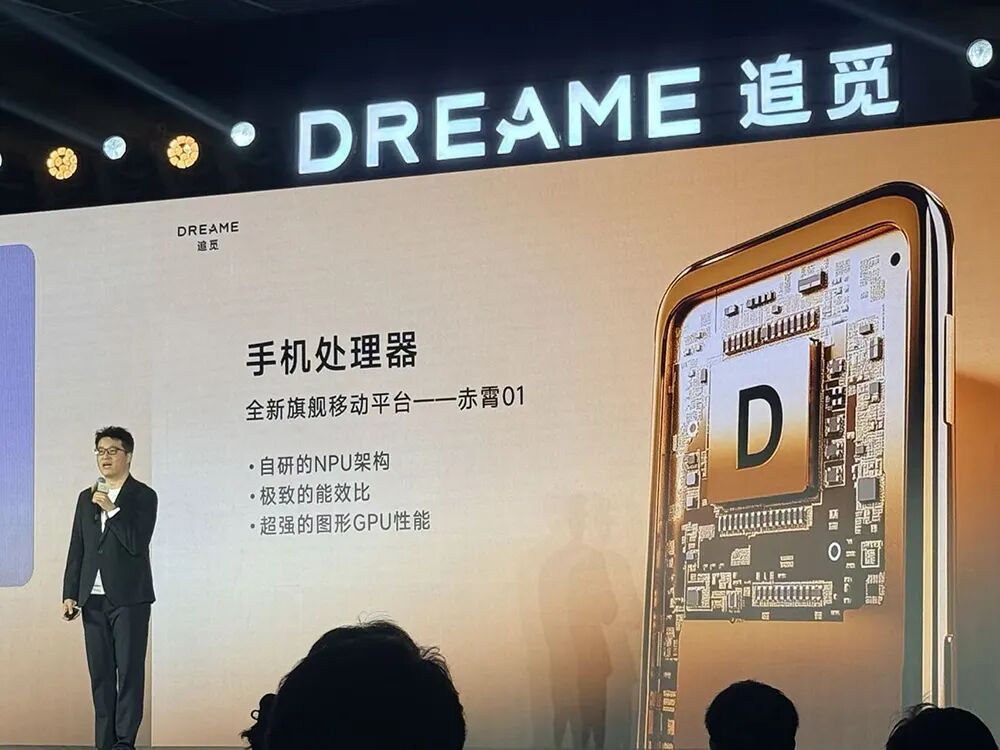
1. Mobile Phone Processor
Chixiao 01 is a flagship mobile platform that adopts a self - developed NPU architecture, featuring an excellent energy - efficiency ratio and outstanding graphics GPU performance. Its GPU architecture is designed based on the concept of bringing desktop - level technology to mobile devices, which is equivalent to compressing the entire graphics performance of a thin and light laptop into a mobile phone. It can achieve full - scene ray tracing under extremely high - quality graphics and run stably at 120 frames per second with a 1.5K resolution.
2. Autonomous Driving Chip
The autonomous driving chip announced by Dreame is a cockpit - driving integrated chip that uses 2nm process technology. A single chip has a computing power of up to 2000 TOPS, claiming to be "three times that of the industry mainstream" and "achieving the industry's best computing power - to - power consumption ratio", which can support the computing power requirements of L4 - level autonomous driving.
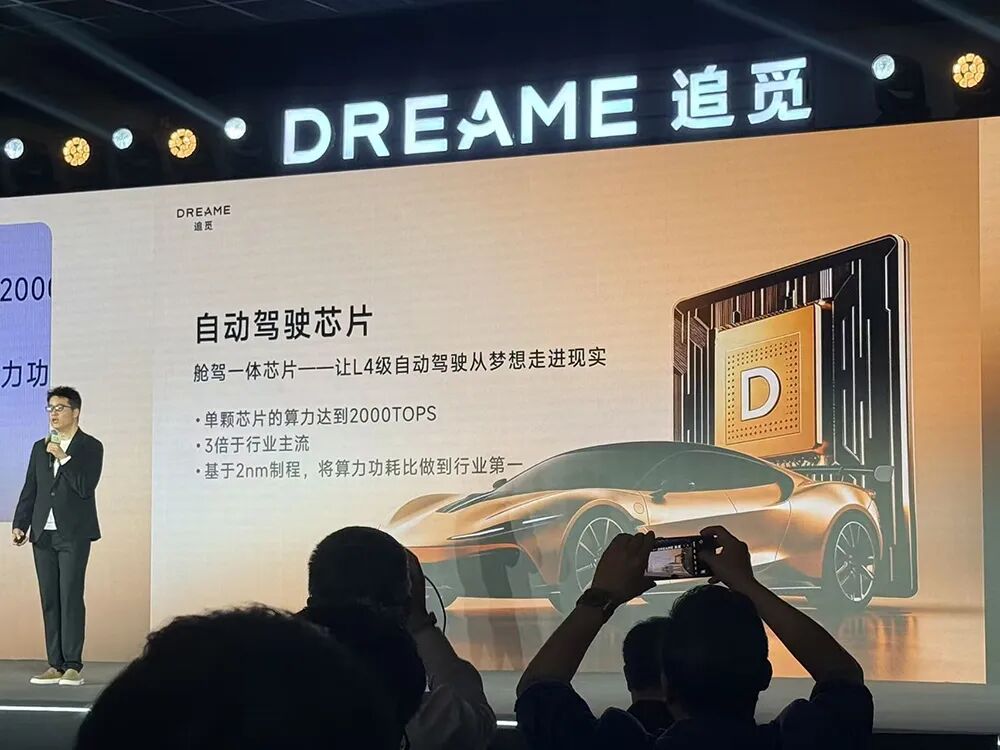
This chip is not an isolated one. It will be deeply integrated with Dreame's multi - modal fusion perception route for autonomous driving: combining vision, lidar, and world models to enable cars to understand, predict, and navigate the world.
3. General Robot Chip
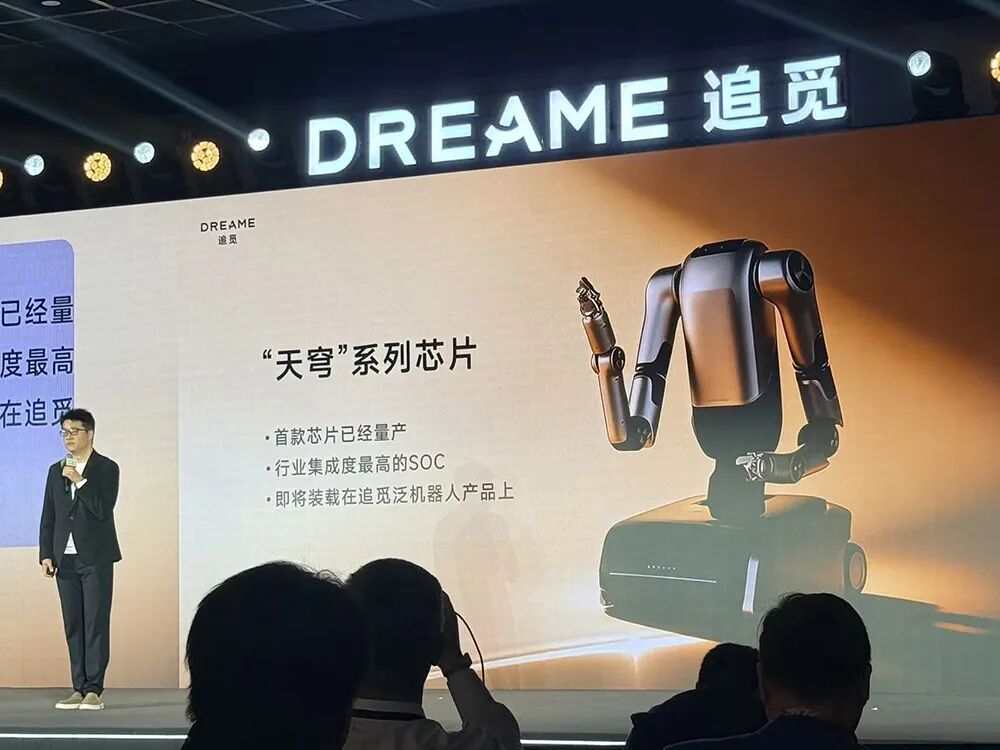
The first chip of Dreame's "Cangqiong" series has been mass - produced and will soon be installed in Dreame's general robot products. Its mass production marks that NXMIND has truly moved from a strategic blueprint to product implementation.
This chip is claimed to be the "industry's most integrated SoC". Through a heterogeneous platform composed of a multi - core CPU, a dedicated NPU, and an independent MCU, it can support advanced algorithms such as Dreame's self - developed lidar + AI vision fusion perception and binocular obstacle avoidance, achieving accurate navigation and obstacle avoidance in complex home environments in the industry, and truly making the sweeping robot run smoothly without maintenance.
4. Space Computing Power Center
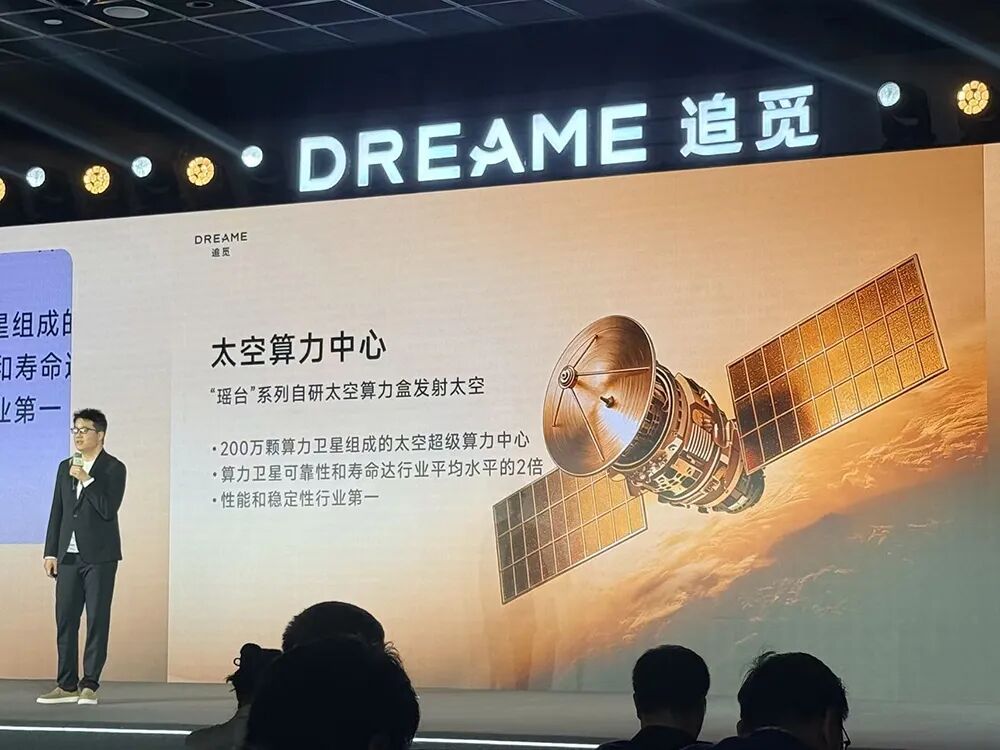
The space computing power center involves deploying data centers in space orbits. Dreame's NXMIND aims to build a super constellation composed of 2 million computing power satellites, claiming to achieve "the industry's best performance and stability".
"Only we have the entire industrial chain capable of mass - producing 2 million satellites in a short time with low cost, high quality, and high reliability," said Fu Haiyang. "Through leading hardware protection reinforcement and software fault - tolerance reinforcement, we will make the reliability and lifespan of our computing power satellites more than twice the industry average."
5. Personal Super AI Computer
Dreame's first personal super AI computer has a computing power of 1.5 PFLOPS. It adopts a unified memory architecture, with a multi - core CPU and a high - performance GPU, comparable to a small - scale data center. It can easily load and debug large models with tens of billions of parameters locally and supports interconnection and networking of multiple devices, allowing several devices to form a micro - cluster, enabling every geek to own a supercomputer.

Many people may wonder why Dreame's NXMIND can surpass global leading technology companies?
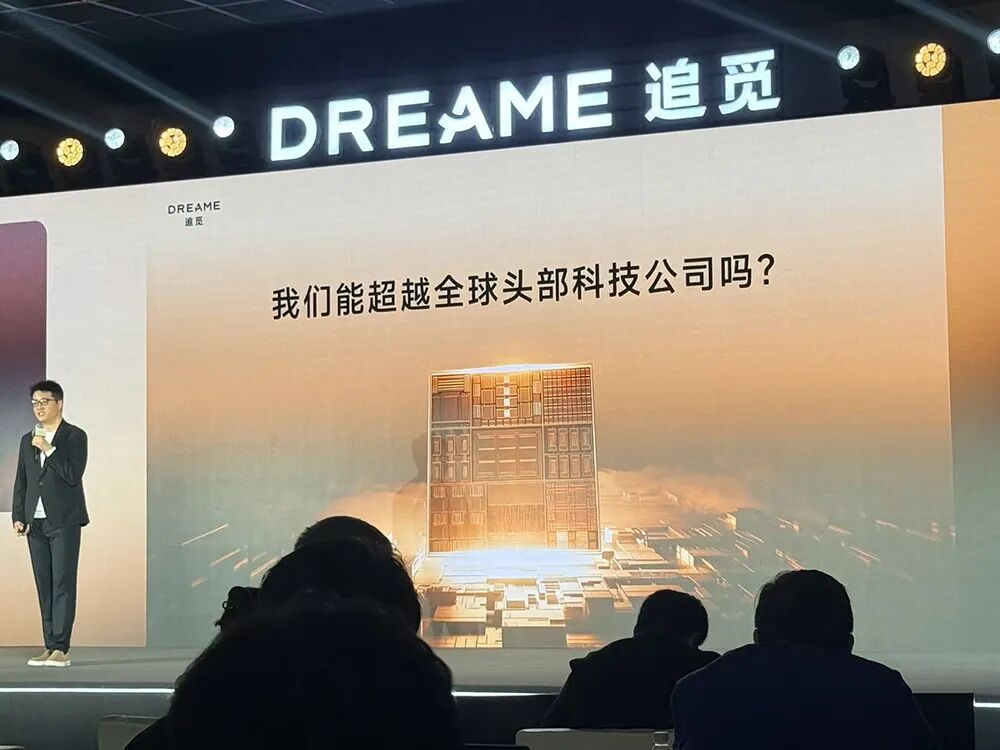
Fu Haiyang's answer is: "The times have changed, the tracks have changed, and the power of definition is shifting. They defined the last decade, while the next decade belongs to those who dare to re - define the world with innovation. Maybe it's us, maybe it's others, but ultimately, more Chinese chips will become the over - achievers."
This article is from the WeChat official account "Zhidx" (ID: zhidxcom). The author is ZeR0, and the editor is Moying. It is published by 36Kr with authorization.