OpenAI made an urgent acquisition of a 23-person company for Lobster.
The "Lobster" trend is booming, and OpenAI is also taking continuous actions.
First, it recruited the "Father of Lobster," and then immediately acquired a new company.
Moreover, it is targeting the rather concerning agent security issue.
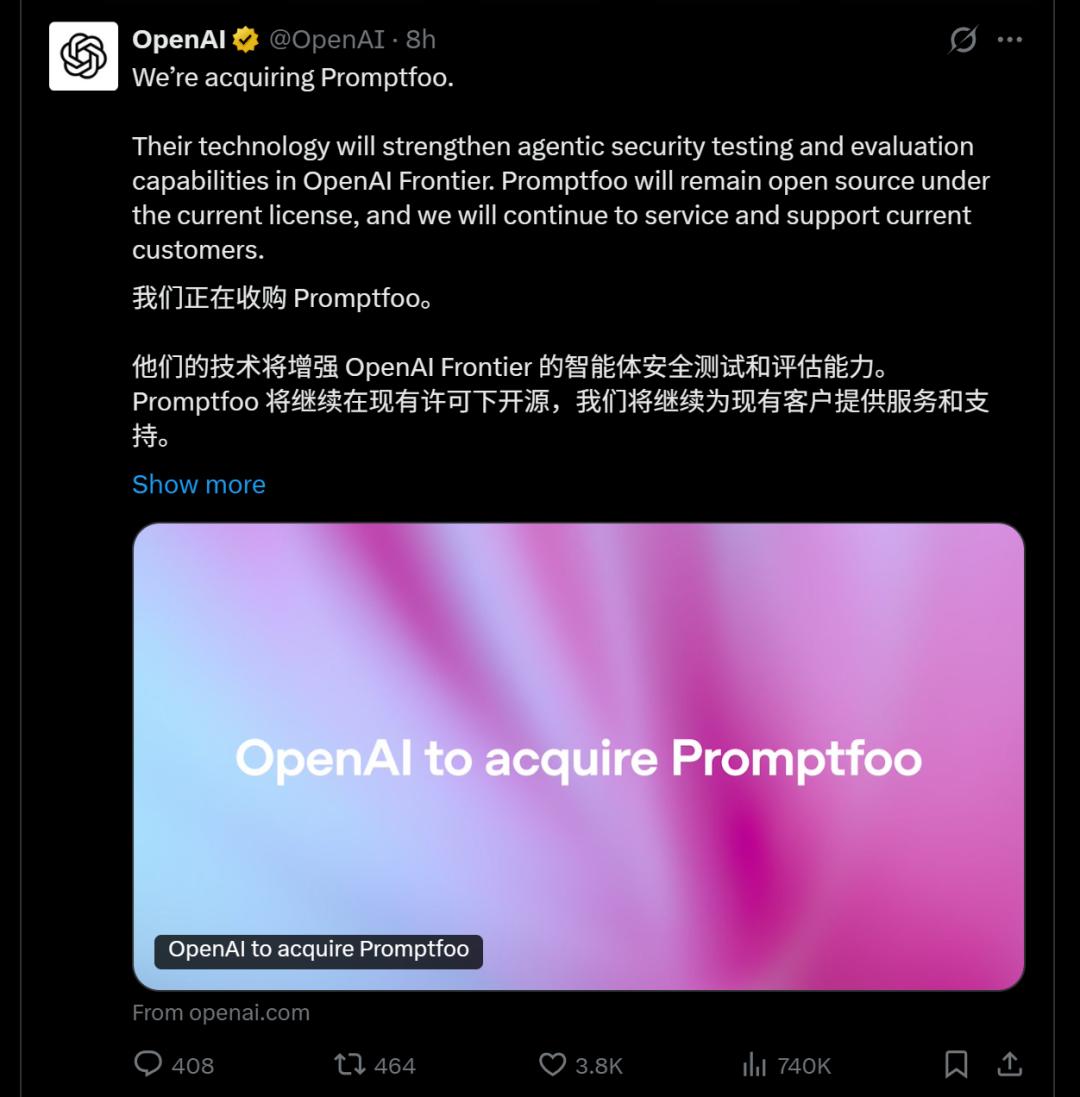
According to OpenAI's announcement, the acquired company is Promptfoo, a startup focusing on AI security and evaluation.
With a little inquiry, you'll find that this company has a certain reputation in the open - source community.
Its evaluation framework, Promptfoo, is one of the most popular open - source tools in the field of AI application evaluation, with over 300,000 developer users. As of now, it has received 11.2K stars on GitHub.
Before the acquisition, OpenAI, Anthropic, Amazon, etc., were all its loyal users.
According to the CTO of OpenAI's B2B applications, as enterprises deploy "AI colleagues" into actual work processes, evaluation, security, and compliance have become basic requirements.
Therefore, Promptfoo fills a key gap in OpenAI's "Lobster security" aspect.
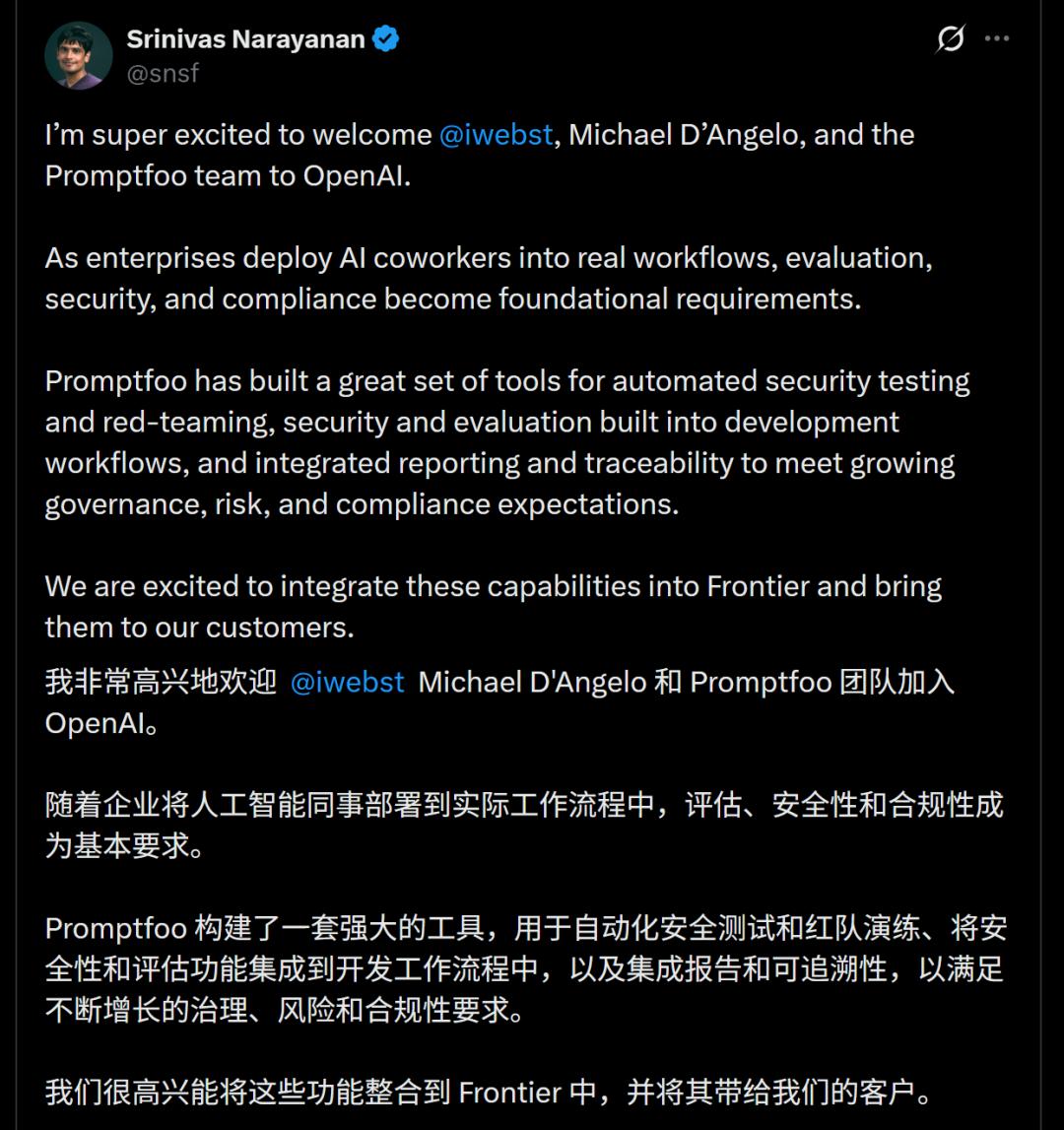
After being acquired by OpenAI, Promptfoo will continue to be open - source.
Who is Promptfoo?
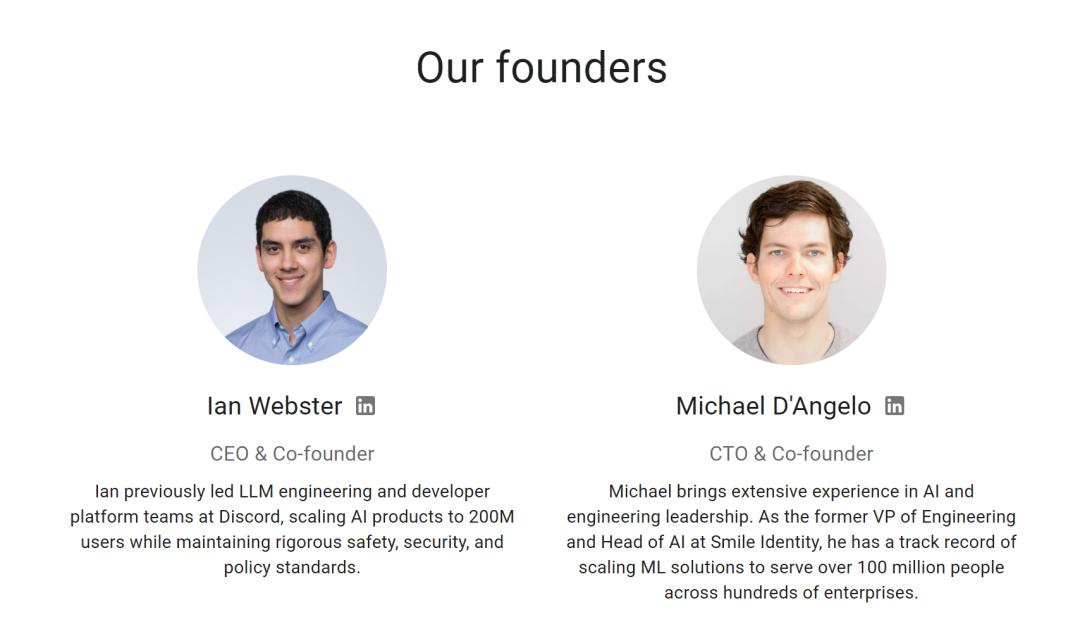
Public information shows that Promptfoo was founded in 2024 and has two founders.
The co - founder and CEO once served as the head of Discord's LLM engineering and developer platform. The co - founder and CTO once served as the vice - president of engineering and AI director at Smile Identity (a digital identity authentication company).
The original intention of founding Promptfoo was simply because the team noticed:
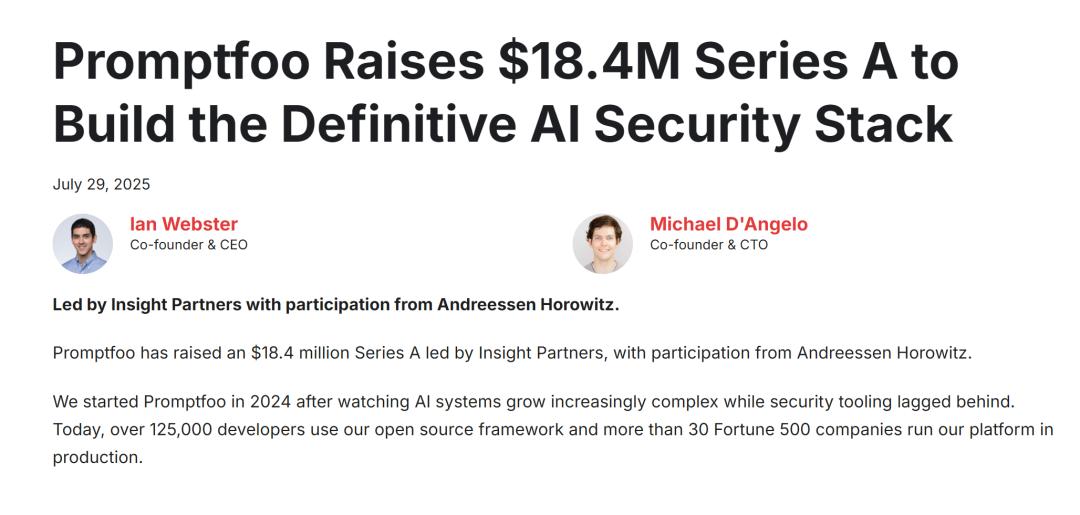
The complexity of artificial intelligence systems is increasing, while security tools have failed to keep up.
So they decided to break through in the mainstream large - model field and provide some AI security detection tools for developers and enterprises, aiming for differentiated competition.
Unexpectedly, this choice turned out to be a right bet.
Just two years later, this small team of only 23 people has achieved remarkable results.
Over 350,000 developers have used its products, with 130,000 monthly active users. More than 25% of the teams in Fortune 500 companies (about 125) are using its products.
This achievement has also won the recognition of the capital market.
Its latest round of financing was officially announced in July 2025. Led by top venture capital firm Insight Partners and participated by a16z, Promptfoo completed a Series A financing of $18.4 million (approximately RMB 127 million).
According to data from financial information platform PitchBook, Promptfoo has raised $23 million (approximately RMB 158 million) since its establishment. The financing in July last year brought its post - investment valuation to $86 million (approximately RMB 592 million).
(Note: The above does not include the transaction amount of this acquisition, and both parties have not disclosed the details of this transaction for the time being.)
The key to achieving such a large user base and financing in a short time lies in its product - the Promptfoo open - source evaluation framework mentioned at the beginning.
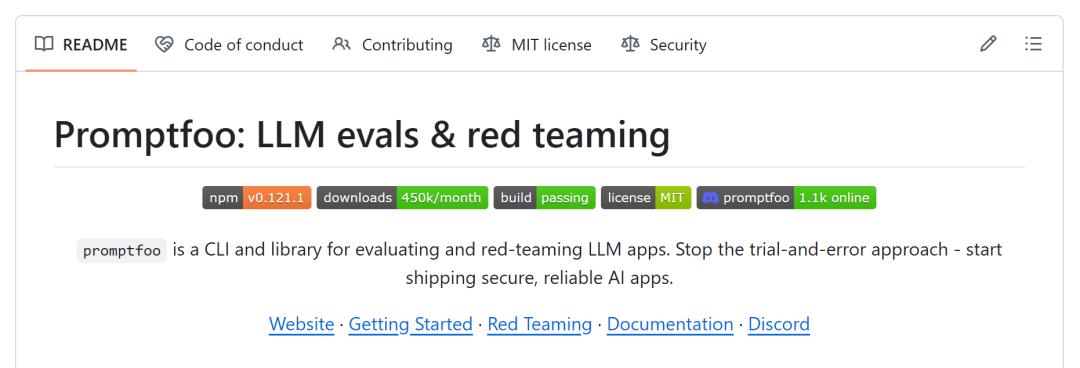
This framework aims to solve a real - world problem faced by many AI teams:
Large models are useful but difficult to test.
In traditional software development, developers can use unit tests and automated tests to ensure the stable operation of the system. However, in the era of large models, many teams often have to adjust the models by constantly trying prompts and manually checking the outputs.
This is not only inefficient but also difficult to ensure the stability and security after going live.
What Promptfoo wants to do is to turn AI application testing into a standardized engineering process.
Specifically, it mainly includes the following capabilities:
First, automated evaluation. Developers can batch - test different prompts and models, and the system will automatically evaluate the output effects.
For example, the following picture shows Promptfoo comparing the performance of different open - source models: