After walking 100,000 steps, we've summarized 10 answers about MWC26.
On March 5th, local time in Spain, the four - day MWC26 came to an end.
Lei Technology sent a reporting team led by editor Dingxi and anchor A Lei to conduct all - round and three - dimensional reports on MWC. According to incomplete statistics, Lei Technology was invited or actively visited the booths of more than 30 top domestic and international technology brands such as TCL, Zhiyuan Robot, Qualcomm, Shengtai Optoelectronics, Qianwen AI Glasses, Honor, ZTE, Xiaomi, vivo, Huawei, China Mobile, China Telecom, China Unicom, Jiangbolong, Guanghetong, BOE, Lenovo, MediaTek, Timekettle, and Transsion. We experienced their latest products, truly felt the pulse of technology, and were also touched by the innovative energy of AI technology.
(Image source: Captured on - site by Lei Technology)
Lei Technology has been continuously reporting on the four major technology exhibitions, CES, MWC, IFA, and AWE, for many years. As usual, after the exhibition exploration and reporting, we will conduct a systematic review and summary of the exhibition through Q&A. Now let Xiaolei answer these questions.
Q1: What new products are impressive?
A: Different from CES, which focuses on various concepts, MWC pays more attention to actual implementation: Most of the products on display are new hardware products that users can see, touch, and use, such as AI mobile phones, AI PCs, AI glasses, and robots. But if we talk about the most impressive new product to Xiaolei, I think you should have guessed the answer.
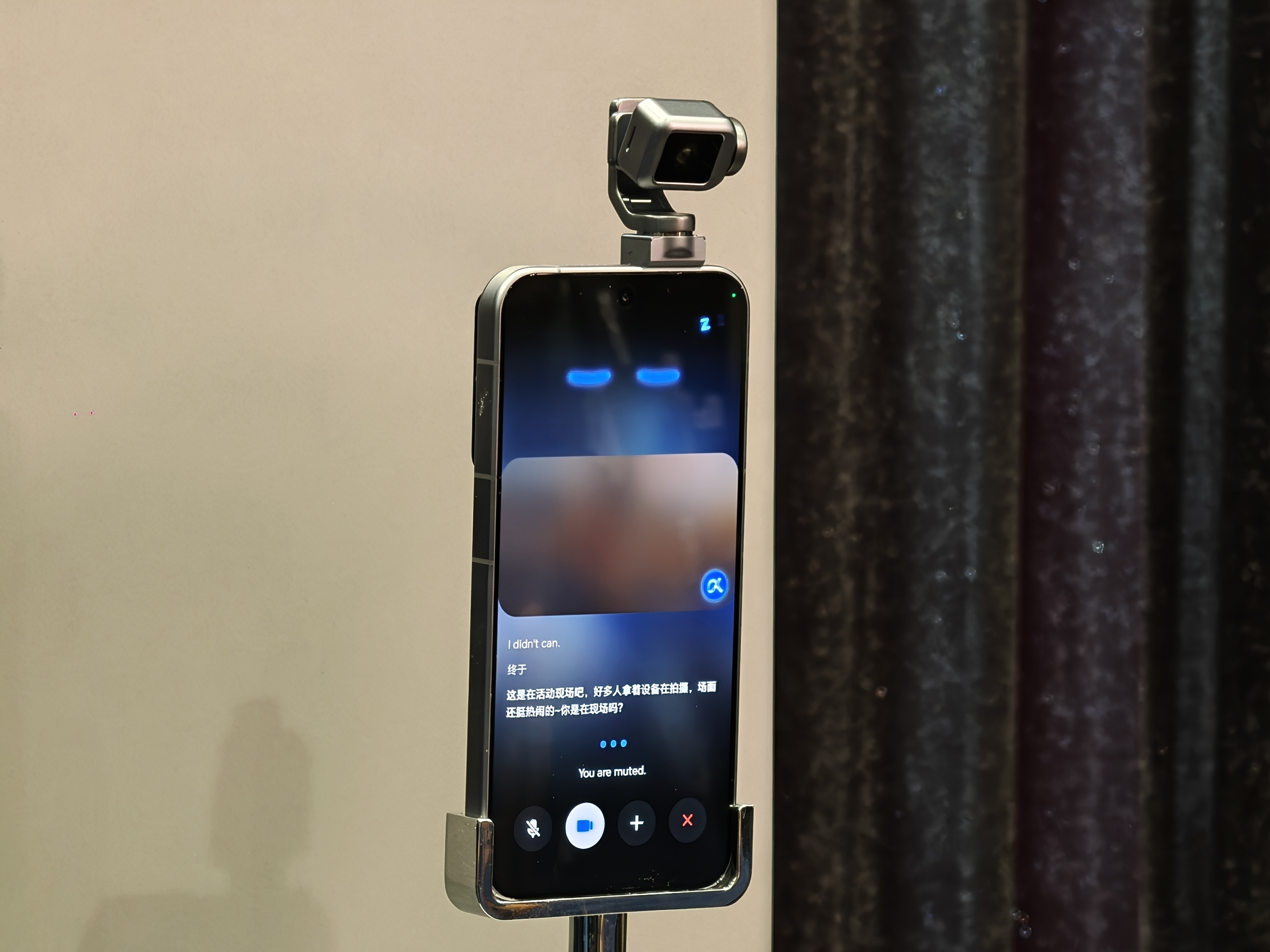
As long as you have been paying attention to MWC or the digital technology industry recently, you must have been bombarded with information about Honor's ROBOT Phone. As the most innovative product at this MWC26, its appearance is not just for Honor to show off its strength. Instead, it has brought mobile phone video shooting to a new dimension: What really makes a difference in the experience is no longer just image quality and stability, but "whether you can shoot" and "whether you can shoot well".
(Image source: Captured on - site by Lei Technology)
Its core selling point is a gimbal camera arm with a mechanical structure: It integrates a 200 - million - pixel sensor and is equipped with an extremely small 4 - DoF gimbal. At the same time, AI tracking is added, allowing the lens to "follow people".
Xiaolei has also seen many comments online recently. Some netizens think it is flashy but not practical: It's fun, but its durability must be greatly reduced. It's a product that "professionals look down on and non - professionals won't buy". But Xiaolei believes that in the era of short videos, users are becoming more and more aware of what the standard of a good video is: A non - shaky picture and comfortable image quality are just the minimum requirements. What really makes a video seem high - end is interesting camera language, the ability to keep up with the subject, a well - structured rhythm, and diverse picture changes.
More importantly, although it looks like a concept phone from every angle, according to some industry insiders, this product will be officially launched in August this year - which also conforms to the style of MWC: First, show the direction, and then push the product to the market for verification.
It can let the industry see "what the next video selling point might be" and make peers realize that "talking about anti - shake and image quality is no longer meaningful".
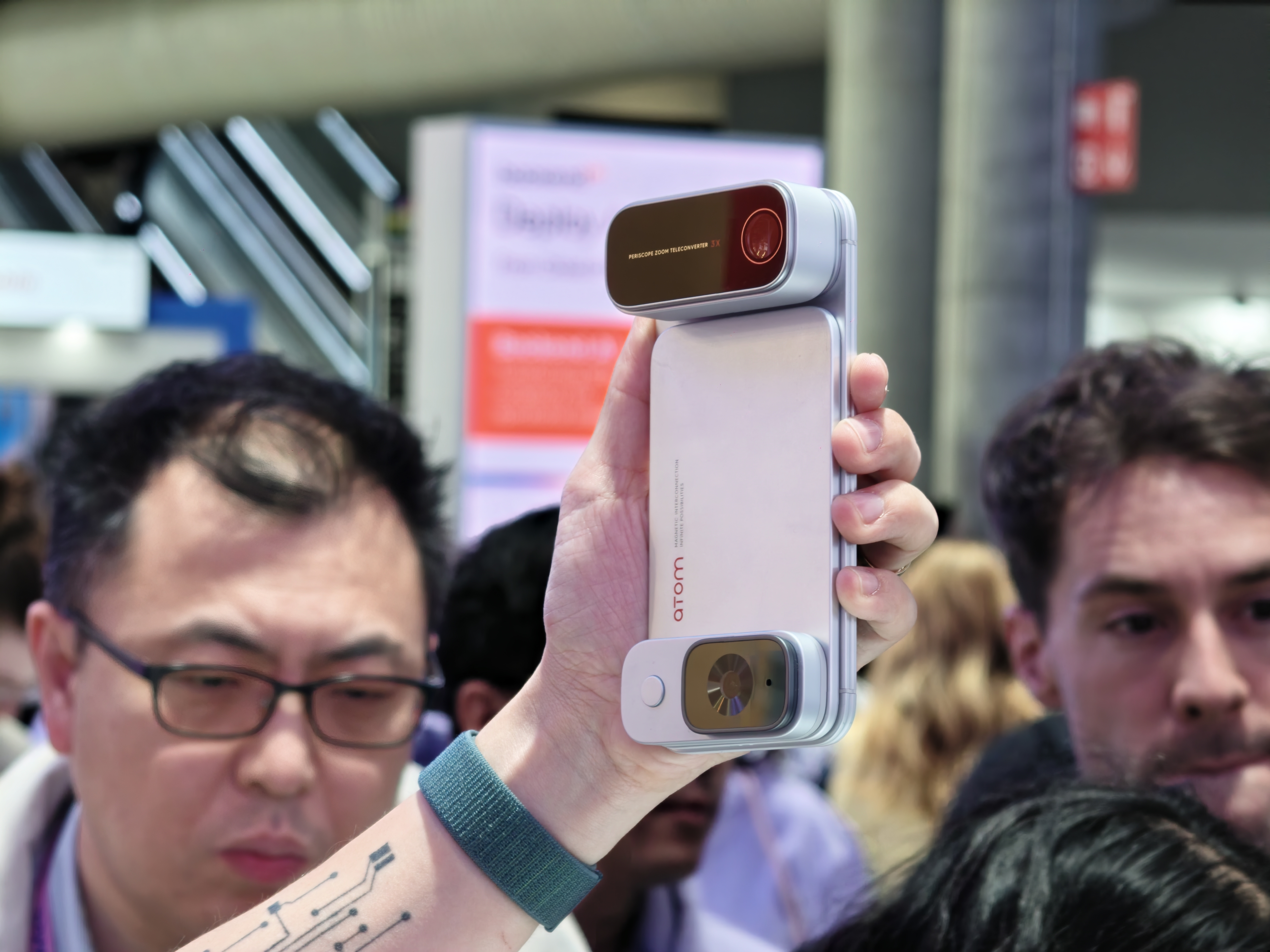
Another interesting new product is the modular magnetic mobile phone from Transsion. Its design concept is very ingenious: Since adding modules will make the phone thicker, then I'll make the phone thinner first.
Its body is only 4.9 mm thick. When Xiaolei held it in his hand, it felt like holding a metal card. The back uses a rectangular magnetic array + Pogo Pin physical contact for power supply. Users can directly attach various accessories to the back of the phone, just like using a magnetic power bank or a DingTalk A1 recording card.
(Image source: Captured on - site by Lei Technology)
According to the on - site staff, it has 13 different accessories, including but not limited to magnetic power banks, high - magnification teleconverters, action camera modules, collar clips, microphones, small speakers, and fill - light makeup mirrors.
The failure of modular phones in the past was largely because they tried to break the phone body into too many pieces: Without modules, the experience would be extremely poor. Transsion's idea is much smarter - even if you don't use these accessories at all, it is still a fully functional mobile phone.
It's a pity that Transsion has not revealed whether this product will be mass - produced in the future. Xiaolei believes that if Transsion cannot attract enough third - party manufacturers to make modules, then this concept phone may really just be a "concept".
In addition, manufacturers such as TCL CSOT, Zhiyuan, and vivo also released many interesting products. If you are interested, you can reply "MWC" in the background of Lei Technology to view our report collection. We won't go into details here.
Q2: What new technologies are unforgettable?
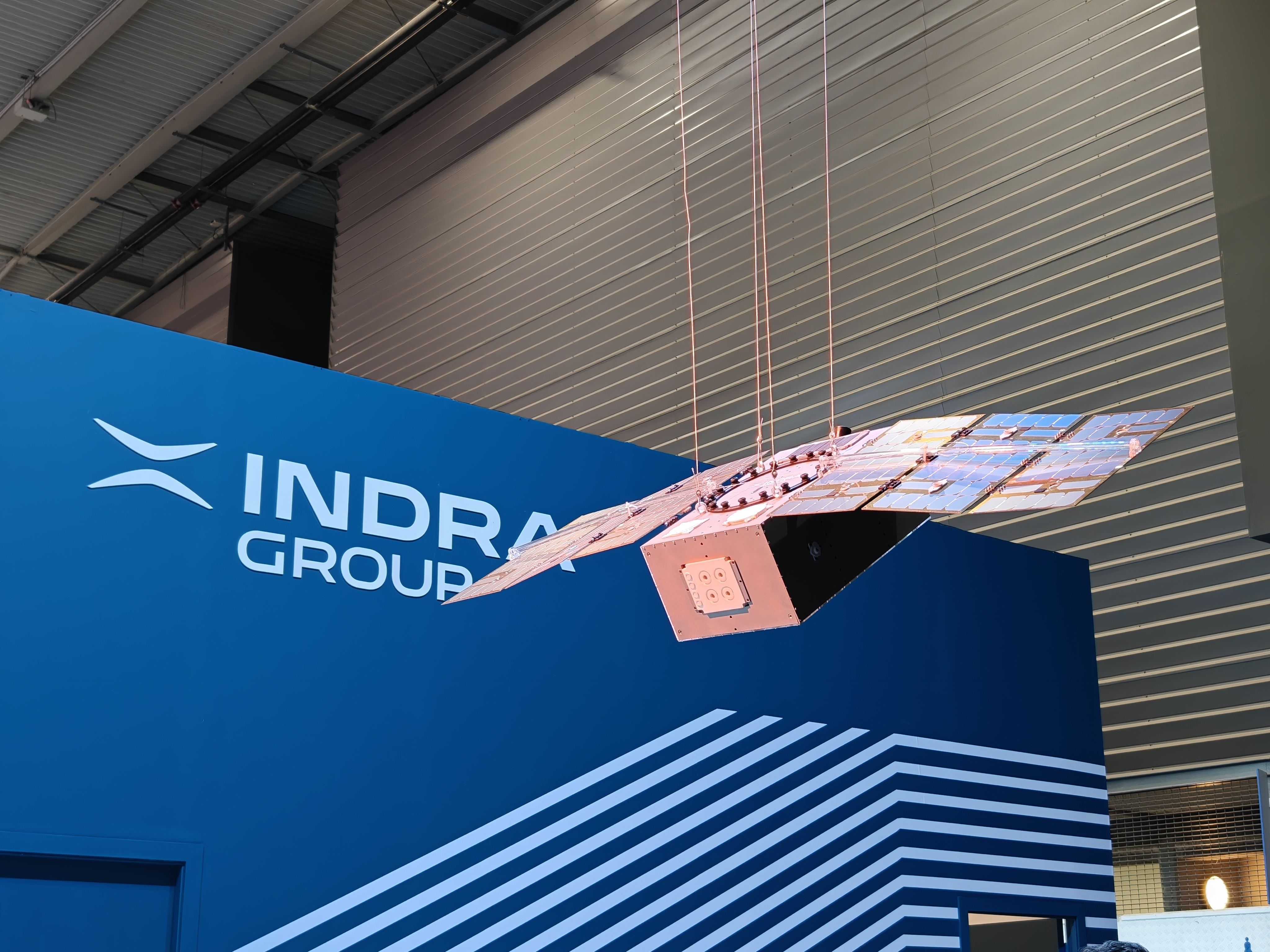
A: At MWC, which focuses on mobile communication, the network is naturally of utmost importance. At this MWC, the frequency of the appearance of 6G, Wi - Fi 8, and satellite communication technology far exceeded Xiaolei's expectations: From Hall 1 to Hall 7, small satellite models hanging in the air could be seen everywhere; In addition to the well - known Starlink, domestic and international operators and small technology companies have also launched corresponding technologies and demonstration solutions.
(Image source: Captured on - site by Lei Technology)
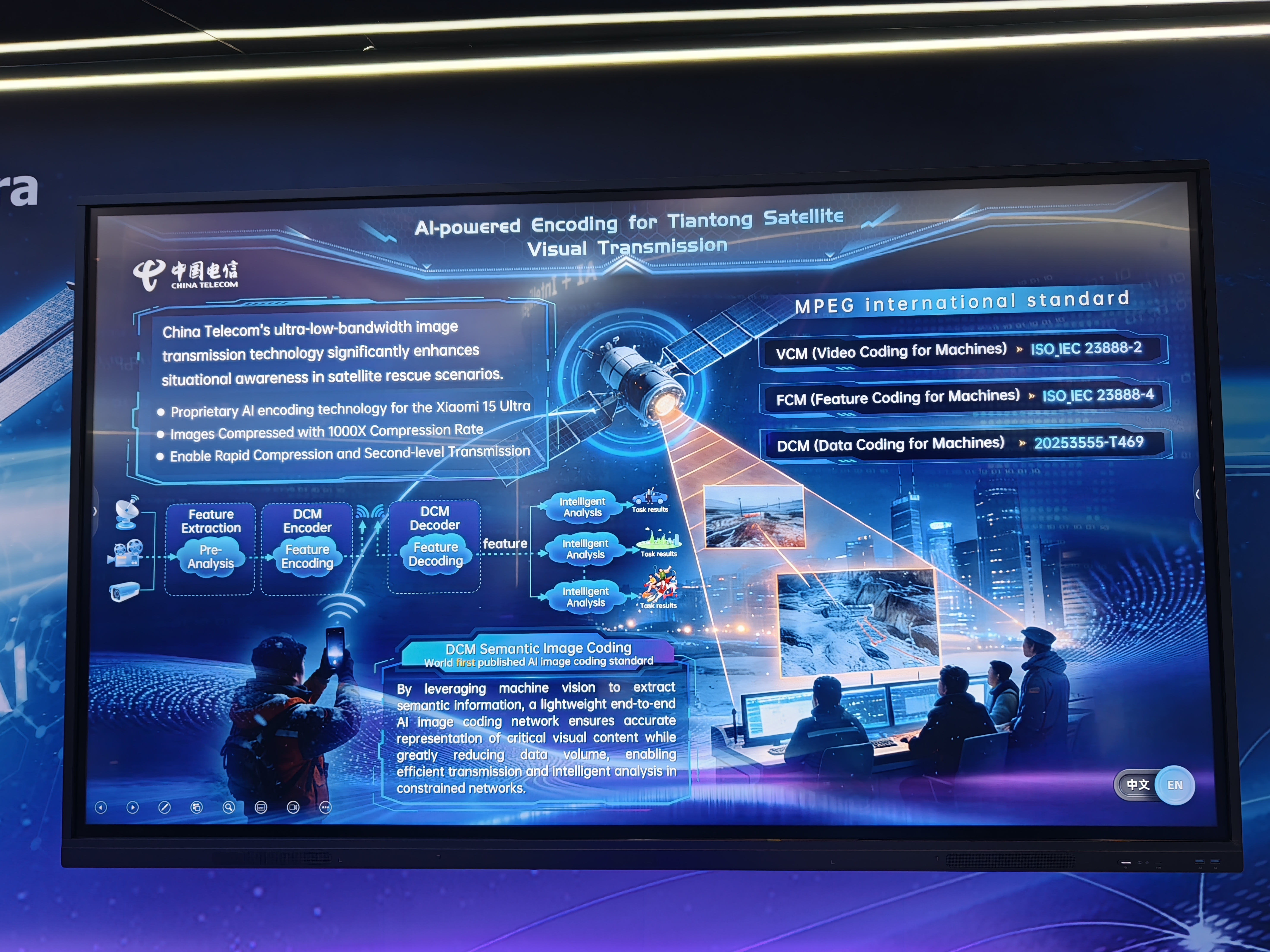
Compared with the well - known satellite phone calls on mobile phones, the satellite communication technology demonstrated at MWC is obviously more professional and complex. If we were to explain every link clearly, it would probably take a whole article. China Telecom is one of the manufacturers that explained satellite phone calls in the simplest and most straightforward way at this MWC: In simple terms, satellite communication uses in - orbit satellites as "air base stations/relays" to connect ground stations, terminals, and the Internet, realizing communication networks in areas without ground - based signal coverage, such as across seas and borders.
By the way, many satellite communication functions on domestic mobile phones are also realized through China Telecom's related services.
At this MWC, China Telecom demonstrated the world's first AI image coding standard - DCM semantic coding and decoding technology: It can compress any high - definition image to less than 4 KB. We all know that the advantage of high - orbit satellites is wide coverage, while the disadvantage is low speed. They are usually only used in fields such as voice and text messages, mainly for emergency scenarios.
(Image source: Captured on - site by Lei Technology)
With this image extreme compression technology, images can be sent out faster at low speeds. In scenarios such as emergency rescue, image information is often more helpful for rescuers to quickly determine the location and assess the situation of the trapped people.
The staff also told Xiaolei that in addition to mobile phones, devices such as smart watches and cars will also gradually join the satellite communication system. Two years ago, Xiaolei thought satellite communication was a very distant thing and it would take at least five or eight years to mature. Unexpectedly, it has developed to this level now. This also makes Xiaolei extremely look forward to: Will satellite communication become one of the standard features of various intelligent terminals in 2027, two years from now?
The popularity of 6G and Wi - Fi 8 at this MWC is no less than that of satellite communication. Although both will not be released until 2028 at the earliest (the commercialization time of 6G is expected to be around 2029), the relevant solutions and reserve technologies have already taken shape.
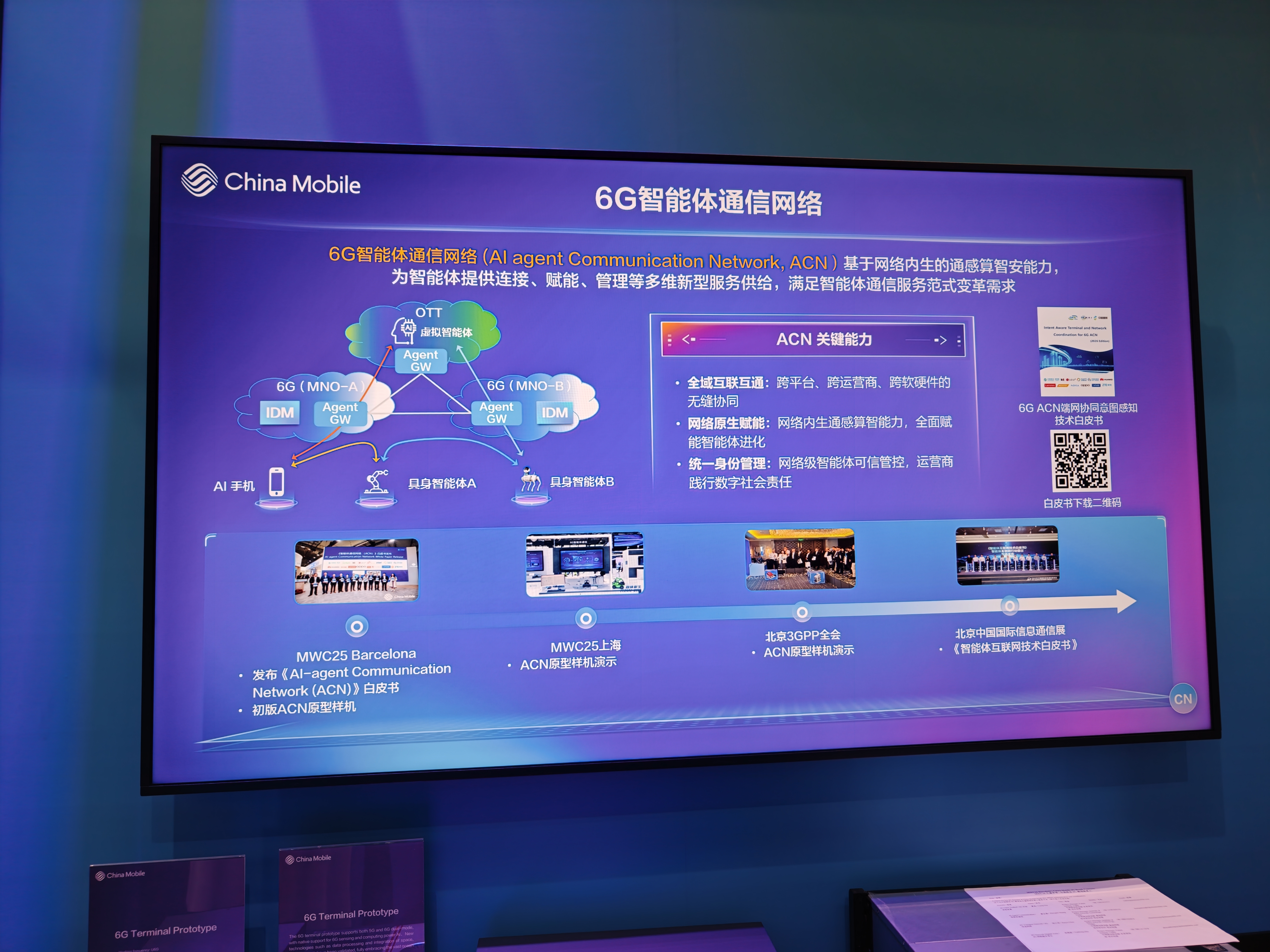
In the field of 6G, a group of operators represented by China Mobile are more like advancing the "next - generation network" from a concept to a demonstrable and verifiable system project. The focus of China Mobile's demonstration at MWC26 is no longer on "faster", but on building 6G into a network system for the era of intelligent agents: It includes the prototype of an end - to - end intelligent agent communication network (ACN), business demonstrations of multi - agent collaboration and autonomous decision - making, and an integrated presentation of "communication + computing power + intelligent services" - It wants to prove that the future network not only transmits data but also organizes the collaboration of intelligent agents and turns connections into an orchestratable and guaranteed system capability.
(Image source: Captured on - site by Lei Technology)
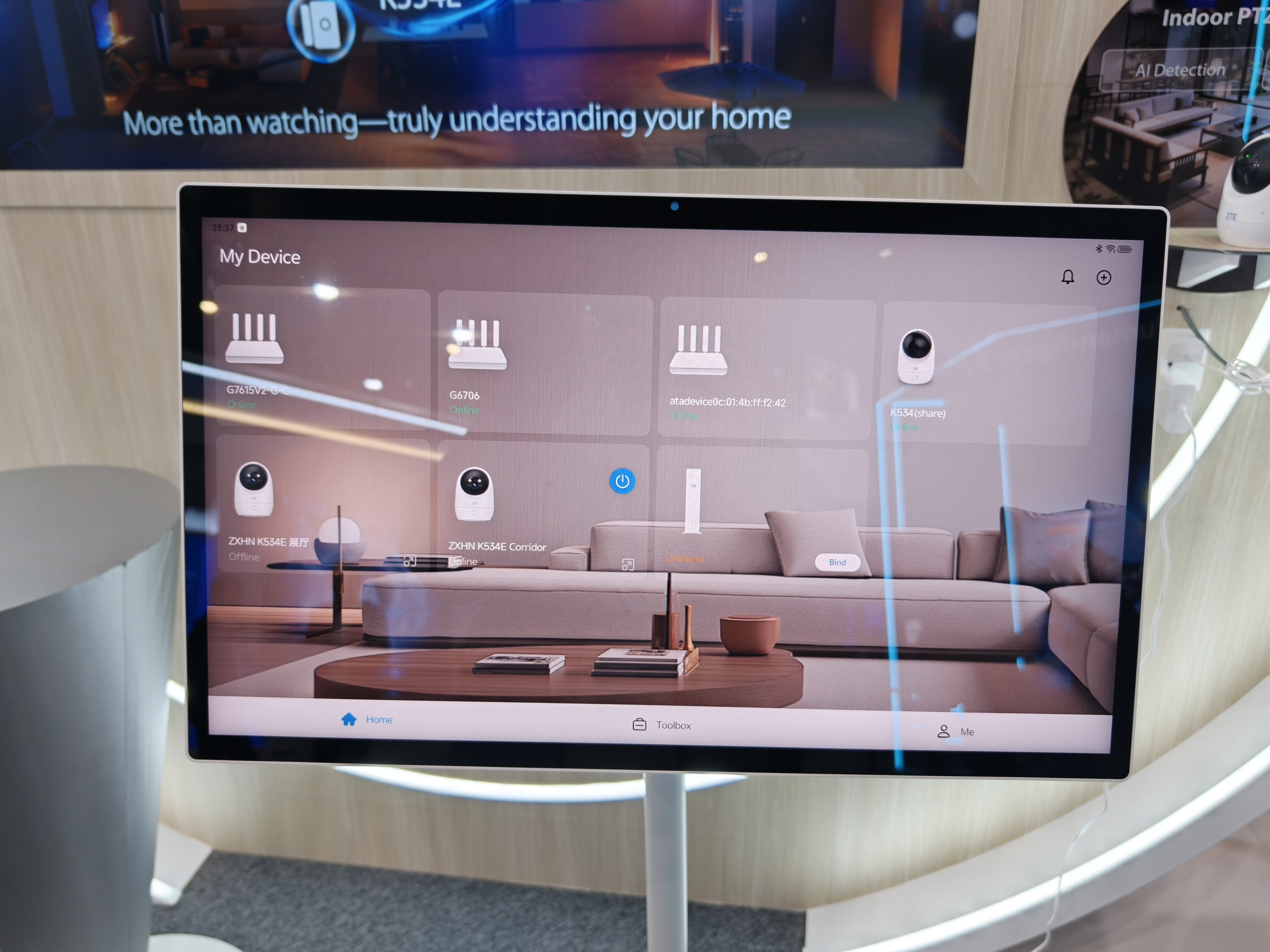
ZTE's demonstration of Wi - Fi 8 focuses on "reliability". In an environment with many people, many interferences, and many APs, what users are really afraid of is not slow network speed, but frequent stuttering, jittering, and disconnection. ZTE's Wi - Fi 8 Mesh technology emphasizes "ultra - stable + high - speed", which essentially gives higher priority to reliability and a deterministic experience - This also happens to echo the trend at MWC26 that the overall wireless technology is moving from "competing on parameters" to "competing on experience".
(Image source: Captured on - site by Lei Technology)
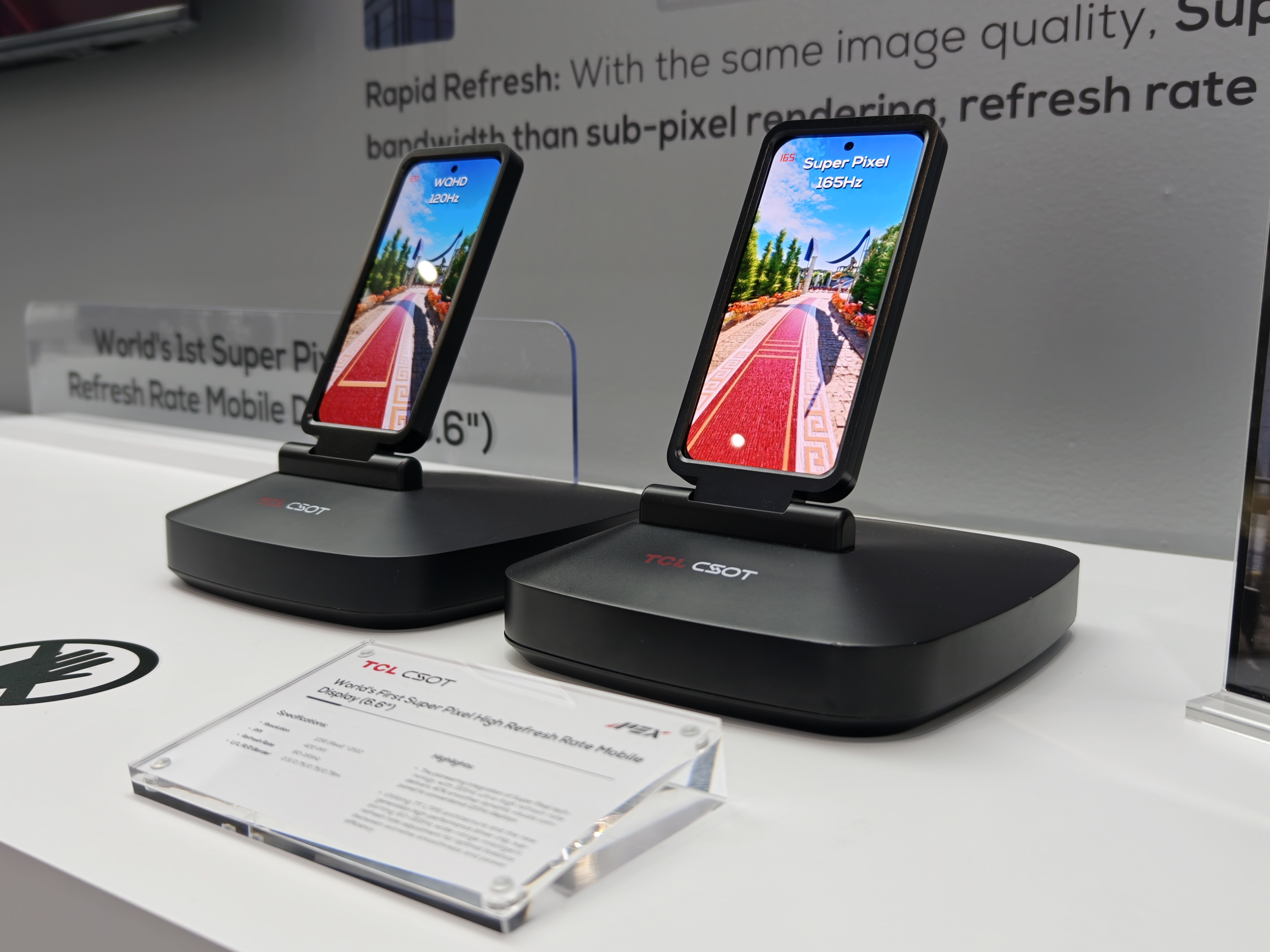
In the field of display technology, TCL CSOT brought the latest Superpixel technology. Through pixel architecture optimization, it achieves independent RGB sub - pixels, resulting in a clearer imaging performance. It brings a more intuitive visual improvement in terms of text sharpness, color edge, and sawtooth control. Under the same "equivalent PPI" image quality conditions, by reducing the amount of information to be processed for super pixels, it can greatly reduce the power consumption of the screen.
Currently, this technology has been installed on the Xiaomi 17 Pro Max and REDMI K90 Pro Max: It not only reduces the overall power consumption of the device but also provides room for a high - refresh experience on the basis of being more friendly to bandwidth and processing pressure; The refresh rate can be increased by up to about 40%.
(Image source: Captured on - site by Lei Technology)
In the AI era, the low - power technology of screens is getting more and more attention. The power saved by TCL CSOT can help the device achieve a better balance between performance release and battery life, allowing the AI experience not to come at the cost of sacrificing battery life.
In addition, there are also printed OLED screens, the new APEX Zhentu technology brand, etc. Due to space limitations, we won't go into details here. But from the various products demonstrated by TCL CSOT this time, it is obvious that TCL has long been well - prepared for the incoming era of AI terminals. Xiaolei learned from an interview with Zhao Bin, the vice - president of CSOT and the general manager of the R & D center, that TCL CSOT has been deploying AI - related technologies for more than a decade, not just in the past one or two years - This also shows that it didn't just happen to catch the wave by luck, but confirms the saying: "Opportunities are always reserved for those who are prepared."
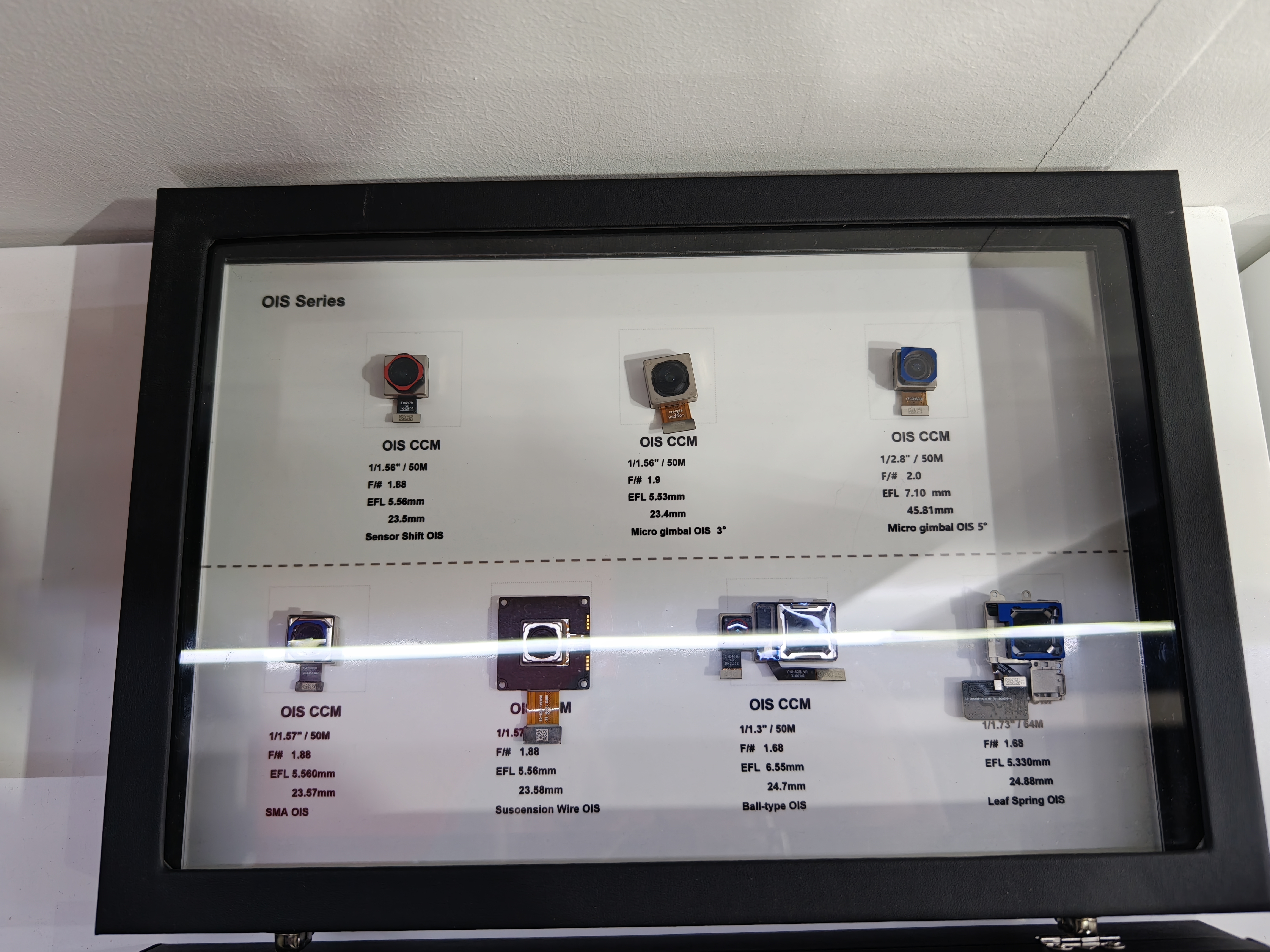
Shengtai Optoelectronics launched the new AloM technology at MWC. By replacing more complex solutions with plane mirrors and other methods, it reduces the difficulty of manufacturing and adjustment and makes the module size more user - friendly, thereby lowering the cost curve. The executives of Shengtai Optoelectronics also told Lei Technology: Our main advantage is cost. We can enable more mobile phones to have periscope modules. Currently, mid - and low - end models do not have telephoto modules in operation. We developed this technology hoping that more mobile phones can have periscope telephoto capabilities.
(Image source: Captured on - site by Lei Technology)
If AloM can significantly reduce the volume and cost of a single periscope module, the multi - periscope solution may no longer be just a showy gimmick but become a standard feature, bringing more diverse focal length coverage and a more flexible shooting experience to mobile phones.