Is the era of humanoid robot bodies coming to an end?
The "factions" of humanoid robots have become increasingly blurred.
Previously, the industry commonly used the layout emphasis to distinguish, giving rise to two factions: "pure body" and "body + large model". But now we can see that there is no longer an obvious difference between the two factions.
A clear signal is that Wang Xingxing said in an interview with Yang Sheng, "Whoever can develop the large model for robots will be the most powerful AI company and robot company in the world."
The reason why this sentence is worthy of being singled out is that it comes from an entrepreneur who has long been regarded as the "representative of the body faction". To some extent, this is more like a new "storyline" within the industry. That is, when those who are best at making the body start to publicly emphasize the importance of the "brain", a new narrative cycle is on the horizon.
This cycle is closely related to the overall trend of the industry. The engineering ability of the body of humanoid robots has crossed the critical point of "from 0 to 1". Hardware indicators such as joint control and motion stability tend to converge, and the focus of industry competition is shifting towards higher - dimensional intelligent interaction.
Those who master the model will rule the world. It is no longer a one - sided slogan but a real portrayal of the industry.
When body manufacturers start to attach importance to the development of the "brain" and the boundaries of humanoid robots gradually disappear, the issue for manufacturers is no longer simply to increase production capacity, but a new battle for market position.
01 Making Up for the Model Deficiency, Body Manufacturers Are Getting Serious
In fact, body manufacturers are not just realizing the importance of the "brain".
Long before, several typical founders of the "body faction", such as Wang Xingxing of Unitree Technology, Zhao Tongyang of Zhongqing Robotics, and Jiang Zheyuan of Songyan Power, gave similar responses when repeatedly asked about the progress of the model: They were already working on it and would continue to increase their investment. It is only now that this matter has truly become a necessary make - up lesson and retest from a "direction judgment".
In the past few months, the responses of body manufacturers have become more specific.
Zhongqing and Songyan have successively chosen to strengthen their "brain" capabilities through cooperation. In December last year, Songyan Power reached a strategic cooperation with Huichen Co., Ltd. The two sides centered on the consumer - grade humanoid robot "Bumi" and carried out in - depth cooperation in the research and development of robot brains and scenario - based intelligent applications.
On January 30 this year, Zhongqing Robotics reached an in - depth strategic cooperation with Fengwu Technology and jointly established a joint - venture company. They clearly proposed to build a new - generation AI security embodied robot OEM with the model of "body as the foundation + brain empowerment".
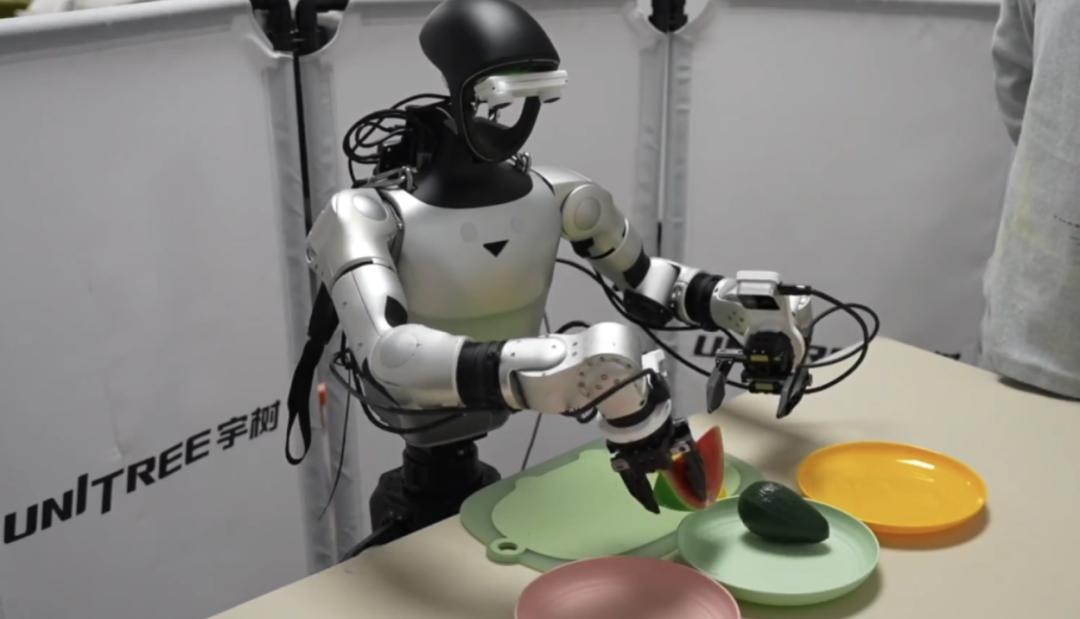
Then look at Unitree. On January 29 this year, Unitree open - sourced the vision - language - action large model UnifoLM - VLA - 0 for general humanoid robot operation. This is the latest move in the "brain" direction after open - sourcing the world model action architecture UnifoLM - WMA - 0 in September last year.
What's more dramatic is that just one day before, Lingbo, a subsidiary of Ant Group, released and open - sourced the LingBot - VLA embodied large model. In just a few days, it also intensively launched a series of "full - set" technical infrastructures for the development of embodied intelligence, such as the LingBot - Depth spatial perception model, the LingBot - World world model, and the LingBot - VA embodied world model.
This release rhythm and intensity are no longer just "showing results", but a "change of course".
In other words, if body manufacturers do not develop models themselves, the market will not stop. Automobile giants, Internet behemoths, AI model companies, and even a group of embodied intelligence startups that "emphasize the brain over the body" are all accelerating their entry into the market.
To some extent, this is a real - life portrayal of the saying "If you don't get on the table, you'll end up on the menu."
Digging deeper, why are body manufacturers collectively starting to make up for their deficiencies at this time?
The direct fuse is that the body technology has become increasingly mature. As of now, there are more than 140 domestic humanoid robot whole - machine enterprises, and more than 330 products have been released. Humanoid robots are no longer a rarity.
More importantly, the path of mass production has been cleared. At the end of January this year, the "Pilot Verification Platform" of the Beijing Humanoid Robot Innovation Center was officially launched, and the 1000th customer - customized prototype was rolled off the production line on - site. It should be emphasized that this is a customer - customized prototype, not an internal verification product, which is highly consistent with the platform's positioning of "external service".
The platform has built a whole - machine production demonstration line, a joint production line, and a small - batch trial production line. It can provide one - stop services from trial production and proofing, performance and process verification, to whole - machine assembly, adjustment, and testing verification, and has the ability to produce 5000 sets per year.
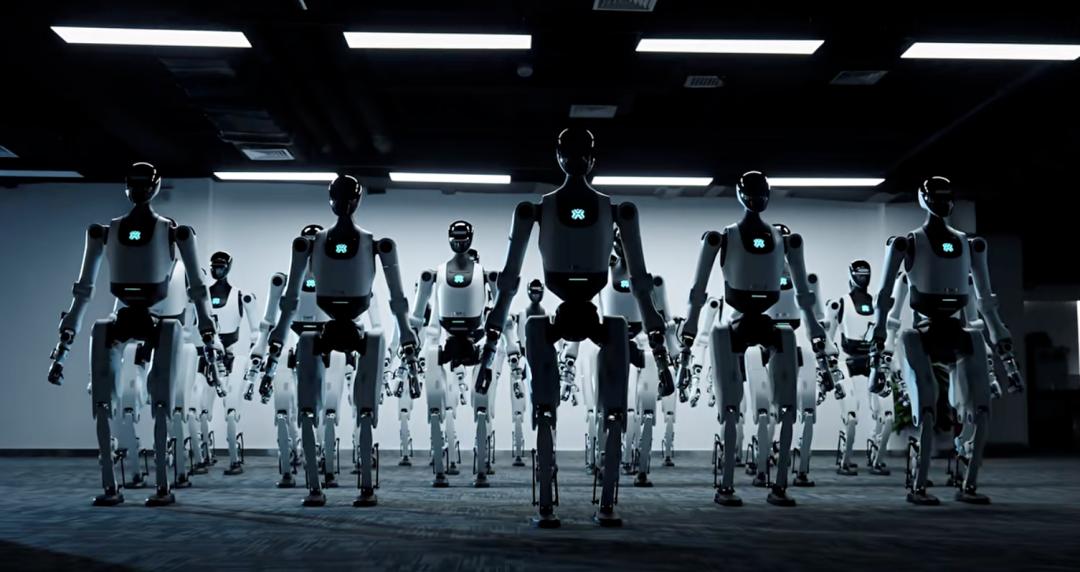
This not only means an improvement in mass - production capacity but also means that leading manufacturers are spreading their engineering experience to small and medium - sized manufacturers. The manufacturing of humanoid robots is evolving from a "difficult problem" into a mature industrial capability, and a well - structured industrial pattern is gradually taking shape.
Data from not long ago showed that the global installed capacity of humanoid robots is about 16,000 units, and Chinese manufacturers account for more than 80% of the market share. Among them, Unitree and Zhiyuan are leading the way with a delivery volume of about 5000 units.
From this perspective, the body side, whether it is the configuration, production capacity, or even the industrial chain, has become very mature, and the battle for market position on the body side is coming to an end. This is also an important reason for body manufacturers to make up for their model deficiencies.
02 The Road of Changing Course: Coexistence of Opportunities and Challenges
Frankly speaking, the idea of body manufacturers making up for their model deficiencies sounds a bit "coercive", as if the path of simply "making the body" has reached a dead - end in today's industry. But in fact, it is not all about challenges; there are also many opportunities.
In terms of challenges, on the one hand, they have to compete with powerful opponents with a first - mover advantage; on the other hand, they have to fight on two fronts, consolidating their advantages in the body while engaging in direct competition with embodied model enterprises.
The opportunities are also very clear. The shift in the industry does not mean that the industry will move towards the extreme of "emphasizing the brain over the body", but rather aims to achieve a healthy ecosystem of "walking on two legs". Through the large - scale implementation of body technology, they can seize basic markets such as scientific research and exhibitions, complete data accumulation and capital recovery; then, through continuous model breakthroughs, they can expand into complex and open scenarios such as industrial manufacturing and household services, forming a positive cycle of technological iteration and commercial realization.
It is worth noting that this "brain revolution" has not closed the opportunity window for small and medium - sized enterprises. Wang Xingxing admitted in an interview that it may not necessarily be the companies with the most computing power and the most abundant resources that will succeed. Today's AI still highly depends on "genius - driven". In other words, in this new narrative, small and medium - sized enterprises still have a chance to enter the game. After all, he even joked himself: "The probability that we can develop (the embodied large model) is not more than 50%."
Behind this frankness lies a new opportunity point in the track: at a stage when the technical route has not been fully finalized, small and medium - sized enterprises may still break through in niche areas with their flexible decision - making mechanisms and precise scenario entry.
From the perspective of industry valuation and business reality, the value weight of the model still occupies a significant advantage. In the global valuation list of embodied intelligence enterprises, the top three are all enterprises led by models or driven by both the body and the brain. Figure AI, which has just updated its model, leads the list with a valuation of $39 billion, followed by Skild AI and Physical Intelligence with valuations of $14 billion and $5.6 billion respectively. This pattern intuitively confirms the high expectations of the capital market for model capabilities and also poses a test to the development narrative of pure body enterprises.
The industry generally believes that the profit margin of body manufacturers achieved through large - scale mass production is limited. This view is also strongly supported by the popular overseas research report Humanity’s Last Machine: A deep dive on humanoid hardware.
After in - depth visits to the Chinese humanoid robot supply chain, the report found that the cost - reduction space for the structural costs of each link in the BOM of humanoid robots is limited. It is difficult to achieve significant cost reduction simply relying on the scale effect of increased production. Tesla's goal of reducing the cost of Optimus from $40,000 to $20,000 is almost impossible to achieve. This means that the single path of "reducing costs through scale" expected by body enterprises has a low feasibility, and this kind of development logic is easily misunderstood by the capital market.
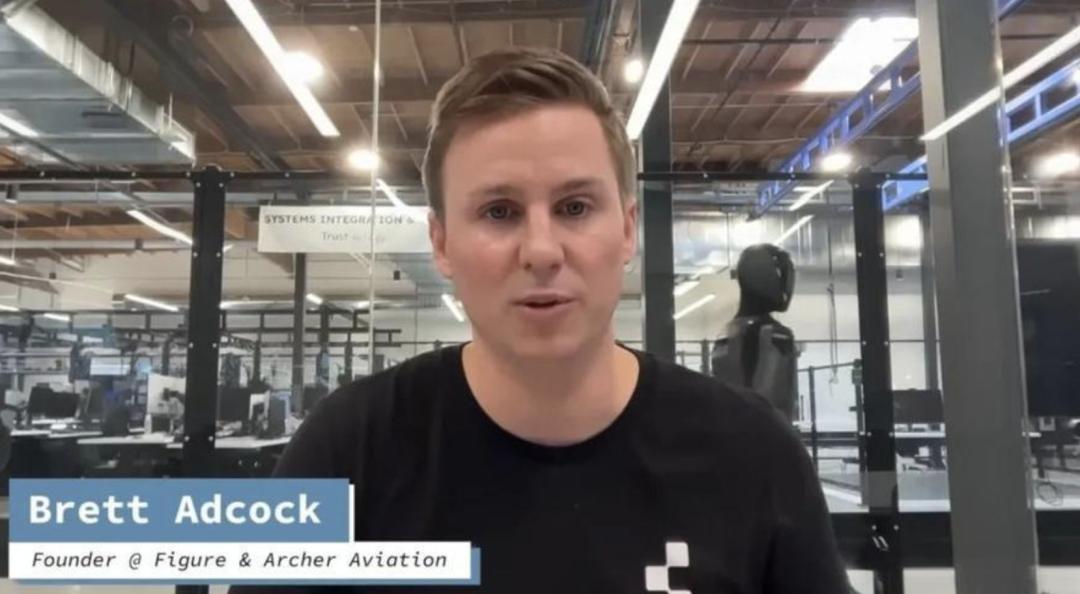
The CEO of Figure AI has also repeatedly stated that the core of the humanoid robot competition is to achieve "generalization" first, which is essentially a technical R & D problem, not simply a manufacturing and mass - production problem. Although his words are always intense and he once questioned the mass - production ability of Ubtech, this statement also points out the core logic of industry development from the side: the full - stack approach is the ultimate direction of embodied intelligence.
In fact, this change of course is not a negation of body technology but an inevitable upgrade of the industry from "single - technology competition" to "system - ability competition".
The body is the physical carrier, and the model is the intelligent core. Both are indispensable. The capital market's preference for models is essentially an expectation of "intelligent implementation ability", rather than a neglect of body technology; and body enterprises making up for their model deficiencies is not about giving up their own advantages but about enabling body technology to break through the ceiling of scenario applications with the support of models.
For the entire industry, whether it is the dual - wheel drive of leading enterprises or the niche breakthrough of small and medium - sized enterprises, the core is no longer about "making the body" or "making the brain", but about finding their own positions and building the body - brain coordination ability suitable for scenarios.
Leading enterprises can rely on their resource advantages to promote the research and development of general technologies, while small and medium - sized enterprises can focus on high - value niche scenarios such as semiconductor auxiliary parts handling and photovoltaic power station inspection, and build differentiated barriers through the combination of "body customization + lightweight model".
When all players break out of the thinking of "single - dimensional competition" and truly build a complete closed - loop of perception - decision - execution around scenarios, the embodied intelligence industry can truly move from technology exhibitions to large - scale commercial implementation, and this road of change of course will eventually become the only way for the industry to mature.
This article is from the WeChat official account "Embodied Learning Community", author: Peng Kunfang. It is published by 36Kr with authorization.