Claude's new model 4.6 is here, and more jobs are at stake: Wall Street finance, compilers, white-hat hackers, PPT creation... all are under threat.
As soon as you open your eyes, Anthropic has launched a new model. Let Claude Opus 4.6 wish you a happy new year!
As soon as the news came out, FactSet, a financial data service provider, tumbled as much as 10% during intraday trading. S&P Global, Moody's, and Nasdaq all declined, and major indexes plunged across the board.

This is already the second time this week that you, Anthropic, have stirred up the market.
A few days ago, a plug - in for automated legal work under its banner quietly went online, directly triggering a sharp decline in software stocks worth trillions of dollars.
Investors' panic is focused on one question: Who can guarantee that they won't be disrupted by AI in a few years? If not, sell.
Unexpectedly, Anthropic is even more ruthless today.
Before today, people's impression of Claude was that it had an overwhelmingly strong programming ability.
Claude Opus 4.6 sneers and punches through this impression with a bang: I'm strong in many more fields!
At least according to the official statement, Claude Opus 4.6 can handle financial analysis, research, and the Microsoft Office suite with great proficiency.
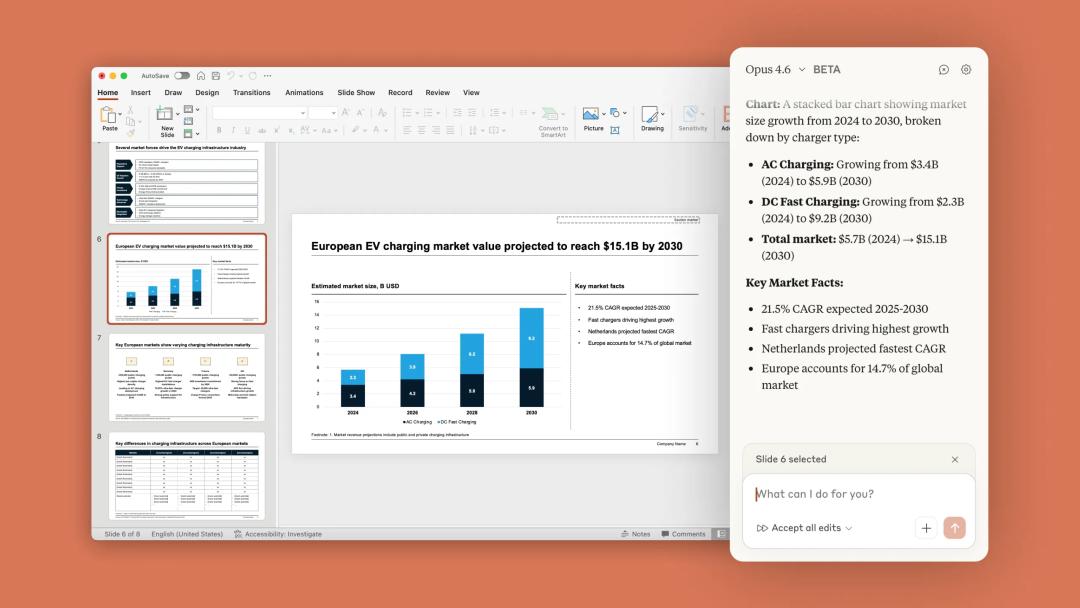
The official website directly states:
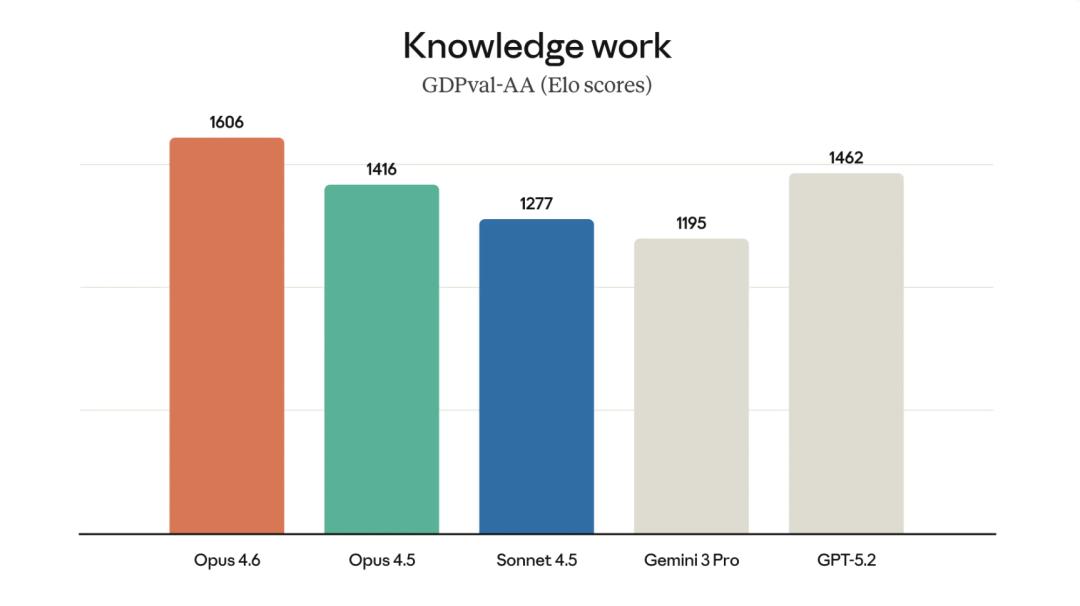
In GDPval - AA (a performance indicator for assessing knowledge - work tasks with economic value in financial, legal, and other fields), Opus 4.6 outperforms the next - best model in the industry, OpenAI GPT - 5.2, by 144 Elo points.
(This means that Claude Opus 4.6 scores higher than GPT - 5.2 in about 70% of the cases in this assessment. A 50% rate would mean comparable scores.)
Of course, it still leads the way in programming.
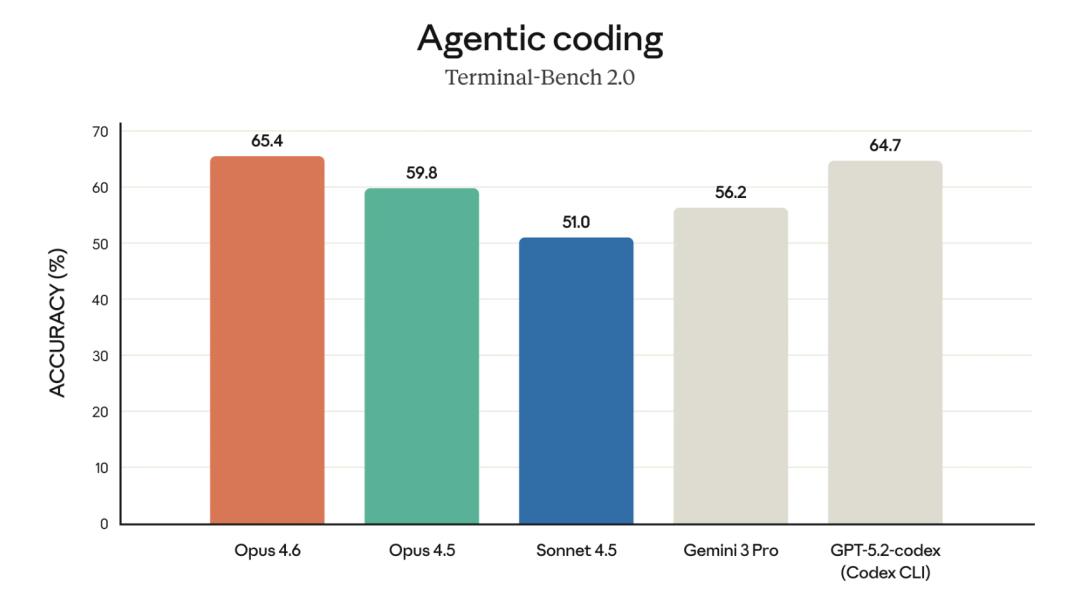
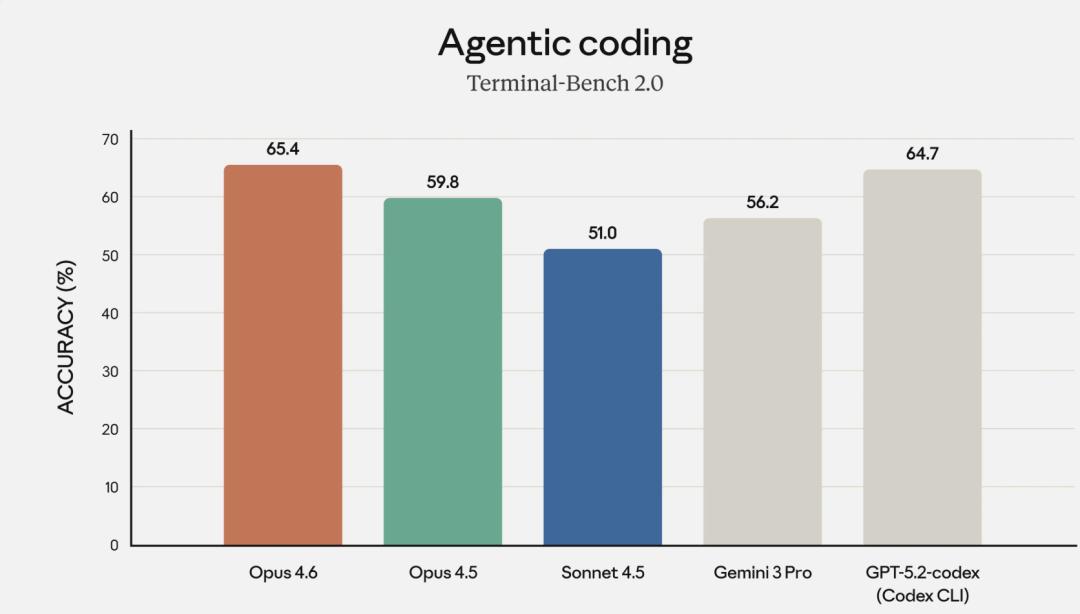
It achieved the highest score in the Agent programming assessment Terminal - Bench 2.0 and led all other cutting - edge models in the "Final Exam of Mankind".
The good news is that with increased capabilities but no price hike, the pricing of Opus 4.6 remains the same as the original standard: The price is $5 for every million input tokens and $25 for every million output tokens.
(For the convenience of reading, the new model will be referred to as Opus 4.6 hereinafter.)
Return to the peak with 1M context and adaptive thinking
The most obvious improvement in Opus 4.6 is that it has a huge 1M Token context. This is the first time Claude has introduced a context window of this length in an Opus - level model.
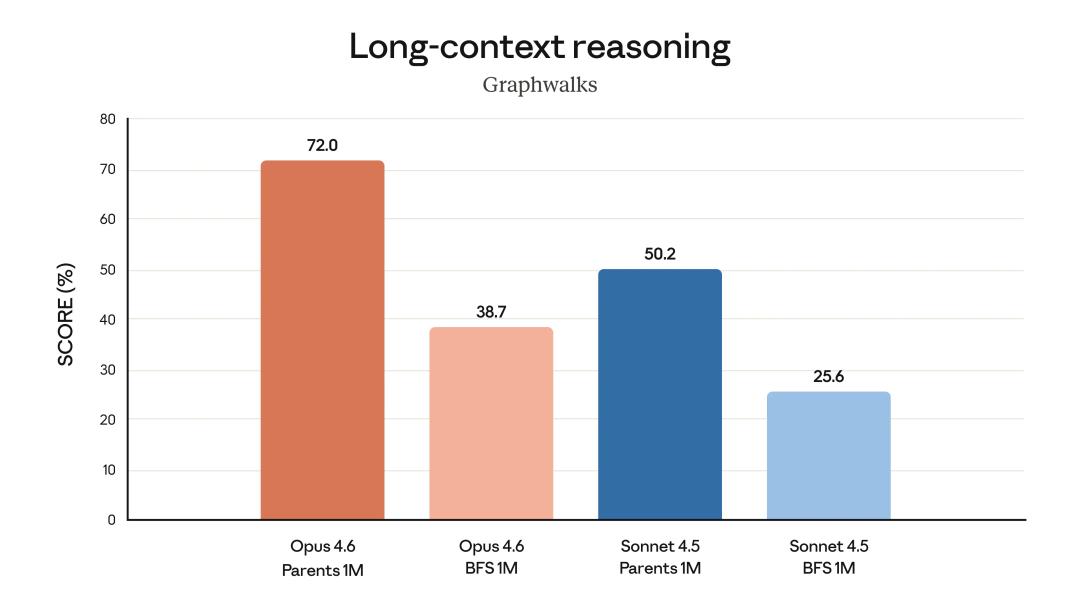
This greatly improves the "context decay" problem that Opus 4.6 used to have when dealing with long texts.
In the MRCR v2 8 - needle 1M benchmark test - a search for a needle in a haystack - Opus 4.6 scored 76%, while Claude Sonnet 4.5 only scored 18.5%.
The result is an improvement in search ability.
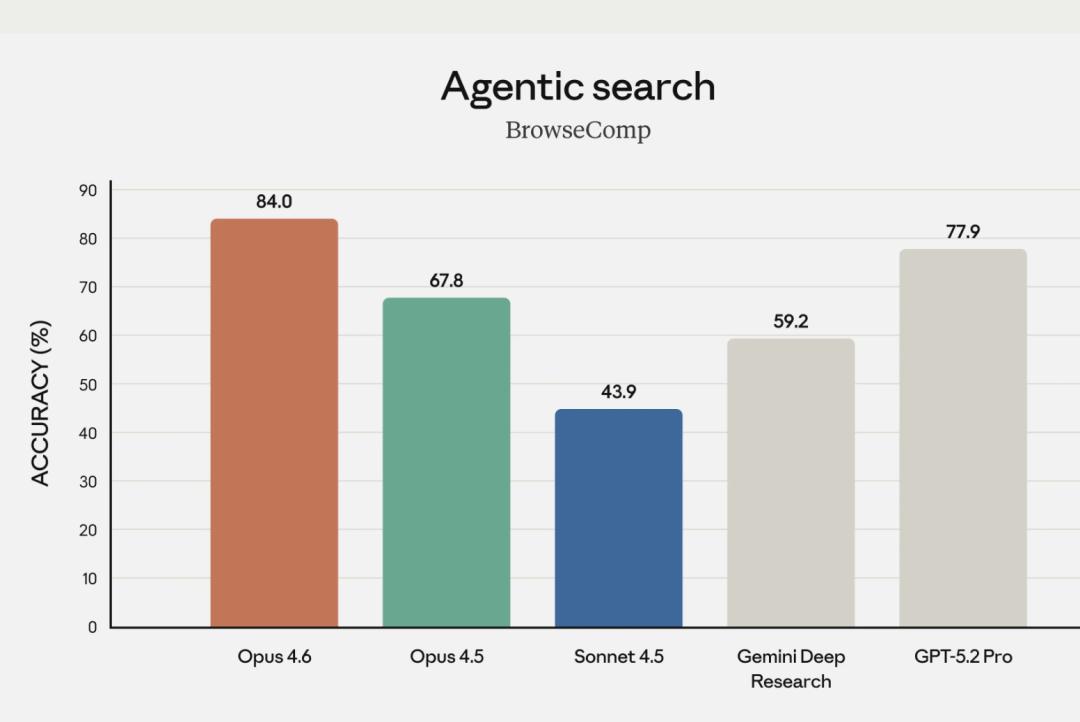
In the BrowseComp evaluation (which assesses the ability to retrieve hard - to - obtain information online), Opus 4.6 ranked first in the industry. It showed the best performance in in - depth multi - step agent - based searches and can accurately locate key information scattered in long documents.
Opus 4.6 also introduces the Adaptive Thinking function.
Previously, developers using the Claude model could only choose between turning on or off the extended thinking mode.
Now, Claude can decide for itself when in - depth reasoning is needed.
(To be honest, this step is slower than ChatGPT. Next time, please introduce such good features more quickly.)
The supporting effort parameter provides four levels of selection - low, medium, high, max - with high being the default. You can manually lower it when the model over - thinks.
Another useful function is Context Compaction.
When the conversation approaches the upper limit of the context window, it automatically summarizes and replaces old content, making long conversations and Agent tasks easier.

It dominates in core scenarios such as coding, knowledge work, search, and reasoning
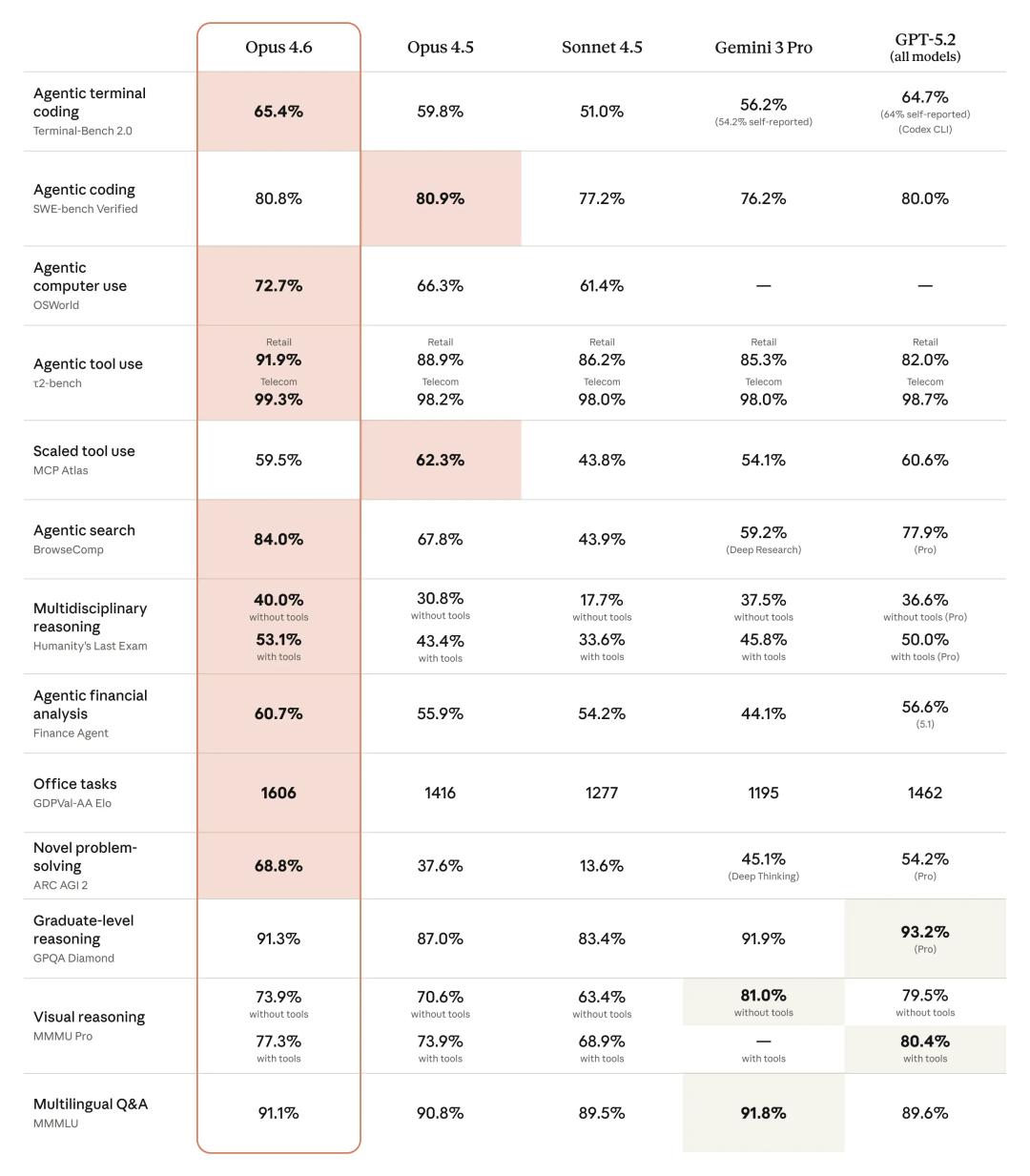
The official blog shows that once Opus 4.6 is launched, few models can compete with it.
Opus 4.6 has made significant breakthroughs in core scenarios such as coding, knowledge work, search, and reasoning.
Its scores in multiple evaluations have exceeded those of previous generations and industry competitors, like:
After getting a general impression, let's break it down one by one.
First, let's talk about its programming ability.
Opus 4.6 got the highest score in Terminal - Bench 2.0.
Looking at the actual abilities behind the scores, Opus 4.6 can plan tasks more comprehensively, run stably in large codebases, and improve the accuracy of code review and debugging.
Moreover, it can independently detect its own errors.
Another point is that Opus 4.6 supports multi - language coding and can handle cross - language software engineering problems.
It can complete the migration of a codebase with millions of lines of code like a senior engineer, and the time it takes is actually half as much.
As I'm writing this, I can't help but wonder:
Will engineers be so happy that they stop losing hair when they hear this news, or will they lose it even faster... (Deep in thought.jpg)
Second, Opus 4.6 is also actively invading the traditional office territory.
This time, it has taken on the Microsoft Office suite.
It can directly ingest messy unstructured data in Excel, infer a reasonable table structure on its own, and handle multiple complex steps in one operation;
It can remember your company's PPT template, including the font and layout style, to ensure that the generated PPT doesn't have an "AI feel" and makes your boss think you stayed up all night to create it.
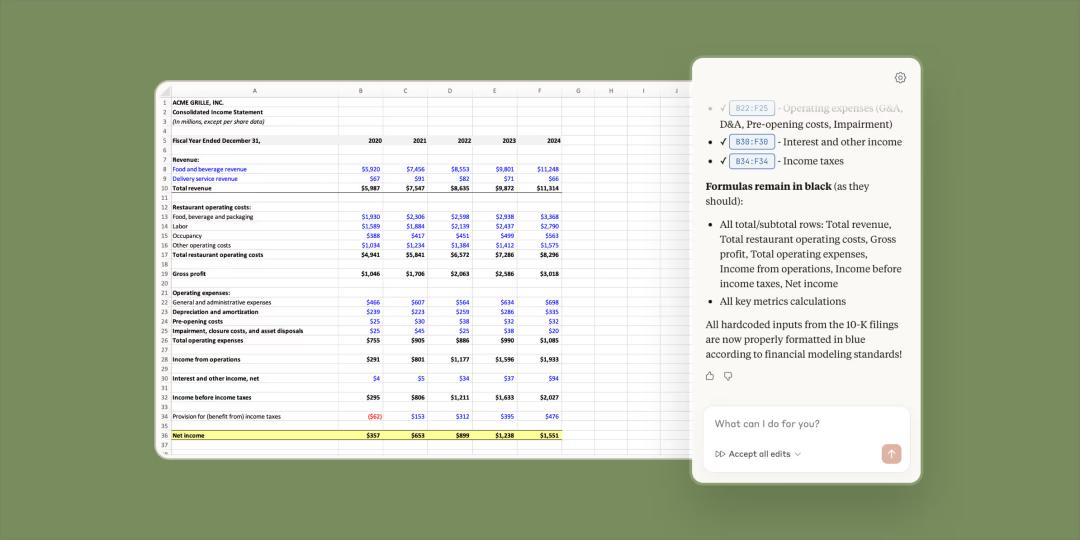
In a Cowork environment, Opus 4.6 can run multiple tasks autonomously on behalf of the user, conducting financial analysis on one hand and organizing research results into documents on the other.
It seems that Anthropic wants to pull Claude out of the chat box and into more areas?
Third, let's talk about its improvement in reasoning ability.
Here's a summary first:
Opus 4.6 is even stronger in cross - domain reasoning.
In the multi - disciplinary complex reasoning test "The Final Exam of Mankind", Opus led all cutting - edge models.
In the legal field, Opus 4.6 scored 90.2% on the BigLaw Bench, where 40% is a full score.
In the GDPval - AA evaluation of economic - value - oriented tasks in finance, law, etc., Opus 4.6 outperformed the "industry competitor" OpenAI GPT - 5.2 by 144 Elo points.
Whether it's complex legal and financial professional knowledge or tricky academic research, its depth of reasoning and understanding has reached the peak of current frontier models.
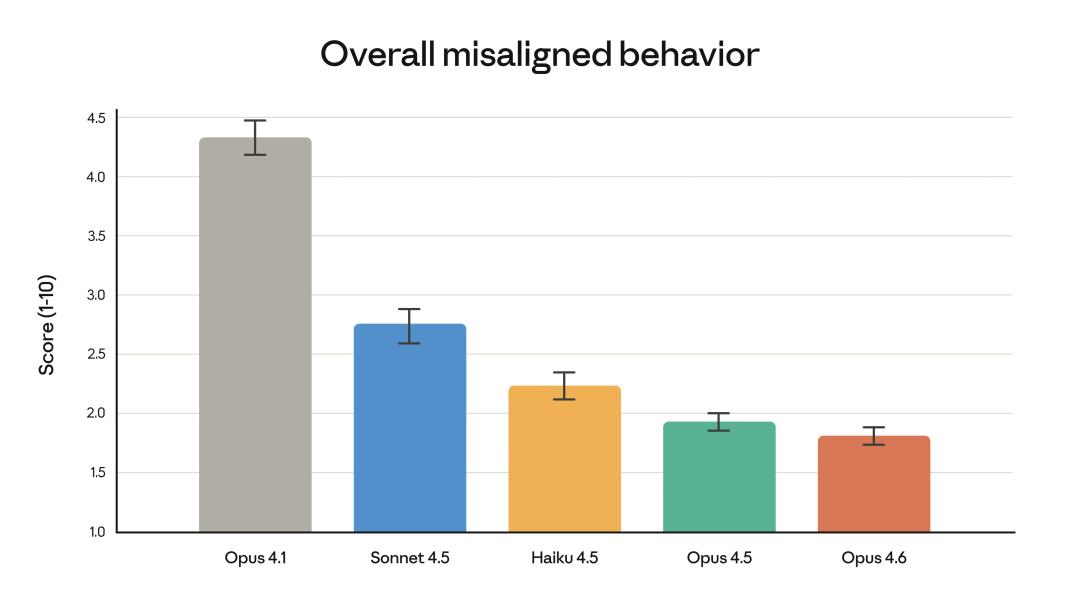
Rarely, this leap in intelligence doesn't come at the cost of sacrificing security.
In the automated behavior audit that Anthropic values most, Opus 4.6 has a very high alignment level, and at the same time, very low negative behaviors such as deception and flattery.
Opus 4.6 has even solved the common headache in the AI circle, the "over - refusal" problem -
When faced with normal and harmless requests, it shows less rigid refusal than any previous model.
Currently, Opus 4.6 has been launched on the official website, API, and all major cloud platforms.
With increased capabilities but no price hike, the pricing of Opus 4.6 remains the same as the original standard: The price is $5 for every million input tokens and $25 for every million output tokens.
However, in the 10M token context test version, there will be an additional fee if the prompt exceeds 200k tokens.
Pay attention to this important point!
If you want to use Opus 4.6, you need to explicitly specify the model identifier "Claude - opus - 4 - 6" when calling the API.
More jobs are at stake
16 Agents wrote a C compiler in two weeks and ran Doom
A core upgrade brought by Opus 4.6 is Agent Teams, which means multiple Claude instances can collaborate in parallel without real - time human supervision.
Nicholas Carlini, a researcher on the Anthropic security team, conducted a stress test with it: He asked 16 Agents to write a C compiler that can compile the Linux kernel from scratch in Rust.
In two weeks, with nearly 2000 Claude Code sessions, burning 2 billion input tokens and 140 million output tokens, the total cost was less than $20,000.
The final output was a compiler with 100,000 lines of code that can compile Linux 6.9 on the x86, ARM, and RISC - V architectures and can also run Doom.
This parallel mechanism allows each Agent to run in an independent Docker container and share a git repository.
To prevent multiple Agents from stepping on each other's toes and all rushing to solve the same problem, the system uses a simple locking mechanism.
Agents "claim" tasks by writing files to the current_tasks/ directory, and the git synchronization mechanism automatically handles conflicts. There is no dedicated communication protocol between Agents, and no Agents are orchestrated. Each Claude decides what to do next on its own.
Carlini wrote in his blog:
"When the Agents started compiling the Linux kernel, they got stuck for a while because it was a huge monolithic task, and all 16 Agents hit the same bug and overwrote each other."
The solution was to introduce GCC as an "oracle" control group, allowing each Agent to compile only a random subset of the kernel and locate the problem file through the binary search method. Only then did the parallel capabilities truly come into play.
500 zero - day vulnerabilities, ready to be discovered out of the box
Opus 4.6's performance in the field of network security even surprised Anthropic itself.
In the pre - release test, Anthropic's cutting - edge red team put Opus 4.6 into a sandbox environment, gave it Python and regular vulnerability analysis tools (fuzzers,