Three Chinese entrepreneurs born in the 1990s with a combined five IMO gold medals have founded a startup valued at over $10 billion.
Billionaires specifically refer to those with a net worth exceeding $1 billion. In Silicon Valley in recent years, new billionaires have been emerging constantly, and they are often very young.
Just the title of "the world's youngest billionaire" has changed hands multiple times in a short period.
First, there was 28-year-old Alexandr Wang, the founder of Scale AI, who is now the person in charge of AI at Meta. 18 months later, it was 27-year-old Shayne Coplan, the CEO of Polymarket. After another 20 days, the "world's youngest billionaire" became the three founders of the AI data annotation startup Mercor, who are only 22 years old, even breaking the record set by Mark Zuckerberg back then (at 23 years old).
Now, another Chinese billionaire has emerged in Silicon Valley - Steve Hao, the co-founder and CTO of Cognition.AI.
Cognition has just completed a financing round of over $400 million, with a post - investment valuation of $10.2 billion. According to Forbes' estimates, as the co - founder with the highest shareholding in the company, Steve Hao's net worth has reached around $1.3 billion.
Although Hao is already 28 years old and cannot win the title of "the world's youngest billionaire" at present, the rapid increase in his wealth is still astonishing.
The other two founders of Cognition are also not far from the "net worth of $1 billion mark". The CEO, Scott Wu, has a net worth of $600 million, while the CPO, Walden Yan, has a net worth of $830 million.
All three are Chinese and very young. Scott Wu and Steve Hao are both post - 90s, and Walden Yan is a post - 00s, only 23 years old now.
01 The "world's first AI programmer" comes from this company
You may not remember Cognition.AI, but you probably still have an impression of Devin and Windsurf.
Devin is the star product of Cognition.AI.
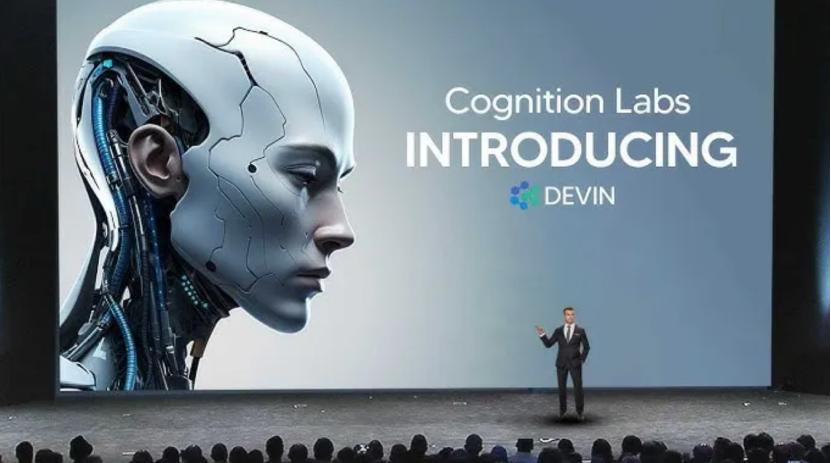
It is an autonomous programming agent, directly defined by the company as an "AI software engineer".
Different from previous "code assistants" like GitHub Copilot, Claude, and Cursor, Devin can complete development tasks end - to - end, rather than just helping engineers complete code.
Users only need to describe their requirements in natural language, such as developing a website, building a certain application function, or fixing problems in the code library. Devin will break down the tasks on its own, write code, call tools, run programs, debug errors, and iterate repeatedly until the project can run.
It was first publicly demonstrated and a technical report was released in March 2024. As soon as it was launched, it caused a sensation in the Silicon Valley developer community. To some extent, it is also regarded as the iconic product that truly brought the "vibe - coding" wave into the mainstream.
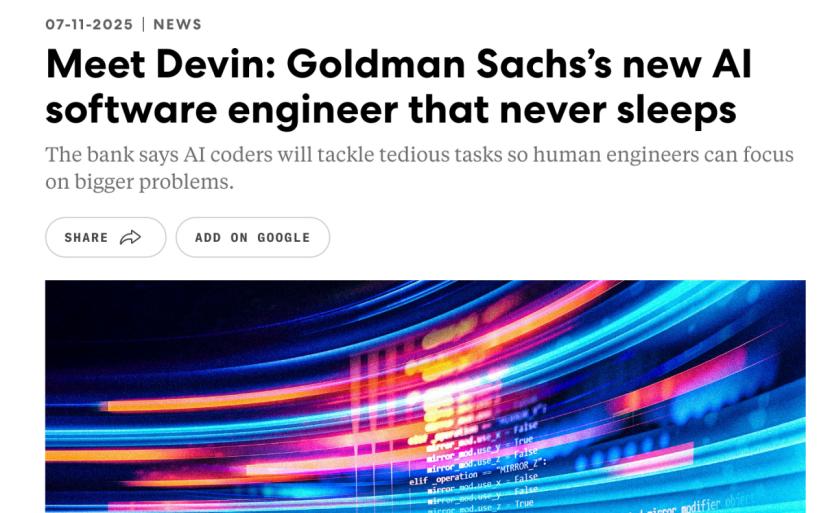
At that time, Devin was promoted as the world's first AI programmer. In July of that year, Goldman Sachs introduced Devin. The press release said that "Goldman Sachs' newly recruited AI programmer never sleeps".
At that time, Cognition had only been established for one year, and Devin became an instant hit after its release. Cognition quickly received support from top venture capital firms such as Founders Fund, Khosla Ventures, and Bain Capital Ventures, and its capital lineup was quickly formed.
Well - known corporate customers also flocked to it. In addition to Goldman Sachs mentioned earlier, there are also Citibank, the fintech company Ramp, and so on.
However, Devin's early popularity was mainly based on the company's demonstrations. After its official launch, controversies also followed. Devin was even accused of being "fake". For example, the demonstration omitted the process of Devin creating and then fixing bugs by itself, making it seem more "perfect".
But if Cognition had faded into obscurity after that, there wouldn't be this article.
The next highlight moment was about to arrive, which was the "Windsurf battle".
The Windsurf battle was one of the most dramatic events in the AI coding tool field in 2025.
Windsurf is an AI coding startup focusing on agentic IDE. It was targeted by OpenAI for acquisition. However, there was a major sticking point during the negotiation of this deal. Since OpenAI is backed by Microsoft and has an intellectual property sharing agreement with Microsoft, Windsurf had concerns about this.
As a result, the long - reported and seemingly certain "OpenAI acquisition of Windsurf" deal fell through.
Just a few hours after OpenAI's failed attempt, Google suddenly stepped in. It quickly paid $2.4 billion to obtain a non - exclusive license for Windsurf's technology and also recruited the CEO, Varun Mohan, the co - founder, Douglas Chen, and several core R & D personnel to Google DeepMind.
It was a Friday, and things happened very quickly. Windsurf and its 250 employees were left in a difficult situation.
Just at this moment, Cognition made a stunning appearance.
On Monday, it announced that it had acquired the remaining assets of Windsurf, including the Windsurf IDE product itself, intellectual property (IP), trademarks, brand, as well as the corporate customer base, user data, and the remaining team (most of the employees).
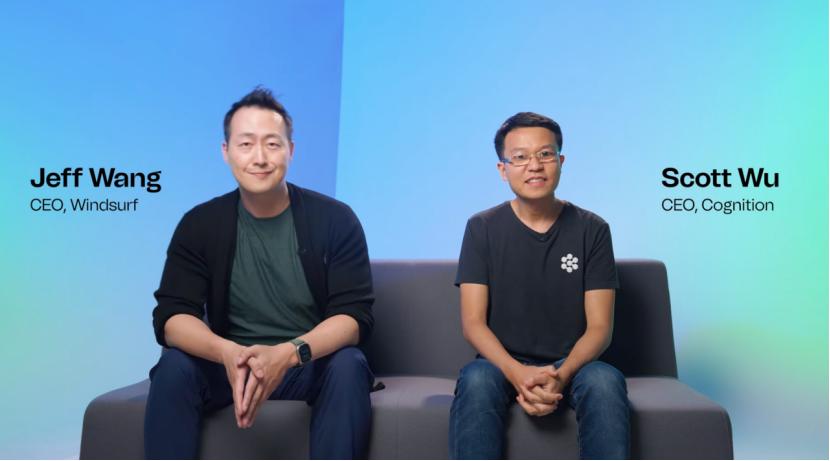
Cognition's quick reaction and decisive actions became a good story. It obtained a complete product line, brand, and team at a relatively low cost. The combination of Devin and Windsurf directly enhanced its competitiveness in the AI coding track.
02 The three Chinese founders
As can be seen from the previous text, Cognition is a small - scale but very perceptive startup.
The founders of the company are three Chinese: the CEO, Scott Wu, the CTO (Chief Technology Officer), Steve Hao, and the CPO (Chief Product Officer), Walden Yan.
Scott Wu is a second - generation immigrant born in the 1990s. His parents immigrated from Shanghai to the United States and are both chemical engineers. When he was a child, he showed talent in mathematics and programming and won the International Olympiad in Informatics (IOI) gold medal three times.

Later, he entered Harvard University. In his own words, he wanted to "meet some interesting people and have personal growth". In his freshman year, Wu represented Harvard in the International Collegiate Programming Contest (ICPC) and helped the team win the gold medal and the third place in the world.
However, he chose to drop out of school and start a business. He co - founded the AI professional social platform Lunchclub.
According to Wu's later recollection, their understanding of what AI could do at that time was not profound. As their understanding deepened and ChatGPT arrived, when Wu started a business again, Cognition was born.
Wu has a lot in common with the other two founders, which may also be the basis for their cooperation. Steve Hao and Walden Yan were also active in competitions, won IOI gold medals, and studied at prestigious universities.
The three founders have a total of 5 IOI gold medals, which is quite eye - catching in the entire Silicon Valley.
What's even more interesting is that Wu once revealed that these competitions also form a circle, just like the "PayPal Mafia". The competition circle also has its own "competition mafia". Top contestants often communicate with each other, introduce opportunities, and share ideas. It's not surprising that they eventually team up to start a business.
Steve Hao and Wu competed against each other in mathematics and programming competitions during their adolescence and belong to the same generation of technology competition elites. Later, Hao entered the Massachusetts Institute of Technology.

Before founding Cognition, Hao's most important professional experience was working as a core engineer at the data annotation and AI infrastructure company Scale AI.
Hao was involved in engineering related to high - complexity data systems and model training processes and is regarded by the industry as a composite technical talent who understands both model capabilities and engineering implementation.
Walden Yan also won an IOI gold medal in 2020. He is also an alumnus of Harvard with Wu and also dropped out of school.

Before founding Cognition, Yan had accumulated a lot of experience, such as being a managing partner of the Inverted media consulting company (which was later acquired), a co - founder of the DeepReason web3 security startup, and an engineer at Anysphere (the Cursor AI coding tool).
After ChatGPT was officially launched in November 2022 and swept the world in just a few months, the three of them quickly realized the potential of generative AI, especially long - range reasoning and autonomous agent capabilities.
They believe that "letting AI truly write code, debug, and deploy the entire software engineering process" is essentially a highly algorithmic problem, which is very suitable for their backgrounds.
So, in an Airbnb house, they invited several friends from the IOI competition circle and built a prototype in the form of a hackathon.
Devin was born in this rented house.
03 The rapid increase in wealth
After Devin became extremely popular, Cognition has attracted a lot of attention.
When Devin was released, the company completed a Series A financing round of $21 million, with a valuation of about $350 million. This was already a good start.
After Devin's release, the company immediately followed up with a new round of financing. The lead investor was still Founders Fund. This time, it raised $175 million, and the valuation rose to about $2 billion, doubling several times in just a few months.
In 2025, in August, Cognition raised nearly $500 million, and its valuation soared to $9.8 billion.
Actually, before this round of financing, Cognition had also successfully sparked intense debates in the community.
In June 2025, Cognition officially published an article titled "Don't Build Multi - Agent Systems". They advocate using a single agent + powerful context engineering to achieve long - term reliable agent behavior, which is especially suitable for deep, continuous, and highly sequential tasks, such as software engineering and the entire coding process.
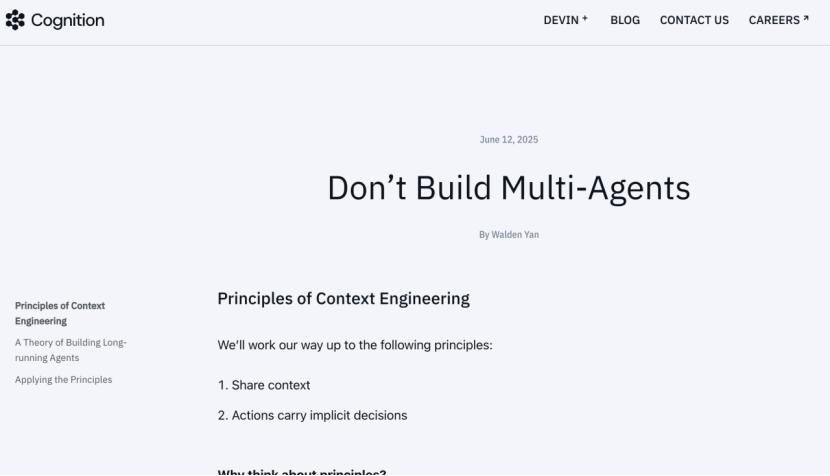
The most stung by this statement was the well - known Anthropic. Less than 24 hours after Cognition's article was published, Anthropic released a report titled "How We Build Multi - Agent Research Systems" to refute it. Anthropic believes that multi - agent systems are feasible and powerful, especially suitable for parallelizable and decomposable tasks. Although there will indeed be challenges in coordination, they can be avoided through a series of means.
With the Windsurf battle, in September, Cognition announced good news again. This round of financing exceeded $500 million, and the post - investment valuation reached $10.2 billion.
This means that Cognition has crossed the "billion - dollar valuation" threshold, surpassing Anysphere (the company behind Cursor) with a valuation of $9.9 billion, and has become the company with the highest valuation in the global AI programming track.
It was also after this round of financing that the net worth of the three founders skyrocketed.
According to Forbes, CTO Steve Hao had the highest shareholding during the financing, and his net worth has reached the level of $1.3 billion.
Among the three, next is CPO Walden Yan, with a net worth of about $830 million, and finally CEO Scott Wu, with a net worth of about $600 million.
It is currently unclear why the CEO has the lowest shareholding. Cognition has not responded to this yet.
In addition to frequently causing waves in public opinion, Cognition has also done a good job in its main business.
In September 2024, Devin's Annual Recurring Revenue (ARR) was about $1 million. By the first half of 2025, it had soared to $73 million. Industry giants such as Dell and Cisco have all become its loyal customers.
Windsurf also contributed a lot to this. After the acquisition was completed, Cognition's Annual Recurring Revenue (ARR) doubled directly, and the combined company's ARR increased by more than 30%.
Devin's sudden popularity made the company stand in the spotlight of the AI programming track overnight, but it also pushed it into a more brutal competition channel:
On the one hand, basic model giants such as OpenAI, Google, and Anthropic are accelerating the integration of agent capabilities into their own platforms, forming a systematic advantage from models, computing power to distribution channels;
On the other hand, native coding agent players such as Cursor and Windsurf are also rapidly iterating their product experiences to compete for the developer entrance.
In this situation, whether Devin can continuously widen the gap in engineering capabilities will determine whether Cognition will become the next - generation software productivity platform or be integrated into a