Aiming at the blue ocean of spectral quantitative remote sensing and deploying the world's first hyperspectral quantitative remote sensing constellation with global coverage, "Spectrum Star Aerospace" has completed a 30 million yuan angel round of financing | Exclusive report by 36Kr
Text | Liu Jingqiong
Editor | A Zhi
Cover Source | Provided by the enterprise
36Kr has learned that Shanghai Puxing Aerospace Technology Co., Ltd. (hereinafter referred to as "Puxing Aerospace"), a provider of optical payloads and micro - nano satellite platform solutions, has announced the completion of a 30 - million - yuan angel round of financing. This round of financing was led by Tusstar Venture Capital, and the funds raised will be used for the R & D of optical payloads and mass - production technology for remote sensing satellites, the construction of the Changchun satellite factory, and team operations.
Puxing Aerospace was established in September 2025 and focuses on the R & D and mass manufacturing of multi - category optical remote sensing payloads and 20 - to 30 - kilogram business - type micro - nano satellites. It is the first domestic team to master real - time spectral quantitative remote sensing technology and promote the mass production of spectral quantitative remote sensing satellites.
The founder, He Xiaojun, has 18 years of experience in optical payload and satellite R & D. He has served as the chief designer of multiple satellite models in leading domestic commercial aerospace enterprises, and has led the development and launch of a total of 55 satellites. He has also led the demonstration and incubation of multiple satellite models, totaling more than a hundred satellites, and participated in creating multi - satellite launch records in China, such as 26 satellites in one rocket and 41 satellites in one rocket. The core team of the company comes from leading commercial aerospace companies as a whole. The R & D personnel have an average of eight to ten years of experience in optical payload and satellite R & D, and have deep technical accumulations in fields such as spectral quantitative remote sensing, micro - nano satellite mass - production design, and on - board AI computing. They have full - link technology and engineering experience from payload definition, satellite mass production to data application understanding.
He Xiaojun introduced that Puxing Aerospace's current product matrix covers three major sectors: payload products, satellite products, and technical services, among which the payload and satellite businesses are the company's main business at this stage. The payload product line includes multiple products in two categories: earth - imaging and non - earth - imaging. Representative products include high - resolution spectral cameras, atmospheric synchronous detection spectrometers, hyperspectral spectrometers, and situational awareness cameras. The satellite product line mainly includes high - resolution spectral satellites, hyperspectral quantitative remote sensing satellites, scientific exploration satellites, and situational awareness satellites. Technical services cover on - board verification, payload hosting, and data platform services. Currently, the detailed design of many of the company's core products has been completed, and the development and manufacturing of prototypes are underway. It is expected that on - orbit verification will be carried out successively from the second half of 2026 to 2027.
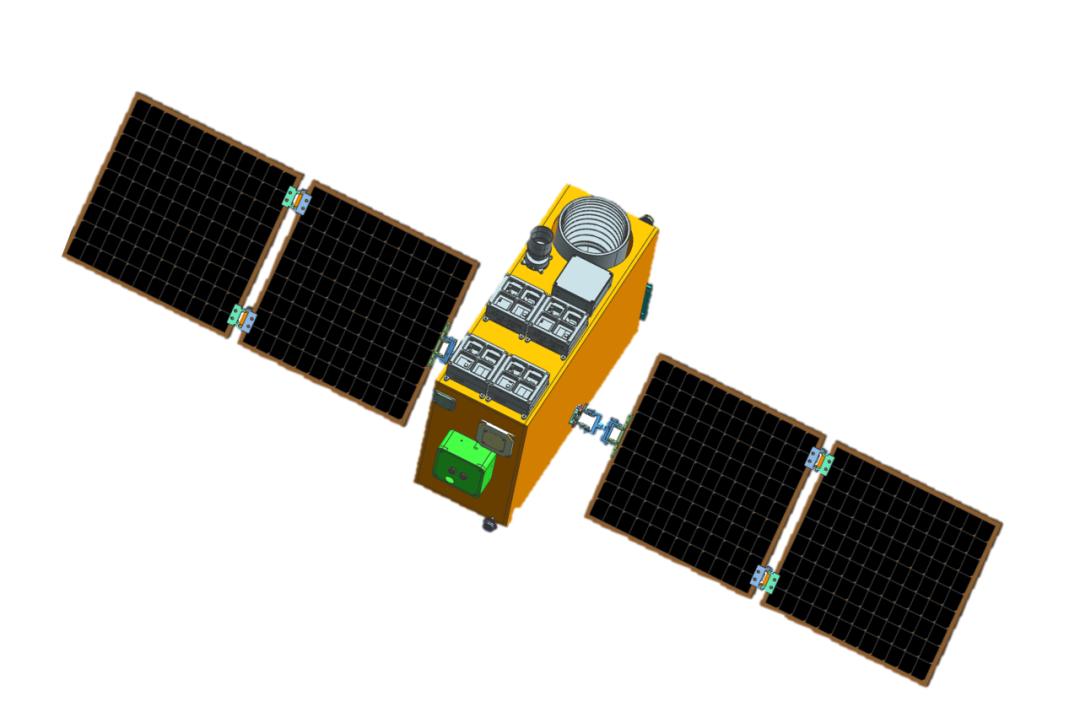
Multi - functional operational mass - produced satellites
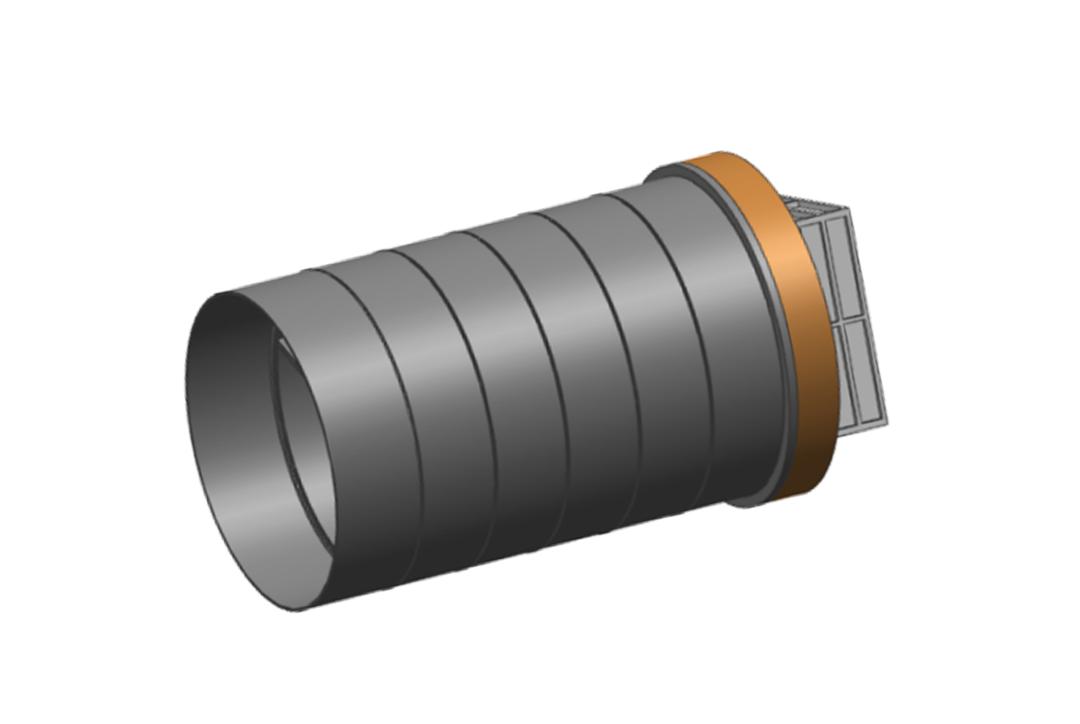
Earth - imaging optical payload
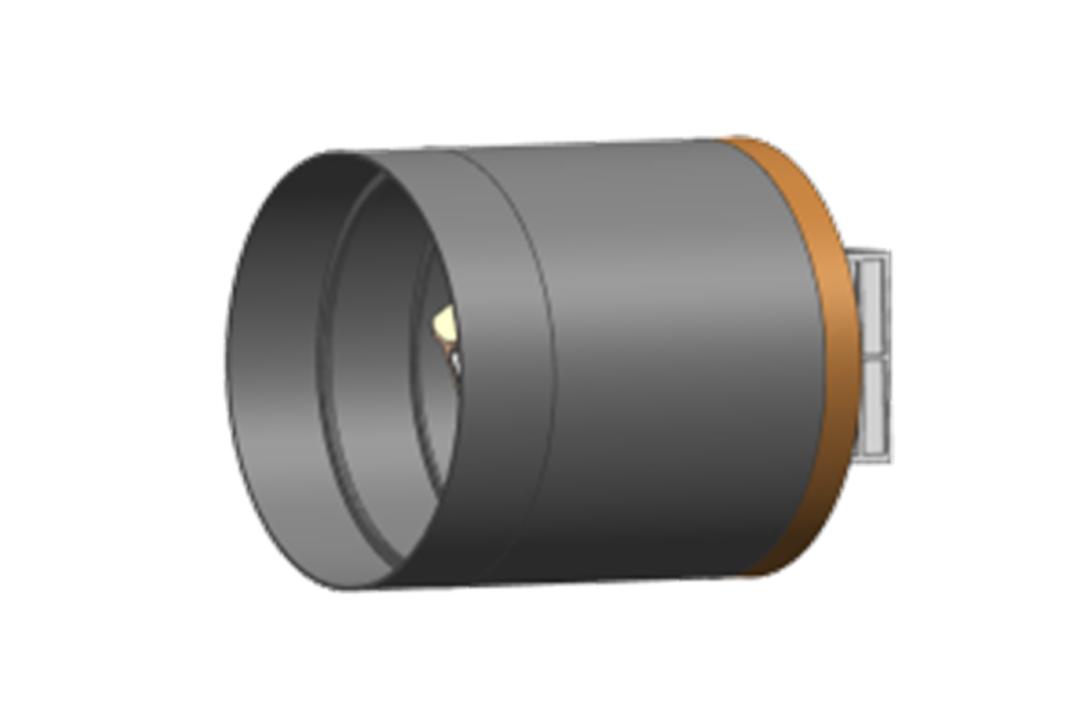
Non - earth - imaging optical payload (Situational awareness camera)

Self - developed and jointly built real - time spectral quantitative remote sensing constellation to provide low - cost, high - precision, hourly remote sensing services
Traditional high - resolution remote sensing satellites are mainly targeted at G - end customers. Although the market scale is large, the application scenarios are limited, and the growth has gradually slowed down. Around 2020, the hyperspectral quantitative remote sensing market began to emerge. Many startups focusing on this field have emerged in the United States, India, Canada and other places. Hyperspectral enterprises represented by PIXXEL have received high attention from capital, and the industrial development path has become increasingly clear: the value of remote sensing is moving from the qualitative stage of "seeing" to the quantitative stage of "calculating accurately", and its service objects will also expand from the government to commercial fields that can directly generate economic value, such as agriculture, finance, and mining. Spectral quantitative remote sensing has become a new blue ocean in the aerospace industry.
Meanwhile, after more than a decade of development in the domestic aerospace remote sensing industry, the costs of various single - machines and components have been significantly reduced, and the mass - production capacity has been initially formed. For the first time, the conditions for achieving a commercial closed - loop for remote sensing satellites are met.
Based on the above trends and industrial foundation, Puxing Aerospace established its core strategy since its establishment: to deeply integrate "optical remote sensing quantification ability" with "satellite mass - production engineering ability". The company plans to launch a total of 1024 hyperspectral quantitative satellites in batches, aiming to build the world's first hyperspectral quantitative remote sensing constellation that can achieve daily global coverage, and provide customers with hourly atmospheric monitoring, daily - coverage spectral images, and high - precision route monitoring services.
At the technical level, Puxing Aerospace is committed to pursuing "usable and easy - to - use" quantitative data. The founder, He Xiaojun, pointed out that many "hyperspectral" products on the market are not equivalent to "high - quantitative". Real quantitative remote sensing is a full - link system project from space to the ground, and its core lies in ensuring the accuracy and consistency of data. For this reason, the company not only develops hyperspectral payloads but also independently develops the key atmospheric synchronous detection spectrometer, aiming to accurately correct atmospheric disturbances from the source, so as to ensure that the data can be directly used for accurate inversion of the composition and content of surface substances, such as the content of minerals and chlorophyll in crops.
At the product and engineering level, Puxing Aerospace has chosen the path of "lightweight platform + large - scale networking". The company focuses on the standardized mass production of 20 - to 30 - kilogram micro - nano satellite platforms, and effectively controls the cost of a single satellite through economies of scale. He Xiaojun cited comparative data and said: "In the field of 20 - kilogram optical remote sensing satellites, Chinese manufacturing is already at the world's leading level. We can achieve about three times the performance of foreign satellites with about half of their weight."
This extreme cost - performance ratio makes it possible to build a hyperspectral quantitative remote sensing constellation composed of thousands of satellites. The 1024 - satellite constellation planned by Puxing Aerospace aims to achieve high - frequency revisits on a global scale (such as 7 times a day), shortening the update cycle of remote sensing data from monthly and weekly levels to daily or even hourly levels, so as to truly support commercial decision - making with high - timeliness requirements, such as futures trading and precision agriculture.

The self - operated satellite factory will be put into use in the second half of the year, and the revenue in 2026 is expected to increase several times
In terms of R & D progress, Puxing Aerospace's characteristic products, such as high - resolution spectral cameras, atmospheric synchronous detection spectrometers, hyperspectral spectrometers, and situational awareness cameras, are currently in the accelerated R & D stage. It is expected that on - orbit verification will be carried out successively from the second half of 2026 to 2027.
In terms of competition, He Xiaojun believes that in the field of optical remote sensing, especially in the mass manufacturing of optical satellites, domestic enterprises have a global leading advantage. For example, the overseas company Planet verified the feasibility of small - satellite networking through its "Flock" constellation; while Puxing Aerospace aims to build a "super Flock", that is, on the basis of maintaining the low - cost networking advantage, to achieve a comprehensive upgrade of spatial resolution, spectral resolution, and quantitative remote sensing ability.
When talking about the domestic competition pattern, He Xiaojun emphasized that the threshold for building a hyperspectral quantitative remote sensing constellation is very high. Success requires the team to meet three key capabilities at the same time: first, a deep understanding of the full - link calibration of quantitative remote sensing "satellite - ground - atmosphere"; second, experience in the development and on - orbit operation of spectral remote sensing satellites; third, large - scale, low - cost satellite mass - production ability. Puxing Aerospace is one of the few domestic teams that have all three capabilities.
In terms of business planning, in the short term, Puxing Aerospace's commercial revenue mainly comes from the sales of payloads and satellite products; in the long term, with the completion of its own constellation, the company's revenue focus will gradually shift to data application services. At that time, it will charge industry customers through the "Puxing Space" data application platform in the form of subscription or annual - package services. Relevant institutions in the financial and quantitative fund fields are expected to become its first - batch paying customers.
Currently, Puxing Aerospace has achieved the initial commercial implementation of multiple payload and satellite products, and its customers include universities, research institutions, and operators of large - scale constellation projects.
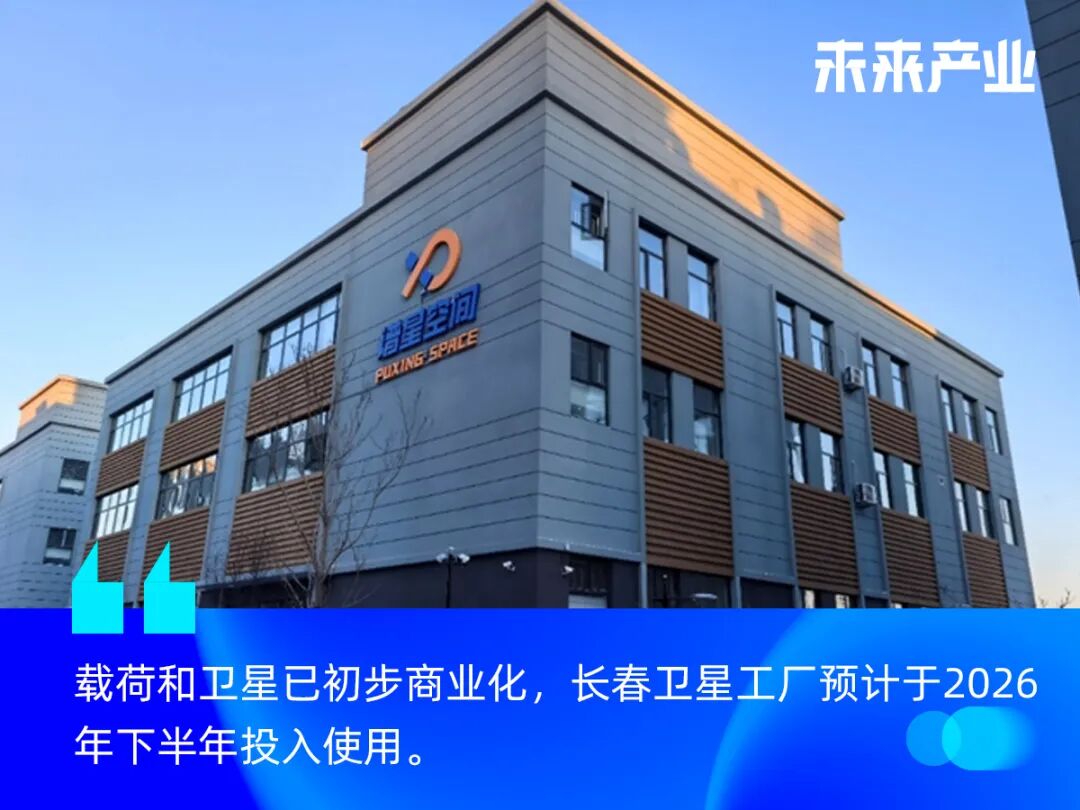
To ensure the delivery of existing orders, Puxing Aerospace is accelerating the construction of the Changchun satellite factory. The factory is expected to be completed and put into use in the second half of 2026, with a planned annual production capacity of 30 to 50 payloads and 20 to 30 whole satellites.
According to the team, Puxing Aerospace's commercial revenue in 2026 is expected to increase several times compared with that in 2025. Facing the situation where the order volume may exceed the self - built production capacity, Puxing Aerospace has planned to adopt a flexible production model of "self - manufacturing + outsourcing cooperation" to expand production capacity. Currently, the company has reached cooperation intentions with several mature satellite AIT (assembly, integration, and testing) factories.
According to the company's management plan, by the end of 2026, Puxing Aerospace also plans to achieve three goals: the launch and orbit - entry of the first customized satellite; the R & D, finalization, and delivery of two self - operated spectral quantitative remote sensing satellites; and the start of the product definition and development of the "Puxing Space" data application platform.