Three papers in the same issue of *Science* reveal: Emotions are not solely regulated by neurons.
The human brain is a vast network composed of billions of neurons. They exchange signals by inhibiting or exciting each other, and the resulting activity patterns spread like ripples in the brain at frequencies of up to 1000 times per second. For more than a century, it has been believed that this dazzlingly complex neuronal coding alone determines perception, thought, emotion, behavior, and related health conditions. If you want to understand the brain, you study neurons – that is, neuroscience.
However, a series of research results from multiple laboratories, published as three papers in the journal Science in 2025, provide the strongest evidence to date that focusing solely on neurons is far from sufficient to understand how the brain works. Experiments conducted in mice, zebrafish, and fruit flies show that a type of large brain cells called astrocytes actually play the role of “supervisors”. They were once regarded as simple support cells for neurons, but now they are considered to help fine - tune brain circuits, thereby controlling the overall brain state or emotions – such as the level of wakefulness, anxiety, or apathy.
In many brain regions, the number of astrocytes exceeds that of neurons. They have complex and diverse morphologies, and sometimes they extend tentacles that can wrap around hundreds of thousands or even millions of synapses – the connection points where neurons exchange molecular signals. This anatomical structure places astrocytes in a perfect position to influence the flow of information. However, whether and how they change synaptic activity has long been controversial, partly because the mechanisms of potential interactions are not fully understood. The new research reveals how astrocytes “moderate” the dialogue between synapses, making their influence impossible to ignore.
“We are living in the era of connectomics, and everyone loves to say that if you understand the connections between neurons, you can understand how the brain works. That's not true,” said Marc Freeman, the leader of one of the studies and the director of the Vollum Institute at the Oregon Health & Science University's independent neuroscience research center. “Even when the neuronal connections remain completely unchanged, the firing patterns of neurons can change dramatically.”
Astrocytes do not participate in the high - speed, instantaneous signal transmission that occurs at synapses among neurons. Instead, they monitor and regulate higher - level network activities, maintaining or switching the overall state of the brain by up - regulating or down - regulating the overall activity. This function is called neuromodulation, which allows an animal's brain to switch between very different states. For example, one of the new papers shows that astrocytes can assess whether an action is futile and prompt an animal to choose to give up.
Neuromodulation is crucial for maintaining brain activity within a workable range, preventing the activity from “hitting zero” and avoiding the outbreak of epilepsy. “Without the continuous and fine - tuning of these things we call neuromodulators (the molecules that mediate these regulations), no neural circuit could function at all,” said Stephen Smith, an emeritus professor of neuroscience at Stanford University. He conducted pioneering research on astrocyte signaling from the late 1980s to the early 1990s but was not involved in this new work.
For years, it was believed that this fine - tuning was done by neurons themselves. Although previous studies have suggested that astrocytes are involved in some cellular signaling processes, the latest experiments “use advanced techniques to truly and precisely prove beyond doubt that astrocytes play a key role in brain neuromodulation,” said Douglas Fields, an emeritus neuroscientist at the National Institutes of Health, who was also not involved in this new research.
In this role, astrocytes may be important players in sleep disorders or mental illnesses, as these diseases disrupt the brain state at an overall level. “We must start thinking about what this means for neuropsychiatric diseases,” Freeman said.
The Birth of a “New Star”
Astrocytes are a type of glial cells, which are non - neuronal cells in the nervous system. They fill the brain like packing foam, filling the gaps between neurons. The term “glia” comes from the Greek word meaning “glue,” reflecting the view of people in the mid - 18th century that the role of these cells was merely to “glue” the brain together.
By the 1950s, researchers already knew that astrocytes did much more than that. In experiments, they absorb excess neurotransmitters, buffer potassium ions, and secrete substances necessary for neurons to maintain energy. Like alchemists at the cellular level, astrocytes seem to be monitoring and regulating the “soup” of the brain, maintaining a favorable environment for neurons. But until the late 1980s, people still thought they were relatively passive regulators. The turning point came after Smith built a new microscope in the neuroscience laboratory at Yale University.
Smith's new digital video fluorescence microscope was specifically designed to “film” neuronal activities with fluorescence. When neurons fire, calcium ions rapidly rush into the cells. So researchers put fluorescent sensors into brain cells, which emit light when they encounter calcium ions. The microscope can capture the increase and decrease of this light in time and space, thereby revealing the firing patterns of cells. “We probably had the most advanced, sensitive, and coolest system at that time,” Smith said.
One day in 1989, Steve Finkbeiner, a graduate student of Smith (now a neurologist at the Gladstone Institutes, a non - profit organization in San Francisco), was using this microscope to study the potential toxic effects of the neurotransmitter glutamate. Glutamate is the molecule used by most neurons in the brain to communicate. Finkbeiner didn't care about astrocytes, but since they helped keep neurons alive, he added them to the cell culture system and then added glutamate.
“Suddenly, he started shouting in front of the microscope: ‘Boss, come quickly! You have to see this!’” Smith recalled. “Those astrocytes went completely crazy.” The fluorescence spread like waves in the layer of astrocytes, jumping from one cell to the next. These calcium waves showed coordinated activity, as if the astrocytes were communicating with each other. And since these cells respond to glutamate, it is logical that they also respond to neurons. In a paper describing this experiment in 1990, the researchers boldly proposed that “the astrocyte network may form a long - range signaling system inside the brain.” Soon after, other teams also found that astrocytes respond to various neurotransmitters in petri dishes, brain slices, and even in anesthetized animals.
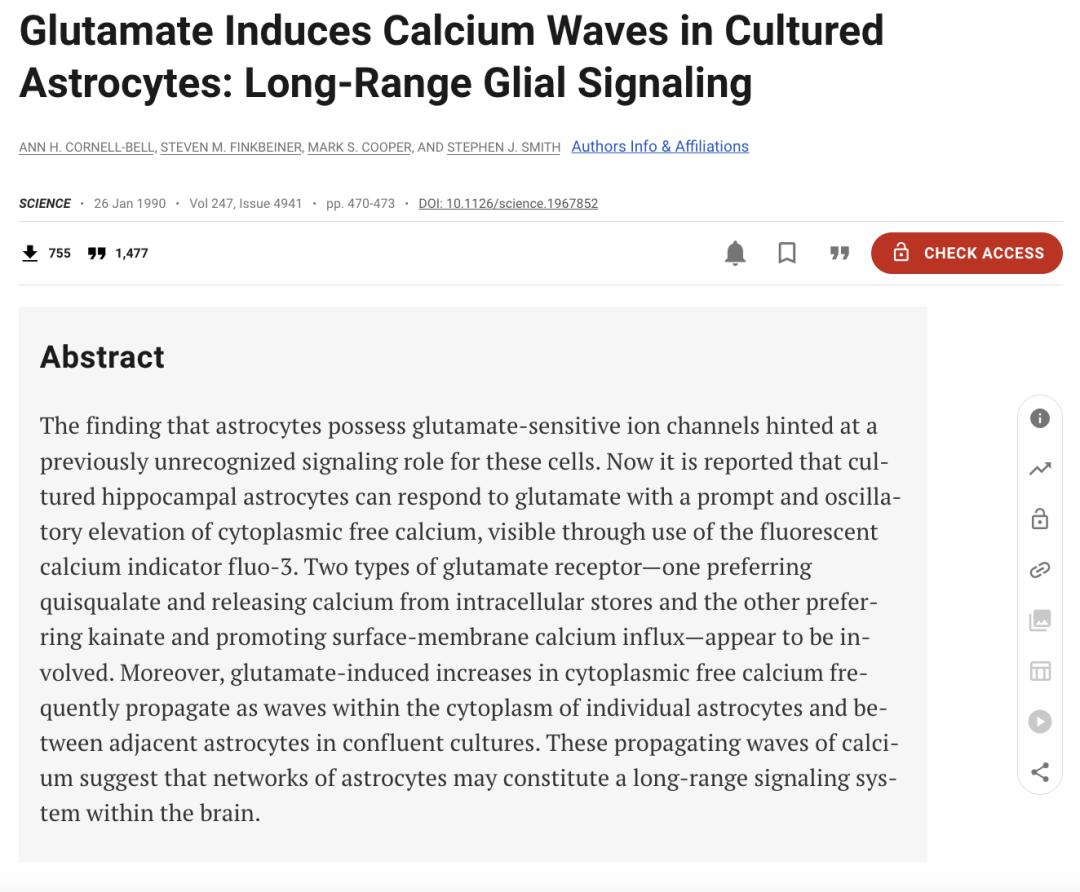
At that time, many neuroscientists compared the newly discovered properties of astrocytes to those of neurons, but in hindsight, the differences between the two are quite obvious. First, astrocytes occupy a very large “territory”: in the human brain, a single astrocyte can cover a large area of tissue and contact up to 2 million synapses. Second, they operate on a longer time scale. The spread of calcium waves in astrocytes takes seconds to minutes, while it only takes milliseconds for neurons to conduct signals along axons and release neurotransmitters.
To study how this new understanding of astrocytes relates to behavior, the research team turned to animal models. Researchers tried to activate the astrocytes of experimental mice through strong sensory stimuli, such as shining light on their eyes or touching their whiskers, and observed the responses through a cranial window under a fluorescence microscope. Sometimes the cells responded, and sometimes they didn't. Then, in 2013 and 2014, two independent research teams reported a foolproof method to attract the attention of astrocytes: scaring the mice, such as suddenly spraying a puff of air at them or suddenly starting a treadmill under their feet. The startle response is a mainly unconscious defense mechanism and also a sudden switch in the brain state, which is common throughout the animal kingdom.
When vertebrates are startled, neurons in an area of the brainstem called the locus coeruleus release norepinephrine along fibers that radiate throughout the brain. Norepinephrine is a neuromodulator related to arousal. Different from neurotransmitters that transmit specific information, neuromodulators are more like the knobs on a radio, changing the overall state of the brain by up - regulating or down - regulating the activity level. These studies show that it is norepinephrine that triggers the fluctuations of astrocytes, suggesting that astrocytes are involved in neuromodulation to some extent.
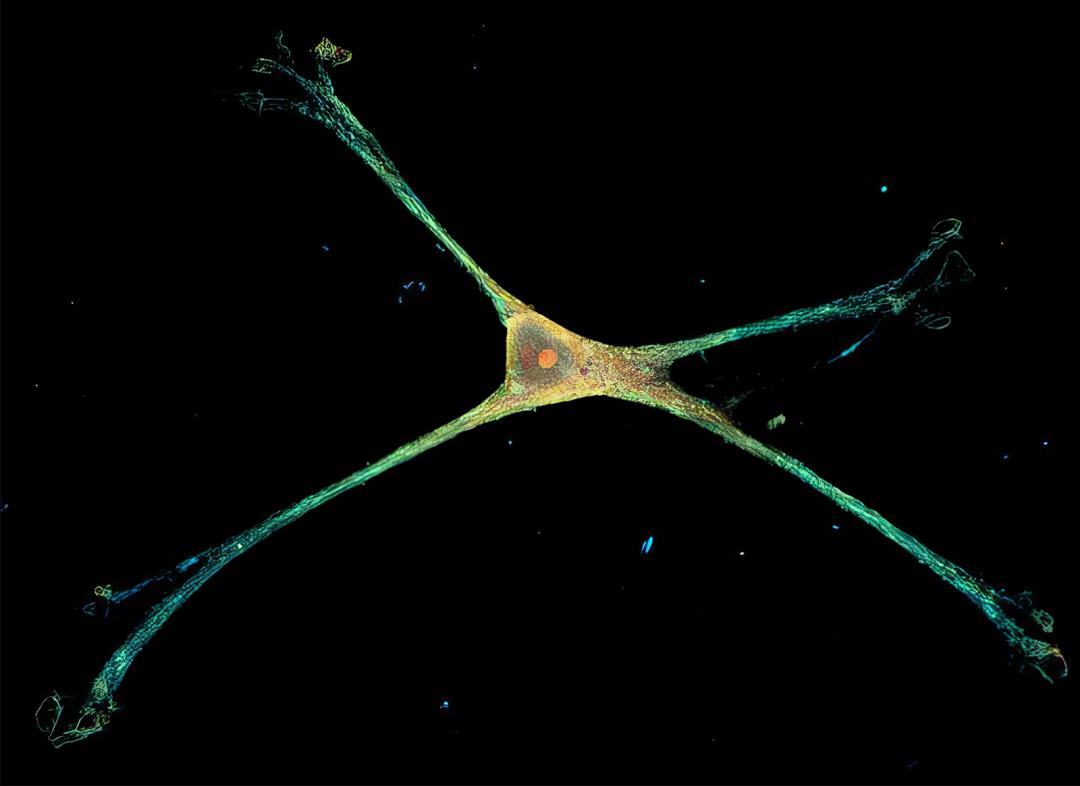
An astrocyte from a rat is spread on a special nanowire structure. In its natural environment, this type of cell usually wraps around thousands of synapses, enabling it to monitor and regulate the signal transmission of neurons.
Nevertheless, there are still many mysteries about astrocyte signal transmission. People know that these cells have norepinephrine receptors, but no one knows exactly how the binding of norepinephrine triggers calcium waves. Meanwhile, there is another question : what signals do these fluctuations transmit to downstream neurons? Some researchers believe that astrocytes produce their own “gliotransmitters” that act on neurons, but others question this. At academic conferences, researchers have had intense and noisy debates about the extent to which – or even whether – astrocytes shape the flow of information in the brain.
Then, Zhiguo Ma, a student in Freeman's laboratory (at the University of Massachusetts Medical School at that time), tried to solve this problem in the fruit fly brain. “Please don't do this,” Freeman recalled warning him. “It's too messy.” But Zhiguo Ma continued. He replicated the startle response of fruit flies by suddenly flipping them over. With sophisticated molecular biology tools, he traced the relay process of chemical signals: the fruit - fly version of norepinephrine activates astrocytes by opening a channel on their cell membranes, leading to the release of a gliotransmitter – probably adenosine – which inhibits neuronal signal transmission. Characterizing this type of neuron - astrocyte interaction is crucial, “because they may represent a widespread mechanism for controlling brain function,” the Freeman team wrote in a paper published in Nature in 2016.
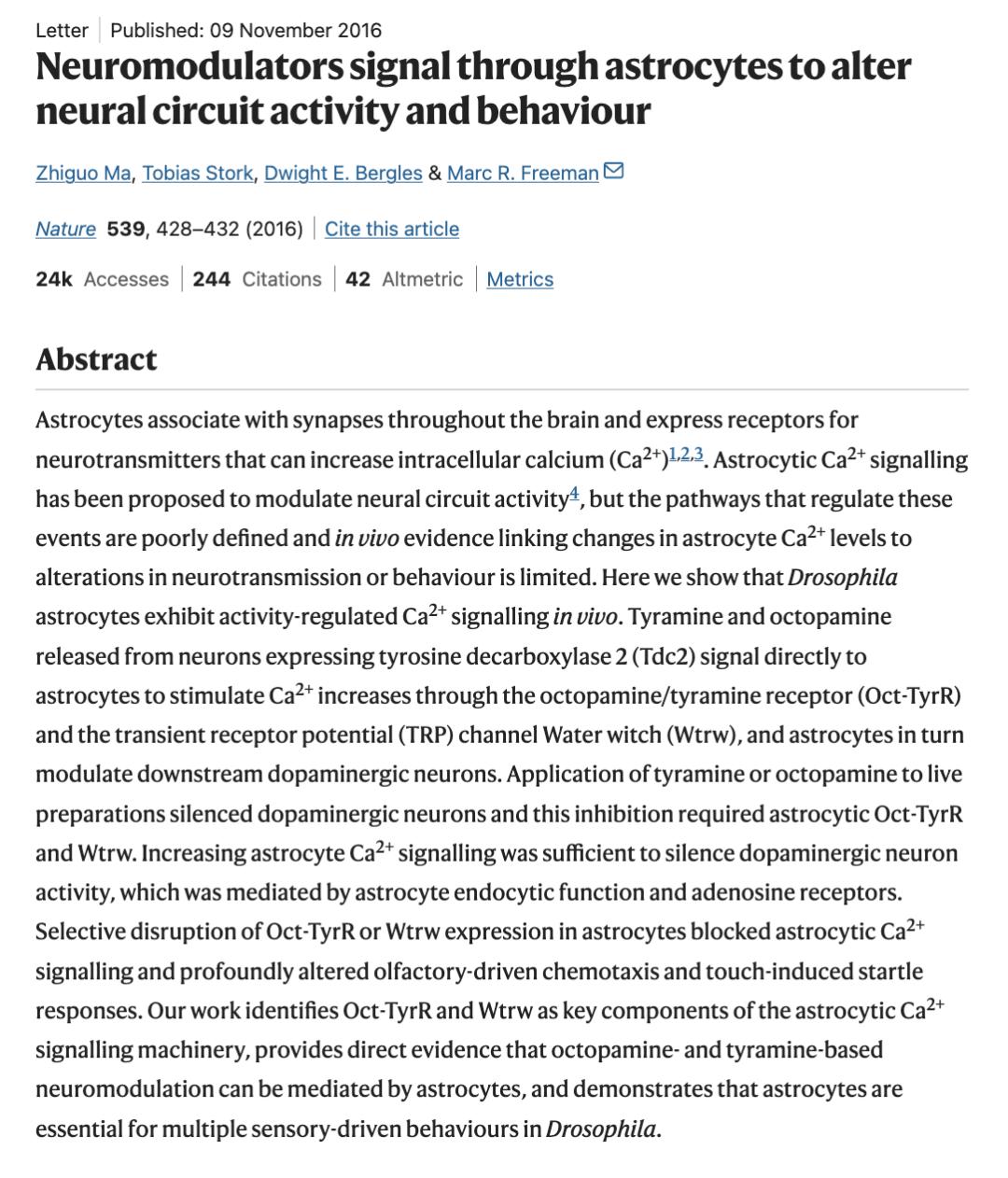
In the view of some, this experiment was the first to prove that astrocytes are an integral part of neural circuits. But a single paper on fruit flies was not enough to convince the skeptics. Nearly a decade later, chillingly similar results found in a vertebrate finally changed the situation.
When to Choose to Give Up
Although we don't usually think about it this way, the act of “giving up” itself reflects a sudden change in brain activity. It represents a change in psychological state from hope to despair, which, like being startled, has a profound impact on behavior. A research team led by neuroscientist Misha Ahrens accidentally discovered how astrocytes mediate this sudden change in emotion when studying when juvenile zebrafish give up.
What does it look like when a zebrafish “gives up”? In the wild, if a zebrafish wants to stay in place in a flowing current, it swims against the current. In the laboratory at the Janelia Research Campus of the Howard Hughes Medical Institute in Virginia, the Ahrens team used virtual reality technology to simulate a water current in the zebrafish tank, making the fish feel like it was sliding backward no matter how hard it swam. At first, the fish swam more vigorously, but after about 20 seconds, it usually gave up. After a while, it would try again.
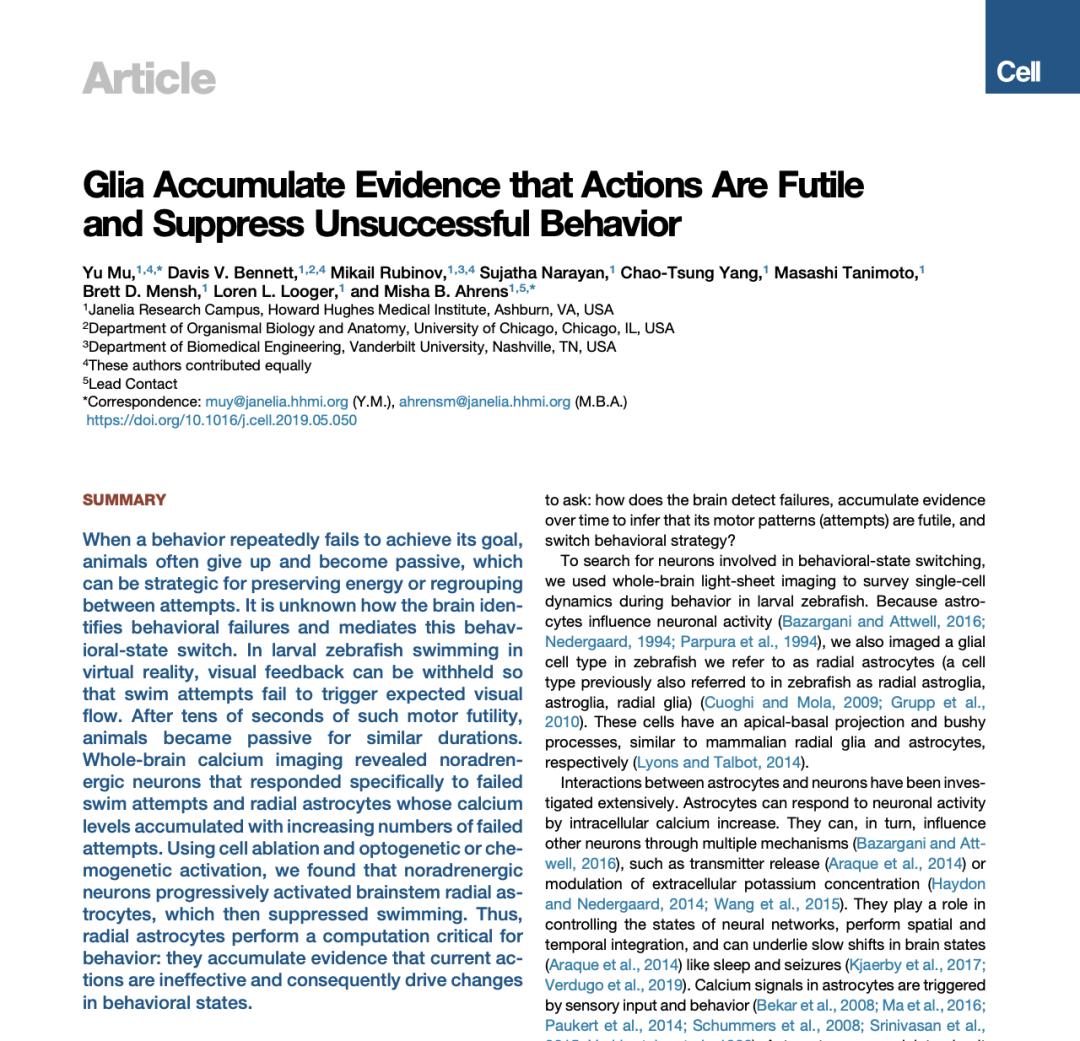
Throughout the process, researchers used advanced whole - brain imaging technology to simultaneously monitor the neurons and astrocytes in the zebrafish brain. When the fish futilely fought against the current, neurons that release norepinephrine began to fire; in response, calcium ions gradually accumulated in astrocytes. This accumulation increased in sync with the number of times the fish tried to fight the current, as if the astrocytes were “counting” – until a certain moment when they sent a stop signal, and the zebrafish gave up.
When the Ahrens team inactivated astrocytes with a laser, the fish never stopped swimming; while if they artificially activated astrocytes, the fish would stop immediately. “This is the first time someone has proven that astrocytes play a role in switching behavioral states,” Ahrens said.
In a paper published in Science in 2025, researchers revealed how astrocytes cause these behavioral changes. Through fluorescent sensors targeting various molecules, they found that when enough calcium ions accumulate in astrocytes, the cells release the energy molecule ATP, or adenosine triphosphate. ATP is converted to adenosine outside the cell and acts on neurons – in this case, it activates neurons that inhibit swimming while inhibiting neurons responsible for swimming. This chain of events is exactly the same as what Zhiguo Ma and Freeman observed in fruit flies.
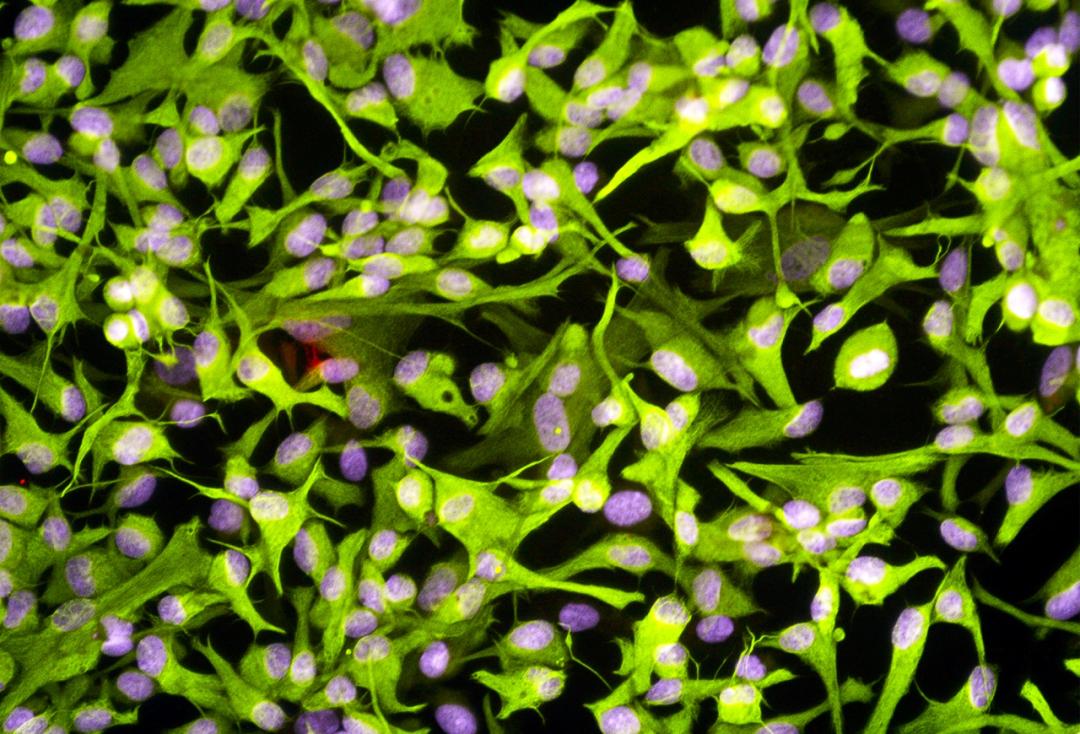
For a long time, astrocytes (as shown in the fluorescent optical micrograph of human tissue) have been considered just the “supporting actors” that provide support and structural framework for important neurons. But new experiments have detailed the influence of these cells on neural signal transmission in the brain.
According to another study published in the same issue of Science, a team led by Thomas Papouin from the Washington University School of Medicine found that the same chain of molecular events also occurs in the mouse brain. The Papouin team studied changes at the synaptic level, which change the communication between neurons and are a form of neural plasticity that supports continuous thinking and behavioral changes. In the past, it was thought that norepinephrine triggered these changes by acting directly on neurons. But to Papouin's surprise, even when the norepinephrine receptors on neurons were removed, these effects still existed. The whole process is completely dependent on astrocytes.
