The latest masterpiece of "Industrial Cthulhu", a 35,000-ton heavy-duty train group
Some time ago, CCTV broadcast a piece of news.
"China's independently developed 35,000 - ton heavy - haul group train completed the world's first automatic formation driving of heavy - haul trains."
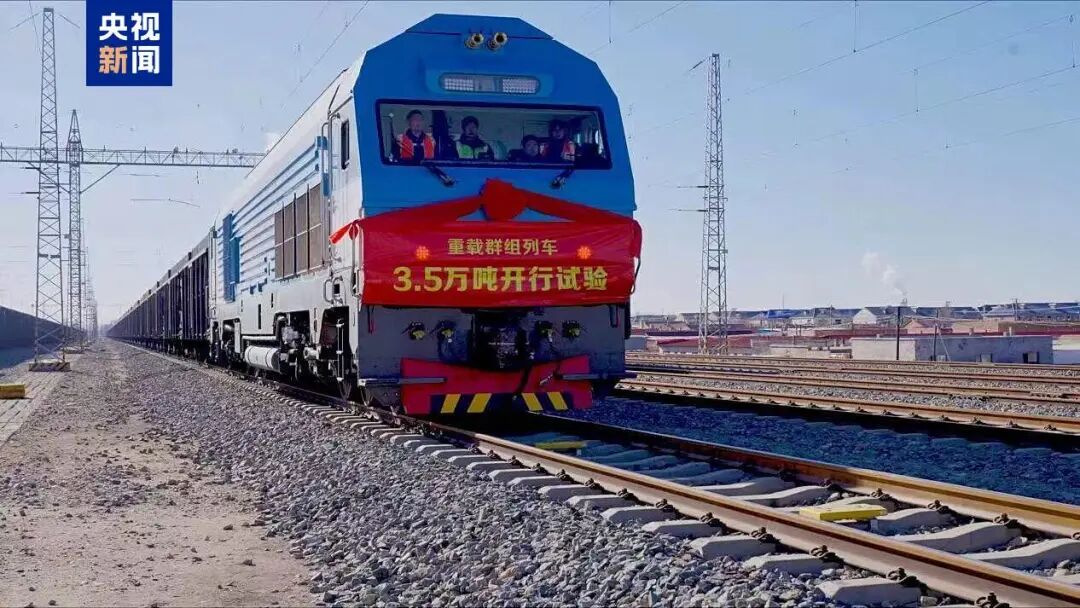
In an era dominated by various cutting - edge AI breakthroughs, this piece of news doesn't seem to have sparked much online discussion. However, in terms of real - world impact, the significance of this news for China is no less than the shockwave brought by DeepSeek last year.
The release of this news indicates two major breakthroughs:
Firstly, we have mastered a technology that can significantly increase (by 50%) the transportation capacity of existing railway lines.
Secondly, China's already stable energy system has now been reinforced with a layer of high - grade concrete, becoming even more robust.
Today, let's talk about this low - key yet significant technology.
What is a "heavy - haul group train"?
Before the term "heavy - haul group train" emerged, the pinnacle of technology in the field of railway freight was the "heavy - haul train" - a super train composed of hundreds of carriages, stretching for several kilometers, with a load of tens of thousands of tons, and speeding along dedicated tracks at a speed of dozens of kilometers per hour.
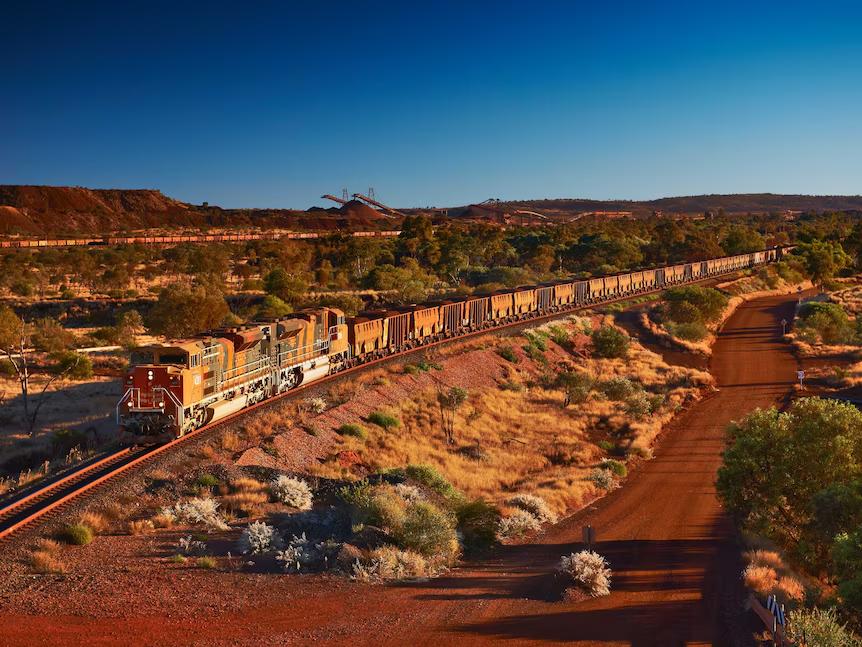
Take the "Mount Newman Railway" of BHP Billiton Iron Ore Company in Australia as an example. This 426 - kilometer - long railway line is owned by BHP Billiton. The world's largest heavy - haul train runs on it - towed by 8 locomotives, with a total of 682 carriages, the entire train is 8 kilometers long and has a load of over 100,000 tons.
Why was such a thing developed?
Because if you want to transport bulk goods such as iron ore, coal, grain, and cement on land, "heavy - haul railways" are the most cost - effective and reliable way - a few drivers can operate a train to transport tens of thousands of tons of goods at one time. The same goes for China's Datong - Qinhuangdao Railway and Shuohuang Railway, which transport hundreds of millions of tons of coal from Inner Mongolia, Shanxi, and Shaanxi to ports in the Bohai Bay every year.
However, although the transportation cost of heavy - haul trains is low, the construction cost is extremely high:
The huge load means that all the tracks and bridges along the line need to meet special standards. On other lines, a slope of 12‰ is generally allowed, and the Sichuan - Guizhou Railway even has a super - steep slope of 24‰. But on heavy - haul railways, the slope indicator usually cannot exceed 9‰, and a slope of 12‰ is only allowed when there is no other way. In reality, in order to reduce the slope, designers and constructors often need to make a large number of detours or build winding tracks, which ultimately leads to a sharp increase in the engineering volume.
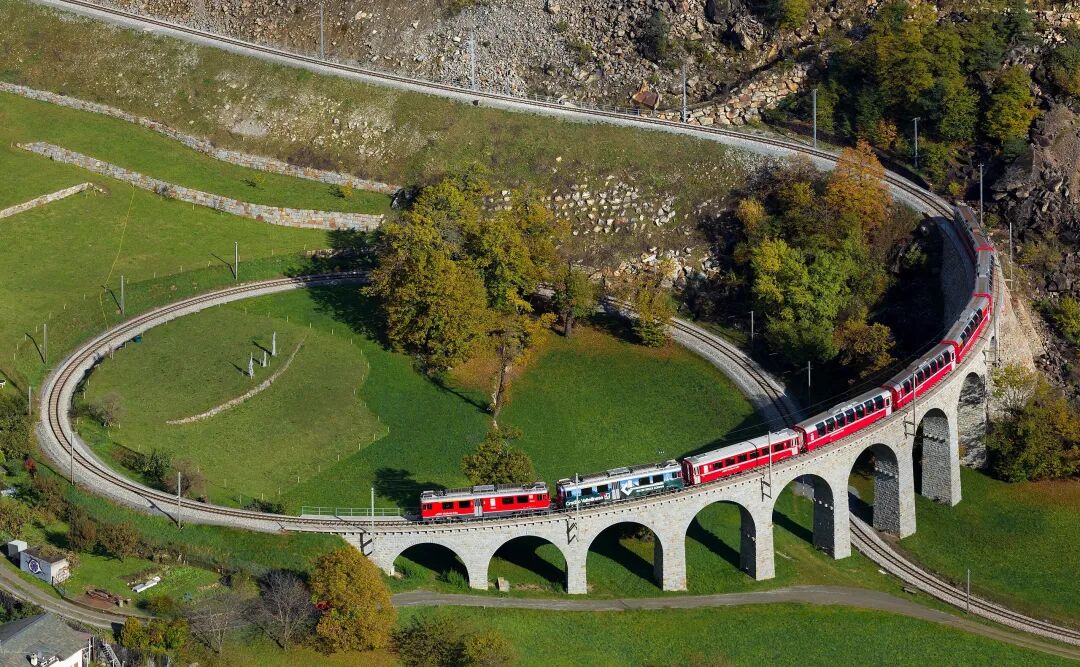
The "winding track" designed by the Swiss railway to help trains climb slopes
In addition to the weight, the length of the train is also a major problem. On ordinary railways, the maximum length of the "arrival and departure tracks" at freight stations does not exceed 1050 meters. But if you want to dock a heavy - haul train, the length of the arrival and departure tracks needs to be extended to over 1500 meters - your entire station needs to be rebuilt.
Moreover, an overly long and heavy train is also a big headache for drivers.
Trains are braked by air brakes, and the propagation speed of compressed air is about 300 m/s. The longest heavy - haul train in China can be up to 4000 meters long. By the time the air brakes at the rear of the train start to brake, the locomotive has already been braking for more than ten seconds. The front carriages have stopped, but the rear carriages are still moving forward due to inertia. The situation is similar when starting. The front carriages have started moving, but the rear carriages are still stationary. If the driver operates improperly and uses too much force, the couplers are likely to break.
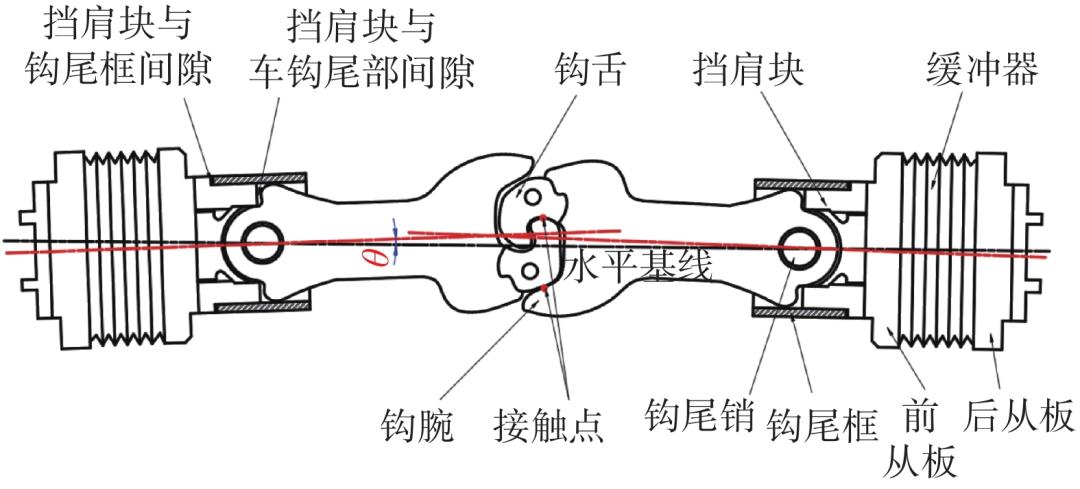
China's railways generally use the "Janney coupler"
Combining these factors, the final result is that to operate heavy - haul trains, you need to build a dedicated railway line, set up dedicated stations, and operate dedicated locomotives and carriages. The asset investment is extremely large, and the return period is extremely long.
So, is there a technology that doesn't require building new lines, setting up new stations, or relying on special vehicles, and can still transport tens of thousands of tons of goods quickly?
Yes, buddy, there is.
This is what we call the "35,000 - ton group heavy - haul train".
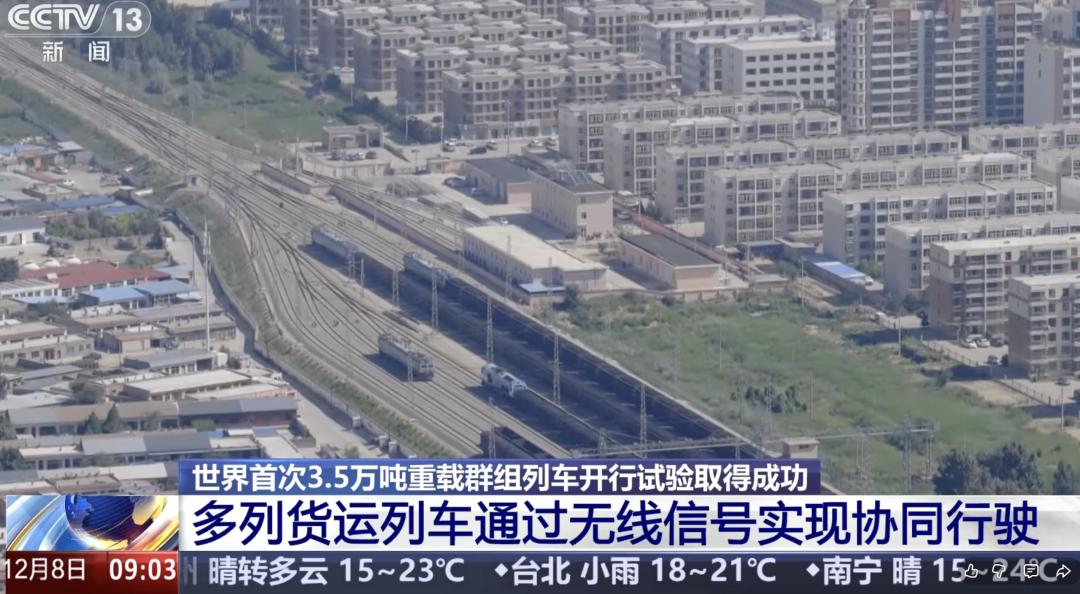
You say your railway line has poor conditions and a large slope, so it can't handle a 35,000 - ton train?
Okay, then it can at least handle a 5000 - ton train, right? Can't I just split the 35,000 - ton train into 7 small trains?
You say that 7 trains departing one after another are prone to rear - end collisions?
Then you're underestimating China's communication technology. These 7 trains are not 7 independent trains but 7 trains that can communicate with each other. There are Beidou satellites for positioning in the sky, a command center for dispatching on the ground, and 5G network communication between them. The 7 trains accelerate and decelerate together. They cooperate automatically with each other, and the minimum following distance can be reduced to just one kilometer. Do you think I still need to worry about rear - end collisions?
In fact, the advantages of group trains don't stop there.
Take the heavy - haul coal - transporting trains on the Datong - Qinhuangdao Railway as an example. In the traditional mode, hundreds of carriages and tens of thousands of tons of coal are not loaded at the same place. Usually, they are loaded into several small trains from multiple coal mines and finally assembled into a large train at the marshalling station and transported away together.
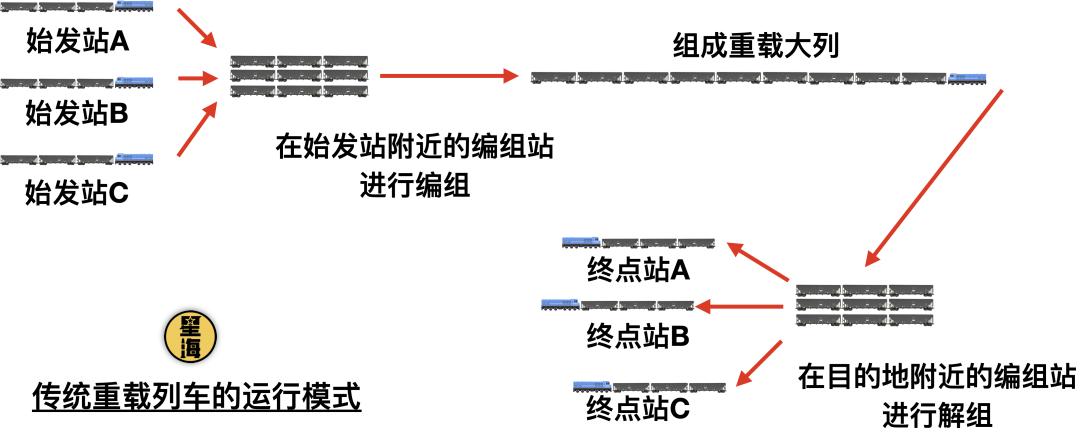
Since it involves "assembly", there is an order of arrival, which means there may be delays and various unexpected situations.
But in the new mode of group trains, since the trains are originally separate, there is no need for secondary assembly. Therefore, there is no need to gather at the marshalling station. Under the centralized command of the system, each train can take its own route and finally converge on the main line.
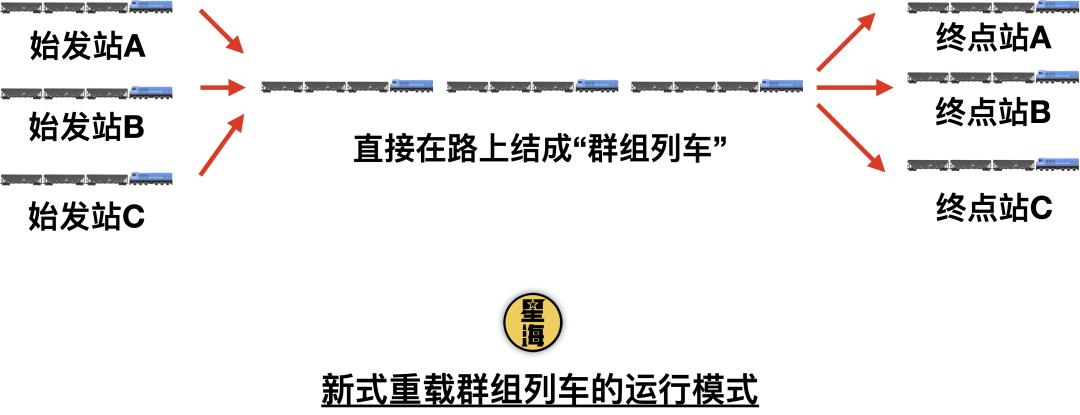
So, as long as there are enough locomotives and carriages, the number of formations can be as large as possible. Don't even mention 35,000 tons. Even 55,000 or 65,000 tons is just a matter of finding more carriages. There is no need to consider construction issues at all.
Ultimately, the essence of this technology lies not in "carrying more weight" but in "smarter control" - Traditional trains rely on metal couplers to transmit mechanical force, while group trains rely on high - speed, low - latency, and highly reliable communication links represented by the 5G/5G - R railway - specific network.
This system is like a "super walkie - talkie" with millisecond - level response for each train. It not only enables stable interaction between the train and the ground control center ("queen bee") but also revolutionaryly adopts the "train - to - train" direct communication mode. This allows the following train to instantly sense the speed and position information of the leading train, replacing the mechanical connection and forming an "information rope" that tightly connects the entire formation, making it possible to maintain an ultra - short safety following interval of about one kilometer.
Although this concept was proposed in the international railway circle long ago, only China today can turn it into reality - this is the advantage of having both powerful communication technology and powerful railway technology.
Now, do you understand why we can achieve heavy - haul transportation without building new railways?
What's the significance of "heavy - haul group trains"?
As for the significance, although we mainly talked about the cost issues of railways earlier, the biggest beneficiary of this new technology is not the railway department but the power department.
As is well - known, China's development in the new energy field is far ahead. Whether in the deserts of the northwest or the hills of the south, you can see endless wind farms or solar panels.
It's really spectacular, but it's also really difficult to manage. In terms of installed capacity, the proportion of renewable energy in China has exceeded 60%. But in terms of electricity consumption, the proportion of green electricity is only one - third.

The reason is well - known: Although energy sources such as solar and wind power are clean, they are not stable. A large installed capacity only means that they can generate huge energy under ideal conditions. It doesn't mean that they can meet your needs in time when you need them.
Under the current technological conditions, only thermal power is the most reliable when it really matters. Thermal power is still the absolute pillar of China's energy system today.
However, this "absolute pillar" of thermal power actually has a major problem - the transportation bottleneck.
For China's thermal power, there is an overall "mismatch of resources" - the southern regions have a huge demand for electricity but little coal, while the northern regions produce a lot of coal but have relatively low electricity demand. Although projects such as "Power Transmission from the West to the East" have solved a considerable part of the problem, many thermal power plants in the south still need a large amount of thermal coal to operate.
The problem lies in the transportation of thermal coal.
A typical thermal - coal transportation route in China is as follows: Coal is mined from mines in Shaanxi, Shanxi, and Inner Mongolia, processed locally, loaded onto trains, transported along railways such as the Datong - Qinhuangdao and Shuohuang Railways to ports such as Qinhuangdao and Huanghua in the Bohai Bay, and finally shipped by sea to the southeastern provinces.
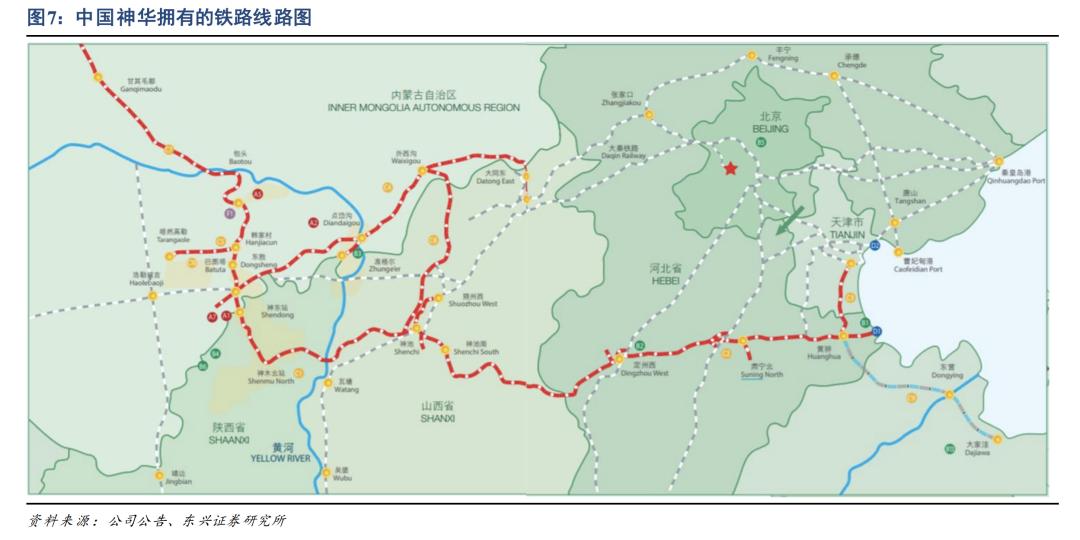
Given the almost unlimited transportation capacity of sea - shipping, the real bottleneck mainly lies in the railway transportation volume and the port loading and unloading efficiency.
In the past, every year during the peak coal - and - electricity consumption periods in summer and winter, the "love - hate relationship" between the power department and the railway department began:
The power department's demand for thermal coal is extremely large. Although the cooperating coal mines have coal, there are many other industries that need transportation capacity. So every year, the most common complaint from the power department is "unable to coordinate railway wagons".
The railway department is also helpless. They think they've tried their best, so why are they still being blamed? They have strict safety indicators to follow. Haven't you seen that the marshalling stations are operating 24/7 all year round?
In the future, this problem is likely to be completely solved with the popularization of "heavy - haul group trains".
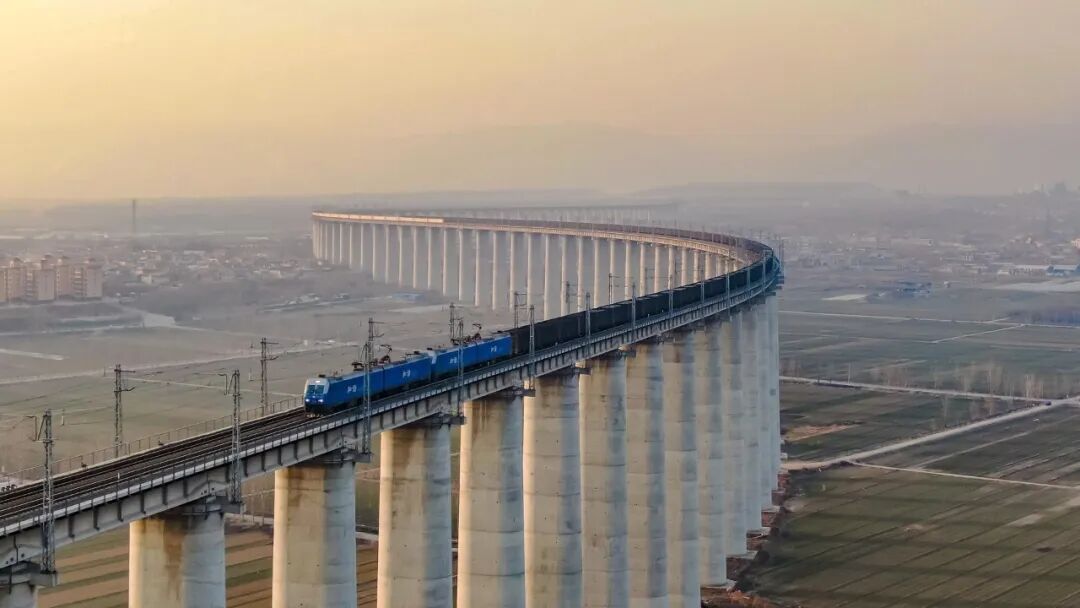
After all, the annual transportation volume of the entire China National Energy Group is less than 600 million tons. Once "heavy - haul group trains" are popularized in the main heavy - haul sections, even at the lowest level, it can increase the transportation capacity by 100 million tons without building new railways - it's like having an extra heavy - haul railway out of thin air. And if it reaches the experimental level, it means we can easily complete the transportation task of 900 million tons of coal every year.
This will give us a huge advantage.
What will "heavy - haul group trains" bring?
In the opinion of the author, the most suitable place for the "group heavy - haul train" technology to showcase its strength is not within China but in the land - locked neighboring countries around China.
There are two reasons:
Firstly, among