In the booming space photovoltaic market, it's highly likely that the first to strike gold won't be component manufacturers.
Elon Musk's proposal of "sending photovoltaic to space" at the Davos Forum has given the photovoltaic industry, which has been struggling with over - capacity, a glimmer of hope, as if it has grasped the ticket to a new world.
On January 22nd, Elon Musk stated at the Davos Forum that SpaceX and Tesla aim to build 100GW of photovoltaic production capacity in the United States, and the goal is expected to be achieved in the next three years.
For the traditional photovoltaic industry that has been on edge due to the price war, this is like being assigned a demand as vast as the "stars and the sea".
But let's be realistic: if photovoltaic energy really starts to be sent to space on a large scale, the first ones to reap the benefits are probably not the current component manufacturers that are deeply trapped in the "rock - bottom price" quagmire.
Many people have a misconception when looking at space - based photovoltaic. They seem to think it is just an extension of ground - based photovoltaic, only with a different application scenario.
If we remove the hype and stock price fluctuations and look at it from the engineering logic of commercial spaceflight, we will find that the essence of space - based photovoltaic is more similar to the localization of chips or the development of aero - engines in the past. It is not about expanding demand but reconstructing the industrial chain.
So, is it really feasible to send photovoltaic energy to space on a large scale?
What kind of technology qualifies to enter the launch pod?
And on this reconstructed chain, who can be the first to receive Musk's orders?
Only by clarifying these questions can we understand the story of space - based photovoltaic and energy storage. We will also find that the so - called current space - based photovoltaic is still in the stage of researching how to sell shovels, materials, and equipment, rather than simply transporting ground - based components to space.
01
How to send it to space?
The above three questions all point to the same thing: whether space - based photovoltaic is a suitable route for engineering and commercialization.
In fact, the concept of space - based photovoltaic is not new. Research on space solar power stations (SBSP) has been going on for decades, involving organizations such as NASA, Japan's AXA, and the European Space Agency.
What really brought it back into the spotlight is the changes in commercial spaceflight.
With the development of applications such as low - orbit constellations, high - performance payloads, and on - orbit processing, the demand of spacecraft for energy systems is shifting from the "hundreds of watts level" to the "tens of kilowatts level and hundreds of kilowatts level".
Energy is no longer just a supporting component but has begun to determine the mission boundaries.
In a relevant report, China Merchants Securities mentioned a judgment: Commercial spaceflight is moving from the era of functional satellites to the era of energy - driven systems.
It is against this background that Elon Musk has brought the space energy system to the forefront.
It is reported that Musk plans to take SpaceX public in the second half of the year, with the core goal of raising funds for the space energy system and building a data center in orbit.
SpaceX and Tesla aim to build 100GW of photovoltaic production capacity in the United States, a significant portion of which will be used to power space and data centers. This scale is comparable to one - quarter of the total electricity in the United States.
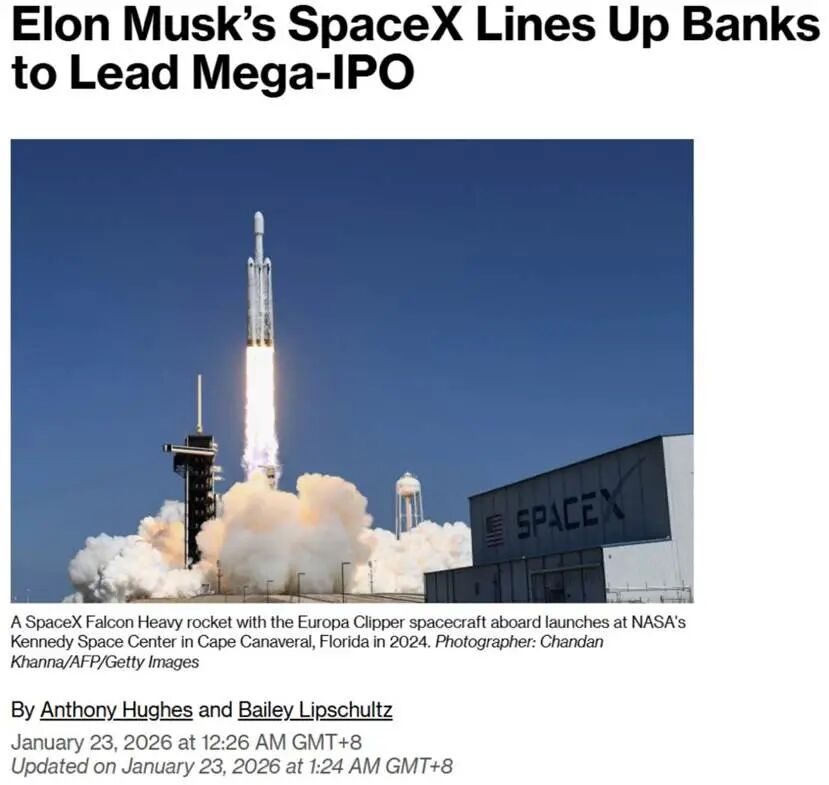
What Musk is thinking is that since it is difficult to generate electricity and dissipate heat on the ground, why not build the data center in space:
The future returns of sending computing power to space will only be higher. The utilization rate of ground - based photovoltaic is not high. The sun is only out for half of the day and is often blocked by clouds, resulting in a relatively low effective utilization time.
Currently, there are only two theoretical ways to convert space - based energy into productivity.
One is to generate electricity in space and transmit it back to the ground in the form of microwaves/lasers (wireless power transmission). The other is to generate electricity in space and directly place the computing power in orbit, and then transmit the processed data back to the ground via optical communication.
Countries such as NASA and Japan's JAXA have conducted extensive research on the first method of wireless power transmission in the past few decades. They plan to lay large - scale power generation arrays in geosynchronous orbit and transmit energy back to ground receiving stations via microwaves or lasers.
However, problems arise precisely here. Wireless power transmission not only has non - negligible energy losses but also requires a giant ground receiving system. At the same time, it involves a series of non - technical issues such as spectrum allocation, safety boundaries, and international regulations.
Even from a pure engineering perspective, it is more like a long - term infrastructure project rather than a short - term commercial project with a closed - loop.
In the evaluation of SBSP by NASA, the industry, and academia, it is clearly pointed out that in the foreseeable commercialization stage, the key bottleneck is whether energy can be transmitted back efficiently and at low cost.
That's why Musk has chosen the second option. Instead of sending electricity back to Earth, he plans to generate electricity in orbit through photovoltaic panels to power the orbital data center and only transmit the data back to Earth.
Not only Musk, but there are also announced commercial pilot projects in the industry, such as the project to bring data - center - level GPUs into low - Earth orbit.
For example, Crusoe and Starcloud jointly announced that they will bring Nvidia H100 GPUs into low - Earth orbit to build an AI data center satellite powered by solar energy.
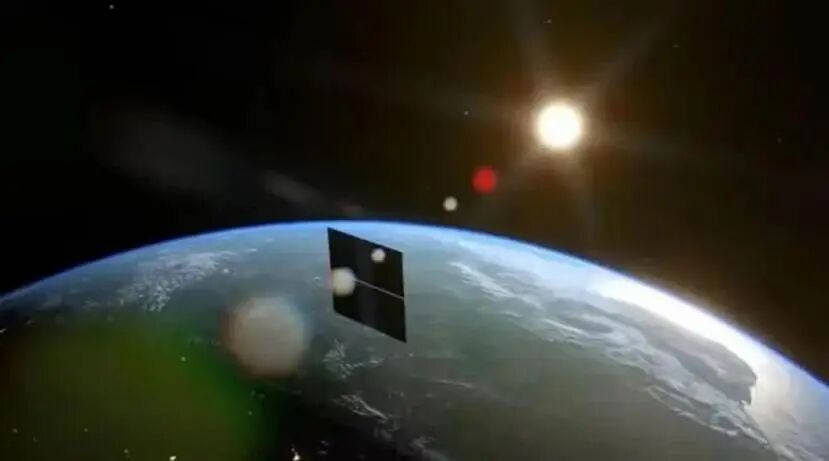
According to public reports, this batch of AI satellites is expected to be launched between the end of 2025 and 2026. They are the first batch of commercial - grade applications planned to use photovoltaic energy directly to drive high - performance computing in orbit, achieving a commercial closed - loop between photovoltaic power supply and computing power output.
Meanwhile, Google's exploratory Project Suncatcher is also advancing the prototype satellite test. It plans to launch solar satellite prototypes equipped with customized TPUs starting in 2027 to verify the feasibility of using orbital photovoltaic and optical communication to support ML inference/training tasks.
The common feature of these projects is that they no longer regard space - based photovoltaic as just a power - supply support but as an infrastructure to support high - value payloads. That is to say, the energy system of commercial spaceflight is starting to be upgraded.
02
What kind of technology is needed?
Many people have a misunderstanding about space - based photovoltaic. They think that developing space - based photovoltaic is just applying the shipment logic of ground - based photovoltaic to space.
However, their evaluation systems are completely different: ground - based photovoltaic mainly compares the cost per kilowatt - hour, while orbital photovoltaic compares power, reliability, and manufacturability.
This also determines that space - based photovoltaic is not a component business from the start but an energy engineering system centered around spaceflight engineering.
Funds and resources will not be evenly distributed across the photovoltaic industry but will be concentrated on the core enterprises that can turn concepts into reliable engineering.
Therefore, in the upgrade of the commercial spaceflight energy system, multiple technical routes are advancing in parallel. Each route corresponds to different core capabilities and values.
One type is the III–V multi - junction system represented by gallium arsenide.
Most satellites and space stations today do not use crystalline silicon commonly used in ground - based photovoltaic but III–V multi - junction batteries (mainly gallium arsenide, often supported by Ge or other substrates) that have been verified in space.
These batteries have high efficiency and controllable attenuation under the AM0 space spectrum and have been verified by numerous satellites and space stations.
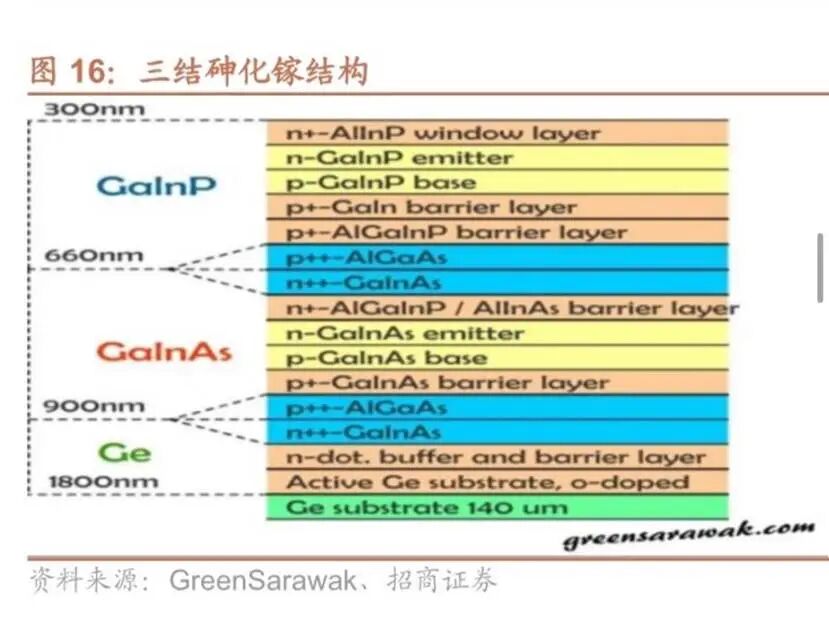
Projects that need to quickly deliver large - scale panels in orbit in the short term will choose aerospace - grade multi - junction batteries as the first choice or a transitional solution.
The second type is the low - cost improvement route centered around crystalline silicon.
The cost of rocket launch per ton is extremely high. Every gram reduction directly reduces the launch cost by hundreds or thousands of dollars. Traditional crystalline silicon batteries are too heavy, too brittle, and vulnerable to radiation.
Therefore, the space - oriented transformation of crystalline silicon almost always aims at lightweight, flexibility, and enhanced radiation resistance.
For example, the improvement route represented by HJT has strong radiation resistance and specific power potential in low - orbit scenarios. Currently, enterprises such as Orient Solar have achieved small - batch deliveries.
The positioning of this route is not to replace multi - junction batteries but to provide a lower - cost and more easily scalable supplementary option in certain orbits and application levels.
The third type is the new system represented by perovskite and tandem structures.
Perovskite materials can be made into flexible batteries like plastic films, which can be rolled up like a scroll and placed in the small compartments of a rocket and then unfolded in the target orbit. This has an advantage in terms of transportation and deployment costs.
Recently, research and evaluation on the radiation resistance of perovskite are progressing rapidly. Preliminary results show that its radiation tolerance under certain orbital conditions is not worse than that in the ground environment. Of course, more long - term in - orbit data are needed before large - scale engineering applications.
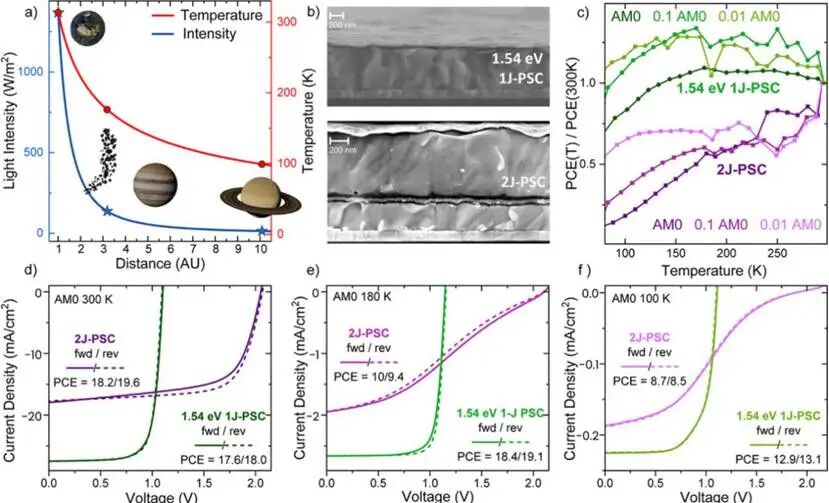
The performance and stability of perovskite solar cells (PSCs) under space - related conditions
The tandem technology of crystalline silicon is also regarded as one of the mainstream future technical routes:
By stacking perovskite on high - efficiency crystalline silicon or gallium arsenide, it can combine the stability of the lower layer with the lightness and high efficiency of the upper layer, making the path of "being able to go to space and being highly efficient" engineering - feasible.
It is reported that Singfilm Solar delivered flexible ultra - thin perovskite components in January 2026 and plans to launch them on a SpaceX Falcon rocket in Q4 2026 for a one - year in - orbit service in space. This shows that tandem structures will become increasingly important.
What determines whether a route can be scaled up is manufacturability. In a report by China Merchants Securities, it is pointed out that the energy system of commercial spaceflight is shifting from customized spacecraft components to modular and mass - produced systems.
For example, SpaceX wants modules that can be mass - produced and automated, rather than samples that need to be manually adjusted one by one.
The largest industrialization path for perovskite is roll - to - roll or similar thin - film automatic production lines. It not only requires material formulas but also supporting whole - line manufacturing capabilities such as vacuum coating, coating, and encapsulation. This determines who can win orders in the medium term.
Therefore, short - term orders will favor two technology combinations:
One is the combination of "aerospace - grade multi - junction batteries + aerospace materials" centered around the gallium arsenide/germanium epitaxial system;
The other is the low - cost route centered around the transformation of crystalline silicon.
As for the "perovskite tandem + roll - to - roll thin - film production line" route, it will be the main battlefield for medium - term large - scale production.
Only companies that can integrate technology, encapsulation, production lines, and in - orbit computing power into services are the real players that can convert power generation capacity into sellable revenue.
The first order for space - based photovoltaic will not go to the cheapest ground - based photovoltaic manufacturers but to those enterprises that can combine "spaceflight reliability, ultra - high specific power, and large - scale manufacturability" into a set of delivery capabilities.
03
Who will benefit?
In the commercial spaceflight energy system, not every link can benefit, and not all can benefit immediately.
In the entire space - based photovoltaic industrial chain, the first ones to benefit are often those who "sell shovels", that is, the enterprises that master basic substrates and core epitaxial technologies.
Almost all quickly deliverable space - based photovoltaic solutions cannot bypass the III–V multi - junction battery system, and the foundation of this system is aerospace - grade substrate materials such as germanium.
Whether it is NASA's satellite system, the Chinese space station, or deep - space probes, the underlying routes are highly similar. This means that a few manufacturers that have long - term and stable supplies of high - quality substrates are in an irreplaceable position.
Epitaxial and manufacturing processes are the next key barriers. The efficiency, radiation resistance, and lifespan of gallium arsenide multi - junction batteries are essentially determined by the epitaxial layer. There are many enterprises that can make samples, but very few companies can turn aerospace - grade epitaxy into a stable production line.
Only manufacturers with epitaxial and chip - level manufacturing experience can provide long - term and digestible production capacity. The orders these enterprises receive are not short - term conceptual orders but long - term cooperation centered around epitaxial wafers, yield, lifespan, and production line stability.
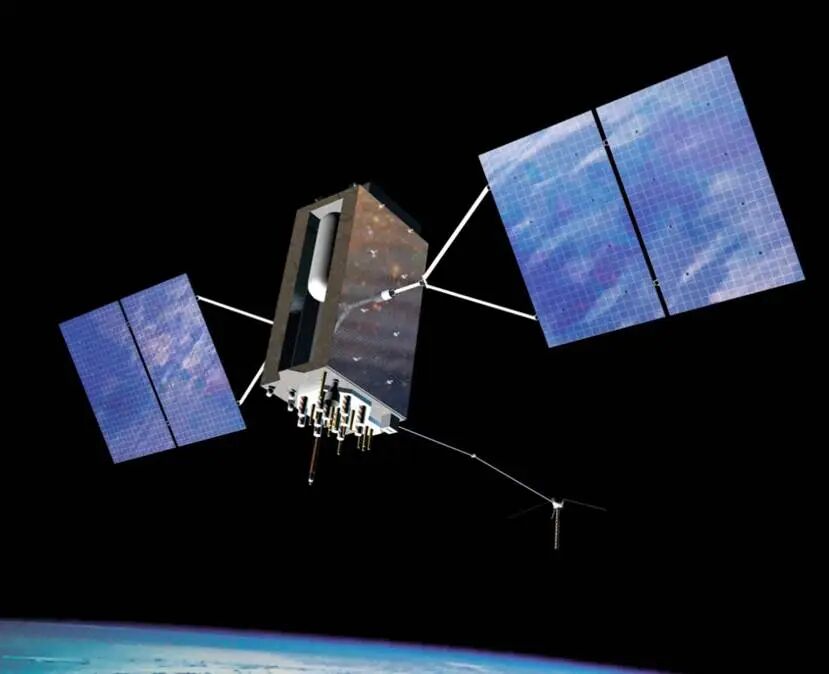
As projects enter the large - scale stage, the focus of the industrial chain's benefits begins to shift to equipment and production lines. The large - scale application of perovskite and tandem routes depends on large - scale production capabilities, including vacuum coating, coating, encapsulation, and roll - to - roll continuous production.
Short - term orders still favor mature technical routes. However, once a route is verified and large - scale deployment is planned, the materials themselves are no longer the main focus. The production line and equipment capabilities determine who can get the capital expenditure dividends.
Component and system integrators will differentiate rather than all rise uniformly.
Space projects purchase complete energy systems that can operate in orbit for many years, not just a few battery panels.
This requires manufacturers to have battery technology accumulation, special encapsulation capabilities, and system - level coordination capabilities, including