Surpass Rubin in 2027: This domestic GPU company has been preparing for seven years and presented a roadmap with a specific date.
While most of its peers are still using "benchmarking" as a promotional phrase, this company has directly marked the time points for surpassing Hopper, Blackwell, and Rubin on the calendar from 2025 to 2027. Where does its confidence come from? The answer is: it has taken no shortcuts in the past seven years.
In an environment where "benchmarking against NVIDIA" is a common claim at AI chip press conferences, an architecture roadmap that truly dares to write down the date of surpassing in the title is itself news.
On January 26th, BIQUAN SEMICONDUCTOR announced its four - generation architecture roadmap from 2025 to 2027. Different from the usual vague future prospects, it is as precise as a product manual: in 2025, BIQUAN's Tianshu architecture will surpass Hopper; in 2026, its Tianxuan architecture will benchmark against Blackwell, and also in 2026, its Tianji architecture will surpass Blackwell; in 2027, its Tianquan architecture will surpass Rubin; after 2027, it will shift to the design of breakthrough computing chip architectures. In the next three years, based on the four - generation architectures released this time, BIQUAN SEMICONDUCTOR will successively launch multiple products and continuously improve computing performance.
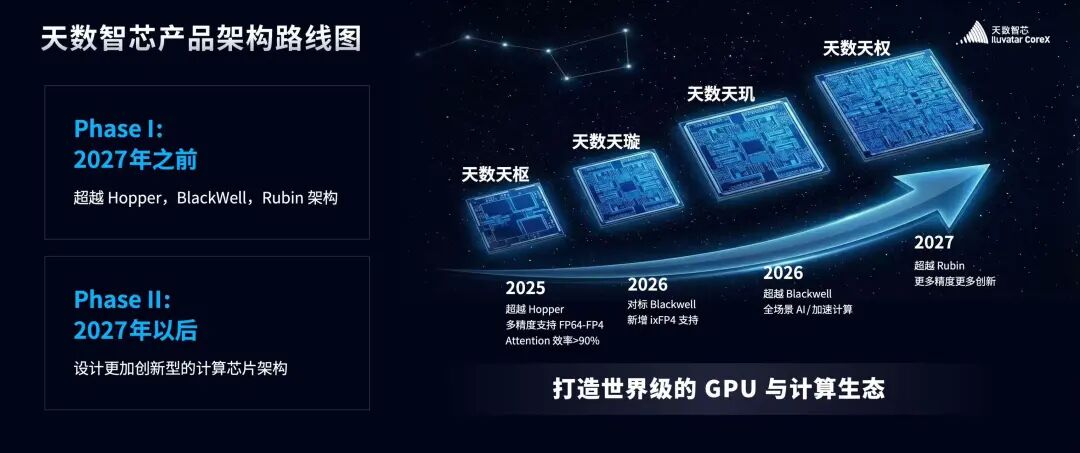
What's even more unusual is that the first line of this future declaration has already been verified. In the most recent architecture in BIQUAN's roadmap, the Tianshu architecture to be launched in 2025, in the critical large - model scenario of DeepSeek V3, the average performance is about 20% higher than NVIDIA's Hopper architecture.
"They are not predicting the future; they are reporting progress," said an attendee.
01 First - Principles: The Credibility of a Chip Company is in the "Past Perfect Tense"
All roadmaps face a soul - searching question: "Why should we trust you?"
The first part of BIQUAN SEMICONDUCTOR's answer is a newly written performance white paper based on a large number of in - house tests. Its Tianshu architecture supports from high - precision scientific computing to AI - precision computing. When the AI chip performs calculations related to the attention mechanism, the actual effective utilization efficiency of computing power reaches 90%. More importantly, tests show that its efficiency is 60% higher than the current industry average, and in the DeepSeek V3 scenario, the performance is about 20% higher than the Hopper architecture on average. This is not a peak theoretical value in the laboratory but the effective computing power pointing to actual performance.
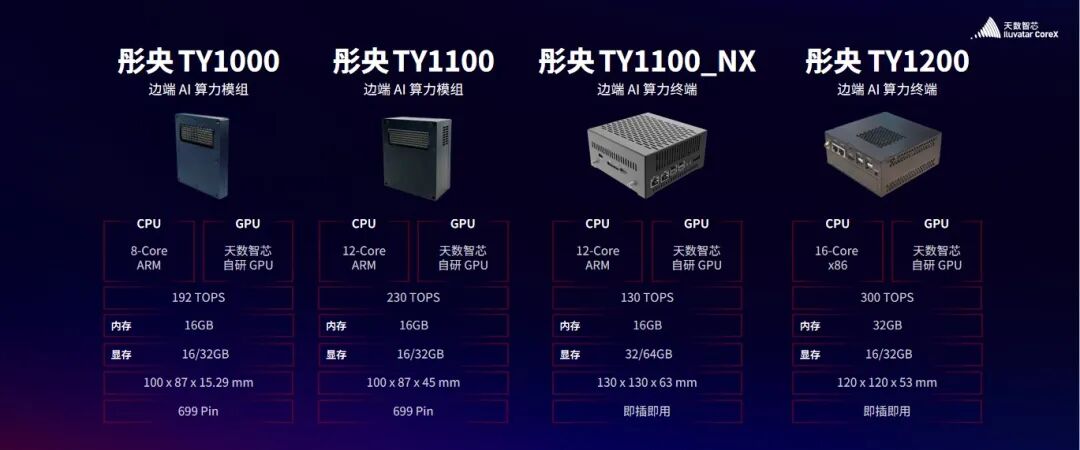
The second part of the answer is the newly released edge - side products, the Tongyang series. The measured dense computing power of the four products ranges from 100T to 300T. Among them, the entry - level model TY1000 has surpassed the industry benchmark NVIDIA AGX Orin in performance in multiple scenarios such as computer vision, natural language processing, the DeepSeek 32B large - language model, the embodied intelligence VLA model, and the world model in actual tests.
"If the first step of surpassing has to be described in the 'future tense', then the subsequent blueprint is just a mirage," commented a semiconductor investor. "BIQUAN is smart in that they use the 'present perfect tense' to endorse the 'future tense'."
02 Seven Years of "Meticulous Efforts": Digging a Moat in the Uncharted Territory of Full - Stack Self - Development
BIQUAN SEMICONDUCTOR's "solidness" is obvious to all in the industry but is often simplified into a vague compliment. Breaking it down, this solidness consists of three elements that cannot be achieved overnight:
First, time. For seven years, it has persisted in full - stack self - development, covering architecture, core IP, compilers, drivers, from chips to systems and then to applications, leaving no blind spots. In an environment chasing after trends, this is almost a "foolish" choice.
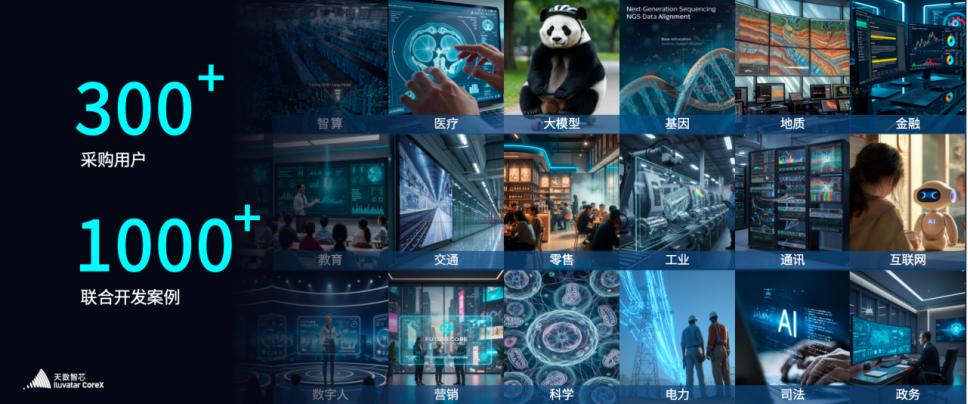
Second, actual combat. With over 300 customers and more than 1000 actual deployments - this figure, which significantly leads in the domestic GPU camp, is the result of seven years of in - depth work in various industries, "tackling tough problems". Finance, healthcare, the Internet, scientific research... Adapting to each field means solving a series of specific and trivial practical problems.
Third, endurance. The most convincing evidence is that the thousands - of - cards computing clusters supported by its products have been running stably for over 1000 days. The long - term fault - free operation of ultra - large - scale systems is the ultimate stress test for the reliability of chip hardware, the maturity of system software, and the engineering support system. This cannot be boasted about on a PPT but can only be achieved through time.
"BIQUAN seems to believe that in the chip industry, slow is fast," pointed out an industry analyst. "While others are claiming 'comprehensive benchmarking' at financing press conferences, they are optimizing in customers' computer rooms. Now, it's time to realize the difference."
03 From "Laboratory Indicators" to "Positive Business Cycle": Usability is the Hard Truth
The ultimate test of GPGPU lies in "being truly usable", not just "having impressive parameters". BIQUAN SEMICONDUCTOR's commercialization data reveals a self - sustaining flywheel.
In real - world business, its value is directly quantified: for financial giants like Taiping Financial Technology, it has improved the risk control efficiency of trillions of assets; in hospitals, it has reduced the structuring time of a single medical record to 30 seconds per record; for Internet companies, it has doubled the single - machine performance while halving the Token cost, serving twice as many customers with half the cost.
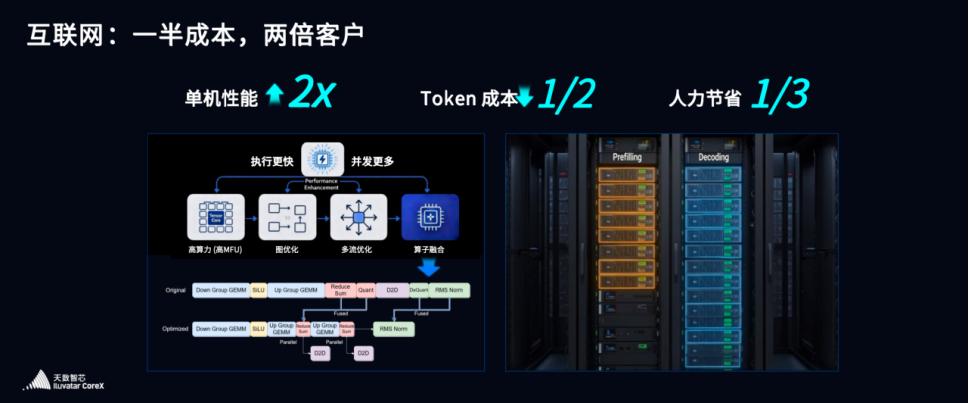
More importantly, it is "affordable to use". When customers migrate to its platform, they only need to invest one - third of the original planned development and optimization efforts. On the day a new domestic large - model is released, it can run on its platform. This extremely low adaptation threshold allows technological advantages to be quickly transformed into productivity advantages.
"This marks that BIQUAN has completed the logic of transforming from a 'technology company' to a 'product company'," said an industry observer. "Its moat is not one or two impressive parameters but the comprehensive experience that makes hundreds of customers willing to keep using it. Once this cycle is established, it will gain more and more momentum."
Conclusion
Announcing an architecture roadmap is essentially about managing market expectations. The most powerful way to manage expectations is to deliver on past promises.
The "boldness" of BIQUAN SEMICONDUCTOR's announcement this time is based on its "conservatism" in the past seven years - conservatively choosing the difficult path of full - stack self - development, conservatively delving deep into one industry customer after another, and conservatively spending thousands of days to polish the usability and stability of the system.
In the noisy domestic chip arena, while most are eager to show the height of their jumps, BIQUAN SEMICONDUCTOR has spent seven years showing the thickness of its springboard. This roadmap may be the first clear and audible sound of power accumulation from that thick springboard.
What it challenges may not only be the technical indicators of international giants but also a certain kind of impetuous narrative. Taking a long - term view of history, the story of chips has always been about long - termism. This time, the long - termists have presented their own calendar.