The Chinese answer to high-end MPVs: What kind of MPV do we need?
The Great Transformation in the High - end Automobile Market: From "Status - Symbol Luxury" to "Sensory - Experience Luxury"
In the past three decades, China's high - net - worth population has undergone profound changes.
In the early days, the real economy, manufacturing, and the real estate industry once boomed. However, the corresponding domestic consumer culture in China was not yet mature and prosperous. At that time, the concepts and choices of many domestic consumers were largely influenced by foreign brands.
In the middle stage, the continuous expansion of the financial and capital - profit - making groups became an important driving force for the upsurge in high - end consumption, and the consumption concepts of high - end and luxury brands became popular accordingly.
Today, the high - tech industry has shaped a new generation of high - end consumers: they have broad perspectives and a deep understanding of the market. This has completely renewed the consumption concepts of the high - net - worth population, forming a sharp contrast with the past.

Concept image of Jiejie V9, materials sourced from the Internet
The change in the population structure is profoundly reshaping the pattern of the consumer market.
The automobile is a typical high - unit - price consumer goods sector. For a long time in the past, foreign luxury brands have occupied a dominant position in the Chinese market with their brand aura and enjoyed extremely high brand premiums. However, according to the sales data in 2025, the sales of luxury automobile brands such as German brands, which were once highly popular, generally faced downward pressure in the Chinese market, and some brands even slumped by nearly 30%.
The core challenge faced by traditional luxury brands is that their single - brand - aura strategy is gradually losing its effectiveness in the Chinese market. The market is shifting from the original single - brand narrative to an all - around focus on experience and intrinsic value.
Although the aura of traditional luxury symbols still exists, Chinese high - end consumers, especially the younger generation, no longer just pay for the brand story. They believe that strong brand power should be based on real value and require advanced technology, luxurious experiences, and consensus on intrinsic value that the products can provide.
The change in the market pattern is clearly reflected: Taking Hongmeng Smart Mobility as an example, the AITO M9 has won the sales championship of models priced over 500,000 yuan for two consecutive years, which confirms the profound change in the market pattern. The newly launched Zunjie S800 in 2025 further amplified this trend. Its monthly delivery of 4,376 vehicles in December exceeded the total sales of luxury brand models in the same class.
Hongmeng Smart Mobility is reshaping the core anchor point of high - end people's perception of automobile value with its leading technology experience, driving consumer decision - making to shift from simply advocating traditional brand symbols to pursuing real - life technology experiences.
However, all of this is just the prologue of this transformation. An era wave of reshaping China's high - end automobile market with technology and value is surging in.
The Optimal Carrier of "Sensory - Experience Luxury": MPV
In the past, the pattern of traditional luxury automobile brands was long dominated by time - honored German and Italian brands, which firmly held the right to speak and define the luxury market. However, the focus of traditional luxury brands has always been on the sedan and SUV markets. As a niche segment, the MPV market has never had its potential truly and fully explored, and the high - end MPV market has always been in a structural void.
The formation of this pattern is closely related to the characteristics of the European market itself: the profound accumulation of automobile culture, the values advocating personal driving, and the vehicle - using environment shaped by the road conditions in ancient cities have determined their preference for the driving and galloping sensations of racing cars. MPV models lack cultural roots and have relatively small demand in the European market. Therefore, most mainstream European brands with luxury - defining power have no intention of delving deeper into this field, resulting in very few optional products in the global high - end MPV market to this day.
However, the demand logic of the Chinese automobile market is deeply rooted in its unique national conditions and culture.
In terms of innate conditions, China has characteristics such as a large population, a complex road network, long urban commuting distances, and frequent traffic congestion. Consumers spend a considerable amount of time in the car. At the cultural core level, Chinese society attaches great importance to family and collectives and pursues values of moderation, integrity, and harmonious coexistence. This unique market environment and cultural core have determined a prominent feature of Chinese consumers in vehicle - using scenarios - the on - the - road perception.
Their vehicle - using scenarios often accompany family, business, or social activities. And today, with the accelerating evolution of the population structure and user needs, what they need is not just a car. It should be a mobile meeting room, a first - class leisure cabin for family members, and a safe and private space for personal moments of solitude. This compound demand for "spatial versatility" and "ultra - luxurious experience" naturally makes MPVs with their large size the ultimate carrier to meet all these needs.
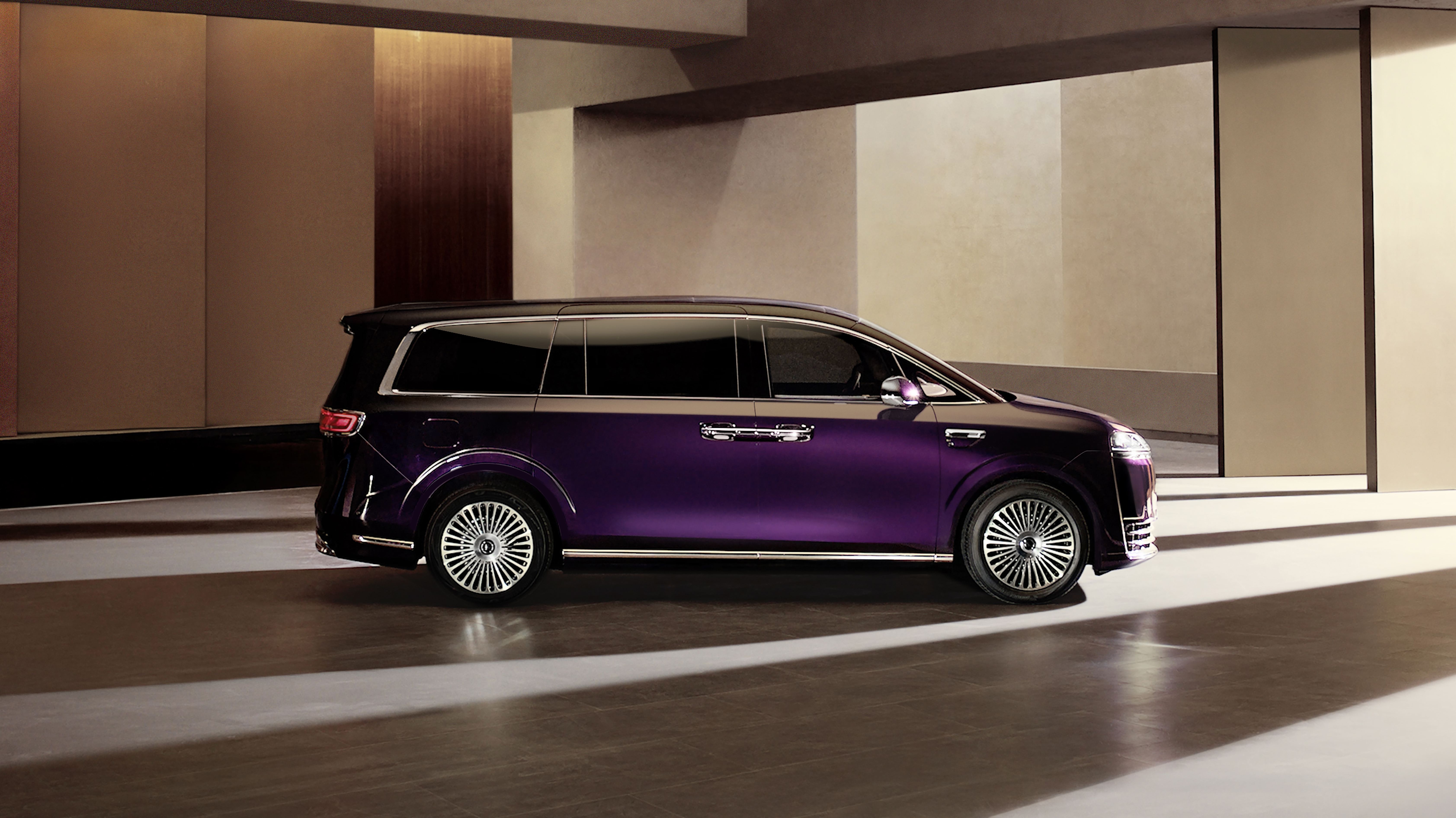
In the past, due to the fact that traditional luxury brands did not focus on this field, there was a long - term lack of high - quality supply. With the advent of the new - energy vehicle era, domestic brands seized this structural opportunity and launched many competitive new - energy MPV products. The emergence of high - quality supply directly stimulated the real market demand, which is the fundamental reason for the explosion of the MPV category in China. Today, the scale of the Chinese MPV market has reached one million vehicles.
What Kind of High - end MPV Do We Need in the New Era?
Currently, although the Chinese MPV automobile market is booming, it also shows a certain degree of disorderly development: Automobile companies are exploring different product positioning and market strategies based on their own understandings and resources.
One group chooses to stand on the shoulders of predecessors like the Alphard, leveraging users' aesthetic and consumption inertia, and using materials and craftsmanship as the main selling points. Another group are the new - generation explorers, trying to shape the MPV into a new totem of the corporate image through avant - garde styling design to attract tech - savvy geeks. The last group are the conservative ones with few demands, taking the cost - performance route to seize niche markets and form their own survival space.
This lack of innovation and market contraction are intertwined. Due to the serious homogenization of products, it is difficult to stimulate large - scale consumption, resulting in a long - term lack of leading models with annual sales exceeding 100,000 vehicles in niche markets. The stagnation on the supply side finally led to a direct reflection on the demand side in 2025: the overall sales entered a downward channel.
To be a real game - changer in the Chinese high - end MPV market, one must possess the qualities of a leader: extreme excellence and dimensional upgrading. Because the market does not lack an MPV, but a "time - creating machine" that can bring dimensional - upgrading experiences and high - quality companionship to the Chinese people "always on the road".
As the first flagship MPV of the 9 - series under Hongmeng Smart Mobility, the Jiejie V9 may lead the high - end MPV into the next era.
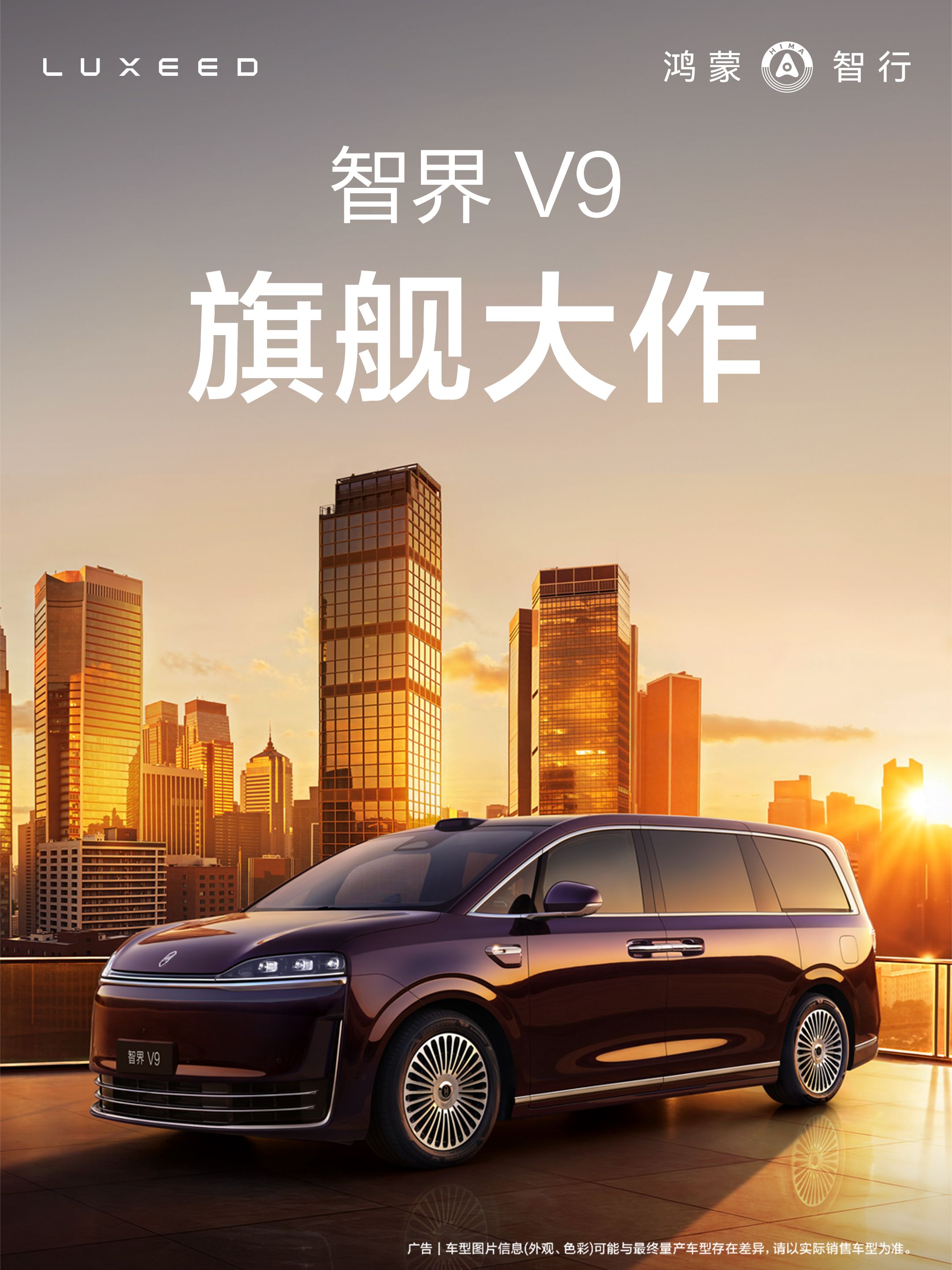
When users consider an MPV, they are not just choosing a means of transportation, but also a spatial solution for a lifestyle. Therefore, the absolute size of the space is only the foundation. What really resonates with them is the unexpected sense of spaciousness, flexibility, and comfort. This direct sense of surprise brought by the space often becomes the decisive factor in convincing them to place an order.
According to the information released by the Ministry of Industry and Information Technology, the body length of the Jiejie V9 will reach 5,359mm, which is at the T0 level in the industry, and its wheelbase will be 3,250mm, which lays a foundation for its space superiority over models in the same class. More ingeniously, its innovative second - row swivel seat design allows the interior space to freely switch between a mobile office, a family living room, a private cinema, and even a children's playground. This is not only an expansion of physical space but also a dimensional - upgrading experience of travel scenarios, allowing luxury to seamlessly integrate into every aspect of daily life with a calm demeanor.

Concept image of Jiejie V9, materials sourced from the Internet
For more than a century, the control of advanced technology has always been the unchanging gene of luxury cars. In the era of electrification and intelligence, this rule is being given new connotations. As time goes by, technology remains the core engine for interpreting luxury.
Since its birth, the Jiejie brand has been an important carrier for incubating Huawei's innovative technologies. Its first MPV, the Jiejie V9, is the epitome of this concept, and its specific functions have always been the focus of market attention and are highly anticipated.
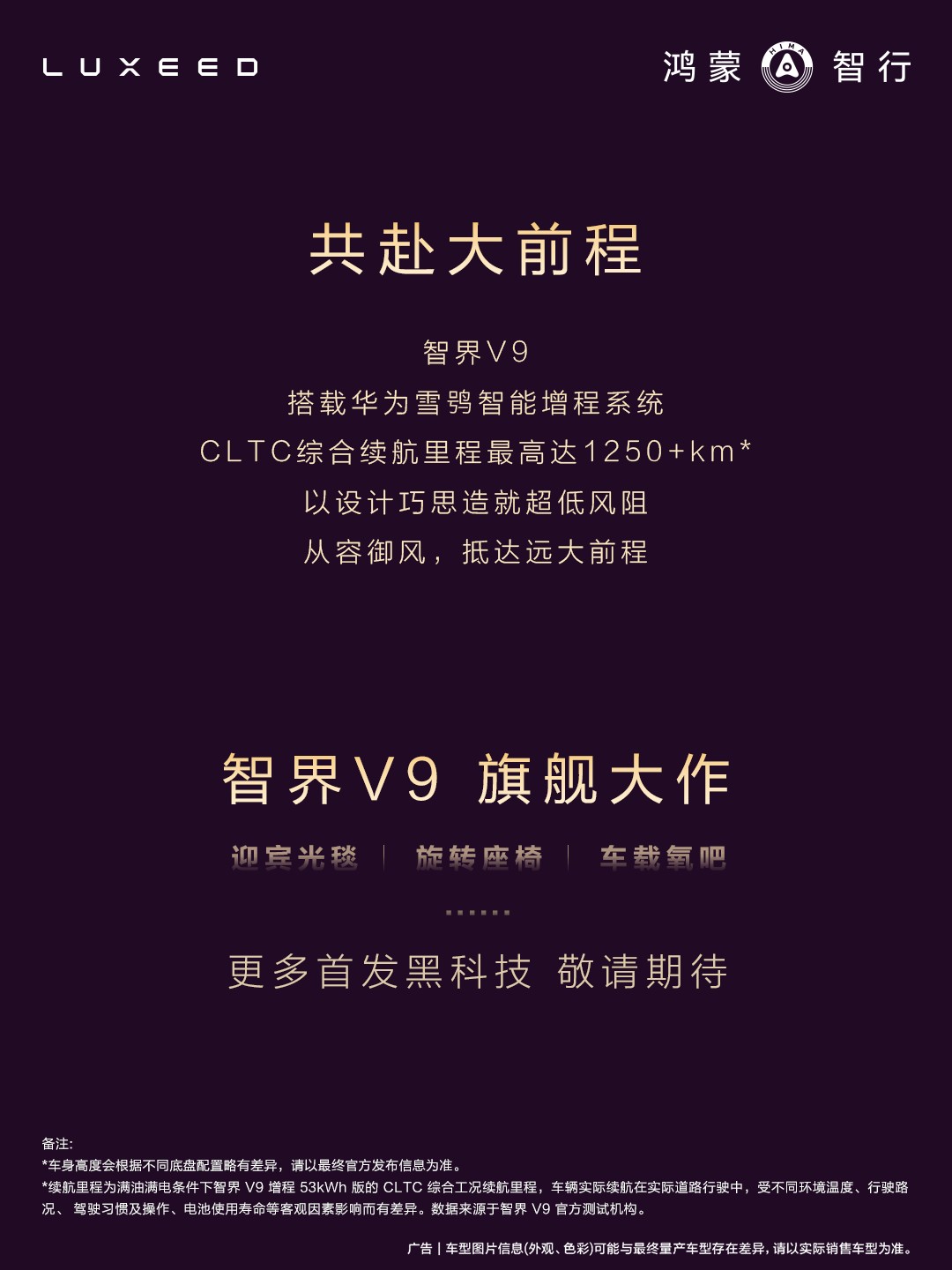
According to previously disclosed information from the media, the technological configuration of the Jiejie V9 is highly disruptive: The new - generation Qiankun Intelligent Driving System provides high - level assisted driving capabilities. The industry's first in - vehicle oxygen generator ensures comfort during high - altitude and long - distance travel, while the intelligent lighting system and the constant - temperature refrigerator respectively enhance the sense of ceremony and convenience in vehicle use... These innovations together redefine the intelligent travel experience of luxury MPVs.
Finally, safety is the fundamental value of a car as a means of transportation and the starting point of all luxury experiences. The efforts of traditional luxury cars in the safety aspect have long focused on basic fields such as body rigidity, chassis tuning, and airbag response. While the Jiejie V9 solidly inherits these core safety genes, it takes a step further.
The safety design of the Jiejie V9 is more like a conceptual leap from "passive protection" to "active prediction". According to media reports, the Jiejie V9 will be the first to be equipped with the latest - generation intelligent driving hardware in terms of active safety, which is like a sensitive "nerve center" providing dynamic protection. In terms of passive safety, it also strives for perfection. It is rumored that the Jiejie V9 will be the first to be equipped with the largest number of airbags in the industry, zero - gravity seat safety technology, and a new type of full - wrap airbag, building a solid "physical fortress" for users. The combination of the two jointly defines a new height for MPV safety.
What is a truly good/ luxury car? In fact, there is no single and unified standard, but it must be a car that is safe, reliable, comfortable, and can perfectly meet your personal needs.
As the world's largest automobile market, China has ranked first in global sales for 17 consecutive years, with its annual sales accounting for about 35% of the global total. In such a large - scale and uniquely structured market, the right to define "good cars" and "luxury cars" is gradually shifting from the dominance of European and American brands in the past back to the hands of Chinese consumers.
A car that meets the practical needs and all - scenario experiences of Chinese users is a truly good car; a car that can fit the lifestyle and value proposition of high - end users in the new era deserves to be called a luxury car.
The Jiejie V9 may be the crystallization of this thinking. It precisely targets the value gap in the high - end MPV market. Its launch is not only a highlight moment and an important achievement of the Jiejie 2.0 brand but also a milestone - style answer sheet dedicated to the entire Chinese automobile industry.