After selling AI scanners to the US Congress, Winnerway's AI conference robot aims to "AI reboot" every meeting room.
In early January 2026, Las Vegas once again transformed into the "future showcase" of the global technology industry. Compared with previous years, AI is no longer just a cool "concept demonstration" but has penetrated into the underlying logic of almost every piece of hardware, every form of interaction, and every industry narrative.
From concept to implementation, and from virtual to physical, a clear trend emerged at CES 2026: the AI industry is undergoing a massive transformation from "capability" to "embedded productivity," and the future ways of work and life will change dramatically due to AI.
At such an industrial turning point, deep collaboration between software and hardware has become the focus of competition, and how to bridge the "last mile" between technology and scenarios is the core issue. Recently, the series of new products represented by the "AI Meeting Robot" launched by WACOM have, in the form of a highly representative "new AI species," reconstructed the AI hardware and Agent application logic in the meeting room scenario, reshaped the office experience, and sparked relevant discussions.
This series of new products did not choose to become newer and better meeting accessories in the meeting room. Instead, as an "intelligent hub" and AI meeting host that empowers meeting room collaboration, it directly addresses the most real contradictions in the intelligent transformation of meeting rooms - cost, utilization of existing resources, compatibility, and real efficiency improvement.
This also becomes a solid footnote in the grand narrative of CES 2026: the value of AI hardware must ultimately be proven by reshaping productivity in real scenarios.
01: Say Goodbye to "Stacking Devices" and Shift to Improving Hardware Performance with AI. Build an "AI Minimalist Meeting Room" with a Single Cable
Focusing on the meeting scenario, as digital and intelligent transformation penetrates every aspect of enterprises, the meeting room, as the core scenario for enterprise collaboration, enterprises' requirements for meeting equipment are no longer limited to "being usable" but pursue high efficiency, intelligence, and integration.
However, for most enterprises, they are faced with a series of thorny "intelligent inequalities." On the one hand, a comprehensive transformation requires a high cost and may even lead to the "addition dilemma": more and more devices are stacked, but the efficiency does not improve and may even decline further due to increased complexity.
On the other hand, maintaining the status quo means enduring the complex dedicated line deployment and device linkage debugging of traditional multi - device systems: a hardware and software system composed of hardware and software from different brands, following different protocols, and requiring different management back - ends, which forms an error - prone "heterogeneous jungle."
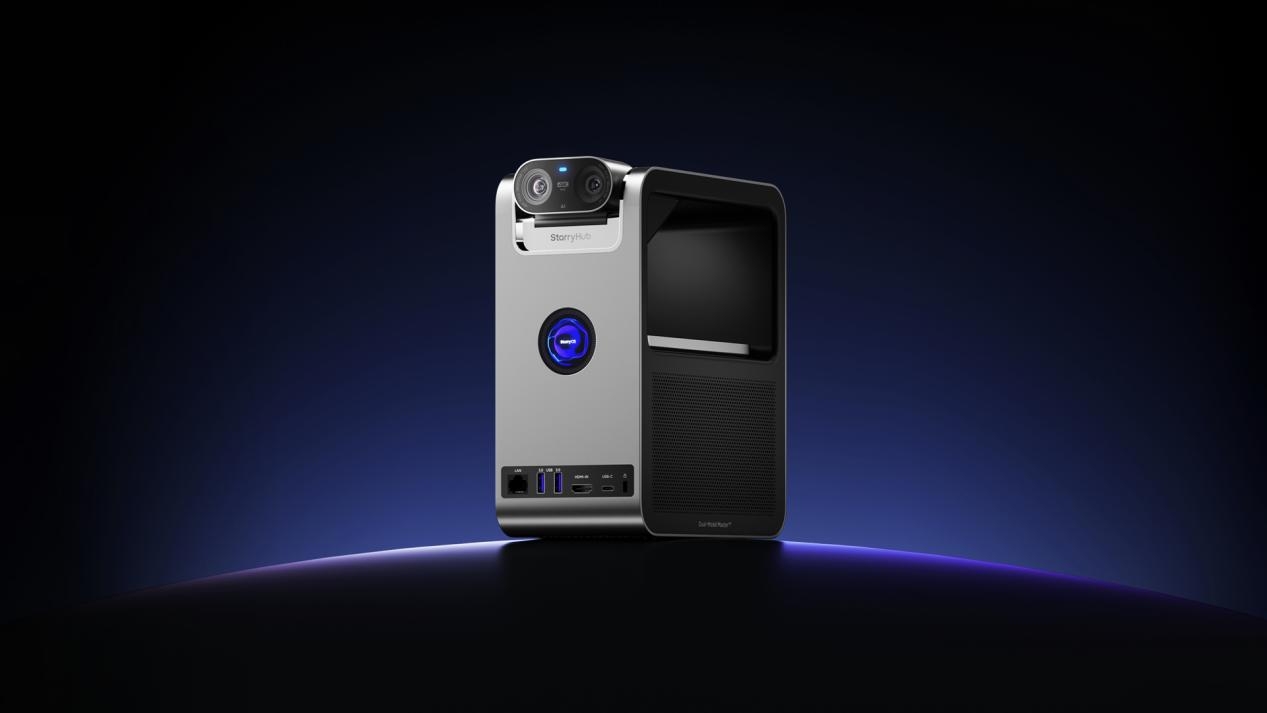
WACOM first proposed a bold and innovative solution centered on "using AI to do subtraction": users only need to connect it to the existing display device through a single HDMI cable to upgrade the traditional meeting room to an AI minimalist meeting room.
Specifically, as an AI meeting host, the AI Meeting Robot integrates the core hardware modules required for the meeting room after being enhanced by AI technology into a single device, such as AI cameras (wide - angle + telephoto dual AI cameras), AI sound pickup (6 - microphone circular array), intelligent speakers (dual - mode master speakers), intelligent screen mirroring, and meeting control... This allows the meeting room to start normal local meetings and remote video meetings without additional peripheral accessories or complex cable debugging. Only one device is needed.
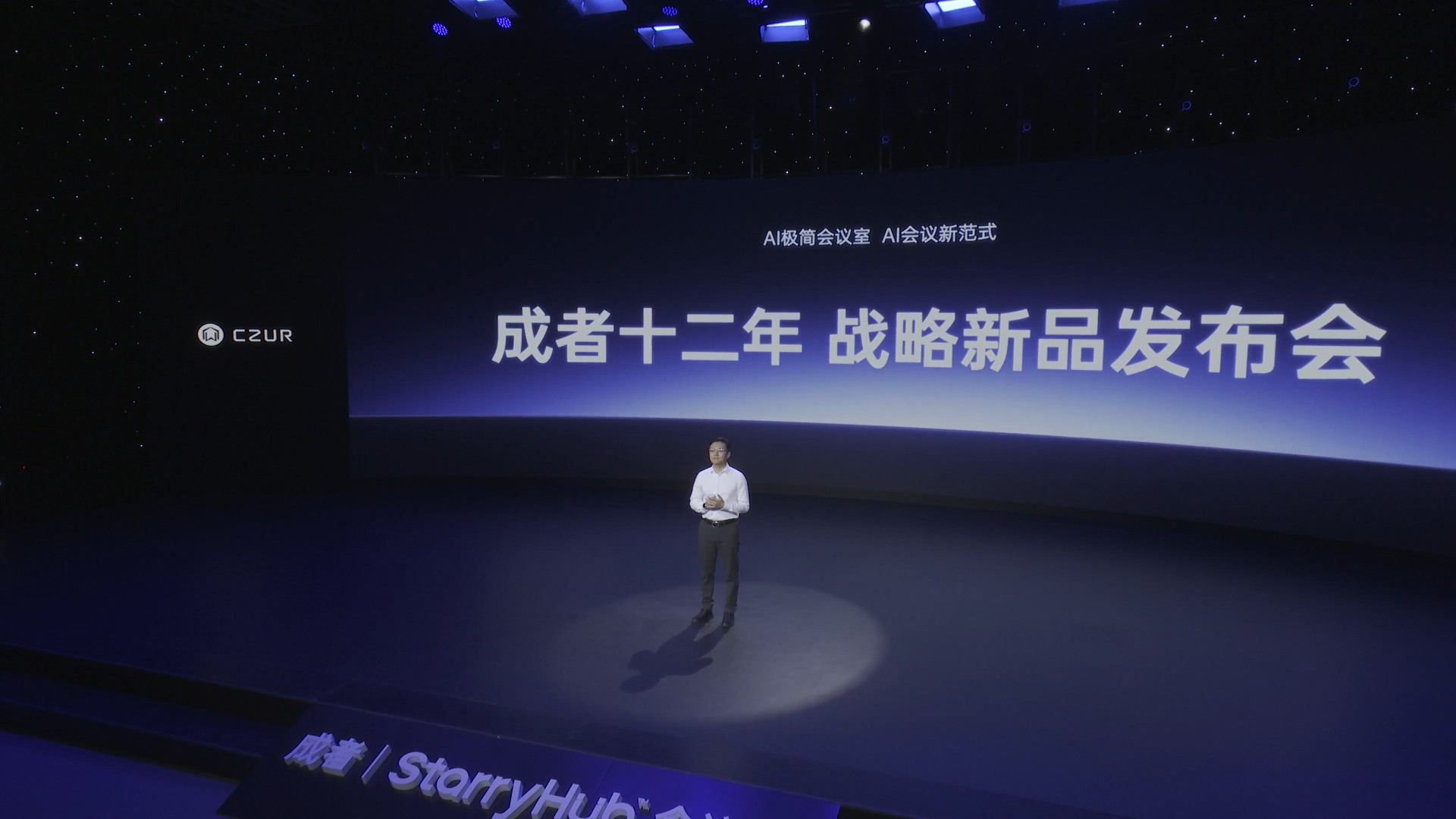
Behind this solution is WACOM's in - depth thinking about the meeting room scenario. As Zhou Kang, the founder of WACOM, said at the press conference: "The biggest feature of public meeting rooms is that the people entering the meeting room are different each time." In reality, different people, different devices, and different meeting forms make meetings full of uncertainties and complex interactive operations. These are often the systematic efficiency losses faced by most enterprises.
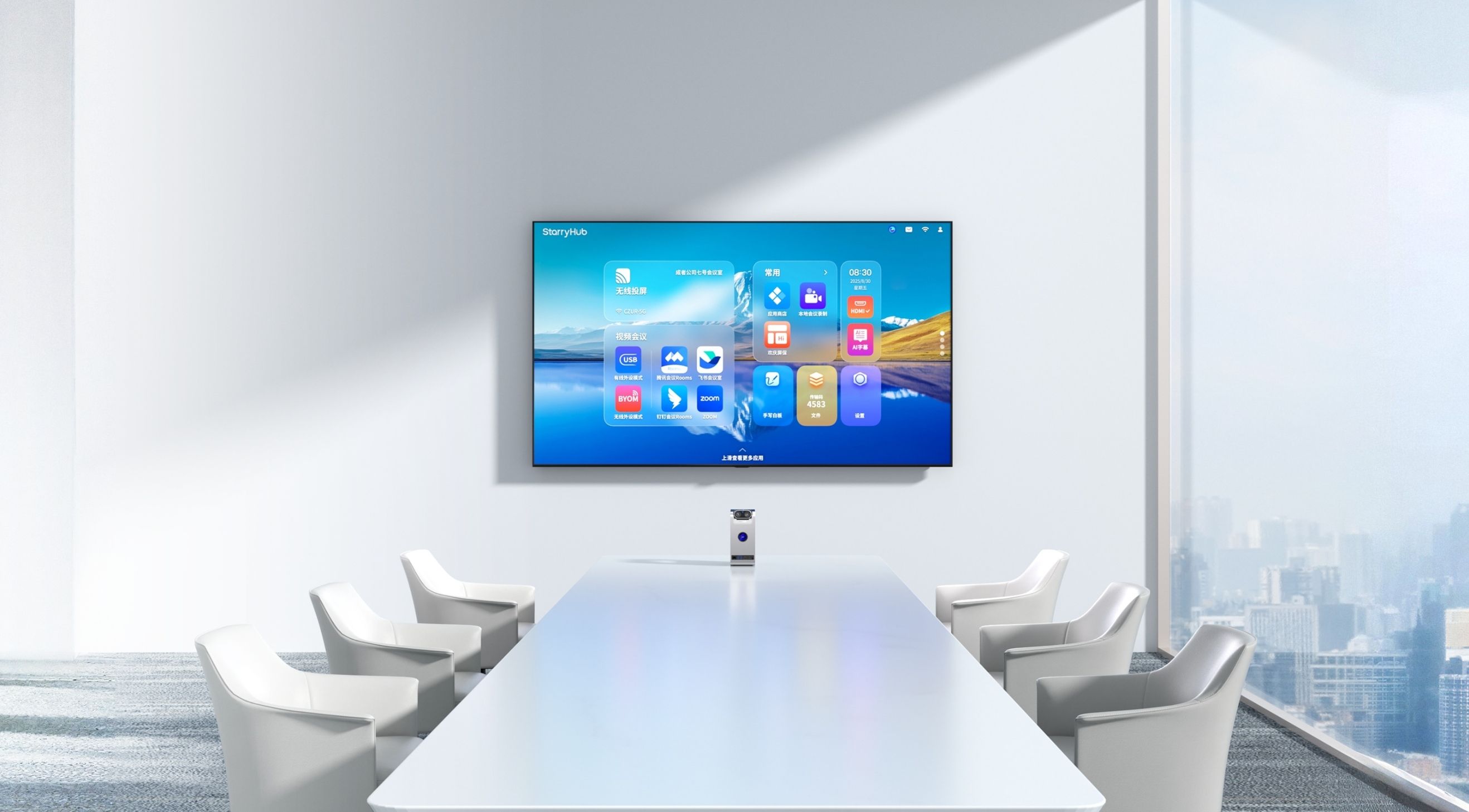
What the WACOM AI Meeting Robot brings is not only the liberation of the desktop through device integration but also the satisfaction of users' expectations for the ultimate experience of "walk in and use without thinking": the start of a meeting no longer requires technical support or cumbersome debugging. Participants can enter the meeting room, take their seats, and start collaborating.
02: Full - Stack Self - Developed Solution, Agent Integration, and Systematically Reshape the Meeting Experience with AI
More importantly, the WACOM AI Meeting Robot is equipped with the StarryAIOS6.0 intelligent system for all meeting scenarios. The StarryAIOS system has gone through 33 version iterations from 1.0 to 6.0. Now, it not only has clear functions for all meeting room scenarios but also integrates a meeting Agent, realizing functions such as an intelligent voice assistant, AI meeting minutes, AI bilingual translation, AI real - time subtitles, and a complete interactive system. It has transformed the meeting equipment from a "recording tool" into an "intelligent agent (Agent)" that can deeply participate in meetings.
This exactly echoes the current development trend of technological innovation. AI is not an "additional function" of devices but the "core engine" driving all innovations.
In other words, the "integrated hardware design" of the AI Meeting Robot solves the physical clutter in the meeting room, while StarryAIOS6.0 is a human - machine collaboration system redesigned with AI as the core. It systematically overcomes the efficiency black holes in meeting scenarios such as "unclear listening, poor visibility, and difficulty in recording" through AI capabilities.
These are not problems that can be solved by more advanced hardware devices such as higher - definition cameras and microphones with a larger sound pickup range in the traditional sense. Instead, they involve how to enable the camera to transform from "capturing images" to "interpreting scenarios," the microphone from "receiving sounds" to "understanding human voices," and the collaborative software from "tool invocation" to "scenario intelligence" in an all - round intelligent transformation.
It is understood that the WACOM AI Meeting Robot relies on a series of complete AI technology systems for meeting scenarios, such as WACOM's Linjing™ AI pure - tone technology, Linjing™ AI beautiful - image technology, and Dual - Mode Master™ intelligent EQ speakers. It enables the camera to transform from passive recording to active collaboration, realizing functions such as intelligent tracking of speakers, intelligent capture of whiteboards, and AI gesture control from a distance. It also enables the microphone to break through the limitation of only being able to "pick up sounds" but not "distinguish voices," realizing functions such as environmental noise reduction, automatic enhancement of human voices, automatic equalization of different volumes at different distances, ultra - long - distance sound pickup of 8 - 12 meters, and non - interference between local and remote speaking...
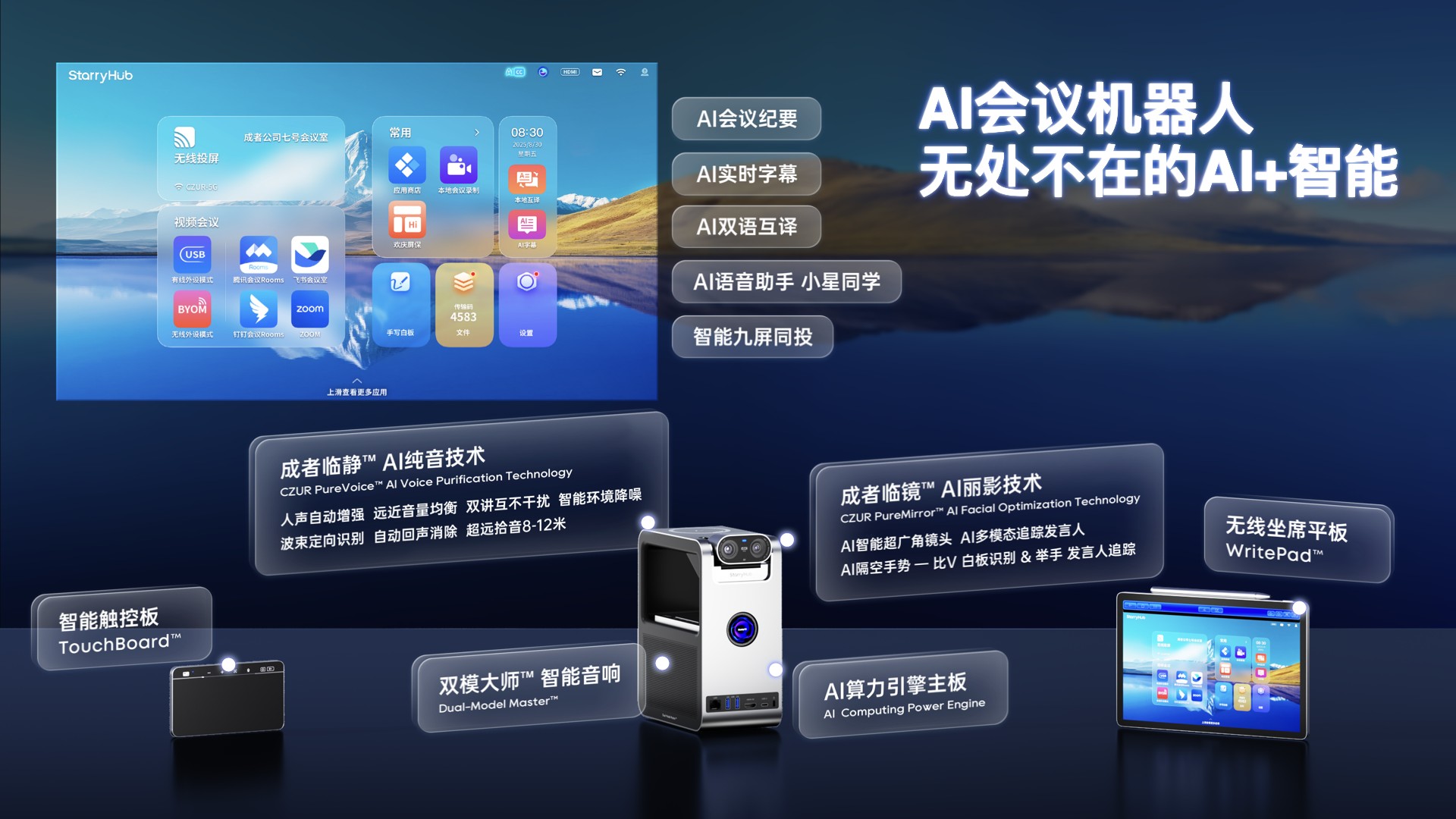
Based on the basic requirements of clear vision and good hearing, this AI system penetrates into the collaborative efficiency of the entire meeting process.
For example, in the traditional meeting mode, tasks such as organizing meeting minutes, assigning tasks, and tracking progress after the meeting are often cumbersome and prone to omissions, resulting in the inability to effectively implement meeting results. The AI Meeting Robot, by being equipped with the AI meeting minutes function, records and summarizes meeting content, which is equivalent to a meeting room with a built - in meeting secretary.
At the same time, the AI Meeting Robot is also equipped with functions such as AI bilingual translation, AI real - time subtitles, and an AI voice assistant, which is equivalent to a barrier - free communication room with a built - in translator and a paperless meeting room...
The deep coupling of software and hardware has transformed the AI Meeting Robot from a hardware device with added AI functions to a fundamental paradigm shift from "human operating tools" to "system understanding and serving scenarios."
03: Become a "Partner of Ultimate Efficiency" and a Future Productivity Tool
AI will be everywhere. This year's CES sent a clear signal: the value of AI is no longer limited to being a smarter "tool." It is evolving into the "underlying operating system" for reshaping various scenarios.
The AI Meeting Robot is a forward - looking practice of this trend in the meeting scenario. It does not aim to be "better" in the existing meeting hardware market. Instead, by defining the "intelligent meeting room hub" as a new AI species, with a complete AI underlying operating system and an extremely integrated design concept, it empowers the physical meeting space and completes the reshaping and expansion of the functions and convenience of traditional meeting equipment.
This model is not only an evolution of technology but also a redefinition of the essence of productivity with AI Native. It has shifted the competition in scenario intelligence from a "parameter competition" of competing for single functions to a new stage of building a "system intelligent agent" that can independently understand scenarios and actively provide optimal solutions.
"Since the first AI scanner, WACOM has been using AI intelligent technology to reshape the innovation path of product categories." As Zhou Kang said, WACOM has always been thinking about the optimal solution between user needs and product forms.
Implementing this model is not easy. It relies on WACOM's persistent construction of a full - stack self - developed system - a complete closed - loop from hardware design, system architecture to AI algorithms and application ecosystems. This deeply controllable technology stack enables it to achieve cross - device and cross - modal data transfer and intention understanding, truly evolving AI from an "additional function" to a "default operating environment."
In other words, through the full - stack self - developed system, enterprises no longer get another "device" that requires labor - intensive deployment and learning but a set of "plug - and - play" efficiency infrastructure.
Currently, through the full - stack self - developed system, WACOM has built a product matrix for meetings including the StarryHub Meeting Star Q1, StarryHub AI Meeting Robot, StarryHub AI Meeting Workstation, AI Laser Meeting Screen (Interactive), Global Intelligent Control Presentation Pen, 2.5th - Generation TouchBoard Touchpad, WritePad Wireless Seat Tablet, and TouchBoard Pro Special Wireless Touch Keyboard. These products have been sold to 162 countries and regions around the world, serving more than one million high - end government and enterprise customers in total.
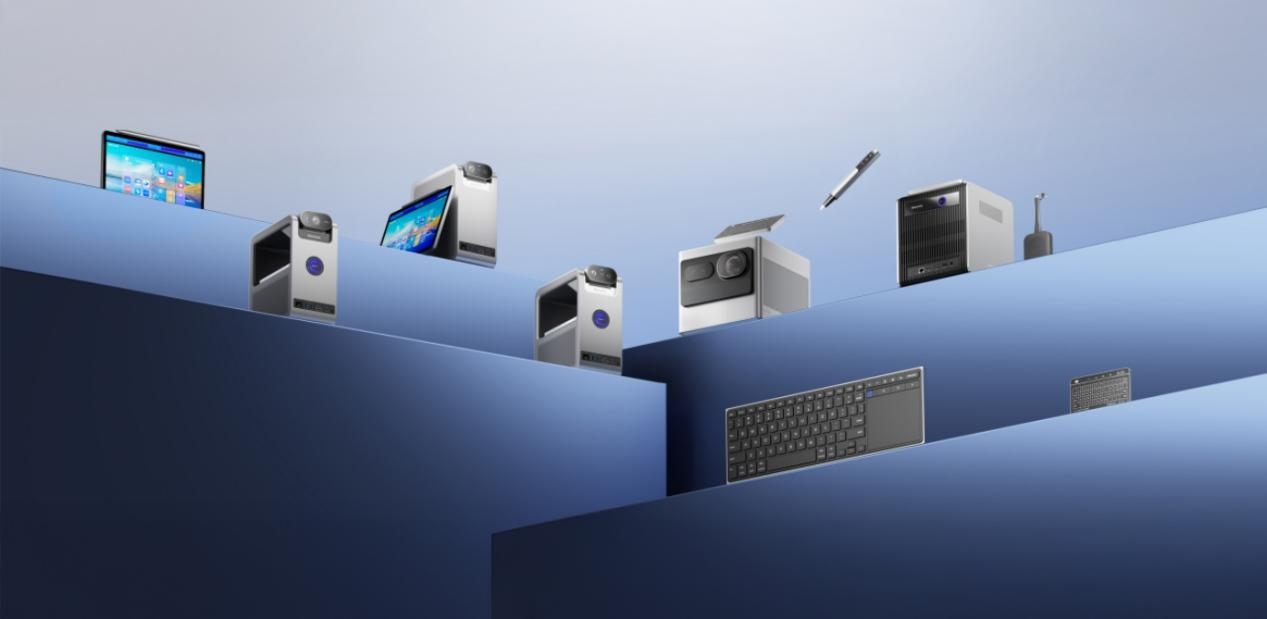
"Top - notch technology reshapes the future form of office products," and "providing future productivity tools that better suit the characteristics of partners who love innovation and pursue ultimate efficiency" have become a feasible path for WACOM to reconstruct productivity with AI in the era when AI is evolving from a tool that passively responds to problems to an "agent" that can independently plan, disassemble, and execute complete tasks, which is worthy of reference.