There are national standards for solid-state batteries, but brothers who want to buy them should just give it up.
Guys, after all the hype about solid-state batteries, have they actually been put into use? I'm so confused by what the car manufacturers are saying!
According to BYD's previous prediction, it will be at least 2027 before solid-state batteries are installed in vehicles in small batches, and "the same price for solid and liquid batteries" won't happen until 2030. We're still far from the era of large-scale application.
However, many car manufacturers have now directly announced that solid-state batteries have been put into use...
For example, at the beginning of last year, IM L6 launched a "Light-Year Solid-State Battery", but in the end, it turned out to be a "semi-solid-state battery". The difference in just one word means a huge difference in what's inside.
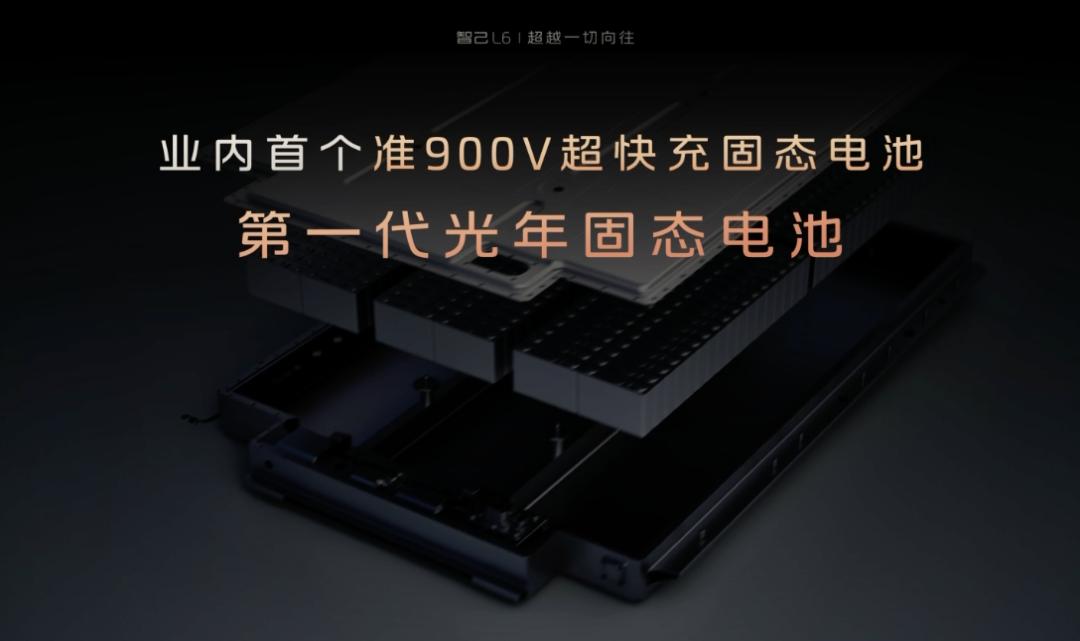
Not to mention that some media mislabel semi-solid-state batteries as solid-state batteries, and now they're even hyping up "quasi-solid-state" batteries. Isn't this just playing word games?
After being misled by all sorts of misinformation on the Internet, many uninformed people don't know what solid-state batteries are. Some are even asking, "Are dry batteries considered solid-state batteries?"

If you mix up these concepts, you'll really be taken for a ride by the car manufacturers. The world is full of tricks, so everyone should be careful...

The reason why the publicity about solid-state batteries is so chaotic is mainly that the technology is still in its early stages. No one expected the emergence of "semi-solid-state" batteries, so the official hasn't had time to give a clear definition.
Now, the naming chaos has finally caught the official's attention, and the right path is about to be paved.
A few days ago, on December 30th of last year, the first national standard for solid-state batteries "Solid-State Batteries for Electric Vehicles - Part 1: Terms and Classification" began to solicit public opinions. The group standard announced in May last year is finally about to be implemented.
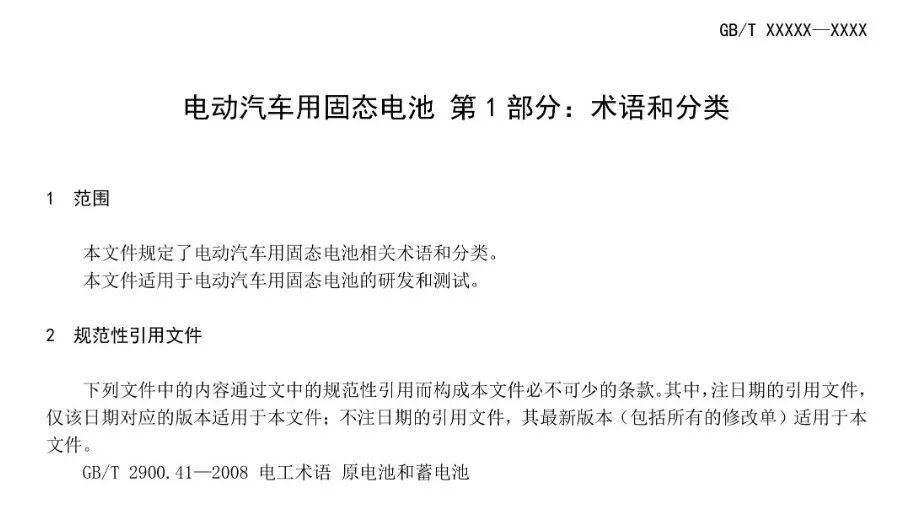
You don't need to read this document carefully. I'll summarize it for you.
In a nutshell: If the electrolyte is liquid, it's a liquid battery; if it's solid, it's a solid-state battery; if it contains both solid and liquid electrolytes, it's a hybrid solid-state battery.
If you find "hybrid solid-state" a bit of a mouthful, you can also call it semi-solid-state. They're essentially the same thing, and there's no compulsion to change the term.
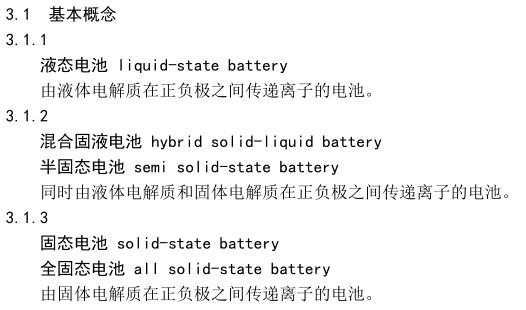
Some might say this is like stating the obvious, like "a man must be a man, and a woman must be a woman." Well, they're not wrong.
The key is that the official has made a definitive statement.
After the release of this national standard, semi-solid-state batteries can't be mislabeled as solid-state batteries, and car manufacturers and the media can no longer play on the margins.
Of course, in today's world, it's hard to tell the truth even by looking at an ID. So, in addition to the qualitative definition, the national standard also provides a quantitative testing method to completely eliminate any room for deception.
To put it simply, place the battery in a vacuum-dry environment and heat it to 120°C to "evaporate" the liquid inside. The weight of the evaporated liquid as a percentage of the total weight of the battery cell is the weight loss rate.
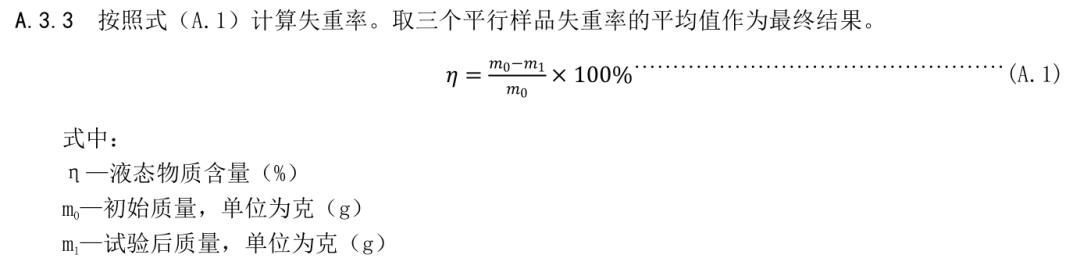
If you claim it's a solid-state battery, the weight loss rate can't exceed 0.5%. Why not set it at 0? It's because at this temperature, the solid electrolyte might also decompose, so a small margin is left.
Currently, the liquid content in semi-solid-state batteries on the market is generally between 5% and 20%, which is far from 0.5%. It's almost impossible to meet the standard through normal means.
All in all, this national standard is a timely rain for the chaotic solid-state battery industry.
However, for us, we're less concerned about industry regulation and more interested in another question: Does the arrival of the national standard mean that solid-state batteries are really close to us?
In recent years, car manufacturers have been reporting good news one after another. GAC announced a solid-state battery production line, and Hongqi said it would conduct real-vehicle tests of solid-state batteries. Even at the recent CES, a Finnish company claimed to have used solid-state batteries in electric motorcycles.
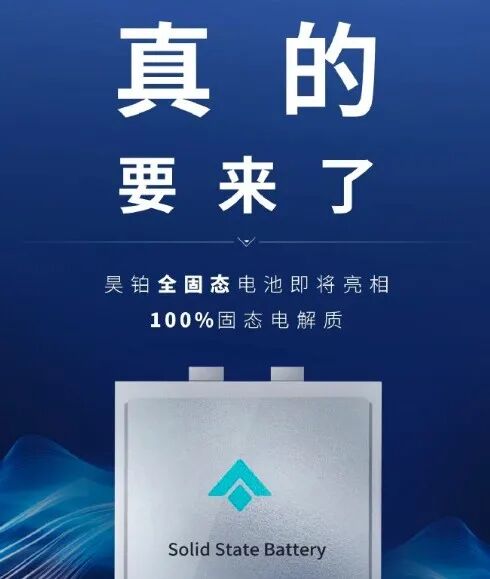
Hold on, everyone. Don't be misled. Look at the "Part 1" in this national standard. It means there's still a long way to go. The development of solid-state batteries is still in its infancy.
The national standard doesn't have any relevant requirements or definitions regarding the safety and performance of solid-state batteries. Even the companies making solid-state batteries may not fully understand this technology.
People are so eager for solid-state batteries not because they've seen their real capabilities but because they've been bombarded with exaggerated claims. Like running for thousands of kilometers without charging and not catching fire even when punctured, right?
In theory, solid-state batteries do have the advantages of safety and long-range, outperforming current liquid batteries. However, in actual production, the situation may be different.
One of the main reasons for battery fires is the electrolyte. Liquid batteries use an organic solvent that's volatile and flammable when heated. If a cell cracks, the battery pack could turn into a flame thrower.
The main purpose of developing solid-state batteries is to replace the liquid electrolyte with non-flammable and non-volatile solids like oxides, sulfides, and polymers, making them less likely to catch fire under normal conditions.
However, according to a record of an expert conference call by the well - known investment firm J.P.Morgan, the all-solid-state battery samples provided by six battery manufacturers, including CATL and BYD, may not pass all the safety tests.
Because the sulfide electrolytes they use will also decompose and catch fire at 200°C, which is actually no different from liquid batteries.
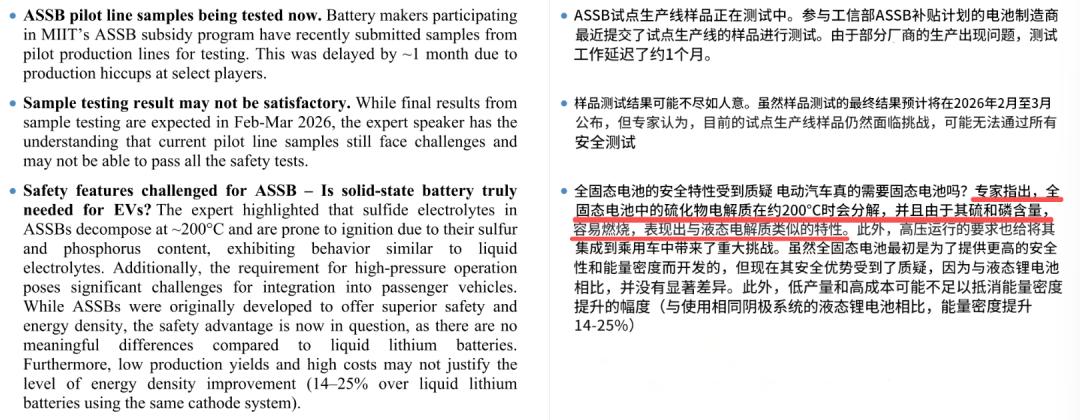
Moreover, even these "less - than - ideal" solid-state batteries are still difficult to mass - produce.
The record also mentions that the raw material cost of solid-state batteries is more than 10 times that of liquid batteries. Even if you manage to produce them, there are still issues like yield rate and consistency. With the current technology, solid-state batteries have no competitiveness in the market.

So, it's speculated that by 2027, solid-state batteries may be installed in vehicles in small batches as the car manufacturers claim. However, it's unlikely that they'll be widely used or replace liquid batteries even by 2030.
After all these years of hype, is the solid-state battery just a dream? In fact, facing the difficulties of solid-state batteries, semi-solid-state batteries may be the most reasonable technical route at present.
An expert in the field of solid-state batteries told me that he's quite optimistic about semi-solid-state batteries.
"In the short term, I think we can only rely on semi-solid-state batteries."
"Car manufacturers don't necessarily have to go the all-solid-state route... The technology may seem promising, but in reality, it's not that perfect."
This is similar to the past debate between pure electric and hybrid vehicles. People said that hybrid was just a transitional technology and pure electric was the future. However, in reality, BYD's DM models are selling well, and new - energy vehicle startups are relying on extended - range vehicles.
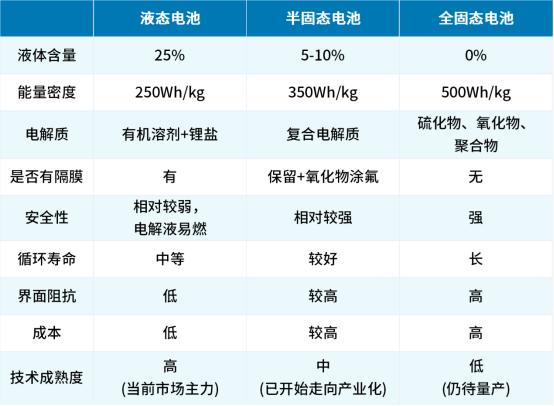
So, the semi-solid-state batteries that have deceived us in the past may actually be more appealing than all-solid-state batteries.
Technologically, the semi-solid-state battery technology has advanced rapidly in recent years. In the early days, it was just adding some additives to the liquid, with the liquid content at 20 - 30%. Now, it's down to about 10%. For example, the semi-solid-state battery in SAIC MG4 has a liquid content of only 5%, and the electrolyte has turned into a gel.
Oh, this is not an advertisement. You can trust me...
In MG4's official promotion, its semi-solid-state battery can pass ten - needle puncture, rebar penetration, and three - side extrusion tests, seemingly outperforming BYD's Blade Battery.
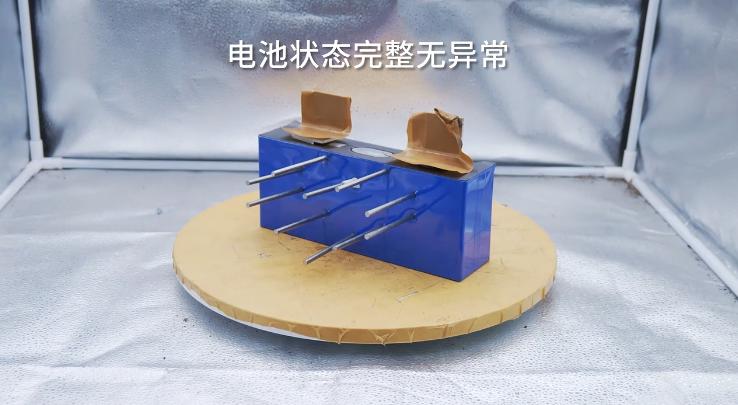
At first, I thought it was the lithium iron manganese phosphate battery that was performing well. But a battery expert told me that it's really the credit of the semi-solid-state battery.
Moreover, the price is reasonable. Compared with the semi-solid-state batteries that used to cost hundreds of thousands of yuan, this car with the battery only costs 100,000 yuan. For the elusive solid-state batteries, semi-solid-state batteries may really be ready to enter the market.
However, the question is, will the market really buy semi-solid-state batteries?
Just look at how many semi-solid-state vehicles are on the road. Many car manufacturers make a lot of noise but take little action. They only promote the concept but remove the posters as soon as the vehicle is supposed to be launched. You can't even see the car. Maybe some car manufacturers have delivered a small batch, but I don't know who's buying them...
"Semi-solid-state batteries may be technologically attractive, but they may not be a good product for the market."
Except for the MG4 mentioned above, the prices of most semi-solid-state vehicles are not very cost - effective. For example, the solid-state battery version of IM L6 costs 345,900 yuan, nearly 100,000 yuan more than the regular version, but the range only increases from 800 km to 1000 km. I don't think it's worth it.
At the beginning of last year, NIO ET7 announced that it would be equipped with a 150 kWh semi-solid-state battery, but it only received doubts. Li Bin himself said that no one would drive 1000 km continuously, and the development of this product is more symbolic than practical.

If car manufacturers themselves lack confidence in this technology, it's even harder to convince consumers...
A battery researcher named Xiao G told me that he's not entirely optimistic about "installing solid - or semi - solid - state batteries in vehicles". The key lies in what car manufacturers do, not what they promote.